
Restraint at Altitude: Namgyal Sherpa Recalibrating Nepal’s Luxury Tourism
By: Jeremy Tran
Nepal has always been measured in vertical terms.
The world comes here to climb higher, to summit Everest, to conquer Annapurna, to test endurance against altitude. Tourism has followed the same logic. More trekkers. More beds. More access. Growth has long been synonymous with upward motion.
But in fragile landscapes, vertical ambition can carry horizontal consequences.
For Namgyal Sherpa, born into one of Nepal’s most influential mountaineering families, the son of Pasang Lhamu Sherpa – the first Nepali woman to summit Everest, and heir to the Yeti Group’s travel empire, he inherited more than businesses. He inherited narrative power.
At a crossroads familiar to many second-generation leaders in emerging markets, he faced a defining choice: accelerate expansion in a country still eager for “development” or re-engineer growth around limits.
Today, as the Founder and CEO of Sherpa Hospitality Group (SHG), Namgyal leads a portfolio of 17 properties — from Shinta Mani Mustang to Mountain Lodges of Nepal and Kasara Chitwan and Hokke Lumbini — alongside trekking operations under Thamserku Group and a growing food and lifestyle platform, Le Sherpa Concept.
Yet his defining decision has not been scale. It has been restraint.
“In the Himalayas,” Namgyal says, “leadership is not measured by how much you build, but by how much you choose not to.”
In a tourism economy long wired to reward volume, his leadership may signal a new chapter in how Nepal positions itself on the global stage — not just as a place to conquer peaks, but as a place that understands its limits.
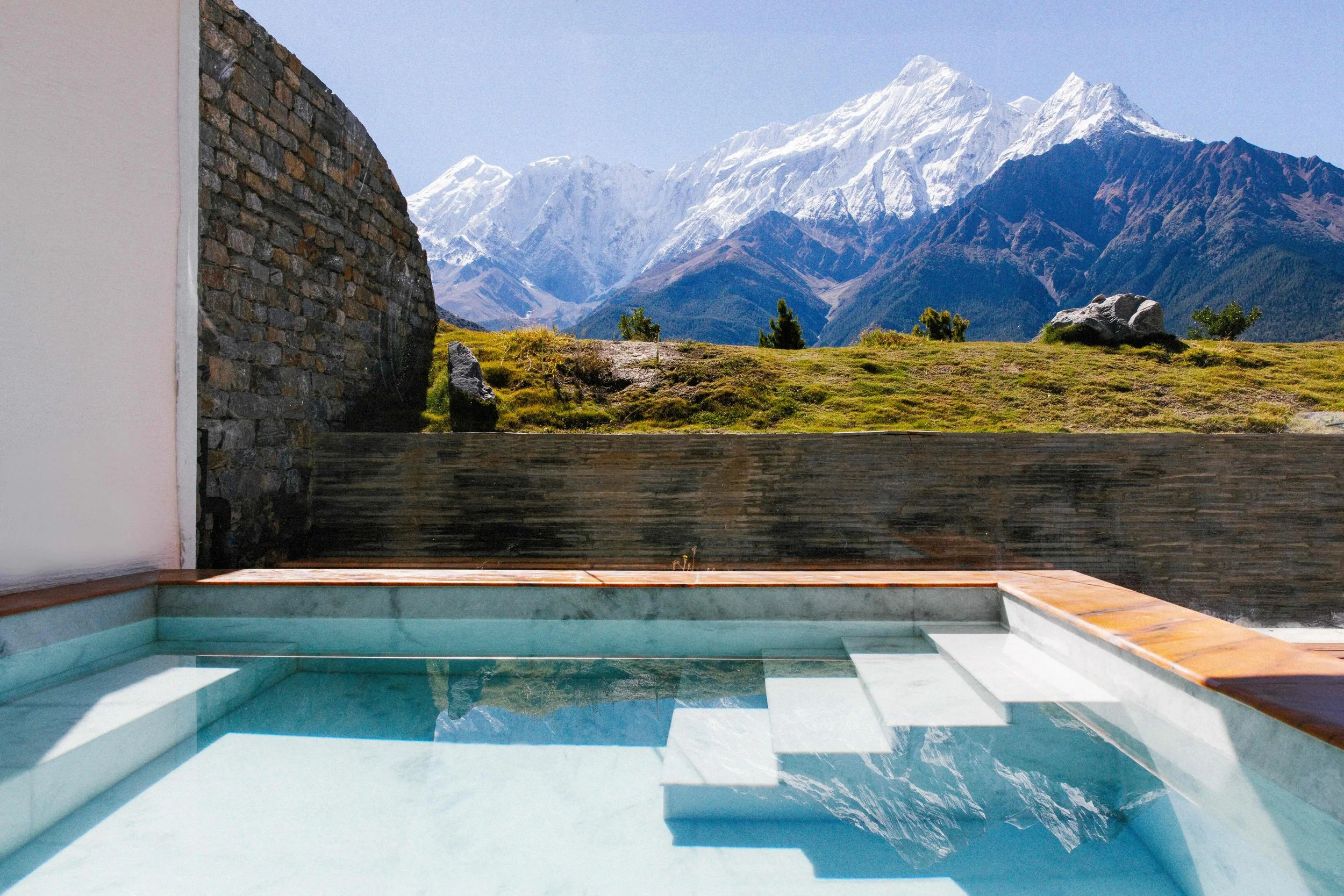
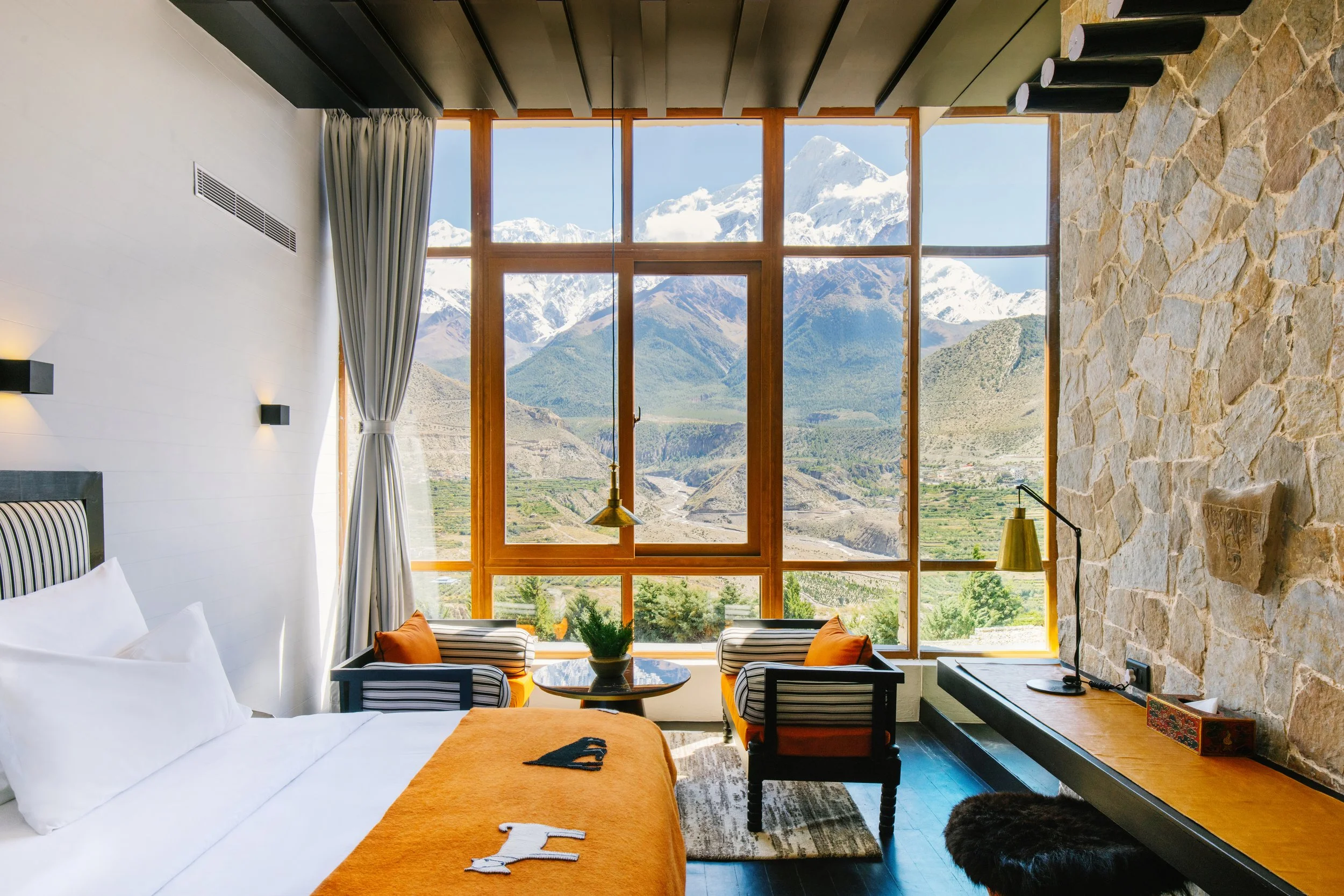
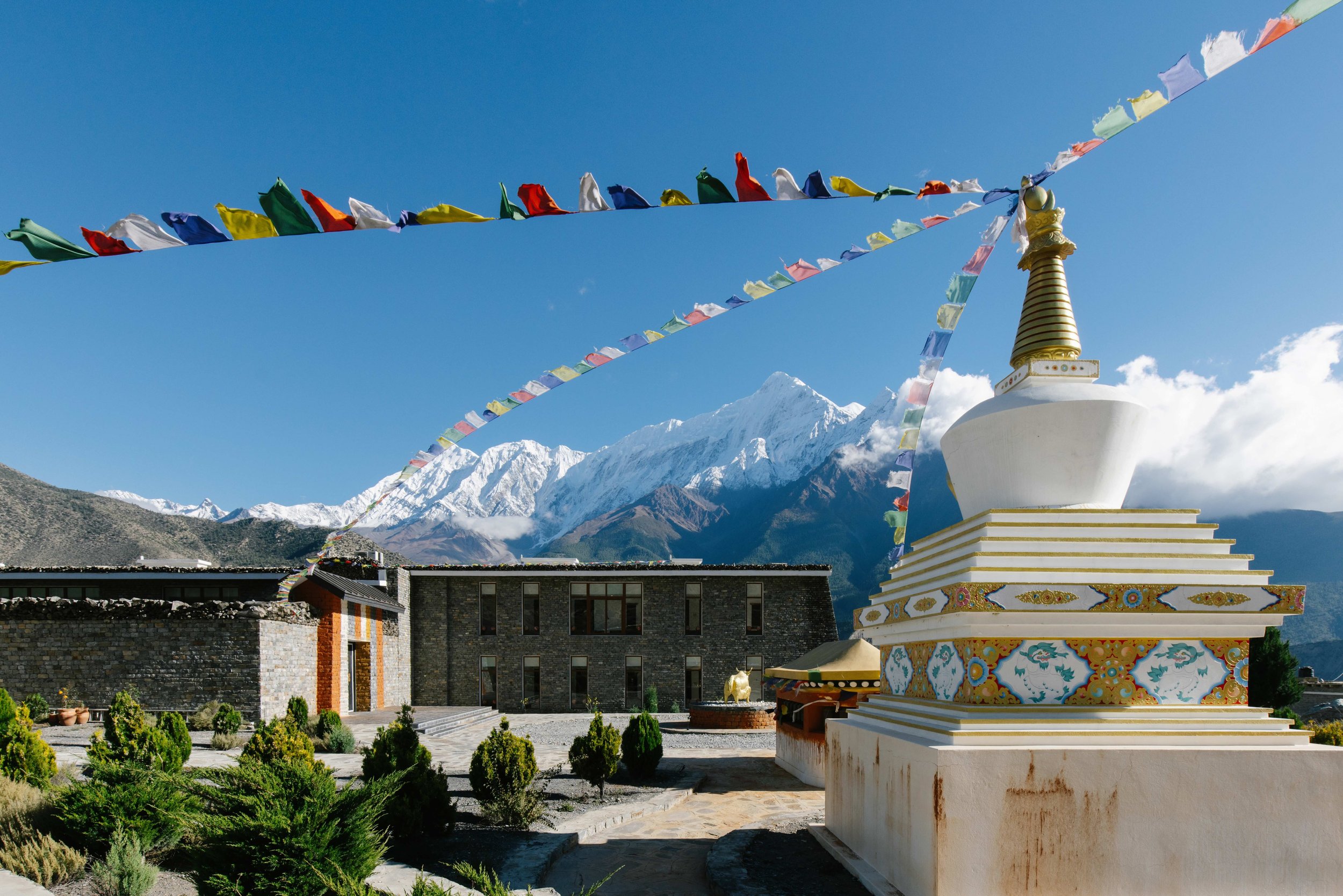
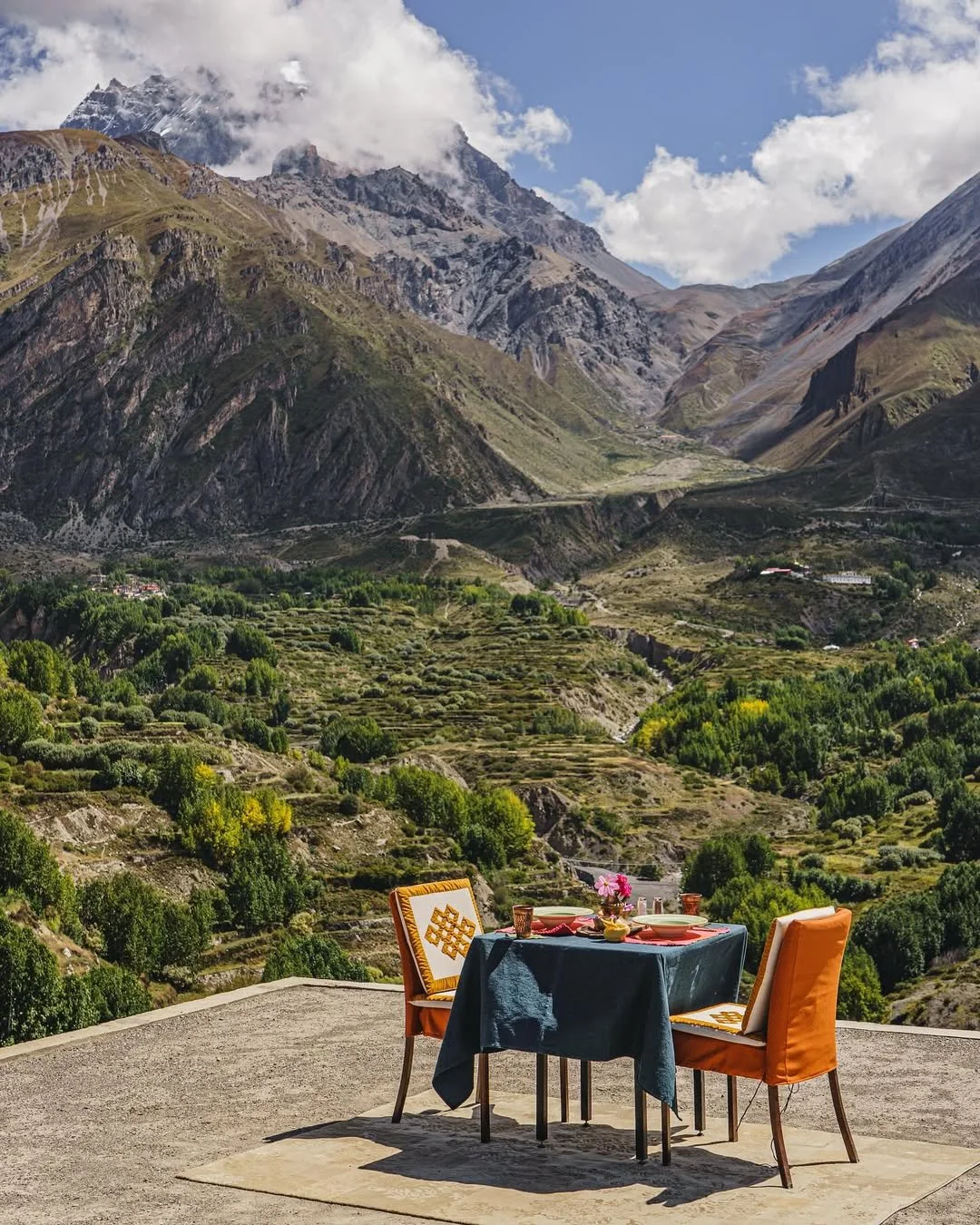
The breathtaking mountain views at Shinta Mani Mustang
Inheriting a Mountain
When Namgyal merged multiple family businesses into a single umbrella, Sherpa Hospitality Group, he confronted a deeply entrenched assumption that real power, and especially top leadership, must stay within the family.
“In a family business, there’s often an assumption that leadership roles must stay within the family,” he reflects. “But as we grew, that just wasn’t sustainable.”
The pivot was not just cosmetic or lip service.
Namgyal deliberately stepped back from the gravitational pull of hereditary control to empower non-family team members to lead in their own areas. The result was less of a consolidation and more of a restructuring because a family business was rewired into a professional platform designed for business longevity and people empowerment.
Doing so has allowed Sherpa Hospitality Group to create consistent standards across a geographically scattered portfolio while keeping each rooted in its local character.
It has also sharpened the group’s ability to deliver a seamless guest experience, manage risk in varied environments, and invest in a more ambitious sustainability agenda.
Sherpa Hospitality Group was no longer defined by a surname alone, but by a shared set of principles that every team member could own.
“In a family business, there’s often an assumption that leadership roles must stay within the family. But as we grew, that just wasn’t sustainable.”
- Namgyal Sherpa
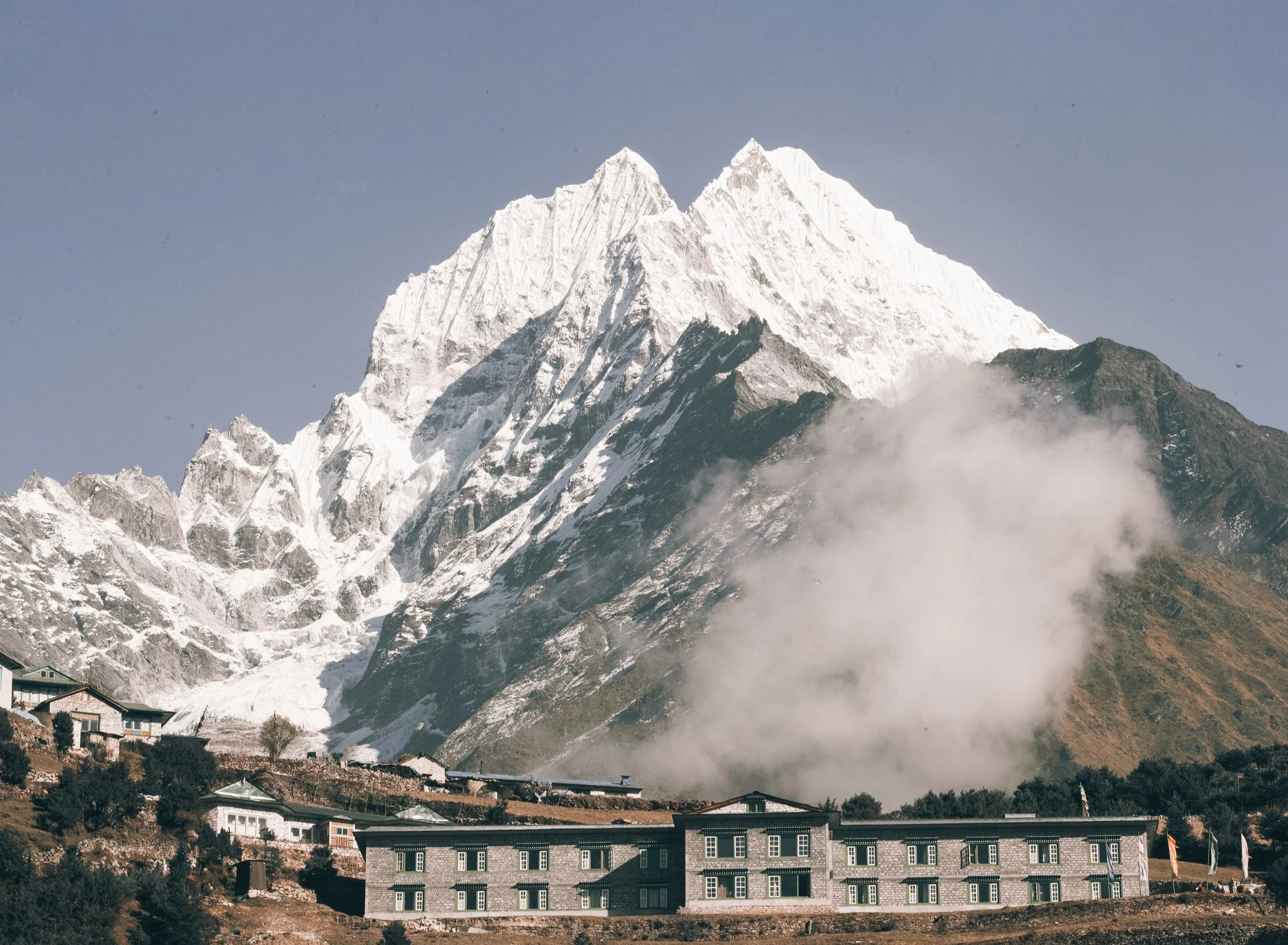
Namche Lodge, part of Mountain Lodges of Nepal
Discipline, Not Personality
In any business, the risk is familiar – decisions shaped by the strongest personality in the room. In family enterprises, that risk is amplified.
Sherpa Hospitality Group’s answer has been to formalize governance around a decision framework that forces discipline.
When commercial priorities collide with community expectations or environmental limits, leadership retains the final say, but only after a structured review. Long-term impact on place, people, and business viability is weighed alongside community input, operational insight, and ownership perspective.
By making trade-offs explicit and traceable, the framework turns tension into clarity. Over time, it establishes a collective norm. Stakeholders understand what the group will and will not do, and why.
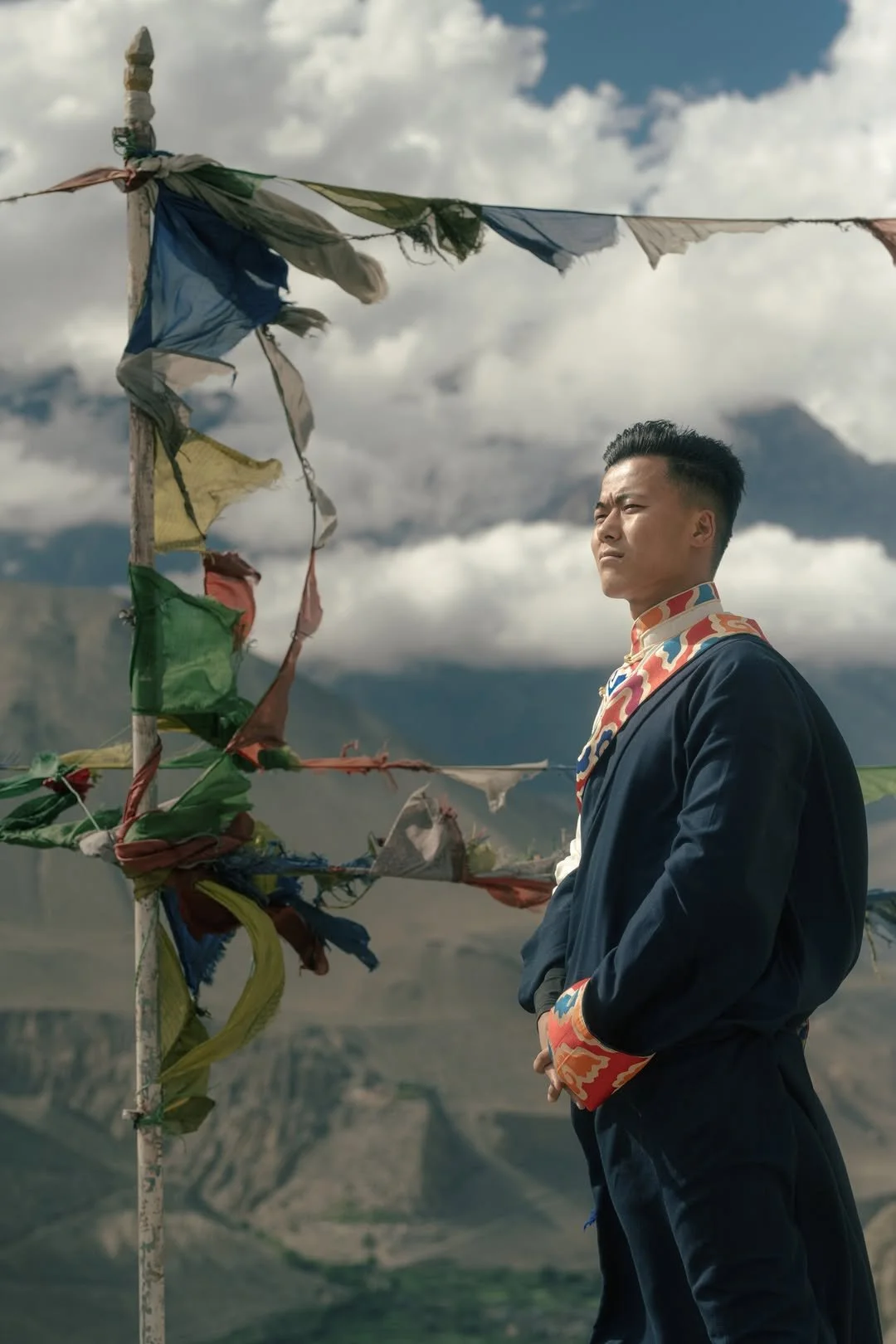
Sometimes, Choosing Not to Build Matters More
In the high Himalayas, there’s an ever-present urge to build bigger and flashier projects. Helicopter access can shorten journeys that once took days. Larger lodges can harness shoulder seasons into MICE venues for additional revenue streams. More rooms mean more jobs, more tax, more “development.”
Yet Namgyal’s leadership is defined less by what Sherpa Hospitality Group has added to the landscape than by what it has deliberately chosen not to. In an industry where luxury often equates to scale, Sherpa Hospitality Group caps its properties at 15 to 20 rooms, building with local labor and materials, and anchoring each lodge in the stories of its surroundings.
Commercially attractive proposals that would push Sherpa Hospitality Group toward higher volume, heavier infrastructure, or more intrusive access are weighed against a set of non-negotiables: the resilience of the landscape, the integrity of community relationships, and the company’s own sustainability commitments.
Keeping room inventory low and guest numbers intentionally modest means slower revenue growth and more conservative capital returns in the short term. “Choosing restraint limits how quickly revenue can scale,” Namgyal acknowledges. But he frames it less as forfeited income and more as “an investment in durability” — of place, brand, and community.
Namgyal says, “while that might have a short-term cost, it clarifies exactly the kind of company we’re building: one that prioritizes long-term sustainability over short-term gain.”
Across its operations, Sherpa Hospitality Group has anchored itself in small, intimate lodges, often in the 15–20 room range, built with local materials and local labor.
Restraint growth has also enabled the team to ensure high-quality guest experiences, preventing overuse of trails, overcrowded lodges, and the subtle erosion of the sense of remoteness that drew visitors in the first place.
It stabilizes teams, avoiding the boom-and-bust staffing cycles common in seasonal destinations. It also preserves trust with communities who have seen too many promises of “development” end in extraction.
While [choosing restraints] might have a short-term cost, it clarifies exactly the kind of company we’re building: one that prioritizes long-term sustainability over short-term gain.”
—Namgyal Sherpa
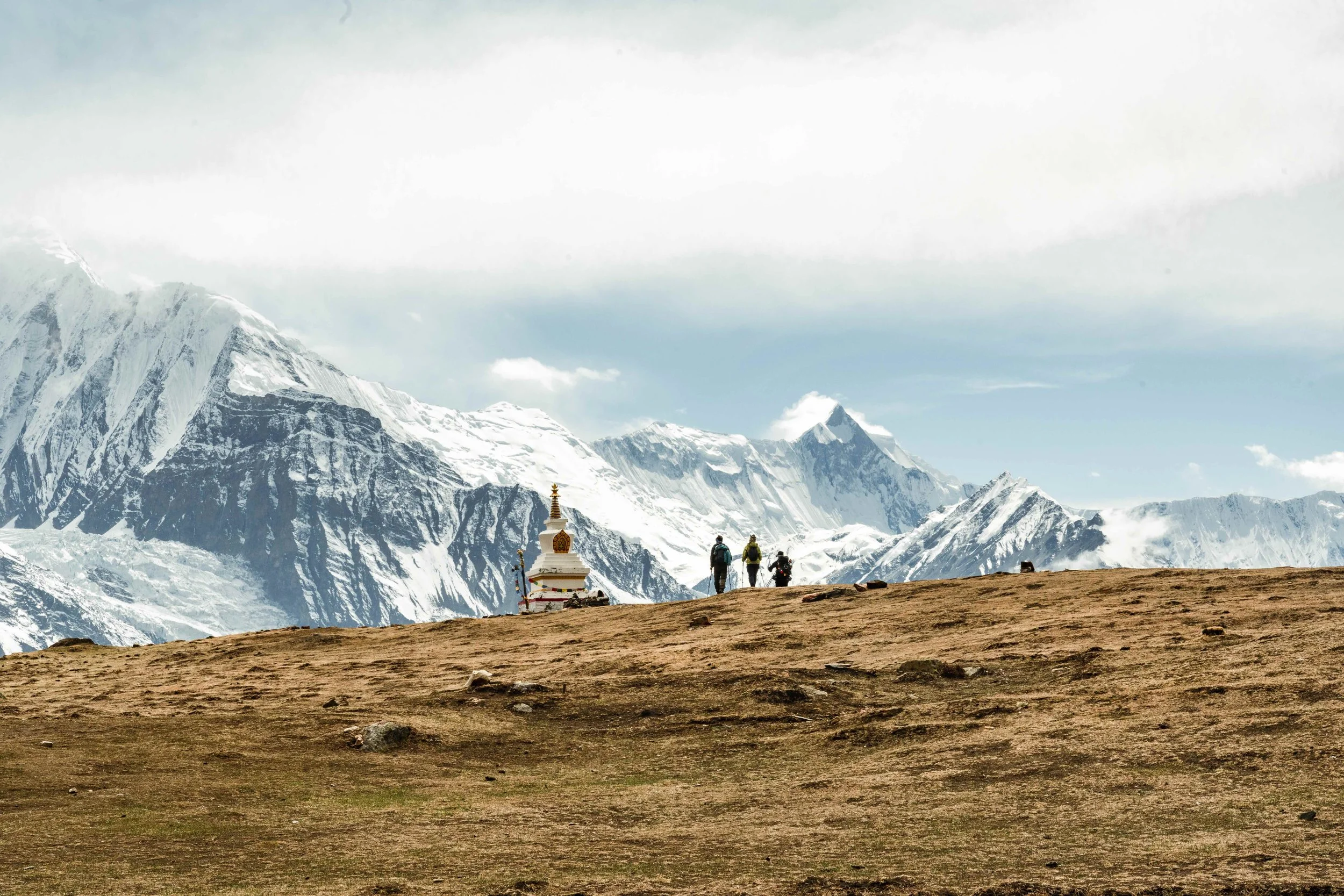
When Communities Are Co-architects, Not Beneficiaries
Many hospitality brands now talk about “community engagement.” Fewer are willing to confront the power imbalance in who designs the experience, who tells the story, and who ultimately benefits.
At Sherpa Hospitality Group, the answer unfolds not in marketing language, but in how journeys are developed on the ground.
In Mustang, the remote western region of Nepal, where Sherpa Hospitality Group operates its flagship property Shinta Mani Mustang, Namgyal and his team noticed a familiar pattern. Travellers move quickly between marquee sites, barely seeing the living culture around them. The landscape was being photographed, but the villages were mostly passed through.
Instead of layering a generic wellness offering on top, Namgyal’s team spent time in the valleys, meeting with local leaders, healers, and families.
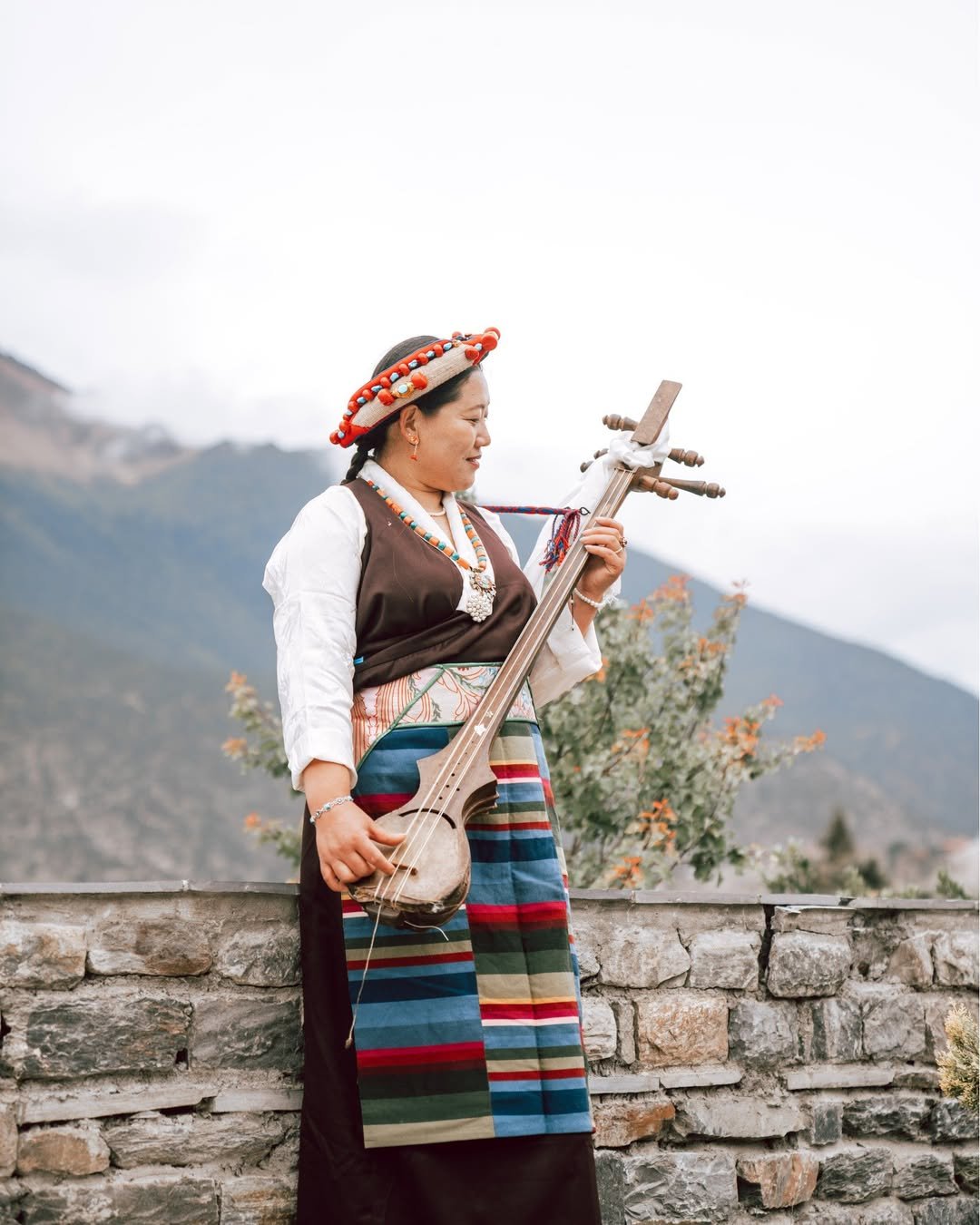
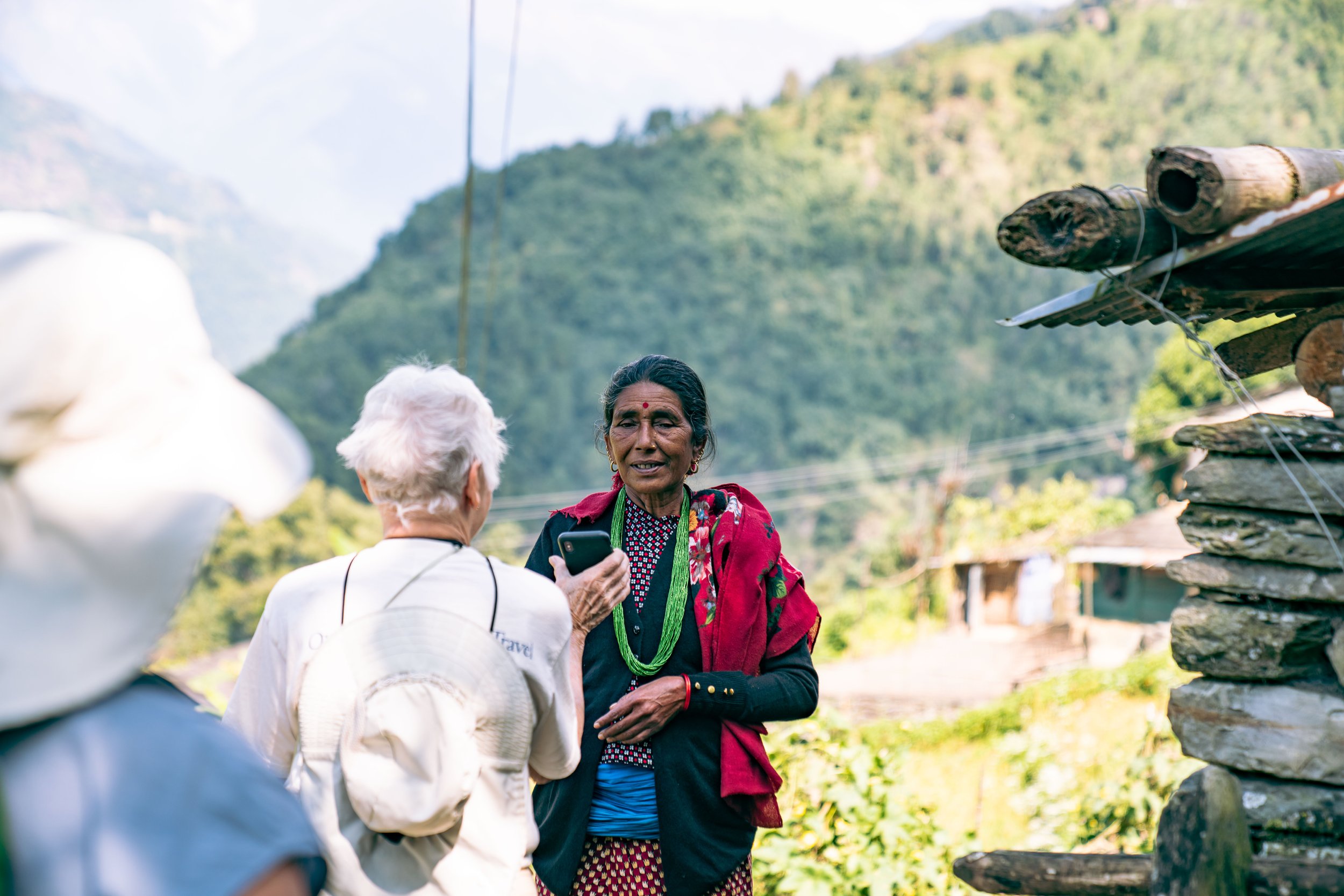
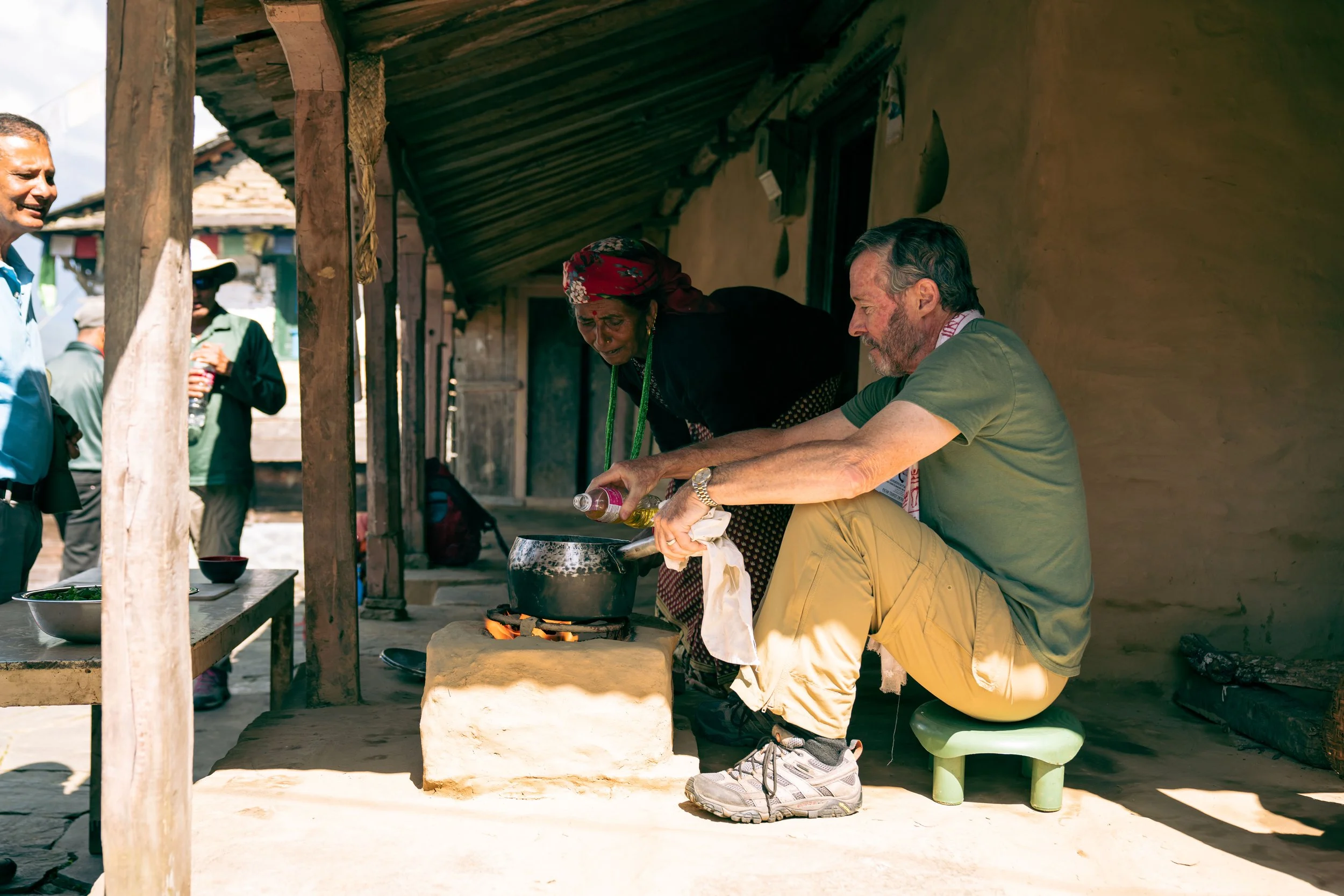
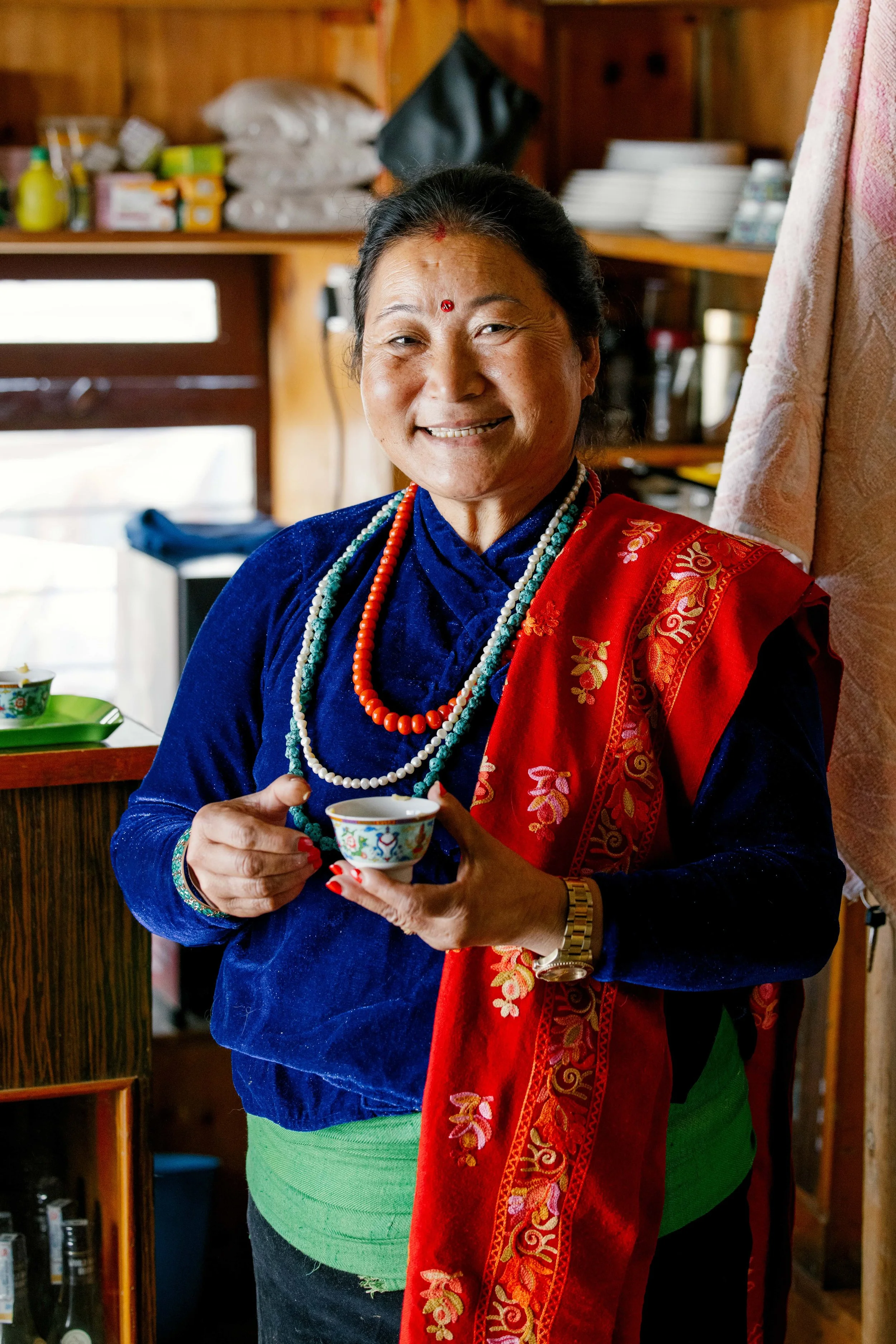
One of those meetings led them to an 11th-generation Amchi, a traditional Himalayan healer, who co-created the pillar of the lodge’s wellness program. Another led them to Ms. Kamala, a local female leader in Marpha village, who now hosts guests for an intimate chef’s-table-style lunch inside her home.
They are not cameo appearances nor “add-ons” to an itinerary. They are authors of the experience itself.
A similar philosophy plays out in Majgaon, a small Gurung village in the Annapurna region with around 80 residents. There, the Ama Samuha, or the Mothers’ Committee, effectively runs the show. In “A Day in Majgaon Village,” guests are welcomed on the community’s terms. They visit the local primary school, learn traditional weaving, taste homemade wine, and share meals at villagers’ homes.
Sherpa Hospitality Group’s function is infrastructural rather than curatorial. The company provides structure, logistics, and fair economic exchange but intentionally cedes control of narrative, pace, and outcomes to the community. The result is a subtle but important inversion of the usual model. Namgyal says, “communities are co-architects, not beneficiaries.”
This approach has forced Namgyal and his team to rethink the business model itself. It requires longer lead times when local priorities shift. It may complicate standardization, but it increases community income retention, diversifies household livelihoods, and creates experiences that feel alive rather than staged.
Measuring Transformation, Beyond Satisfaction
“Transformative travel” has become one of tourism’s most overused promises, often a poetic label for what is, in practice, a well-designed but conventional holiday.
Transformation, he believes, is not measured at checkout. It is measured in what lingers. It is the quiet shift a guest carries home, an altered perspective, a decision made differently, a renewed sense of joy toward place, work, or community.
In an era marked by climate anxiety and digital fatigue, Nepal offers something unusually potent: “serene, almost heaven-like areas and incredibly warm, kind people,” as Namgyal puts it. The contrast between guests’ fast-paced lives and the measured rhythms of Himalayan villages is often enough to trigger reflection.
Sherpa Hospitality Group’s role is to create the conditions — through travel pacing and curation, and relationship building — for that reflection to turn into resolve.
This is not easily quantifiable.
Yet it sits at the heart of Sherpa Hospitality Group’s strategy, informing how a journey is designed and a partner selected.
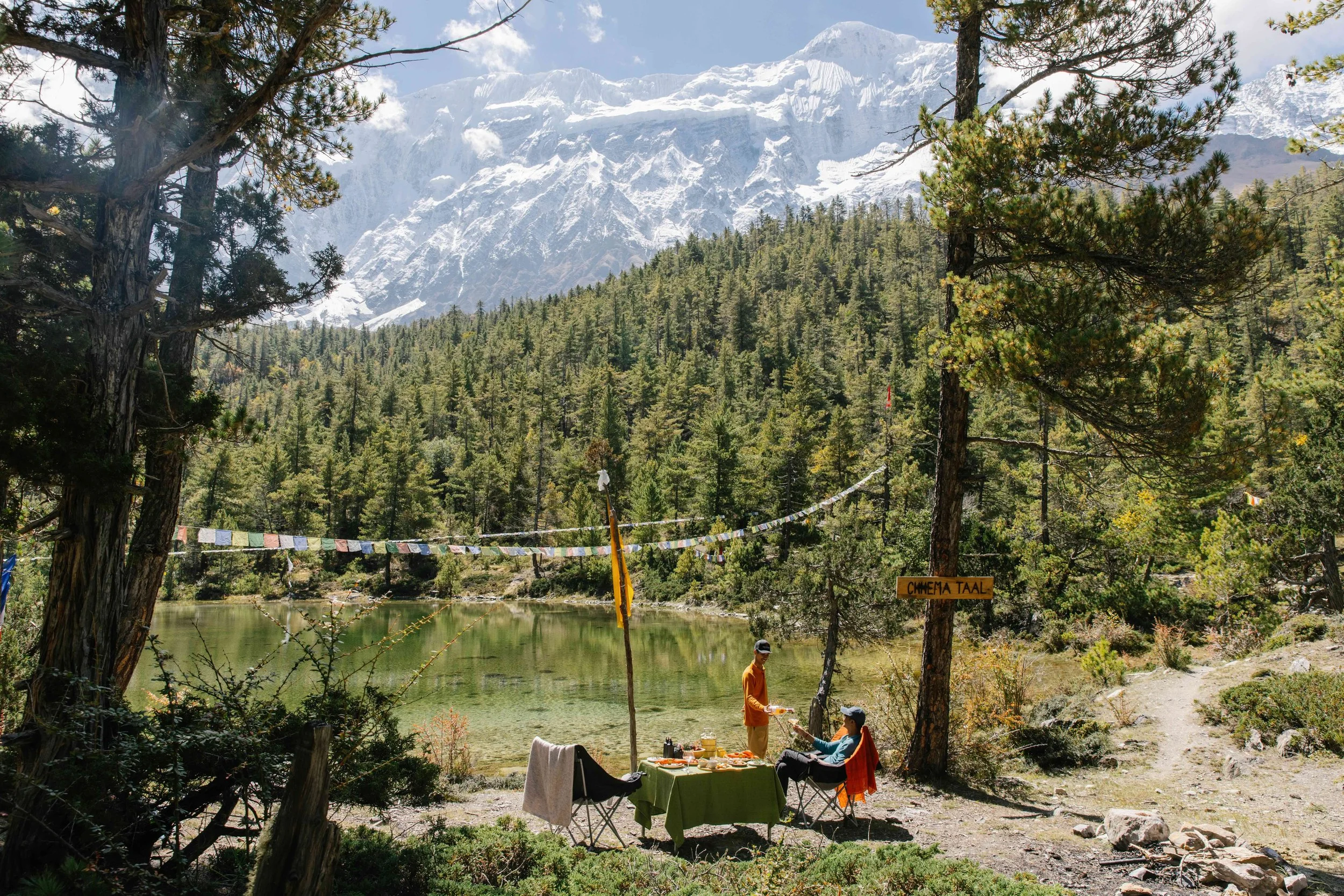
Chema Lake
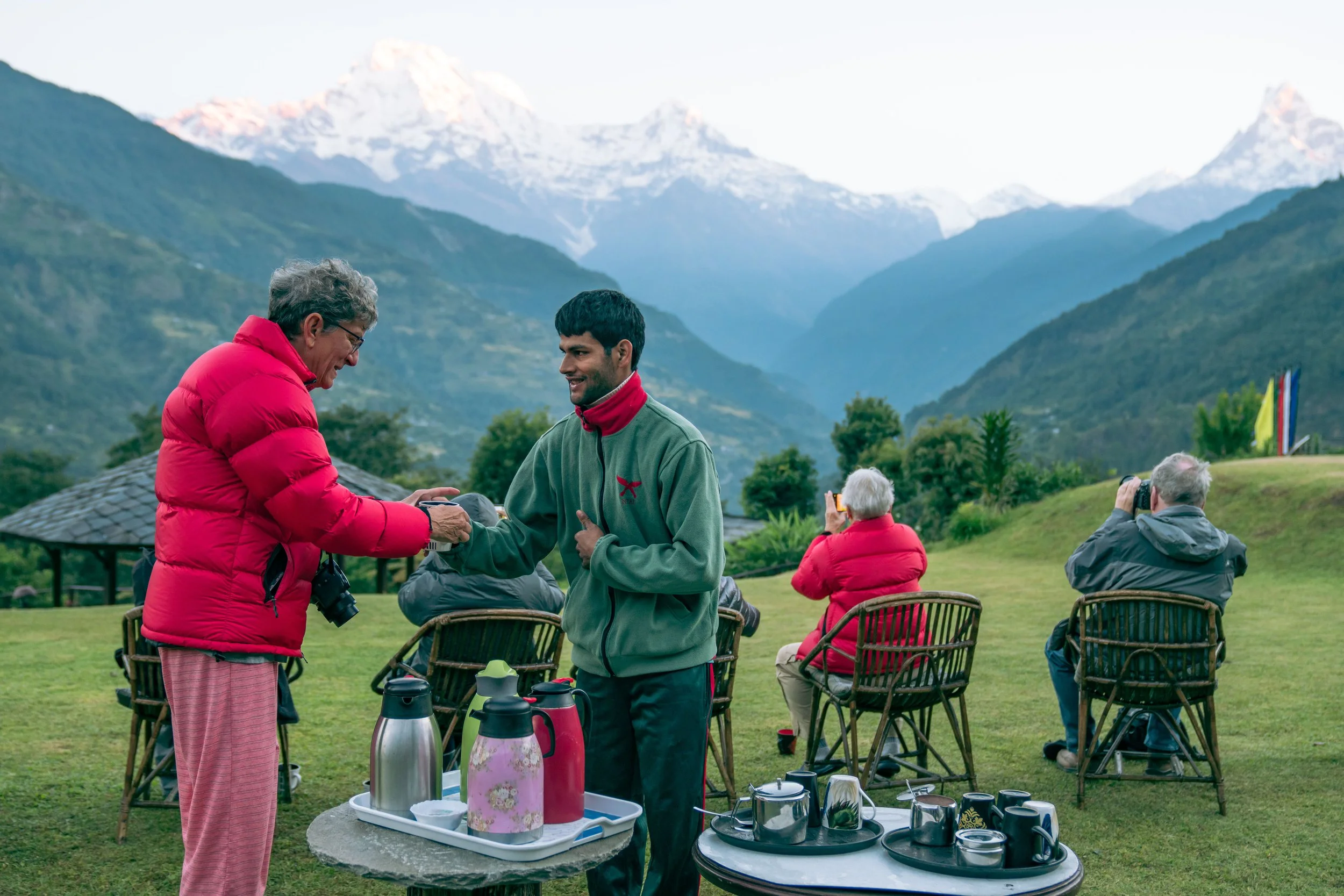
View of Tomijong
Reimagining Mustang
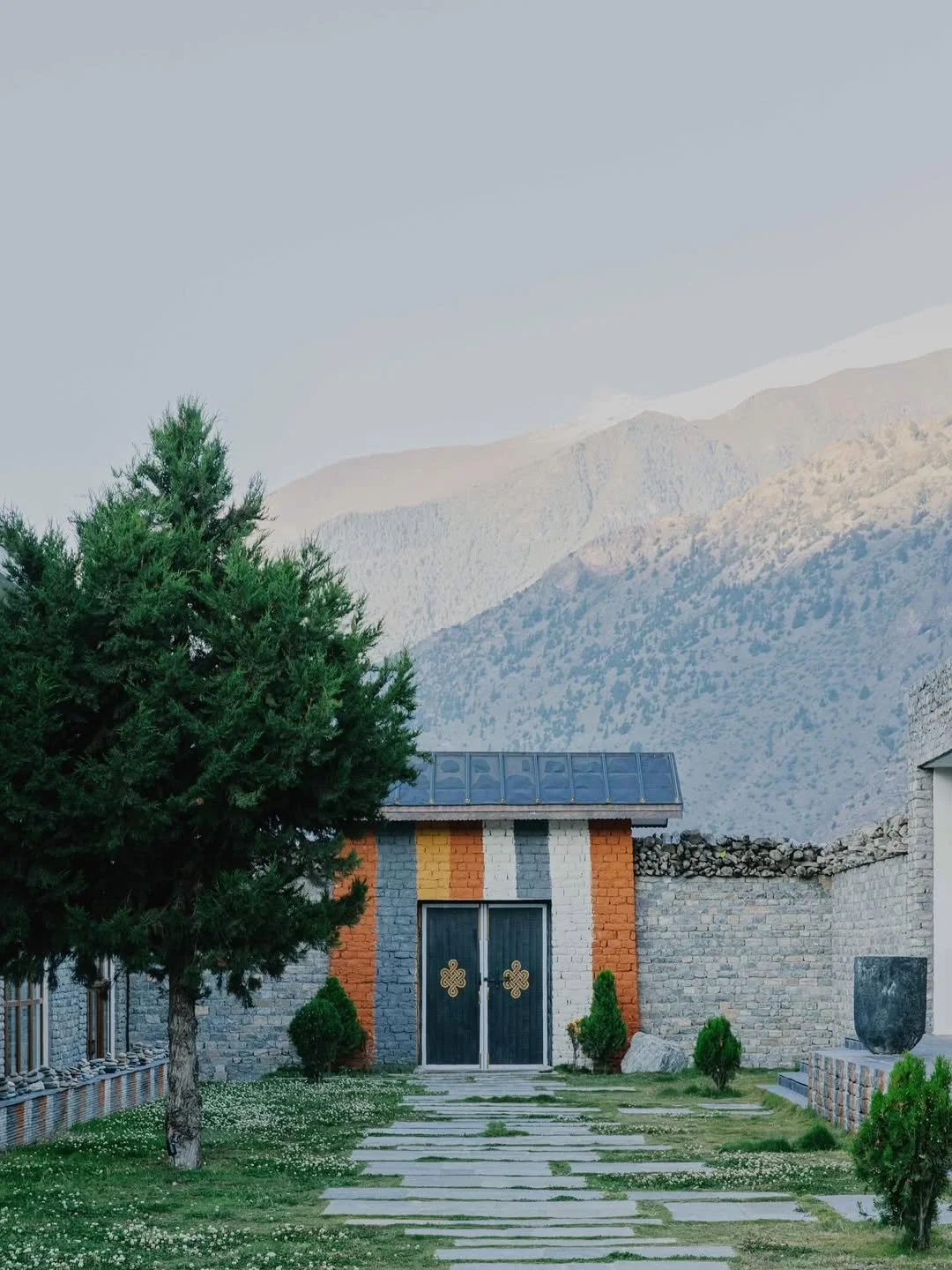
If there is one project that crystallizes Sherpa Hospitality Group’s regenerative philosophy, it is Shinta Mani Mustang.
Before the current iteration, Sherpa Hospitality Group operated Moksha Mustang, a comfortable lodge that offered shelter, but left much of the region’s cultural and spiritual depth underexplored. For many travelers, Mustang remained an add-on rather than a destination in its own right.
Namgyal recognized both opportunity and risk. As travelers’ interest in Mustang grew, so did the risk of overtourism and of reducing its intangible heritage to a mere scenic attraction.
Then, the question was whether it was possible to introduce world-class experiential luxury here without diluting the very qualities that made Mustang unique.
Through industry veteran Jason M. Friedman, Namgyal connected with designer Bill Bensley of the Shinta Mani Collection. Bensley had long been fascinated by Mustang’s “untamed landscape and spiritual depth,” Namgyal shares.
What anchored the partnership was not aesthetics alone, but a tight alignment of values. Namgyal looked beyond global recognition to assess how the Shinta Mani brand performed when sustainability and community integrity were tested against commercial opportunity. His verdict was that Bensley and his team were willing to build slowly, listen deeply, and treat restraint as a form of leadership rather than a constraint.
When the COVID-19 pandemic halted global travel, the project could have stalled. Instead, the pause became an advantage. The team slowed further to research, listen, and refine.
Out of that patience emerged a new hotel: Shinta Mani Mustang as a five-night, all-inclusive, non-conventional stay.
This model allowed Sherpa Hospitality Group to “control pace, protect the landscape, ensure fair community participation, and offer guests depth rather than volume,” Namgyal shares. “Commercially, it shifted the conversation from occupancy and nights to journeys, outcomes, and value per guest.”
For Nepal, the project has become a subtle reframing. Long associated with budget trekking and hardcore adventure, the country is increasingly seen as capable of delivering place-led, design-conscious luxury rooted in culture and meaning.
Success, for Namgyal, is measured not in press headlines, but in whether Nepal is “better understood, more respected, and more carefully experienced” as a result.
“[We] control pace, protect the landscape, ensure fair community participation, and offer guests depth rather than volume.
Commercially, it shifted the conversation from occupancy and nights to journeys, outcomes, and value per guest.” — Namgyal Sherpa
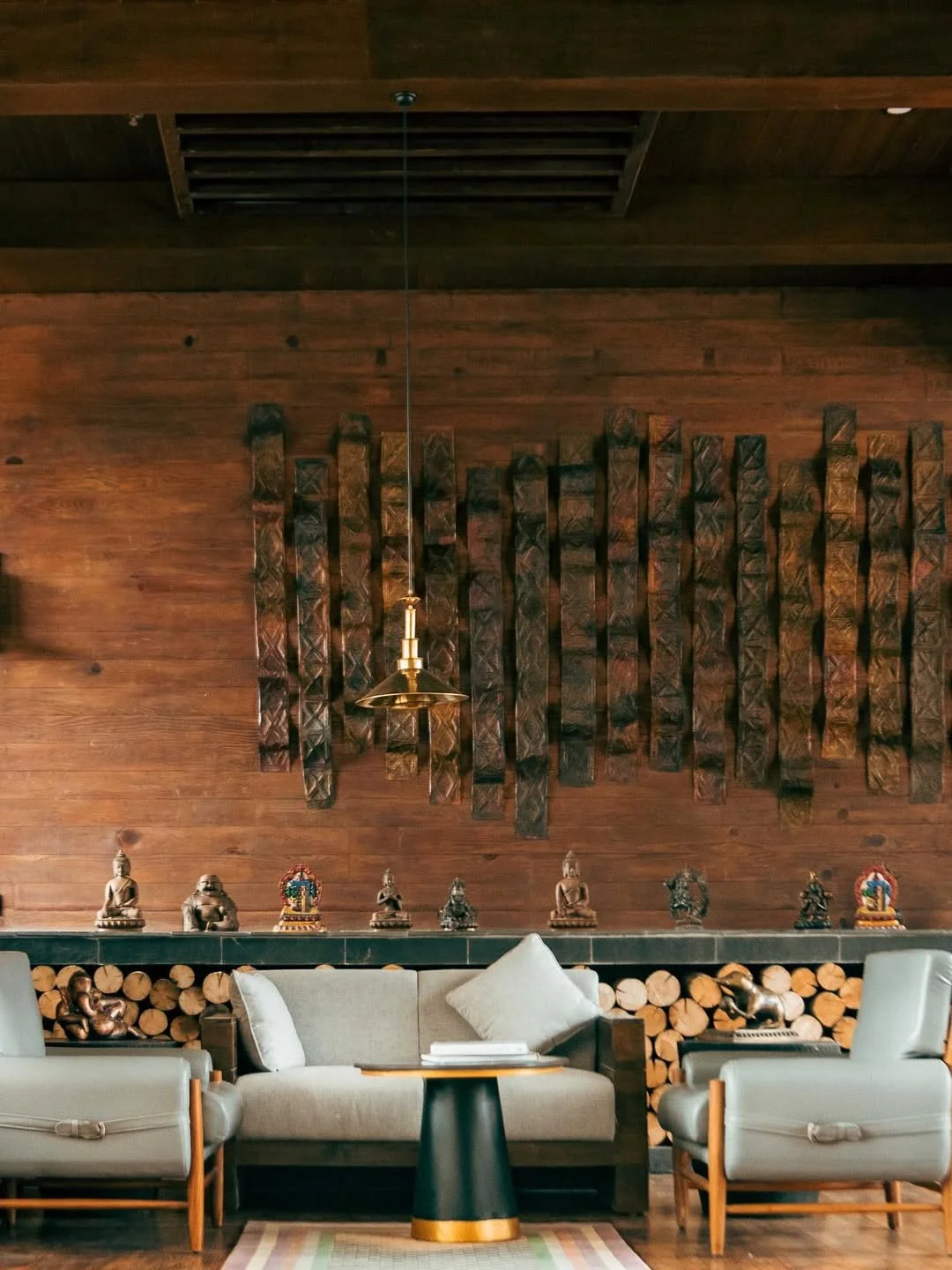
Redefining Success from Throughput to Depth
Behind Sherpa Hospitality Group’s poetic language of journeys and transformation lies a rigorous recalibration of metrics.
Occupancy, average daily rate (ADR), and revenue per available room (RevPAR) are still tracked—financial rigor remains non-negotiable. But in a journey-based model, these are not the primary success indicators, according to Namgyal.
What matters more is yield per guest over maximum occupancy. This ensures each stay creates meaningful economic value without increasing pressure on fragile ecosystems.
Community income retention measures how much spending remains local through employment, community-led experiences, and sourcing from nearby farmers and artisans.
Guest outcomes are assessed by length of stay, repeat visits, referrals, and depth of engagement rather than by surface-level satisfaction.
Operational stability—staff retention, local leadership growth, and seasonal continuity—signals resilience.
These metrics shape real decisions such as whether to expand in a strained valley, how many journeys to run, or when to adjust itineraries to ease community fatigue. Internally, the conversation shifts from “How many more guests can we accommodate?” to “How much more economic, cultural, and relational value can each journey generate for everyone involved?”
Impact by Design
Sherpa Hospitality Group’s community and environmental commitments do not sit in a CSR silo. They run through its operations, partnerships, and financial flows.
The Pasang Lhamu Foundation, named after Namgyal’s late mother, advances women and remote communities through education, vocational training, healthcare, emergency assistance, and programs in the greater Himalayan region on cultural preservation and environmental stewardship.
Partnerships like Nepal Evergreen, organized by the volunteer-based Juniper Trust, aim to plant 100,000 fruit trees across Nepal, with the potential to absorb up to 50,000 tons of CO2 over their lifespan.
Across Sherpa Hospitality Group’s 17 properties, impact is tracked with operational precision.
Local employment: Over 78% of staff in the Everest, Annapurna and Mustang regions come from nearby communities, with a target of 90%; one-third of employees are women.
Materials and food: Lodges prioritize local stone, timber, solar energy, and farm-to-table sourcing from in-house orchards and gardens; greenhouses reduce imports while refillable systems minimize waste.
Guests, too, become participants rather than observers. One financed a trekking route rebuild in Thame. Another supported a community rice mill and water system in Annapurna. Instead of funding distant causes, guests contribute directly to the places they experience—making impact tangible, local, and visible.
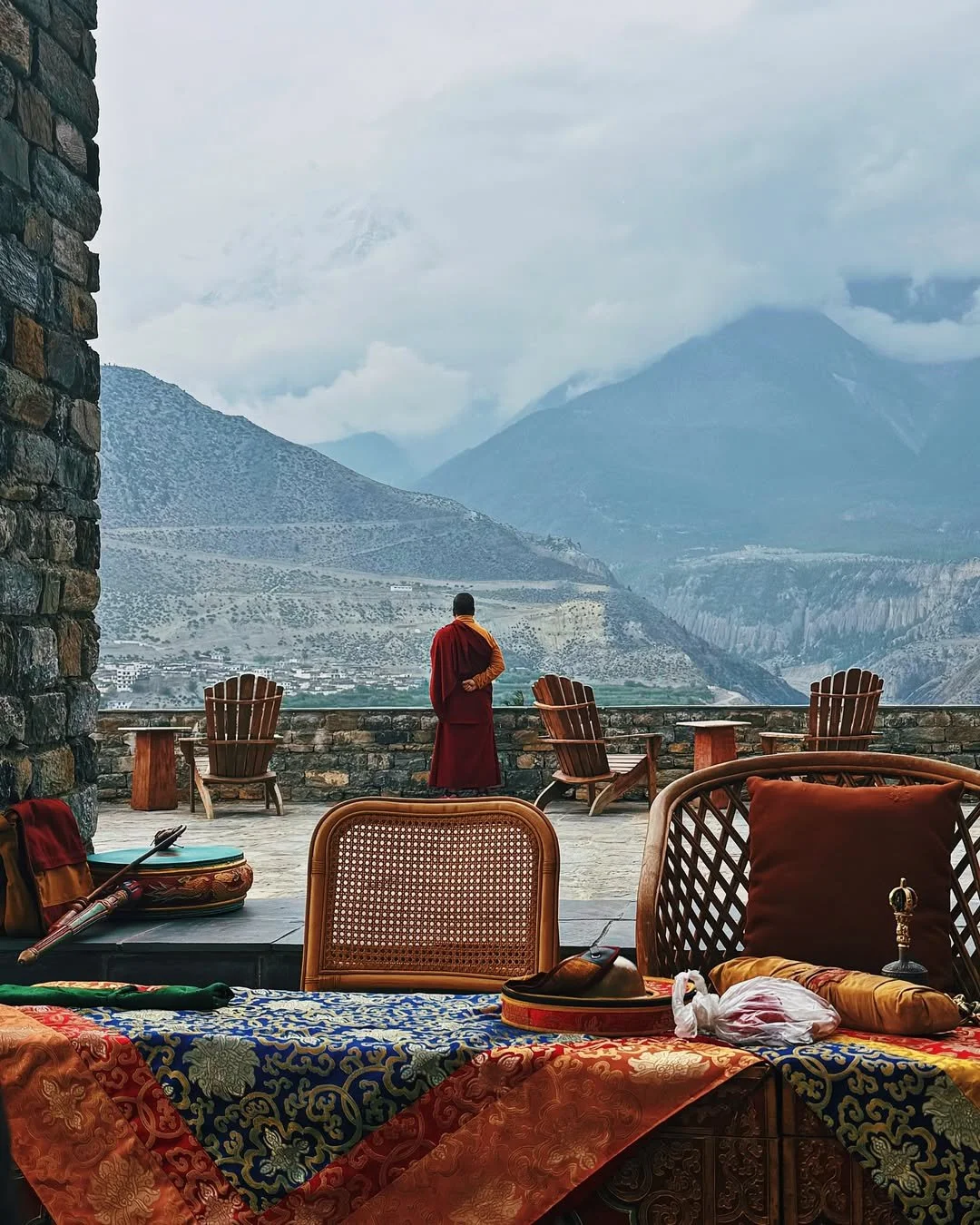
Endurance Over Acceleration
Reflecting on Sherpa Hospitality Group’s journey, Namgyal says, “our path can look daunting: capital-intensive, slow to mature, and constantly exposed to climate shocks and market swings.”
That reality, he says, demands a long-term horizon. “Ask yourself early: would I still pursue this if returns took two or three years to materialize?” If the answer is no, values are the first casualty under pressure.
He stresses building the right team before scaling. Alignment, trust, and shared conviction matter more than technical skill, especially in remote environments where teams must navigate weather shifts, operational complexity, and community dynamics with limited oversight.
Equally critical is anchoring the business in place. Understanding local culture and rhythms is both ethical and strategic. Deeply grounded experiences are harder to replicate and more resilient when markets tighten.
Finally, niche clarity is essential. Rather than chasing trends, Sherpa Hospitality Group has deliberately defined its lane: low-volume, high-value, community-anchored, regenerative luxury in some of Nepal’s most demanding landscapes. That focus, though slower in the short term, brings coherence to decisions and credibility to partnerships.
Modeling a Different Future
When asked whether he sees Sherpa Hospitality Group as a standard-setter for Nepal, Namgyal answers with restraint. He insists that his team is practitioners, not policymakers. Their role is simply to demonstrate that tourism here can be commercially viable and deeply respectful of place.
Yet practice shapes perception. Through the way it designs journeys, invests in local talent, structures partnerships, and positions Nepal internationally, Sherpa Hospitality Group has quietly shifted the narrative from “cheap adventure” to place-rooted, world-class hospitality.
There are limits, such as infrastructure, policy, and air access, that require national alignment. But private operators can still build responsibly, share knowledge openly, and prove that stewardship and profitability need not be at odds.
Namgyal’s leadership style is not loud. It is deliberate. He empowers beyond lineage, caps growth before it accelerates, measures depth over volume, and treats restraint as strength. In a sector drawn to fast expansion, his most consequential choice may be the one that few notice – to resist the kind of growth that burns bright and fast, and to build, instead, a company designed to endure at altitude.

Kongde Lodge, part of Mountain Lodges of Nepal
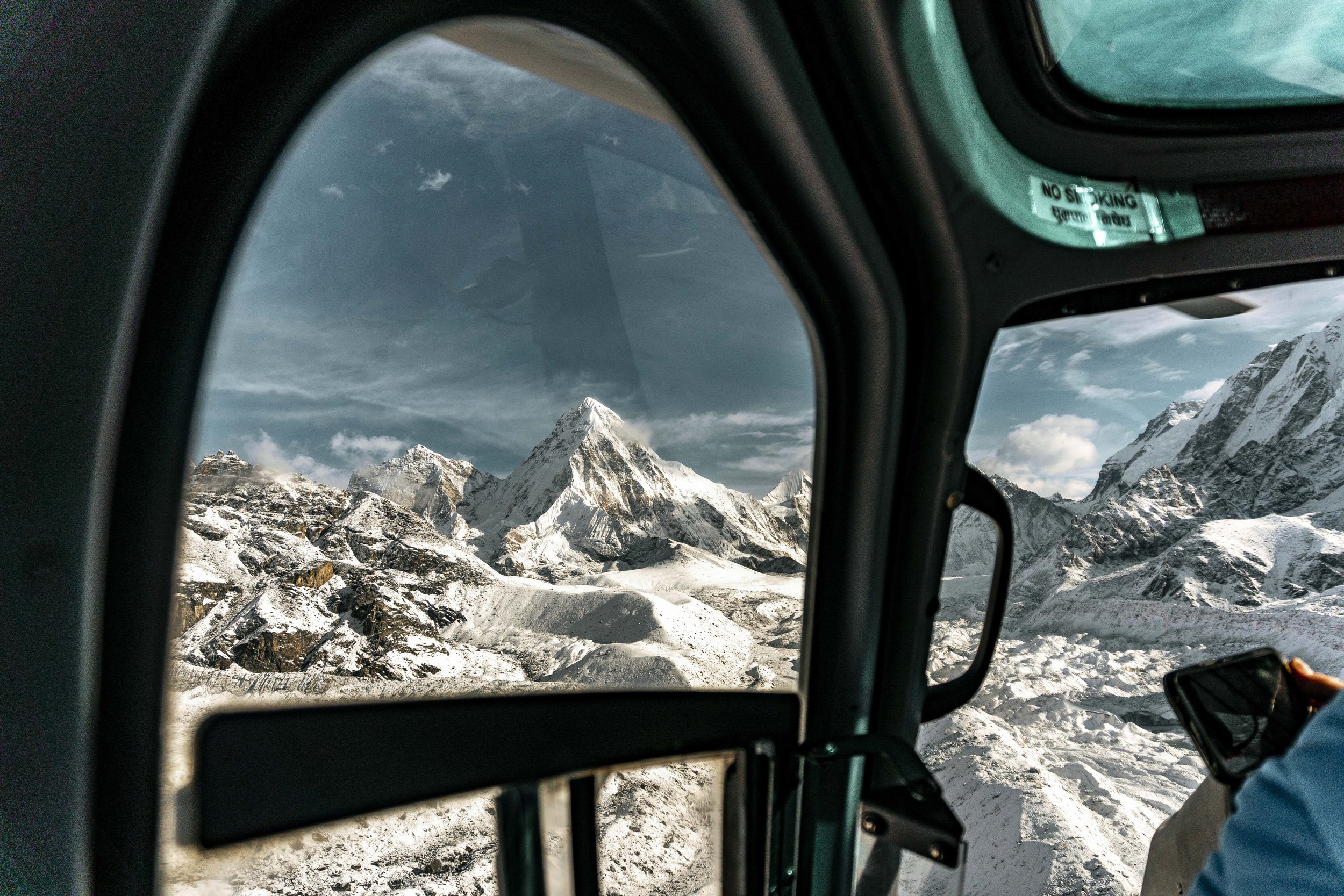
Everest View
All photos provided by Sherpa Hospitality Group
If you know someone who deserves recognition as Asia’s Sustainable Travel Changemaker, please click on the link below to nominate your candidate or even yourself. Or you can also email us directly. Please read our privacy policy.
SELECTED FOR YOU