From Baghdad Rooftops to Yunnan Villages:
How Bobby Robbins Is Building an Honorable Bridge Between Conflict and Connection
By: Rhea Vitto Tabora
From the rooftops of Baghdad to the cobblestone lanes of Lijiang, Bobby Robbins has carried one constant: a strategic mind trained to close enormous gaps between reality and possibility. A decorated U.S. Army officer who once led combat platoons and planned Effects-Based Operations in Iraq, he now channels that same discipline into building bridges—literal and cultural—through sustainable tourism in Yunnan Province, China.
As founder of Harmony Bridge Travel and the first nominee from mainland China for Asia Sustainable Travel Changemaker, Bobby is showing what it looks like when tourism becomes a practical methodology for turning the lessons of conflict into bridges of understanding and connection.
His story is not one of abandoning military service but of completing it. “I didn’t leave the military so much as the military completed what it needed to do in me,” he reflects.
Two deployments and two life-altering moments of humility reshaped his worldview.
On an exchange trip to Mexico City as a college student, he stood before layers of history and dignity he had never been taught existed. Years later, in Baghdad, an Iraqi interpreter—an agricultural university professor turned cab driver turned translator—quietly corrected his assumptions about both Iraq and his own country.
“That moment cracked something open,” Bobby says. “I realized how much of the world I had never seriously considered, and that the gap between what I assumed and what was actually true was enormous.”
Those realizations converged with military strategy. During his second deployment, he applied Effects-Based Operations (EBO): working backward from a desired end state, mapping the conditions required to reach it, and aligning every resource and actor with precision.
“I kept thinking that this doesn’t only work for military objectives,” he explains. “It works for anything where the gap between where you are and where you want to be is enormous—and where no single actor can close that gap alone. Including peace. Including development.”
A visit to Yunnan with his wife, Vanessa, in 2011 provided the arena. Stepping into 800-year-old Lijiang, ringed by ethnic minority villages and shadowed by Jade Dragon Snow Mountain, Bobby was stunned by a multi-millennial civilization he had barely known existed.
“I'm embarrassed to admit that before that moment, I probably couldn't have named more than three Chinese cities. I had no mental map for what I was looking at. Here was a multi-millennial civilization, layers of Silk Road and Tea Horse Trail history, dozens of distinct cultures living in proximity, and I had never even thought to wonder about it. What I saw next shaped everything. There was a thriving domestic tourism infrastructure. There was real, extraordinary cultural, historical, and natural beauty. And there was not a single other foreigner in sight.”
He saw an opportunity to build understanding in the arena where he had once managed conflict. Harmony Bridge Travel was born: the same mission, a different instrument.

Bobby and Vanessa on their first visit to Yunnan in 2011—the trip that planted the seed for Harmony Bridge.
The Moment That Made Yunnan Home
What anchored Bobby was not scenery alone, but people. His first winter, a friend took him north of Lugu Lake to a Nosu Yi ethnic minority group. Inside a wooden house built to be disassembled and moved, with a dirt floor and fire pit at the center, a husband and wife—who made their bed on the floor every night in that same room—offered him bowl after bowl of fire-blackened potato and liver.
“They kept reading my attempts at politeness as hunger,” he recalls, “and so they kept giving, out of the very little they had, until I had eaten far more than I intended.”
Raised in middle-class Midland, Texas—where he still felt poor compared to the oil money surrounding his family—Bobby had thought he understood hardship because he had enough glimpses of his mother’s life in Odessa, where water and electricity weren't always on.
That room recalibrated everything.
“These people had almost nothing by any material measure, and they were filling my bowl to overflowing because they thought I was still hungry. There was a dignity in that room, and a welcome, that I had not anticipated and could not explain away.”
He stopped being a visitor that day. “Not when I fell in love with the landscape, but when I realized I had been welcomed into something I didn't want to leave,” he explains.
His family’s commitment made staying possible. Vanessa ran the homeschool program, raised their six children, and “kept the ship running” during his long absences in villages and meetings.
The children thrived in a community that genuinely cared for them, offering the most honest rebuttal to fear-based narratives about China.
“Our family’s life here is the most honest answer I can give to anyone who wonders whether this place is worth the risk.”
“Our family’s life here is the most honest answer I can give to anyone who wonders whether this place is worth the risk.”
- Bobby Robbins
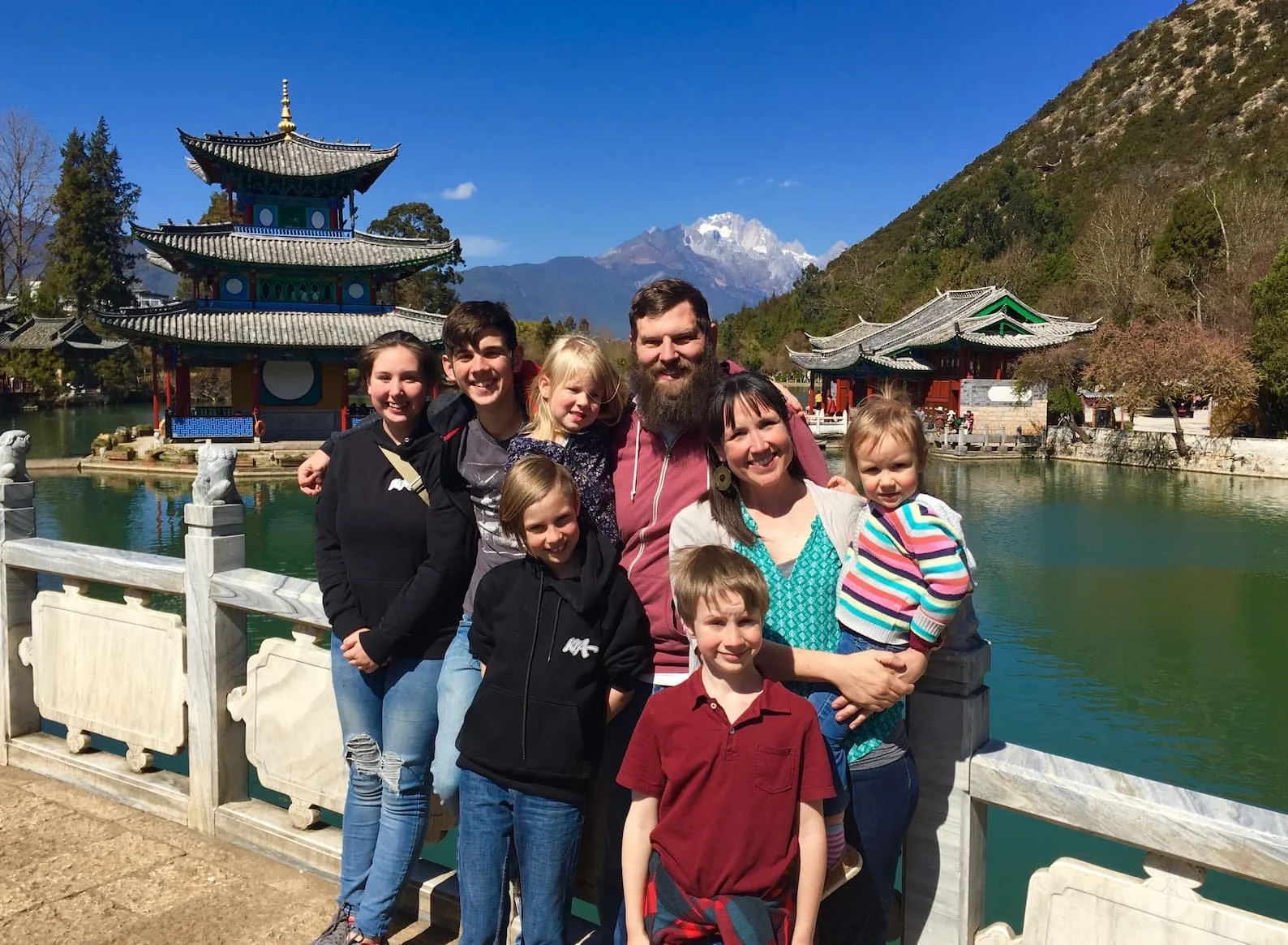
The Robbins family of eight—Bobby, Vanessa, and their six children—at home in Lijiang.
Beyond the Tourist Path: A Student’s Quiet Lesson
Harmony Bridge Travel deliberately crafts experiences that bypass packaged itineraries.
One moment captures the ethos. In an A’Zhe ethnic minority village near a breathtaking cave marred by years of trash, Bobby organized a student cleanup. The group worked hard; the cave was transformed. During the debrief, one student quietly said, “I think we embarrassed them.”
Bobby froze. He had assumed shared offense at the trash and that outsiders arriving with solutions would read as an act of solidarity. The student saw what he had missed: the group had decided the problem, the solution, and the intervention without the community’s voice.
“That student had connected with Yunnan the way I hope every traveler eventually does. Not by consuming its beauty, but by being changed in how she saw her own presence in it,” he says. “She had looked at what we were doing from the inside out instead of the outside in. That is the whole thing. That is what meaningful travel is supposed to produce. Not a highlight reel. A changed perspective.”
The incident became foundational. It led directly to Bobby’s master’s studies in international sustainable tourism at CATIE (Centro Agronómico Tropical de Investigación y Enseñanza, or Tropical Agricultural Research and Higher Education Center) in Costa Rica, and the formal principle of stakeholder engagement.
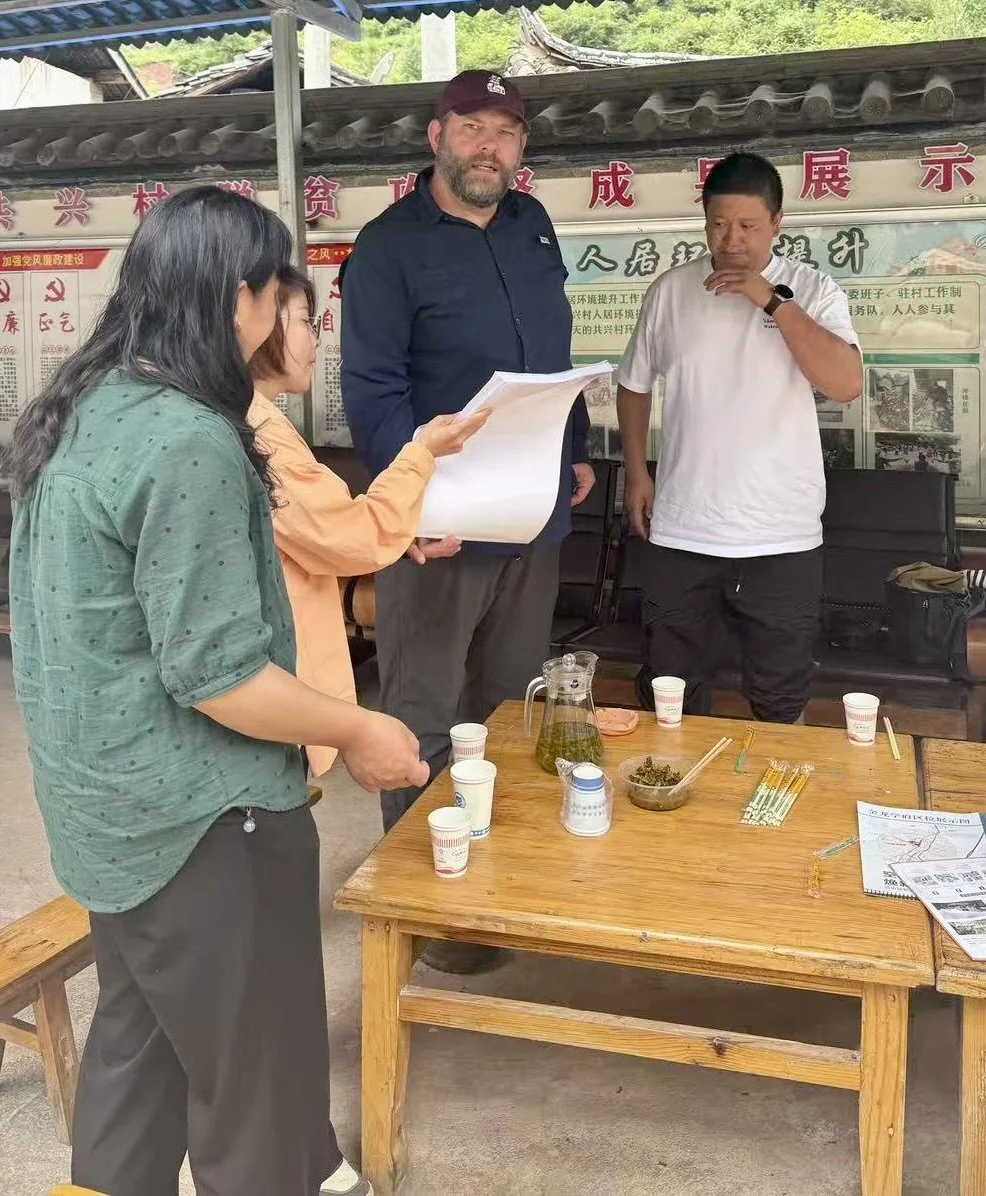
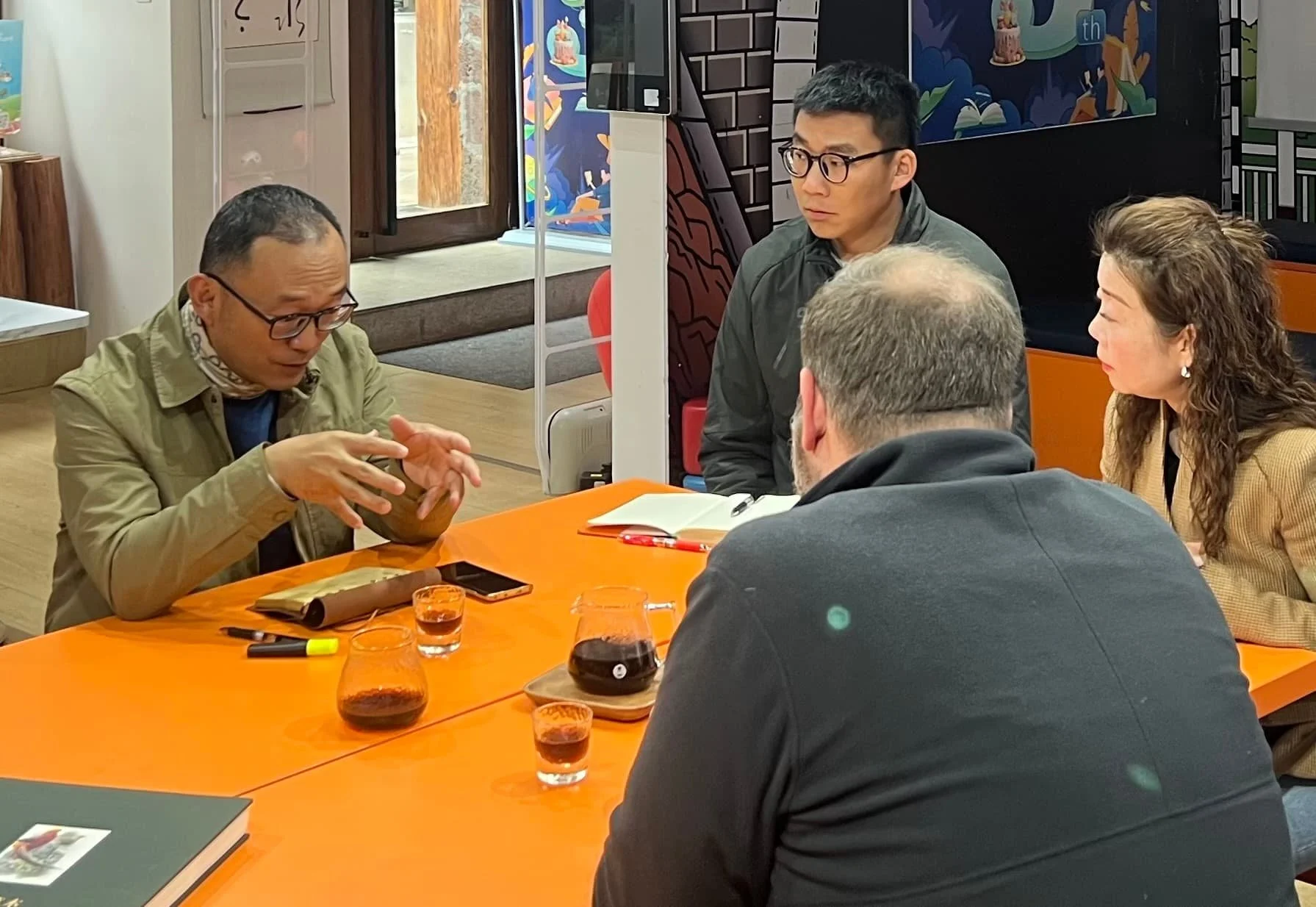
Left: Bobby discussing a five-year community development plan with village leaders; Right: Bobby in a working meeting with the Yunnan Provincial Tourism Planning Institute.
Partnerships Built on Listening
Trust with local communities took years and required insiders who could vouch for him. Two partnerships illustrate the approach.
In Jiazi Village in Lijiang, out-migration had left homes empty. Young people are leaving for factory towns and cities. Rather than accept that as inevitable, the community partnered with a nonprofit to convert abandoned houses into homestays.
Bobby helped connect them to Tourism Cares Meaningful Travel Map — a placement that would make it the first such community in mainland China—while they build the organizational infrastructure to handle what that visibility will eventually bring.
In Bai Hua Ling, a Lisu ethnic minority village in Nujiang Prefecture, an a cappella vocal group preserves rare multi-part harmony, language, songs, and dances. Young people are leaving for cities like in Jiazi, but the village sees the connection clearly.
“If tourism can create a viable livelihood around their cultural heritage, younger people have a reason to stay, to learn the craft, to become the next generation of carriers instead of the generation that watched it end. That is not a tourism product. That is a community making a bet on its own survival,” Bobby notes.
Both efforts follow the discipline learned in the A’Zhe village: ask first, listen second, never assume.
Community leaders write their own applications to the Meaningful Travel Map in their own words, on their own terms. “My job is to open doors, not to walk through them first.”
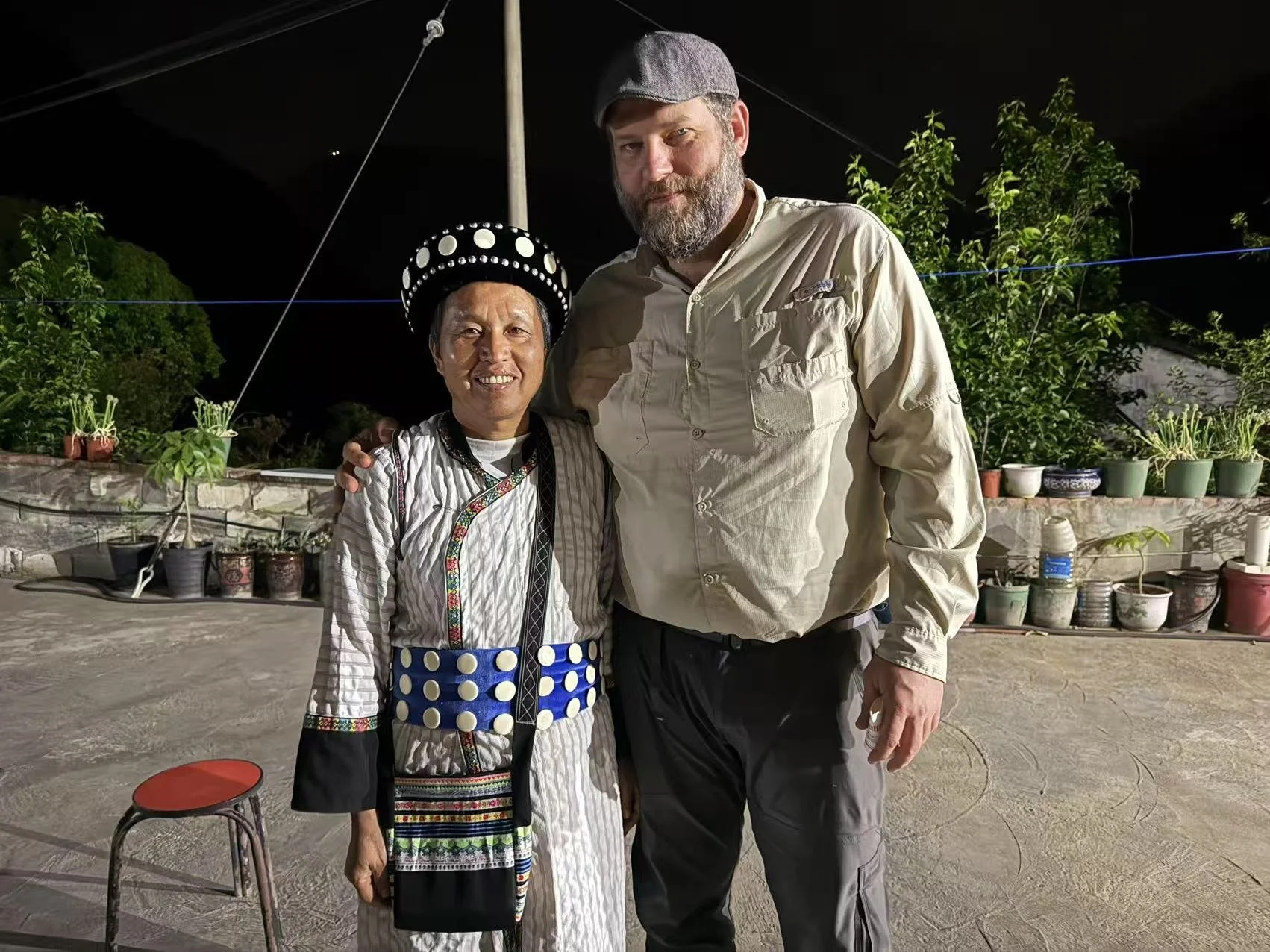
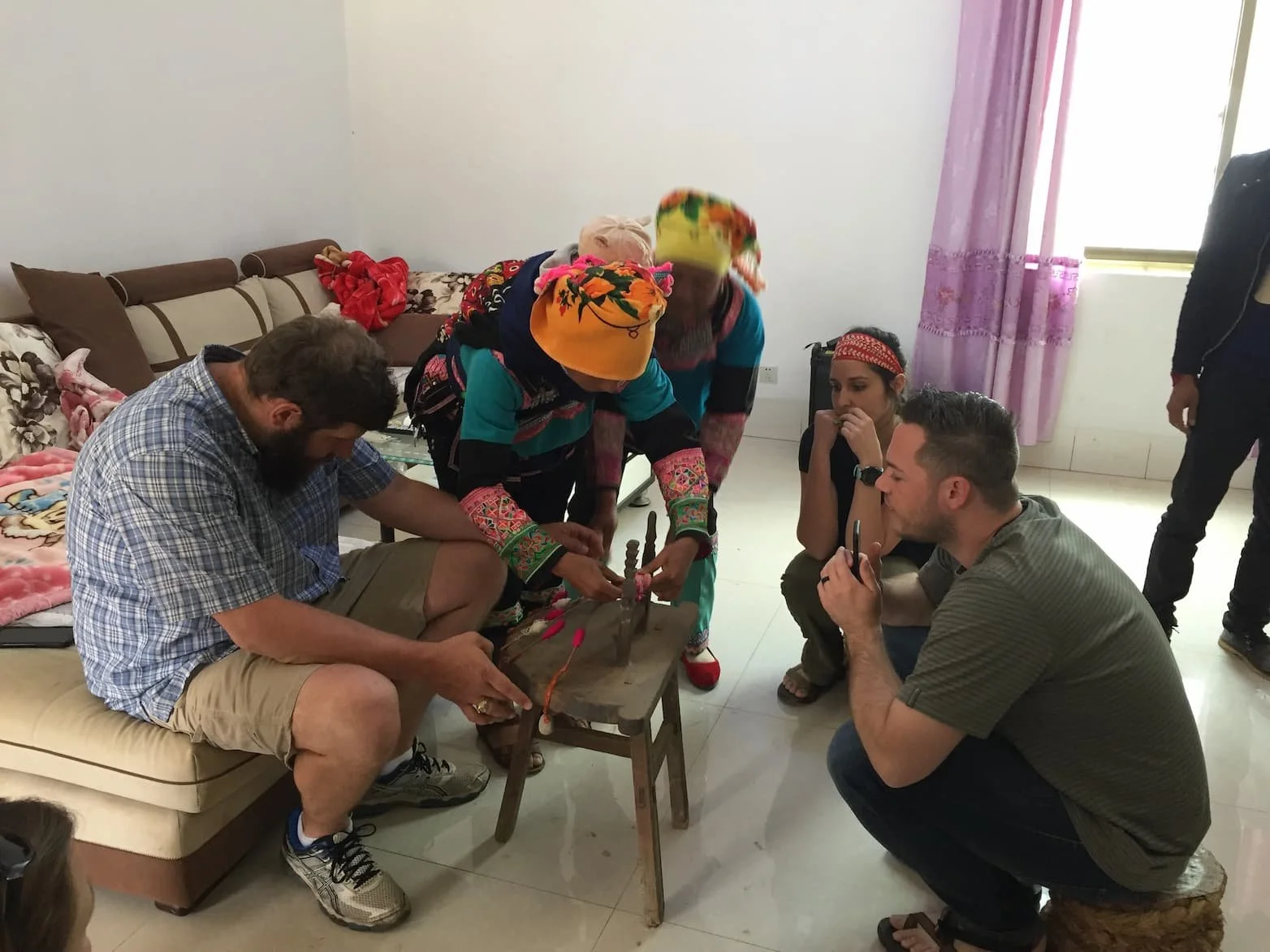
Left: Bobby meeting with a Lisu community leader in Nujiang Prefecture; Right: Bobby learning traditional A’Zhe braiding techniques from village artisans
The Pull of Iconic Sites and the Risk of Commodification
Bobby is candid about the tension. Some of Yunnan’s ancient towns have been transformed into stage-set tourism districts: tea and coffee shops, restaurants, photo booths where you can put on traditional ethnic dress and take a picture, and trinket vendors owned by outsiders, while original inhabitants have left.
He refuses to pretend Harmony Bridge Travel exists outside this reality. Travelers from North America often make their one trip to Asia; they want to see the Great Wall, the Forbidden City, or the Terracotta Warriors. He honors those requests. But he works upstream—sitting with community leaders before designing anything, aligning with internationally recognized frameworks, and building itineraries that route around over-touristed corridors toward places suffering from invisibility.
“My job, as I understand it, is to build itineraries compelling enough to expand that imagination rather than just confirm it, to take them somewhere they didn't know to ask for, where the people they meet are actually from there, where the food was grown nearby, where the cultural expression they witness is not a performance designed for outsiders but something the community does because it is who they are,” he explains.

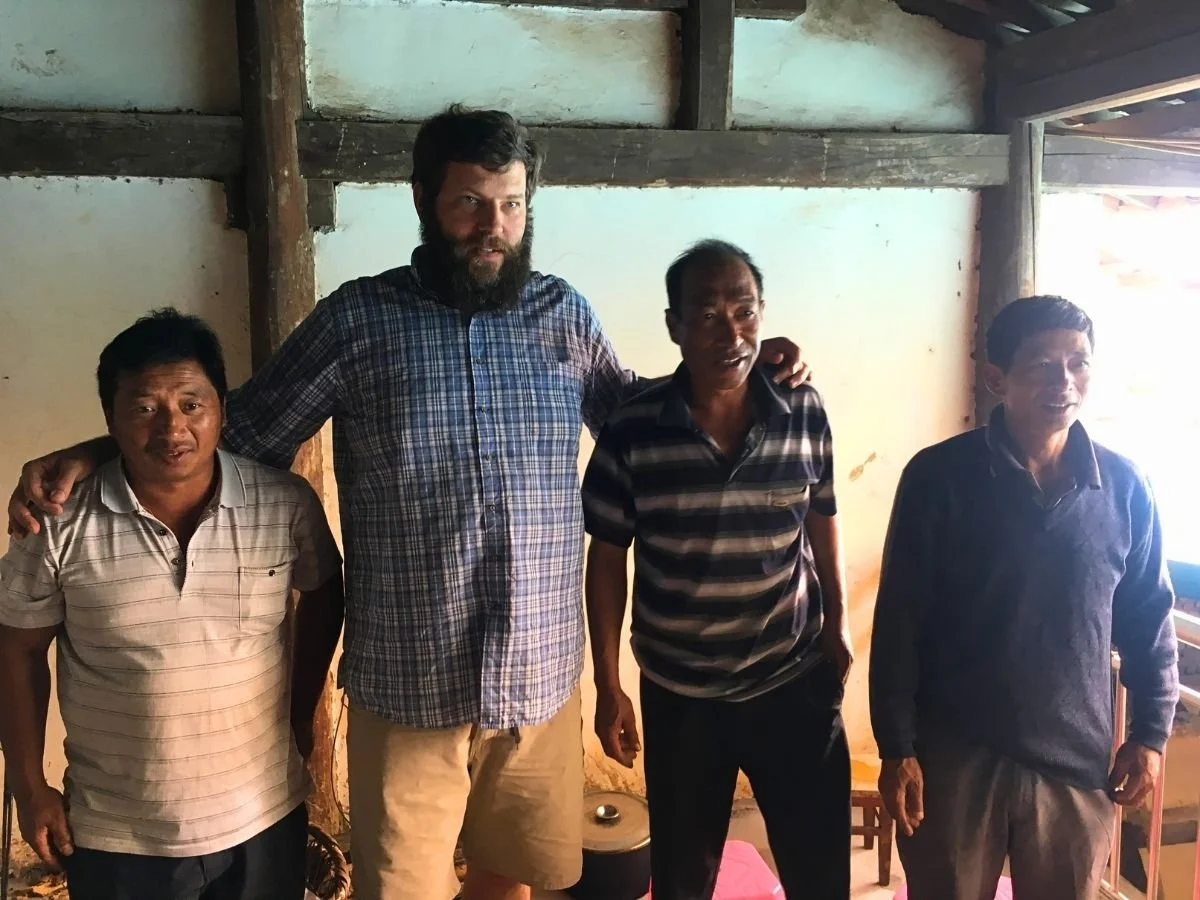
Left: Bobby discussing sustainable tourism strategy with a leader from the Yunnan Provincial Tourism Bureau; Right: Bobby with A’Zhe village leaders during a community planning session
When Things Go Wrong: The Real Meaning of Seamless
“Seamless experience” in remote Yunnan, says Bobby, does not mean nothing goes wrong—it means that “when something goes wrong, nobody panics, and the memory doesn't get wasted.”
On a mountain road toward a tea plantation and mushroom hunt, a landslide forced a long backtrack. Inside the van, travelers took turns playing their favorite songs on an MP3 player. They sang, laughed, and transformed frustration into connection. Later, rain turned the final approach into a mud pit; the van was hauled out by tractor amid laughter and mud-covered cheers.
“What I felt inside that van during all of it was genuine gratitude. The people who choose to travel with Harmony Bridge are not people who expect perfection. They know they are going somewhere remote and less visited, and they have decided that is part of the point,” Bobby says. “When you attract that kind of traveler, your job on a bad day is not to manufacture a recovery. It's to hold the space, keep your attitude right, and let the experience be what it actually is.”
His family’s years of testing every route with six children sharpened this instinct.
“When you are navigating a place with kids who need to eat and sleep and stay curious and not lose their minds or their lunch on a long mountain road, you develop a very accurate sense of what a human being can actually absorb in a day. That is not something you learn from a guidebook.”
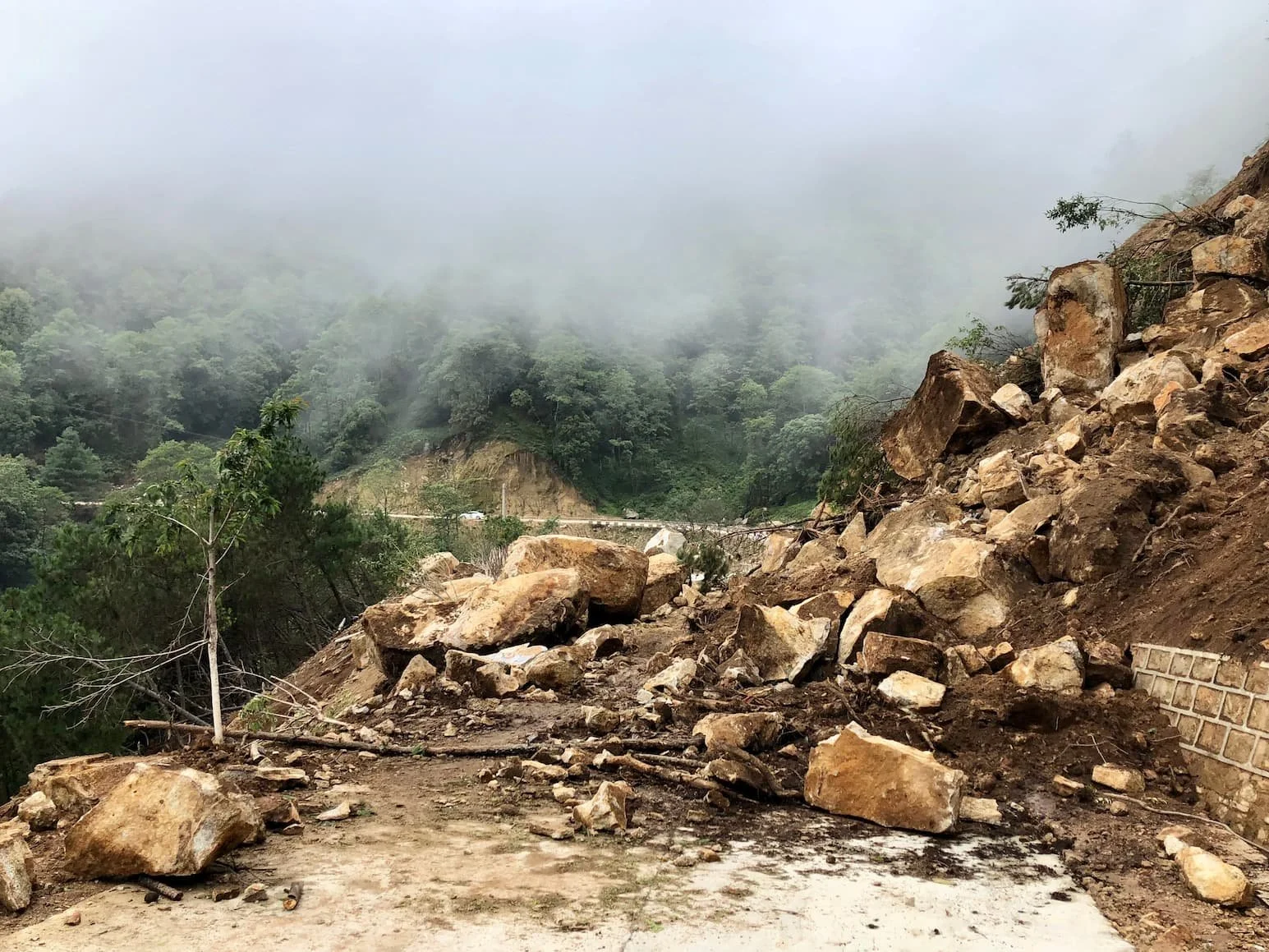
The landslide that blocked the mountain road and turned a planned itinerary into an unforgettable memory.
Challenging Misconceptions Through Real Human Connection
Most visitors arrive carrying geopolitical noise rather than specific misconceptions about Yunnan.
An older American guest, shaped by Cold War fears, traveled reluctantly at his wife’s urging. On the first day in Tiananmen Square, Chinese tourists asked for photos with him. When he and Bobby slipped into a large tour group’s frame, the group pulled them to the center with multiplying smiles. “I watched his entire countenance shift,” Bobby recalls. “What had been an adventure with risk became an adventure with opportunity, and it stayed that way for the rest of the trip.”
That shift is the entire reason Harmony Bridge Travel exists.
“Our name is not metaphorical. There is a profound absence right now of mutual respect and appreciation between East and West, and so much of that absence is built on fear of the unknown, on noise that has never been tested against an actual human face. My theory, the one I have staked my career and my family's life on, is that it is very difficult to flippantly accept conflict or manufactured tension about a people when you have a memory etched inside you of a specific person's eyes and smile. It stops being a statistic. It stops being a category. It becomes a person.”
Effects-Based Development: The Intellectual Core
Bobby’s 2023 master’s thesis at CATIE was the first known academic application of Effects-Based Operations to sustainable tourism development and the UN’s 2030 Agenda for Sustainable Development. He calls it Effects-Based Development (EBD). The itinerary is the last thing he designs. First come the upstream conditions—institutional policies, economic incentives, community capacity—that make genuine benefit possible.
He spends as much time with provincial and prefecture institutions as with travelers because “the world is perfectly designed to get the exact results it is currently getting. If you want different results, you have to change the design.”
This approach slows marketing and sales, but he accepts the discomfort.
“I am confident the foundation and the team being built around it will pay off. The alternative is to skip the hard work and produce travel experiences that look good but don't hold, and I have seen enough of that to know it is not what I want to build.”
Hidden Gems Are Processes, Not Places
Ask Bobby for hidden gems and he names Balagezong in Diqing Tibetan Autonomous Prefecture, hot springs above the Nujiang River, Pu’er’s coffee and tea plantations, and the Hani Rice Terraces in Honghe.
Yet the real hidden gem, he insists, is the process unfolding in communities across Yunnan: balancing modernization with cultural continuity, retaining youth while honoring ancestors, opening doors without surrendering identity.
“It's the process of a community figuring out how to hold two things at once, how to benefit from everything modernization offers without surrendering the things that deserve to be carried forward, how to let the young people have opportunity without losing them entirely, how to open a door to the outside world without letting the outside world walk in and redecorate. That process is happening in communities all across Yunnan, mostly without any outside attention, mostly without the resources or visibility that would help them succeed,” he shares.
“That's the real problem. These places don't need to be protected from visitors. They need visitors. They need the revenue, the recognition, and the voice that come when people show up and pay attention. The answer to commodification is not obscurity. It's the right kind of visibility, on the community's own terms.”
A Life Planted Here: Legacy and Next Chapter
Bobby’s ambition is larger than travel. He wants to break “people’s comfort in assuming”—the settled certainty that they already understand the world. He scales his life not to what is guaranteed, but to what matters.
“Tourism is the vehicle. Sustainability is the ethos,” he says. “And the willingness to plant my family's life inside that bet, for as long as it takes, is the most honest statement I can make about whether I actually believe it.”
Bobby’s hope is for that curiosity to be honorable. “Sustainable tourism, done right, is an honorable handshake. It's not a handout. It's not an outsider arriving with the right answers and the resources to implement them. It's a business relationship where, if the conditions are built correctly, everyone has a chance to benefit.”
The traveler receives a fuller, truer picture of the world. The community receives dignity, revenue, and recognition that what they have built, preserved, and carried forward is worth something. The traditions receive another generation of carriers. The environment receives stewardship instead of consumption. The ancestors who handed all of this down receive the honor of having their work continued rather than discarded.
He is still learning what it means to show up in a way that's honorable rather than just well-intentioned. “But I believe that sustainable tourism, at its best, is one of the few human activities that can produce that kind of mutual dignity at scale.”
“Every person who comes home with a face in their memory instead of a stranger in a headline,” Bobby adds, “is one more person who finds it harder to accept that we are irreconcilable enemies.”
The family’s sacrifices are real. Their six children gave up football, dance recitals, Scout troops, choir, and theater productions back in Texas—where they watched their friends living the childhood they might have had—for a life in Yunnan.
“We made those sacrifices together because we believed in something larger than the comfortable version of our lives.”
In the fall, he will begin a Doctorate in Global Hospitality Leadership at the University of Houston’s Conrad Hilton College, focusing on farm-to-market-to-table supply chains and how they link village culture and agricultural identity to the food and cultural experience within tourism.
“It is practical, ground-level work that I believe has significant implications for how community benefit and cultural preservation actually move from the village to the traveler's table.”
“What I have learned in over a decade here,” Bobby concludes, “is that sustainable tourism, done with integrity, is one of the few human activities capable of building the kind of mutual understanding that makes conflict harder to choose. That is what keeps my family here. That is what keeps me going when the gap between vision and present reality is uncomfortable to sit with.”

The Robbins family celebrating Chinese New Year with close Pumi friends in Yunnan
In Yunnan, Bobby Robbins has planted not just a business but a full life—wife, six children, and a decade-plus of daily commitment. The framework, the partnerships, the communities: all of it carries the weight of that choice.
For hospitality and tourism professionals looking for models that go beyond checklists and surface-level sustainability, his work offers something rare: a rigorous, field-tested blueprint.
Start with effects, not outputs. Center the community on their terms. Never underestimate what one human face, one shared bowl of food, or one mud-covered laugh can do to rewrite old assumptions.
The bridge Bobby is building is already carrying real travelers and real communities. The question he keeps living is whether the rest of us will help strengthen it.
All photos provided by Harmony Bridge Travel
If you know someone who deserves recognition as an Asia Sustainable Travel Changemaker, please click on the link below
to nominate your candidate or even yourself. Or you can also email us directly. Please read our privacy policy.
SELECTED FOR YOU