The Sustainability Dividend: Travel Industry Makes the Case at GSTC 2026 in Phuket

Of the three pillars of sustainability, profitability is the one that still attracts the most skepticism. It should not.
At the GSTC 2026 Global Sustainable Tourism Conference in Phuket — the annual gathering where the Global Sustainable Tourism Council convenes industry leaders to advance measurable progress on responsible travel — two panel discussions, “Sustainability is Profitable, Debunking the Myth of Sustainability Premium” and “The Digital Bridge: How Platforms Drive Sustainable Choice at Scale” – put that skepticism to rest.
Leaders from across the hospitality and travel sector presented hard data, candid operational lessons, and documented financial returns that collectively point to one clear conclusion: the cost of inaction now exceeds the cost of change.
Sustainability is Profitable, Debunking the Myth of Sustainability Premium
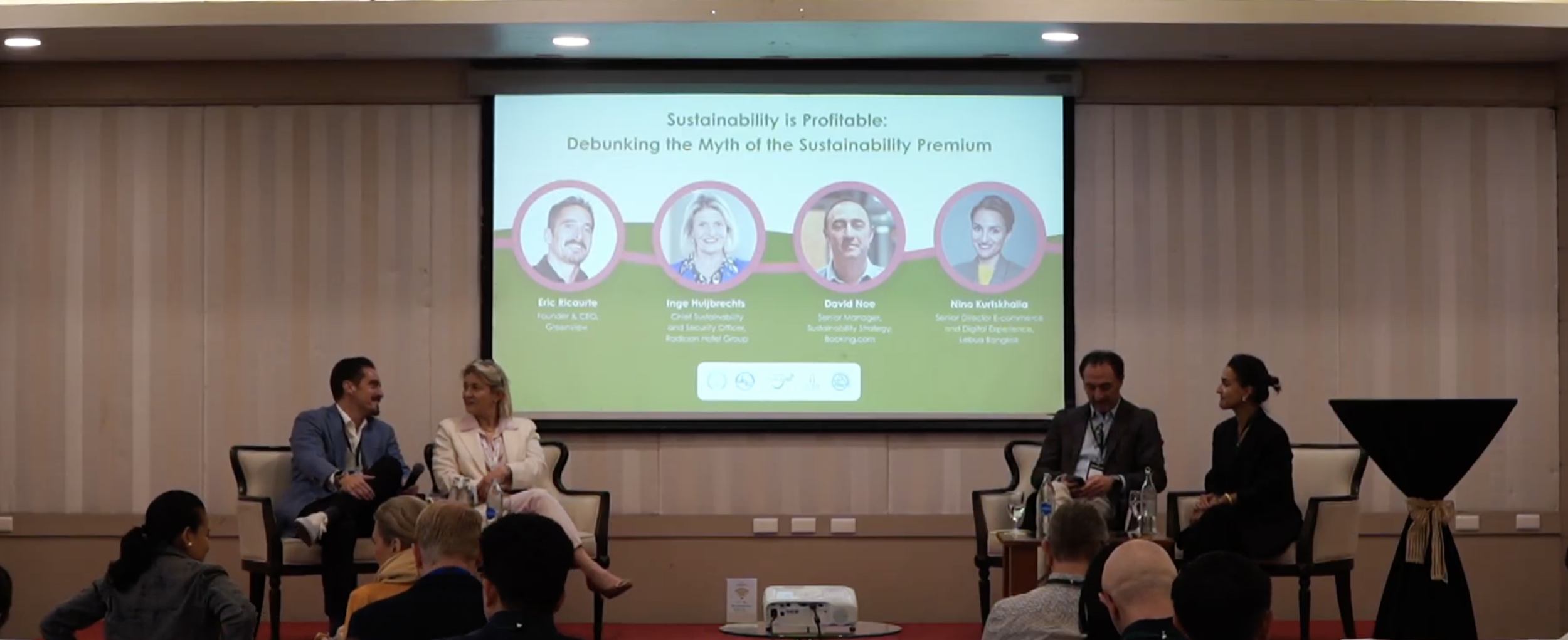
From left: Eric Ricaurte - Founder & CEO, Greenview; Inge Huijbrechts - Chief Sustainability and Security Officer, Radisson Hotel Group, GSTC Board Member; David Noe - Senior Manager, Sustainability Strategy, Booking.com; Nino Kurtskhalia - Senior Director E-commerce and Digital Experience, lebua Bangkok
Eric Ricaurte, CEO of Greenview and the moderator of the named panel discussion, set that tone from the outset. Drawing on data from 291 hotels in Phuket, collected with the Phuket Hotels Association, he revealed a sharp disparity in energy performance. Hotels in the top-performing group consumed roughly half as much energy as those in the bottom group.
For many hotels and resorts, the real cost isn't sustainability investment, it's tolerating inefficiency. Benchmarking frameworks, Ricaurte argued, are valuable because they show owners exactly where energy and money are being wasted.
Radisson: Sustainability Isn't the Cost, Inaction Is
Inge Huijbrechts, Chief Sustainability and Security Officer at Radisson Hotel Group, brought an investor's lens to the conversation. She cited the "70% rule" – approximately 70% of guests, job seekers, and institutional investors prefer companies with strong sustainability practices. The challenge now is converting that preference into measurable action.
Radisson's approach is a structured, independently audited progression. It begins with Hotel Sustainability Basics, a framework of 12 core criteria, advances toward GSTC certification, and culminates in verified net zero status. The group's net zero program is being piloted in existing hotels rather than new builds, reflecting where the real decarbonization challenge lies. Radisson started with Scope 1 and 2 emissions and is now pushing into Scope 3, having helped develop a verification framework to support that work.
Huijbrechts challenged the notion of a "green premium," arguing the more immediate threat is a "brown discount" — inefficient assets that fail to decarbonize face rising energy costs and diminishing appeal to institutional capital. In Europe, 79% of institutional investors and occupiers say they would pay more for a certified green building. Radisson's solar projects in Bengaluru and Fiji have already paid for themselves within a few years.
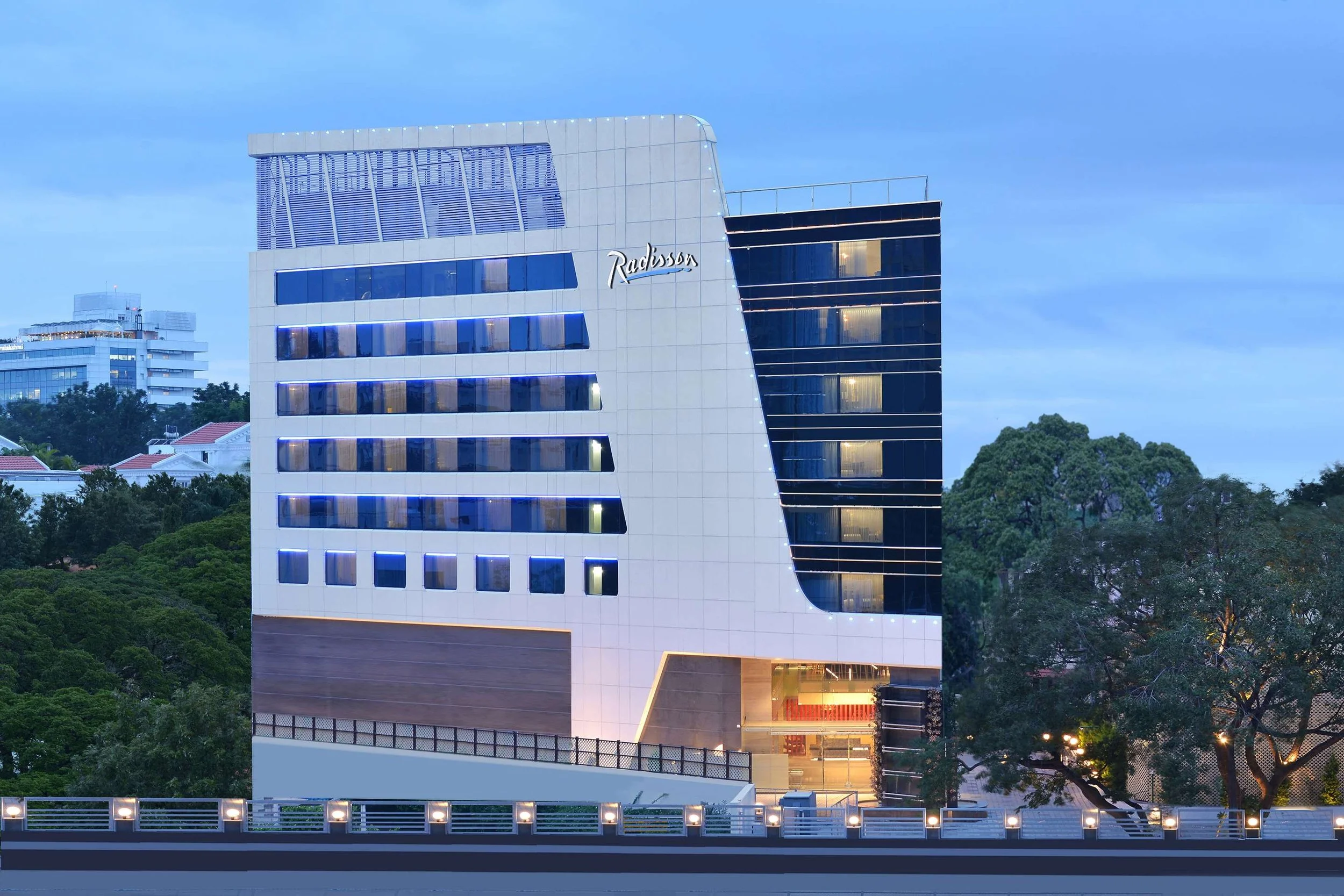

From left: Radisson Bengaluru City Center, and Radisson Blu Fiji. Photos by Radisson Hotel Group.
Booking.com: Making Credentials Visible
If Radisson showed how sustainability protects asset value, David Noe of Booking.com showed how it drives demand. His argument was that the appetite for more sustainable travel already exists, but too often, the accommodation providers fall short on making their credentials visible.
Booking.com’s diagnosis of accommodation providers highlighted three major barriers to obtaining certification:They do not know where to begin.They assume travelers are not interested.They are unsure whether the investment will pay off.To address these, the platform launched its Partner Sustainability Experience in October 2024, offering certification guidance, local support, funding connections, and discounted certification costs in more than 45 languages. According to Noe, nearly 100,000 properties have engaged with the program, and 62% have indicated an intention to pursue certification.
In 2025, travelers booked more than 100 million room nights in certified properties on Booking.com. Yet certified properties still represent less than 0.5% of total listings. When one European corporate travel partner began displaying certification data in November 2024, its share of certified bookings rose from 15% to 27%. Booking.com's research further highlights the Asia-Pacific opportunity. While 68% of travelers globally want to travel more sustainably, in Asia-Pacific, that figure rises to 75%. The stats, altogether, underscore how much opportunity remains.
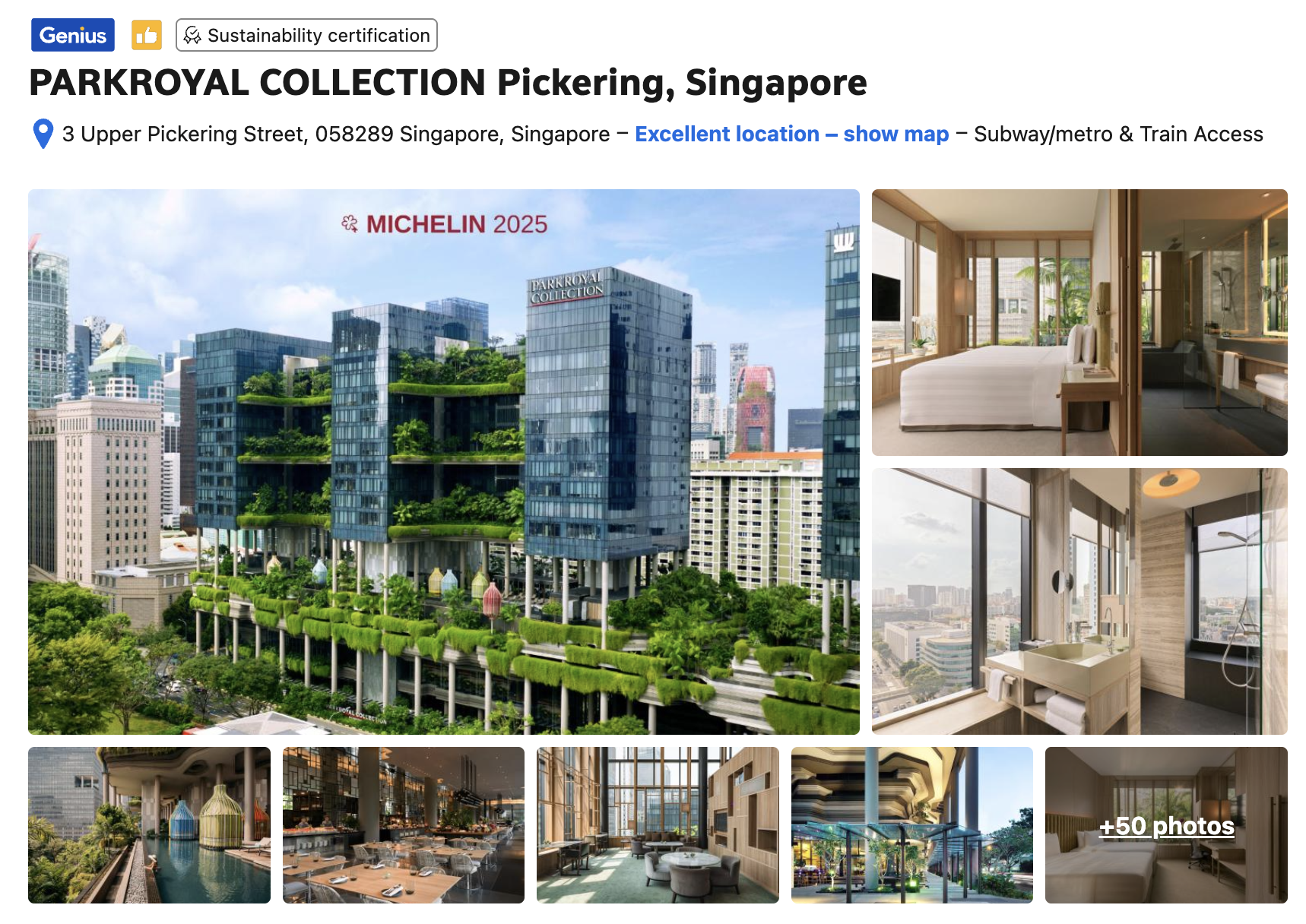
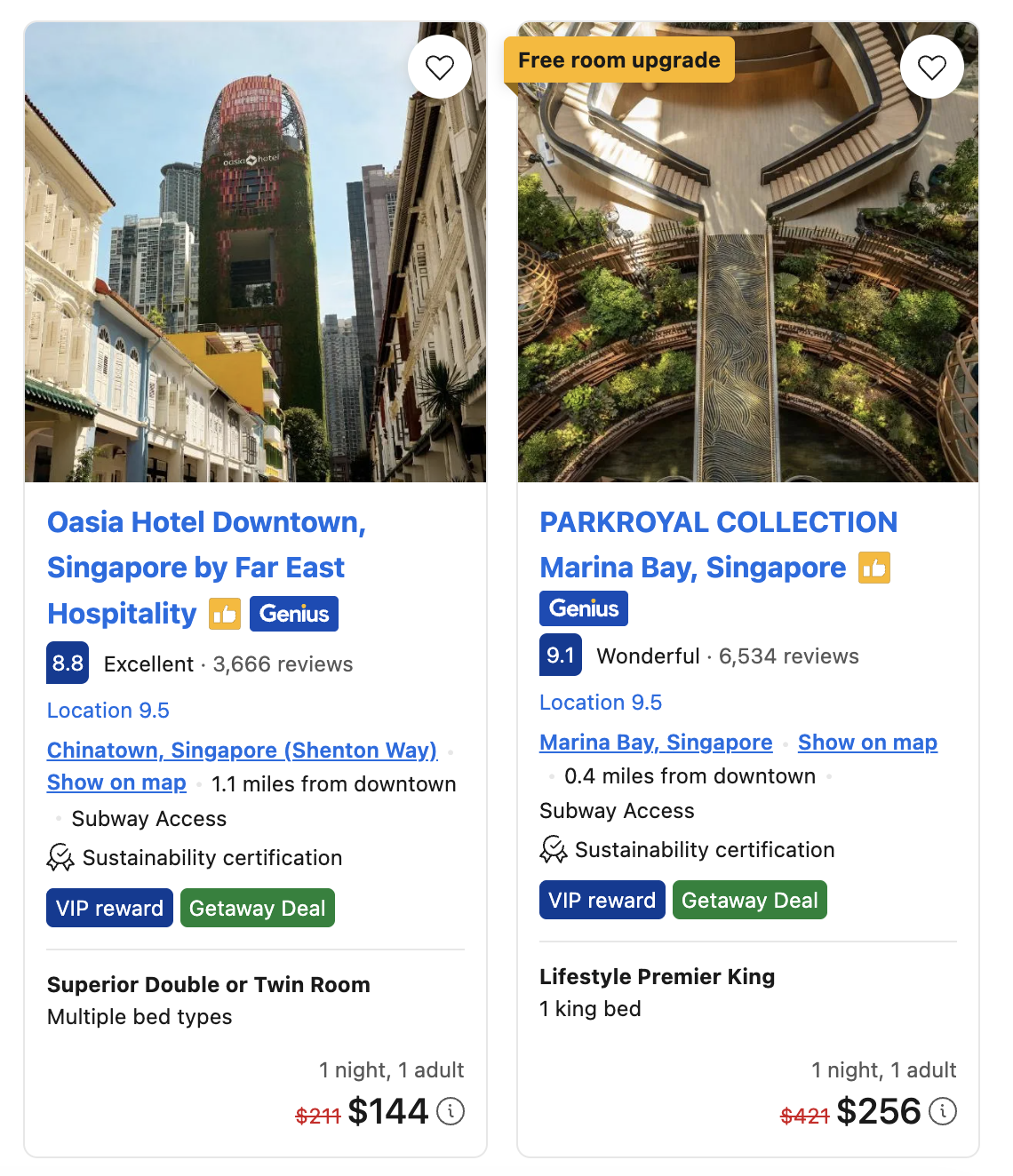
Booking.com displays the “Sustainability Certification” filter and badge on its platform.
lebua Bangkok: Making What's Already Good More Visible
lebua Bangkok's sustainability journey offers a lesson that many hotels overlook: the work is often already being done. When Booking.com advised the hotel that certification was required to display its sustainability initiatives on the platform, the mandate landed on the commercial team's desk.
Nino Kurtskhalia, Senior Director of E-Commerce and Digital Experience, recognized the stakes immediately. With roughly 80% of room revenue coming through online channels, certification was both an ethical consideration and a commercial priority.
During the GSTC pre-assessment, she and her team discovered that half of lebua's operations already met the criteria, a proof that certification makes existing good practice visible and credible, without compromising standards.Kurtskhalia also made a point of explaining the rationale behind every change before placing new expectations on staff.
When the kitchen team doubted whether waste was genuinely being recycled, she contacted the contractor directly and demanded photographic evidence. That response transformed sustainability from an abstract policy into something employees could see, understand, and believe in.
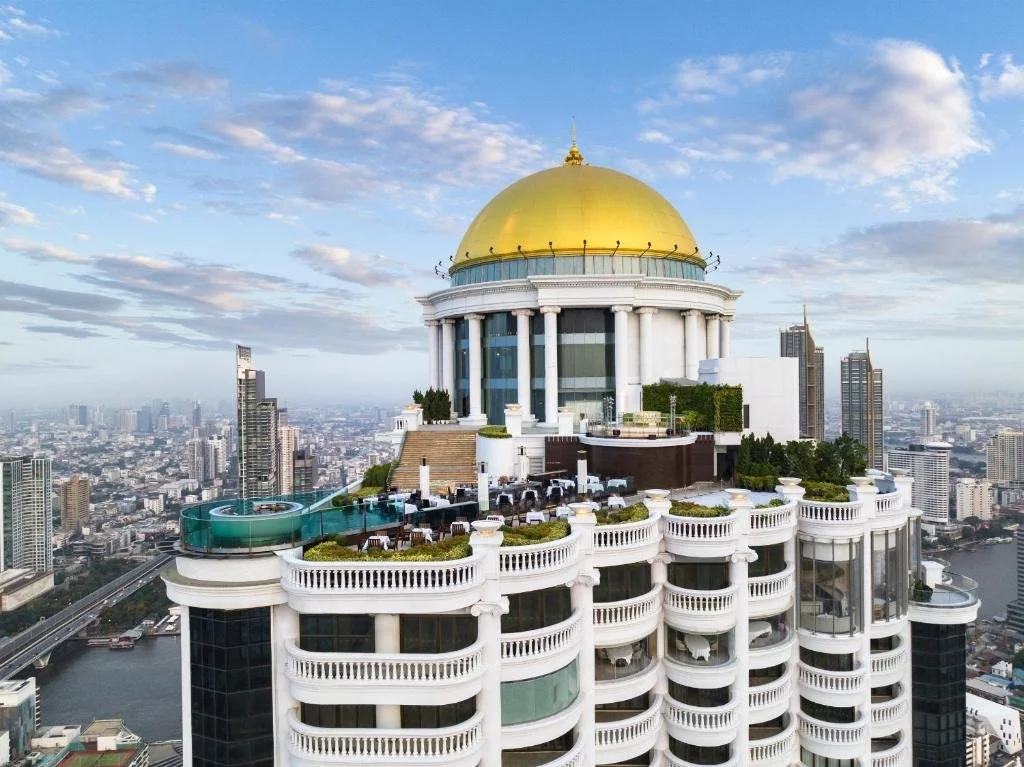

Photos by lebua Hotels and Resorts
Taken together, the stories from Greenview, Radisson, Booking.com, and lebua Bangkok all pointed in the same direction. Sustainability is about identifying waste, protecting asset value, capturing consumer demand, and strengthening operational performance.
»»» Watch this panel discussion on GSTC’s YouTube channel.
The Digital Bridge: How Platforms Drive Sustainable Choice at Scale

From left: Jason Lin - Co-founder & CEO, Hotelzero; Terence Eng - Global Product Director, Trip.Biz; Elena Pérez - Chief People & ESG Officer, HBX Group; Vincent Ng - General Counsel & Head of Public Affairs, Klook; Thomas Loughlin - Program Manager - Sustainability, Booking.com; Thipaporn Dau (Beau) - Country Manager, Thailand, Traveloka
If the previous panel made the business case for hotels to invest in sustainability, “The Digital Bridge: How Platforms Drive Sustainable Choice at Scale” showed how travel platforms are redesigning their platforms by making it easier for travel and travel managers to take action.
Moderated by Jason Lynn, Co-Founder and CEO of Hotel Zero, the panel brought together speakers from Trip.Biz, HBX Group, Booking.com, Klook, and Traveloka to lay out how digital infrastructure is changing what travelers can find, compare, and choose.
Bridging the Demand Gap: Traveloka
A recurring theme echoed what David Noe of Booking.com had raised in the previous session: in Southeast Asia, demand for sustainable travel is running well ahead of available supply.
Traveloka’s Thailand Country Manager, Thipaporn “Beau” Dau, said more than 80% of travelers in the region are looking for more sustainable options, yet many still struggle to find them, and many see them as too expensive. Traveloka’s response has been to work on both sides of the market: training suppliers through GSTC-aligned sessions in key destinations while also running consumer campaigns that use local certification labels such as Green Hotel and SHA to make trusted options easier to spot.
Trip.Biz: From Carbon Counting to Carbon Accountability
In the corporate travel space, Terence Eng, Global Product Director of Trip.Biz, described a market that is moving beyond carbon reporting toward carbon management. Companies can now set carbon budgets alongside financial ones, with emissions tracked down to the individual traveler.
In one case, a global pharmaceutical client moved from simply measuring emissions to actively managing them within six months. The platform suggests rail over air for domestic routes, labels eco hotel options, and uses AI to identify low-carbon alternatives. With sustainability requirements now embedded in nearly every corporate RFP, Eng noted there is a robust commercial opportunity.
Klook: Setting Standards from Within
Vincent Ng, General Counsel and Head of Public Affairs at Klook, brought a legal and policy lens to the panel. Klook's strategy centers on animal welfare and socioeconomic impact. In a signature move, Klook requires every elephant sanctuary listing to be certified by the Asian Captive Elephant Standards.
On over-tourism, Klook's Hiroshima partnership delivered 120% booking growth and triple-digit year-on-year visitation growth following a bundled experience pass and a creator influencer summit in August 2025. Ng described Hiroshima as a replicable playbook for redirecting visitor flow to under-leveraged destinations.
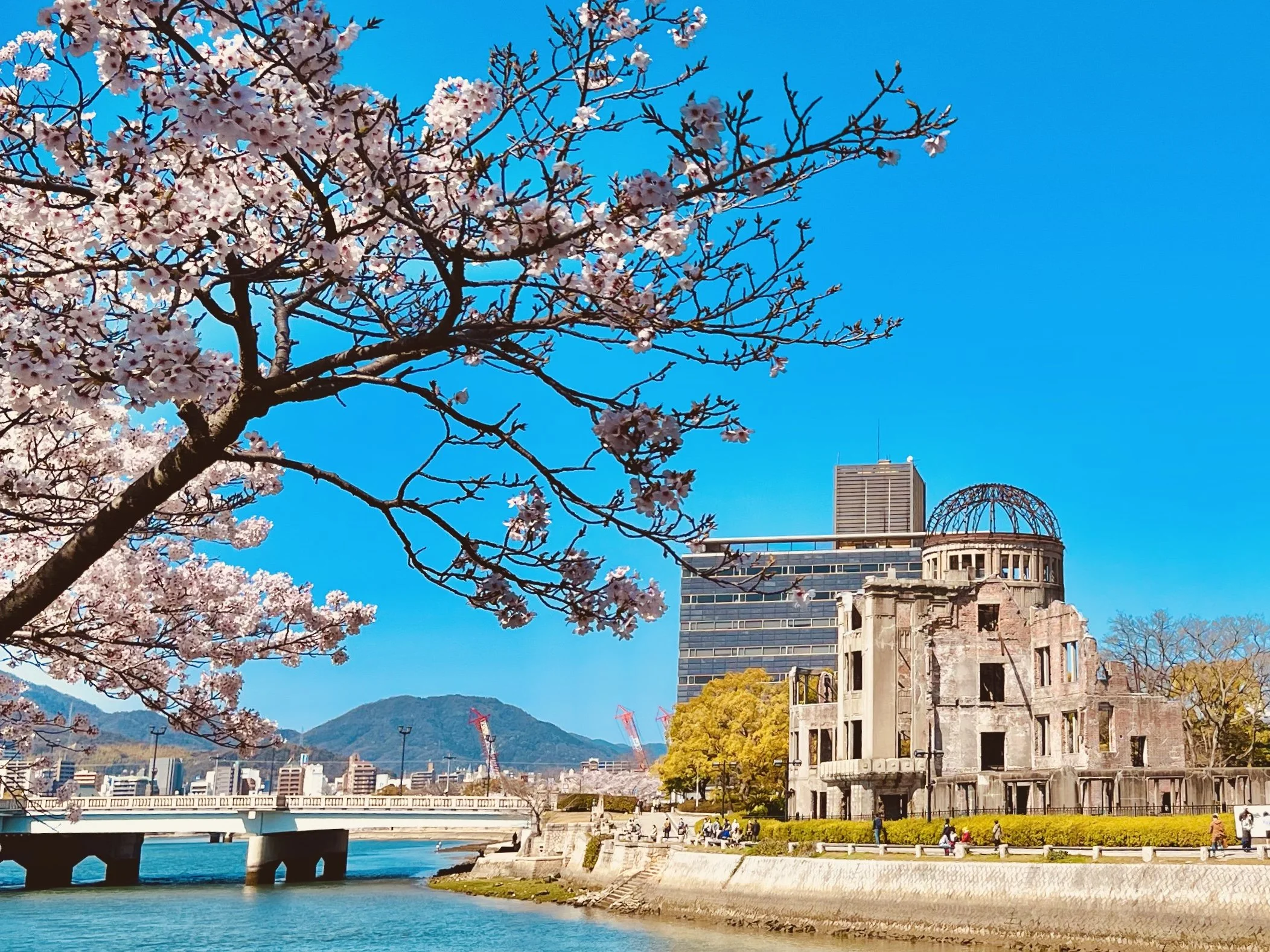

Hiroshima. Photos by Klook and Japan Western Railway
HBX Group: Data at the Center of the Ecosystem
Elena Pérez, Chief People & ESG Officer at HBX Group, offered a perspective most travelers never see but the entire industry depends on. HBX operates as a B2B travel technology marketplace — sitting invisibly at the center of the ecosystem, connecting hotel suppliers, airlines, and transfer companies with more than 60,000 OTAs, travel agents, and tour operators through a platform that processes 7 billion searches daily.
After 11 years of its Sustainable Hotels Program, certified properties in its portfolio have grown more than 30% year-on-year above non-certified ones, according to Pérez.
Beyond accommodation, HBX has partnered with Queer Destinations to support LGBTQ+-welcoming businesses and launched a community-based tourism initiative in Tulum, Mexico, connecting 11 indigenous communities directly with travelers.
Pérez emphasized that sustainability also functions as a vital internal culture-building tool, streamlining purpose across a globally distributed, remote-working workforce through training and volunteering.
»»» Watch this panel discussion on GSTC’s YouTube channel.
Five Key Takeaways
Both sessions, despite their different focus, converged on the same conclusions:
Sustainability is not the risk; avoiding it is. Operational efficiency, asset resilience, investor preference, traveler demand, and platform visibility all point in the same direction.
Supply is the binding constraint. Across hotels, experiences, and platforms, demand for sustainable options is running ahead of what travelers can currently find and book.
Certification is often recognition rather than transformation. In many cases, the work has already begun. The challenge is making it visible, measurable, and credible.
Visibility unlocks demand. When travelers and travel buyers can clearly see trusted sustainability information, bookings follow.
Platforms are no longer neutral intermediaries. They are actively shaping what sustainable travel looks like by supporting travel businesses to get certified, surface their sustainability credentials, and scale their impacts.