
Catherine Germier: Rethinking Tourism Beyond Recovery
By Rhea Vitto Tabora
Catherine Germier is not interested in restoring tourism to what it was. Instead, she asks what it would take for Cambodia and the industry as a whole to build a model that is more honest and more accountable to the people affected by it.
Catherine Germier worked in public utilities for almost ten years before she started talking about tourism. Her early work involved water utilities and sanitation in developing countries, where she provided technical assistance on the infrastructure most travelers rely on but rarely think about. It was through that work that she began to see how tourism often consumed the very resources it depended on.
She did not begin as a tourism professional, she says, but as a professional tourist.
That background explains why she stands out in her field. Many people in sustainable tourism come from hospitality, marketing, or advocacy. Germier came from infrastructure. She learned to think in terms of systems, resources, and consequences, and she brought that mindset into tourism.
What sets her apart is the combination she brings. She thinks like an engineer, has the discipline of a brand strategist, questions the conventional sustainability language, understands commercial realities, and always puts communities first. It is rare to find all these qualities in one person.
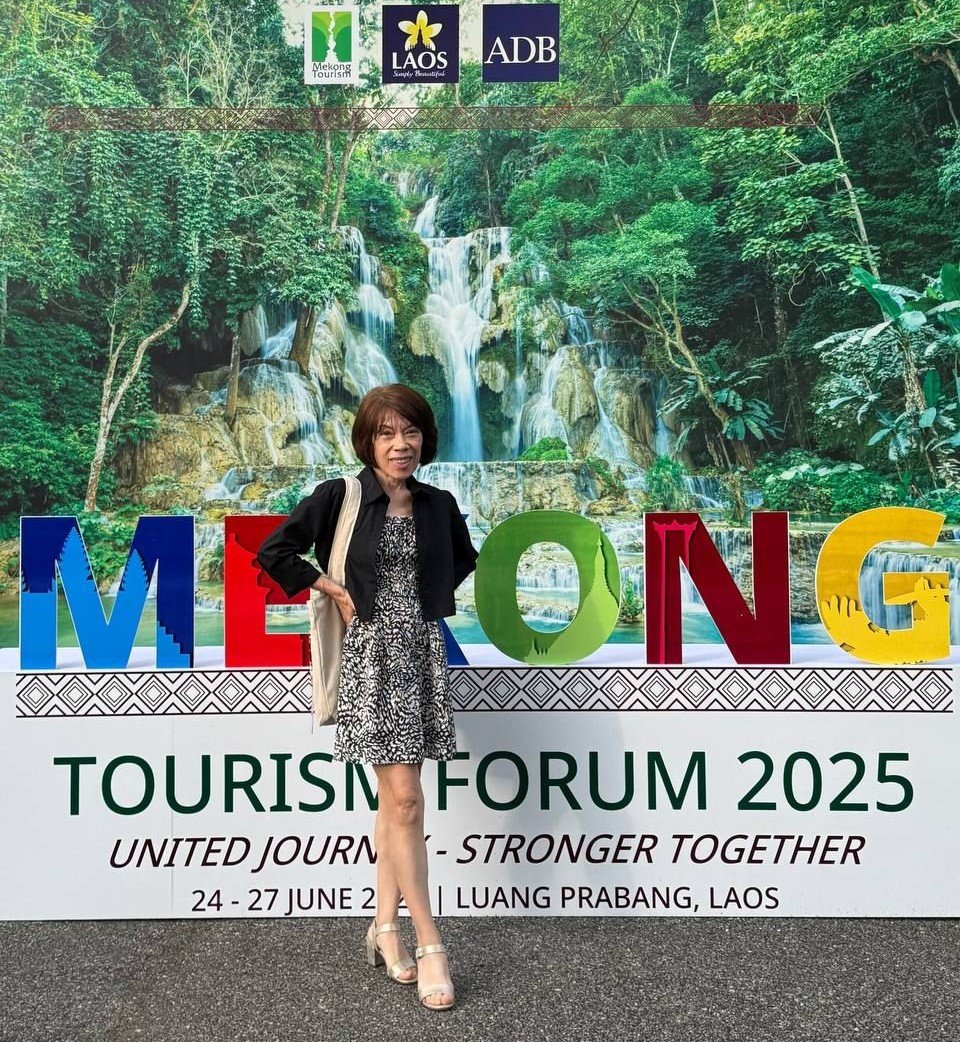
What Tourism Still Gets Wrong
While working in developing countries for a French environmental consulting group, Germier traveled constantly. She says she enjoyed ‘bleisure’—combining business trips with exploring new places, before the term even existed.
There is a personal side to her story as well. Born in France with what she calls “complex Eurasian roots in Southeast Asia,” she has always seen travel as more than just work. For her, it has been a way to find meaning and, at times, to escape when personal crises arose.
However, the more she traveled, the less ideal tourism seemed. She quickly saw that tourism often damaged the resources it depended on.
She still believes that tourism can be different. She argues that tourism can create value, opportunities, and empowerment when destinations, businesses, communities, and visitors all share responsibility.
The problem, she says, is that this promise is rarely kept. In her view, tourism remains a privilege—"one that can create superiority and entitlement over a destination, its people, its culture and its resources."
She includes herself in this criticism. "We enjoy a place, consume what it offers, take pictures of its people and culture, then leave without feeling responsible for the value we have taken or for giving something back."
She argues that the problem is not a lack of good intentions, but the gap between intention and action. As she points out, good intentions “are too often not converted into concrete, meaningful action.”
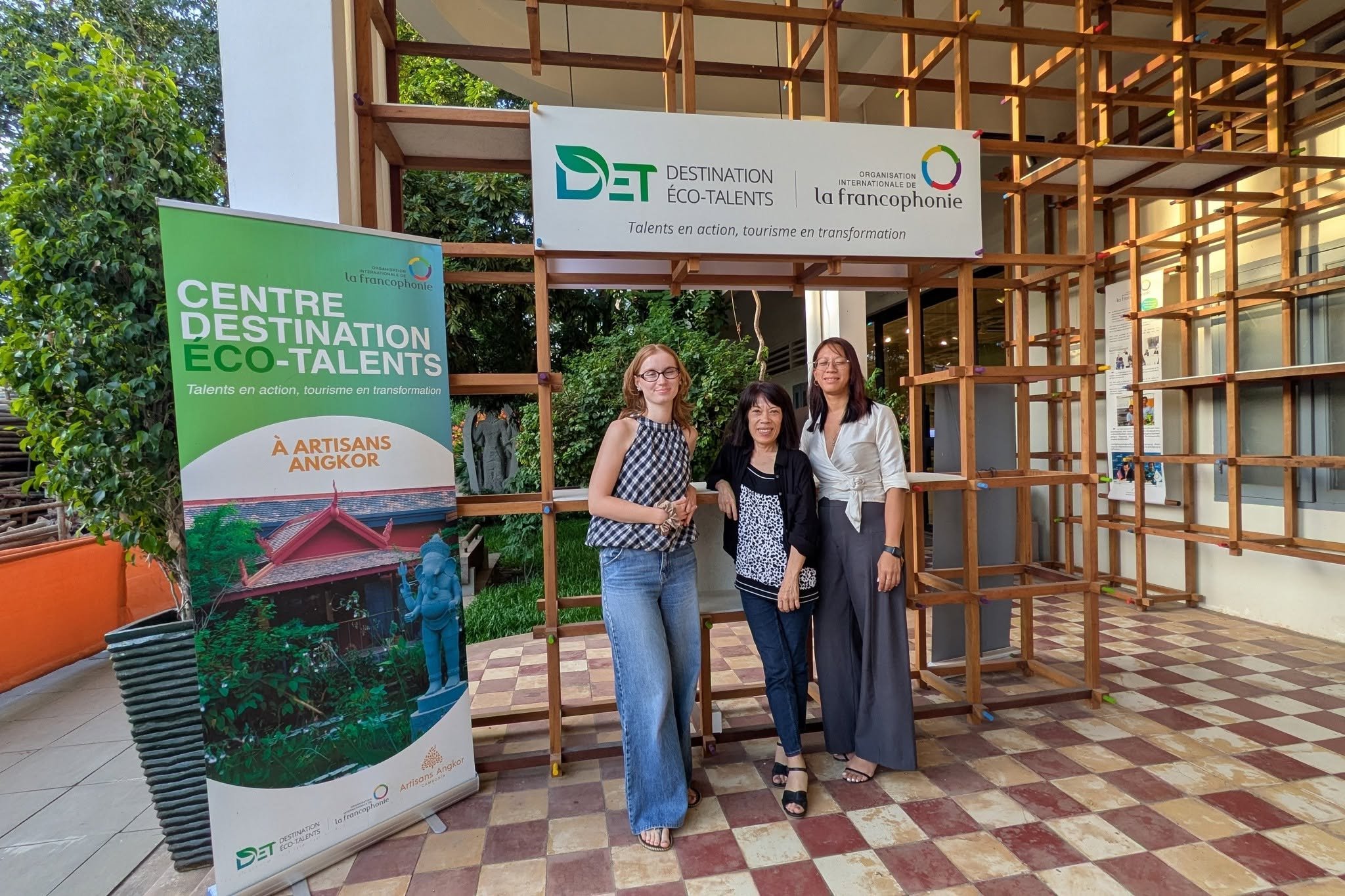
Lessons from South Korea
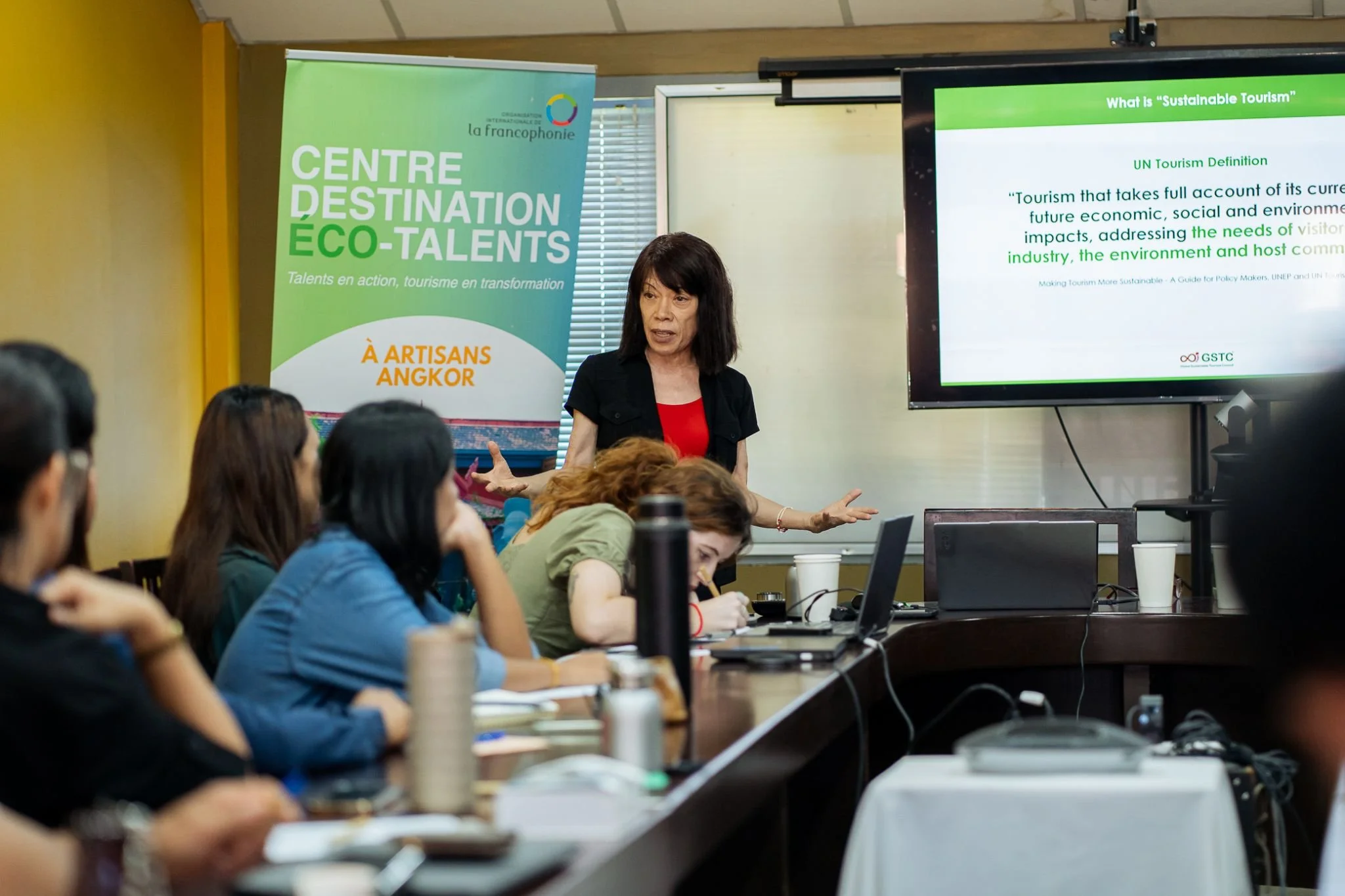
South Korea changed how she thinks. She moved there in 2005, fresh from a postgraduate program in sustainability, and quickly connected with the ST-EP Foundation, which was established that same year in Seoul as part of the World Tourism Organization's initiative to eliminate poverty through sustainable tourism. Much of her work served the least developed countries, and it forced her to confront just how poorly understood and inconsistently applied the term “sustainable tourism” could be.
As she saw it, sustainable tourism was "a complex concept that most people did not really grasp and that needed greater clarity." Rather than defend a single definition, she began translating the idea for whoever was in the room—"a guiding framework for policymakers, a strategic vision for destinations, a business model for operators, and a mindset for everyone."
Without that shared understanding, she warns, the whole thing collapses into "an illusion and a source of frustration and confusion."
South Korea also became her example of what focused effort can achieve. She admires the country—"while remaining critical, as any French person would"—and respects how it rebuilt from war and started a nation-branding strategy in 2009.
None of it was luck. Its success, she says, was the result of political will backed by human, technical, and financial resources; planning and education; and “a collective sense of cohesion, discipline, commitment, and determination.” She points to the spirit of Saemaul Undong, the New Community Movement, and its three values: diligence, self-help, and cooperation.
From all of it, she drew a principle that still guides her work. Tourism should first deliver wellbeing and inclusive socioeconomic development for local communities. Then she asks the question that turns the industry on its head: "How can you make visitors happy if the people who live there are not happy themselves, especially in the face of increasingly visible inequalities and vulnerabilities?"
“How can you make visitors happy if the people who live there are not happy themselves, especially in the face of increasingly visible inequalities and vulnerabilities?”
Catherine Germier
Why She Avoids the Term "Sustainable Tourism"
This is where her position becomes especially clear. For someone whose career revolves around the term, Germier says she usually avoids using "sustainable tourism" in conversation.
She prefers to speak about “sustainability-committed tourism”. As she puts it, “sustainable tourism does not really exist, at least not yet. It remains a vision, perhaps a mirage, or simply wishful thinking."
This is more than a wording choice. A label suggests something is finished and achieved. Commitment, by contrast, means the work is ongoing and shared. She argues that no business is sustainable by nature, but it can be committed to sustainability.
Tourism experiences are co-created and shaped in real time through collaboration between multiple parties. Even when designed with sustainability in mind, she notes that good intentions "can be ruined by any stakeholder involved, starting with tourists themselves."
As she puts it, "Tourism is often presented as a world of freedom and, too often, becomes a world of irresponsibility." She adds that people often behave differently when they travel, forgetting that the host country has its own rules, regulations, values, and limits.
What makes her critique credible rather than preachy is that she puts herself to the same standard. "Few tourists, myself included, truly consider their impact during or after the travel experience," she admits.
She is also critical of one of the industry's favorite words: impact. Real impact, she argues, “is a collective transformation that takes place over the long term. It does not happen overnight, nor can it be credited to the contribution of one person alone." Even voluntourism is not exempt. If done poorly, she warns, it can do more harm to local communities than conventional tourism, “particularly when it becomes a business that harms families, reinforces dependency and feelings of abandonment, or prioritizes the volunteer experience over local needs.”

What Meaningful Tourism Asks Instead
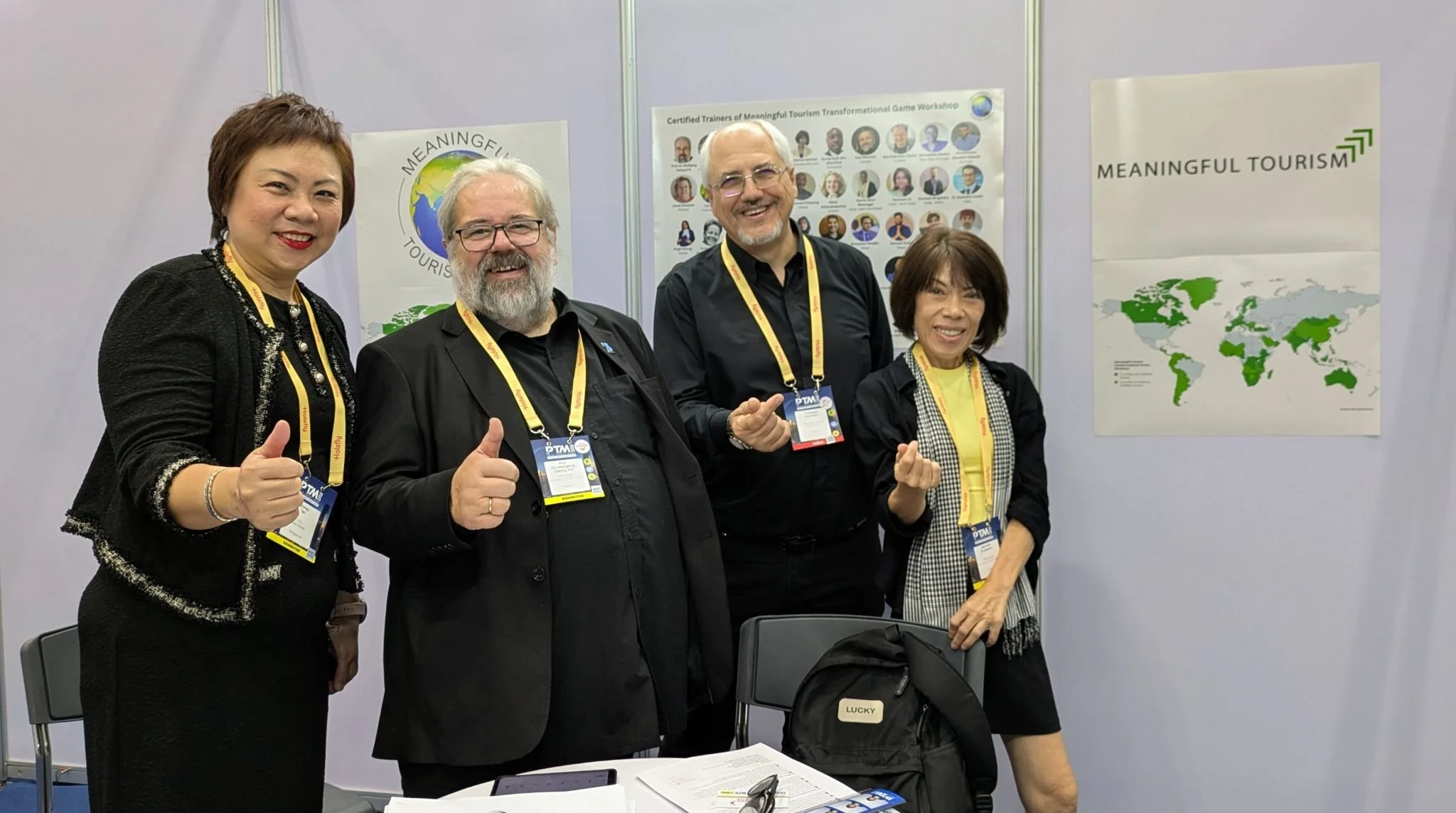
For all her skepticism about tourism language, Germier does not present Meaningful Tourism—the framework she is certified to teach in Cambodia and Laos—as a replacement label. Instead, she describes it as a movement and a mindset rather than a new paradigm: a way of bringing every stakeholder together and aligning their needs, interests, values, and concerns around a mutually agreed purpose.
It asks destinations and businesses "to do more than pursue labels, standard indicators and visitor satisfaction," she explains. It asks whether tourism genuinely makes people feel included, respected, useful and better off: communities, workers, residents, visitors, and future generations. It also asks "who benefits, who decides, who bears the costs, and what remains after visitors leave."
She describes her approach as “perhaps Eurasian: not hierarchical, but complementary” and points to Yin-Yang as a way of thinking how opposing forces can coexist together and even reinforce each other.
"The world can be black and white at the same time," she says. "We do not always need to choose one side or pretend that complexity does not exist. We can admit that mass tourism can be both bad and good at the same time."
That is why she does not feel the need to compare Meaningful Tourism and Sustainable Tourism. Perhaps the problem is not the adjective, she suggests, but the noun: tourism. The real challenge, she believes, belongs to the traveler: "What is the point of traveling back and forth if you do not return as a better person? Every journey should be transformational and designed as an opportunity to be good, feel good, and do good.”

Why Recovery Is Not Enough
The traditional tourism model measures international arrivals, length of stay, occupancy, revenue, and sometimes employment. What it almost never asks, she notes, is "who captures, retains, or loses the value; who bears the costs; or what remains and what is missing after visitors leave."
For Germier, that omission has real consequences. The old model, she says, "treats communities as a backdrop, workers as variables, and culture, beauty and youth as commodities." It remains fragmented and managed through silos, even though tourism is a complex human ecosystem with social, cultural, environmental and economic interconnections.
This is why recovery, in her view, is not enough. She calls instead for a reset, and sometimes even a revolution. Resilience, she argues, "cannot simply mean restarting and reapplying the same old recipes. It must mean anticipating, responding, rethinking, relearning and rebounding differently, crisis after crisis."
The shift she is calling for is more fundamental than that. "Just as people eventually discovered that the Earth is round, not flat, a tourism revolution requires a fundamental shift in perspective." That means putting local communities at the center of decisions rather than relegating community-based tourism to a niche product or reducing people to destination assets.
As she puts it: "From a business perspective, the customer may be king and competition may prevail. From a destination perspective, local residents come first, and collaboration, dignity and wellbeing should guide decision-making."
She sees a community-first approach not as a sacrifice, but as a sound strategy. In her view, “tourism should create value not only for guests, but also, and above all, for hosts. This approach can strengthen a destination's attractiveness and competitiveness."
“Tourism should create value not only for guests, but also, and above all, for hosts. This approach can strengthen a destination's attractiveness and competitiveness.”
Catherine Germier
Cambodia's Chance to Define Success Differently
Her thinking becomes especially concrete when she talks about Cambodia, where much of her current work is grounded.
Asked what success should look like a decade from now, she sets the arrival numbers aside. Success, she says, will not be defined mainly by visitor numbers or a narrow focus on volume and year-on-year growth, but by stronger livelihoods, greater local ownership, and the lasting wellbeing of host communities. "More arrivals do not automatically create more opportunities or empowerment."
Her advice to the country is to stop looking sideways. "Cambodia should build trust in its own identity rather than compare itself with neighboring destinations or imitate them in a race for volume, low prices and short-term attention."
Its strength, she says, lies in its personality: living heritage, creativity, landscapes, waterways, food, spirituality and the generosity of its people.
If those strengths are developed well, Cambodia can become "a distinctive boutique destination, one known for authenticity, quality, consistency and responsible stewardship of its resources."
That will require a clear, long-term strategy, strong institutions, investment in education and skills, and meaningful collaboration among government, businesses, and communities. It also means not relying too heavily on one sector. Tourism, she insists, "should be part of a diversified economy, not a dependency; resilience requires credible alternatives when travel is disrupted."
What matters, in her view, is confidence, rather than imitation. "The objective is not to copy another country's model but to build Cambodia's own confident, credible, and competitive path—one that visitors respect, communities trust, and future generations can sustain. I don't think this is too much to ask or expect."

Why Destination Branding is Often Misunderstood
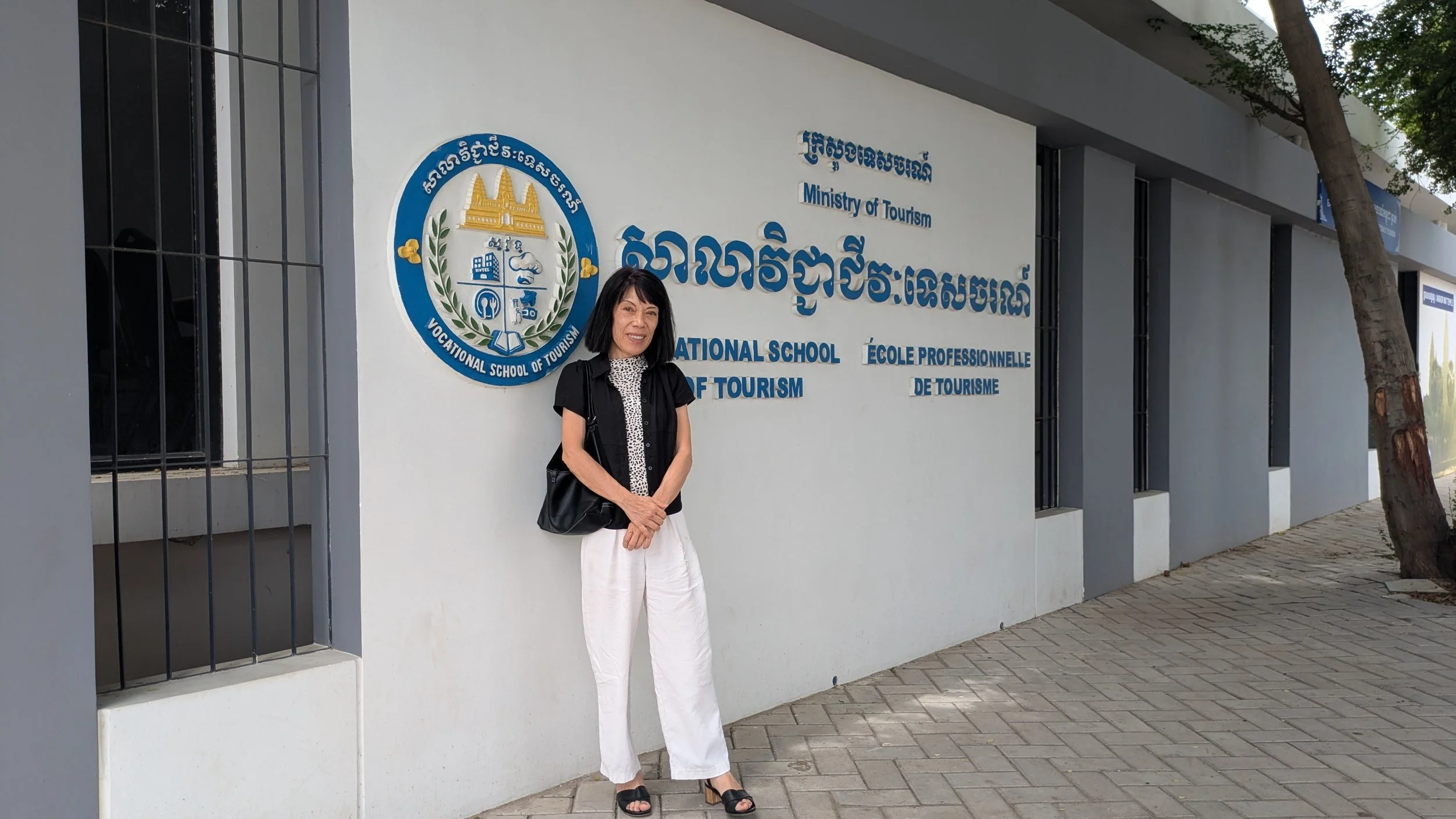
Germier sees destination branding as more than a logo, slogan, or campaign. In her view, it is about attracting the right audience through a credible promise and delivering that promise consistently.
She believes a destination "is a living ecosystem, not a product," shaped by “the combined actions of communities, businesses, workers, public institutions and visitors.” Meaningful participation, she argues, strengthens both the legitimacy of decisions and the authenticity of the country’s story.
The aim, she says, "is not to appeal to everyone, but to engage visitors, investors and partners who value Cambodia's distinctive character." That requires "a clear sense of national personality, confident choices and sustained consistency across markets and institutions."
She is especially clear on the operational foundations that branding often overlooks. "Safety, hygiene, service quality, reliability and transparent communication are not secondary operational issues. They are the foundations of reputation."
When those elements are aligned with empathy, teamwork and accountability, the brand is "earned through real experiences and consistently delivered promises, not through B2B promotion or public campaigns alone."
The Coordination Gap
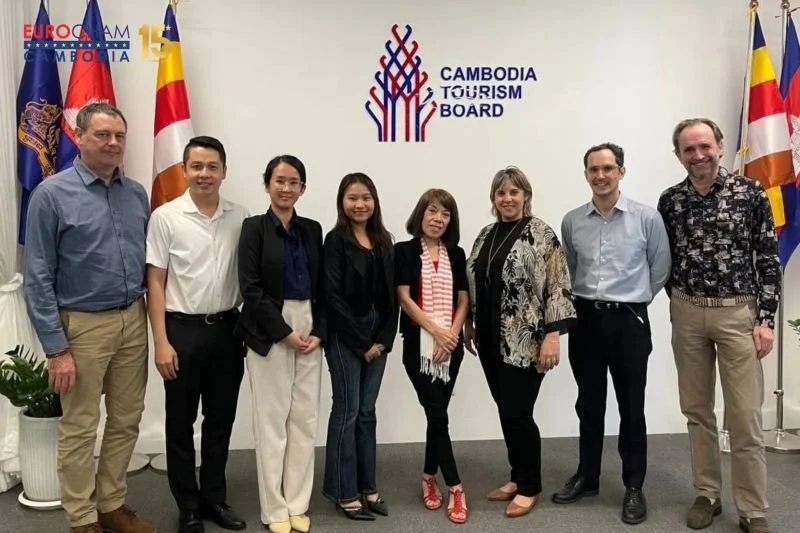
As outgoing Chairwoman of EuroCham Cambodia's Tourism & Hospitality Committee, Germier has pushed hardest for progress in two areas that rarely make headlines: better marketing data and stronger skills and standards. Both come straight from EuroCham's White Book 2027.
The sector, she says, needs reliable, shared intelligence to guide investment, policy and operations, as well as a workforce equipped to deliver consistent quality, safety and service. That has meant supporting ASEAN certification schemes such as the Safe & Warm Stamp for safety and hygiene, calling for a structured digital platform through which the private sector and the Ministry of Tourism or other relevant bodies can collect, process, and share market information, and advancing recommendations on visa policy.
For her, though, the issue is broader than data alone. "The widest gap between rhetoric and action remains coordination," she says. “Tourism stakeholders often agree on broad ambitions, but too rarely work from a common narrative, shared evidence base or aligned priorities."
When that coordination is missing, the consequences are practical. Limited market visibility makes it harder for policymakers and operators to make confident, timely decisions, and it allows negative perceptions of Cambodia to overshadow the country’s real strengths.
She is clear that delay is no longer much of an excuse. "There will always be reasons to delay action, but today's data tools, including AI, make it increasingly possible to understand challenges faster and act more effectively."
Germier is also candid that EuroCham cannot speak for the whole industry. What it can do, she suggests, is convene dialogue, advance practical solutions, and reinforce Cambodia’s credibility as both a trusted business partner and an attractive destination.

Reimagining Siem Reap
All of this becomes tangible at the Cambodia Branding Forum, set for Siem Reap on September 29, built around reimagining the destination through active and adventure tourism.
"The main narrative is that Siem Reap offers more than its temples," she says. "It is a living destination for active discovery, where heritage, rural life, nature, culture and adventure come together."
The temples remain central, but they are not the only reason to visit. Trails, rivers, cycling, walking, local encounters, and both soft and hard adventure can help diversify the destination’s image while encouraging visitors to stay longer and spend across a broader range of local businesses.
She is equally clear that branding has to stay honest. Cambodia is often promoted as an ecotourism destination, but she insists that branding “must reflect what visitors can genuinely experience.” Rather than promise pristine landscapes or infrastructure that may not yet be consistently available, she prefers to build on what is already real: a predominantly rural setting, rich local life, and strong potential for active exploration.
That approach also has practical economic value. Active and adventure tourism, she says, “can create opportunities for locally led guiding, transport, food, accommodation, creative and transformative experiences, as well as wellness and spiritual retreats, while making the destination more relevant throughout the year.”
She adds one important condition: “Community-based initiatives should be designed for long-term viability rather than relying solely on short funding cycles. Adventure travelers do not need staged mirages; they need authentic experiences, reliable services and a clear invitation to explore with humility, respect and a willingness to contribute, not simply consume.”
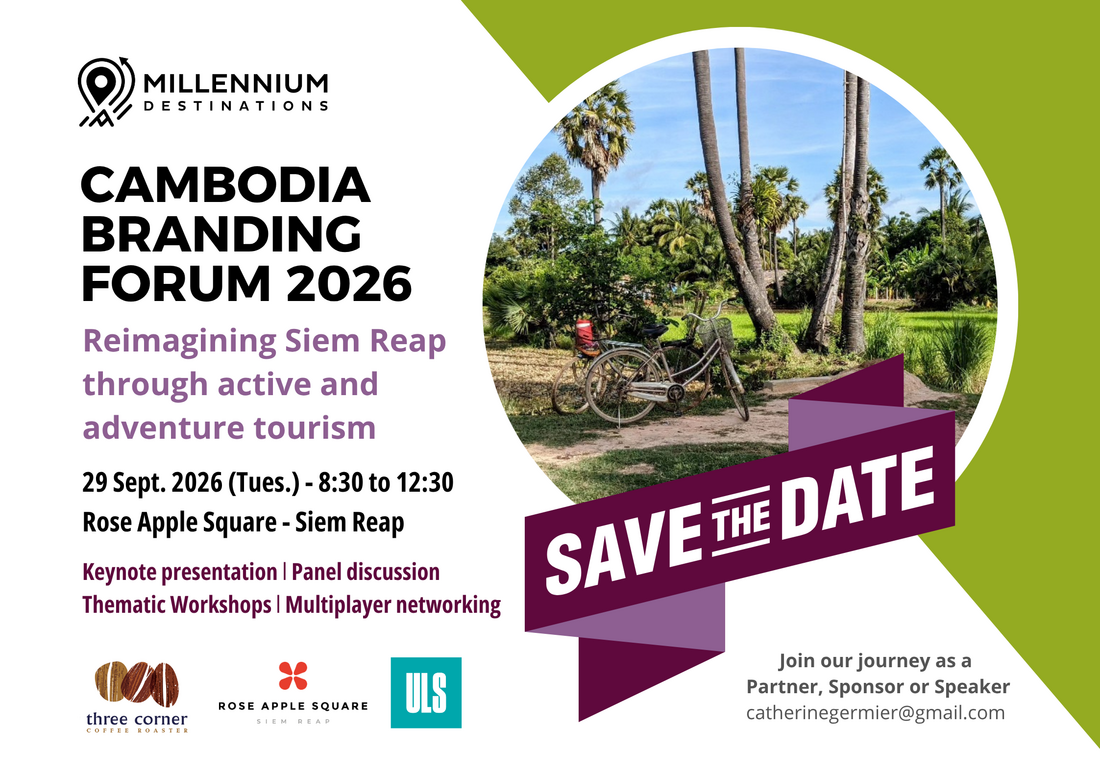
Cambodia Branding Forum 2026 edition in Siem Reap focuses on active and adventure tourism as a strategic tool to:
refresh the image of Siem Reap beyond Angkor
create fresh, on-the-ground experiences for visitors
build a more diversified, resilient, year‑round tourism economy in Cambodia
The Kind of Growth She Would Turn Down
Even with her comfort with commercial realities, she sets clear boundaries and states them openly.
She would refuse "any short-term tourism growth that threatens the well-being of local communities, damages their environment, or deepens inequalities and vulnerabilities." That makes her wary of anything "driven mainly by greed, desperation, or the promise of easy profit."
She is equally direct about the industry’s contradictions. "Tourism can be deeply hypocritical. We promote the dream of authentic encounters while treating people, culture and nature as consumable assets. We demand low prices, unlimited access, increased connectivity, and perfect hospitality, while expecting someone else to absorb the real cost"—workers through low wages, communities through lost space and dignity, and future generations through drained resources.
At times, she says, tourism resembles “a large casino, where people expect to become rich quickly and by chance while communities, workers, culture and nature carry the hidden costs."
She is not against business or prosperity. What she rejects is the idea that money is the only measure of success, at all costs.
She would rather support slower, fairer growth that creates dignity, resilience, and lasting value, with visitors, operators, and investors all "prepared to pay fairly for the value they receive, and to give something meaningful back to the places that welcome them."
What Change Should Outlast Her
When asked what she hopes will change in tourism because of her work, Germier resists the idea of personal credit.
"Realistically, honestly and humbly, I do not expect anything to change because of me alone," she says. She is also frank about one of the realities she faces as a woman without a doctorate: "Some still assume that women must prove their legitimacy more than others, through titles, age or credentials. I have no PhD, but I have experience, conviction and a willingness to keep learning."
Germier is the Founder and CEO of Millennium Destinations. Although she describes herself as an impact entrepreneur, a sustainability-committed tourism consultant, trainer, and destination-branding specialist, she says she would rather be known for what she does: solution provider, advocate, harmonizer, and facilitator. She puts her energy into sharing, inspiring, and reassuring others, especially women and youth, that change is possible.
“Life is a continuous learning experience, and our challenges can, and should, become part of our purpose,” she says.
Her ambition, in her own words, "is not about ego or recognition. It is about helping move the conversation, and, ideally, practice, one step forward."
She hopes sustainability will no longer be treated as an option, label, or a separate initiative. “It should be embedded in every decision, experience, and business model. If empathy, fairness, and responsible behavior become normal expectations, tourism can become a more honest and positive human activity.”
All photos provided by Catherine Germier
If you know someone who deserves recognition as an Asia Sustainable Travel Changemaker, please click on the link below
to nominate your candidate or even yourself. Or you can also email us directly. Please read our privacy policy.
SELECTED FOR YOU