Key takeaways from The TravMedia Summit Asia 2026 on purpose-led travel, food as a destination, loyalty that earns its keep, and why calm leadership matters in a crisis.
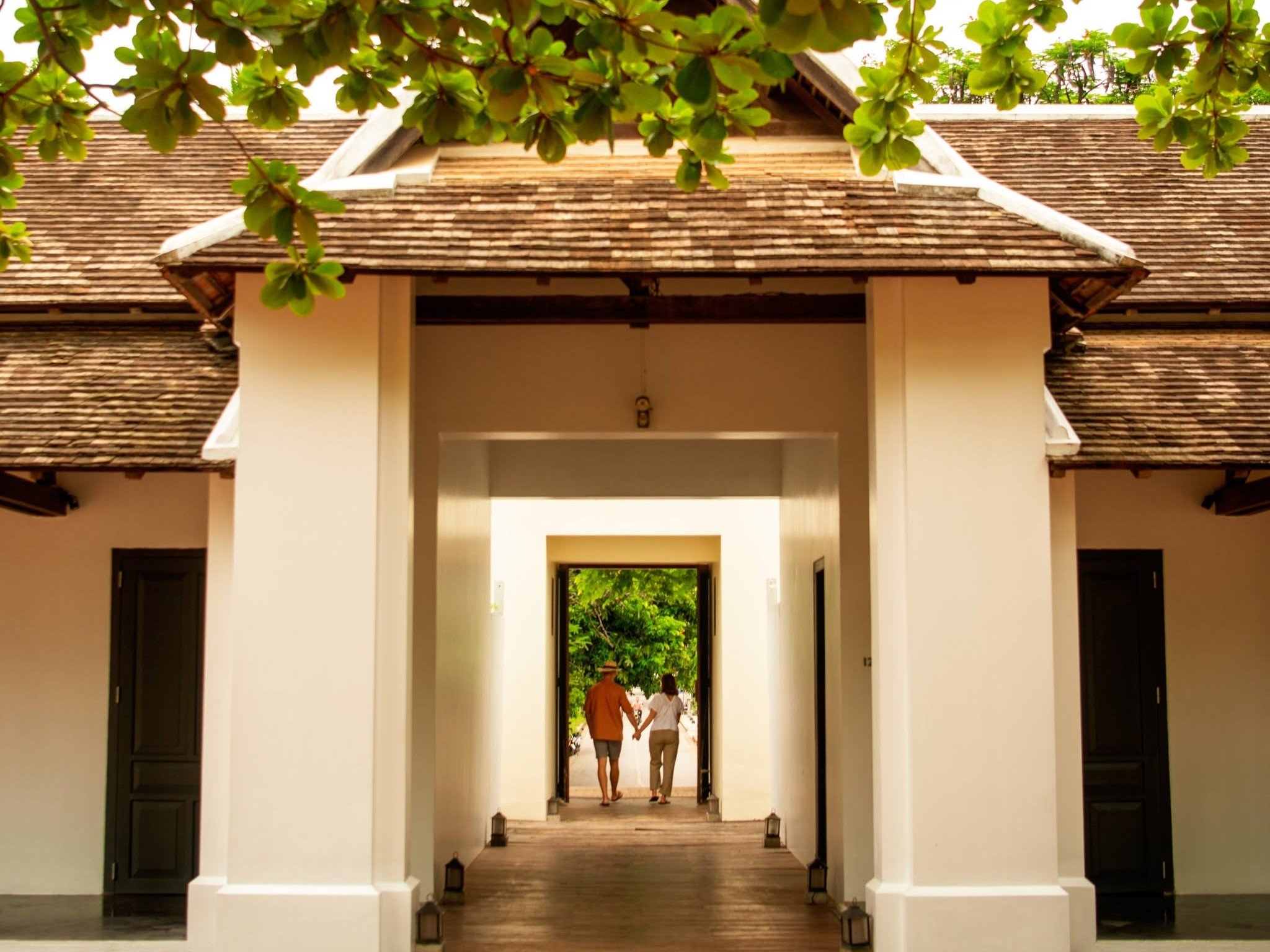
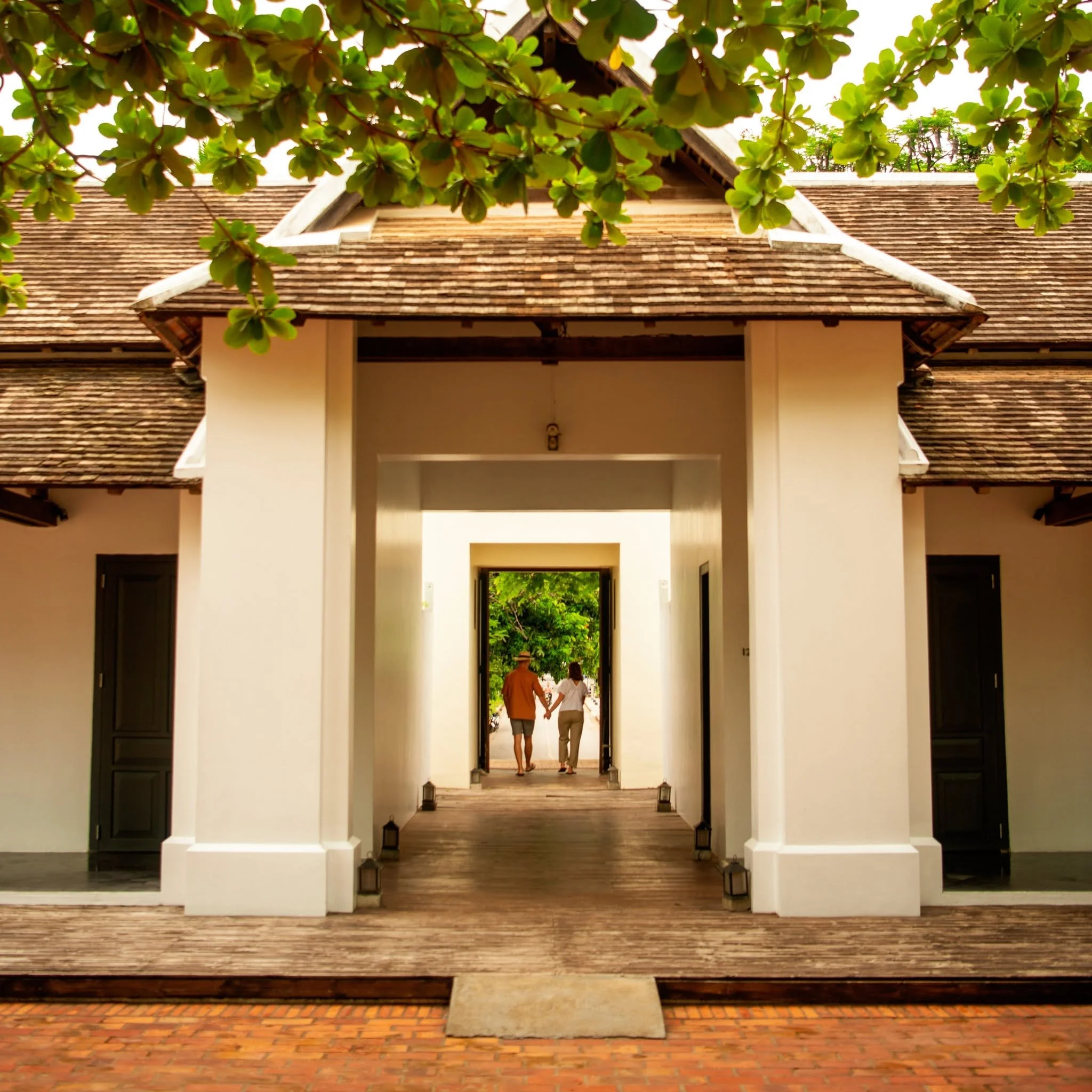
Photo credit: Sofitel Luang Prabang
Travel in Asia is moving into a more expensive and more selective phase. Rising fuel costs and broader pricing pressures have made trips harder to price and sell, even as demand remains resilient. People are still traveling, but they are more deliberate now about what they book, what they pay for, and what they expect in return.
Across four sessions on traveler behavior, food and beverage, loyalty, and crisis communications at The TravMedia Summit Asia 2026 in Singapore on October 19, demand was not really the issue. The real shift is that travelers and diners now look more closely at what they are being asked to pay for.
A room alone does not sell as easily as it once did. A loyalty scheme on its own is less persuasive. A restaurant without a real sense of place is easier to bypass. And when conditions turn uncertain, polished messaging without useful information does not hold up for long.
The pressure now is on the offer to make its case earlier and more clearly. For hotel owners, commercial leaders, and destination marketers, that changes where value sits: in understanding why the guest is coming, making the offer legible before booking, building dining venues locals and visitors would choose on their own, recognizing guests in ways that reduce friction, and communicating with facts when circumstances change fast.
These four sessions are worth close attention for anyone responsible for filling rooms, defending rate, building loyalty, or protecting brand trust when the market turns less forgiving.
1. A reason for the trip now shapes the booking
Nick Wayland, CEO and Founder of TravMedia, opened the summit by saying, "Southeast Asian travelers are no longer just booking beds for the night. They're looking for valuable benefits across access and experience."
Tejveer Singh Bedi, Vice President of Commercial, Accommodation at Traveloka, described a market that remains active, but one in which travelers are more selective about what feels worth paying for.
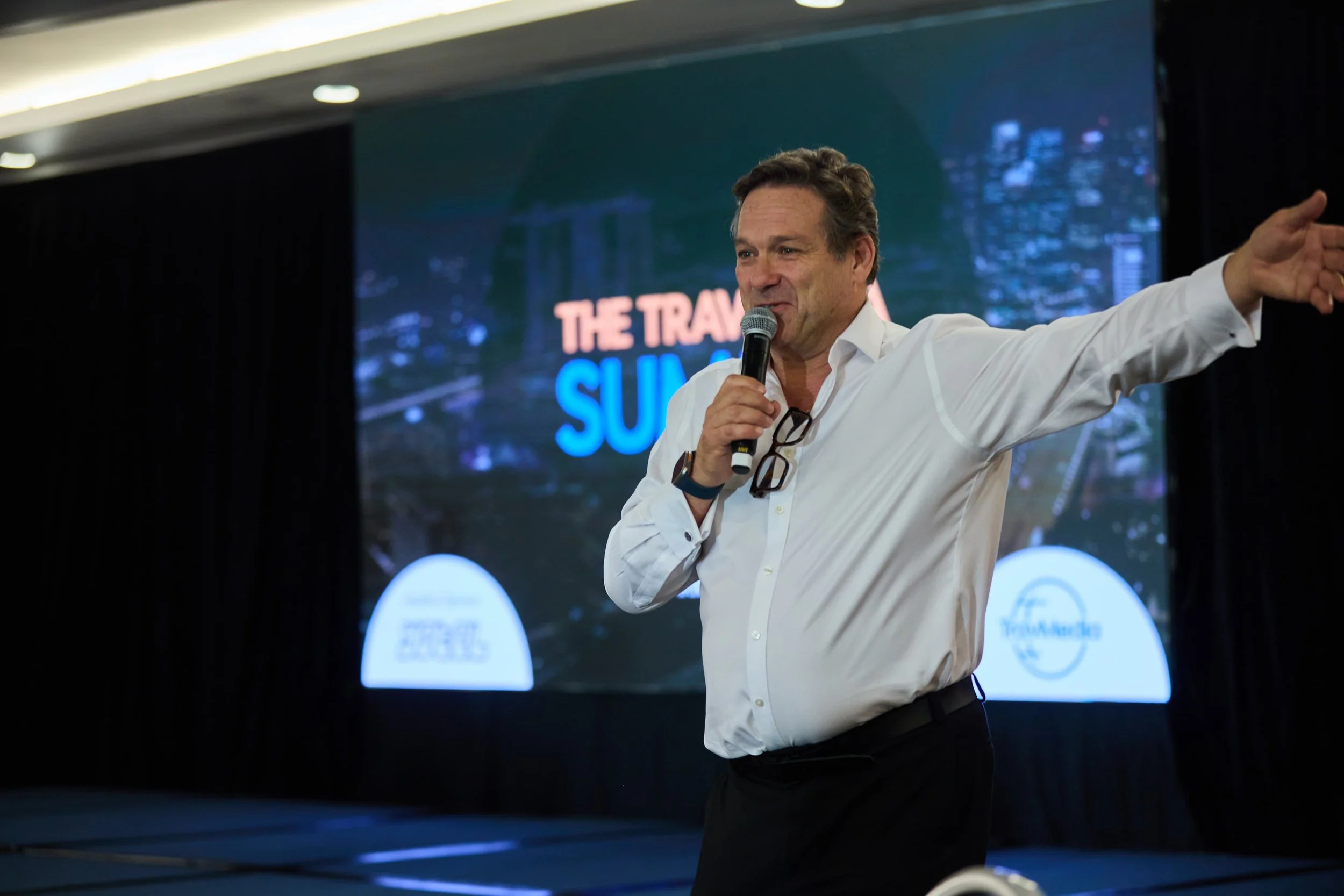

Left: Nick Wayland, CEO and Founder of TravMedia; Right: Tejveer Singh Bedi, Vice President of Commercial, Accommodation at Traveloka. Photos by TravMedia
“People really haven’t stopped traveling,” he said. “But they are choosing more carefully.”
Fuel costs have pushed up the price of the entire journey, yet demand has held up. In Singapore, occupancy remains strong at 91.3% year on year, while average room rate has climbed by 1.7%. (July 2026 vs July 2025). Demand is there. It is simply under more scrutiny.
“The purpose actually organizes the choices,” Bedi said, explaining that the reason for the travel dictates the choices and the entire journey.
Traveloka's Southeast Asia Q3 2026 data pointed to a clear regional pattern. Faith and heritage defined the quarter, not as a passing itinerary theme, but as the primary reason people booked.
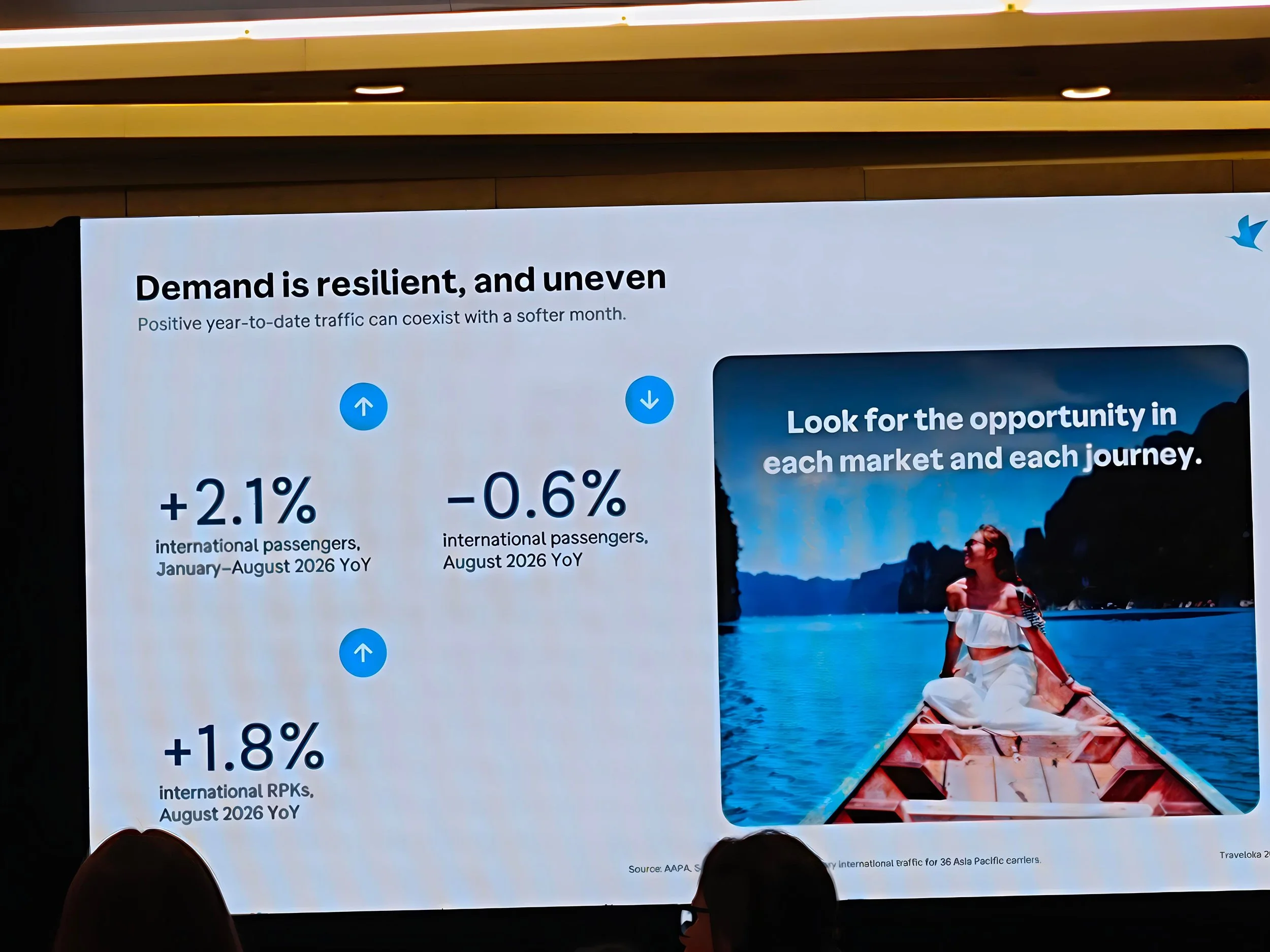
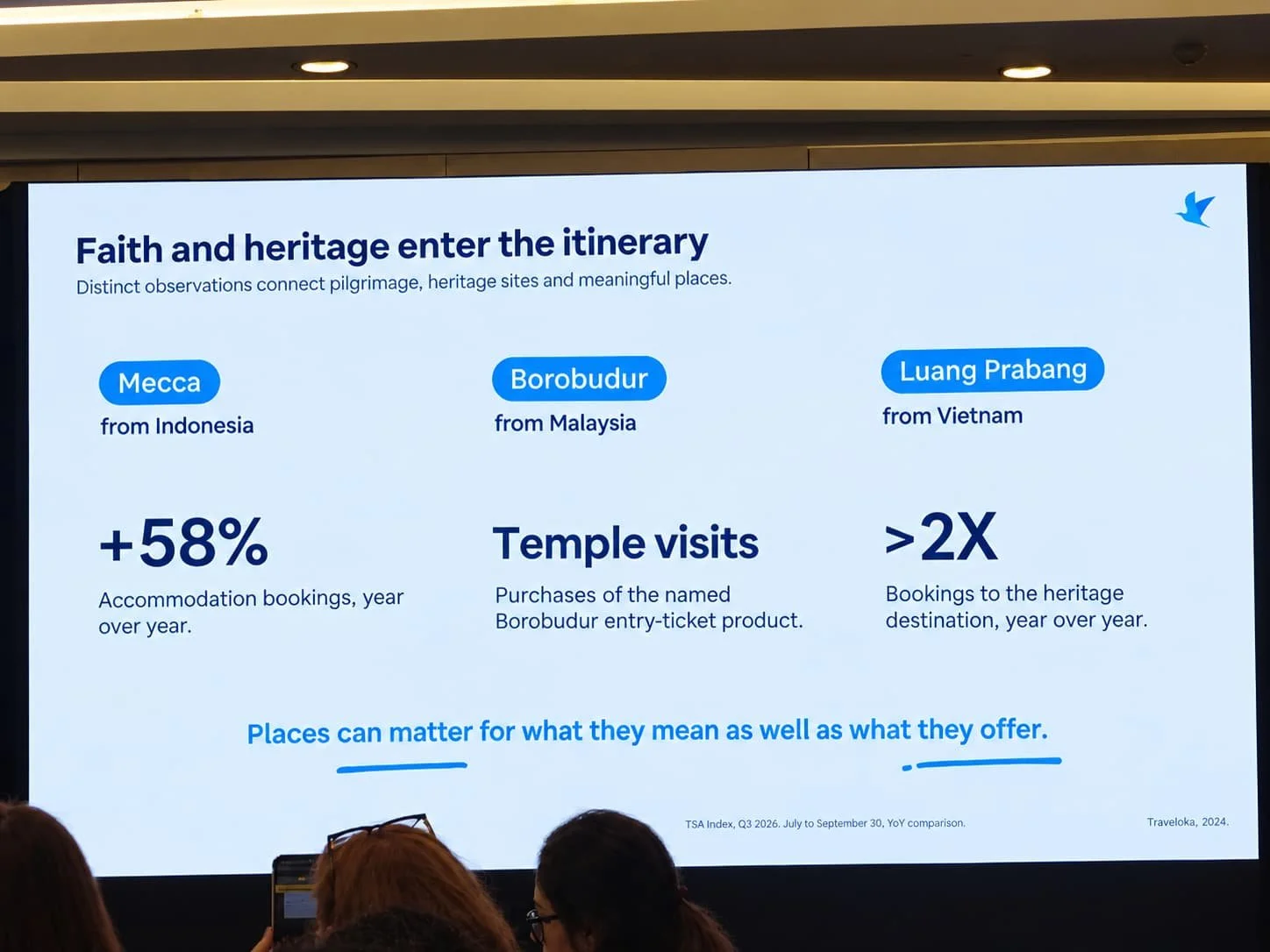
From Tejveer Singh Bedi’s presentation. Photos by Rhea Vitto Tabora
Accommodation bookings from Indonesia to Mecca in Saudi Arabia rose by more 50% year-on-year, with Jeddah and Madinah also gaining ground as umrah (minor Islamic pilgrimage) travel picked up. From Malaysia, interest in Borobudur in Indonesia—along with related growth in Magelang and Yogyakarta on Java—pointed to the continued appeal of religious and historical itineraries within the region. From Vietnam, bookings to Luang Prabang in Laos more than doubled from a smaller base. The destination is a UNESCO-listed former royal capital where Buddhist temples and historic streets give the trip its shape and purpose.
The same quarter also showed other intentional travel patterns. In Indonesia, domestic momentum centered on road-accessible destinations such as Wonosobo and Magelang in Central Java, suggesting demand for cooler highland and temple-linked breaks closer to home. In Singapore, bookings to Melbourne more than tripled year on year: a cool-weather city break offering a different seasonal rhythm from the tropics.
In Thailand, Chongqing topped the international list once new direct flights made travel easier. In Vietnam, Hangzhou, China, climbed quickly after airlines added direct routes from the country earlier that year.
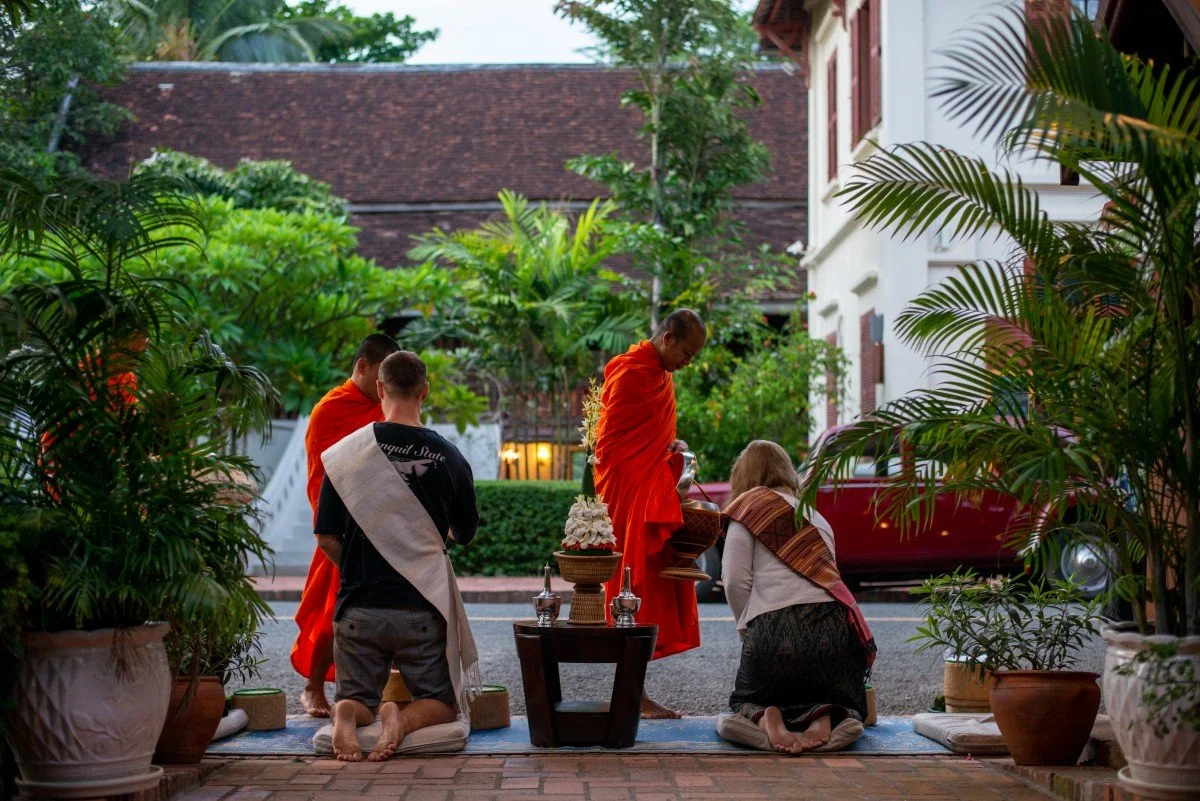
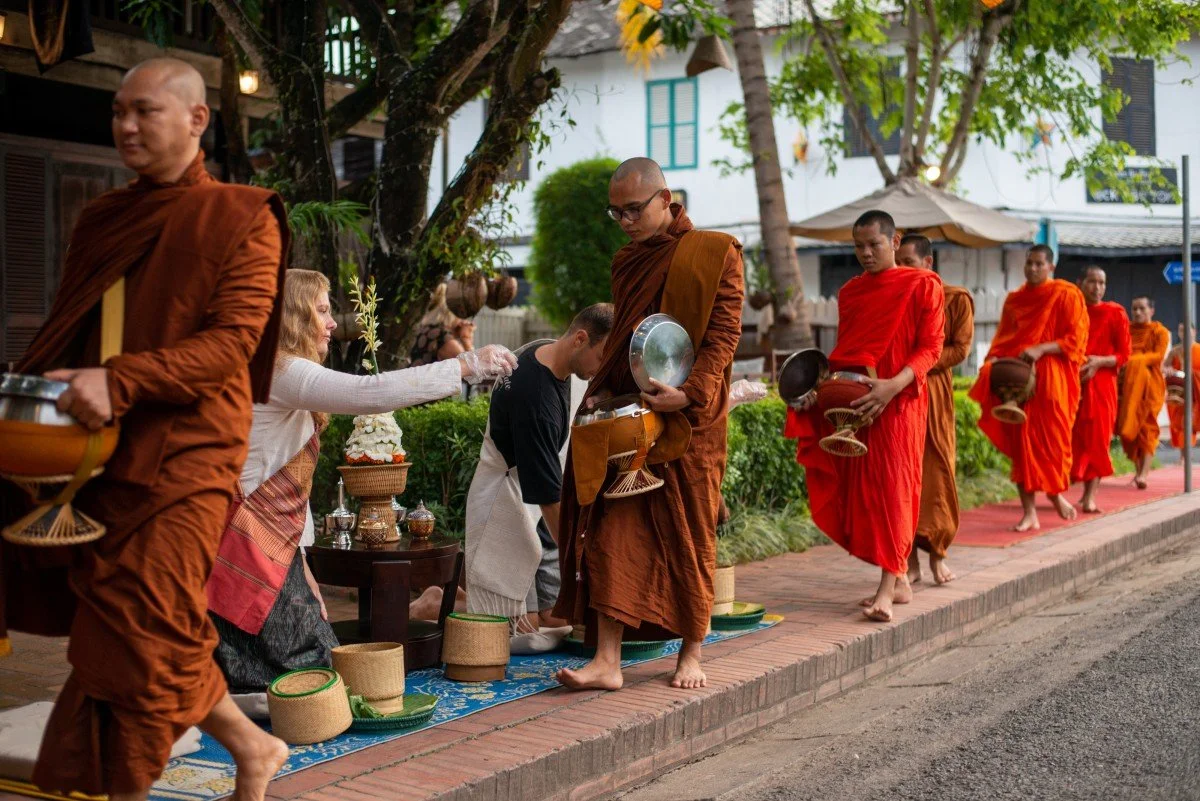
At dawn in Luang Prabang, the centuries-old Tak Bat alms-giving ritual offers travelers a rare way to connect with the city’s living Buddhist heritage. Photo credit: Sofitel Luang Prabang.
Value has to be visible before the booking
"As an industry, we need to make sure that the value matches up," Bedi said.
Travelers are not refusing premium pricing. They are refusing premiums they cannot justify. A family paying more for a room wants to know what that higher rate buys them. More space? Better bedding? A guaranteed interconnecting room setup? Breakfast that actually makes the day easier? A reliable transfer after a late event?
These details are often buried, inconsistent across channels, or not explained clearly enough to trust the rate.
Make room size, bed setup, connecting-room policy, and family inclusions easy to find.
Package the stay with things that solve real trip needs, whether that is transfers, access, or dining.
Fit the occasion. Match the offer to the reason for travel, whether that is a pilgrimage, a family break, or an event trip.
Protect the essentials: transparent total price, dependable quality, and a clear location advantage.
Test and compare the brand promise on the booking page with what guests say in reviews. Close any mismatch.
If your hotel is still marketing rooms while the guest is buying a reason to travel, you are asking the customer to do too much of the work.
2. Food is now part of the destination choice
The food panel moved the discussion beyond the familiar claim that food and beverage is “important” and asked the more useful questions: What kind of hotel dining matters now? Who is it for? And what operating model makes it viable?
Moderated by Tony Chisholm, Global SVP Food, Beverage & Entertainment for Sofitel, Sofitel Legend, MGallery and Emblems, the session brought together Fontaine Cheng, Regional Dining Editor of Tatler Asia; Nicola Lee, Academy Chair for Southeast Asia (South) for Asia’s 50 Best Restaurants; and Petr Raba, Vice President of Food & Beverage, APAC at Marriott International.
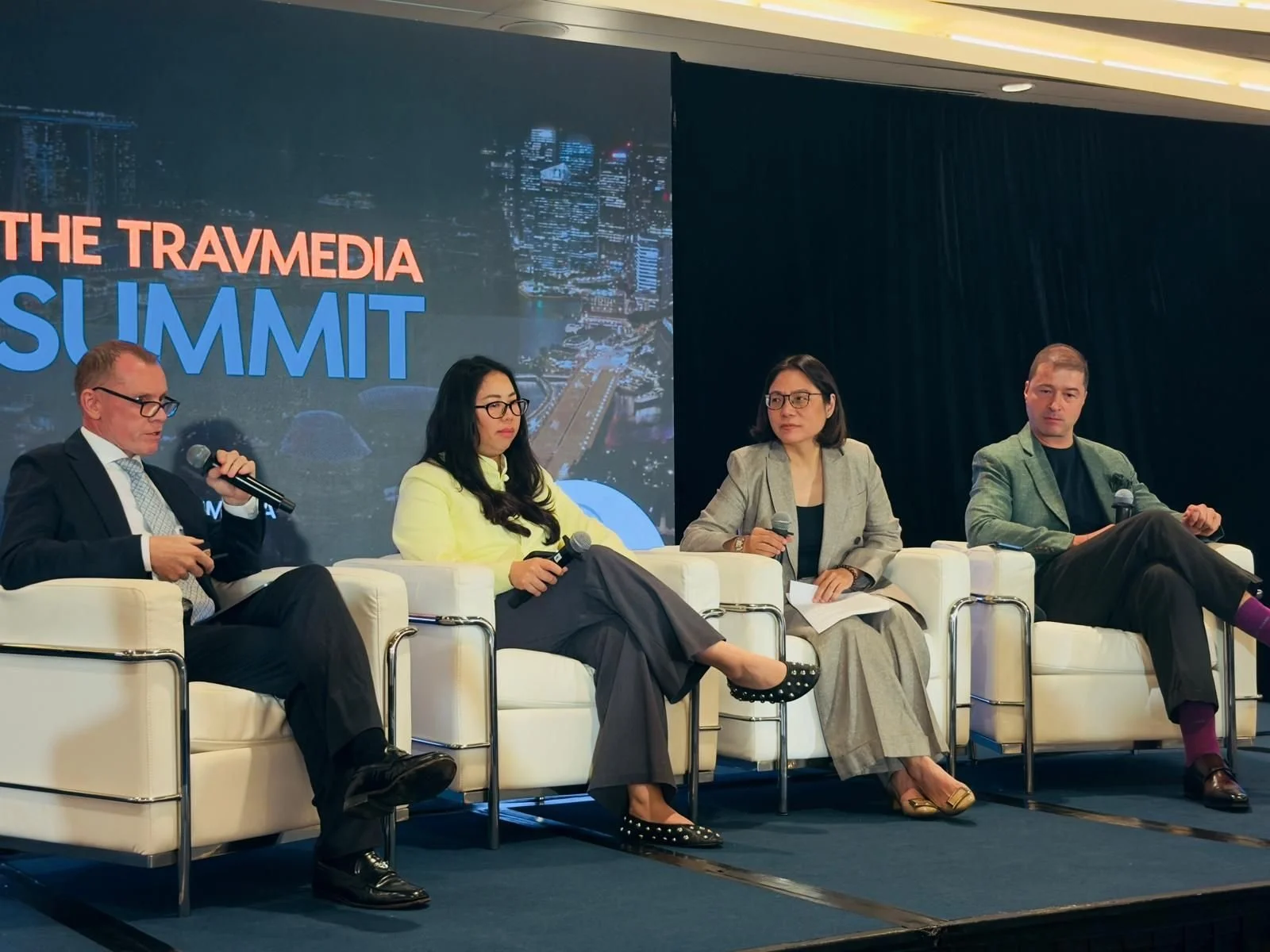
‘Food is the New Destination’ panel. From left: Moderator Tony Chisholm, Global SVP Food, Beverage & Entertainment for Sofitel, Sofitel Legend, MGallery and Emblems; panelists Fontaine Cheng, Regional Dining Editor at Tatler Asia; Nicola Lee, Academy Chair for Southeast Asia (South) for Asia’s 50 Best Restaurants; and Petr Raba, Vice President of Food & Beverage, APAC at Marriott International. Photo by TravMedia
Wayland opened with a statistic from Hilton’s 2025 trends research: nearly one in five travelers sometimes travel solely for culinary experiences.
Raba, who oversees about 1,500 restaurants and bars across Marriott’s Asia Pacific portfolio, shared two additional figures worth noting. Based on research they conducted two years ago among high-net-worth travelers across six markets, 88% choose destinations to experience new cuisines, and 81% choose destinations based on award-winning restaurants and bars. He also said that more than 95% of Marriott hotels are seeing increased demand for local signature dishes.
For hotels, this changes the role of the restaurant. In some cases, it no longer just supports hotel operations and guest service. It becomes part of why a guest chooses the destination in the first place.
Travelers want food that tells them where they are
For years, many hotel restaurants in Asia were designed to appeal broadly. The result was a polished sameness: well-executed menus that were easy to market but rarely rooted in place.
That approach is becoming less compelling and less commercially viable. Travelers increasingly want regional dishes, local stories, and restaurants with enough identity to stand on their own beyond the hotel lobby.
Nicola Lee spoke about a shift in markets such as the Philippines, Indonesia, and Malaysia, where "a lot of younger chefs trained abroad and are returning home, putting on the table their version of their childhood memories of family dishes—but elevated—bringing forward the experience they've gained from international restaurants and their international exposure."
Chengdu and Xiamen were highlighted as destinations with strong regional and ancestral food cultures. The Philippines came up repeatedly as a market with growing momentum in both restaurants and bars.
Raba described a Marriott competition across 14 hotels in the Philippines where local chefs created regional versions of pork adobo (pork braised in vinegar, soy sauce, garlic, and spices). The example was simple, but commercially useful: it highlighted local variation, gave internal culinary talent a platform, and created a story guests could remember.
The speakers reminded hotels not to turn “local” into a lazy marketing adjective. If you talk about culinary roots, provenance, community, or local sourcing, the operation has to back it up. Guests can tell the difference between a restaurant with a real point of view and one that has simply added a few regional references to an otherwise generic concept. This is where credibility matters. If the food story is true, it strengthens the brand. If it is decorative, it dates very quickly.
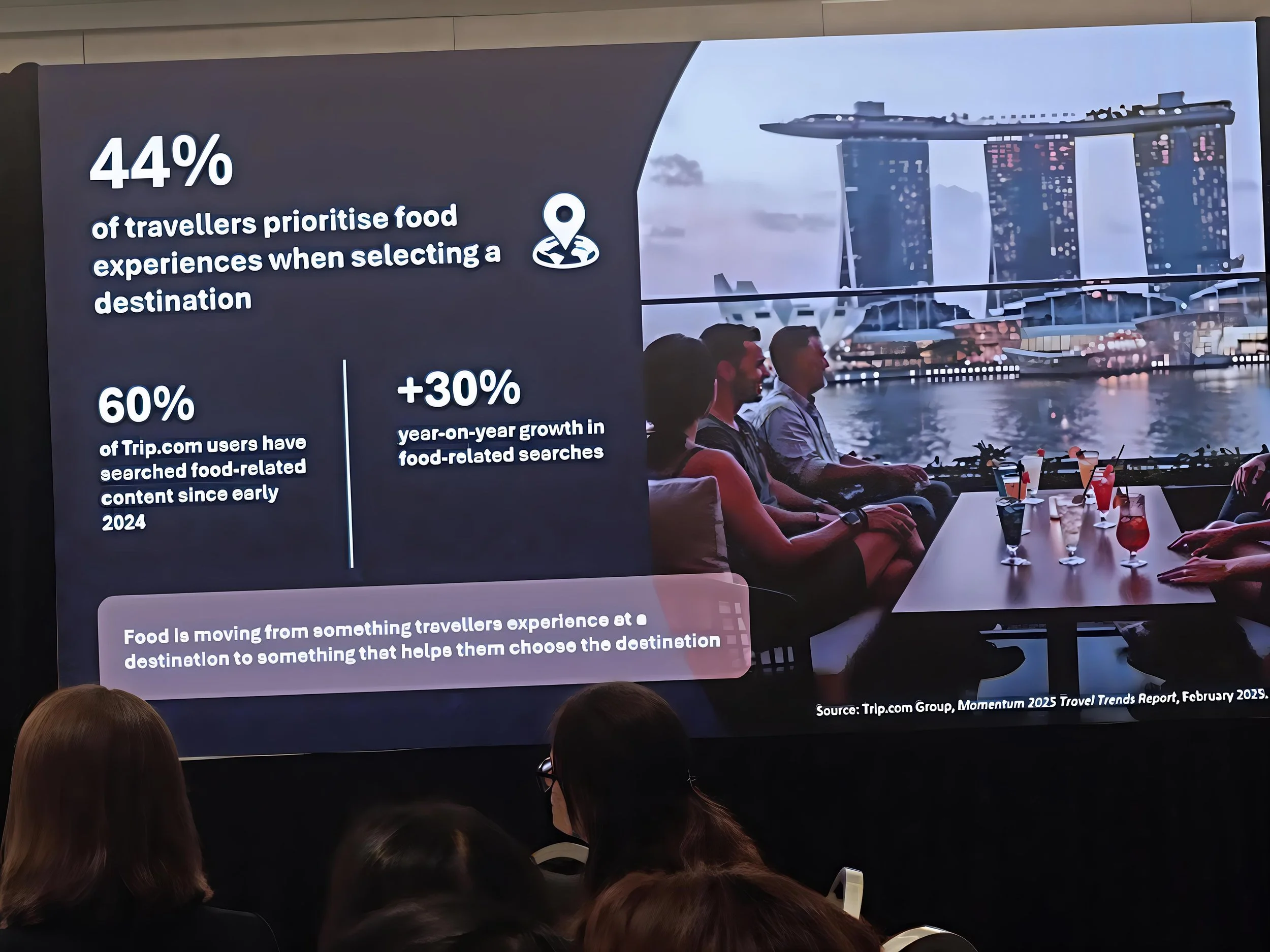
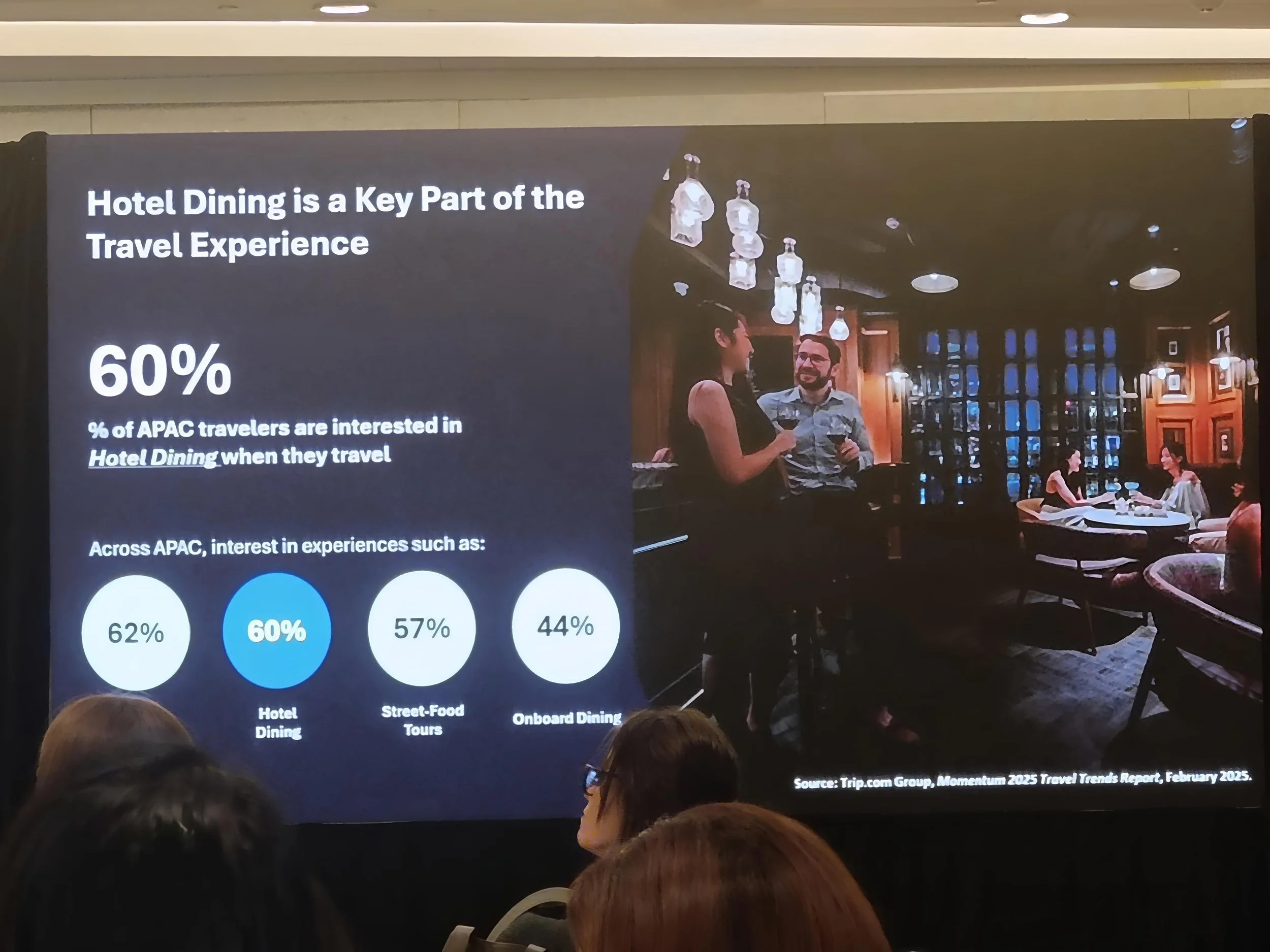
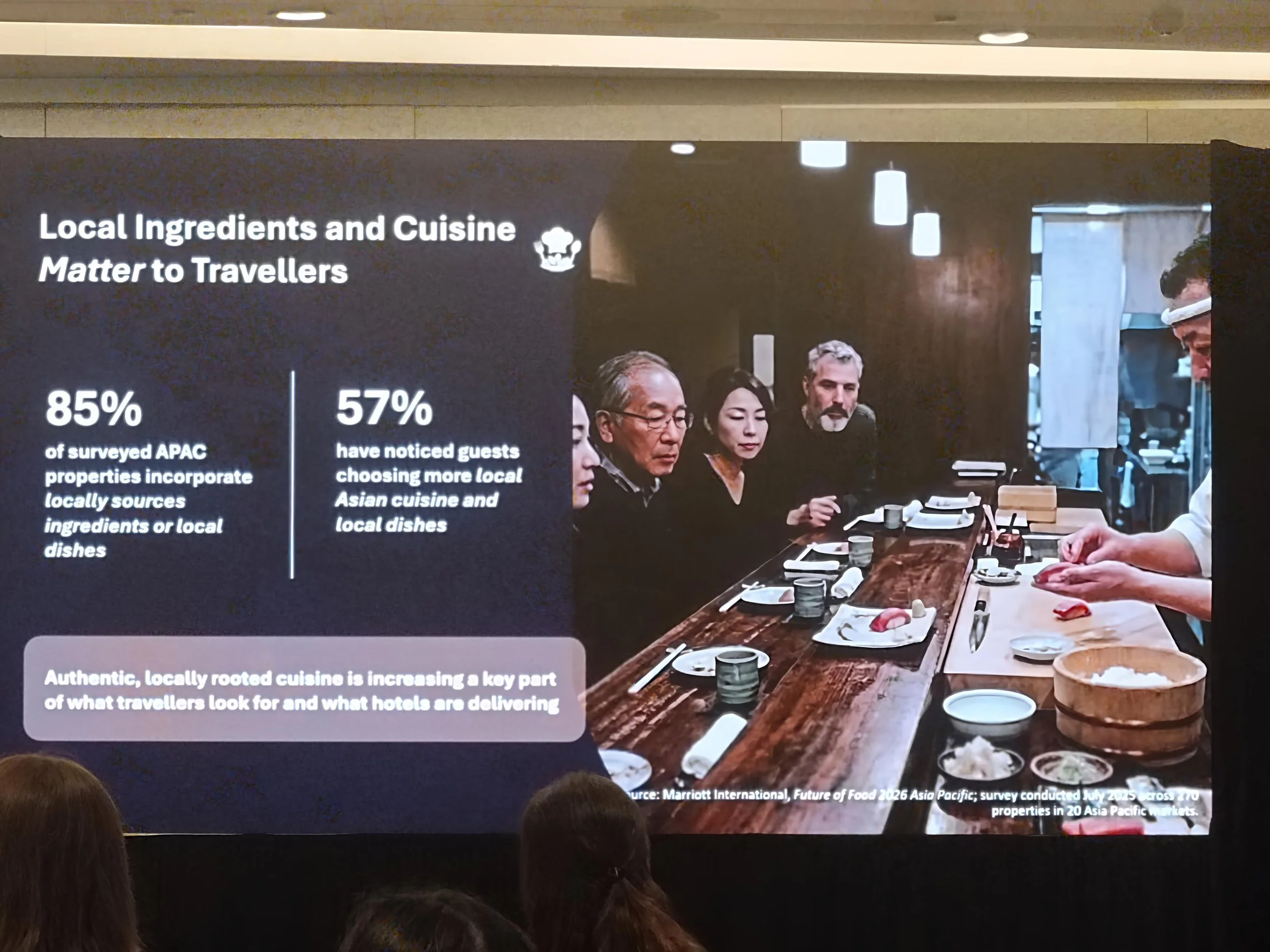
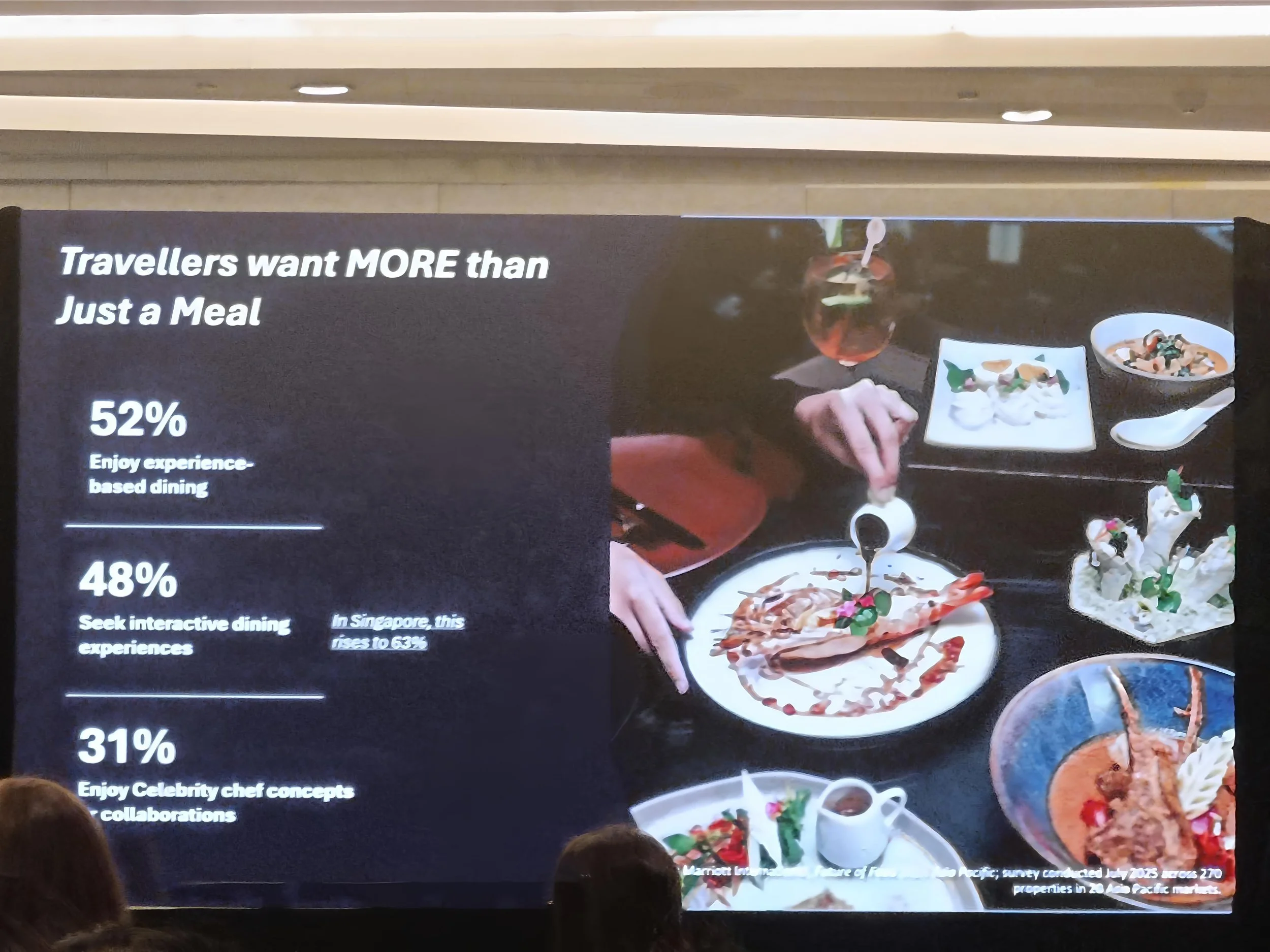
From the panel’s presentation. Photos by Rhea Vitto Tabora
The restaurant has to work for locals, not just guests
The panel also addressed the influence of social media and AI-driven discovery. TikTok, Instagram, and AI search are now major channels for restaurant discovery. This creates pressure to design for visual impact. However, the speakers cautioned against confusing visibility with loyalty.
A dish or room designed for the camera can generate initial traffic, but it does not necessarily drive repeat business. A better benchmark is whether local diners return when they are not staying upstairs.
That is why Raba emphasized that hotel restaurants should be treated as independent restaurants that happen to be located inside a hotel. They need their own identity, their own audience, and a reason for city residents to choose them without a hotel room attached.
He suggested aiming for 80% local diners and 20% in-house guests.
That changes how the concept is built, marketed, and measured. A restaurant designed primarily to serve in-house guests depends on occupancy. A restaurant that becomes part of local dining helps build occupancy. This strategy increases covers, strengthens the hotel’s place in the location, and gives travelers one more reason to choose the property.
The discussion also covered solo dining. As solo travel grows, menu designs, seating layouts, and service styles need to adapt. A table for one should not feel like an inconvenience or an afterthought.
The panel’s point was simple: having a restaurant on property is not a competitive advantage by itself. It becomes an edge only when the concept has a clear identity, local relevance, and the consistency to stand on its own without in-house guests filling the room.
3. Loyalty is being rebuilt around value, ease, and recognition
Wayland opened the session by saying that loyalty used to mean points and a free night. Today, he said, travelers want recognition, experiences, and a reason to come back. They are also more willing to switch if they do not get it.
The panel brought together three different models: Accor Plus as a paid subscription, YOTEL as a brand integrating into Hilton Honors, and Travel + Leisure Co. from the vacation ownership side.
Points still matter. But they no longer explain the whole relationship on their own.
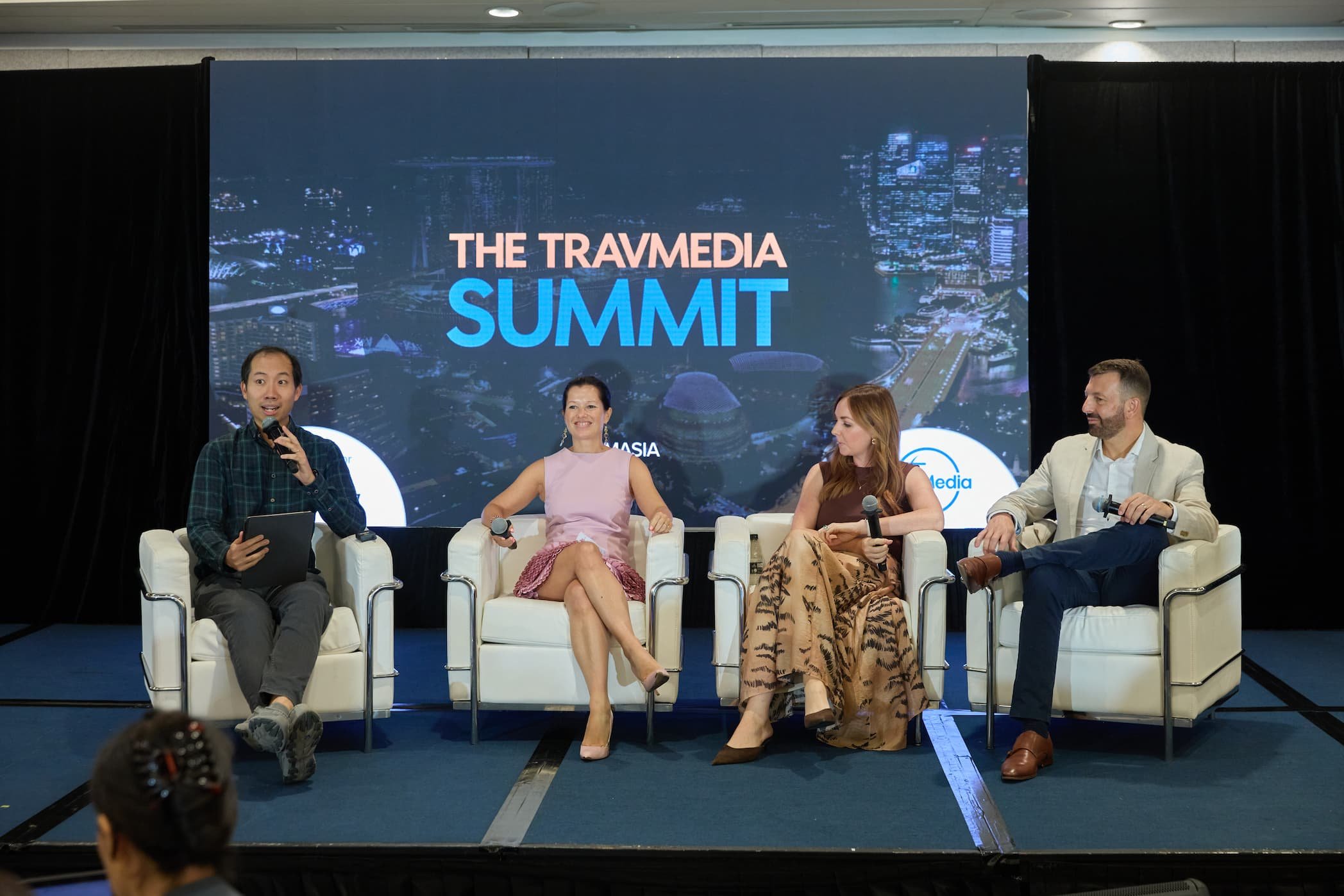
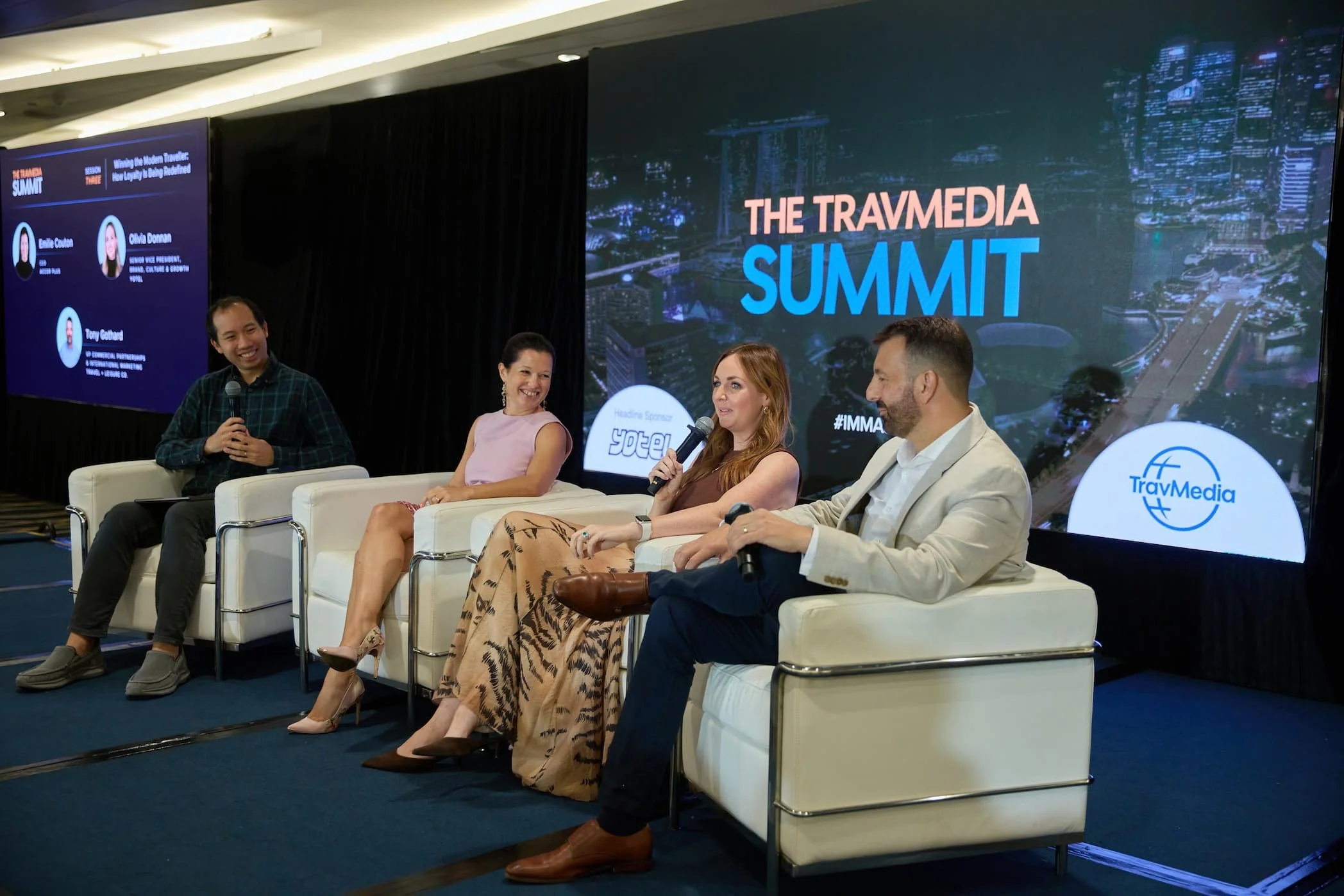
'Winning the Modern Traveler: How Loyalty Is Being Redefined' panel. From left: moderator Aaron Wong, Founder of The MileLion; panelists Emilie Couton, CEO of Accor Plus; Olivia Donnan, Senior Vice President, Brand, Culture & Growth at YOTEL; and Tony Gothard, VP, Commercial Partnerships & International Marketing at Travel + Leisure Co. Photos by TravMedia
Points may get attention, but the stay still has to work
Olivia Donnan, Senior Vice President, Brand, Culture & Growth of YOTEL, described loyalty through three parts: points, product, and people. Points get a brand into consideration. Product helps the guest decide whether the stay suits them. People shape the lasting impression of the stay.
That feels closer to how guests actually experience loyalty than the old CRM-led view of the category. The program may live in an app or a member dashboard, but guests notice whether the stay is useful, whether the benefits are relevant, and whether the brand recognizes them when they return.
Donnan was careful not to dismiss points. When YOTEL retired its instant-reward model, some members wrote in asking what would happen to their points, even though the program had never offered points. That reaction says a lot about how strongly points still shape what members expect.
Paid travel loyalty membership has to prove its value quickly
For Accor Plus, the challenge is more immediate because members pay upfront.
“They want to see the value delivered right away,” said Emilie Couton, CEO of Accor Plus.
During the session, she emphasized immediate, tangible value. She gave a simple example: a member paid A$369 for membership, spent A$2,000 on a trip to Japan, and saved A$550. The math was straightforward. The value did not need much explaining.
Couton said that Accor Plus’s The New Travel Value Exchange report, based on 7,078 consumers across 11 markets and released on October 19, 2026, informed their revamped paid loyalty program. One key finding was that stay benefits and price together accounted for 62% of what drove membership choice.
This suggests members are not necessarily asking for more. They want benefits that are clearer and easier to use.
Joining and renewing are not driven by the same things
One thing the Accor Plus research made clear is that the reason someone joins is not always the reason they renew. People may sign up for the obvious value, like stay savings or complimentary nights. But once they start using the program, other things begin to matter more: how smoothly the benefits work, how often the brand communicates, whether the offer still feels relevant, and whether membership feels like part of an ongoing relationship rather than a one-off transaction.
According to Accor Plus, the top five factors influencing renewal were:
Cost to renew — 23%
Frequency of communications — 12%
Seamless application of the discount — 10%
Feeling part of the community — 9%
Easy to understand which hotels are part of the program — 7%
Recognition still does a lot of the work
Other panelists emphasized that loyalty now depends heavily on recognition and ease of use.
At YOTEL, Donnan said the brand had to carefully consider what benefits made sense for its guest profile as it integrated into Hilton Honors. Rather than defaulting to free breakfast as a standard elite perk, YOTEL introduced a “My Way” benefit, allowing members to choose between bonus points and F&B credit.
That makes sense for a guest profile that is often short-stay, time-aware, and digitally fluent. Many guests check in at kiosks. In that environment, recognition has to work digitally and in person. If the system fails to identify the guest properly, surface the right benefit, or acknowledge their status, one of the key moments when loyalty becomes visible is lost.
Travel + Leisure Co. offered a different example. Tony Gothard described how a general manager at Wyndham Grand Phuket Kalim Bay recognized that male Saudi guests could not use the spa because it employed only female therapists. The hotel hired male therapists so those guests could use the facility in line with their cultural and religious practices.
It was also a useful reminder that recognition is not only about tier or transaction history. It can also mean understanding who the guest is and removing a barrier that would otherwise go unaddressed.
4. Calm is a commercial advantage in a crisis
Phillipa Harrison, CEO of Ras Al Khaimah Tourism Development Authority, spoke about crisis communication from experience. She has led destination marketing through three major crises: Australia’s bushfires, the COVID border closures, and the more recent regional conflict affecting the Gulf.

Phillipa Harrison, CEO of the Ras Al Khaimah Tourism Development Authority, speaks at The TravMedia Summit Asia 2026 on why calm, clarity, and facts matter most when destinations are navigating conflict and uncertainty.
She opened her talk with Tourism Australia’s Matesong, a $15 million campaign launched on Christmas Day 2019 to attract travelers from the United Kingdom. It was pulled shortly after launch as the bushfire crisis escalated.
The larger problem, Harrison said, was not withdrawing the campaign itself. It was managing the gap between what was happening on the ground and what the world believed was happening.
A crisis, she highlighted, runs on two narratives. One is operational reality: what is closed, what is open, where the disruption is, what still works. The other is confidence: what people have seen, what they think they know, and whether they would put their family on a plane.
Those two narratives, she said, don’t run at the same speed.
Crisis communication experts describe that gap as the “second catastrophe,” a concept Harrison cited through the work of Prof. Dr. Wolfgang Arlt, founder of Meaningful Tourism, and Sven Klawunder, journalist, tourism media expert, and CEO of Flying Media.
It is what happens when a localized event becomes a generalized perception that lingers long after the operational facts change. Bushfires in parts of Australia become the idea that all of Australia is burning. Regional conflict becomes the idea that the whole Middle East is unsafe. Airports reopen. Hotels operate. Guests do not return at the same pace because confidence has not recovered.
That gap is where much of the commercial damage sits.
Rather than speaking about resilience in abstract terms, Harrison offered a 10-rule playbook, many of which she said she learned the hard way.
The 10 rules
1. Pause the marketing, not the relationship.
Stopping a campaign, Harrison emphasized, should not mean going silent. During the bushfires, Tourism Australia shifted from marketing to sharing information about where the fires were, where they were not, and which businesses were still open. She said the same principle shaped later decisions during COVID and in Ras Al Khaimah, where campaigns were paused, delayed, or reduced, but partner relationships were kept active.
2. Assume the world will see it before you can explain it.
Harrison said that in a crisis, the world now sees the event before a destination has time to explain it. In earlier crises, that happened through evening news; now it happens through livestreams, social media posts, and videos that may not even be real. By the time the facts are clear and an official statement is drafted, people may already have formed a view of what is happening.
3. The first six hours set the tone for the next six months.
Referring to what crisis communications specialists call “The First Six,” Harrison said those early hours matter because they set the tone for what follows. That is often the point when someone has already posted a video, a reporter wants a statement, and a travel agent wants to know what to do, while the destination is still trying to establish the facts. That is why crisis plans must be ready in advance, including who communicates, how, and to whom.
4. You cannot communicate enough.
One of Harrison’s early lessons from the bushfires was that working hard behind the scenes is not the same as keeping the industry informed. She recalled a board member telling her that while Tourism Australia knew what it was doing, partners on the outside did not. By the time COVID hit, the organization had become far more deliberate about frequent updates, using daily summaries, weekly webinars, and regular stakeholder communication to make sure operators, staff, and industry partners knew what was changing and what it meant for them.
5. You are not the source of truth. You are the source of trust.
Harrison said the source of truth in a crisis is the official authority (governments, emergency services, health agencies) dealing with the event itself, not the destination marketer. But she said destinations can become a source of trust by curating and verifying the information people most need. That role, she suggested, matters even more now because of how much misinformation can circulate during a crisis.
6. Give facts, not slogans.
Harrison said the answer is to give travelers the facts so they can make an informed choice. She also said she avoids using “safe” as a blanket claim, preferring to answer with concrete details, numbers, and her own experience where relevant.
7. Put the number that hurts next to the number that helps.
She highlighted that if you share only the good numbers, “you’re going to lose credibility as a trusted source.” In her example, that meant pairing record first-half arrivals and stronger domestic demand with the less flattering data: arrivals through Dubai Airport were down 80% in the first couple of months, and hotel occupancy was still expected to finish the year at least 20% below 2025. The point was not to undercut the recovery story, but to tell it in a way people could trust.
8. Approach recovery as a market-by-market process, not a launch date.
Harrison said recovery does not happen evenly because different markets have different risk profiles. In her experience, the markets that are closer and know the destination better tend to understand the more nuanced story and return sooner, while others take longer. That is why, she said, recovery has to be approached market by market rather than treated as a single return-to-normal moment.
9. Fish where the fish are.
When international markets disappear overnight, destinations have to look at where business can still come from. In each crisis she has managed, Harrison said, the domestic market helped hold the line. In Australia, domestic travel carried the sector through border closures. In Ras Al Khaimah, it helped support the destination when international demand fell. When one source market weakens, redirect your effort wherever demand still exists.
10. People-first decisions, every single time.
“It’s really important that you look after your people because calm really only works if the whole organization is calm,” Harrison said. A team worried about its job, left in the dark, or absorbing distressed conversations without support cannot project steadiness to guests, partners, or the media. She described putting staff through counselor training because of the emotional weight of the calls and conversations they were handling.
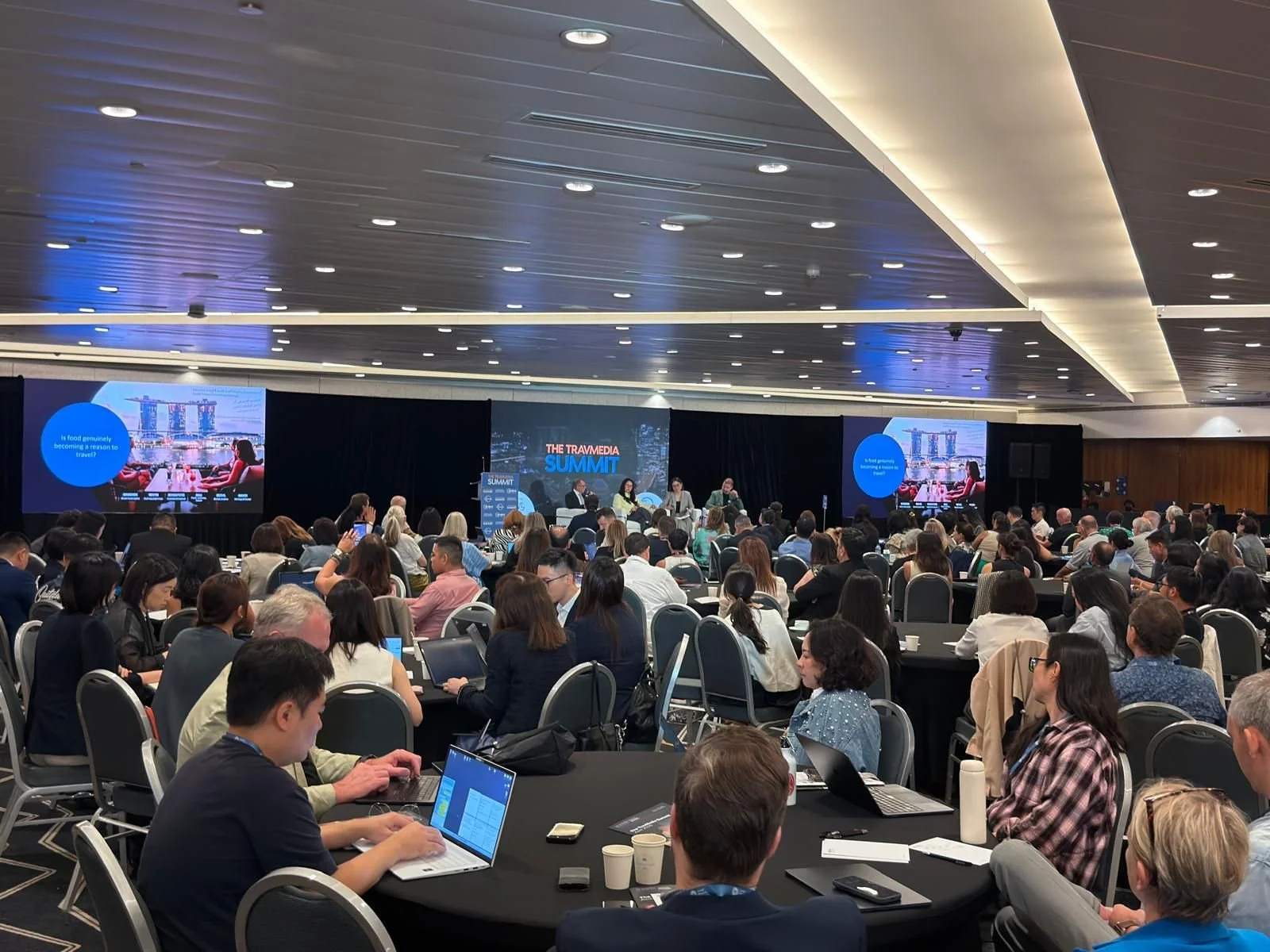
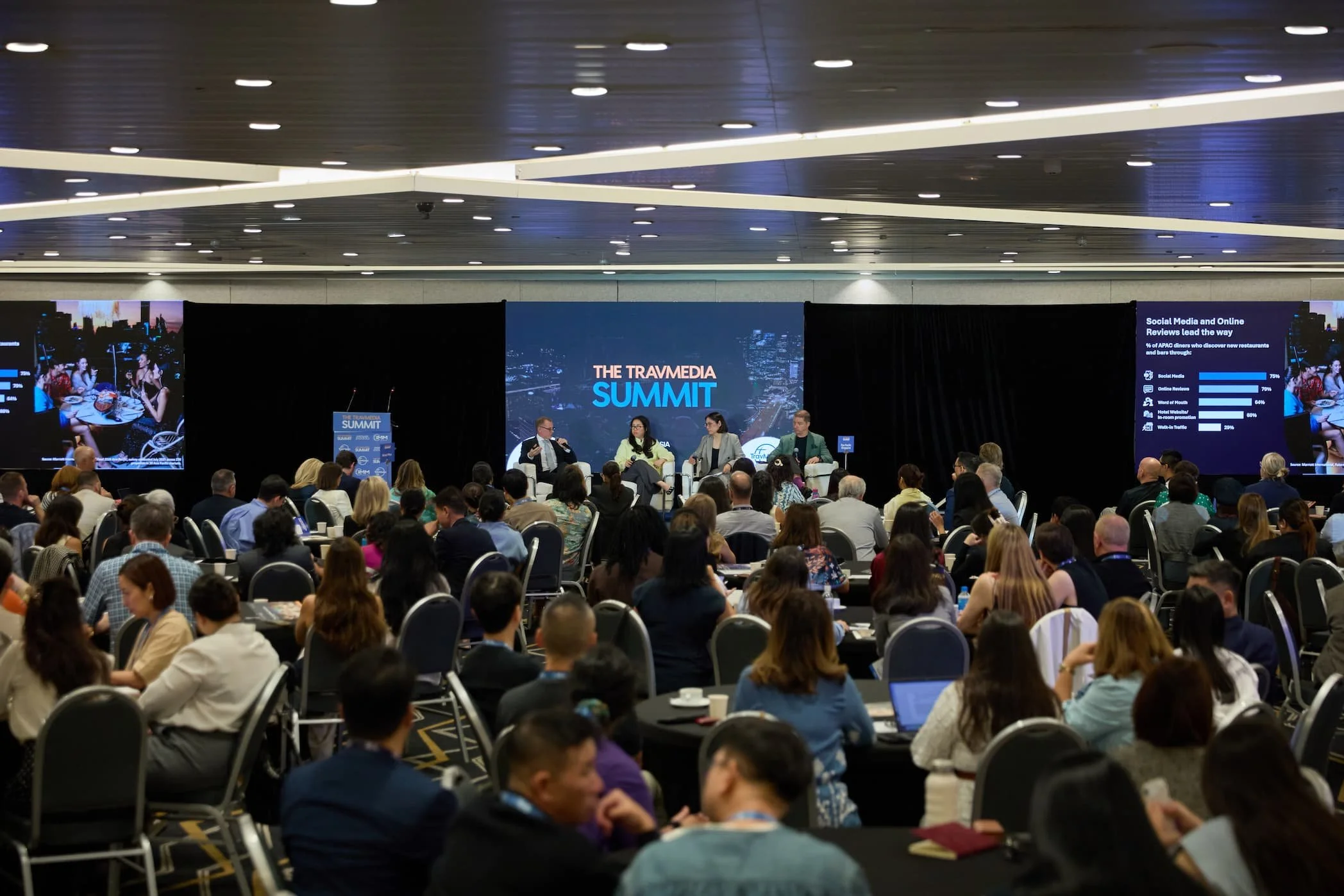
More than 300 travel media, PR professionals, and hospitality and destination marketing leaders gathered at Suntec Singapore for The TravMedia Summit Asia 2026 to examine how APAC travelers are choosing destinations now and what is shaping those decisions. Photos by TravMedia.
The TravMedia Summit Asia 2026 covered more than these four sessions, but they were enough to bring one commercial reality into focus.
Travelers are still spending. They are simply less willing to spend without a clear reason.
For hotels, that extends well beyond distribution strategy. If guests are buying a reason, not just a room, the offer has to stand out more clearly on its own terms: a trip purpose that feels distinct, food and beverage that deepens the sense of place, a loyalty proposition that is easy to use, and communication that remains truthful and dependable when conditions become less certain.