
A rooftop aquaponics farm, back-of-house equipment, a food-waste loop, and room systems show where a high-volume city complex is finding measurable gains.
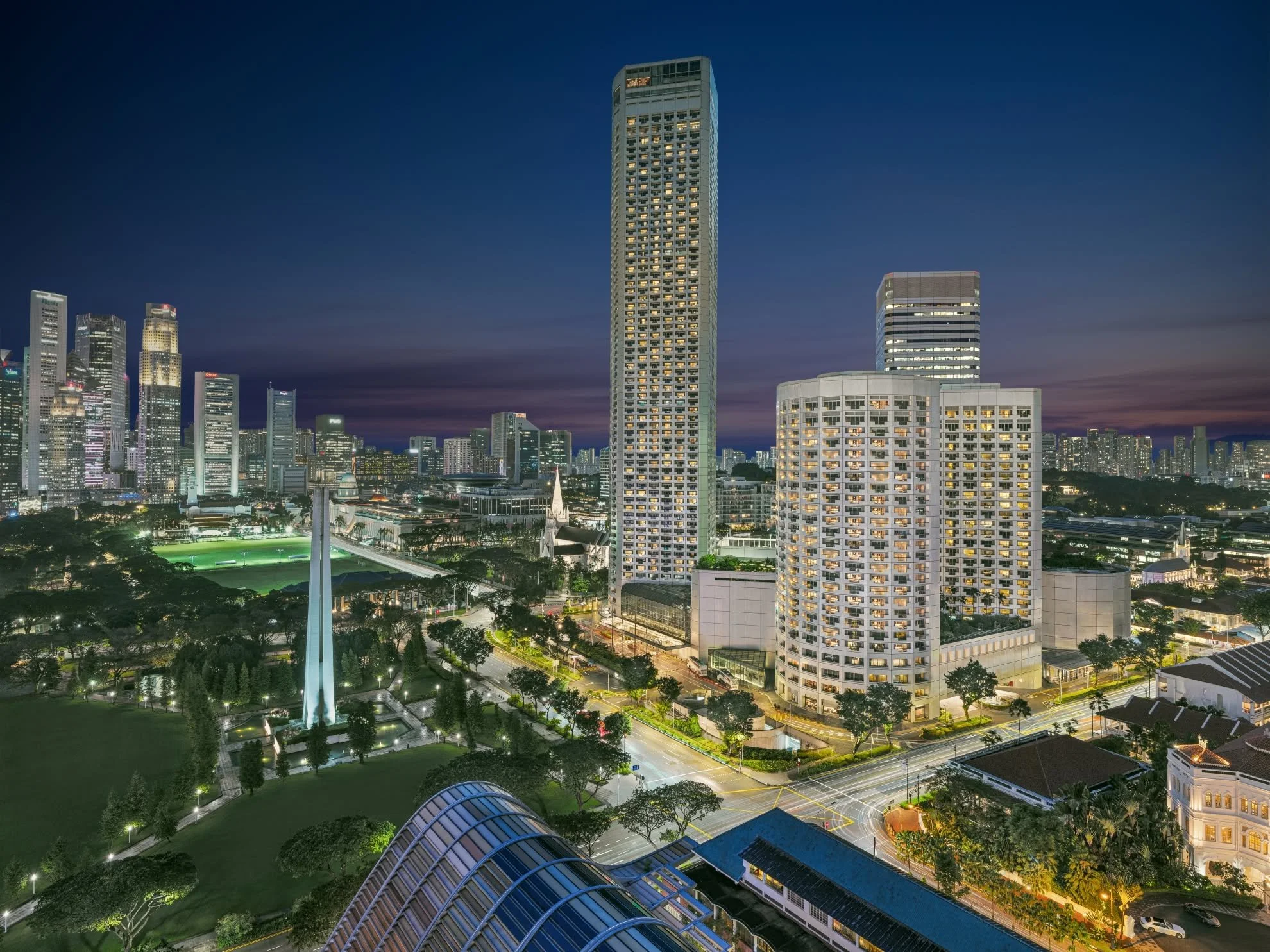
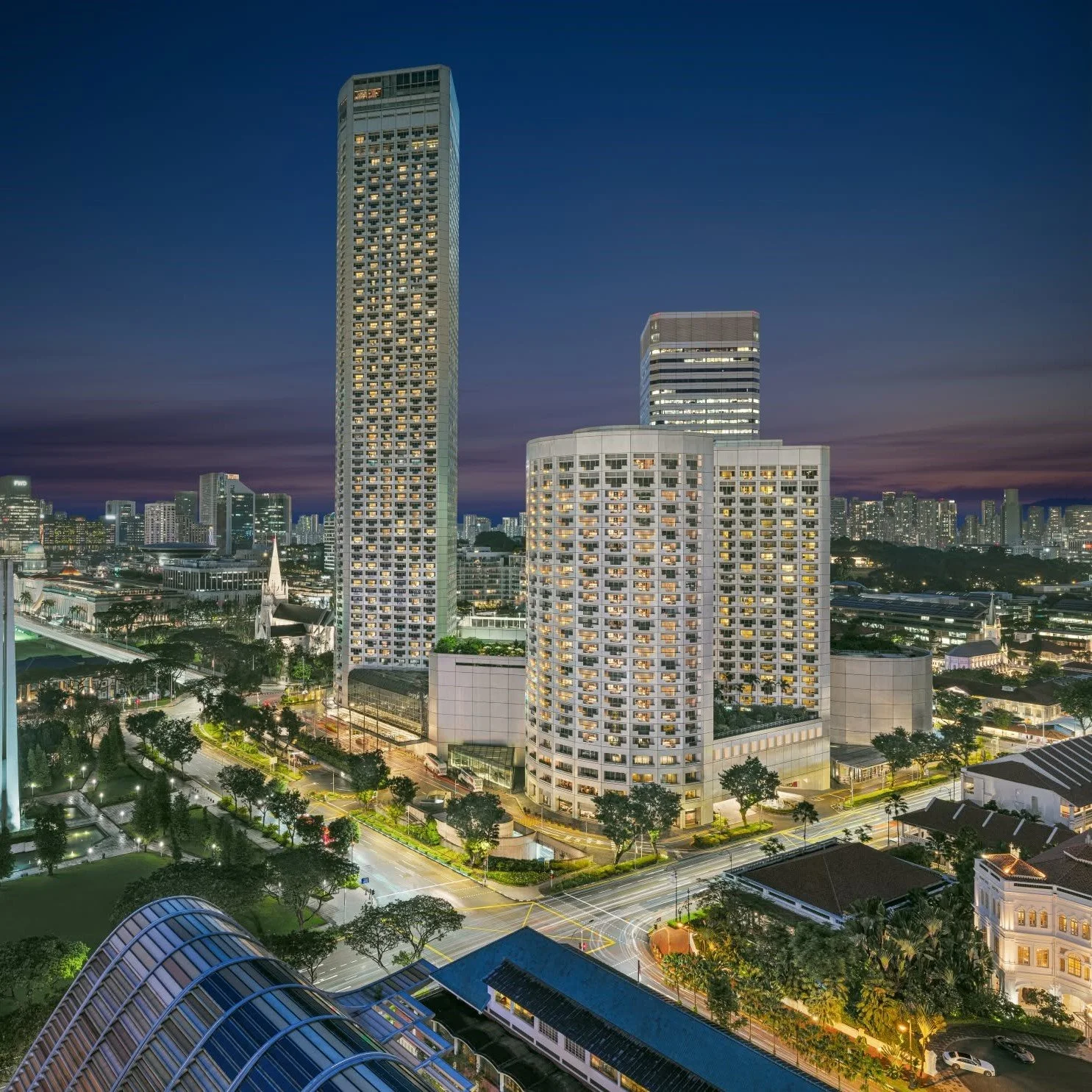
Fairmont Singapore and Swissôtel The Stamford within the Raffles City complex in Singapore
Between two towers in Singapore’s Civic District, above City Hall MRT station, a rooftop aquaponics farm grows pandan, watercress, laksa leaf, and other leafy greens and herbs, along with tilapia for the kitchens and lounges below.
"What surprises guests most is simply discovering that there's a working farm nestled between two skyscrapers in the middle of Singapore. It's not something people expect to find at a city hotel!" says Julia Lim, Senior Director of Marketing and Director of Sustainability. She says guests are often struck when they see ingredients grown on site make their way into the food and drinks served at the hotels.
Fairmont Singapore and Swissôtel The Stamford sit side by side within the Raffles City complex. Together, they offer more than 2,000 guest rooms and suites, 12 restaurants and bars, the Raffles City Convention Centre with 34 event spaces, and Willow Stream Spa.
Food, Farming and the Waste Loop
A Farm Sized to Its Role
The aquaponics farm launched in 2019 after earlier attempts at growing produce on site proved too limited for an operation of this scale. “Before launching the aquaponics farm in 2019, we had explored more conventional approaches to growing our own produce, including vegetable patches,” says Lim. “However, given the scale of our food and beverage operations, these simply couldn’t produce enough to make a meaningful contribution to our kitchens. We knew we needed to be more innovative.”
The farm, which covers 450 square meters, enabled the hotels to use the available space more effectively and to produce fresh ingredients for their restaurants and bars. The crops include lettuces such as romaine and Batavia, kale varieties such as Tuscan and curly kale, and an extensive selection of herbs and leafy greens. The farm also raises tilapia.
What It Produces
In 2025, the aquaponics farm produced approximately 1.02 metric tons of vegetables and 150 kilograms of fish, supplying fresh ingredients to several of the hotels’ dining outlets. That is modest against the demands of 12 outlets as described below. The hotels' own sourcing figures show how much food still comes from elsewhere, so the farm's contribution is best understood as targeted rather than comprehensive.
At CLOVE, produce such as mixed lettuce, pandan, watercress, and Brazilian spinach features in the kitchen, while Prego incorporates Tuscan and curly kale into its dishes. ANTI:DOTE uses a selection of farm-grown herbs, including cranberry hibiscus, sage, rosemary, dill, and laksa leaf, while pandan is supplied to the pastry kitchens. Mint is used at the Fairmont Gold Lounge, with dill incorporated into dishes at The Stamford Brasserie.
What It Teaches
The farm’s role has also evolved beyond food production. “Today, it's also an important educational platform, showing guests what can be achieved through urban farming, particularly in a land-scarce city like Singapore,” says Lim.
It has also become an important selling point. As a major Meetings, Incentives, Conferences, and Exhibitions (MICE) venue in the region, the complex is seeing sustainability move deeper into the sales process.
Lim says corporate and MICE clients are increasingly requesting sustainability certification details and environmental performance data during venue selection. Some clients go further, asking for waste management for their events or breakout sessions centered on sustainability. The rooftop aquaponics farm has become part of that offer, serving not only as a source of ingredients but also as a site for tours and discussions on urban farming and food systems.
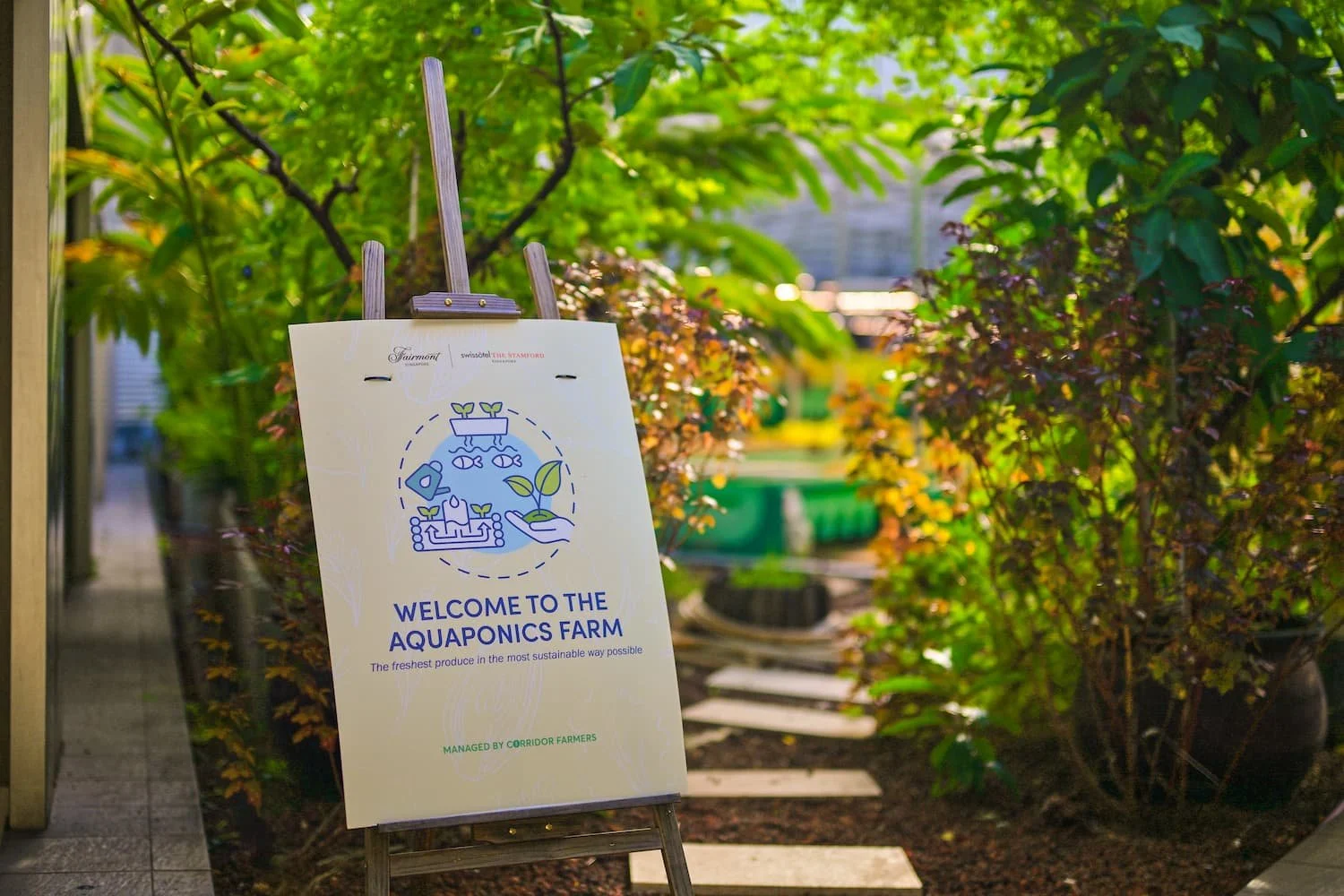
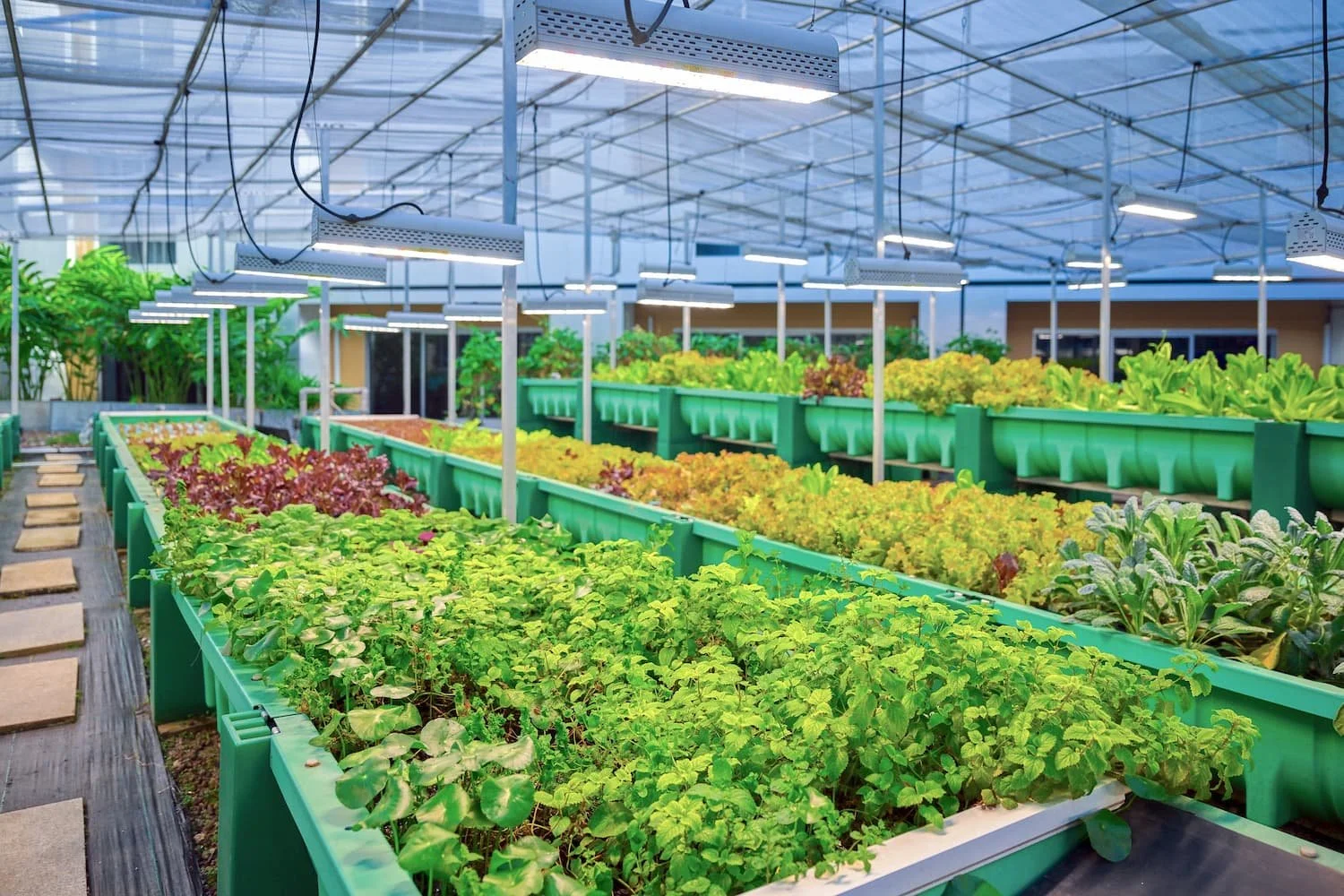
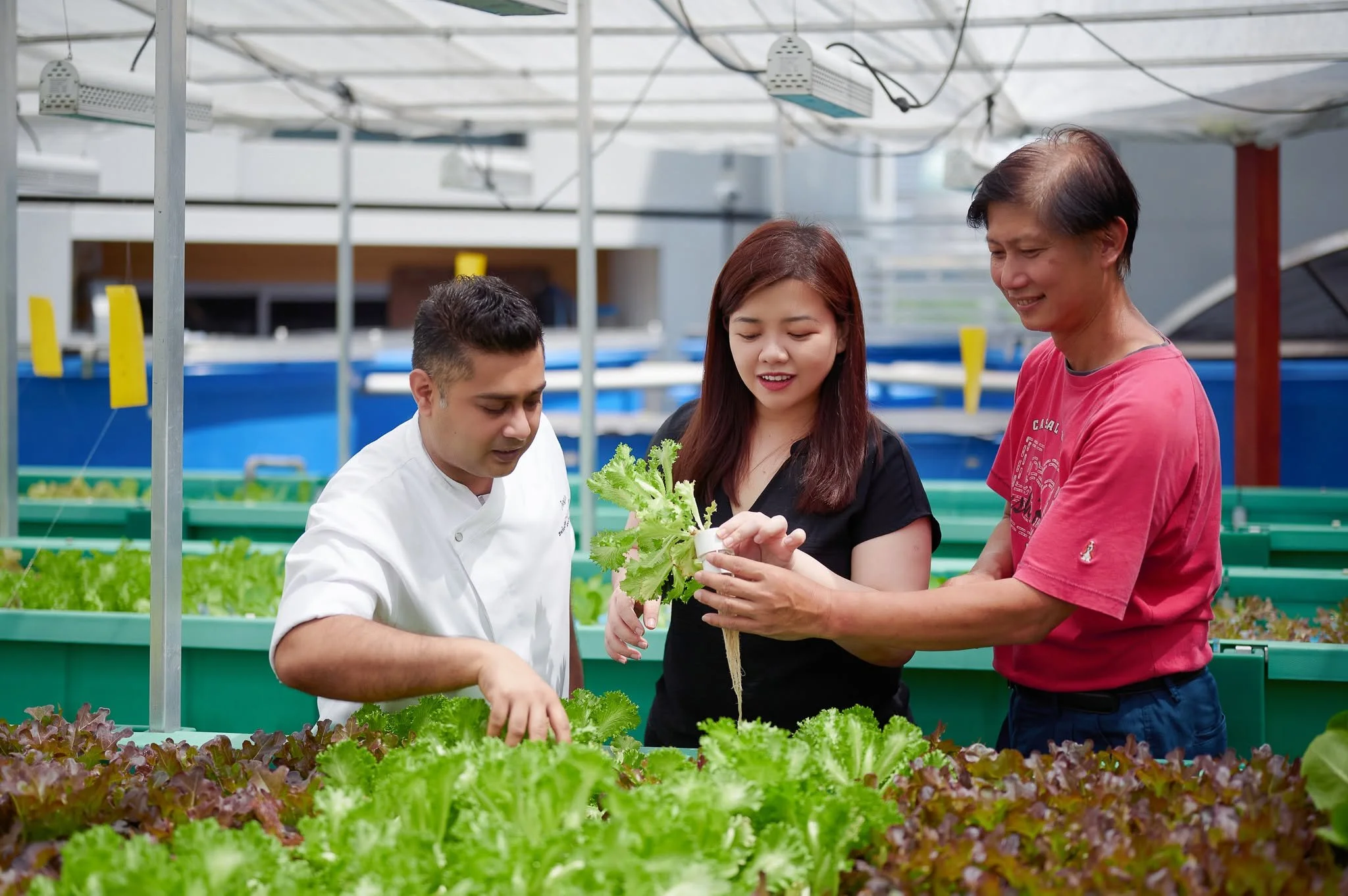
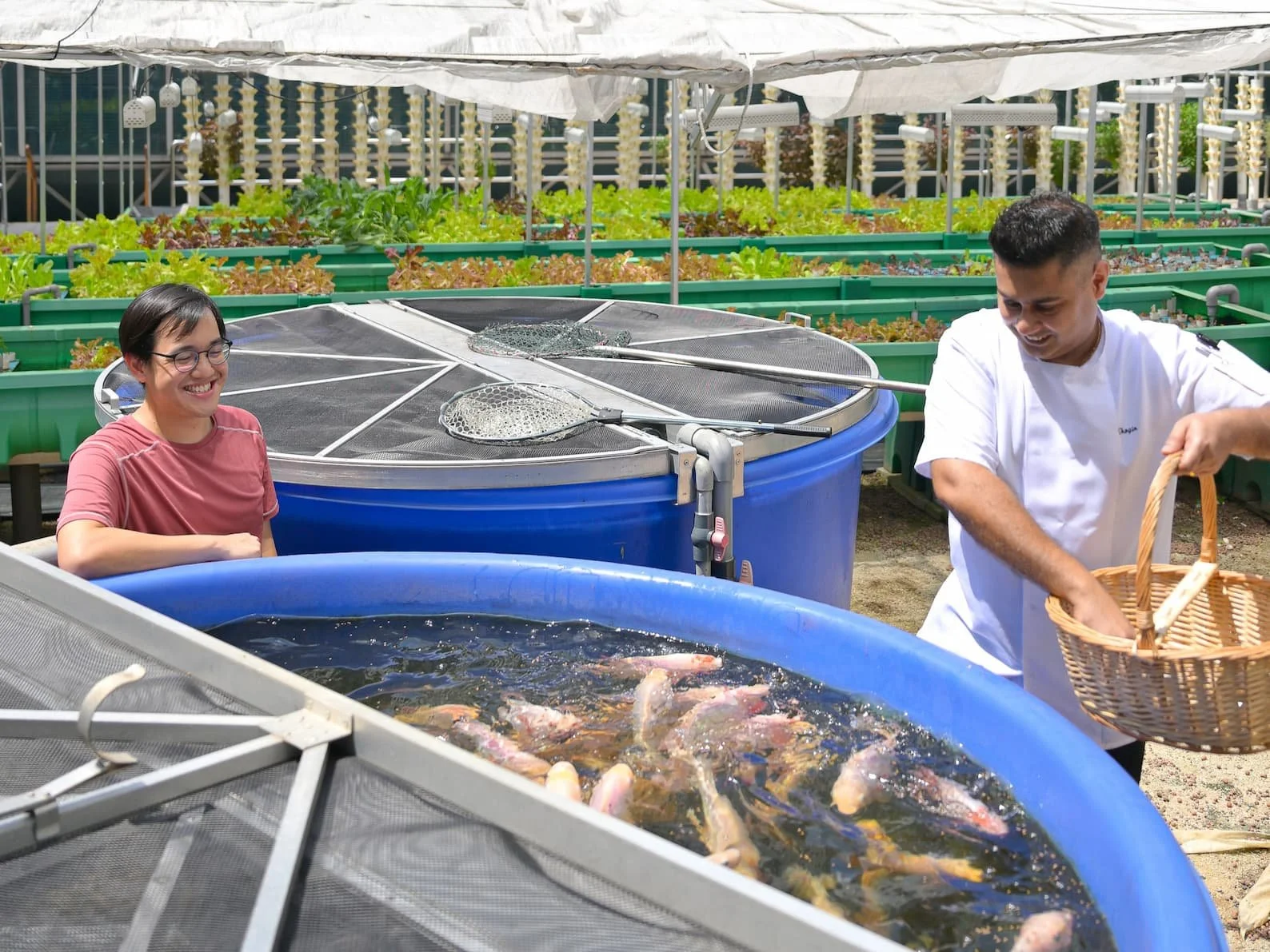
Fairmont Singapore and Swissôtel The Stamford’s rooftop aquaponics farm produces herbs, leafy greens, and tilapia for use across several dining outlets.
Supporting Local Producers
Fairmont Singapore and Swissôtel The Stamford also support local producers by combining their resources and expertise. In a partnership with local grower Mireia Vanilla, the hotels provide the space while Mireia brings the specialist knowledge needed to cultivate vanilla successfully.
“We've also been able to help raise awareness of their work through media features and culinary collaborations. In June 2026, for example, Mireia Vanilla was featured as part of our Kelong-to-Table buffet at CLOVE, which celebrated local producers and ingredients,” says Lim.
Vanilla cultivation is a long-term investment. It takes five to six years before the first harvest. Once established, the plants are expected to produce about one kilogram of vanilla pods a month.
The partnership gives the property a way to support a local producer while testing whether a traditionally imported ingredient can be grown locally.
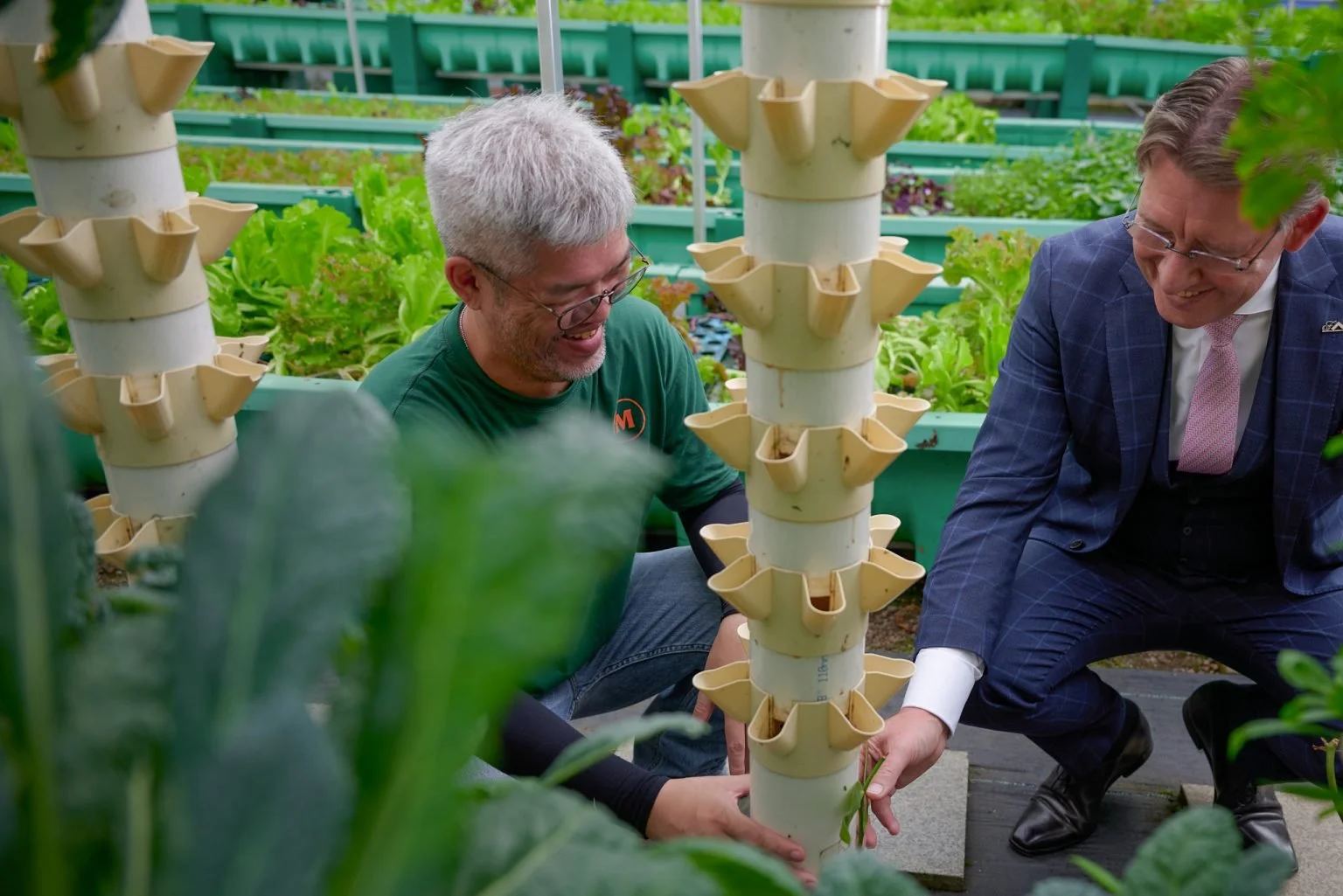
Charles Santoso (left), founder of Mireia Vanilla, with William J. Haandrikman, Managing Director of Fairmont Singapore & Swissôtel The Stamford, at the rooftop aquaponics farm exploring vanilla plant cultivation
Measuring Waste Before Cutting It
Lim identifies food waste as one area where the hotels have seen some of their clearest measurable results. “Through Lumitics' AI technology, we're able to monitor food waste more accurately and use the data to refine menus and reduce waste. We've also introduced food waste valorizers that convert food waste into fish feed for our aquaponics farm.”
The three food valorizer machines, with a combined capacity of 800 kilograms installed, dehydrate food waste on site. According to the hotel’s website, about 80% of the input is reduced to vapor, while the remaining 20% becomes substrate, which partner LifeLab processes into fish feed for the aquaponics farm.
Buffets are the obvious pressure point. “It’s all about careful planning and understanding business levels,” says Director of Culinary Nicholas Issel. Dedicated teams adjust production to expected demand. “A big part of my role is educating our chefs and establishing systems that allow us to produce the right quantities while maintaining the generosity of the dining experience.”
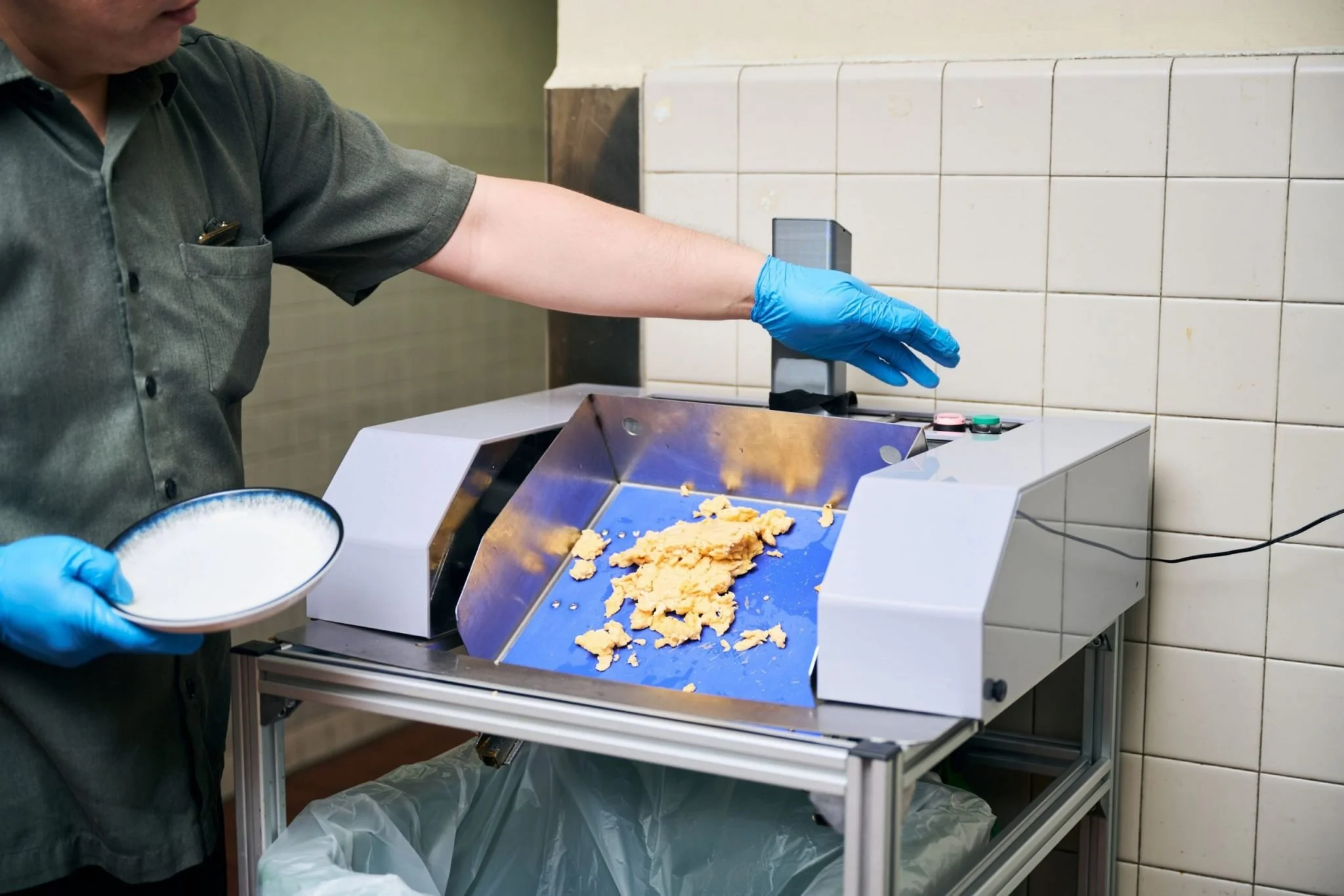
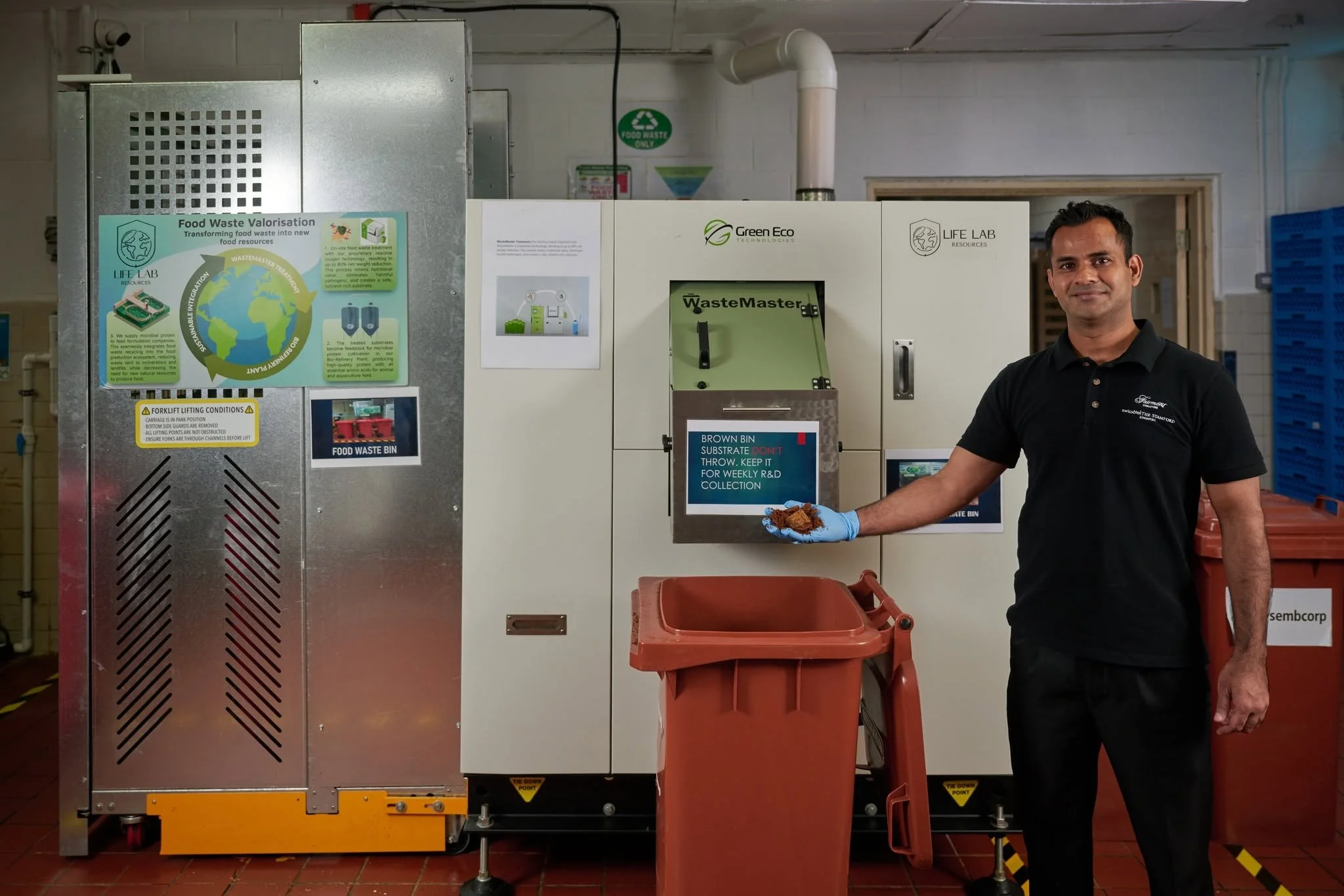
Lumitics food waste tracking technology (left) and on-site food waste valoriser machines (right) support Fairmont Singapore and Swissôtel The Stamford’s efforts to measure and reduce waste.
Sourcing Within Singapore’s Limits
Food sourcing is one area where Singapore’s geography imposes clear constraints. The hotels shared the following approximate breakdown of food purchases:
10–15% from Singapore
60–65% from Southeast Asia and the wider Asia-Pacific
20–25% from further afield, including Europe, Australia and New Zealand
The mix varies with availability, seasonality, quality requirements, and supplier arrangements.
“Singapore naturally has limitations when it comes to local food production, but the quality of what is available can be exceptional,” says Issel. Neighboring countries help fill the gap, supplying seafood, mushrooms, and organic chicken. “It sometimes takes a little more research and effort to find the right producers, but there are some real gems out there.”
Across 12 outlets, the challenge is to maintain quality and consistency while letting each concept keep its own identity. “We work closely with trusted suppliers to source the best possible ingredients,” Issel says, “balancing quality, sustainability and consistency while ensuring each of our dining concepts retains its own distinct identity.”
That sourcing approach also shapes how Singapore’s food culture appears on the plate. Issel describes the fish head curry at Asian Market Café as an example of “how different culinary traditions have come together to create something distinctly Singaporean.”
He adds that breakfast laksa at CLOVE is another favorite, “made with fragrant laksa leaf grown right here at our rooftop aquaponics farm. It's a lovely example of how we're incorporating locally grown ingredients into traditional dishes.”
Lim shares that the hotels have worked with suppliers to reduce packaging and single-use plastics while following Accor’s procurement policies, including fair employment practices. The challenge, she says, is that lower-impact alternatives “can sometimes come at a considerably higher cost.”
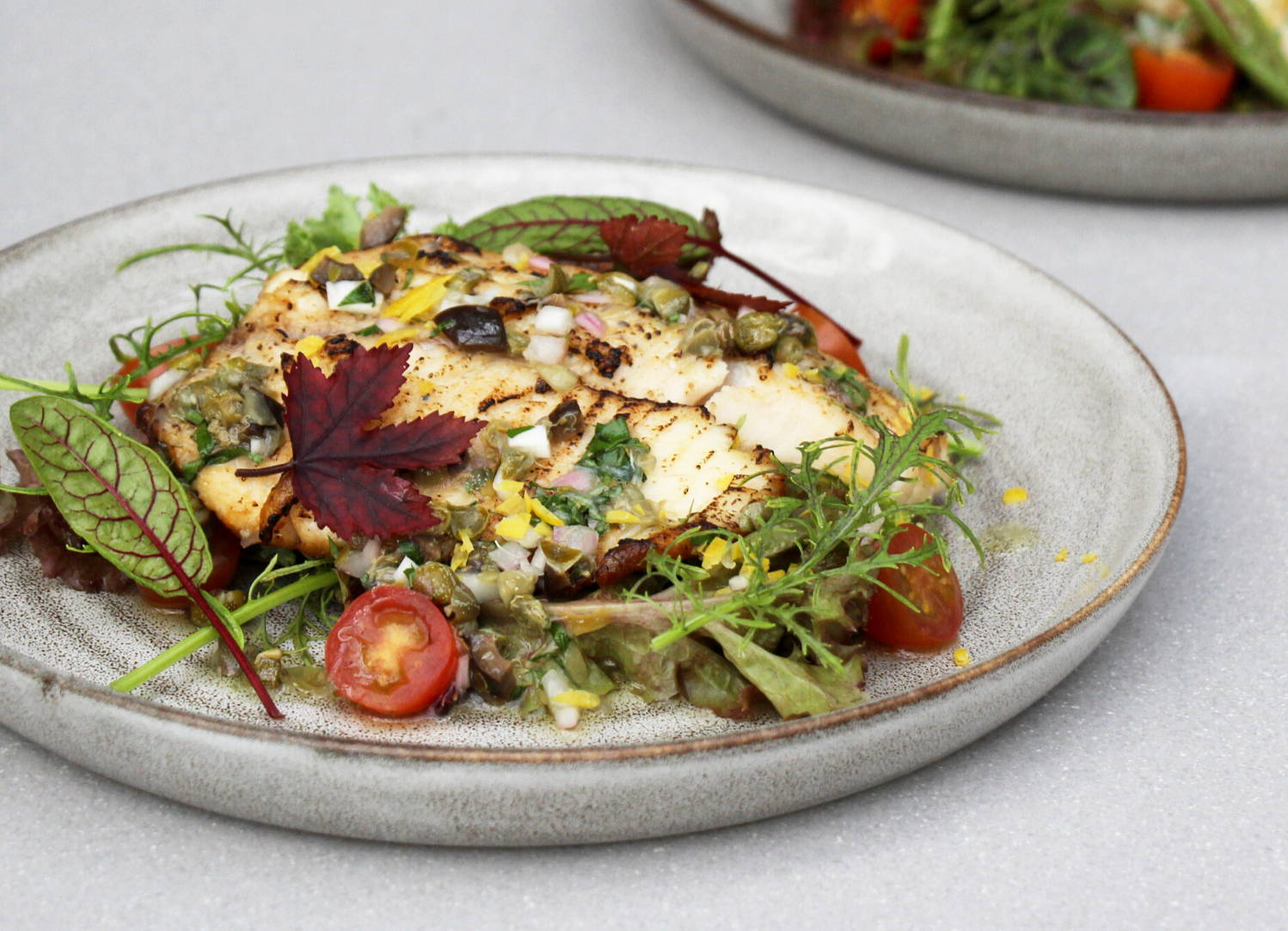
Seasonal Aquaponics Tilapia is one of several dishes prepared using fresh ingredients sourced from the hotel’s rooftop aquaponics farm.
Back-of-House Equipment: Where the Measurable Gains Are
The hotels report some of their clearest quantified savings in kitchen and banquet equipment. All figures below are hotel-reported.
Nor:disk commercial dishwashers clean and sanitize pots and pans in three-minute cycles.
Compared with manual pot washing, the hotels report these daily savings:
68% less water, from 4,860 liters to 1,585 liters
57% less energy, from 171 kWh to 74 kWh
50% less labor, from 16 hours to 8 hours
On the banquet floor, Eco Serve waterless and cableless chafing dishes replace water trays and open flames with hotplate technology. Based on 2024 usage, the hotels estimate that the system reduced carbon emissions by 21 metric tons, kept 6,283 kilograms of waste out of landfill, and saved 427,050 liters of water.
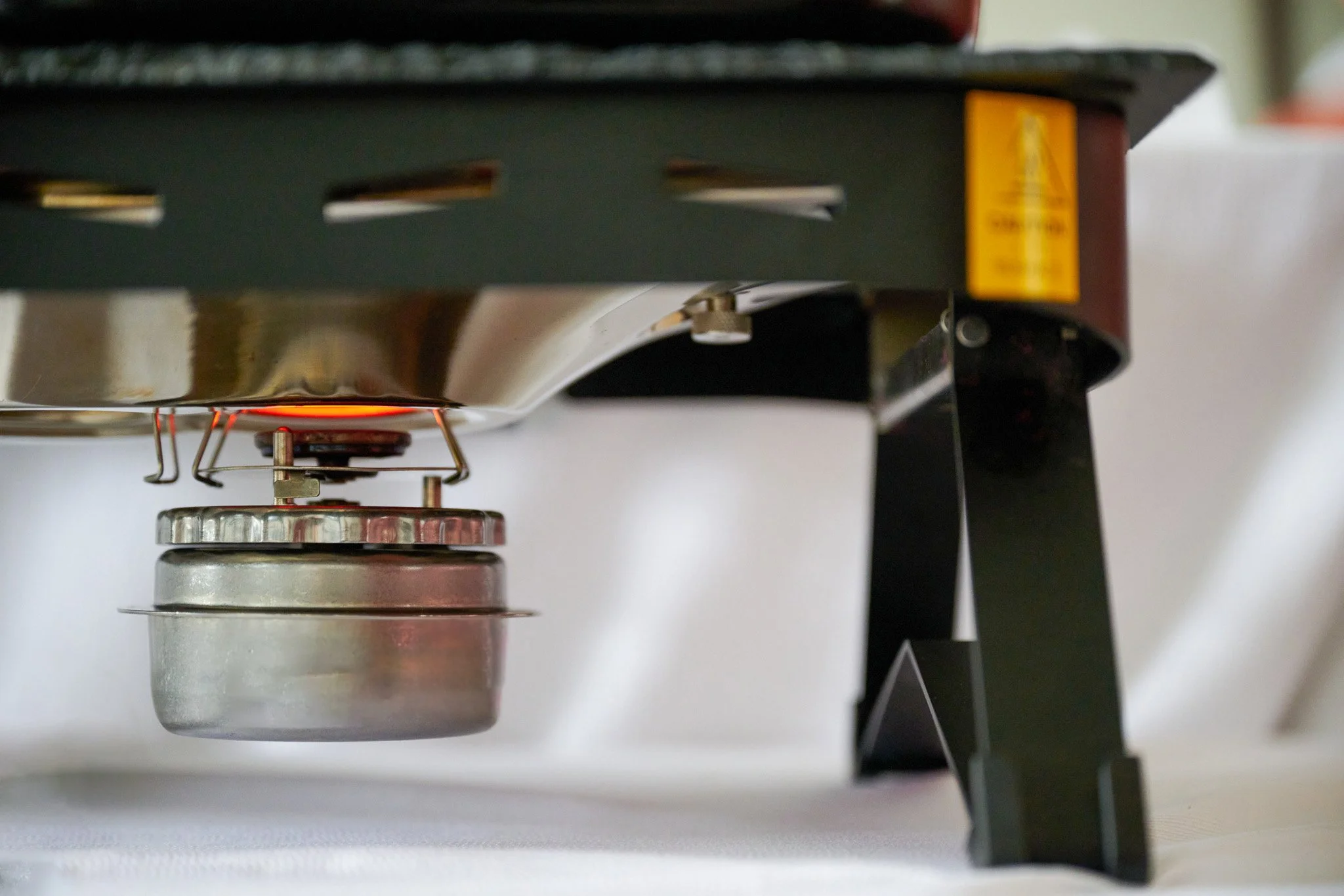
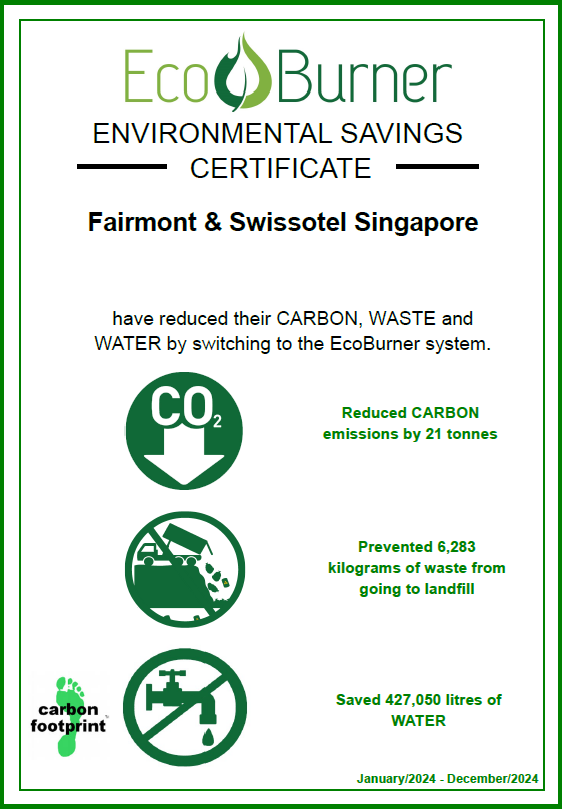
Eco Serve waterless and cableless chafing dishes used at Fairmont Singapore and Swissôtel The Stamford help reduce water use, waste and emissions in banquet operations.
Inside the Guest Room
During my stay at Swissôtel The Stamford, some of these measures were visible in the room.
The welcome message on the bedroom television explains the room’s energy-saving air-conditioning mode, which keeps the room at 25°C and pauses cooling when the balcony door is open. In-room sensors also detect whether guests are present, draw the curtains when the room is empty, and power down appliances after 20 minutes with no activity.
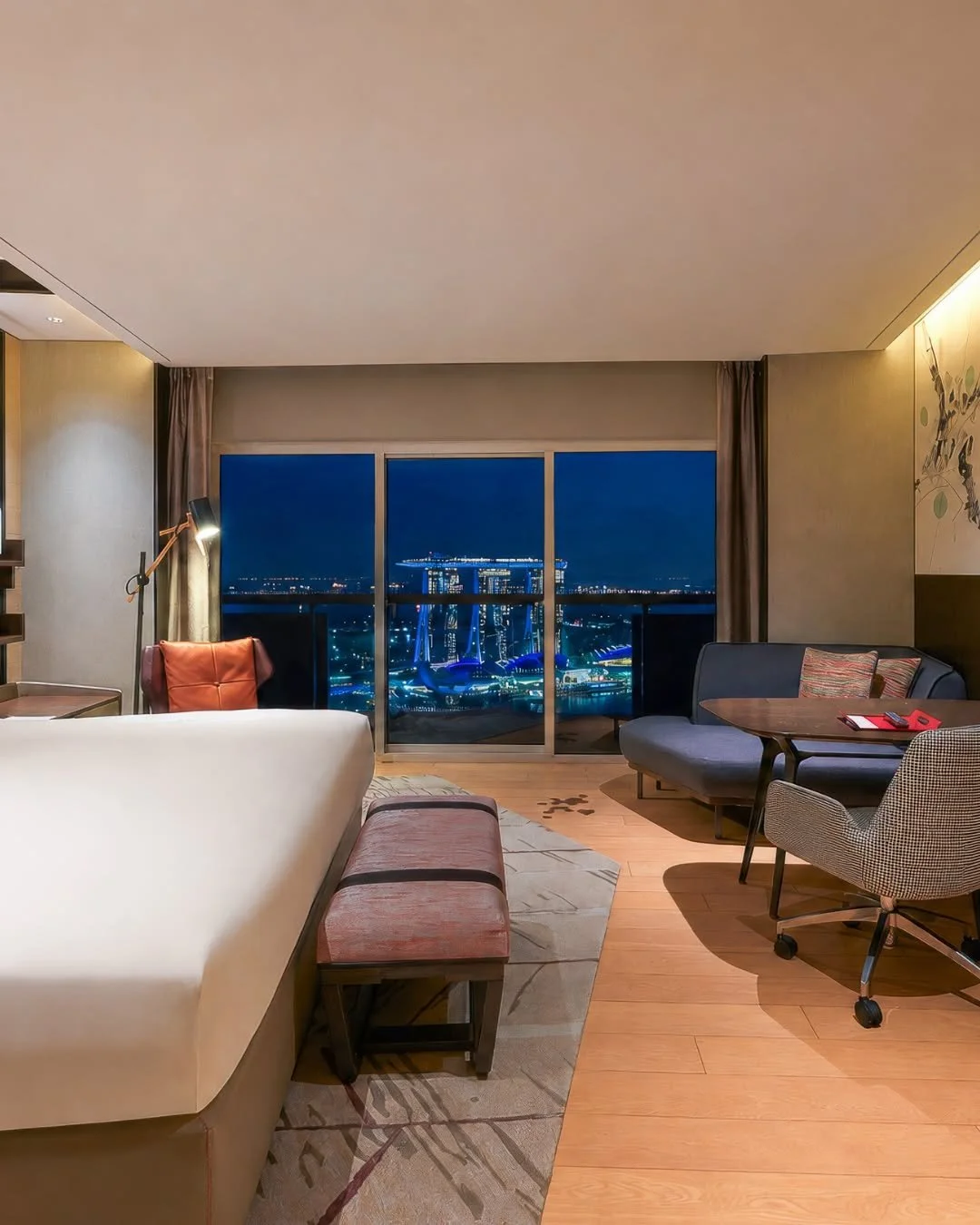
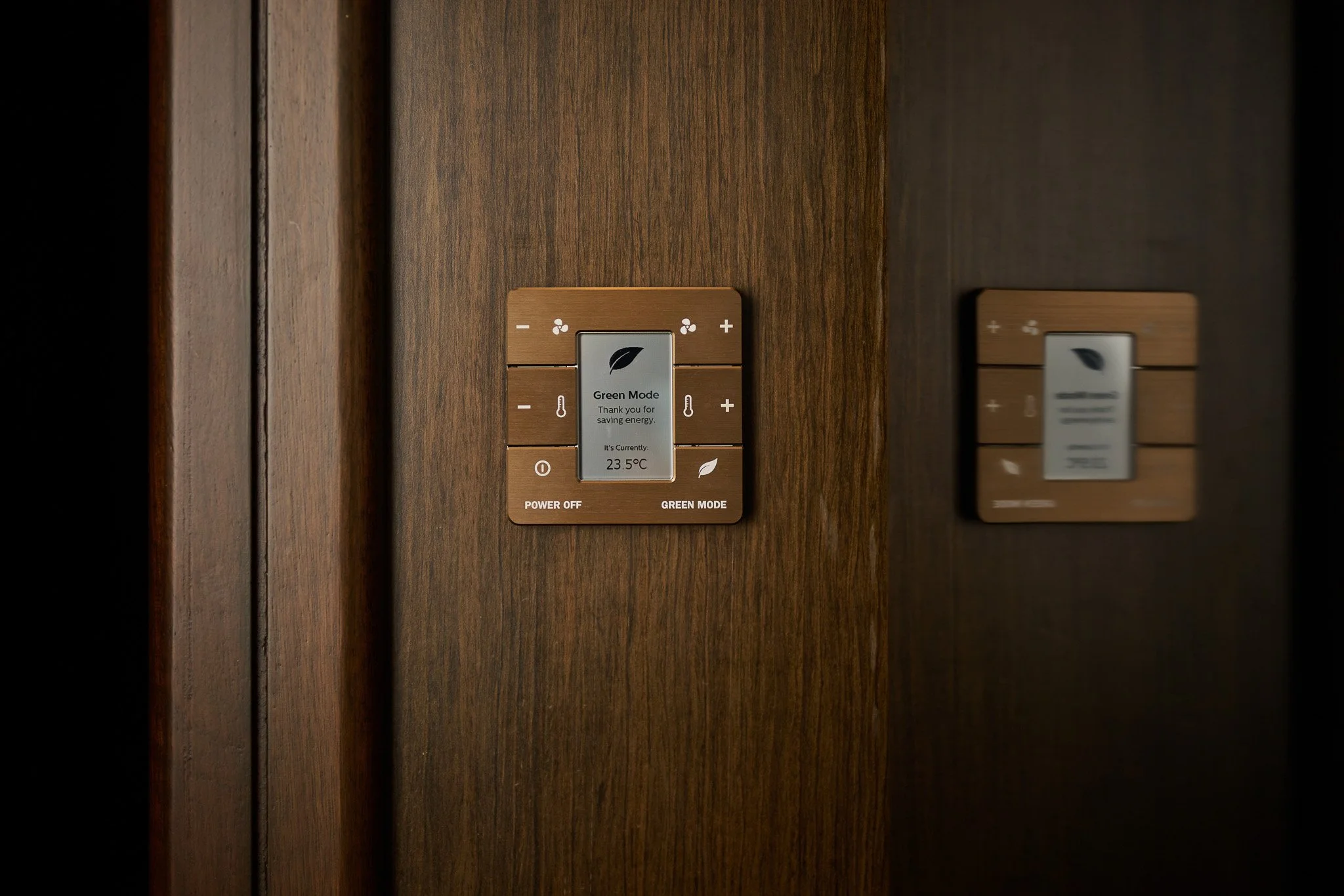
At Swissôtel The Stamford, in-room sensors and a Green Mode on the air-conditioning system help reduce energy use, including by pausing cooling when the balcony door is open.
Drinking water comes from a filtered tap in each room, with two glass bottles provided for refilling. According to the hotel blog published on April 28, 2025, the in-room filtered-water systems avoid about 1.5 million single-use plastic bottles per year across both hotels. Single-use plastics have been removed from guest areas: toiletries come in refillable containers, and amenity items use materials such as bamboo and wood. Further reductions are continuing in back-of-house operations.
The in-room dining menu is available on the television, and guests can order through a QR code on a tent card, removing the need for printed menus.
At Swissôtel The Stamford, guests staying for a minimum of two nights who reuse their linens and towels receive S$10 net in daily credits, redeemable at the spa, restaurants and bars, or toward laundry services. “Guests must inform our reception that they would like to participate in our Clean for Green program upon check-in,” says Elizabeth Wan, Director of Marketing Communications.
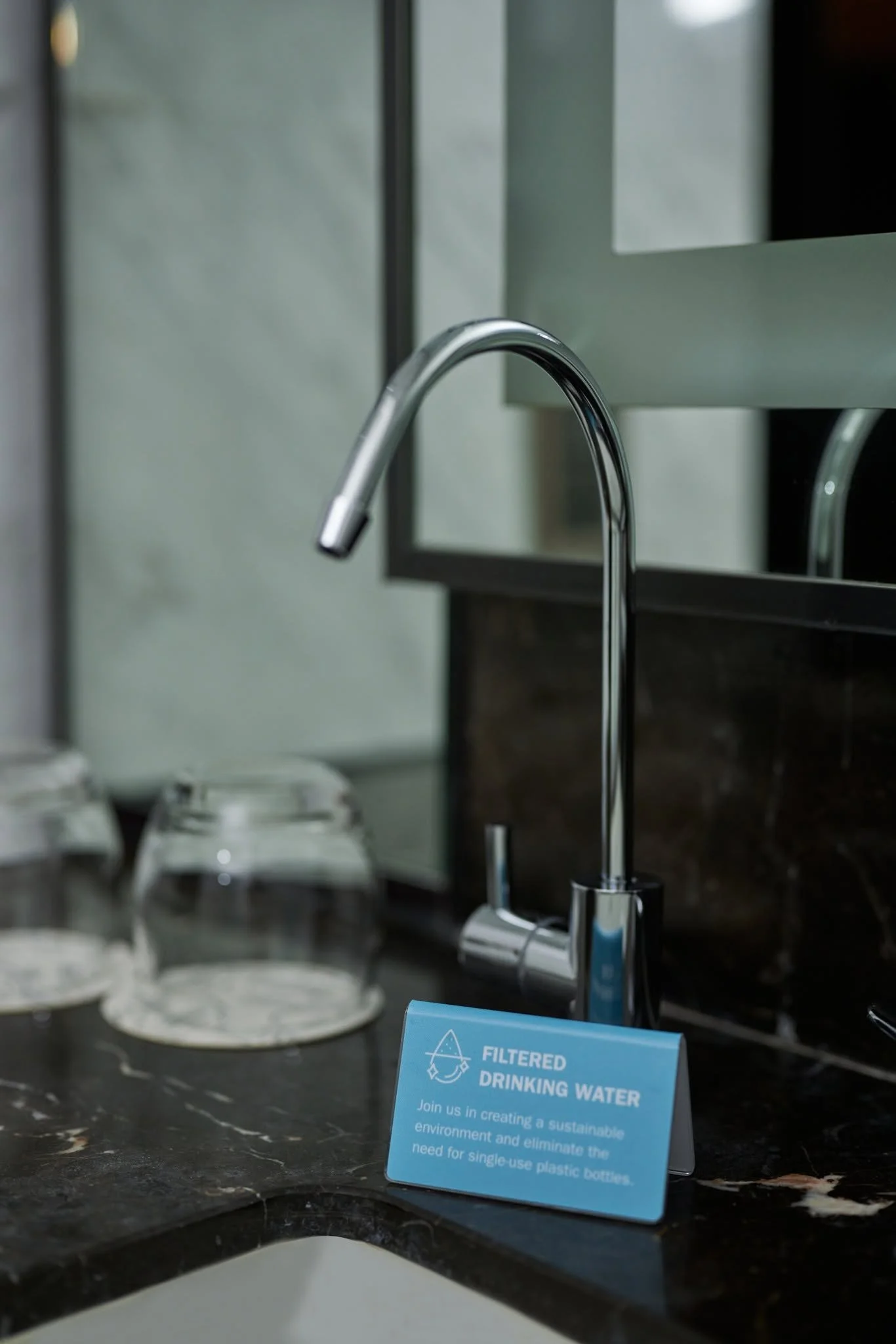
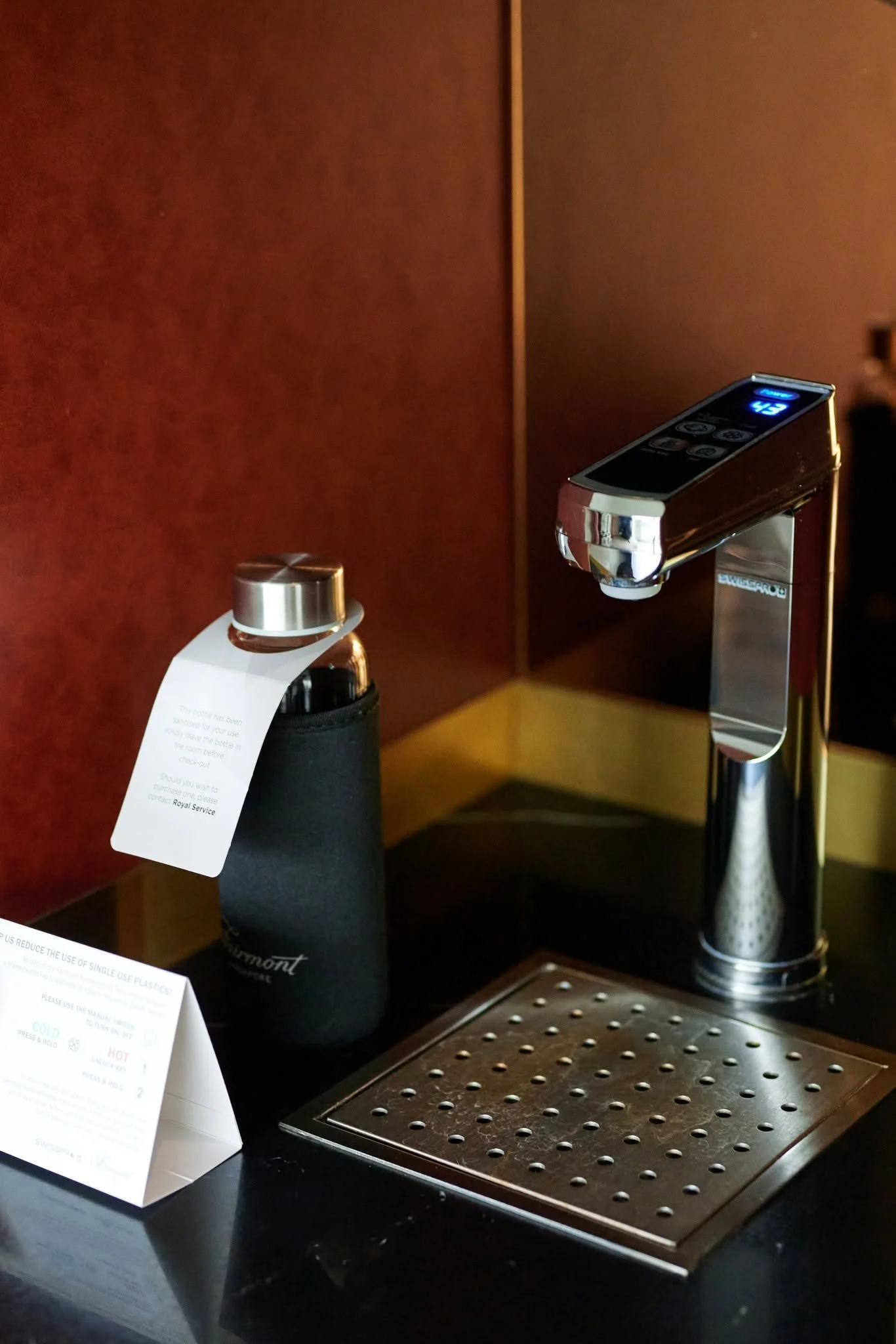
In-room filtered water taps and refillable glass bottles help reduce single-use plastic at Fairmont Singapore and Swissôtel The Stamford.
Certification as an Operating Framework
Both hotels have held Global Sustainable Tourism Council (GSTC) certification since 2024, and the team is preparing for its first renewal in 2027.
Lim says the certification has helped establish clear benchmarks and targets, with an ongoing focus on measuring progress and improving practices over time. “Clear targets and reinforced standard operating procedures help embed these practices into daily operations.”
She adds the process has encouraged engagement across the complex, so colleagues understand their role in meeting the hotels’ sustainability goals. That engagement runs through regular town halls, internal communications and annual fundraising drives. “Seeing the positive impact of their contributions helps build pride and motivates colleagues to do more,” Lim says.
What Other City Hotels Can Replicate
Asked what other urban hotels could take from the farm, Lim emphasized constraints as much as opportunity. The biggest considerations, she says, are upfront investment in infrastructure, access to the right expertise to maintain the farm, and a long-term management plan.
“Urban farming requires ongoing care and specialist knowledge, so it’s important to think beyond the initial installation,” says Lim. “For other city hotels considering something similar, the key is to have a clear plan for how the farm will be managed and how its produce can be incorporated into daily operations.”
Beyond the farm itself, the complex offers several practical lessons for other operators:
Prepare for more detailed buyer questions. Corporate and MICE clients are increasingly asking for certifications, environmental information, and sustainability-related event options during the venue-selection process.
Measure food waste before trying to reduce it. Tracking data can inform menus, production, and purchasing, while on-site processing can turn part of that waste into an input.
Start with back-of-house equipment. The dishwasher and chafing-dish examples show reported savings in water, energy, waste, and labor without requiring any change in guest behavior.
For new builds or major renovations, consider room automation. Occupancy sensors, balcony-linked cooling pauses, and appliance shutoffs can reduce consumption without adding friction for guests.
Tie sustainability incentives to on-property spend. A daily credit for reusing linens gives guests a clear benefit while directing value back into the hotel’s own outlets and services.
Share risk through partnerships. In the vanilla project, the hotel provides space while the grower provides specialist expertise.
Use Standard Operating Procedures (SOPs) to scale practices across outlets. Clear targets and operating procedures help extend a practice from one restaurant or department across a larger complex.
The aquaponics farm may be the most visible symbol of the complex’s sustainability efforts, but many of the clearest measurable gains come from systems and equipment: guest-room automation, filtered water infrastructure, commercial dishwashers, and waterless chafing dishes.
All photos by Fairmont Singapore and Swissôtel The Stamford