Betting on Sustainability: How Sri Lanka is Building a Higher-Value Tourism Model

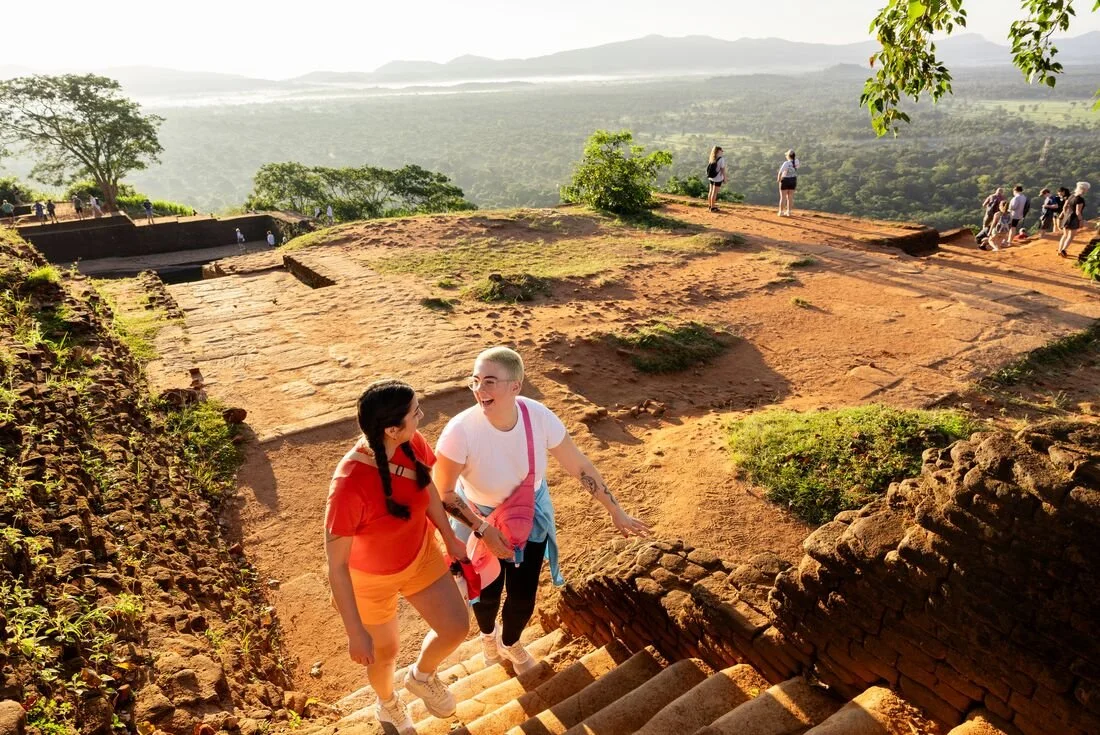
Sigiriya rises above Sri Lanka’s Cultural Triangle, one of the island’s most recognizable landmarks. Its popularity also highlights the need to protect heavily visited sites while sustaining their value to tourism. Photo by Authenticities Sri Lanka
One of the Indian Ocean’s most beloved tourist destinations is rethinking its approach to tourism. Sri Lanka’s thriving tourism industry was built on its natural beauty, stunning beaches, diverse wildlife, and a handful of iconic cultural sites. While this helped establish the country as a unique destination, it also created a model that relied heavily on high visitor numbers rather than high-value experiences.
Today, that approach is showing its limits. Although source markets have diversified and arrivals rose 15% year-on-year in 2025 to reach 2.36 million, tourists’ average daily spend declined from USD 178 in 2018 to USD 148 in 2025, according to an airport exit survey conducted by the Sri Lanka Tourism Development Authority and supported by Australia’s Market Development Facility. Visitors are still coming to the island, but there is a clear need to shift from volume-driven tourism to higher-value experiences to ensure tourism benefits trickle down to communities.
Across some of Sri Lanka’s largest source markets in Asia and Europe (particularly the UK, Germany, and France), travelers are changing: they are more informed, climate-conscious, and motivated by meaningful experiences. According to Booking.com's 2025 Travel & Sustainability Report, 84% of travelers consider sustainability important when traveling, 73% want their spending to benefit local communities, and 77% seek authentic experiences that reflect local culture.
Similarly, European tour operators increasingly expect destination partners to demonstrate responsible practices and look for measurable indicators such as sustainability certification, emissions reporting, responsible sourcing, and evidence of community benefit. How is the Sri Lankan tourism industry responding?
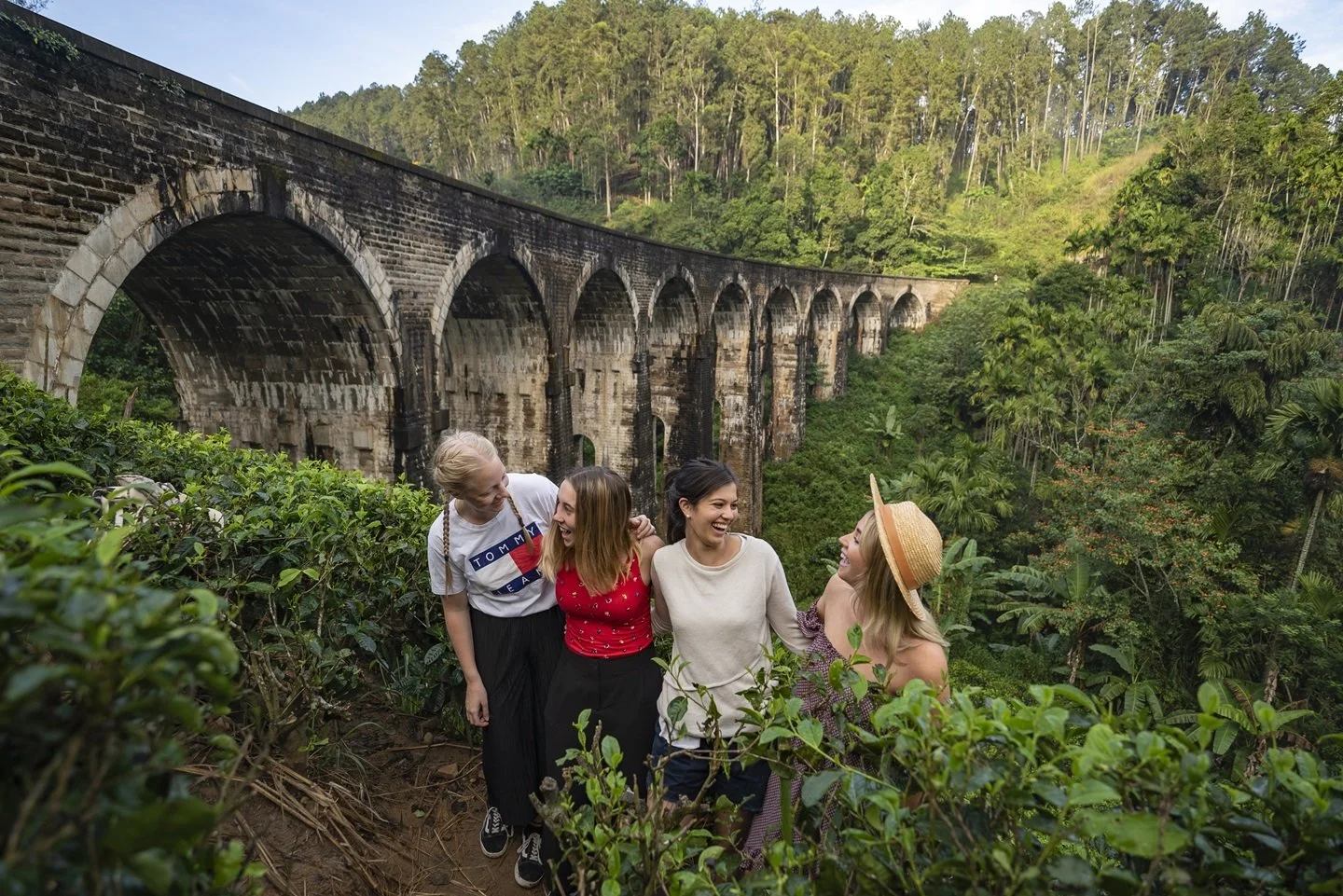
The Nine Arch Bridge crosses a verdant gorge in Ella’s hill country, one of Sri Lanka’s most photographed landmarks. Sites like this show the value of drawing visitors beyond the country’s best-known tourism circuits. Photo by Intrepid Travel Sri Lanka
The Business Case for Sustainability
Designing a Premium, Low-Impact Tourism Product
Authenticities Sri Lanka (ASL) is a boutique destination management company specializing in curated, experience-led travel.
In 2024, with support from Market Development Facility (MDF), ASL introduced carbon-calculated tour itineraries that embedded emissions measurement and management into each journey. As part of this effort, ASL also worked with partner hotels to build awareness and provide training on renewable energy adoption and other sustainable tourism practices.
These practical steps accompany carefully curated experiences, engaging with the community through local sourcing and village activities, and nuanced storytelling about slow, responsible travel. These itineraries target travelers willing to spend on responsibly designed experiences, and they have translated into clear commercial value. Together, these elements create a premium travel proposition.
ASL reports that these responsibly designed itineraries are selling at nearly three times the price of its conventional offerings, suggesting that travelers are willing to pay more for differentiated experiences that combine sustainability with authenticity and deeper local engagement.
For Sri Lanka, effective community tourism is not about turning everyday life into a visitor attraction. Rather, it is about creating partnerships that communities find worthwhile, respectful, and commercially viable over time. Communities are also seeing direct benefits. Many tourism businesses are sourcing talent and produce locally, creating employment and income beyond major tourism hubs.


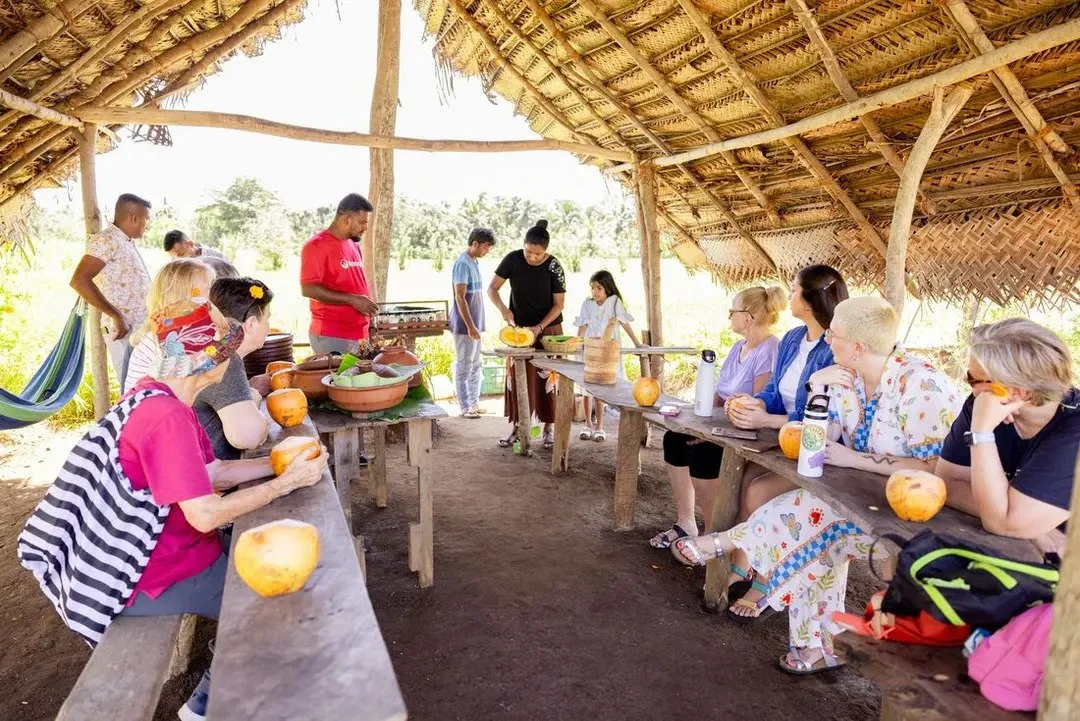
Travelers join a traditional cooking experience that brings them closer to Sri Lankan food and hospitality. When local hosts shape the experience, more of the tourism spend can reach the families who open their kitchens. Photos by Authenticities Sri Lanka


Left: A Kandyan batik artist; Right: A traveler tries on a batik garment as the artist explains the craft behind it. Experiences like this give artisans a more direct and valued role in the visitor economy. Photos by Authenticities Sri Lanka
Making Community Partnerships Work
KK Collection, a collection of boutique hotels, evaluated the local community’s involvement in its supply chain and encouraged new product development.
One example is a family whose livelihood centered on Sri Lanka’s famed cinnamon (Cinnamomum zeylanicum). Working with KK, the household transformed its traditional occupation into a home-based guest experience where guests learn the craft of cinnamon peeling firsthand. The hotel sells the experience at a fixed per-person rate, and guests can also buy the family’s value-added cinnamon products, giving the household an additional revenue stream.
The arrangement allows the community to benefit directly from visitor spending while continuing their traditional livelihood. Rather than ‘packaging’ everyday life into a spectacle for visitors, the cinnamon activity shows how Sri Lanka can draw on its vibrant culture and heritage to create tourism partnerships that benefit both guests and local communities. The strongest of these are ones local participants would willingly choose to continue.
KK Collection’s approach shows that sustainability can create value in more than one way: by strengthening community participation in tourism while also helping businesses respond to rising operating costs.
Lowering Costs Through Efficiency
Mount Lavinia Hotel is a scenic heritage property on the coast of Colombo. Faced with high energy bills, the hotel conducted an audit of its energy use and operational efficiency. This led to upgrading its lighting to energy-saving LEDs, optimizing its HVAC systems, replacing the kitchen’s outdated chiller with a more energy-efficient system, and investing in an energy management system.
By 2025, these measures—alongside water and energy management—had significantly reduced costs, helping the hotel position itself more competitively while enhancing its sustainability credentials.
Using Carbon Data to Guide Investment
Accurate data is key to a successful investment in sustainability.
Thema Collection is a chain of 17 hotels operating across Sri Lanka. Calculating its carbon emissions helped the group build a data framework that enabled it to understand its carbon footprint across all 17 hotels, allocate an annual sustainability budget, and train its staff to use the data to drive investment decisions that could improve efficiency and strengthen its sustainability credentials. Carbon accounting established the baseline and provided the data needed to identify where improvements could be made.
As a result, operational costs across the chain dropped by USD 200,000 in 2025. The savings were largely driven by the operational changes that followed the carbon accounting process.
Thema Collection has also used these insights to inform design decisions, as seen in the development of its new properties. When the group began planning for expansion, it decided to adopt green building design and install solar panels. Thema went on to become Sri Lanka’s first verified carbon-certified hotel chain.


From Thema Collection's Ayurvie, an Ayurvedic wellness retreat in Sigiriya, to Maalu Maalu Resort & Spa on the Pasikuda coast, Waraka in Udawalawe, Deewara in Mawella-Tangalle, and Wild Glamping in Gal Oya, Sri Lanka's accommodation spans wellness, beach, and wilderness stays. That range strengthens the case for higher-value travel by drawing guests and their spending beyond the classic circuit to destinations that each offer something distinct. Photos by Thema Collection
Equipping Staff for a More Sustainable Offer
Sri Lanka’s ingrained hospitality has long been part of the destination’s tourism offering. With people at the heart of its appeal, it's increasingly important to ensure tourism staff have the information and skills to support sustainability. As employees expand their skills into areas such as sustainability practices, biodiversity interpretation, and cultural storytelling, they are better equipped to help visitors connect with local communities, heritage, and natural environments.
Dedicated resourcing completes the picture. New roles such as sustainability coordinators, carbon analysts, and naturalists are becoming central to operations. ASL’s Sustainability Manager plays a strategic role in designing and delivering low-carbon itineraries, and Thema has a team of 16 naturalists.
Together with locally sourced products and community-based offerings, these efforts create richer, more authentic experiences for travelers while maintaining high service standards.
Extending Sustainability Across the Travel Supply Chain
Sustainability efforts are also beginning to expand beyond individual businesses to include industry associations, international chains, and international travel companies.
Intrepid Sri Lanka, the Sri Lankan branch of the global DMC Intrepid, is shifting from modeled, scientific estimates of emissions to calculating its actual, measured carbon footprint across operations. As a first step, the company launched a program to assess emissions across the 60+ hotels it works with in Sri Lanka, while also conducting audits of energy, waste, and water use across the properties.
Beyond measurement, Intrepid plans to help partner properties use the data to implement practical sustainability improvements, including operational changes and targeted infrastructure upgrades. By moving from estimated to measured emissions, Intrepid and its accommodation partners are building a stronger evidence base for decision-making and responding to growing market expectations for greater transparency in tourism operations.
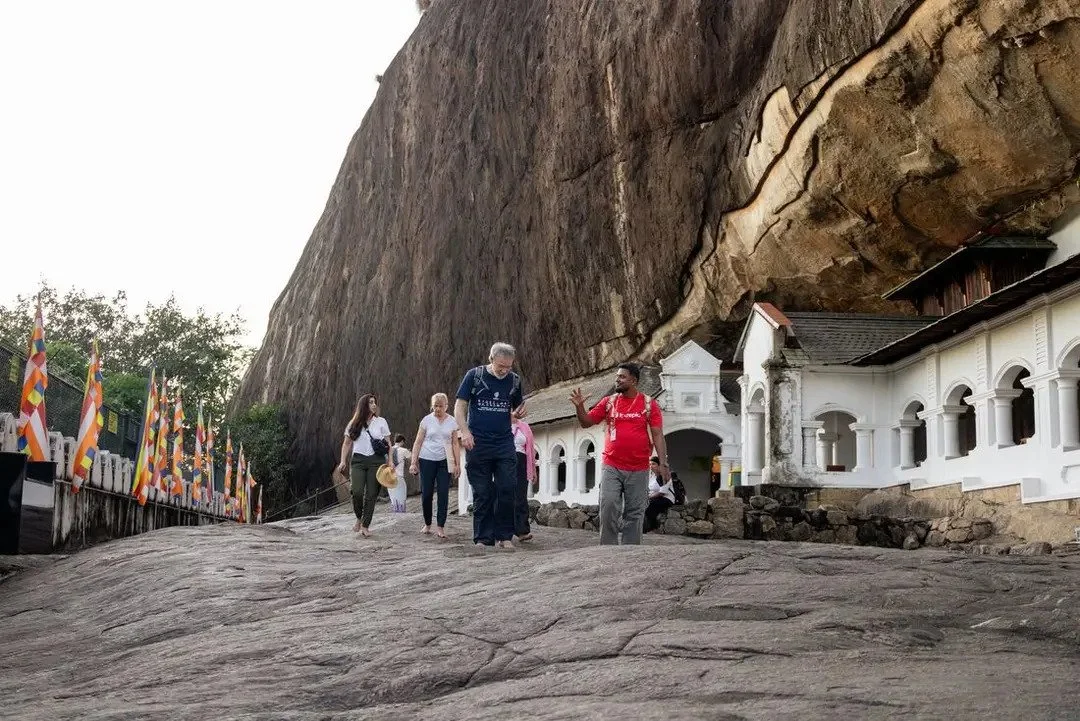
Lion Rock Fortress and the nearby Cave Temple remain two of Dambulla’s best-known landmarks, drawing visitors to a landscape shaped by royal history, religious art and longstanding cultural significance. Experiences such as the Chena cultivation tour add another layer to that story, connecting travellers with the farming knowledge and livelihoods that still define the region. Photos by Intrepid Travel Sri Lanka
Why Partnerships and Policy Matter
A growing number of specialist service providers are supporting the industry’s transition to sustainability in Sri Lanka. Organizations such as the National Cleaner Production Centre (NCPC) and smaller consultancies like SPARK are helping tourism businesses interpret data and act on it. Hotels are using these services to identify inefficiencies, prioritize investments, and make more informed operational decisions. The Australian Government-funded Market Development Facility (MDF) has been working with these service providers, as well as businesses like Thema, ASL, and KK, to connect the many pieces of Sri Lanka’s tourism industry.
The transition toward sustainable tourism has not been without challenges. The initial investment required for energy-efficient equipment, sustainability audits, certifications, and staff training can be substantial, especially for small players. Some sustainability strategies have longer payback periods, making it difficult for businesses to justify the investment.
In addition, finding suppliers that meet sustainability standards in tourism value chains remains a challenge. Support from organizations such as MDF has helped share some of the initial investment risk and made it easier to connect with service providers, smoothing a process that might otherwise have taken longer or become financially unfeasible.
However, businesses that have persisted despite these obstacles report long-term benefits, including operational savings, improved market access, stronger visitor experiences, and reduced environmental impact.
With support services emerging and businesses increasingly picking up on demand and efficiency signals, the policy and enabling environment have needed to follow suit and set the stage for Sri Lanka’s big bet on sustainability. Sri Lanka competes with regional peers that have well-established sustainability practices, resulting in a crowded market, but also opportunities to learn from models that are already working well.
Bhutan's long-standing "high value, low volume" tourism model shows how destinations can protect cultural and natural assets by carefully managing visitor pressure while generating value from tourism rather than focusing solely on arrivals.
Sri Lanka could apply similar thinking to manage pressure at key attractions such as Yala National Park, Sigiriya, and Ella, employing measures to improve visitor management, protect sensitive ecosystems, and encourage higher-quality experiences that help balance conservation with tourism growth. Thailand has focused on spreading tourism benefits beyond established destinations such as Bangkok and Phuket by promoting secondary cities and encouraging year-round travel. Sri Lanka has an opportunity to increase promotion of emerging, lesser-known destinations in the North and East of the country, easing pressure on traditional hotspots.
The Government of Sri Lanka’s Tourism Strategic Plan 2026–2030 sets a clear vision for the shift to a more sustainable industry, prioritizing nature‑based tourism, community‑driven products and equitable opportunities for small and medium businesses, while aligning closely with the UN Sustainable Development Goals. On the ground, public institutions are increasingly signaling support for sustainable tourism as a core component of competitiveness.
The country’s apex tourism body, the Sri Lanka Tourism Development Authority, has established a Sustainable Tourism Unit, planned a national sustainable tourism framework, and is supporting small and medium businesses through ‘Green Destinations’ certification. Destination-level initiatives, such as the certification of the iconic Sigiriya, are helping establish common reference points for the sector. Sustainability concepts are being embedded in tourism education and industry outreach through curriculum updates, workshops, and knowledge-sharing materials. Clearer guidance, shared standards, and institutional backing make it easier for hotels, tour operators, and experience providers to invest with confidence, helping rally the industry around a shared vision.


The Market Development Facility (MDF) supports tourism businesses in Sri Lanka by making sustainability more practical and commercially viable through product development, climate audits, resource efficiency, and access to finance. That support is helping the industry pursue higher-value growth with broader benefits. Photos by MDF.
Key Takeaways
As expectations for more sustainable and meaningful travel continue to rise, Sri Lanka’s shift toward sustainability is proving to be more than a moral choice. It is a practical, market-aligned strategy that delivers value not only to visitors but also to businesses, communities, and the economy as a whole.
For travel professionals pursuing a similar shift, the lessons include the following:
Start with the business case. In Sri Lanka, sustainability gained traction because it helped businesses reduce costs, improve efficiency, and respond to changing market demand.
Use data to drive decisions. Measuring energy use, waste, water consumption, and emissions helps businesses identify opportunities and demonstrate progress to buyers and travelers.
Work with communities as partners, not as passive recipients. The strongest tourism experiences build on local skills and livelihoods, ensuring communities benefit directly from tourism.
Combine business leadership with policy support. Lasting change happens when motivated businesses are supported by practical guidance, skills development, and an enabling policy environment.
Long known for its beaches, wildlife, and culture, Sri Lanka is now rewriting its destination story—this time with sustainability at its heart.
Tharindri Rupasinghe is Communications Director at MDF. This article also includes contributions from Nimesha Palliyaguru (Sector Coordinator, Tourism MDF), Nipuni Daluwatta (Business Adviser, MDF), and Vasundara Kalansuriya (Business Adviser, MDF).