Filipino Care Is the Product: What It Will Take to Grow Philippine Wellness Tourism
Key takeaways from "Transforming Philippine Tourism Through Wellness," the opening panel of the inaugural Travel Byte Summit Philippines (TBSP) at the Hospitality Philippines Conference 2026 (HPC2026). This is Part 2 of our two-part series on HPC2026.

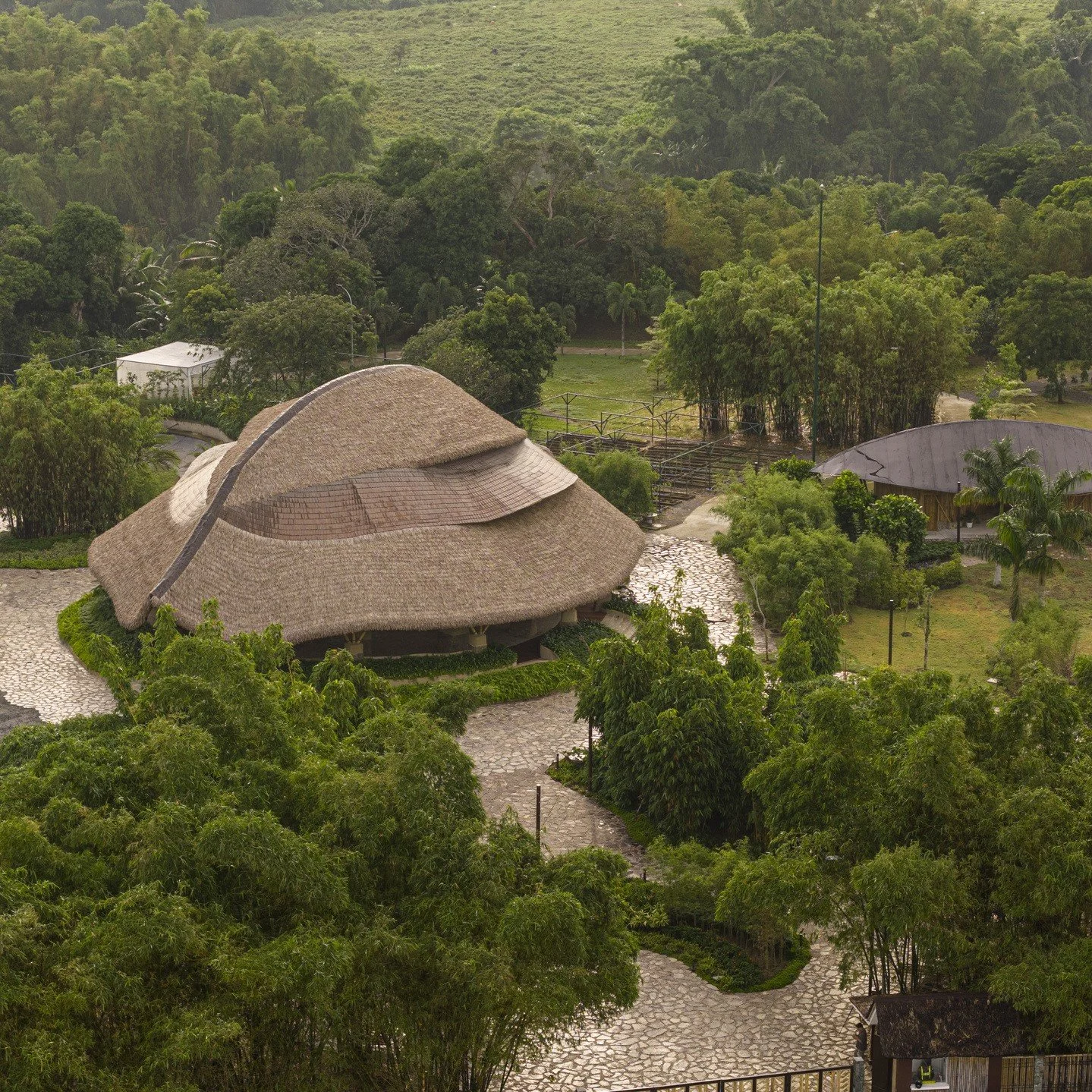
The Labyrinth at The Farm at San Benito, Autograph Collection offers a space for walking meditation and quiet introspection, designed to help guests slow down and find their center. Photo by the brand.
For years, wellness meant a relaxing weekend at the spa, a massage after a long week, or a nice-to-have add-on considered only after the rest of the trip was already planned. For most properties, it was just another amenity in the brochure.
The market now tells a different story.
According to Global Wellness Institute (GWI), the global wellness economy grew by 7.9% between 2023 and 2024, reaching a record US$6.8 trillion—double its size since 2013. Asia-Pacific alone now accounts for roughly 30% of that total, with a wellness economy valued at US$2 trillion in 2024.
In the Philippines, the wellness economy was US$47.3 billion in 2024, up 31% since 2019, and accounted for 10.2% of the country's GDP, placing the Philippines among the top ten countries in Asia-Pacific for wellness as a share of total economic output.
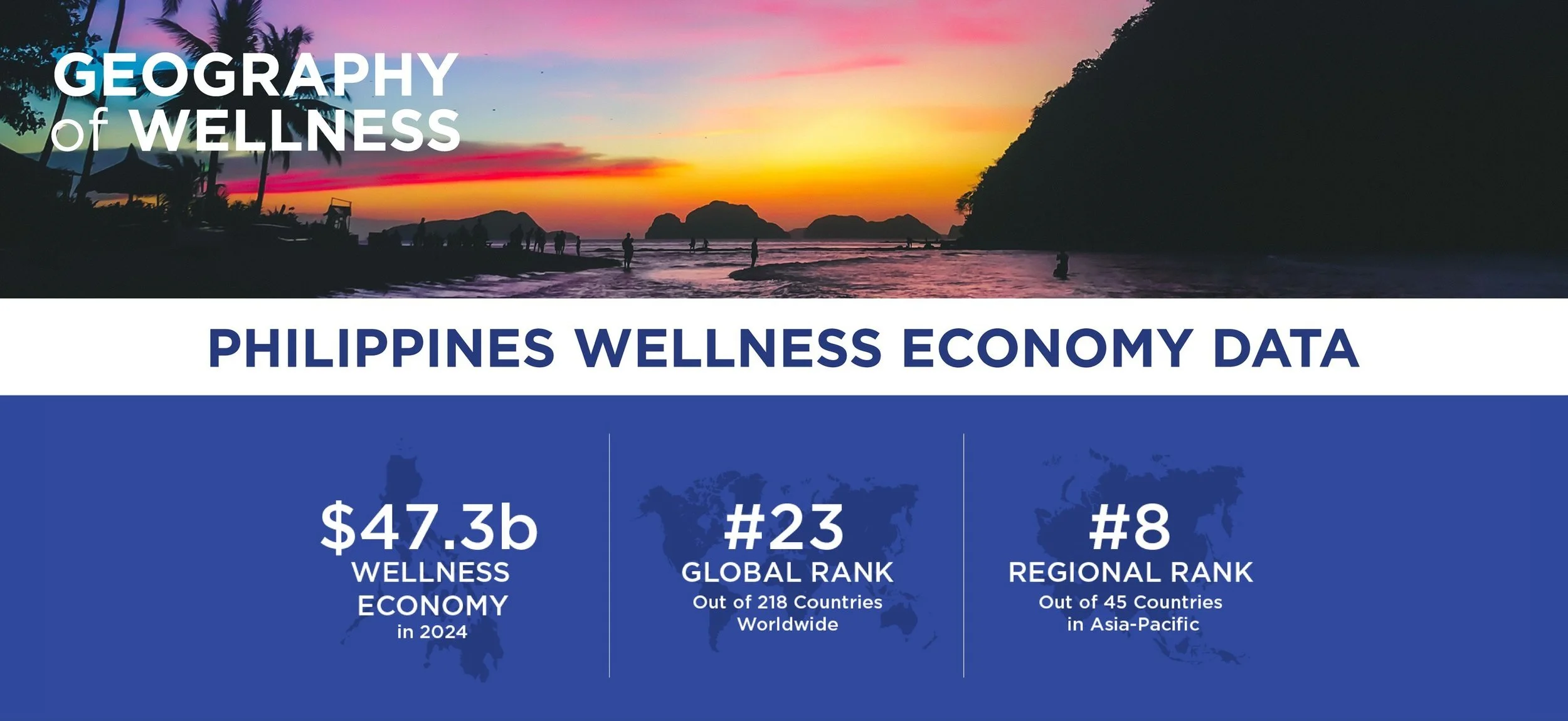

Credit: Global Wellness Institute
These figures reflect that wellness is no longer a side amenity or a nice add-on in hospitality businesses. It is a serious economic category, and one of the strongest growth stories in Philippine tourism.
So the question I put on the panel was not whether wellness tourism is growing. It clearly is. The real question is: what kind of destination is the Philippines building, and can it compete regionally while staying rooted in who we are?
The Panel

From left: Rhea Vitto Tabora of Asia Sustainable Travel; Vikki Aquino of Okada Manila and Wellness Tourism Association of the Philippines (WeTAP); Catherine Turvill of Nurture Wellness Village, Nurture Farmacy, and Philippine Chamber of Commerce and Industry; and Giuliano Callegaro of The Farm at San Benito, Autograph Collection
"Transforming Philippine Tourism Through Wellness" was the opening panel of the inaugural Travel Byte Summit Philippines (TBSP), one of four summits at the Hospitality Philippines Conference 2026 (HPC2026).
I moderated the session, and the three panelists brought meaningful breadth to the topic. They operate in different contexts: a large integrated resort, an independent homegrown pioneer, and an internationally branded wellness retreat.
Vikki Aquino is Executive Director for Wellness and Leisure at Okada Manila and President of the Wellness Tourism Association of the Philippines (WeTAP). She has worked on 33 global projects, including 23 pre-openings across land and sea. Today, she runs wellness operations inside one of the country's largest integrated resorts, and through WeTAP, she sits where standards, investment, and national positioning meet.
Catherine Turvill is a pioneer of the Philippine wellness industry. She and her husband Mike own Nurture Wellness Village, a Department of Tourism-accredited resort in Tagaytay now marking 25 years, along with Nurture Farmacy. Turvill also chairs the Health and Wellness Committee of the Philippine Chamber of Commerce and Industry (PCCI).
Giuliano Callegaro is General Manager of The Farm at San Benito, Autograph Collection. He brings 40 years of operational experience across four continents and 12 countries, plus 15 years in the culinary field—a combination of hospitality discipline and firsthand global perspective.
Why the Philippines, Why Wellness, and Why Now
Aquino traced the shift in demand to the pandemic. "Everything started post-pandemic," she said. "A lot of people became aware of wellness because everyone has a personal experience with their own well-being."
Her point was not simply that interest in wellness increased, but that the Philippines is well positioned to meet it because care already sits close to the culture. “The Philippines stands at a very good place right now,” she said, “because, as you all know, care comes to us naturally.”
She tied that advantage to the caring nature of Filipinos and to a hospitality and wellness workforce already recognized globally. Filipinos, she noted, are already providing care all over the world across both medical and wellness settings. “So that is innate.”
Turvill then framed the opportunity in human terms. “One in two adults in the U.S. is experiencing loneliness,” she said, placing it alongside a global rise in noncommunicable diseases and a more universal condition: stress. In her view, that is why wellness matters now. People are not only looking for relaxation; they are looking for meaningful destinations that offer care, compassion, and real human connection.
In her view, that is where the Philippines holds an edge. Natural attractions, she acknowledged, are not unique to the country. Other destinations can offer beautiful landscapes and strong spa products too. What the Philippines has, she emphasized, is “the Filipino heart”—the country's reputation for care, compassion, and connection, and for making guests feel understood not just intellectually, but emotionally. As she put it: "Because you can use nonverbal communication to say, 'I care for you.' And that is what will respond to this world epidemic of loneliness right now."
Turvill also tied that view to what Nurture Wellness Village has tried to build over 25 years. From the start, she said, the choice was to be distinctly Filipino rather than imitate Bali or Thailand—deliberately local, supportive of communities, and rooted in the provinces where wellness tourism can generate more inclusive growth.
Turvill said she had heard the same point at the recent ASEAN Health & Wellness Summit, which PCCI led in Pasay City on September 4–5, 2026. She recalled advice from keynote speaker Dr. Prem Jagyasi, an international speaker on medical and wellness tourism: “Don’t out-technology the other countries. Don’t out-hospital the other countries. Go back to what you really are.”
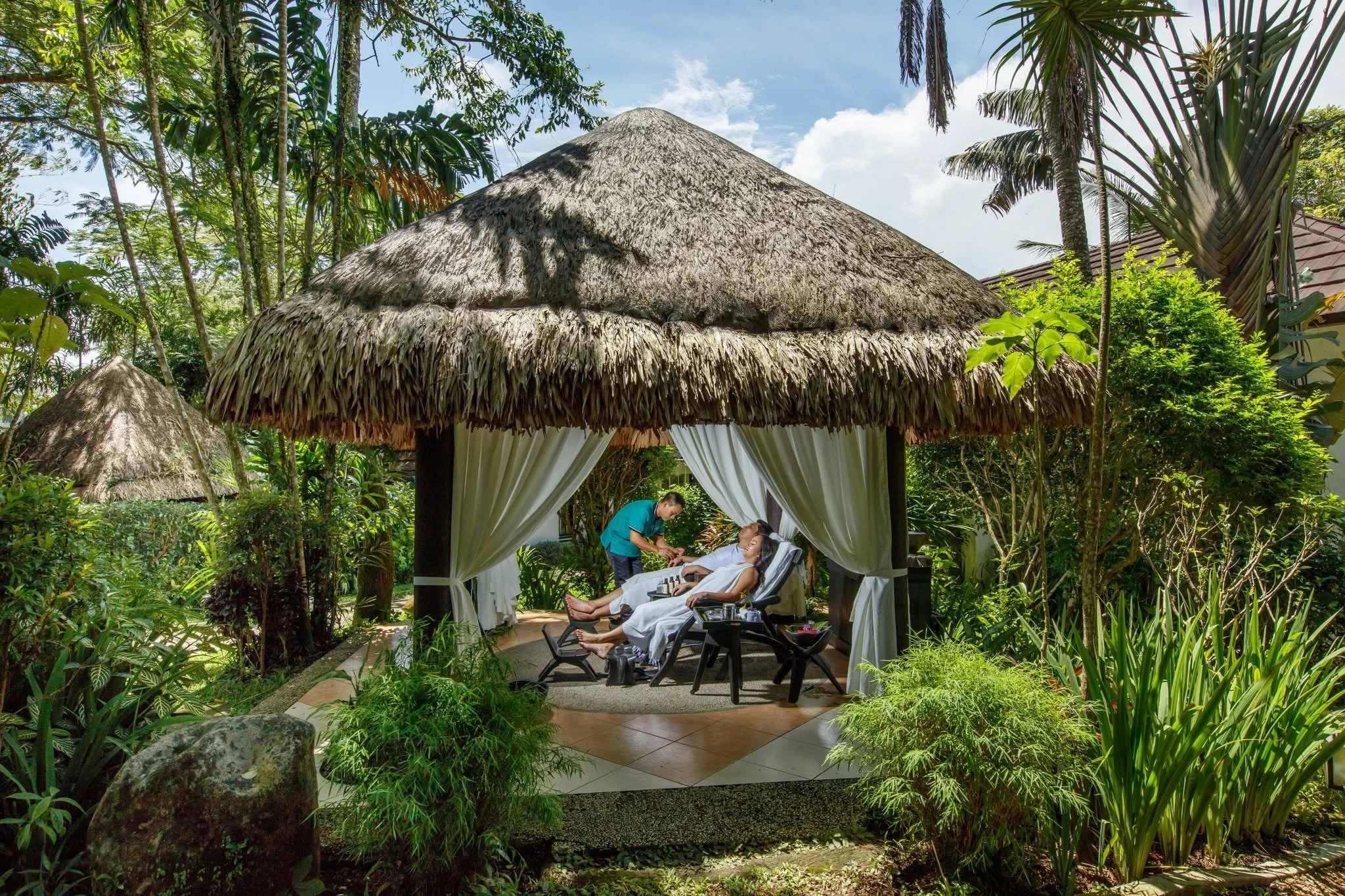
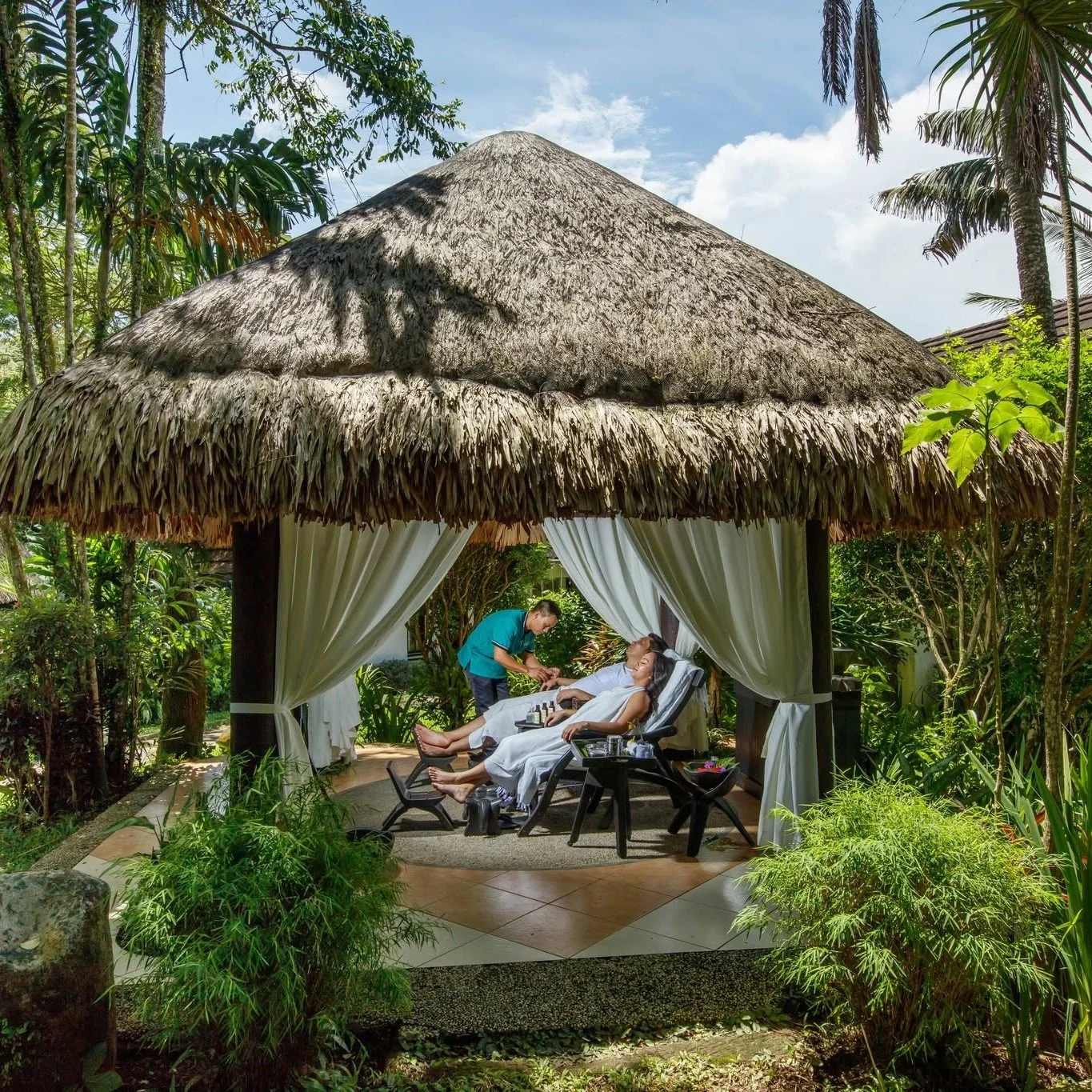
A couple enjoys an open-air spa treatment at Nurture Wellness Village, where garden surroundings and attentive care create a calm, restorative wellness experience. Photo by the brand.
What the Philippines Already Has, and What It Still Needs
Callegaro largely agreed that the Philippines has real strengths in wellness, but viewed them through a more comparative lens. Having worked across four continents, he said one of the first things he noticed on arriving in the country was how pristine much of it still is.
Drawing on his experience in places like Arizona and Hanoi, he emphasized that this remains one of the Philippines’ clearest advantages: cleaner air and lower pollution outside the major cities than many better-known wellness destinations can claim.
He also suggested that the country does not yet promote that advantage strongly enough. “We don’t do a good job promoting the Philippines,” he said. “It’s very pristine.”
But he was equally direct about the main constraint: infrastructure. For wellness travelers in particular, he said, the difficulty of getting to a destination can still deter them.
He also cautioned against trying to compete too directly with countries that have much longer wellness traditions. Some markets, he noted, have been doing wellness for thousands of years. The better path for the Philippines, in his view, is to build around what is unique in its own culture while strengthening the people who deliver the product.
Here, he returned to a problem the industry knows well: talent retention. “We train, and we lose them,” he said.
The Modern Wellness Traveler Wants More Than a Spa
The panel agreed that the definition of wellness tourism has widened, and that travelers are no longer looking only for pampering or relaxation.
What guests increasingly want, Turvill said, are more meaningful and transformative experiences. Not a one-hour massage, but a longer stay with curated experiences that engage different dimensions of wellness.
That shift has broadened the category itself. Wellness, she said, now includes food, fitness, mental health, and social connection. She said PCCI has been encouraging the industry to move toward a broader definition of wellness, one that increasingly overlaps with health tourism and creates closer links between medical and wellness offerings.
The wellness traveler, she emphasized, is also becoming more evidence-driven, looking for diagnostics, measurable improvement, and programs that can show some impact on health, vitality, or productivity.
She illustrated this with examples from Nurture Wellness Village. The property, she said, now works with doctors and builds around ideas such as longevity and vitality. It also offers wellness coaching and monitoring systems that continue beyond the guest’s stay, allowing travelers to remain connected to a wellness advocate even after they leave the property.
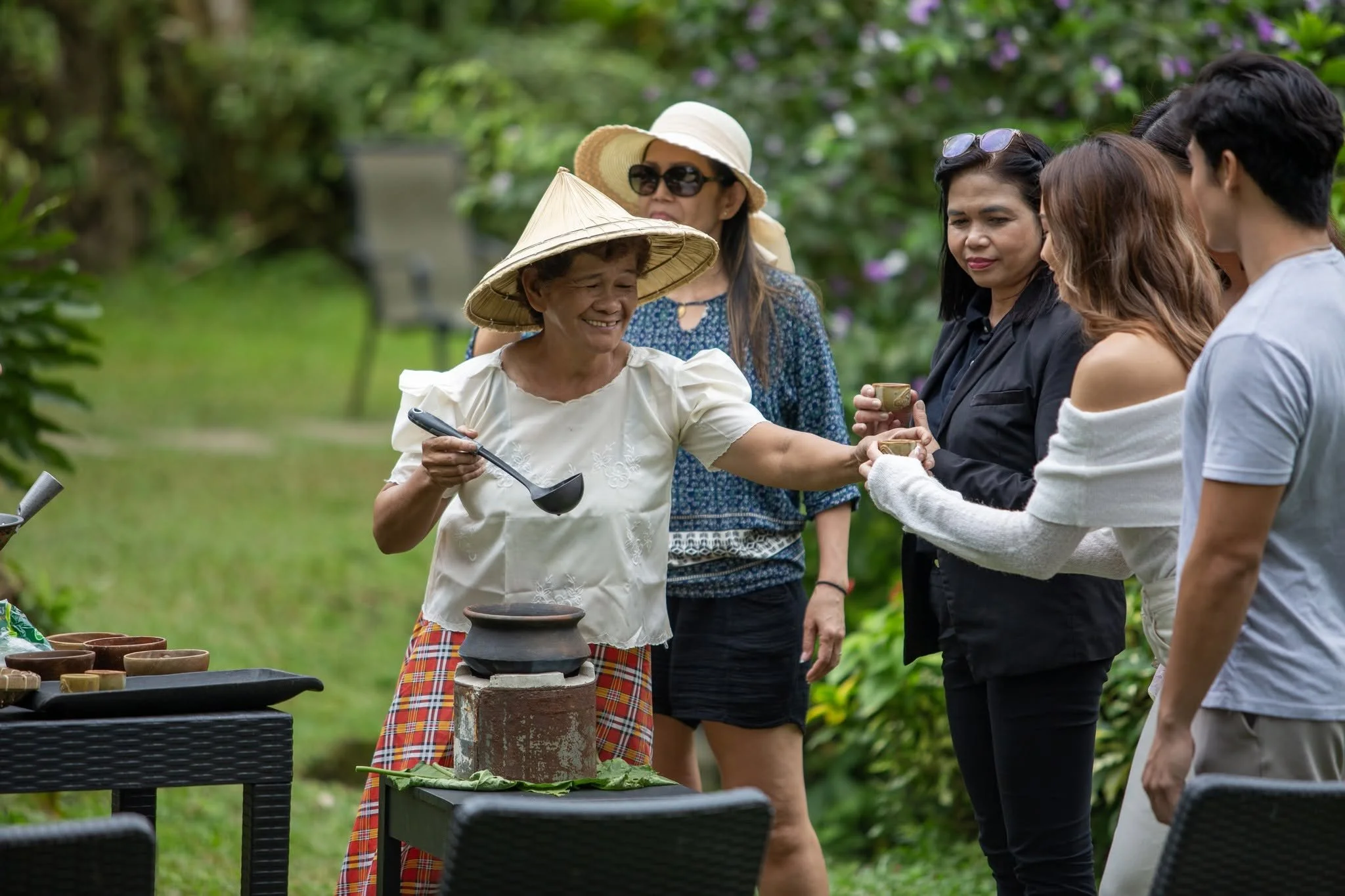
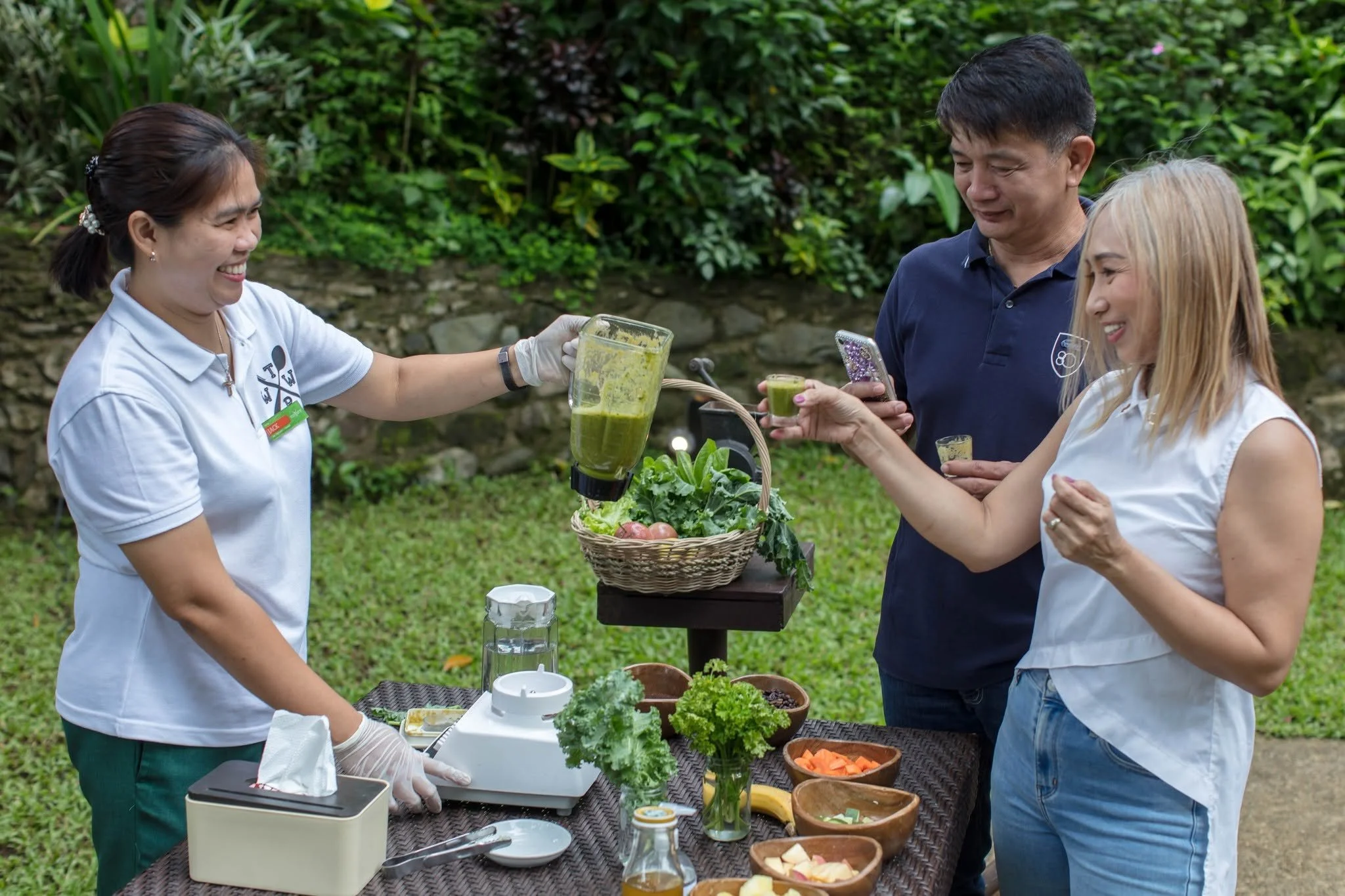
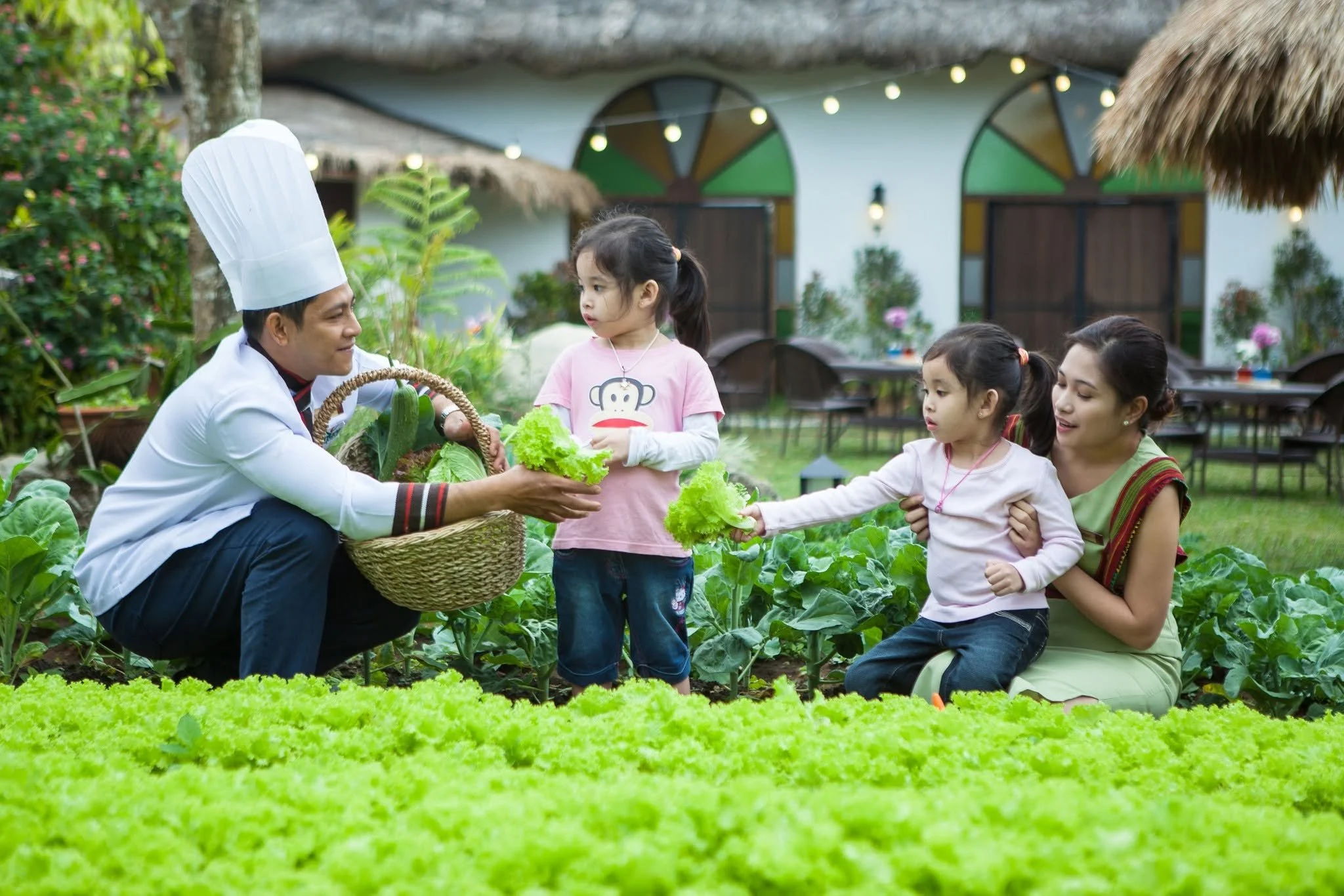

Photos by Nurture Wellness Village
How a Large Property Turns Wellness into a Guest Journey
Aquino described that broader definition of wellness from the perspective of a large integrated resort, where the challenge is not only what to offer, but how to make wellness legible across a much bigger and more varied operation.
At Okada Manila, she said, the approach is to think holistically and to build around the full range of guest types the property receives. That means programming for young children, teenagers, and adults, as well as for gaming and non-gaming guests. The goal is not to confine wellness to one part of the property, but to create a middle ground where different guests can participate in different ways.
She described this through the idea of a “wellness map,” a property-level view of the guest journey that asks where wellness can be built into the experience from arrival onward. The method, she suggested, is straightforward: look at your service flow, your guest journey, and your client profile, then match the wellness offering to those realities.
That can include formal programming, but also smaller design and operational choices. She mentioned simple in-room mindfulness tools, activities that help guests engage with the property, and even the shift from plastic bottled water to recyclable glass bottles in guest rooms.
Her emphasis was not only on facilities, but on how the experience is structured. Guests, she said, should be able to join organized programs without having to plan every detail themselves. They should arrive at a property where there are already programs they can join, activities they can participate in, and touchpoints that make wellness visible throughout the stay.
She also stressed that this does not always require major new investment. In some cases, she said, it means using existing spaces and staff more intentionally. Her examples were deliberately simple: a mindfulness corner a guest can use in their own room, with a yoga mat or a meditation channel; a quiet spot in the lobby where someone can color while waiting for a ride; an outdoor area that invites guests to walk and engage more fully with the property around them. Much of it, she emphasized, is less about budget than about intention.
Two things, however, are essential. The first is training, so the experience is delivered consistently, not occasionally. The second is communication. If wellness elements are built into the guest journey but never named, guests may not register them as part of a coherent offer. Once those pieces are visible and connected, they begin to express what the property stands for and what kind of wellness experience it offers.
"We have to start in our own backyards," she said, "and then we can grow as an industry together."


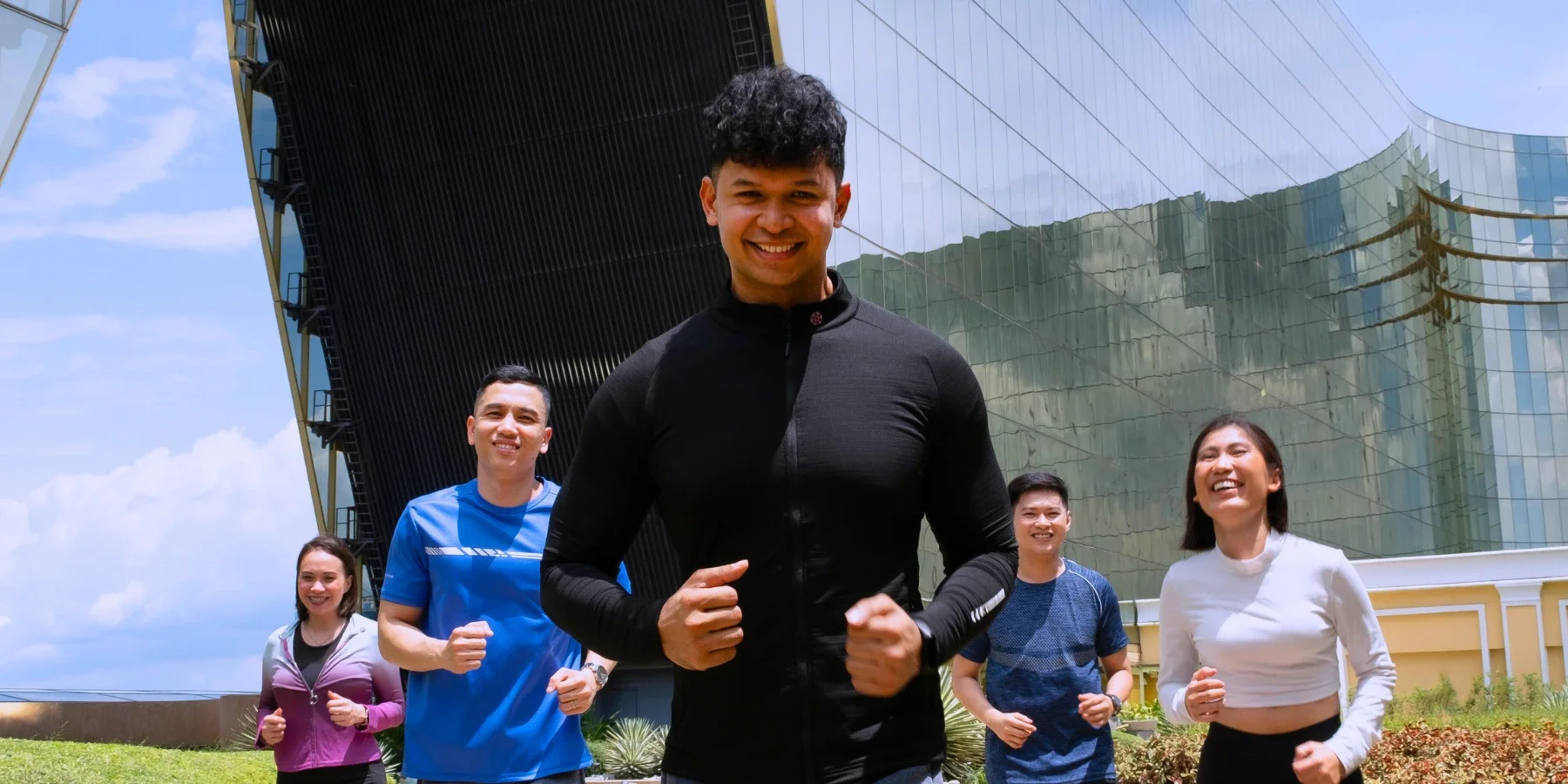

Photos by Okada Manila
Designing for Different Kinds of Wellness Guests
Callegaro returned to a point Aquino had also made: a wellness property cannot build around only one kind of guest. In his view, the market is now too competitive, and guests’ needs are too varied for that to work.
At The Farm at San Benito, Autograph Collection, he said, that means accommodating very different guest behaviors and intentions within the same property. Some guests arrive for structured programs lasting three, six, nine, or even 15 days, often focused on detox and retreat. Others come as families, especially on weekends, simply looking to escape the noise and pollution of the city.
That variety shapes the experience. In some rooms, he noted, there is no television—a choice that initially concerned him when he arrived, especially within a branded hotel environment. But in practice, he said, complaints have been rare. Most guests accept it. For him, that suggests many travelers are more open than operators sometimes assume to quieter, less distracted stays.
He also emphasized the role of food and environment in making the wellness offer feel coherent. The Farm at San Benito, he said, already produces much of its own food and expects to supply about 80 percent of its produce on-site by the end of the year. That lets the resort connect the wellness experience more directly to what guests eat and make food production part of the story rather than something invisible to the guest.
The setting itself is part of the product as well. Rather than treating birds, frogs, and other natural elements as background scenery, Callegaro said they help signal the kind of environment guests are entering. Some visitors may find those features inconvenient, he acknowledged, but for him they also show the ecosystem remains alive and relatively undisturbed. In a wellness setting, that becomes part of the value being offered.
In his view, the wellness offer is shaped not only by programs or wellness offered, but by the conditions around them: what guests eat, how quiet the rooms feel, and whether the environment still feels alive rather than overly managed.


Photos by The Farm at San Benito, Autograph Collection
What Tour Operators and Properties Should Do Now
Wellness Is Not One Market
One question from the audience was whether wellness tourism will eventually become a core travel motivation rather than an add-on to a vacation, and what Philippine tour operators should do now.
Turvill said operators first need to recognize that there are two types of wellness travelers. Some are primary wellness travelers, choosing a destination mainly for health and wellness. Others are secondary wellness travelers, adding wellness to an existing itinerary. The distinction matters because each group asks different questions and expects different kinds of offers.
Her advice to operators: learn the category in more depth. In her view, many parts of the travel industry still hesitate to sell wellness because they are not yet comfortable with what it requires. It is not just a matter of selling rooms. It means understanding what guests want, what kind of wellness experience fits those needs, and which properties can deliver it credibly. She said tour operators need to become more familiar with the language of wellness, the packages available, and the questions to ask before making a recommendation.
Aquino's advice to properties unsure of where to begin was straightforward: don't do it alone. Industry networks exist precisely to reduce the guesswork. Operators don't need to absorb the full cost of trial and error when others have already navigated the same terrain. Shared learning, in her view, helps the sector move forward faster and more coherently.
A Filipino Wellness Product Has to Feel Filipino
Another audience question focused on how Philippine properties can use indigenous healing traditions, local superfoods, and the natural environment to build a wellness offer that feels distinctly Filipino.
Turvill pointed to ongoing work with the Department of Tourism and the Wellness Tourism Association of the Philippines to define a Filipino wellness brand through the senses. Her answer was not about adding one local treatment to an otherwise generic product. It was about shaping the whole atmosphere of the stay: the design of the space, the sounds guests hear, the food and teas they are served, the scents in the room, and the feel of the experience itself.
Callegaro answered from an operational angle. If properties want to build around local food systems and natural surroundings, he said, they also need support structures that make that possible. Hotels may want to buy more from local farmers and fishermen, but those suppliers also need help meeting the operational and documentation requirements larger hospitality groups depend on. He also reiterated that the natural environment is part of the product. In the right setting, birds, trees, frogs, and other living elements become part of what guests remember.
Serious Wellness Requires Serious Partners
A third question asked what kinds of partnerships make sense when properties want to offer more advanced wellness programs without drifting into territory that requires medical expertise.
Aquino said Okada Manila has introduced simple wellness assessments such as grip tests as an entry point, then refers guests onward through a wider network when deeper or more specialized programs are needed. Turvill said Nurture works with doctors and other specialists rather than trying to deliver every part of the experience alone. Callegaro made the same point from the perspective of a global hotel brand: hospitality companies are not medical experts, and liability is part of the equation. If properties want to move into more serious wellness territory, they need the right partners beside them.
Where Properties Can Start
For properties trying to meet wellness demand without overcomplicating it, the panel offered a practical starting point.
1. Start with the guest journey, not the spa menu.
Aquino’s idea of a “wellness map” was useful because it shifted the question from What treatment do we offer? to Where does wellness show up across the stay? It asks operators to think beyond the treatment room or fitness center and look at where wellness can be made visible from arrival onward. That could mean structured programming, but it could also mean quieter rooms, better sleep conditions, healthier food, simple mindfulness tools, more walkable grounds, or clearer moments of pause built into the property.
2. Design for more than one kind of wellness guest.
The discussion made clear that “the wellness traveler” is not one person. Some guests are coming for detox, longevity, or a more immersive health-focused stay. Others simply want better sleep, healthier meals, less noise, and a more restorative environment as part of a trip built around something else. You do not need to be everything to both groups, but you do need to know which guest you are designing for.
3. Build around what is already credible in your property.
The panelists pushed back, in different ways, against the urge to overbuild or overclaim. A property does not need to imitate another destination or suddenly present itself as a medical-wellness brand. It can start with what it already does well: its setting, its service culture, its staff strengths, its food, its quieter spaces, its relationship to the local community, or its ability to create a sense of care.
4. Make local identity part of the stay itself.
If you want to position your property within wellness, local character cannot live only in the marketing copy. It has to be felt in the experience itself—in the food, the atmosphere, the materials, the sensory cues, the service style, and the way nature and culture are brought into the stay.
5. Know where hospitality ends and specialist care begins.
Once the conversation moved into diagnostics, longevity, and more advanced health programming, the panelists were careful not to blur that line. Hotels and resorts can create the environment, the structure, and the hospitality layer. But more serious wellness claims require qualified practitioners behind them.
This is the second article in our HPC 2026 key takeaways series. If you missed the first part, read it here: Why the Most Important Hotel Design Decisions Are Made Before a Guest Arrives
If you want to revisit earlier editions of the Hospitality Philippines Conference, these two articles are worth reading: