Can Hospitality Catalyze Enduring Change? Inside Smiling Gecko Foundation's Bet on Farmhouse Resort & Spa
The first sound I heard at Farmhouse Resort & Spa was not the clatter of a hotel kitchen, the whirr of golf carts, or the low mechanical hum of a construction site. It was music.
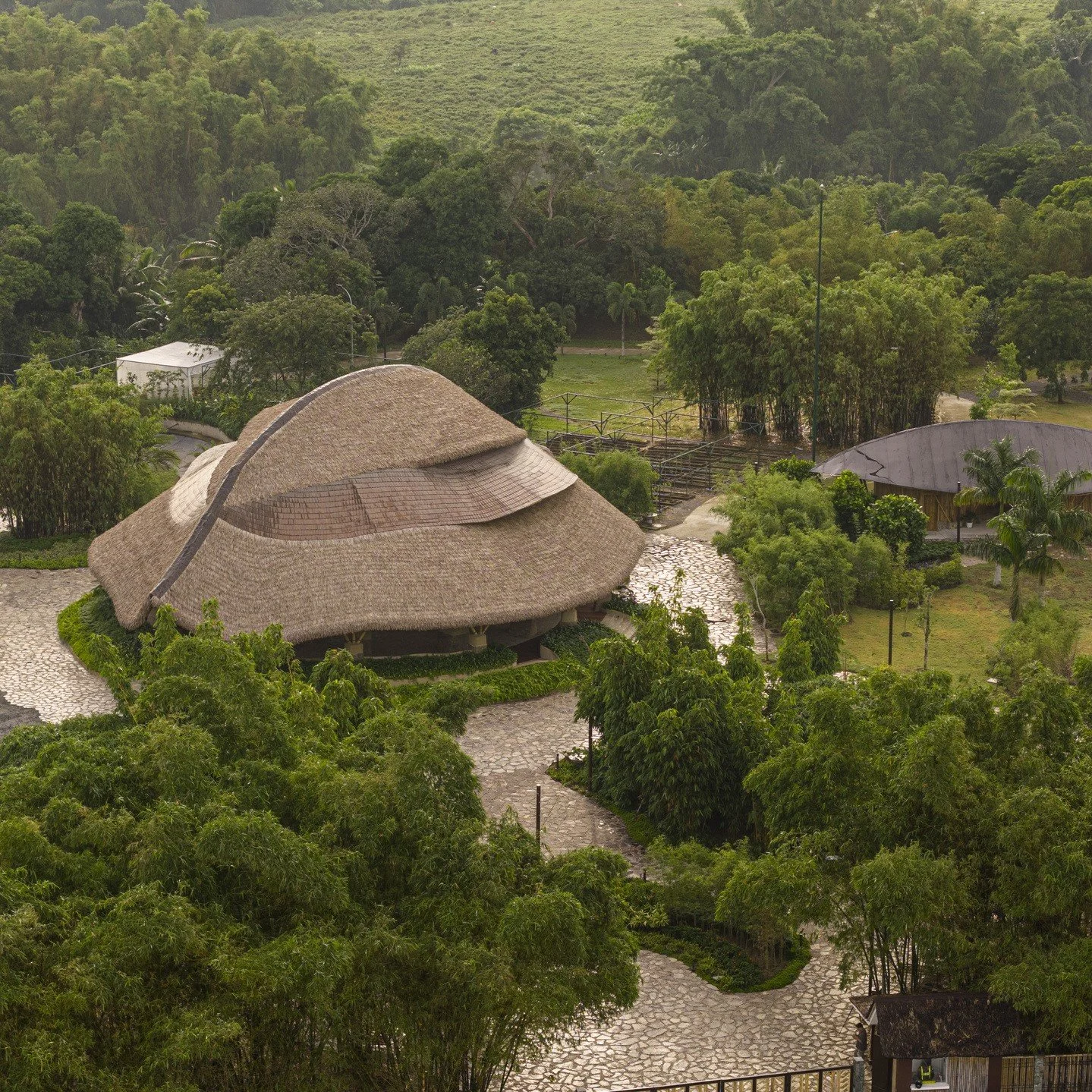
A short ride from the resort brought me to The Gong, a circular cultural complex on Smiling Gecko Foundation's 150-hectare campus in Kampong Chhnang Province, roughly 65 kilometers north of Phnom Penh. Inside its auditorium, students were rehearsing for a small concert, and I had the privilege of being the sole audience member that day. The building, opened in 2024 in celebration of the foundation's tenth anniversary, also houses a professional recording studio and an open-air amphitheater. It was an unexpected state-of-the-art cultural facility in a rural area where many families still navigate insecure incomes, debt, and limited access to public services.
Farmhouse Resort & Spa's General Manager, Daniel Ruprecht, led me through the space, pointing out recording equipment and instruments donated second-hand from overseas. The project has been described as a center for nurturing Khmer arts, built not only for performance but to record and preserve Cambodian music for future generations. For Hannes Schmid, Smiling Gecko Foundation's Swiss founder, music is part of a broader objective of helping young people build confidence, imagine different futures, and gradually develop agency.
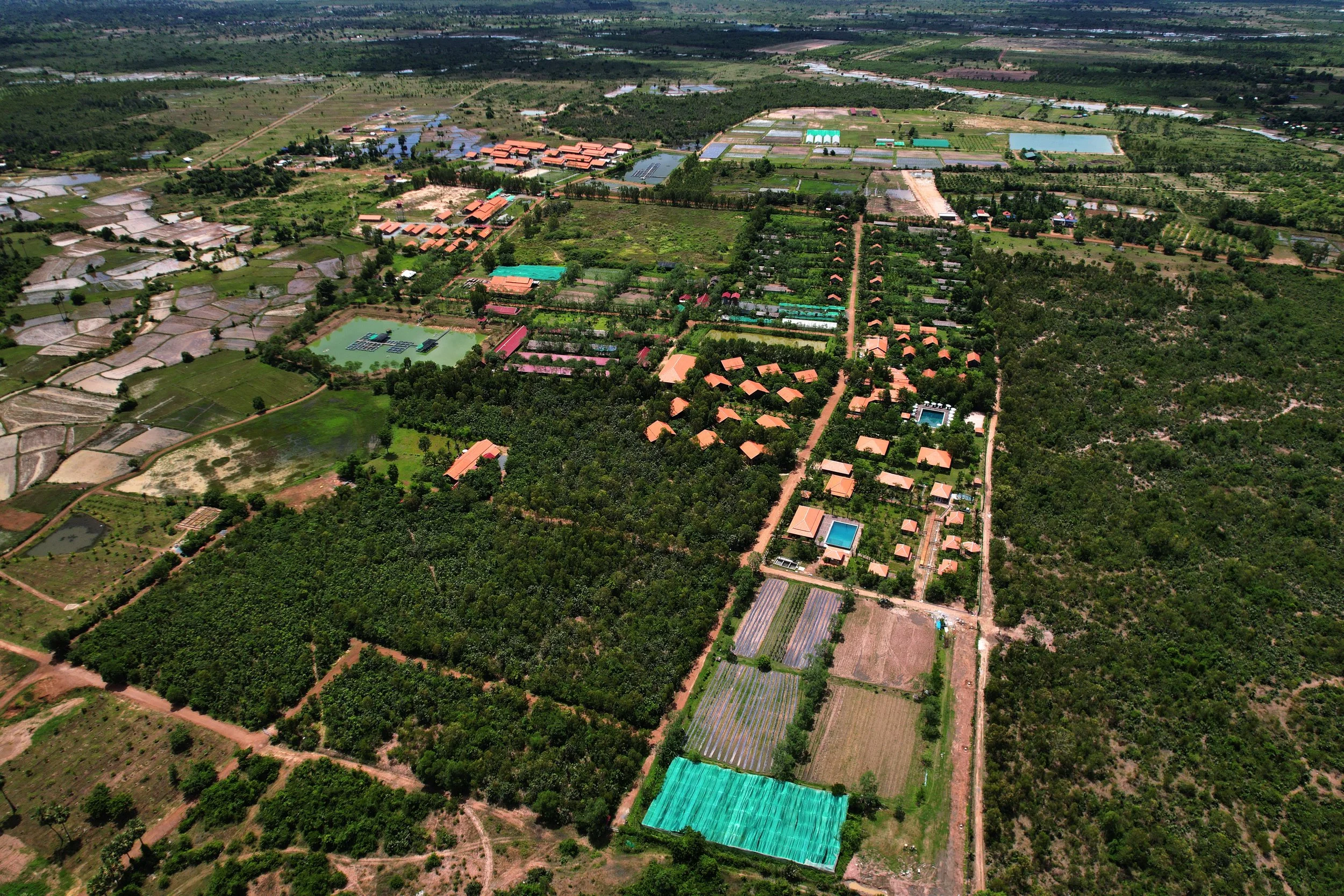
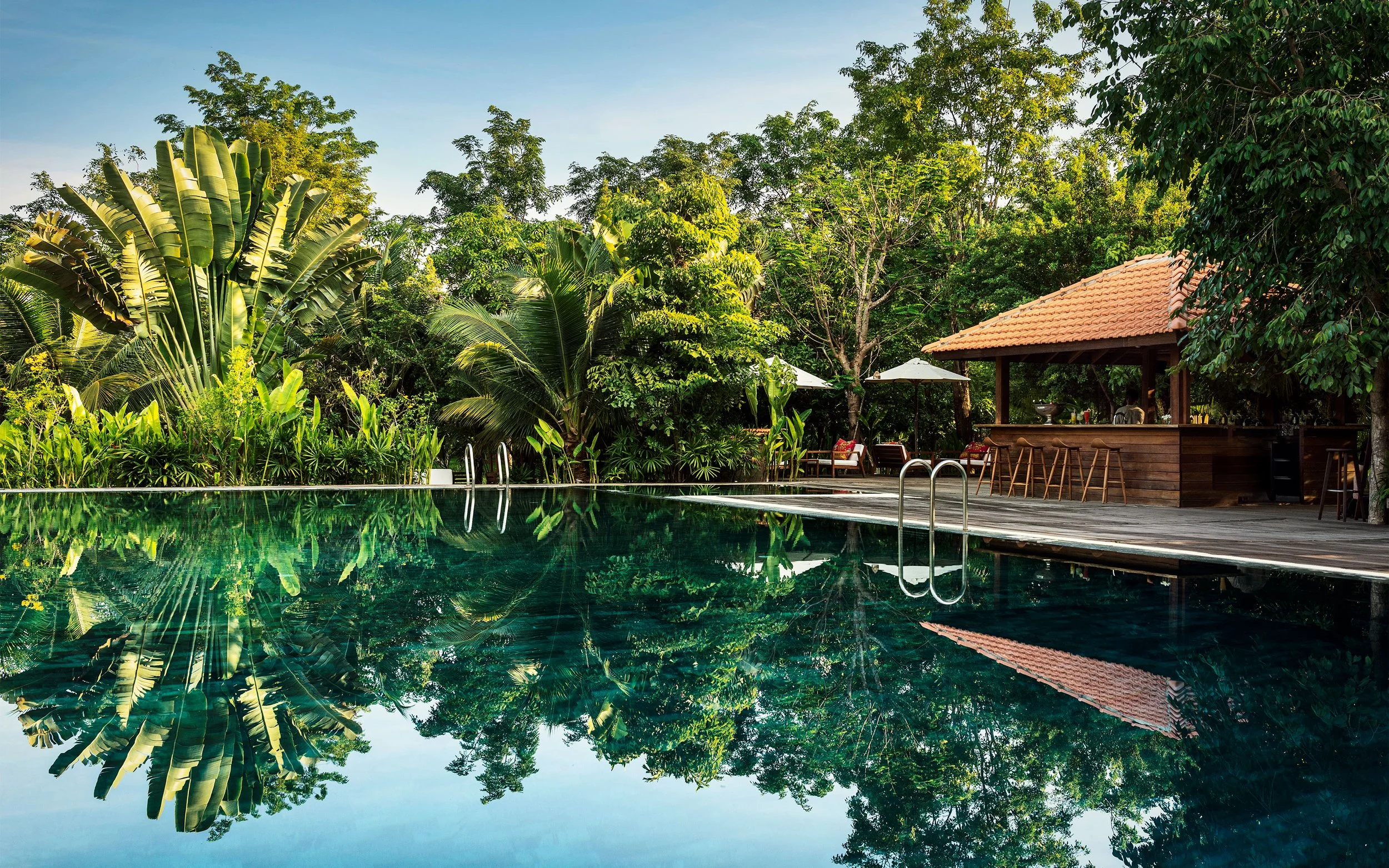
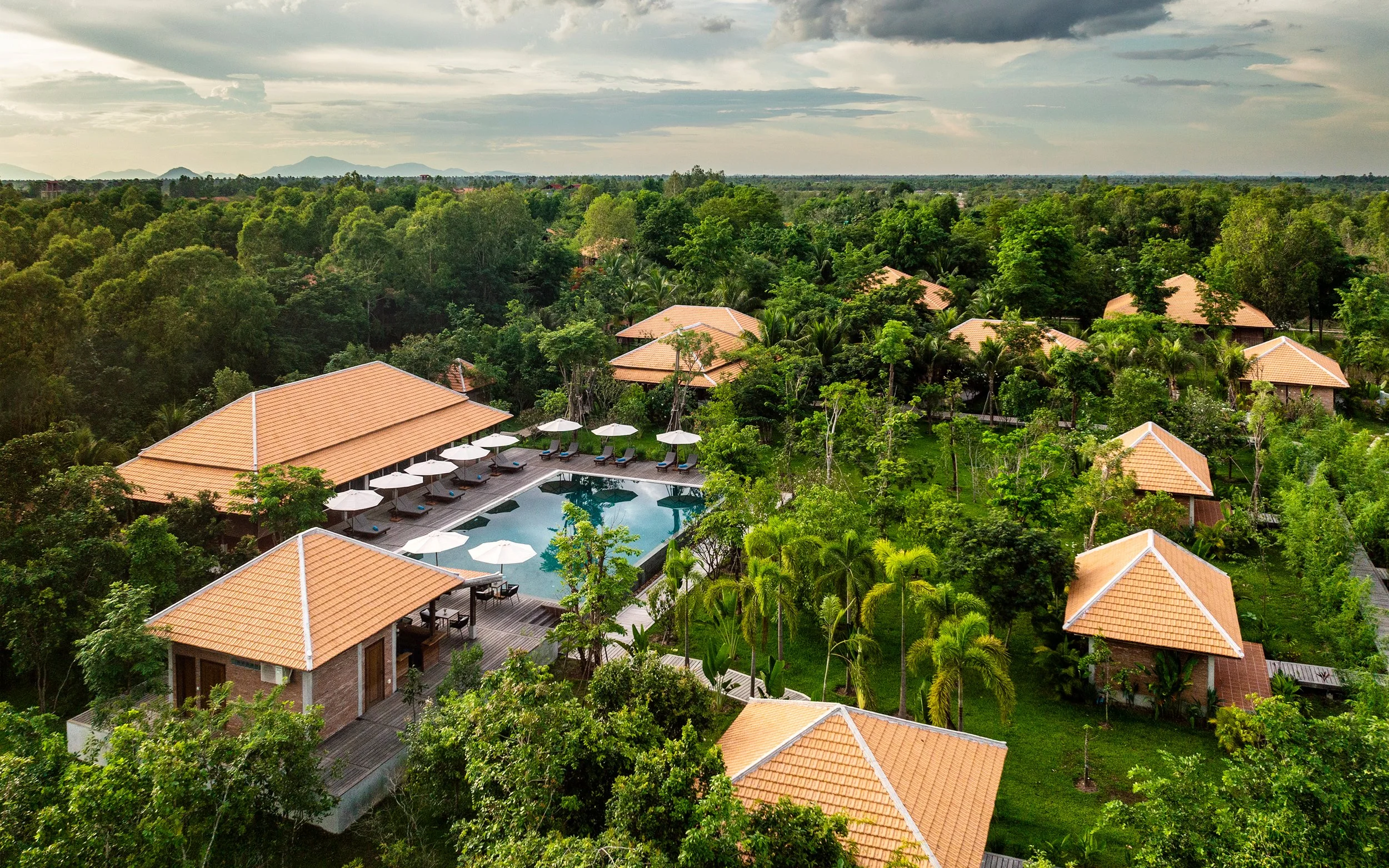
Farmhouse Resort & Spa is central to that ambition. The boutique hotel is not just a resort with a charity program attached. It is the commercial engine of a far larger ecosystem of free education, agriculture, vocational training, carpentry, aquaculture, food production, and cultural programming. Guests come for Khmer-style rooms, Cambodian cuisine, and the Sanctuary Spa. The resort also functions as a workplace, a training ground, a market for campus-made products, and a channel for outside revenue into a rural community.
The land beneath it was rice field 12 years ago. Smiling Gecko Foundation purchased its first nine hectares here in 2013, shortly after Schmid formally founded the organization in Switzerland that May, with the Cambodia registration following in 2014. The campus grew from there, and reached its current 150 hectares by the early 2020s.
It is a living experiment of a one-of-a-kind integrated economy, fueled by sustained donor capital and increasingly supplemented by the resort's own earnings, in a place where education, livelihood creation, and social protection remain uneven.
But a resort or a foundation, however well run, cannot substitute for the public institutions, land governance, and civic accountability that ultimately decide whether that progress can endure. Understanding what the campus has become starts with understanding why Schmid built it this way — and where Smiling Gecko Foundation needs public institutions to do its part.
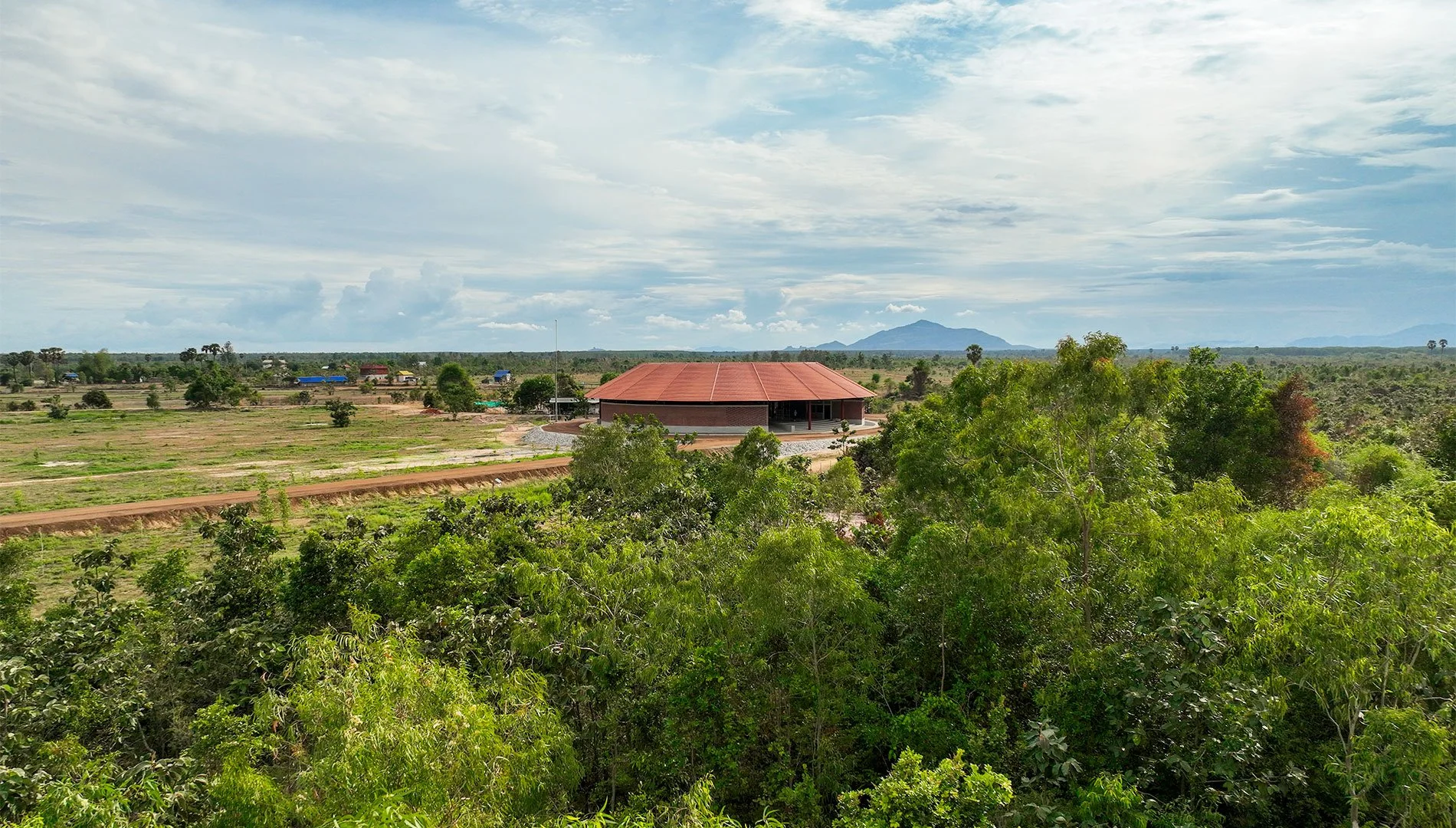
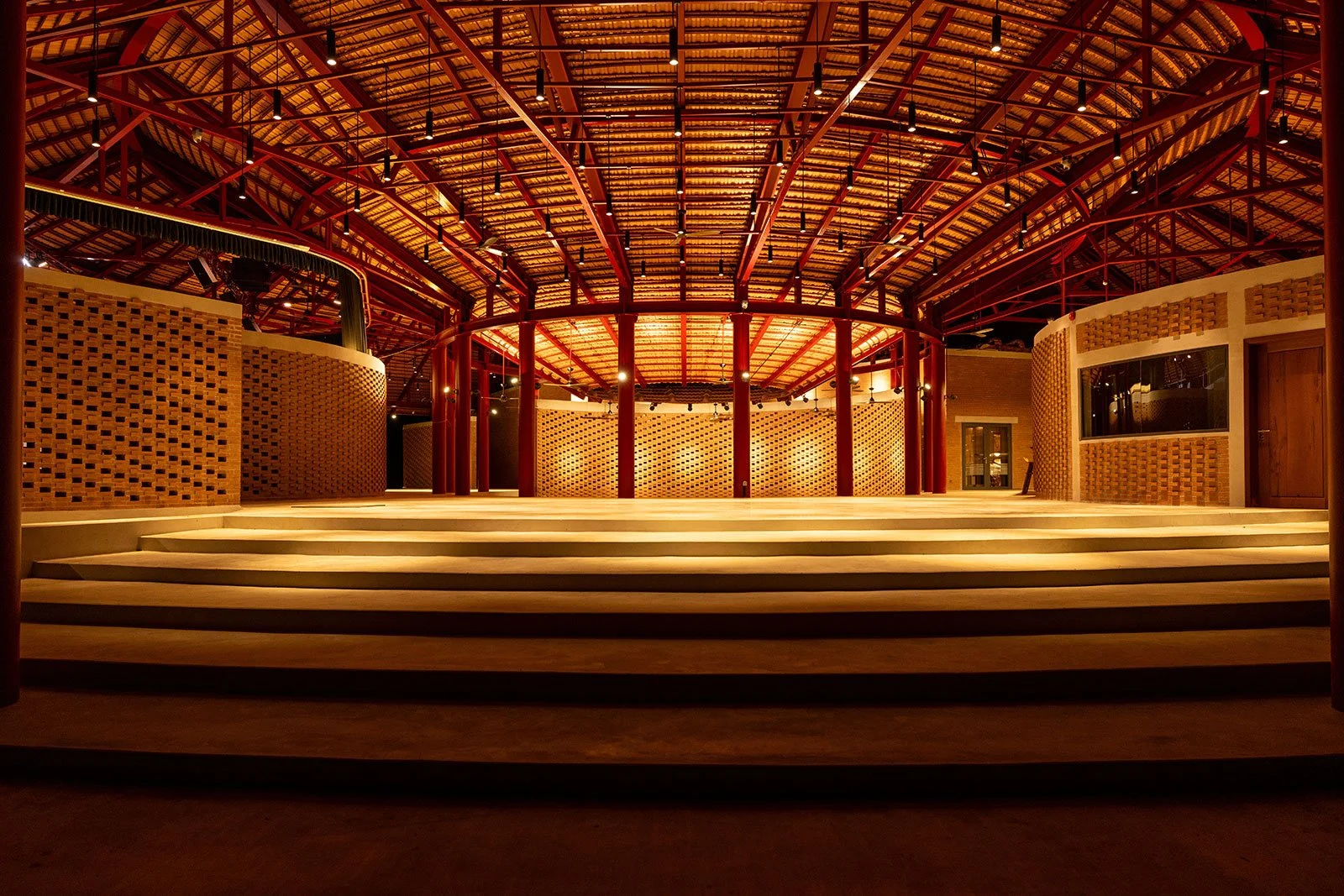
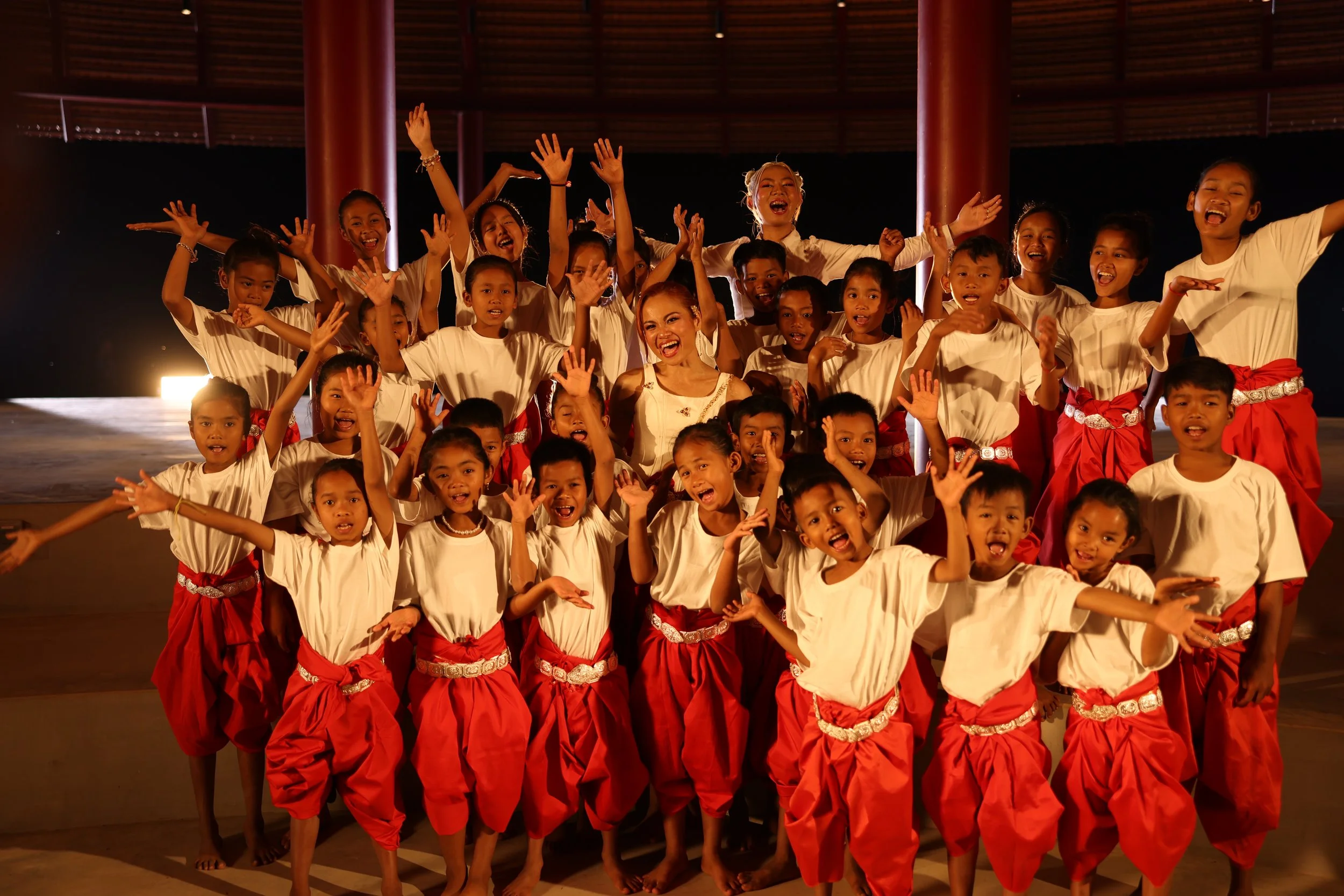
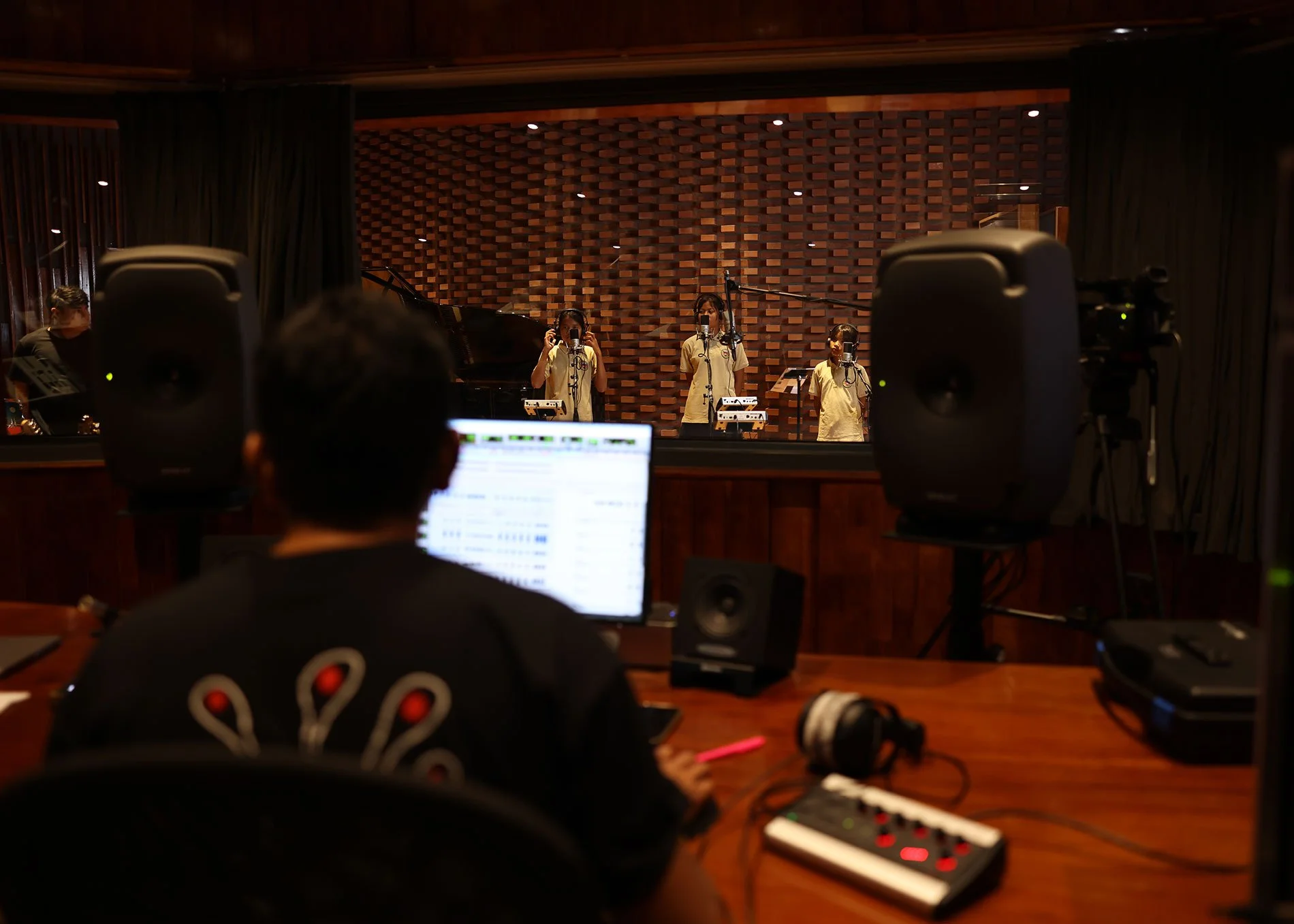
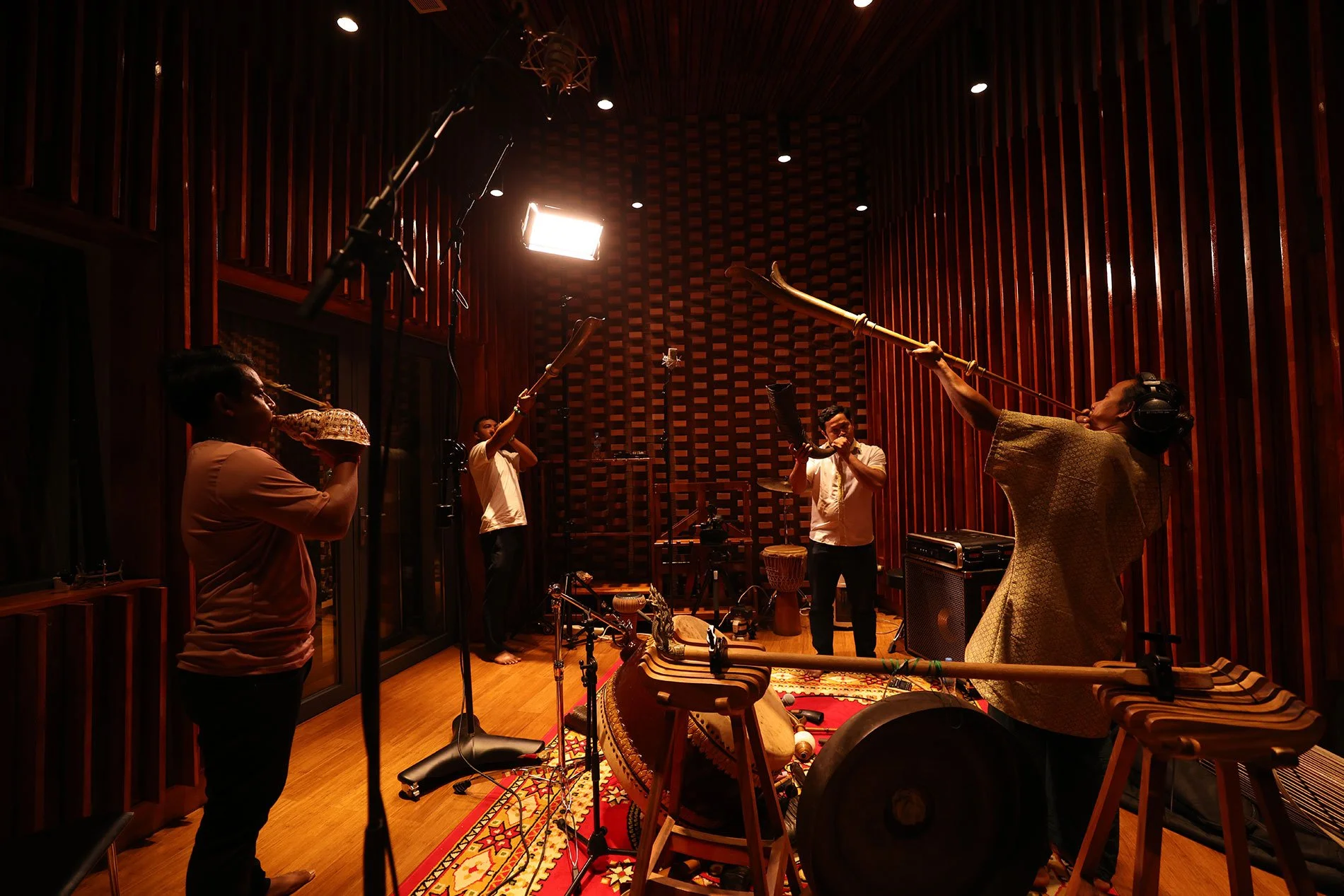
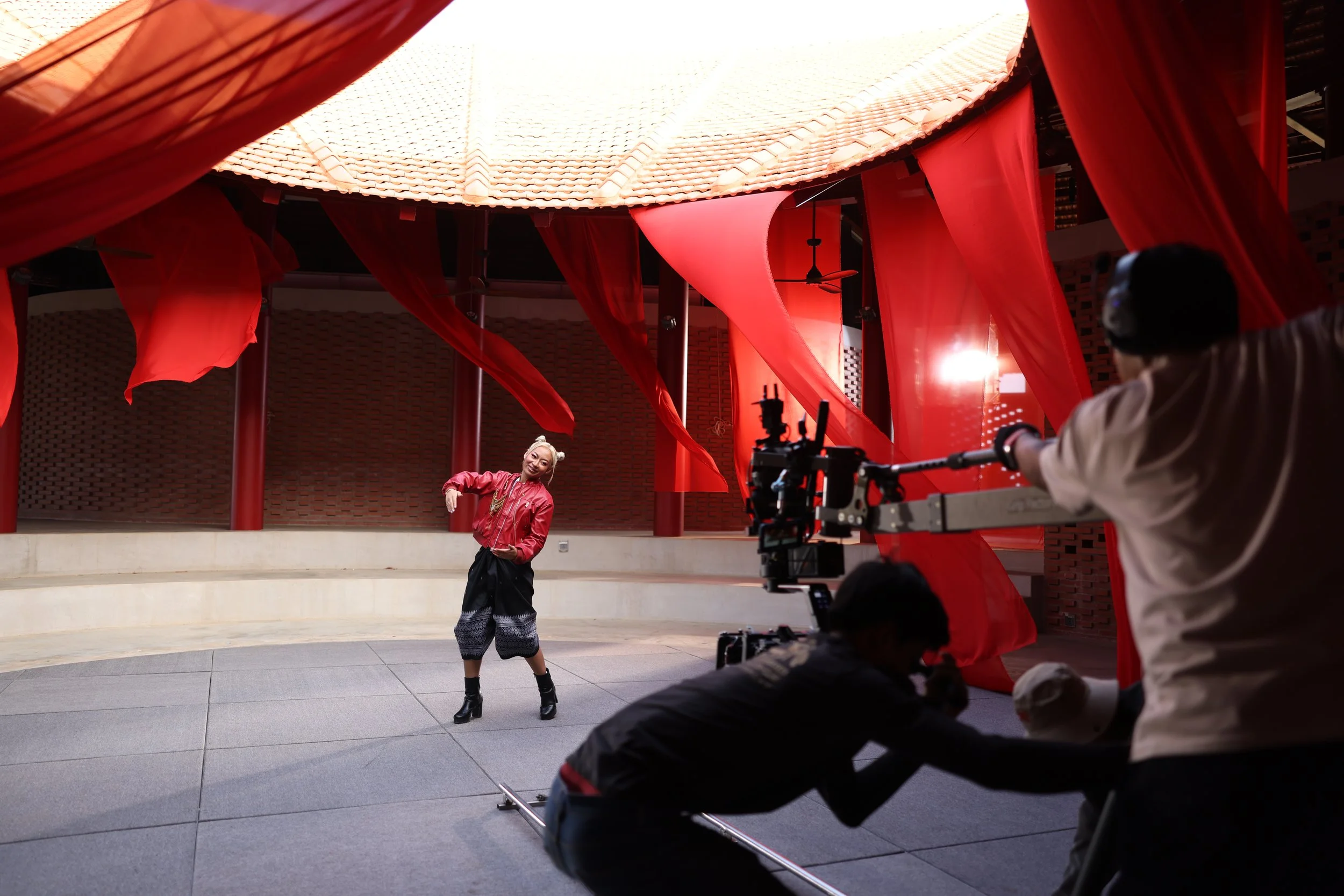
The Gong serves a cultural center, comprising an auditorium, an amphitheater, and a state-of-the-art recording space.
Hannes Schmid: From an Artist to an Architect of Opportunity
Best known for his commercial photography, including the visual mythology of the Marlboro Man, Schmid has spent the latter part of his career building something far removed from advertising's world of image and aspiration.
Smiling Gecko did not begin as a tourism concept or a master plan for rural development. It all began in 2012. Schmid was in Thailand working on an art project, then he came across a Cambodian girl who had been abused by her own father and forced into a begging syndicate. "I was shocked," Schmid has said of the encounter, in an interview with PwC Switzerland. He helped secure the girl's freedom and brought her back to Phnom Penh. He then learned that hundreds of children in Cambodia were in similar situations and sold to begging syndicates every year.
His first response was direct relief such as rice, milk powder, water, and critical support to help children attend school. But he came to see the limits of that approach. “Charity alone would never be enough,” What was needed, he argued, was a holistic and sustainable approach centered on education, vocational training, and economic opportunity.
The idea was ambitious. Its early execution was far from seamless.
His early farming experiments failed. Livestock died, fish operations struggled, and crops withered. Rather than abandon the effort, Schmid sought international and local expertise and co-founded the Smiling Gecko Foundation with lawyer Ngon Sokleap. Together, they moved the foundation beyond an improvised aid initiative and toward the integrated, commercially linked campus that Farmhouse Resort & Spa now helps sustain.
Since the beginning, he has drawn on a long-built network of supporters, businesses, suppliers, cultural figures, and professional contacts — particularly in Switzerland — to mobilize capital, expertise, equipment, and international attention for the project.
Notable Swiss institutions such as the Zurich University of Applied Sciences and the Swiss Hotel Management School in Lucerne have contributed research, training, and hands-on project work, from composting techniques to naturally climate-cooled school buildings. Equipment has often arrived the same way. The carpentry workshop's machinery came from a fire-damaged Swiss timber company, and classroom furniture, medical equipment, and musical instruments have similarly found a second life on the campus.
At an age when many founders would be stepping back, Schmid remains closely involved in the school and the campus's future plans. "It has become something that the Cambodian government is proud of," he told me, before adding, more personally, that it is something "I can't let go" of, even at 80.
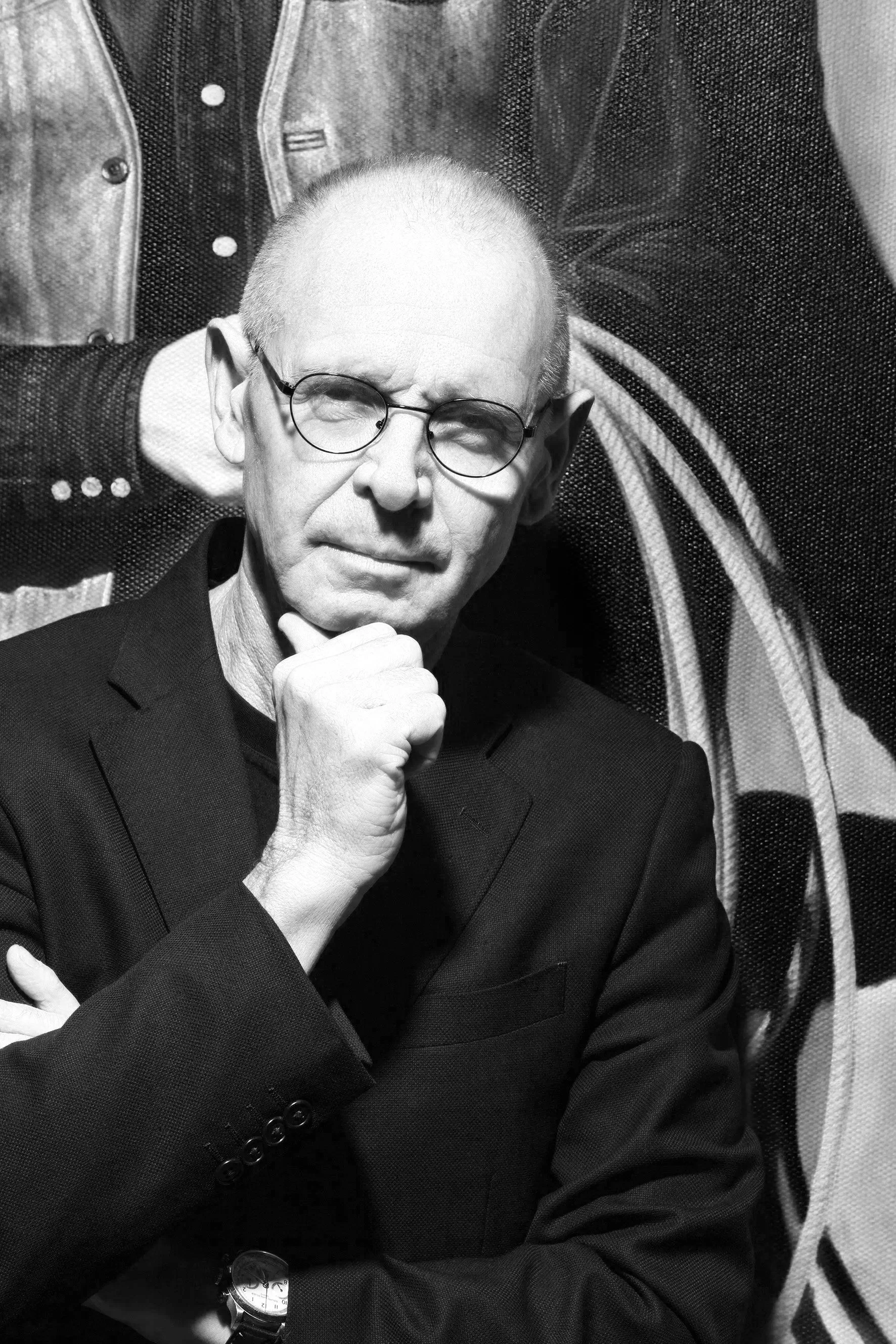
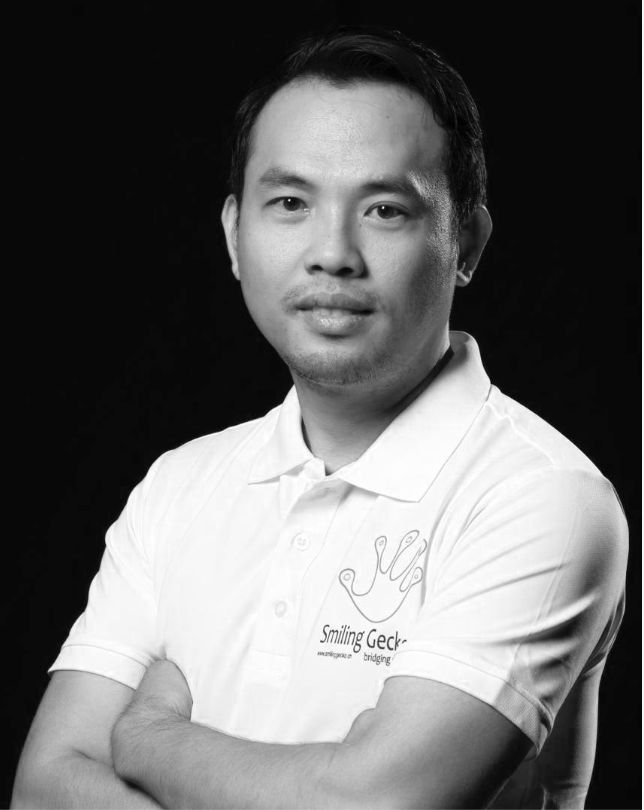
From left: Smiling Gecko Foundation’s Co-Founders Hannes Schmid and Ngon Sokleap
How Restaurant Un Turns Training Into Revenue
Restaurant Un is one of the clearest examples of how Smiling Gecko's vocational training develops and nourishes talent. Its Culinary Director and Executive Chef, Mariya Un Noun, came up through the organization's own kitchen. She started with no formal culinary background before Schmid recognized her talent. After we took her into the resort and started training her in the kitchen, we discovered she had a real talent," he recalled. She was sent to train in Switzerland with leading chefs and returned to Cambodia to lead the resort’s culinary program.
Restaurant Un — the fine-dining restaurant that opened in 2023 alongside the new Sanctuary Spa and bungalow suites, part of a deliberate pandemic-era repositioning of the resort — serves a seven-course tasting menu Tuesday through Saturday and a no-menu Chef's Table on Sunday and Monday, alongside an all-day restaurant for casual dining.
The pricing places it firmly in the upper tier of Cambodia's dining market, a deliberate choice rather than a contradiction of the resort's social mission. Fine dining generates higher-value revenue, supports skilled culinary careers, and functions as a second premium anchor for the property alongside the spa.
Chef Un calls her cooking "New Khmer Cuisine," which combines inherited technique with the discipline she learned in Switzerland. The wider stakes are cultural as well as commercial. Cambodian food has long been underrepresented in fine dining relative to Thai, Vietnamese, or Japanese cuisine.
When a Cambodian-trained chef builds a premium brand on her own terms, the value created reshapes who has the authority to define Khmer food, not just who profits from it. "I am determined that Cambodian flavors will be recognized worldwide," Un told me, "and become a well-earned boost to our tourism industry."
Schmid hopes the training pipeline can produce more career arcs like hers — not more celebrity chefs, but more Cambodians with the skill and agency to lead their working lives on their own terms.
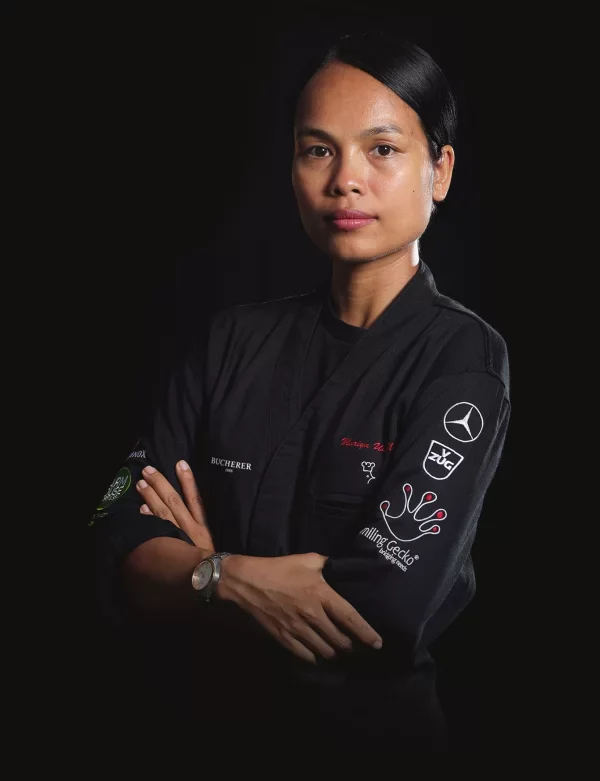
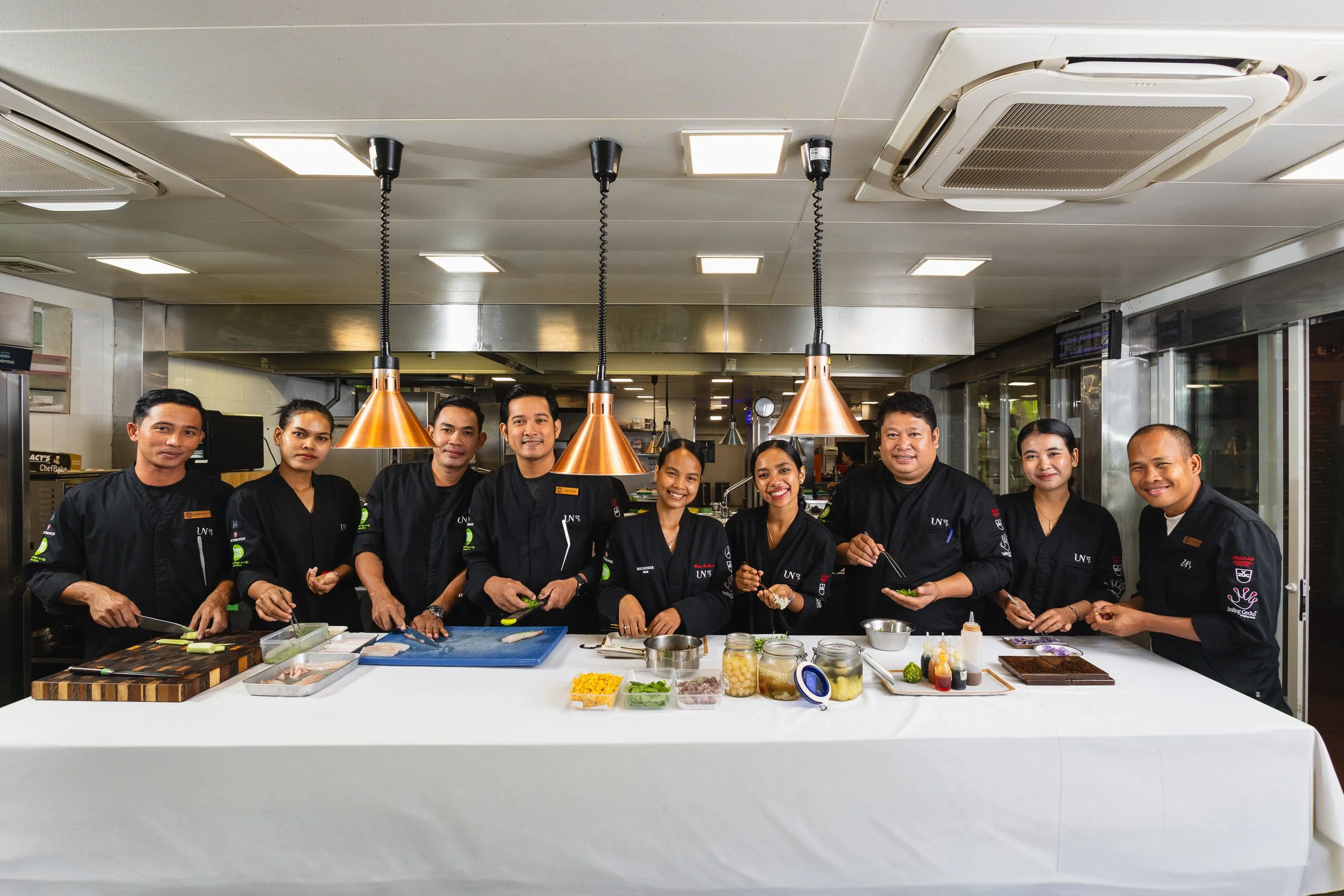
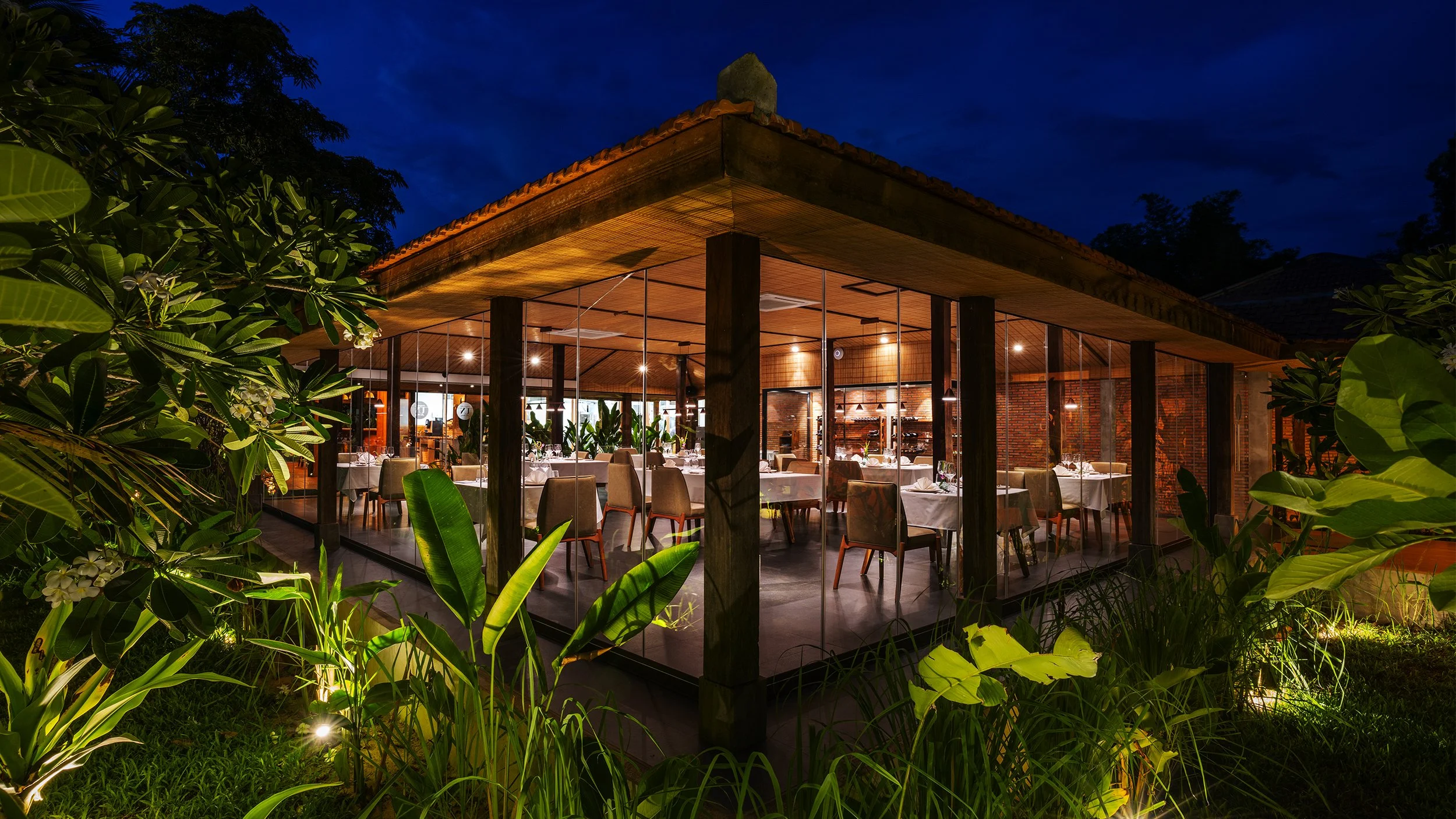
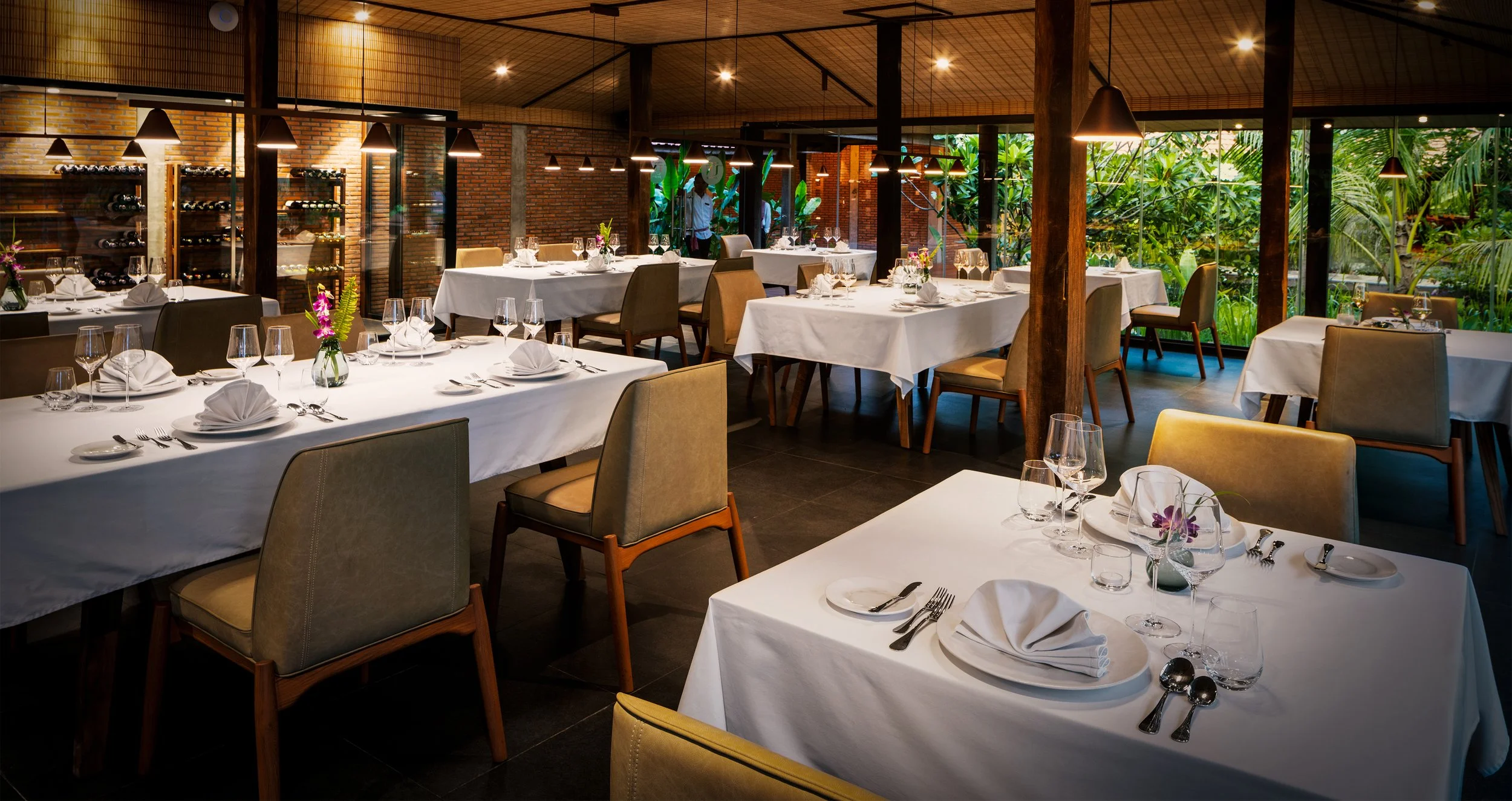
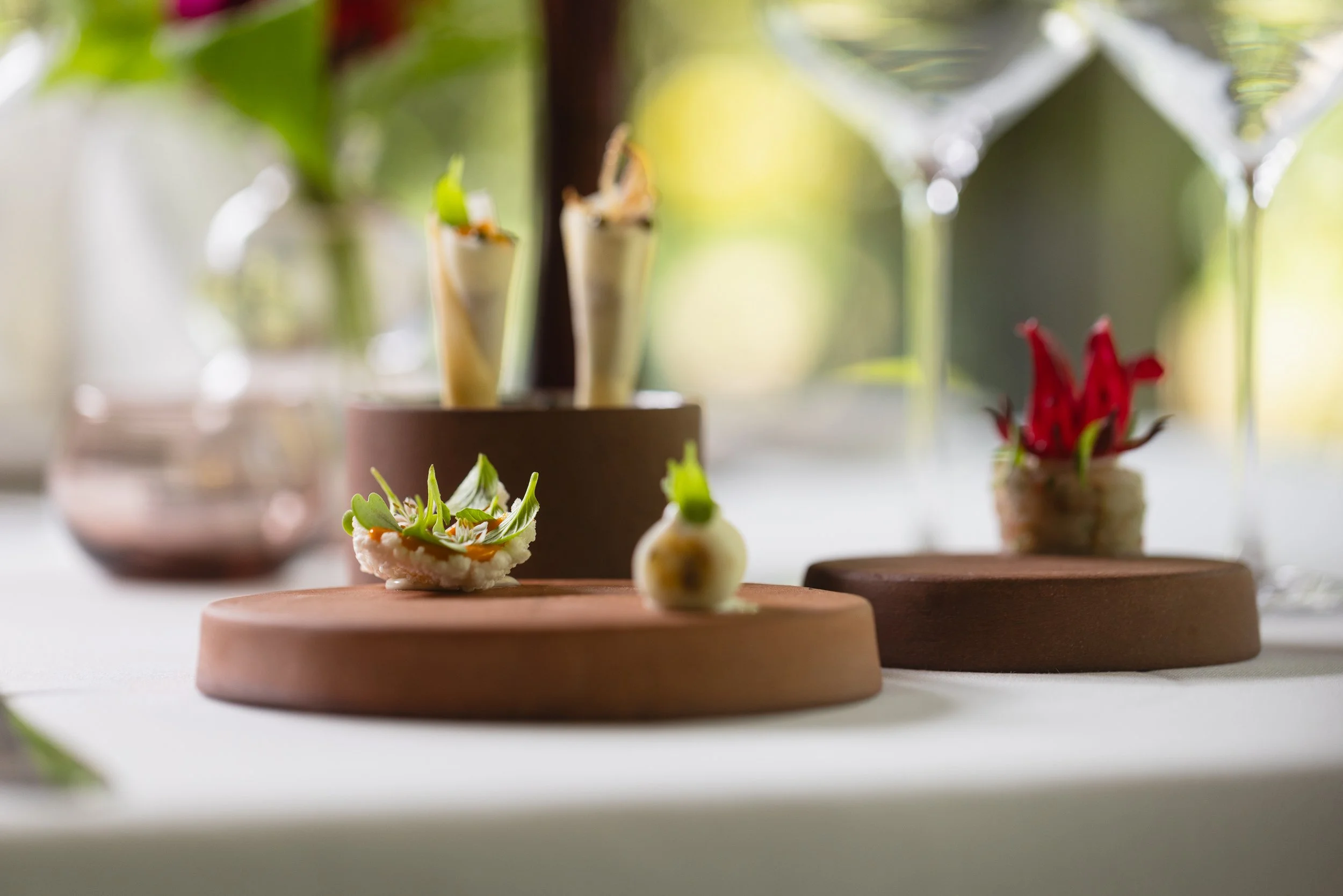
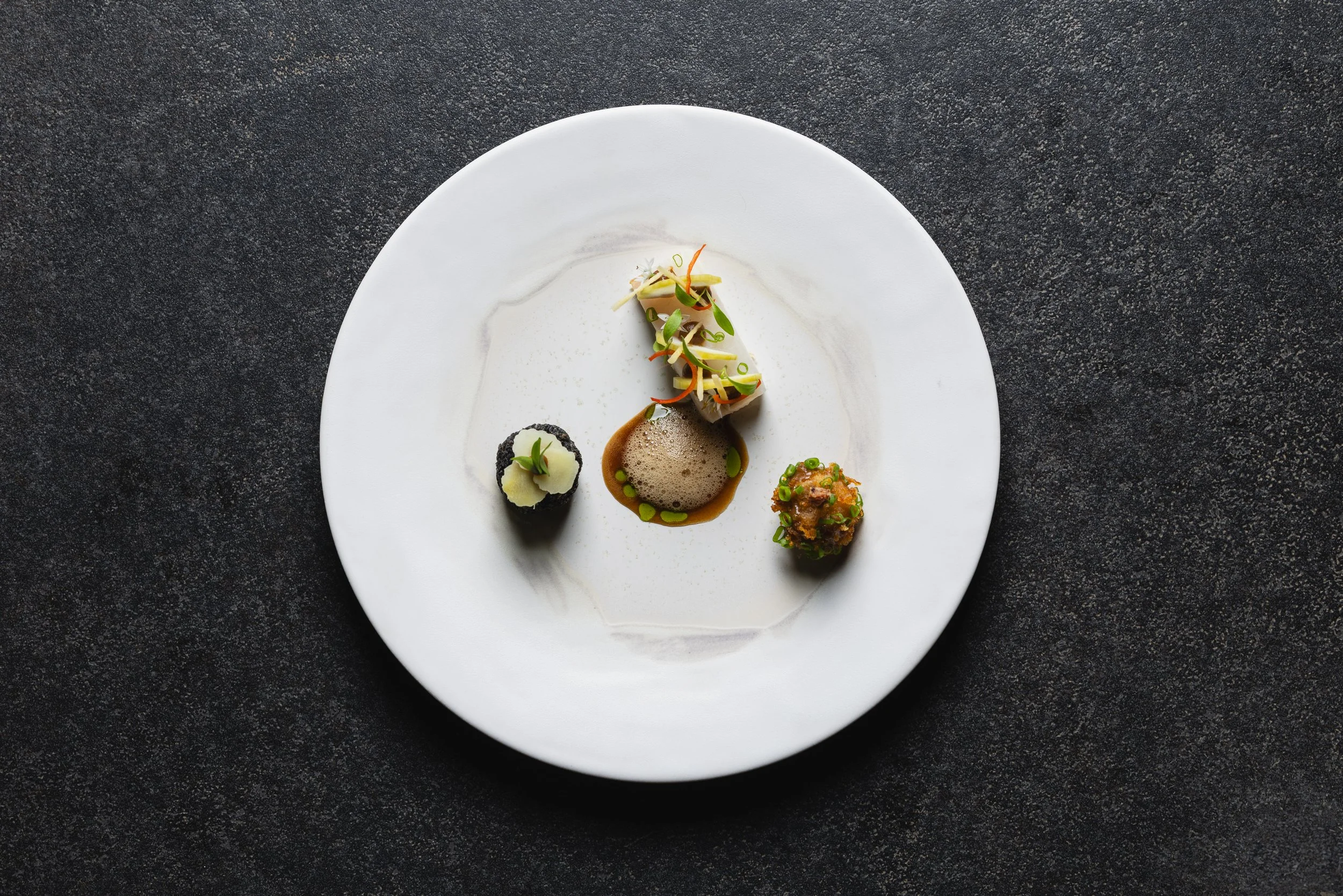
From left: Chef Mariya Un Nou, chef and her team, and the interior of Restaurant UN
How the Resort Funds the Rest of the Campus
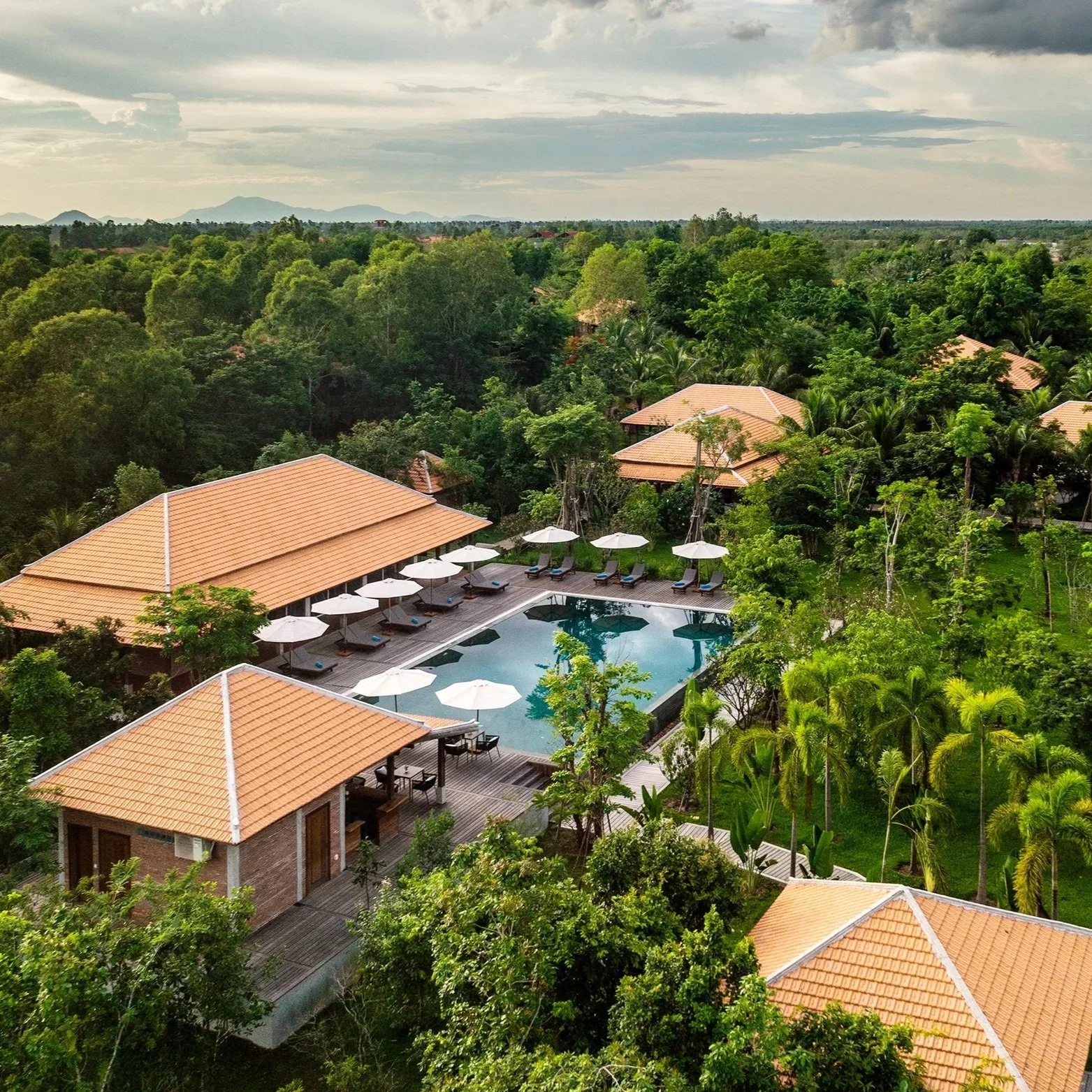
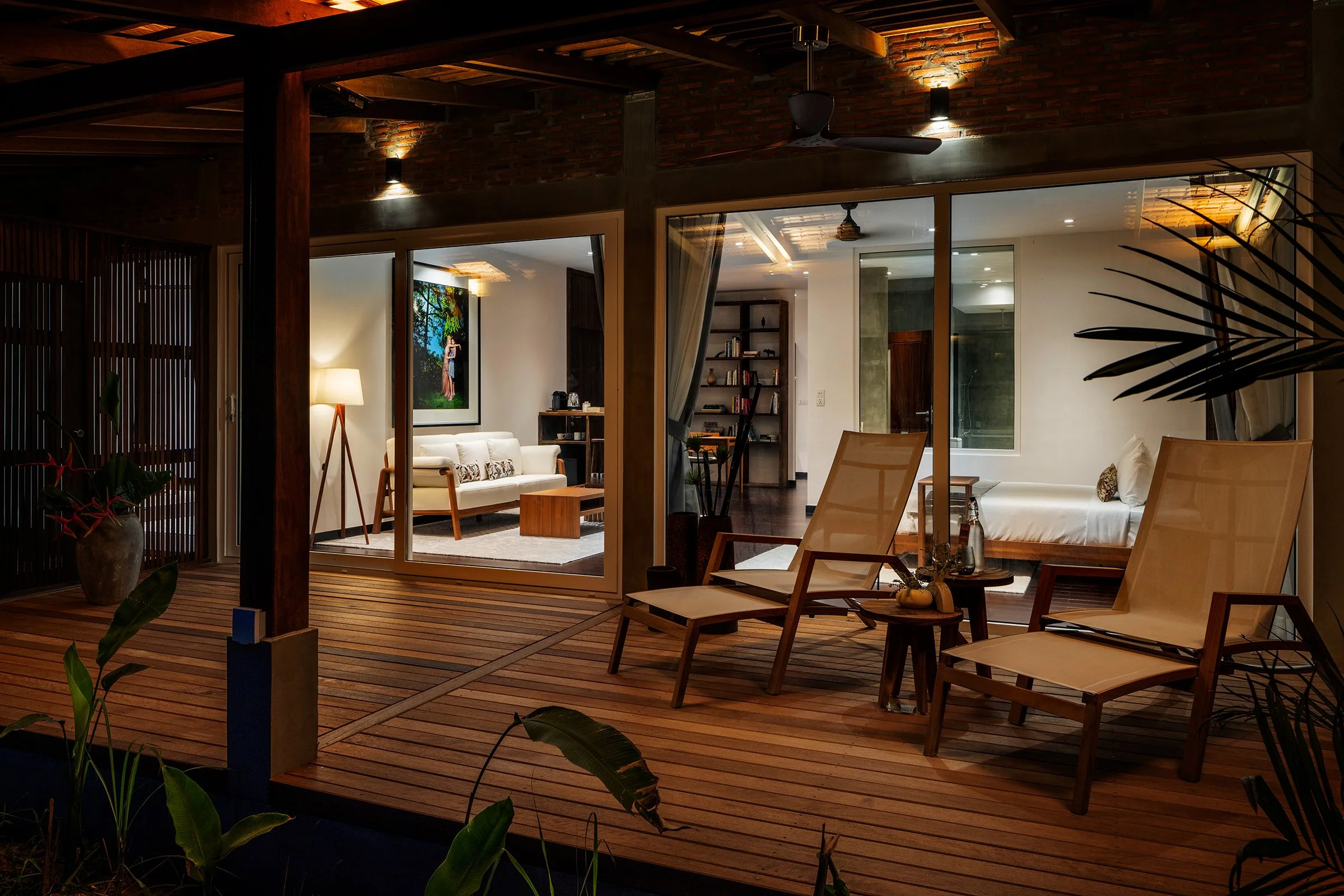
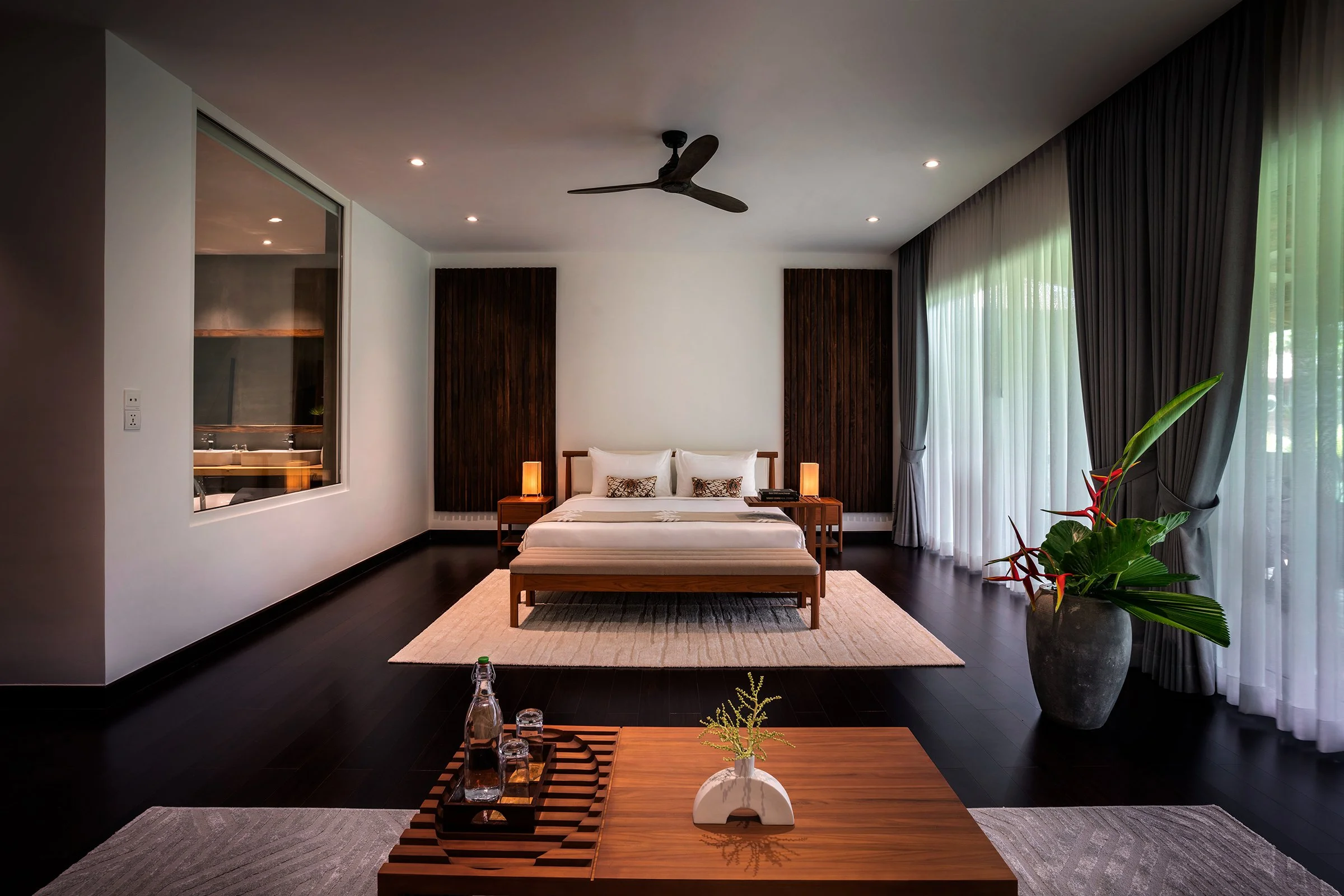
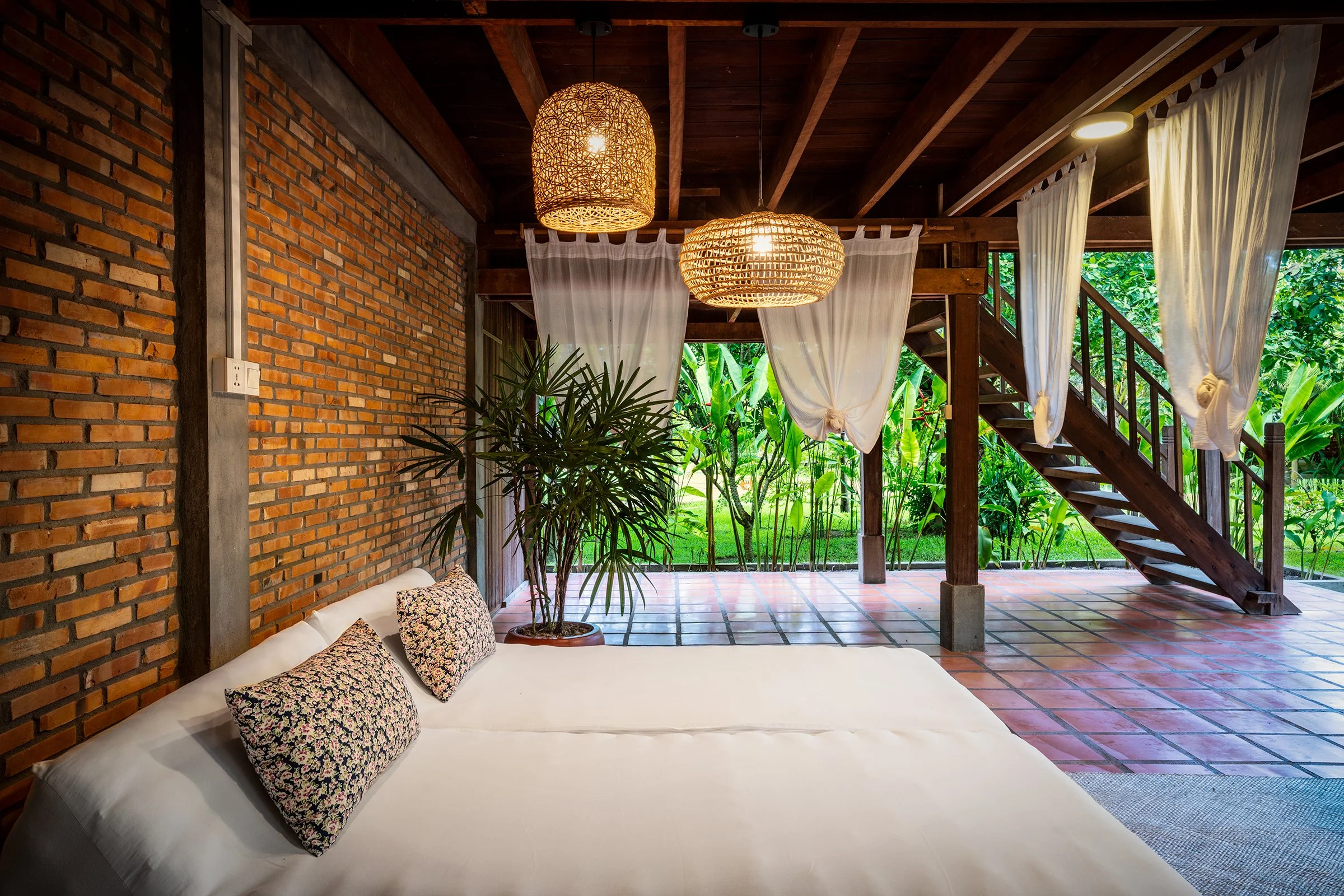
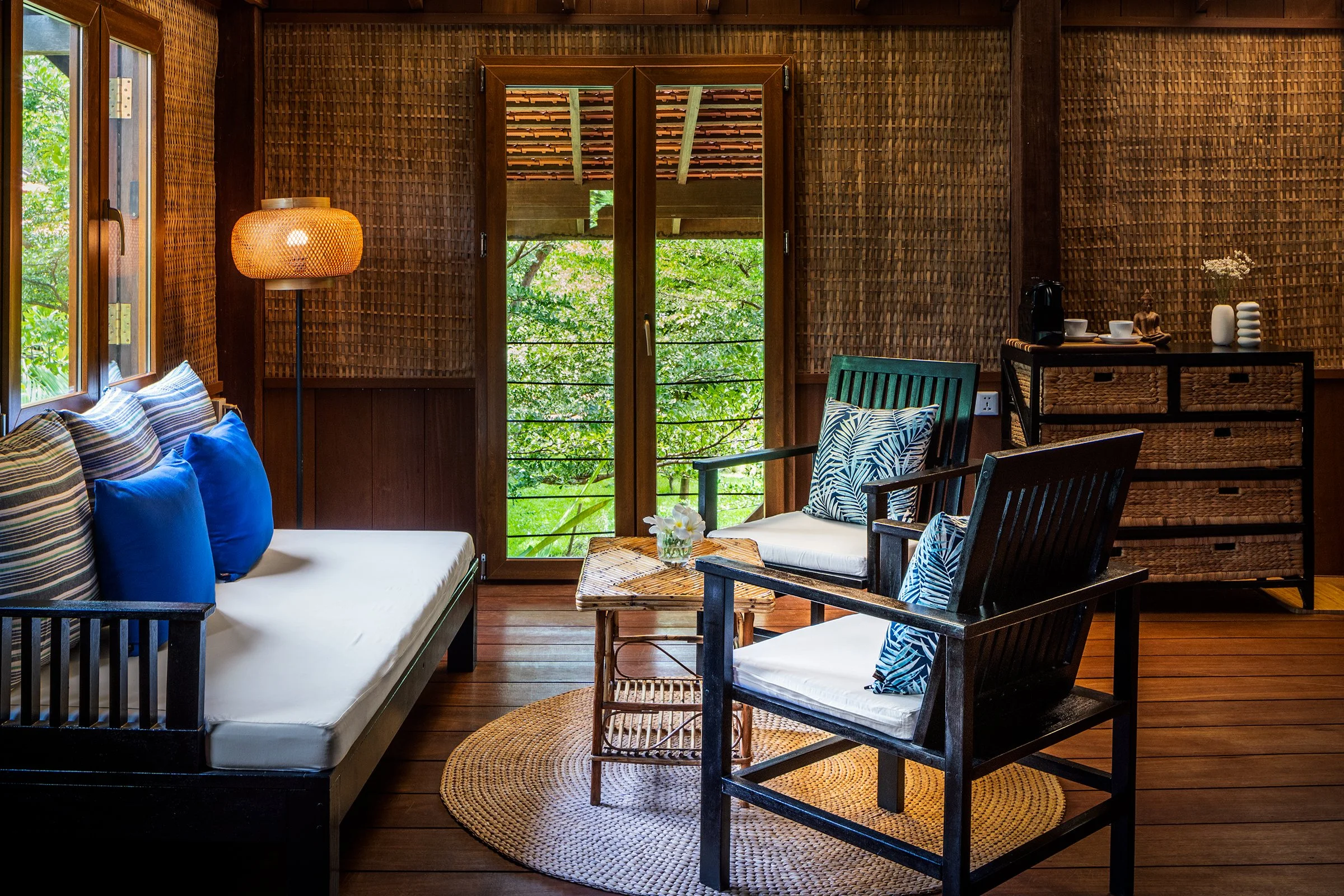
A luxury resort well outside Cambodia's major tourism circuits — nowhere near Angkor's temples or a beach — can look counterintuitive on paper. Farmhouse Resort & Spa is not chasing that market. It aspires to be a destination in its own right, offering travelers a pared-back, rural side of the country, with 34 rooms and villas, tropical gardens, a wellness complex, two restaurants, and a standard of service that has drawn private groups, corporate retreats, and travelers seeking a slower alternative to Phnom Penh or Siem Reap.
Schmid told me the idea for the resort originally came from a friend, who suggested hospitality could become a source of income for Smiling Gecko's wider work. That decision set the business model that now defines the foundation. Tourism was not conceived as a secondary fundraising accessory. It is the commercial spine of the entire social-development ecosystem.
Today, the resort is the foundation's single largest source of income and its biggest training enterprise. Its revenue helps sustain the broader organization, while hotel operations create real routes into paid work and hospitality-grade skills training.
That journey to commercial viability has been gradual and, by the organization's own account, was not guaranteed. The pandemic came close to unraveling it: tourism income and growth plans were, in the foundation's report, "reset to zero" in 2020 and 2021, and the organization survived largely on emergency donor solidarity.
Rather than simply wait out the downturn, Smiling Gecko used it to reposition Farmhouse upmarket by opening the Sanctuary Spa, Restaurant Un, and new bungalow suites in 2023.
Between 2023 and 2025, the foundation saw a slow but steady recovery, with figures trending in a positive direction. However, Cambodia’s border conflict with Thailand mid-2025 dealt a significant blow to the local tourism sector, continuously affecting the foundation’s performance.
A rural resort with a social mission cannot run on goodwill alone. Guests still have to find the experience worthwhile on its own hospitality terms.
By that measure, Farmhouse Resort & Spa appears to be strengthening its proposition. The Travel + Leisure Luxury Awards Asia Pacific 2026 ranked its Sanctuary Spa among Cambodia's top spas and recognized the property itself among the country's leading upcountry hotels, alongside General Manager Daniel Ruprecht.
What stood out to me during my visit was that the resort’s integration into the Smiling Gecko Foundation was its unique strength, and that it was its leadership’s priority to ensure its contribution remains consistent and resilient enough to help the wider cause.
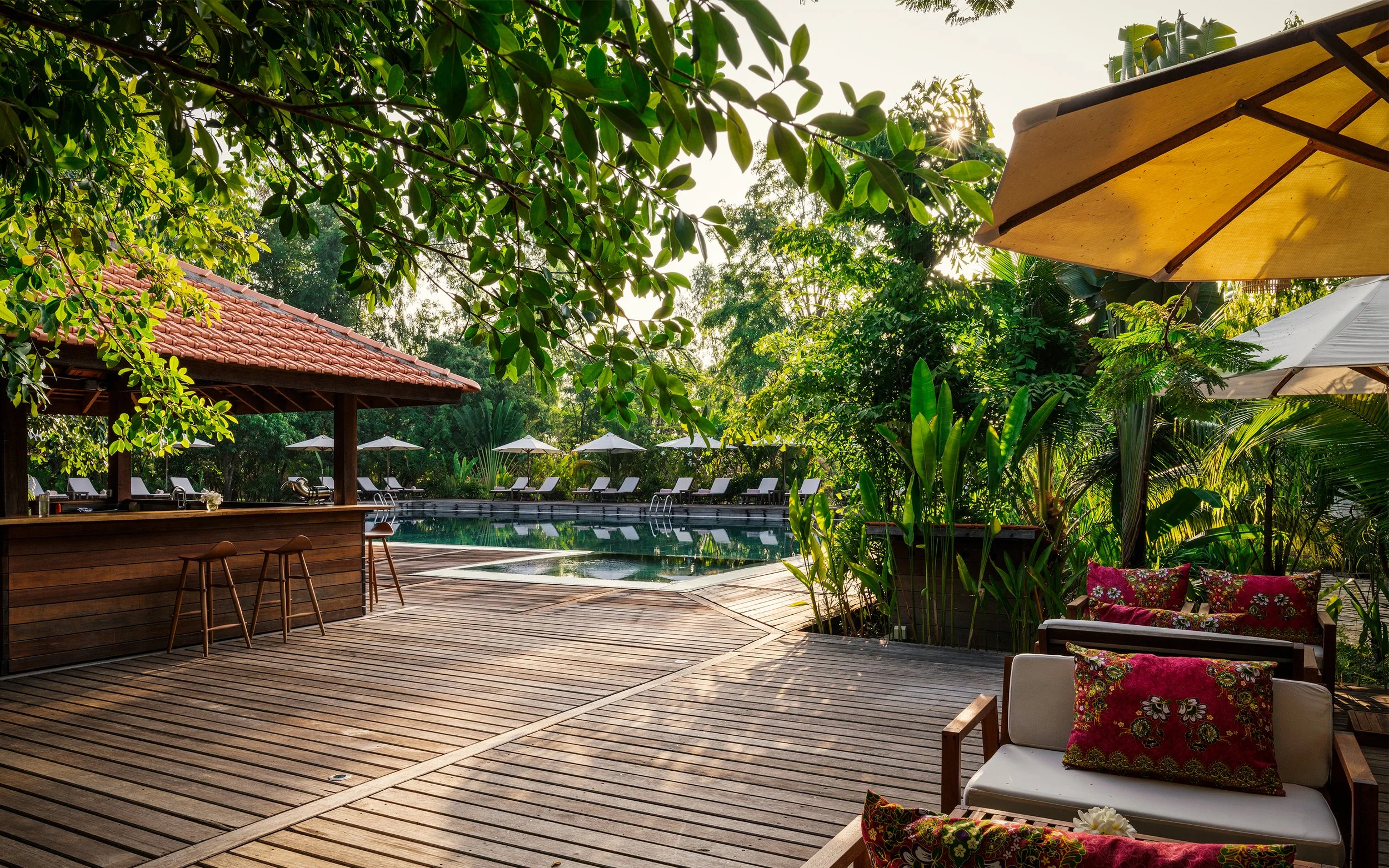
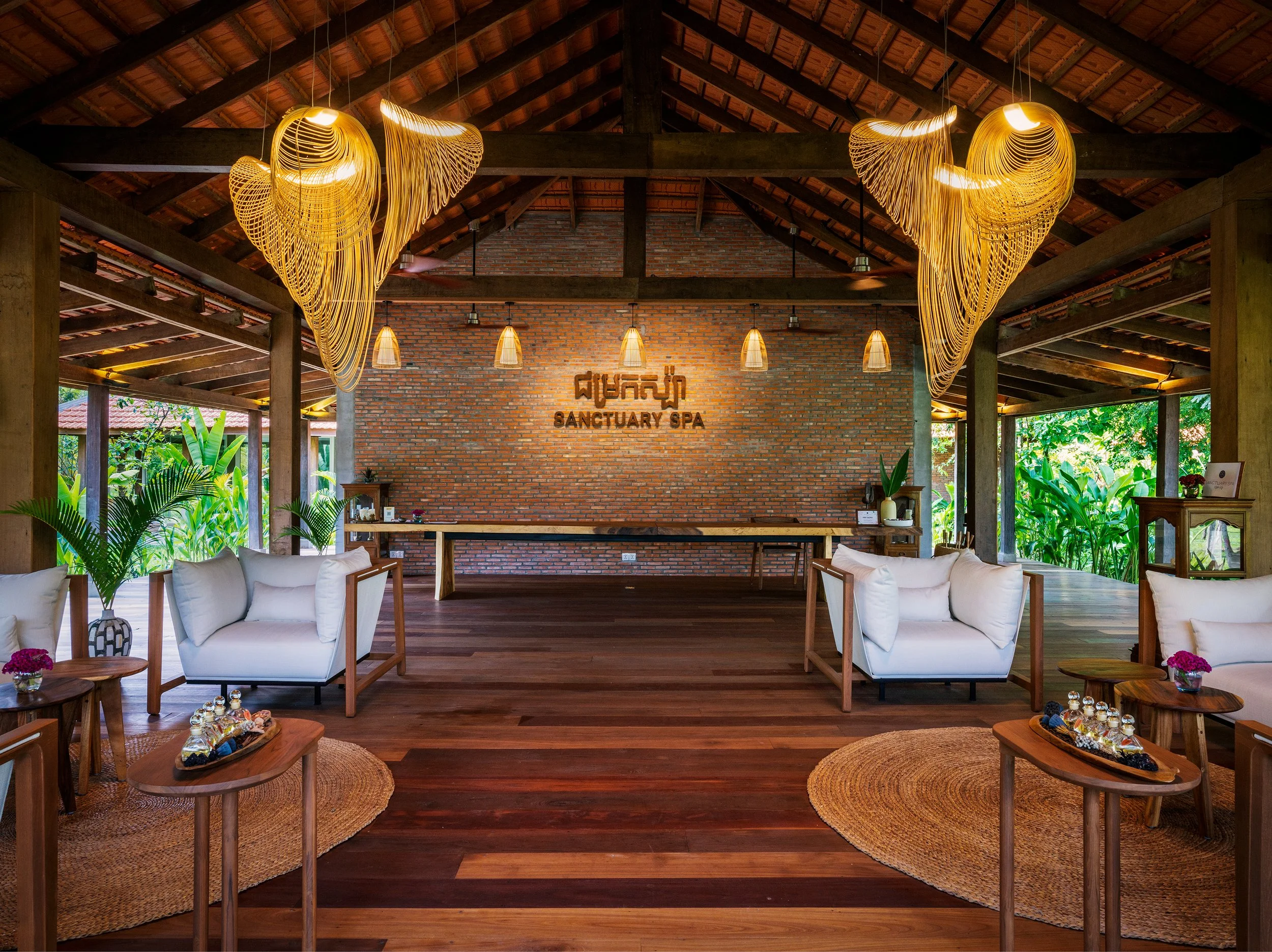
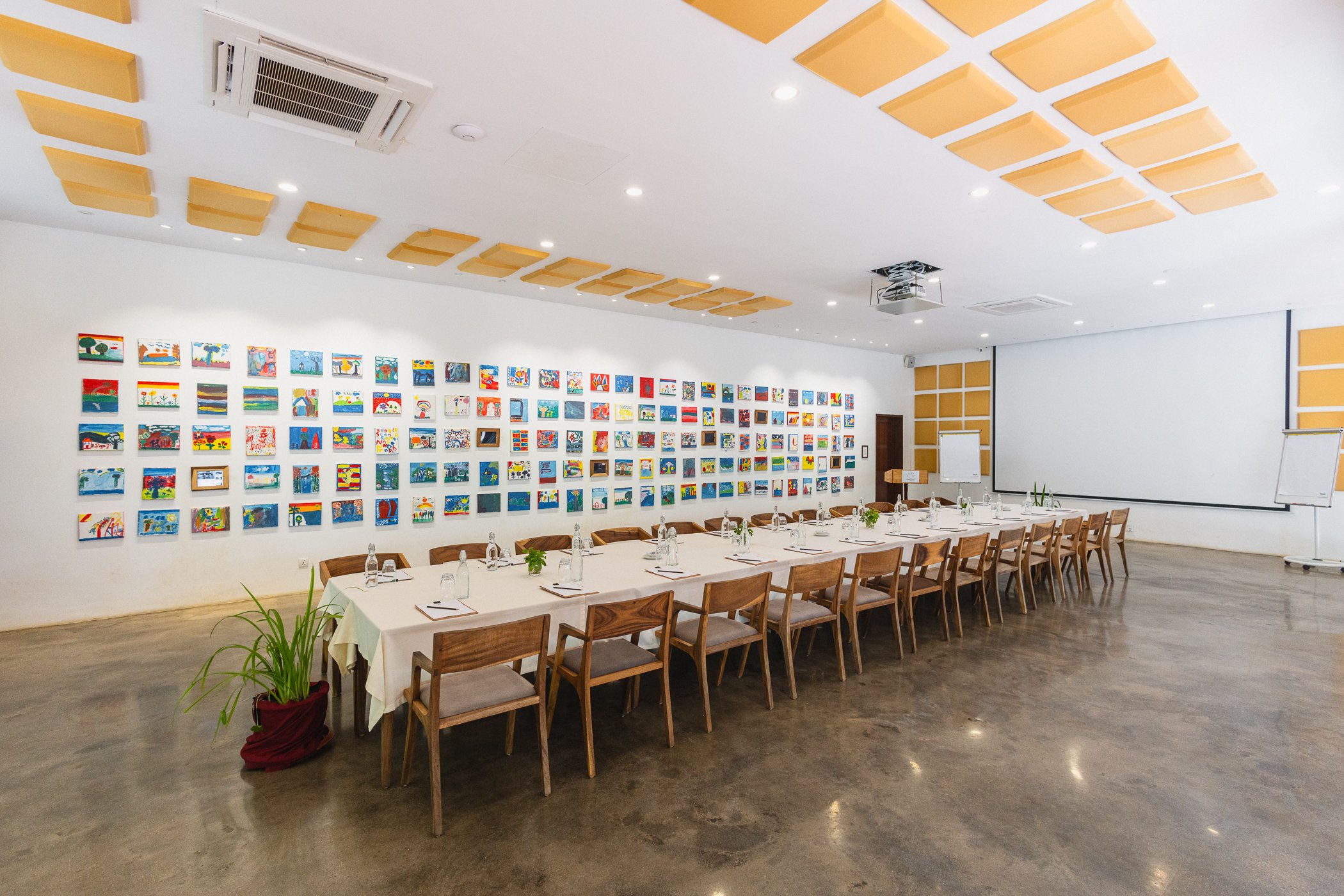
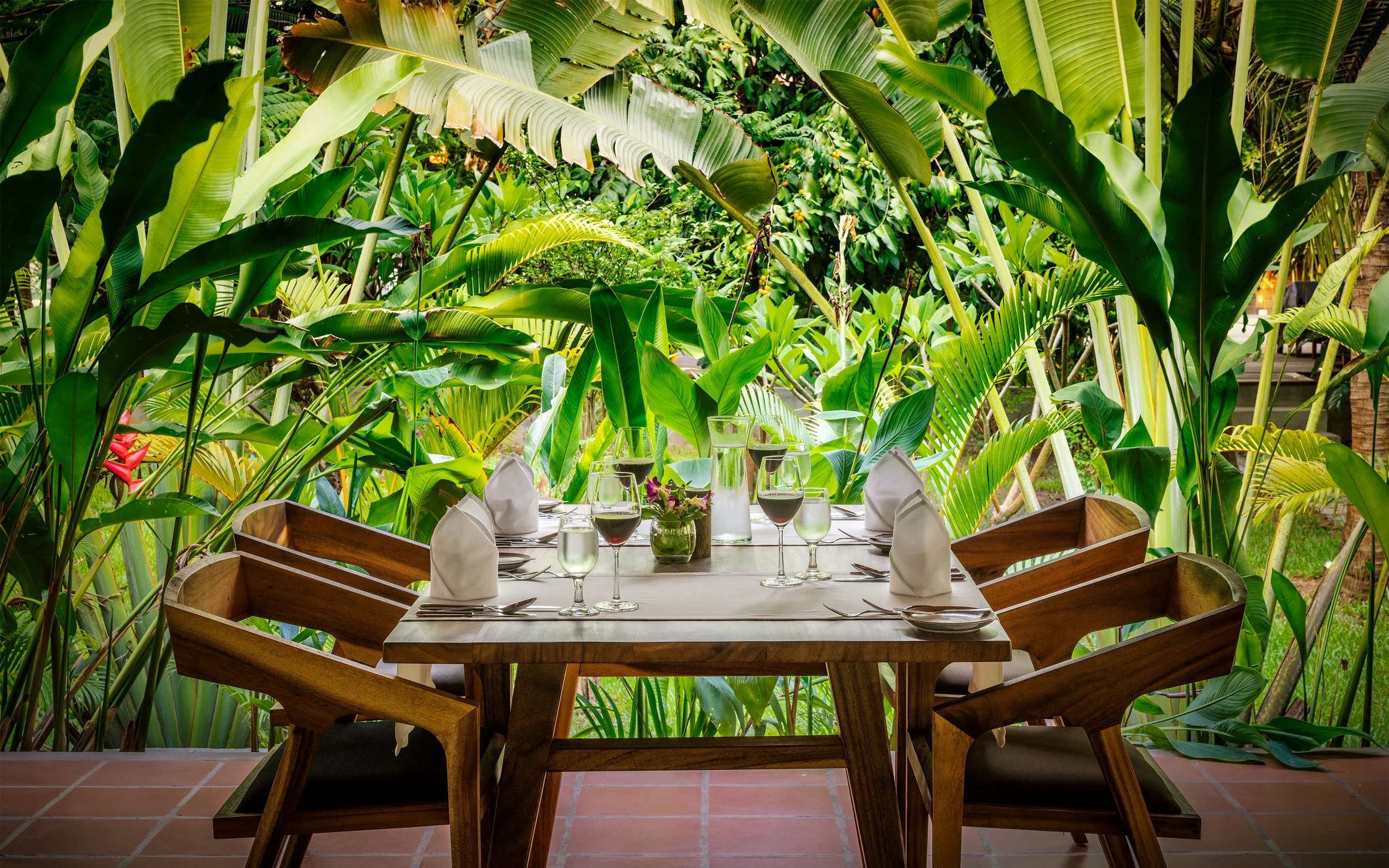
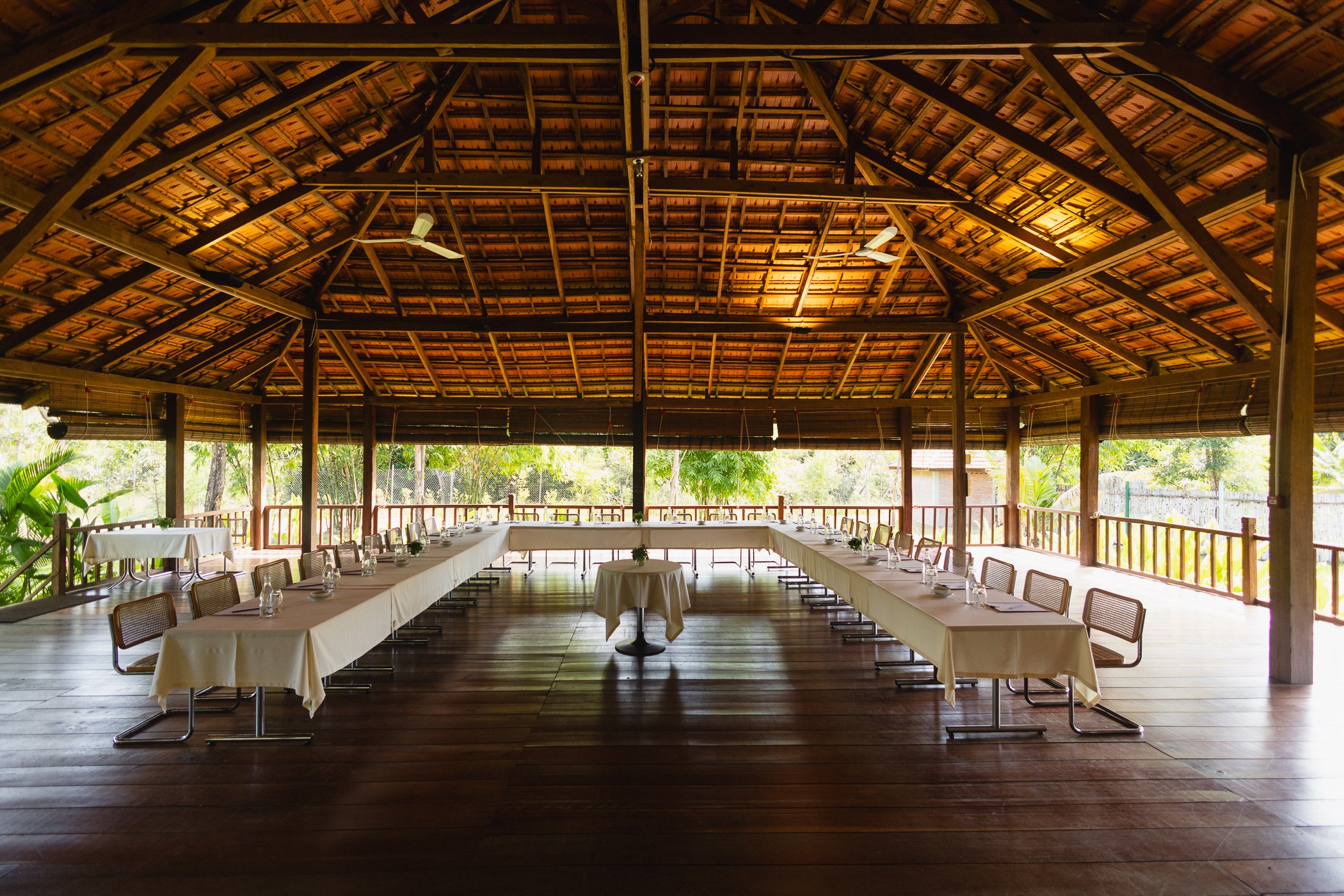
From left: Main pool, the Sanctuary spa, indoor meeting room, meeting shala, and Farmhouse restaurant
The Rural Economy Behind the Rooms
On my second day, Schmid walked me and a few resort guests through the school, where the buildings pair Swiss technology with Cambodian minimal design to keep interiors cool in a country prone to extreme heat.
The school offered free education to 562 students, from kindergarten through age 14, in 2025–2026. Enrollment is expected to exceed 600 next year as it adds upper-secondary grades. Longer-term plans include university-level courses, aiming to build continuity from early education toward skilled employment.
That continuity starts with dignity. Students shower and change into clean clothes before class to reduce the risk of skin disease. Meals favor whole grains over white rice to improve nutrition. The bilingual curriculum, delivered by Cambodian and foreign teachers, is built on that foundation of health and hygiene as much as on textbooks.
The food system behind it operates at scale. By 2018, Smiling Gecko's kitchen already prepared more than 130,000 meals per year for schoolchildren, while also supplying a bakery that sells Swiss-style baked goods to outside businesses, turning a support service into a small enterprise of its own.
That same commercial logic extends across the rest of the campus. Co-founder Ngon Sokleap, a lawyer by training, led me through the fish farm, vanilla plantation, and carpentry workshop, each built to generate a product, a skill base, and income simultaneously.
The vanilla farm supplies hotels including Rosewood Phnom Penh, tying rural production into Cambodia's fine-dining supply chain and demonstrating that Cambodia’s high-end hospitality can source locally rather than purchase imported ingredients. The carpentry workshop, filled with salvaged equipment after a fire at a Swiss timber firm, produces roughly 90 percent of the furniture used across Farmhouse Resort & Spa and the wider campus, plus commissions for outside clients.
Together, these business units are what separate Farmhouse from a conventional hotel with a charitable add-on. The resort does not simply donate a share of its revenue. It creates ongoing demand for campus-made furniture, food, and services, pulling guests into that economic loop whether they notice it or not.
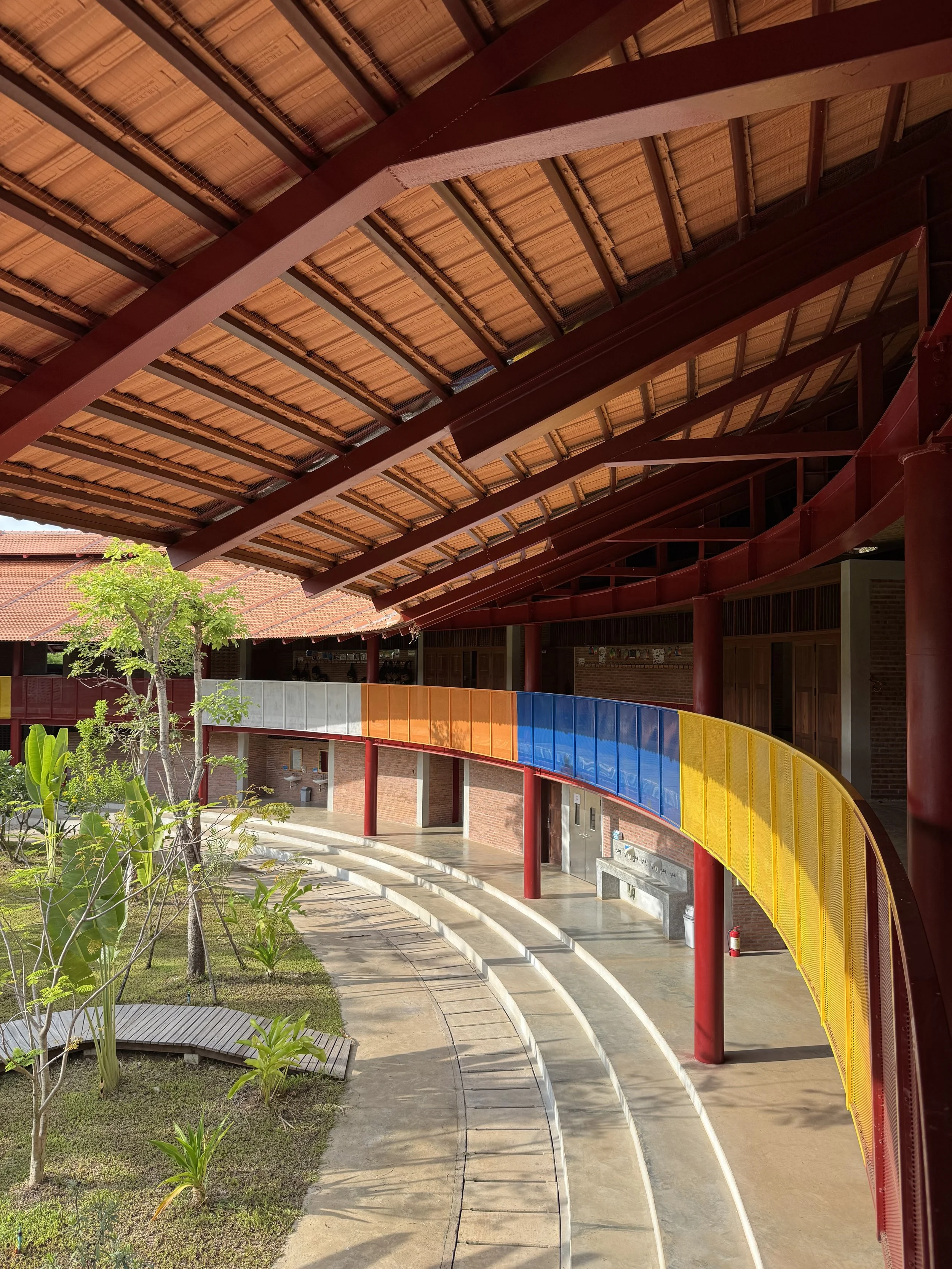
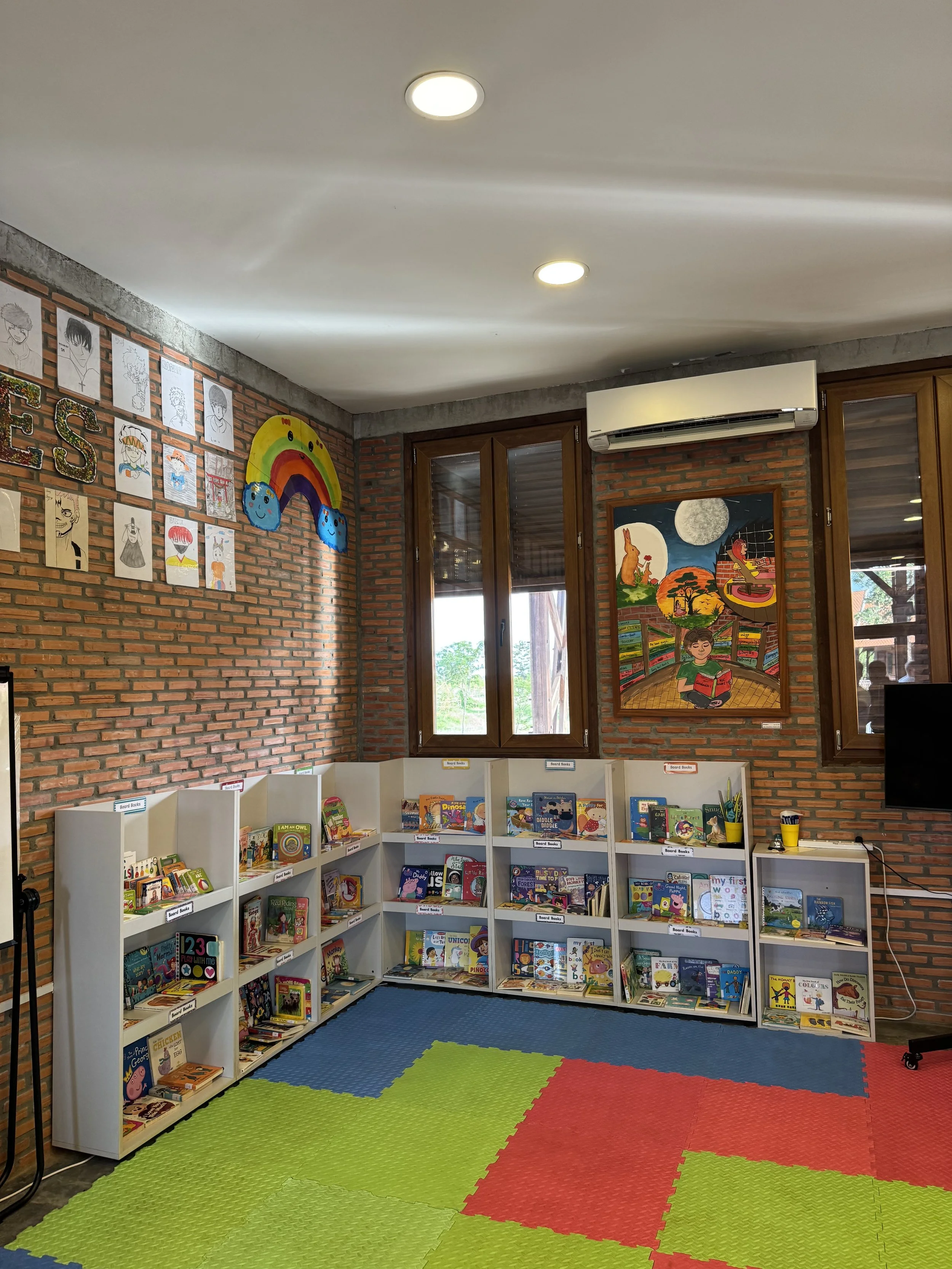
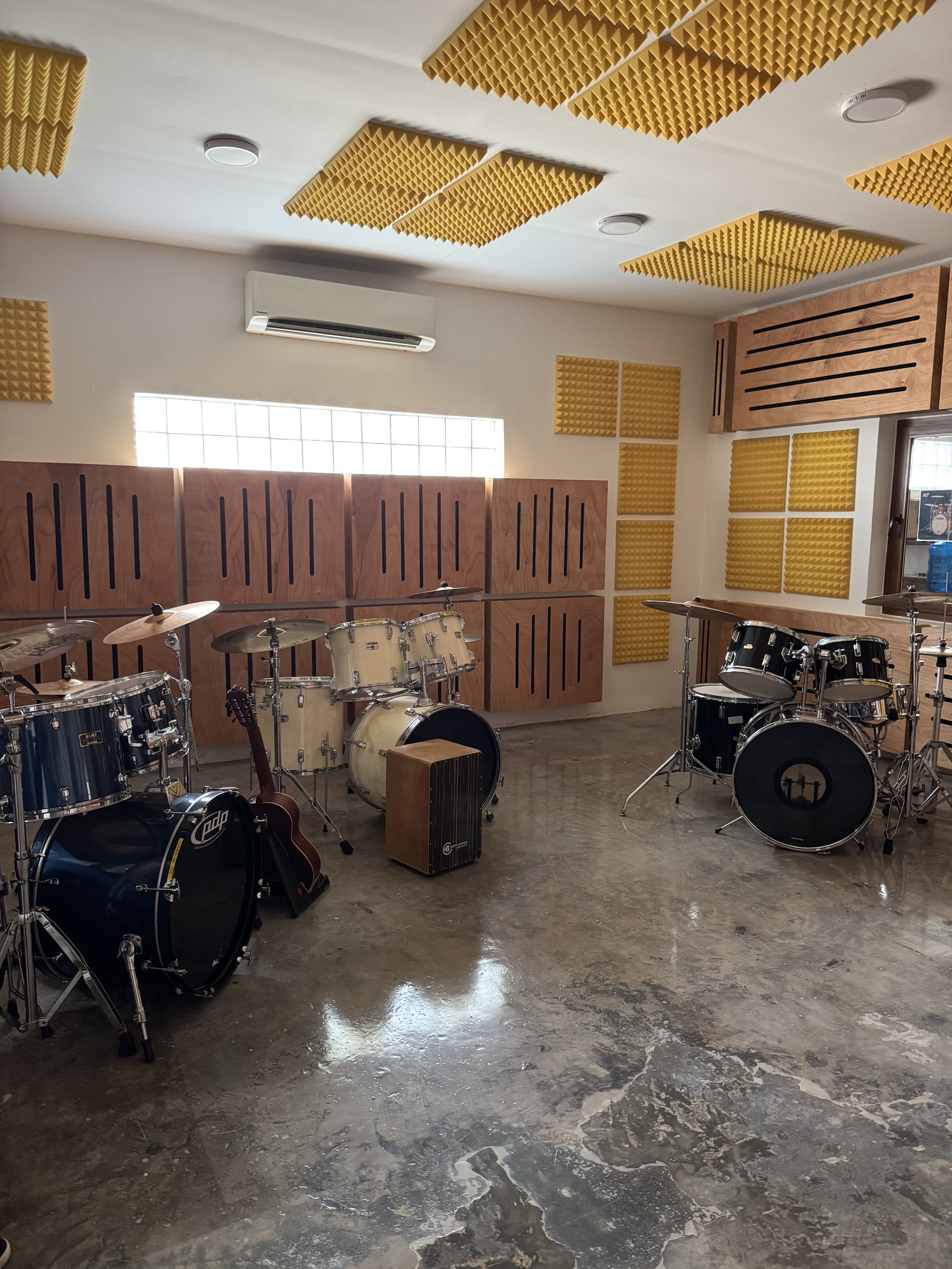
From left: middle school building, library, and music room filled with donated equipment. Photos by author.
Tourism & Hospitality as a Catalyst, Not a Substitute
Farmhouse Resort & Spa sits inside a wider movement using tourism not just to turn a profit, but to finance social and environmental outcomes a conventional hotel rarely attempts.
Its closest parallels in Cambodia, Shinta Mani and Cardamom Tented Camp, are built on different propositions about what guest spending can support.
A share of Shinta Mani Angkor's revenue funds the Shinta Mani Foundation's work on livelihoods, education, health care, and rural assistance, while Shinta Mani WILD’s bookings directly finance ranger patrols and conservation work in the Cardamom Mountains. Cardamom Tented Camp takes a similar conservation-led approach. A portion of guest revenue supports ranger operations in Botum Sakor National Park, tying the commercial value of a stay directly to the value of keeping forest standing.
Smiling Gecko Foundation’s Farmhouse Resort & Spa is structurally different because it is one node inside an integrated rural economy that also includes multiple units – all designed to reinforce each other rather than simply channel profits outward.
All three organizations are, in effect, doing work that would once have fallen to the government.
Decades of conflict weakened public institutions and left serious damage across its education system, including adult literacy. Post-conflict aid and NGO programs stepped in as essential providers of social services.
This assistance addressed urgent needs, but it also created a development landscape in which many social functions were financed and delivered outside public systems.
The World Bank’s research on Cambodia’s ecotourism sector similarly finds that development led largely by donors and private operators can create distance between government agencies and communities, which “makes monitoring and regulatory enforcement difficult.”
Tourism can create a financial case for forest protection, as Cardamom Tented Camp demonstrates, or build practical opportunity through training and enterprise, as Farmhouse Resort & Spa aims to do.
What none of these organizations can do is secure land rights, protect civic participation, regulate harmful development, or guarantee public education and health care at national scale. Those remain state functions, and no amount of donor capital or hotel revenue replaces them.
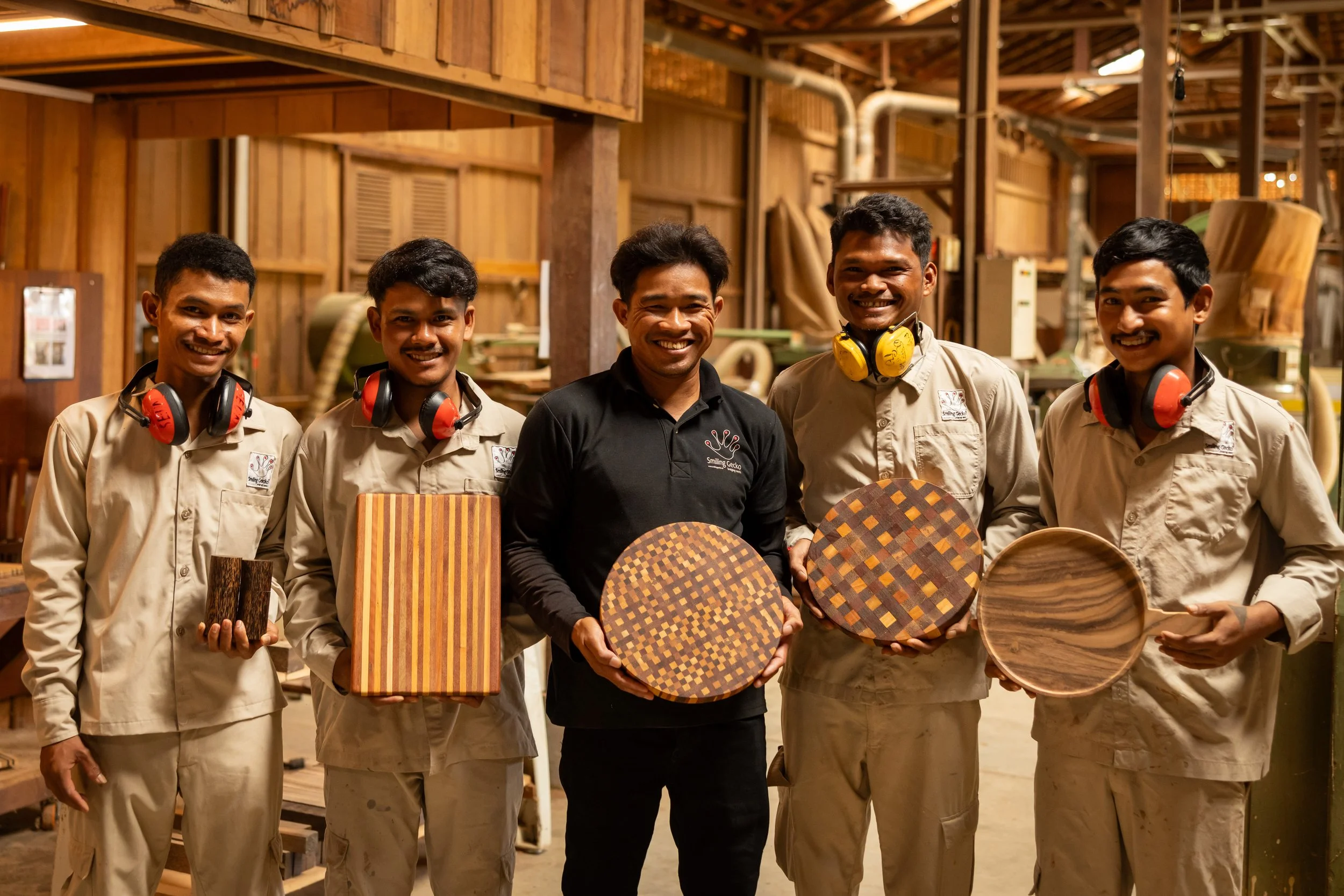
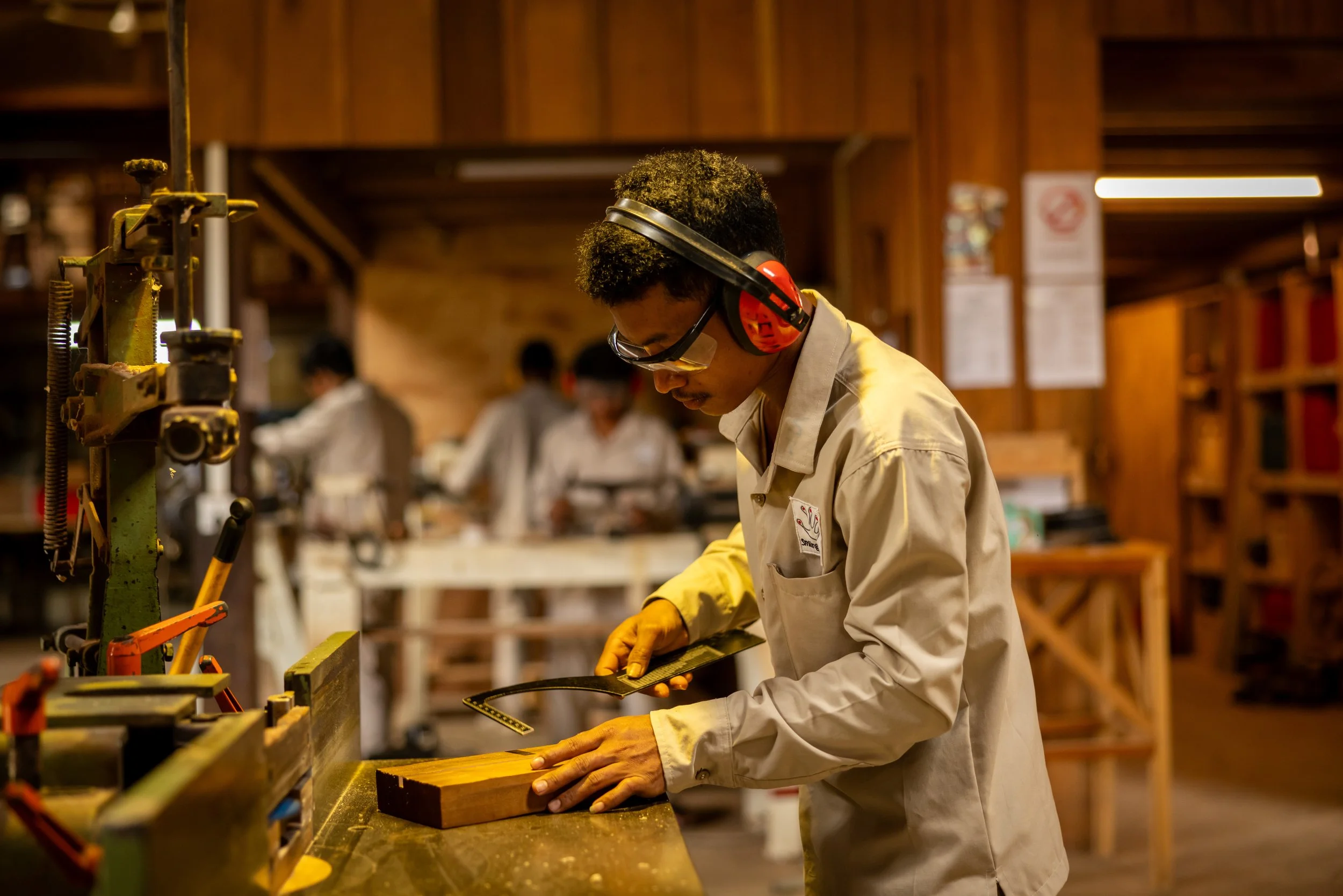

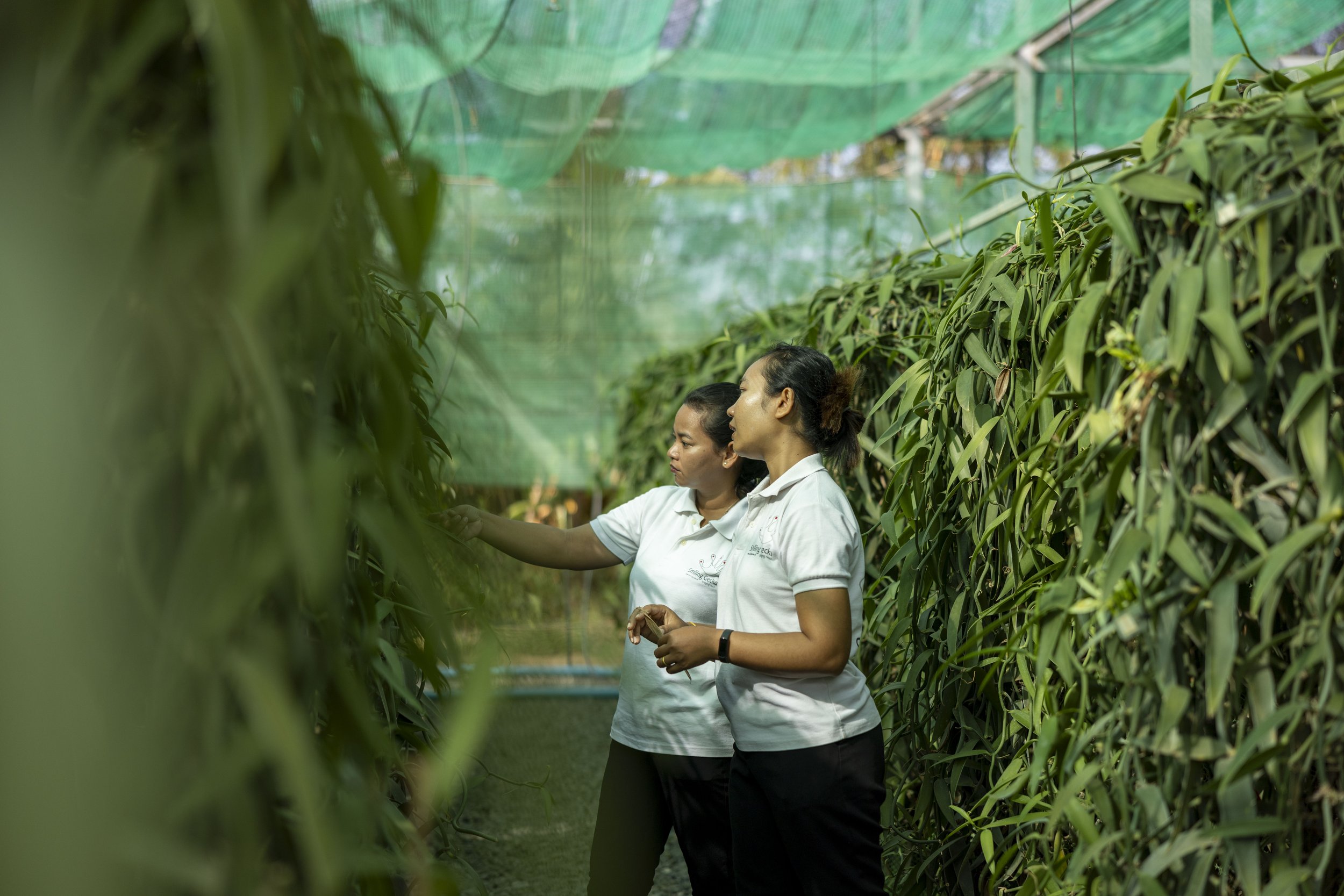
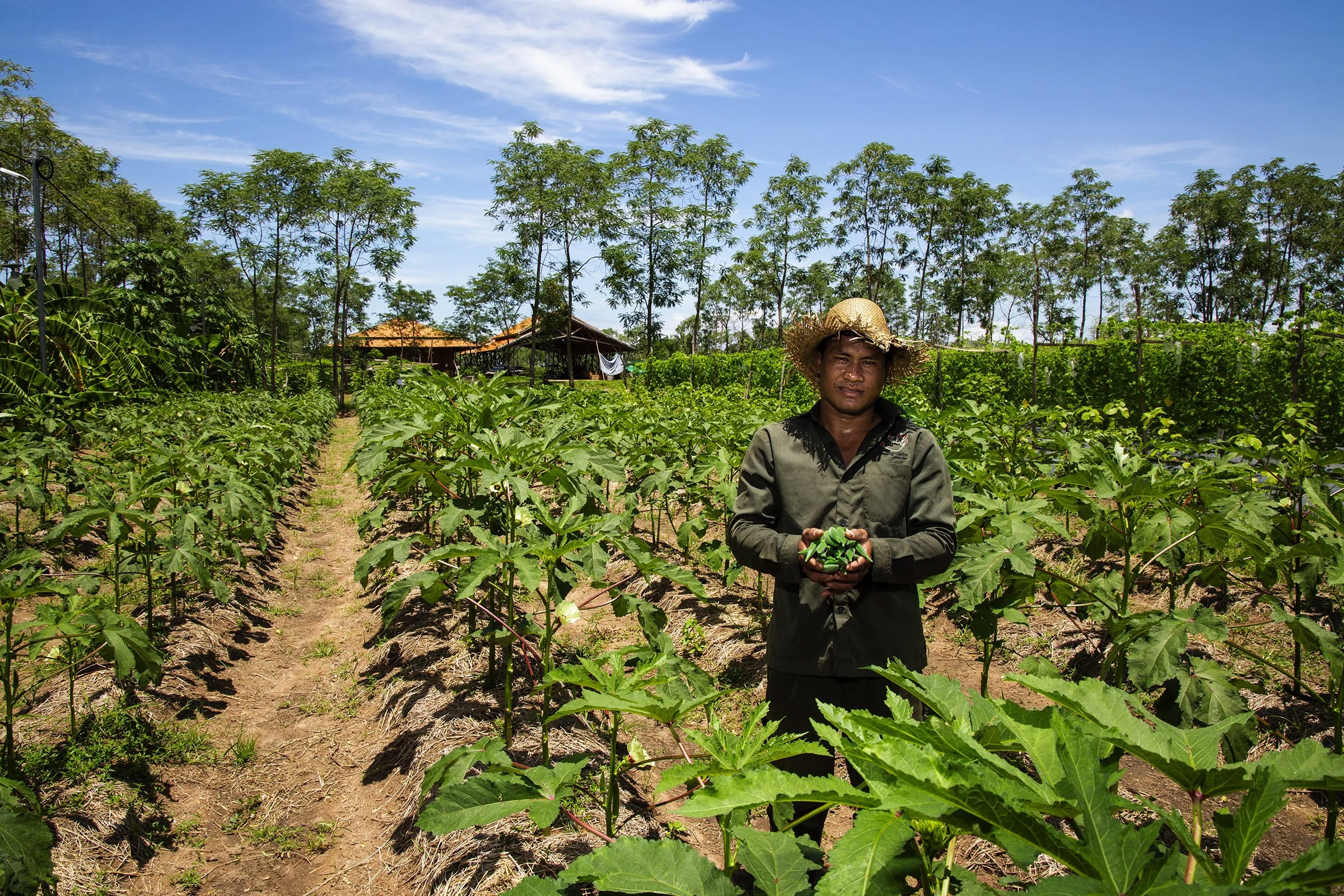
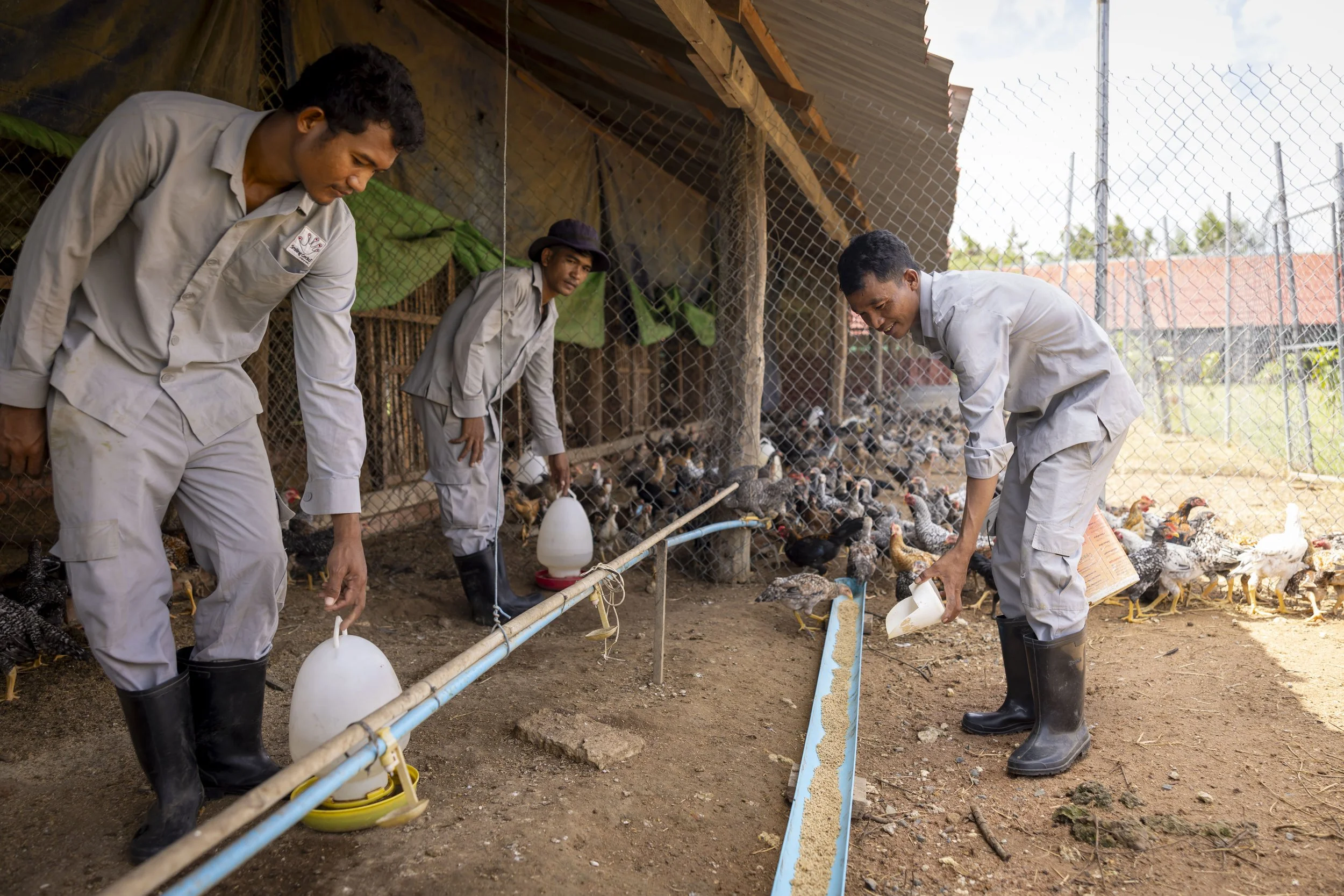
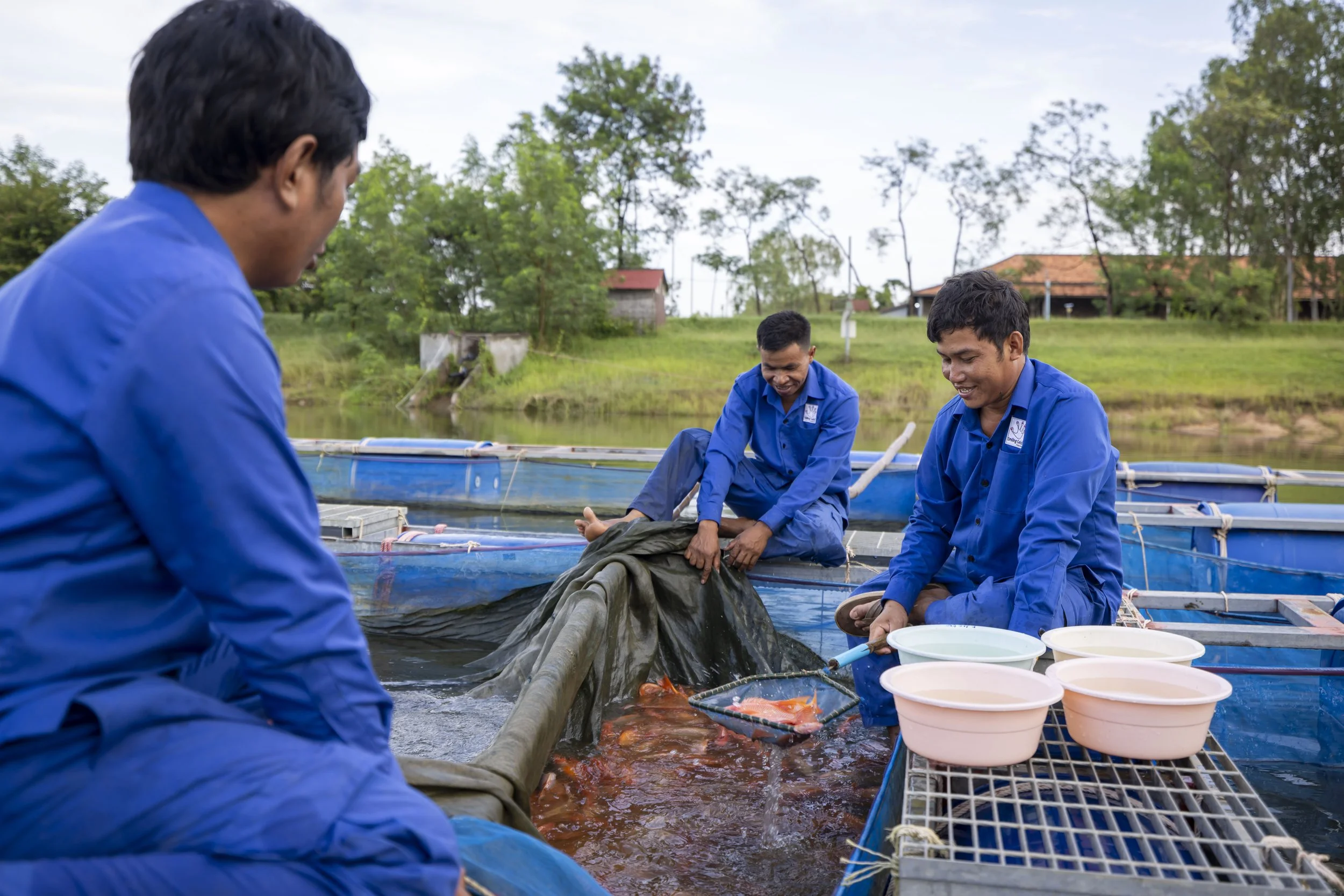
From left: carpentry, mental workshop, indoor vanilla farm, vegetable farm, chicken nursery, and fish farm
The Smiling Gecko Formula
Build the enterprise before the brand needs it.
Smiling Gecko Foundation trained cooks, carpenters, and farmers for years before the Farmhouse Resort & Spa ever opened a fine-dining room, so the campus could meet demand internally. For example, the carpentry workshop supplied 90 percent of the resort's own furniture before it began selling to outside clients.
Treat vocational training as an investment, not a cost.
Chef Mariya Un Noun started in Smiling Gecko's kitchen with no formal training and now runs the resort's signature restaurant. Schmid sent her to apprentice with established chefs abroad before bringing her back to lead. Few conventional hotels would place that bet on an unproven hire. Additionally, the return greatly depends on staff retention as the economics work if the trained staff stays.
Use a downturn to reposition, not just survive.
When Cambodian tourism was "reset to zero" during the pandemic, Smiling Gecko Foundation used the pause to open the Sanctuary Spa, Restaurant Un, and new suites, repositioning Farmhouse Resort & Spa as an upmarket property, to be ready for the recovery rather than just riding it out. This of course required both courage and donor capital to absorb the risk. A property without that financial cushion would have far less leeway to invest during a revenue drought.
Be precise about your organization’s limits and objectives.
Smiling Gecko Foundation describes its government relationship as one of "interest and goodwill," not formal partnership or public funding, and Schmid has put a rough 2050 date on full local handover. That kind of specificity about limits and timelines is more credible than an open-ended claim of self-sufficiency. However, naming a handover date only matters if the governance structures, a local leadership pipeline, and financial independence to support it are being built in parallel. The date alone is not a plan.
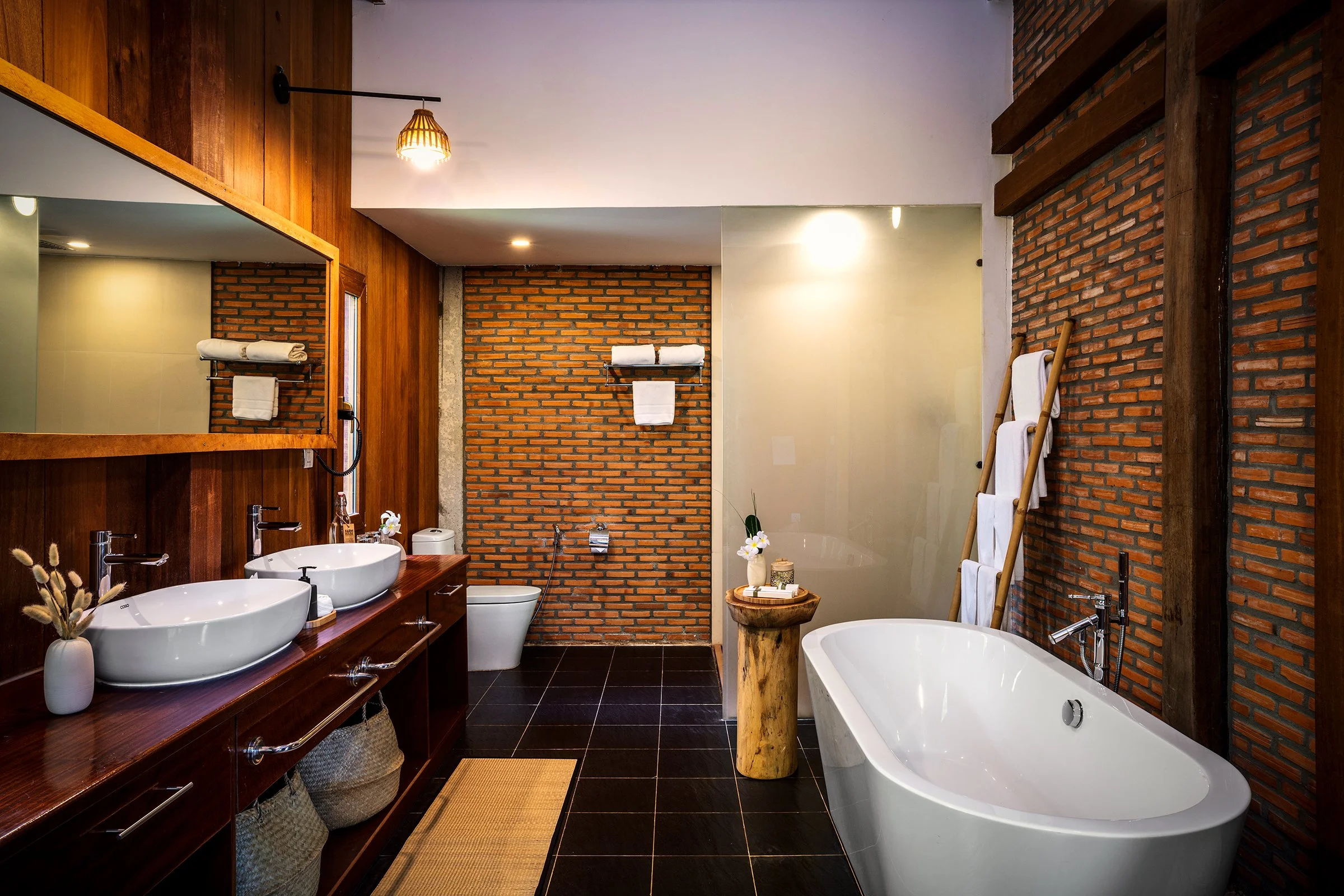
All photos by Smiling Gecko Foundation unless stated otherwise.