How Hospitality Brands Earn Trust Without Saying “We’re Sustainable”

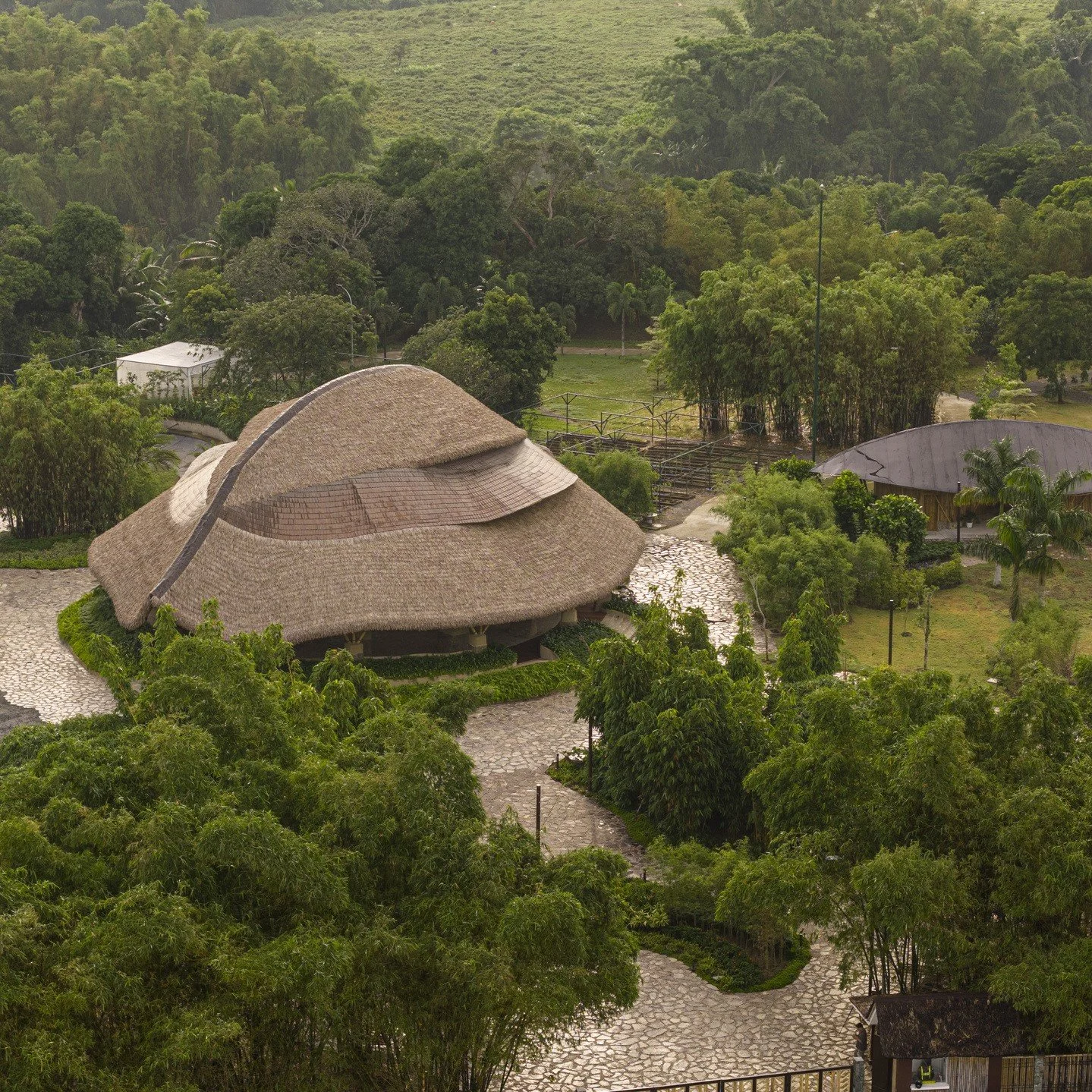
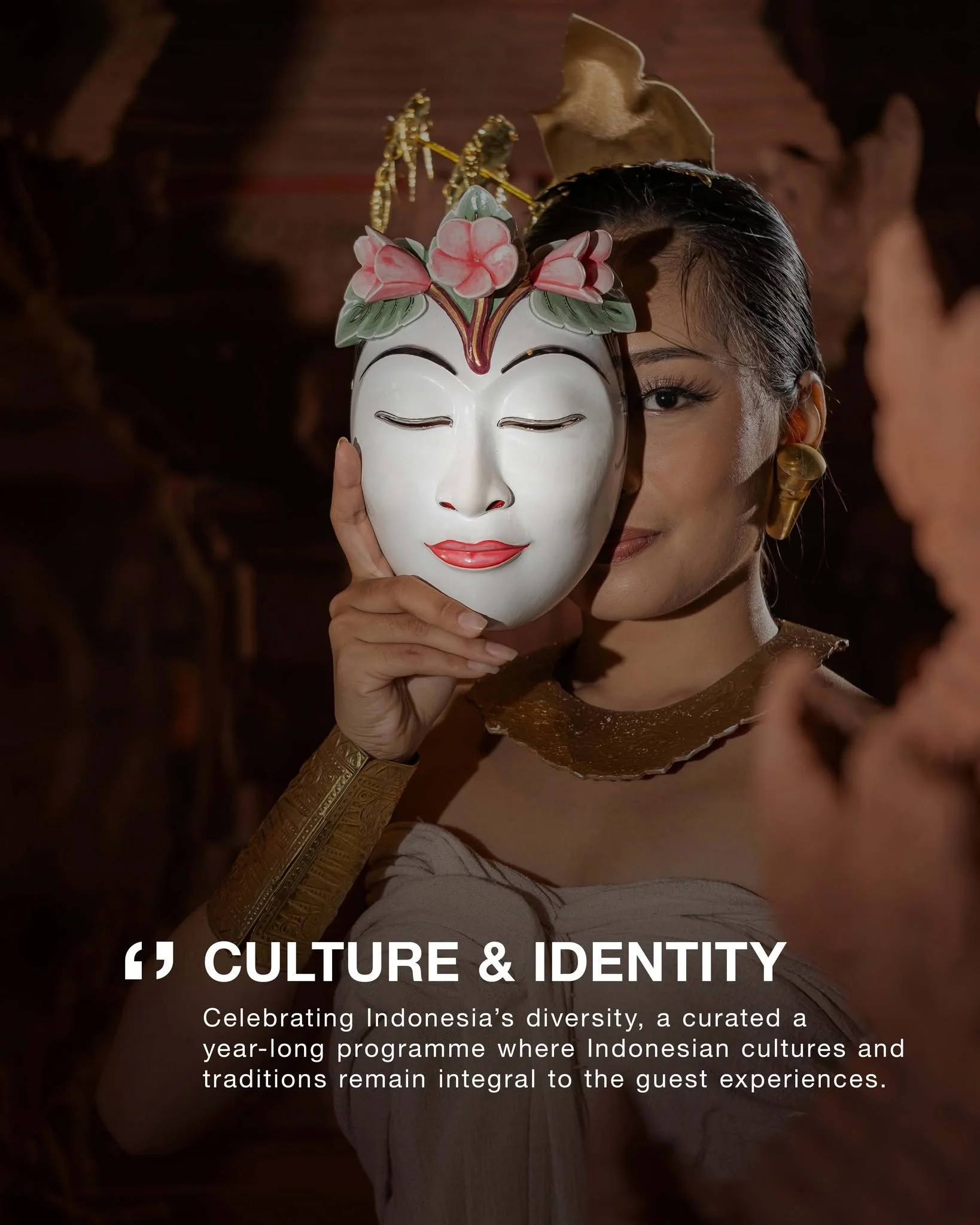
The Apurva Kempinski Bali’s “Unity in Diversity” campaign in 2022 reflected a broader effort to ground its sustainability story in lived experiences, cultural connection, and visible action. Photo by The Apurva Kempinski Bali.
Sooner or later, every sustainability claim faces a guest, an auditor, a journalist, or a team member who asks, “Is this really true?” That moment tests your credibility. Effective sustainability communication is not achieved through better wording alone. It is earned through real action, internal alignment, and proof that others can verify.
That was the core theme of our recent AST webinar, Building Trust in Your Sustainability Story: What Hospitality Brands Must Do Differently.
As the host, I was ready for a conversation about messaging. But the discussion quickly went deeper. All three speakers, each with a unique background, agreed on one thing: communication cannot fix a claim the business has not earned. Trust starts with what happens inside the operation. The words come later.
Tinu Mathur, Founder and Chief Creative of Mathur & Co, brought a creative strategist’s perspective shaped by a long history in hospitality. A multi-award-winning strategist and creative, he previously served as global leader of VRX Studios.
Barbara Kitane, CEO of Ampersand Future and Founder of With Meraki Travel Collection and Souló, brought a strategist’s perspective on how sustainability claims are shaped in brand and boardroom settings.
Danti Yuliandari, Founder of Myneuver International and former Director of Sales and Marketing at The Apurva Kempinski Bali, brought the operator’s perspective, shaped by years of embedding sustainability into brand, operations, and guest experience.
A clear idea came out of the discussion: the goal is to reach a point where you do not have to say ‘we’re sustainable,’ because guests, teams, and partners already feel it. Here is how to make that happen.
![[AST Webinar] Sustainability Communication - intro screenshot.jpg](https://images.squarespace-cdn.com/content/v1/63f6cdbdc249663d72082ecd/1783684144532-414JUN89J7ZFCMBEDNG2/%5BAST+Webinar%5D+Sustainability+Communication+-+intro+screenshot.jpg)
![[AST Webinar] Sustainability Communication 2.jpg](https://images.squarespace-cdn.com/content/v1/63f6cdbdc249663d72082ecd/1783565206732-449HZR9F3130CXE92W08/%5BAST+Webinar%5D+Sustainability+Communication+2.jpg)
The Trust Gap Opens Before a Word Is Written
The panel opened with a shared diagnosis. Sustainability communication struggles when it gets ahead of what the business is actually doing.
Barbara put it plainly. “Marketing and communication can only do so much,” she said. “They cannot make what's happening true. We're writing checks for something we cannot cash, basically.”
When messaging moves faster than real action, the gap between what is claimed and what is done starts to erode the trust.
The industry already knows two versions of this problem. Greenwashing occurs when a company makes false, misleading, or exaggerated sustainability claims. Greenhushing happens when a company downplays or remains silent about real sustainability efforts, often out of caution. Both are familiar industry risks, especially in a sector where honest, verifiable storytelling matters more than ever.
Danti pointed out a third issue. Often, the gap starts inside the organization. She has seen problems arise when the teams delivering the guest experience and the marketing teams do not share the same understanding. A sustainability vision that lives only at the executive level rarely reaches the people who make it happen every day, like housekeeping, engineering, kitchen staff, and the front desk.
This is what internal misalignment looks like, and it has real effects. A housekeeping supervisor who does not know why the property changed suppliers cannot explain the decision to a curious guest. A front office team member who does not understand the reason for a single-use plastic ban answers without conviction. Guests notice the hesitation, and the story loses credibility.
The main task is not finding the right words or deciding how to phrase the story. It is making sure the claim is specific, supported, and understood by the people responsible for delivering it. Alignment cannot be outsourced to a marketing team.
Three Habits That Weaken Credibility
Tinu pointed out three habits that can weaken credibility even before a guest reads any marketing material.
The first is the hotel-centric narrative. As Tinu noted, messaging too often comes “from the perspective of the brand,” which means “you lose a little bit of relatability.” When a property makes itself the hero of every story, the message can start to feel more like image management than meaningful communication.
The second is not explaining the reason behind actions. A property may announce a new water system, a plastics ban, or a local sourcing policy but does not say why it matters or what is at stake. Without that context, even genuine efforts can come across as ticking boxes rather than as part of a bigger purpose.
The third is letting metrics overshadow purpose. As Tinu warned, sustainability can become “a pursuit of metrics versus the pursuit of purpose.” Certifications, targets, and frameworks matter, but if they are not grounded in a clear sense of why the work matters, the effort can start to feel procedural rather than meaningful.
Being, Doing, Becoming
If the issue is a gap between what is claimed and what is real, the solution must start with reality. Barbara suggested a helpful framework: being, doing, becoming.
“It's not about being perfect,” she said. “We're always in the process of becoming. So let's think of it as being, doing, becoming.” The test is not whether the story sounds compelling. It is whether the business acts in line with its stated values and keeps improving where it falls short.
This reframes the opening question. Instead of asking, “How do we tell this story better?” ask, “Have we built something worth sharing?” When sustainability is part of governance, operations, culture, partnerships, and guest experience, communication does not have to cover up gaps. It can focus on connecting, building trust, creating meaning, and deepening relationships. That lasts longer than any catchy headline or polished campaign.
Let the Words Follow the Evidence
One of Barbara’s examples came from a boardroom.
A corporate board wanted to describe its supply chain as “ethical.” Rather than drafting the copy, Barbara showed them the framework of what that word actually demands and asked them to assess themselves against it. Measured against that standard, they realized they were not there yet. As she recalled it, their conclusion was: “Maybe it's a journey. We'll use the word transparent instead of ethical.”
That single decision likely spared them a backlash. More importantly, it modeled a healthier relationship between language and truth. The word matched the work, and “transparent” gave the board an honest position to build from rather than a claim to defend under scrutiny.
This principle works for any property. Let your words follow the evidence, not just your goals. Terms like ‘zero waste,’ ‘carbon neutral,’ and ‘locally sourced’ will prompt questions from guests, journalists, or auditors. If you do not yet have proof, use a more precise term and treat the gap as a guide for what to work on next.
Values That Actually Run Through Operations
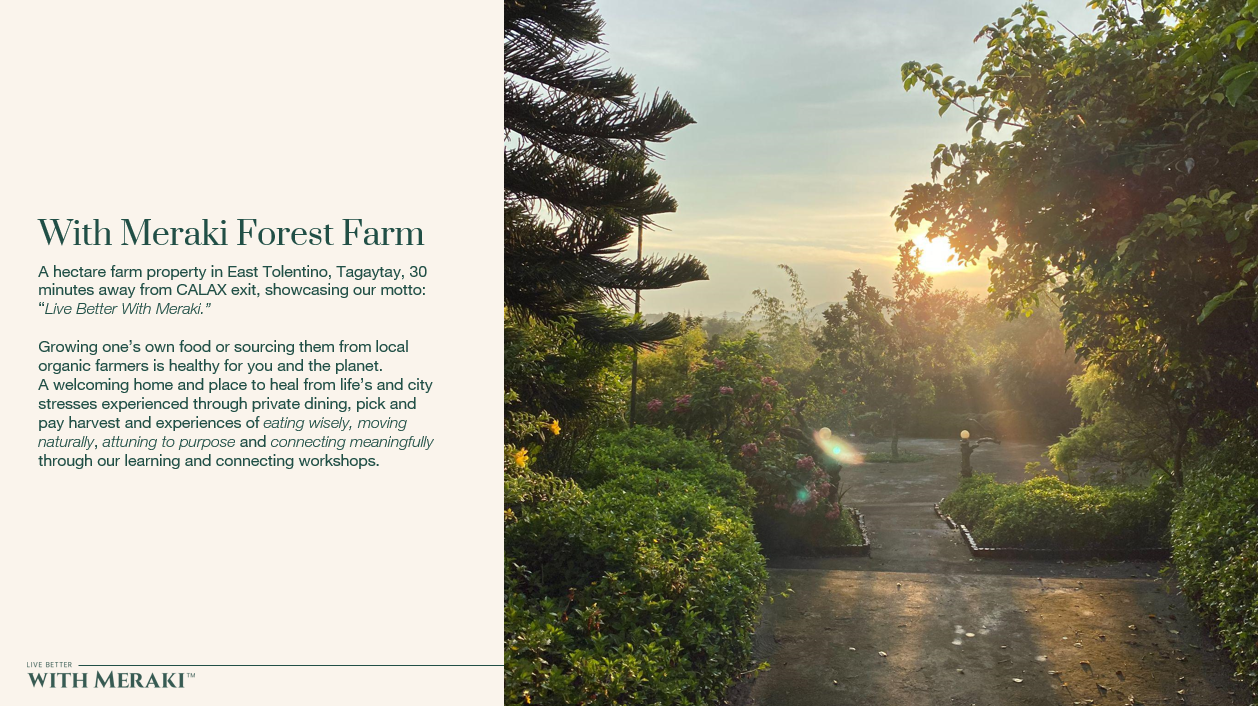
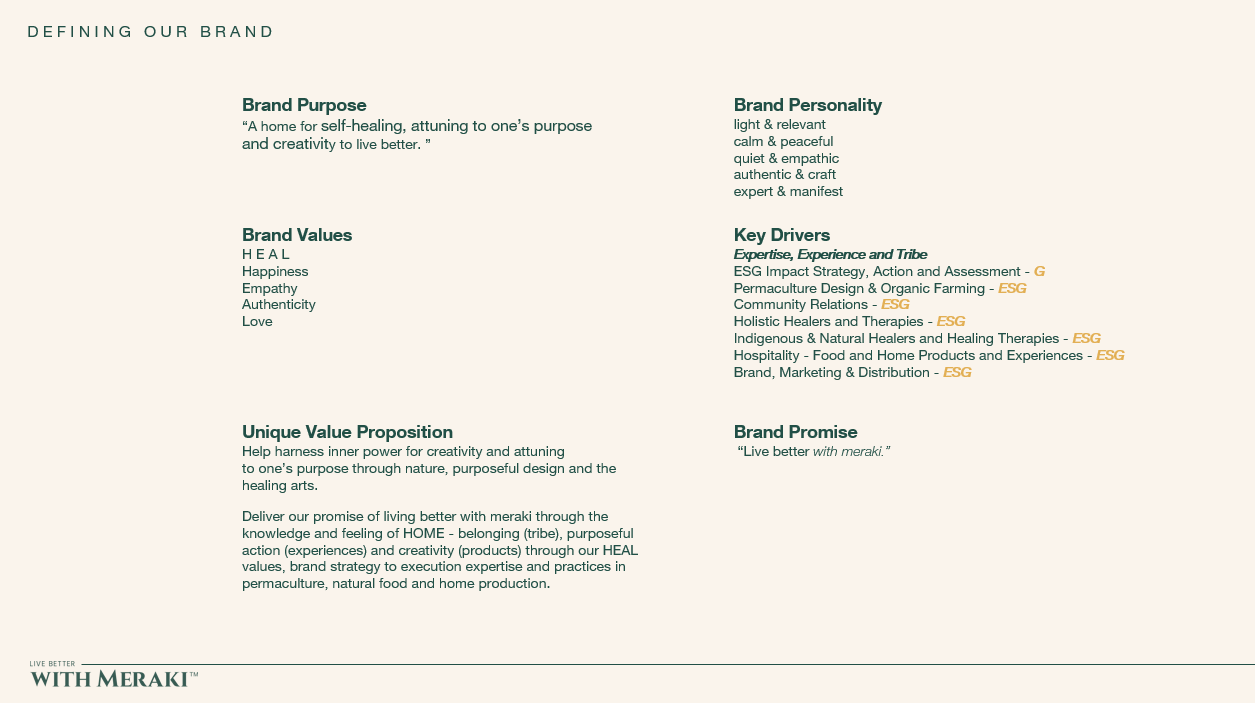
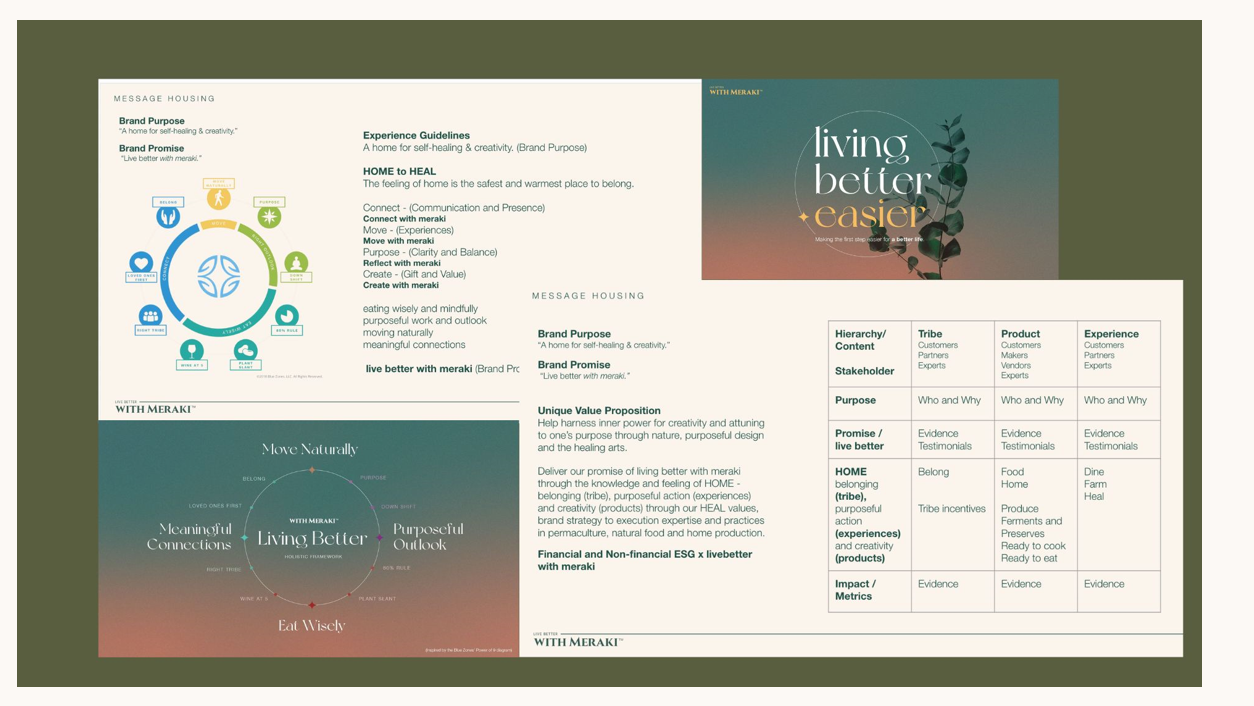
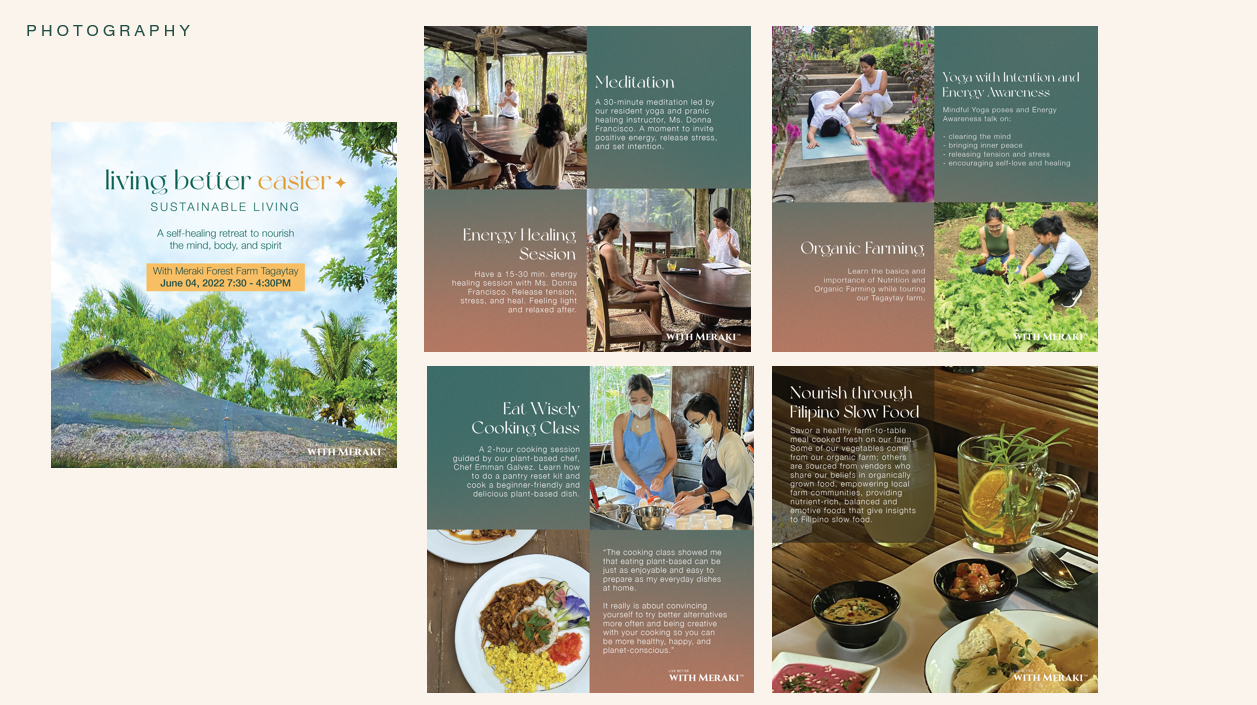
Real substance needs a system. Barbara's venture, With Meraki Forest Farm in Tagaytay, Philippines, is an example of what happens when values guide decisions instead of just appearing on a website.
Meraki is a Greek word often used to describe doing something with creativity, passion, and soul—putting something of yourself into what you do. The brand promise, “Live Better with Meraki,” centers on the idea of home: a place to heal from the stresses of city life. Home anchors the HEAL values that guide the business: Happiness, Empathy, Authenticity, and Love.
These values could have stayed abstract, but instead, they are part of daily life at the farm: permaculture design, organic growing, buying from local farmers, and letting guests pick and pay for their own harvest. Through those experiences, guests do not just hear the sustainability story—they live it. That is what separates a value statement from a value system.
Build the Team Before You Build the Message
The misalignment Danti raised at the start of the session has an operator's answer: structure. The Apurva Kempinski Bali case study showed that you can build internal alignment through planning.
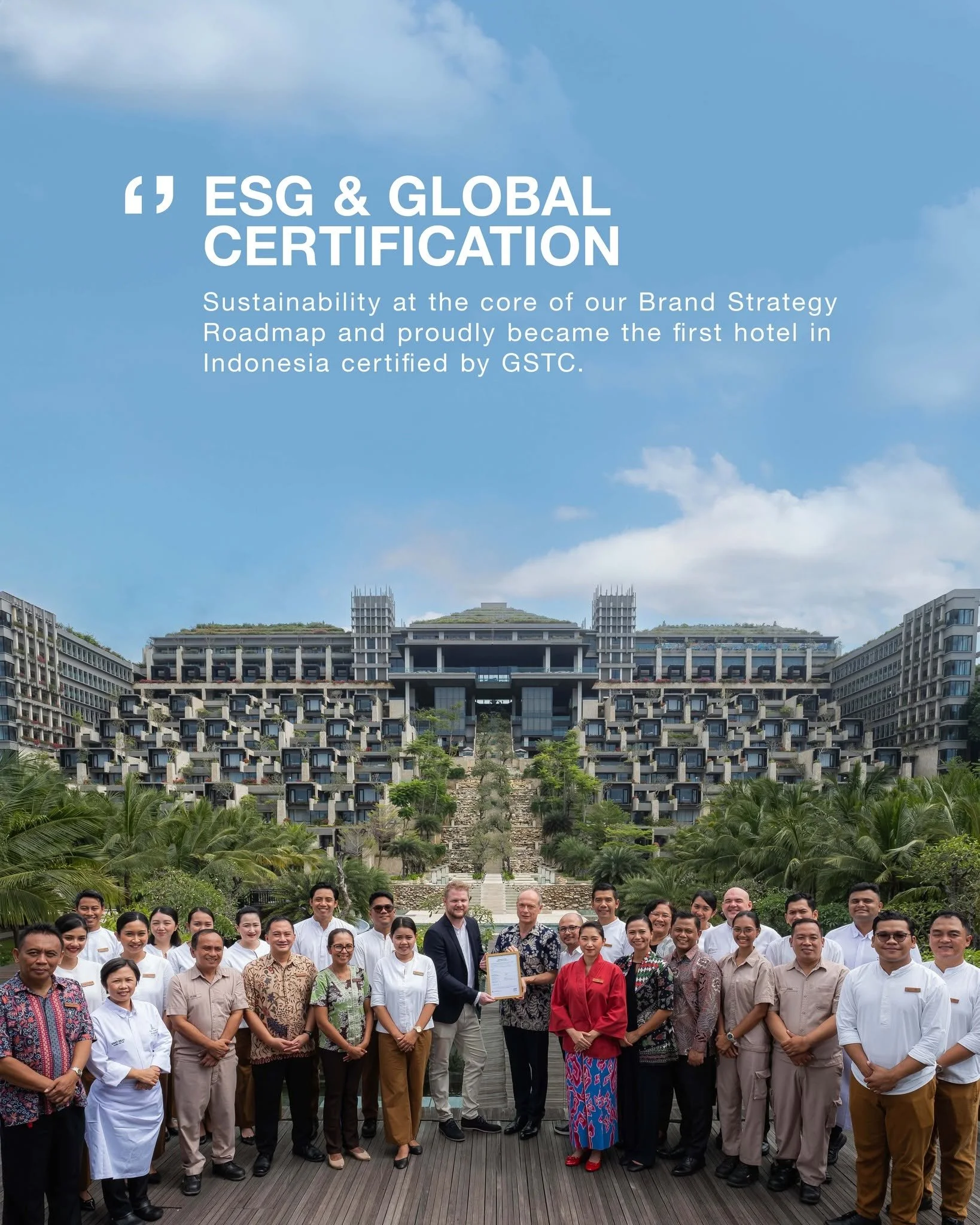
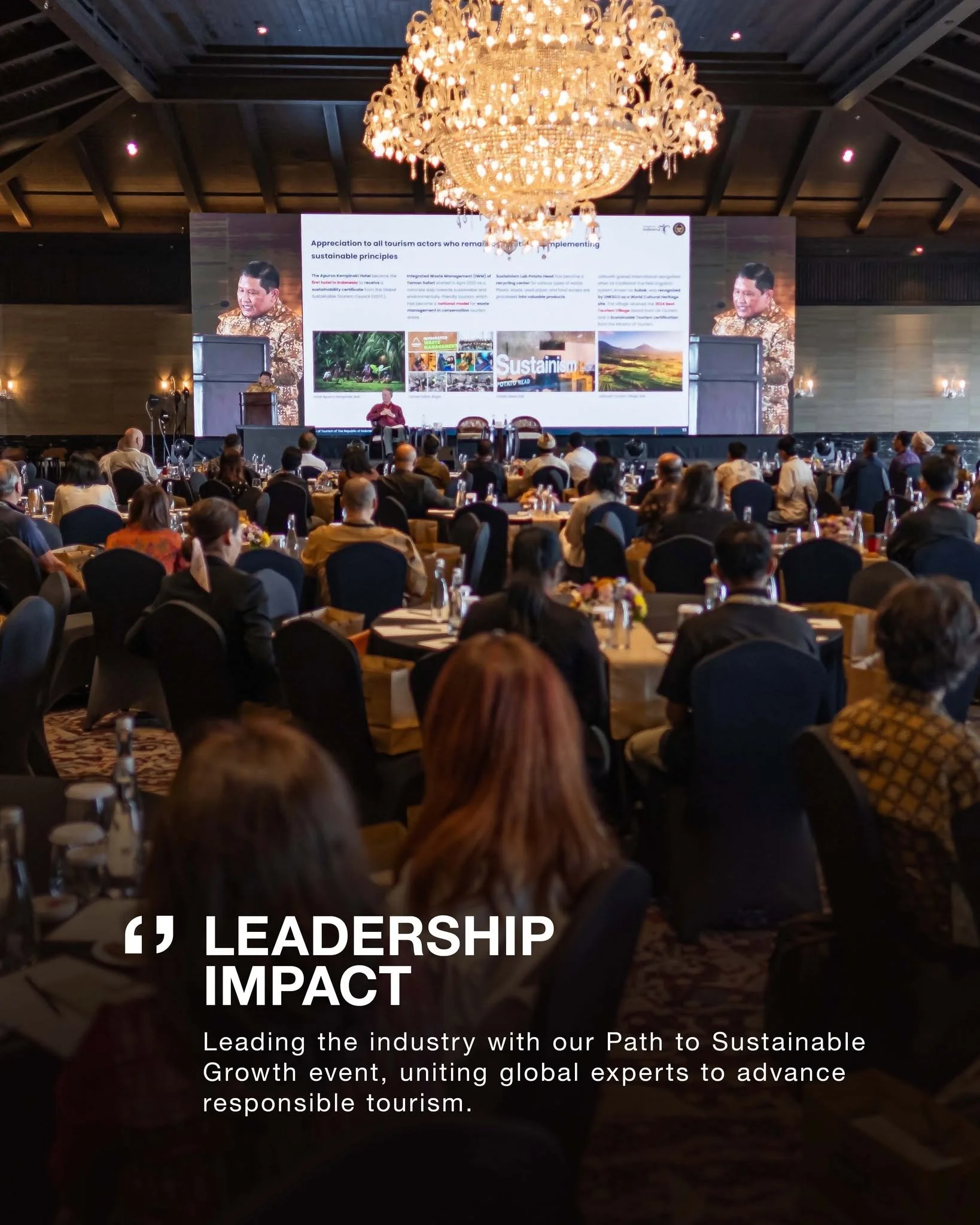
The property’s journey shows that credibility grows step by step, not overnight. It began with a branding framework in 2017, two years before opening in 2019. In 2021, they added a hydroponic garden as the first tangible proof, followed by the Unity in Diversity campaign in 2022. By 2024, the property had become GSTC-certified, adding third-party validation to their efforts. Each step built on the last, with claims following the evidence.
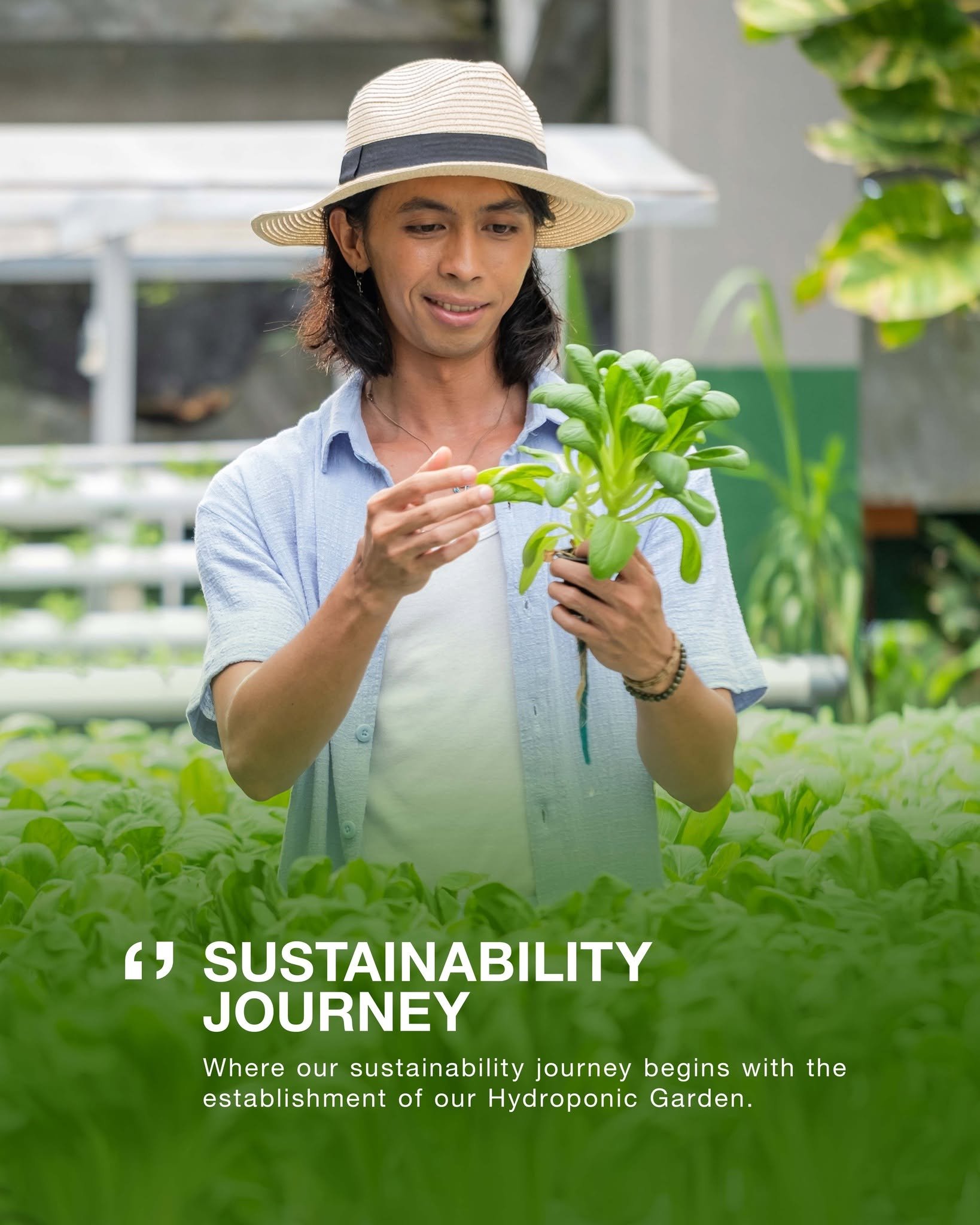

Credit: The Apurva Kempinski Bali
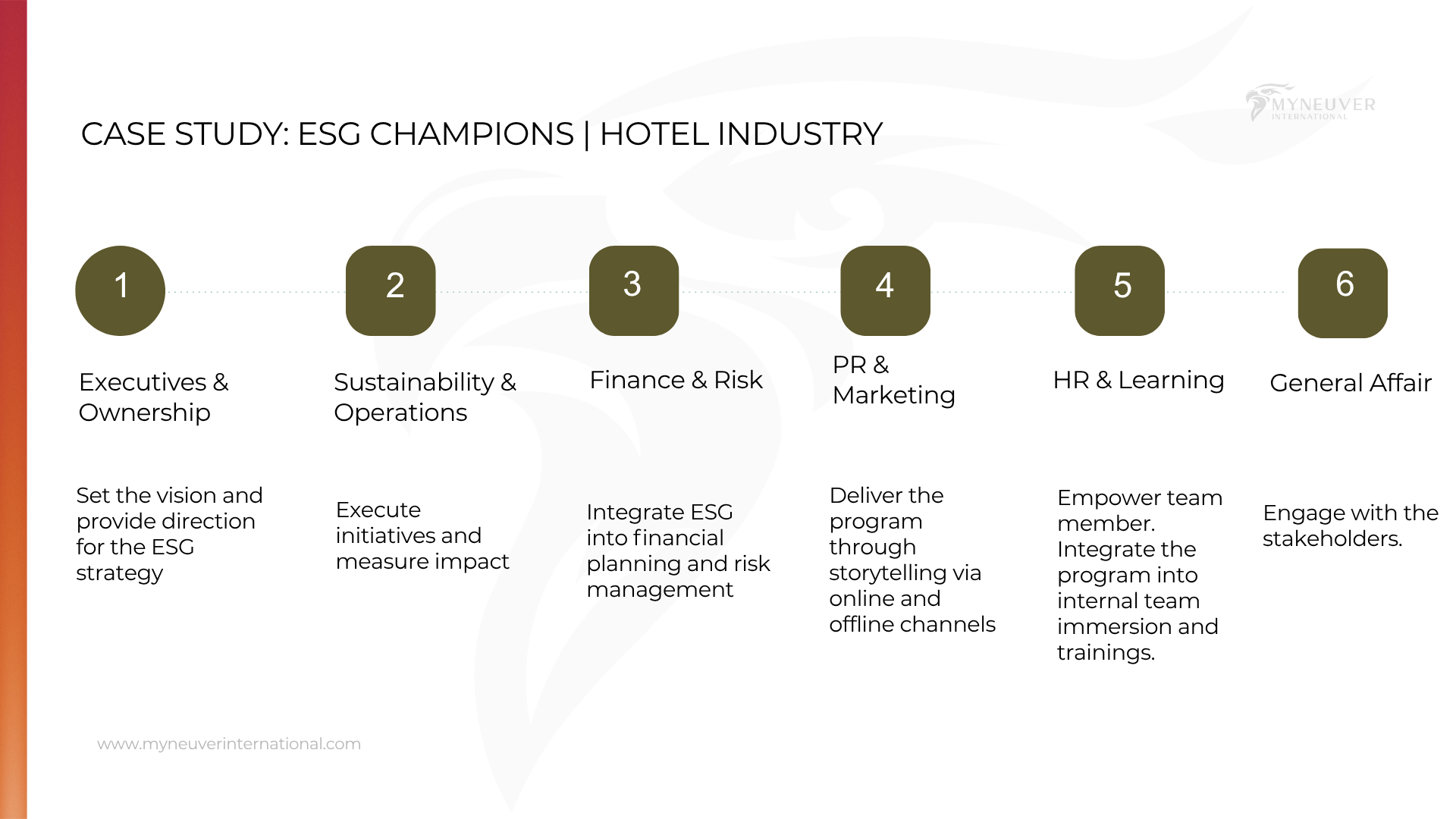
Rather than confining sustainability to one department, the property distributed ownership across a cross-functional group of ESG champions, each with a defined role:
Executives and Ownership set the vision and provide direction for the ESG strategy, maintaining the long view.
Sustainability and Operations implement initiatives and measure their impact.
Finance and Risk integrate ESG into financial planning and risk management, and audit and select vendors with genuine sustainability practices.
PR and Marketing deliver the program through storytelling across online and offline channels.
HR and Learning empower team members and embed the program within internal immersion and training.
General Affairs engages directly with stakeholders.
This is how alignment moves from aspiration into operation. Sustainability stops being one team's project and becomes shared work with clear ownership. This broader idea was also discussed in a previous AST webinar about taking sustainability beyond just managers. When the front desk knows and understands the reasons behind decisions and initiatives, procurement chooses vendors who share those values, and HR keeps the vision alive, what you claim and what you do finally match up.
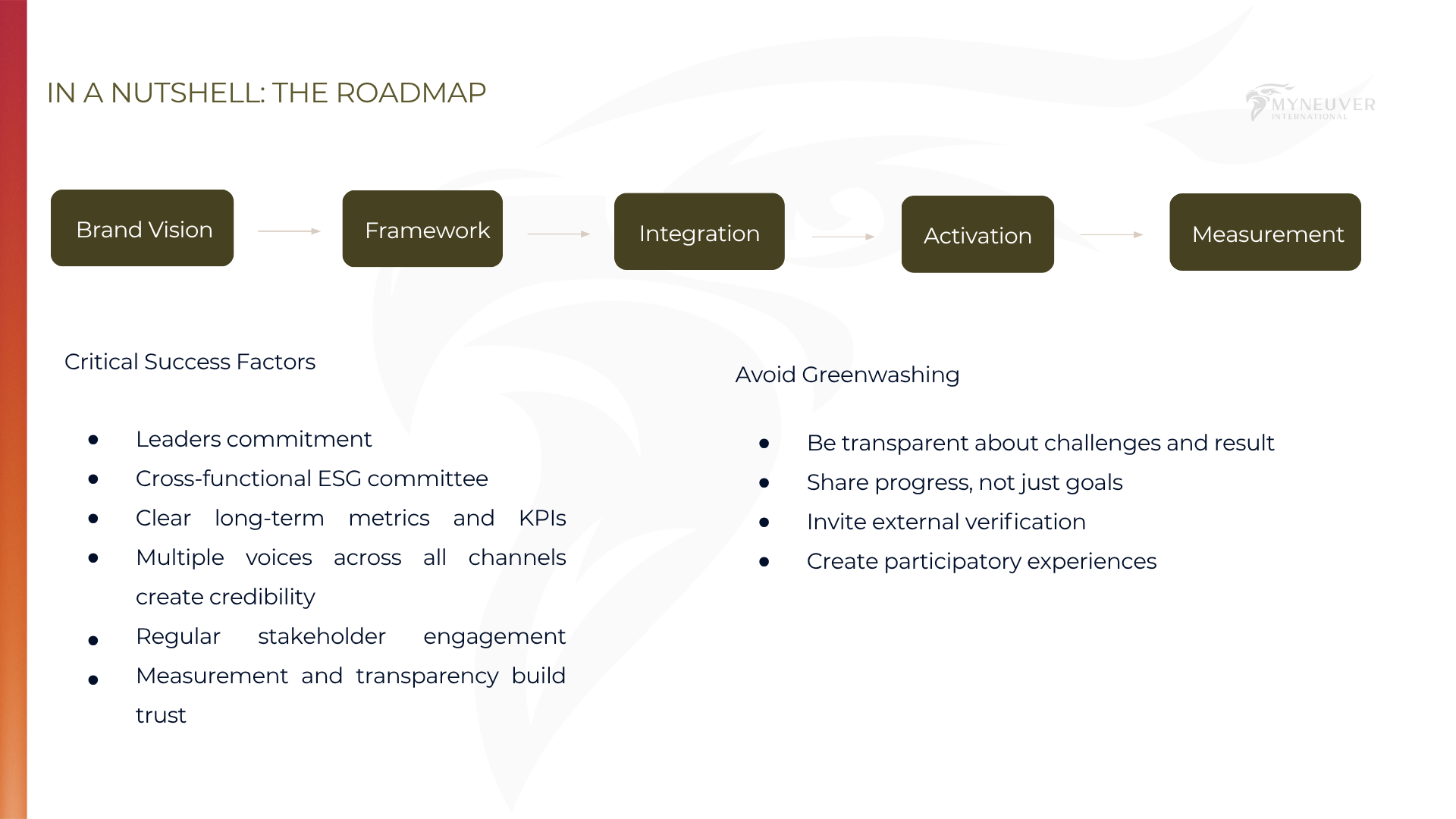
Danti's roadmap distills the critical success factors: genuine leadership commitment, a cross-functional ESG committee, clear long-term KPIs, multiple voices across all channels, regular stakeholder engagement, and measurement paired with transparency. Her guardrails against greenwashing are just as practical: be transparent about challenges as well as results, share progress rather than only goals, invite external verification, and create participatory experiences.
This approach works no matter the size of your business. You might not need a formal chart of champions, but you do need to identify who owns the vision, the operations, the learning, and the story, and make sure everyone is on the same page.
Listen Before You Speak
Structure alone is not enough. It needs to reflect what people truly care about.
Tinu recommended starting with a stakeholder listening tour. “Go on a listening tour,” he said. “Ask questions and get people to open up about what's important to them.”
For a hotel, this means talking with employees and community members before creating any message. Let what you hear and learn guide the story instead of deciding on the story first and looking for proof.
He also encouraged brands to identify the local impact first, then align the messaging and values around it. And rather than sending messages from headquarters down to properties, he suggested the opposite: use a local pilot, then properly communicate those results upward. “That is the most important thing, as opposed to that coming from the top down.”
This approach offers reassurance to multi-market operators. Regional issues differ, but often less than we assume. Working with global brands, Tinu’s team examines each region separately, looks at the issues on the ground, and begins from a clear starting point. Food security, environmental pressure, employment, and community well-being surface again and again. The work is to map the commonalities and begin.
Hand the Story to the Community
Listening reveals what matters. The next question is who gets to shape the story once that is clear.
For brands operating across diverse regions, Tinu suggested that the sustainability story should be decentralized so that local communities help shape and validate the narrative, not just figures in the background.
He illustrated the approach with the Playa Cares impact film series, a set of short films co-created with local groups, employees, and community members for the ESG program of Playa Hotels & Resorts and Hyatt Resorts. Each film was shaped by conversations on the ground, highlighting small-scale sustainability and regeneration efforts and their ripple effects. Tinu framed the work around a clear impact roadmap: awareness leading to relatability and empathy, then behavior change, action, and finally stewardship, where communities take ownership of change for themselves.
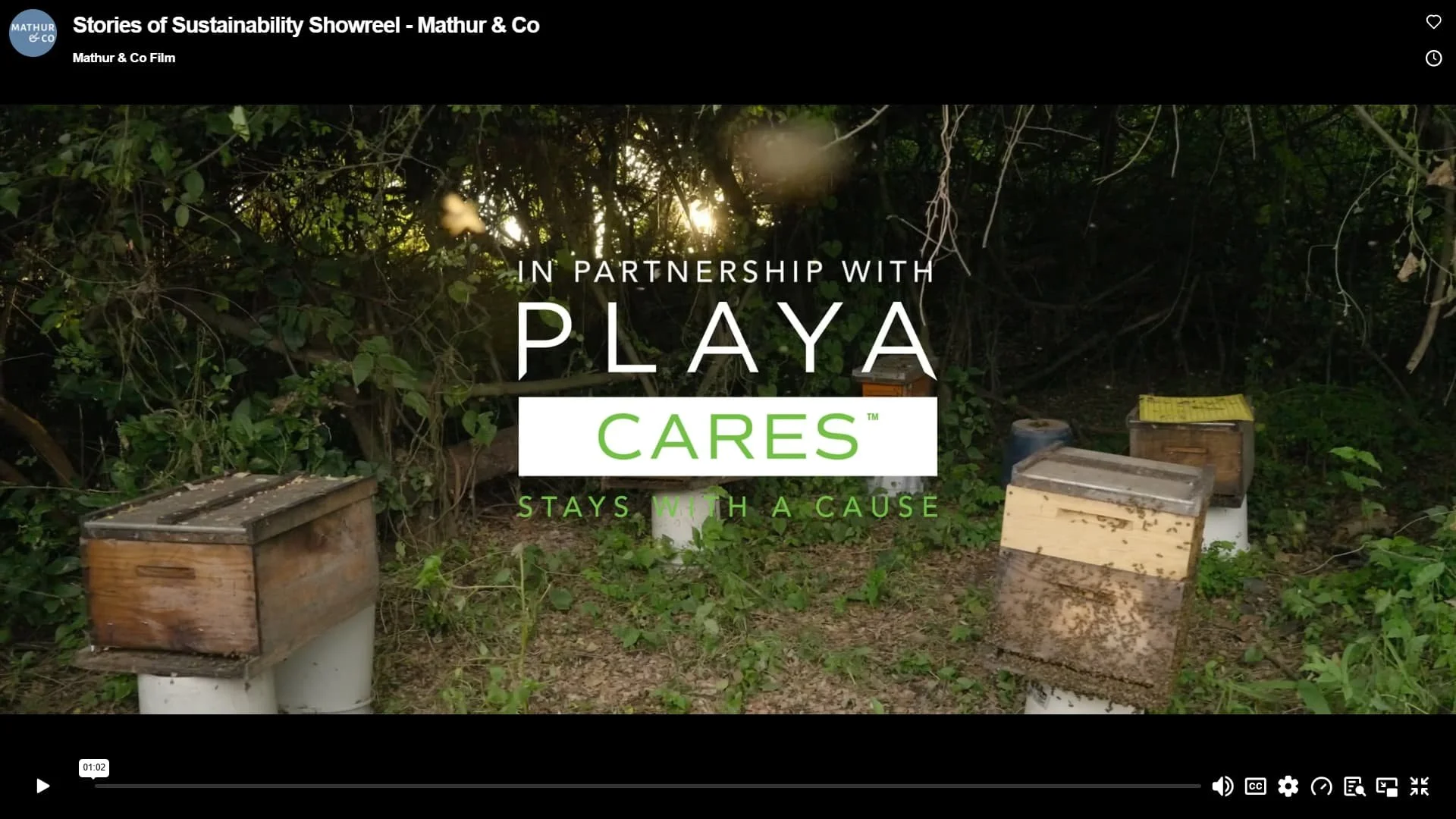
Tinu Mathur shared this case study, a series of short films for Playa Cares. Watch the video and read the details on Mathur & Co’s Stories of Sustainability.
Barbara took the idea a step further, moving from verification to co-creation. She suggested that even before the question of decentralizing, the goal is for communities “to be part of co-creating an experience with the brand, so that the narrative becomes their own.” That can be as concrete as building recipes with people who forage or farm nearby, drawing on heirloom dishes from their own town. When a community helps shape the experience directly, the story becomes more credible.
As she explained, when communities are active participants in creating guest experience, not just checking facts in the background, they naturally take center stage. That, in itself, is a decentralizing process.
Proof Pays: What Guests Actually Value
Does putting substance first cost brands the commercial edge that polished storytelling seems to promise? The examples shared in the session suggested otherwise.
Barbara shared an example of how guests perceive value. Working with local farmers, her team put out a menu and let guests decide what to pay. “They paid double what we would have charged,” she said, “because they felt the embedded value of the experience.”
This one example does not mean every sustainability-focused experience will earn more. But it does show something important: when guests see the value in an experience, they are more willing to pay for it.
Danti brought the point back to action. For brands to go beyond surface-level claims, she emphasized the need for solid data, documented proof of action, and alignment across the teams responsible for delivering the experience. Communication is stronger when the evidence is clear and everyone involved understands it.
Your Next 90 Days: A Practical Playbook
The session offered a clear action plan you can start using this quarter.
1. Reverse-engineer the outcomes.
Begin by deciding what local impact you want to make, then design your messaging and values around that. Start with a stakeholder listening tour: sit with employees, community members, and partners, ask what matters to them, and let their input shape the story before you write it.
If you operate across multiple markets, do not wait for every location to have the same story. Start in one property, one market, or one area where the work is already taking shape, and use it as a pilot.
2. Build the team before you build the message.
Agree early on who will carry out the work before you decide how to communicate it. Build clear ownership across leadership, sustainability and operations, finance and procurement, PR and marketing, HR, and guest-facing teams, just as Apurva Kempinski Bali did.
Sustainability should not be the job of just one department. It needs shared ownership, clear responsibilities, and strong alignment so every team understands both what is being done and why.
3. Integrate, train, and co-create.
Embed the vision into procurement, operations, learning, and guest experience. Train teams regularly so the front desk, housekeeping, and other guest-facing staff can confidently explain the reasons behind changes or initiatives.
Invite communities to help shape experiences through recipes, workshops, films, or other parts of the guest journey, so the narrative becomes theirs.
4. Measure, document, and stay transparent about what is still in progress.
Gather proof of action, track outcomes, and get external validation where it would add credibility. But do not communicate only the polished parts. Show your progress, not just your goals. Be honest about what you have achieved and what is still in progress, and use words that match the facts.
5. Communicate upward and outward through multiple credible voices.
Once the work is real and documented, do not leave the story to a single department or spokesperson. Let different teams—and, where relevant, communities and partners—share what they know from their experience. Communicate the findings from local pilots both up across the organization and out across channels, so the story is not driven by top-down messaging alone.
Where This Leaves Us
One idea stood out in the discussion: sustainability communication works when it’s substantiated with real impacts and stalls the moment we ask words to do a job only the business can do.
For hospitality and tourism leaders in Asia, the encouraging part is that much of this work is within reach. Build the team and make sure everyone understands the reasons behind your actions. Let your values guide procurement, operations, and experience design. Listen before you speak, and let the people and places you serve co-author the story. Use words that match your evidence.
If you do this, communication does not have to compensate for the gap between what a business says and what it does. As Barbara reminded us, marketing communication does not make a business sustainable. It can only reflect what the business is actually doing through the ongoing work of being, doing, and becoming.
Build a business worth talking about. When you reach that point, you will no longer need to say you are sustainable. Your guests, your teams, and your communities will already know.