How Secret Paradise Maldives Is Rethinking the Guest’s Role in Sustainability
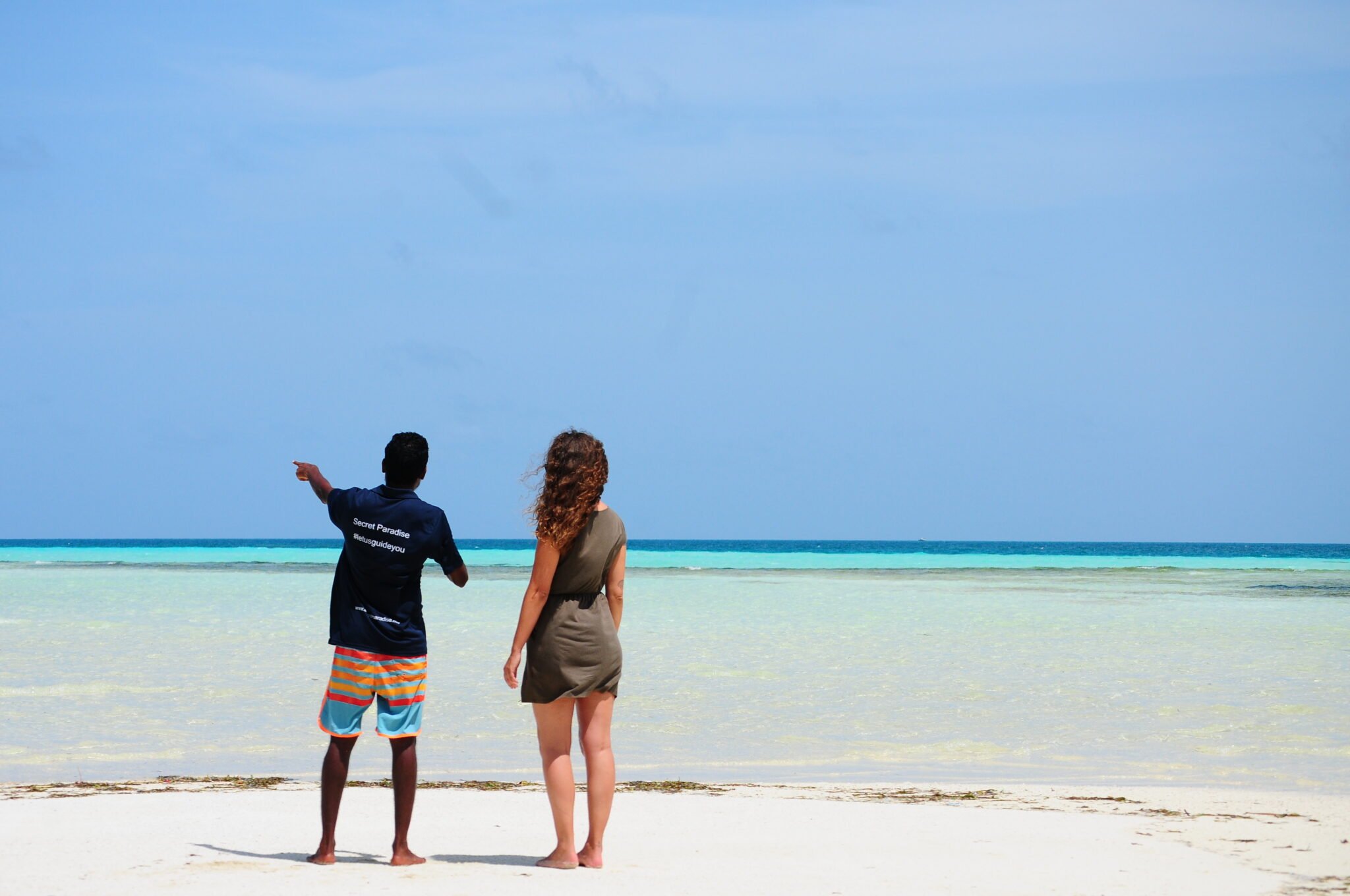
For years, many tourism industry players have viewed guests as spectators of sustainability efforts. Operators explain their conservation work, run occasional beach clean-ups, organize community engagement activities, and hope the message lands.
But awareness on its own rarely changes behavior as effectively as participation can. Secret Paradise Maldives offers a useful example of what happens when you pull sustainability out of the back office and start making impact measurement, conservation activities, and even data collection part of the guest experience itself.
From Diver to Operator
Ruth Franklin, Co-Founder of Secret Paradise Maldives, discovered the country more than 25 years ago as a scuba diver chasing mantas and whale sharks. On these trips, Maldivian friends welcomed her into their homes, shared afternoon hedhika (traditional Maldivian snacks) and betel nuts, and showed her a version of the archipelago that most visitors never see.
After 30 visits, a chance conversation on a beach sparked an idea: as local island guesthouses were emerging, visitors could experience a more connected, authentic side of the country, one that supported local communities, celebrated Maldivian culture, and encouraged responsible tourism.
That conversation led to the founding of Secret Paradise Maldives in 2012, built around a different vision of what a Maldives holiday could be.
Sustainability Built into the Business
From day one, the business pushed back against the dominant model of Maldives tourism, which funnels visitors into luxury resorts and keeps most of their spending contained within those walls. Secret Paradise Maldives wanted to replicate the experiences Ruth had been fortunate to have: connect guests with local guesthouses, island communities, family businesses, and NGOs, keeping visitor money moving through the wider economy.
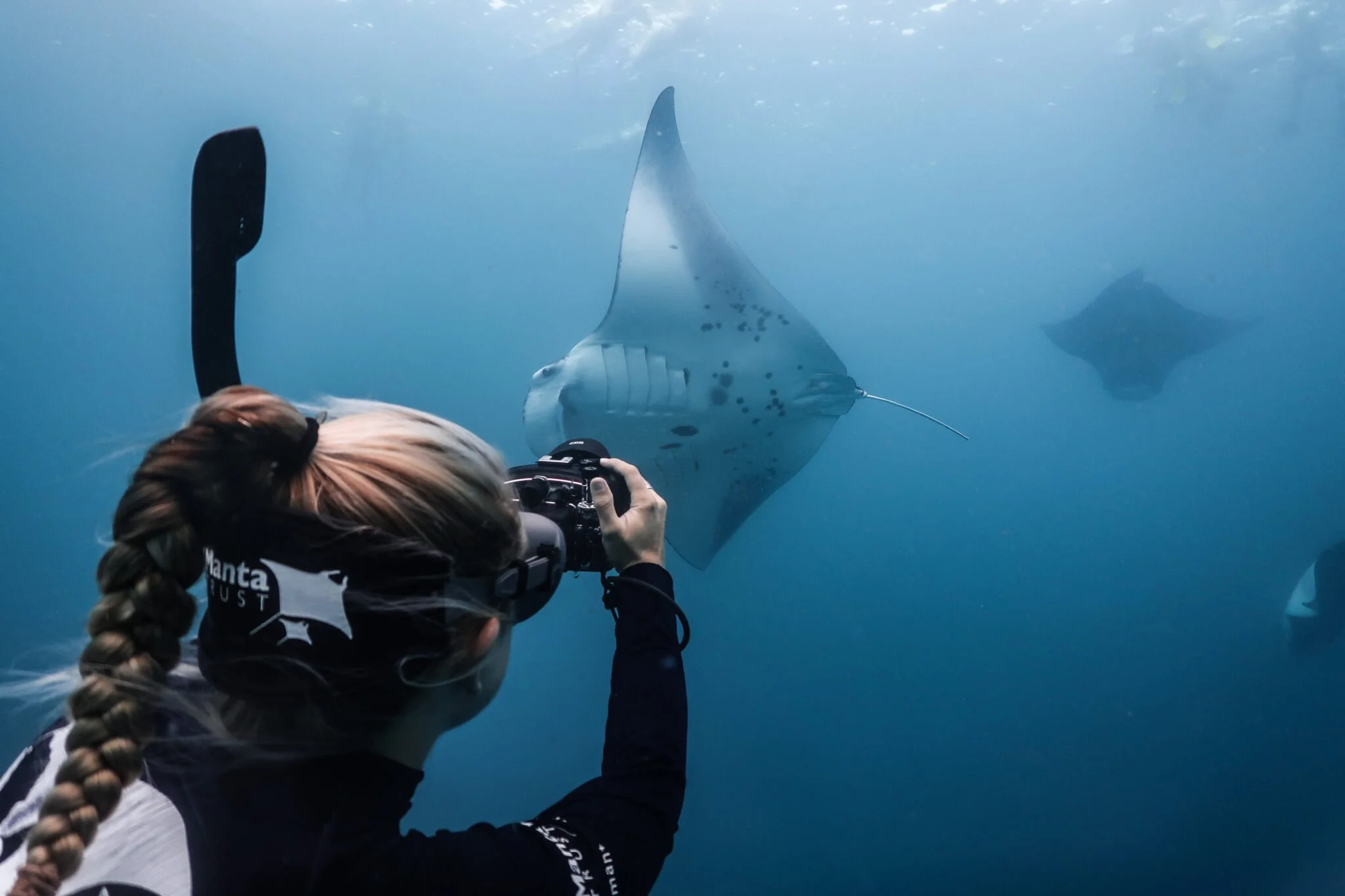
Ruth describes the company's sustainability commitment as structural: making decisions that account for people, place, and future generations, and applying that standard even when it costs something. Secret Paradise Maldives has turned down tour requests it judged irresponsible. In 2021, it removed long-distance inter-atoll day tours to reduce fuel use and emissions, accepting the resulting revenue loss because the environmental impact was clear. Beef and seafood have been removed from the conservation cruise menus. The company follows strict marine life codes of conduct aligned with organizations such as the Manta Trust, Maldives Whale Shark Research, and the Olive Ridley Project. It also builds direct financial contributions to local NGOs, such as Save the Beach Maldives, into selected tour experiences, so conservation funding is a built-in feature of the product rather than an optional add-on.
There is an educational layer to this too, which Ruth calls "unconscious learning." Guests are unlikely to retain much from a pre-trip briefing on reef-safe behavior, snorkel etiquete, or respectful conduct in island communities, but they are far more likely to remember lessons built into the experience itself. The Secret Paradise Education Hub, an online platform Ruth built and maintains, gives guests access to marine life and ocean resources before they board a boat, so they arrive with some understanding of how they are traveling and why it matters.
When Good Intentions Hit a Ceiling
There comes a point for any purpose-driven business where values alone stop being enough. You can do the right things for the right reasons and still have no reliable way to know whether you are improving, and no evidence to share with legislators, partners, investors, and guests who want to see proof rather than promises.
Ruth is candid about this. "If you cannot measure progress," she says, "it is harder to improve and harder to communicate honestly."
For a long time, Secret Paradise Maldives tracked its impact the way most small operators do: through spreadsheets, internal notes, supplier invoices, and institutional memory. That approach worked up to a point, and then it stopped working, because data scattered across a dozen places struggles to tell you anything useful about trends. Ad hoc, piecemeal tracking makes honest reporting nearly impossible and keeps impact measurement locked in the back office, where no one but the team ever sees it.
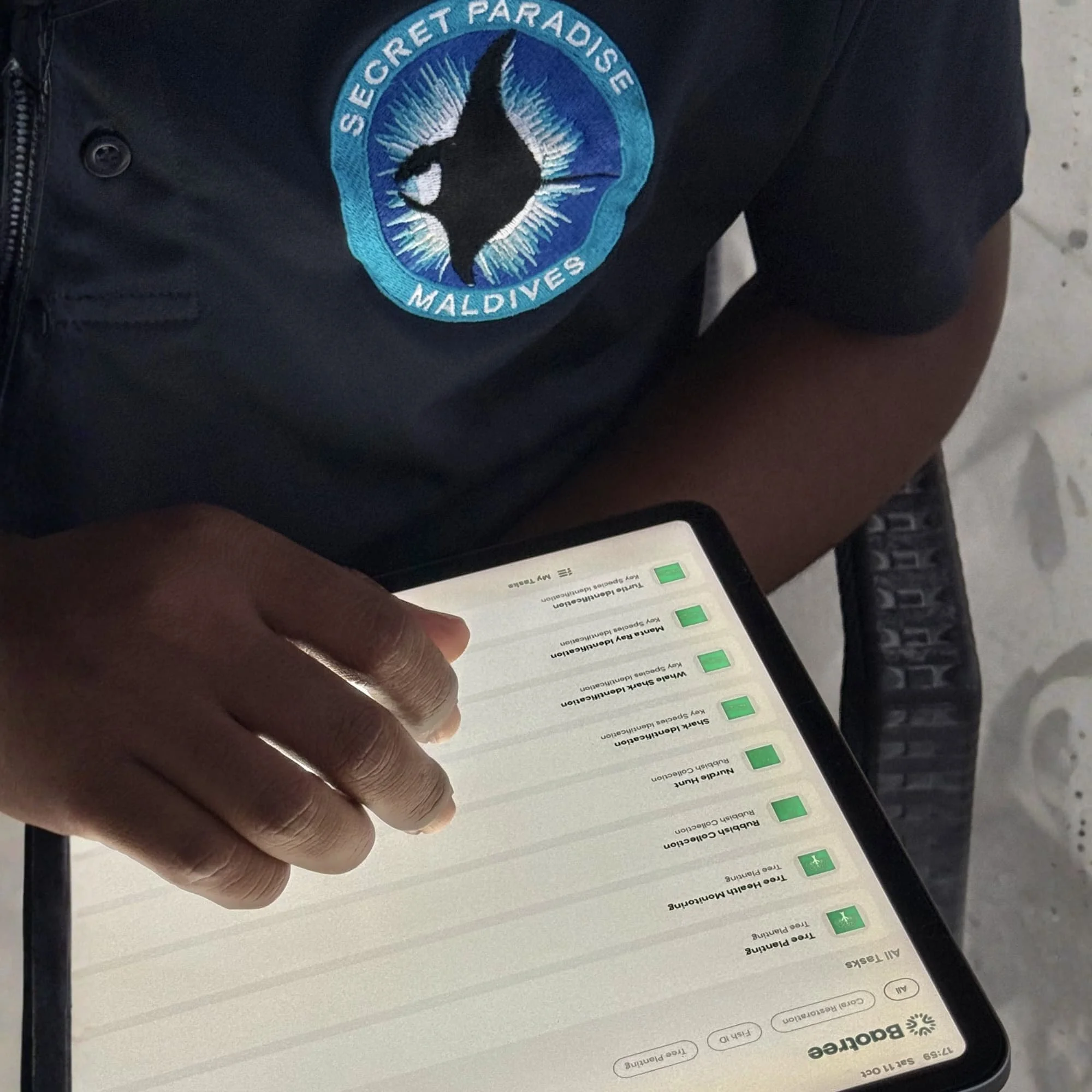
The company started measuring carbon across its tours in 2023, but much of the information still sat across spreadsheets, operational records, and separate tracking processes. They then consolidated their sustainability data into a single system, the Baotree impact measurement platform, built for the tourism space.
With everything in one place, Secret Paradise Maldives can now view and analyze its sustainability statistics more clearly across all day and multi-day tours, including transport, meals, activities, and guiding. Individual tours now carry their own carbon values, which allow both guests and the team to understand the impact at the level of a single experience rather than only at the company level.
Guests Can Collect Data, Too
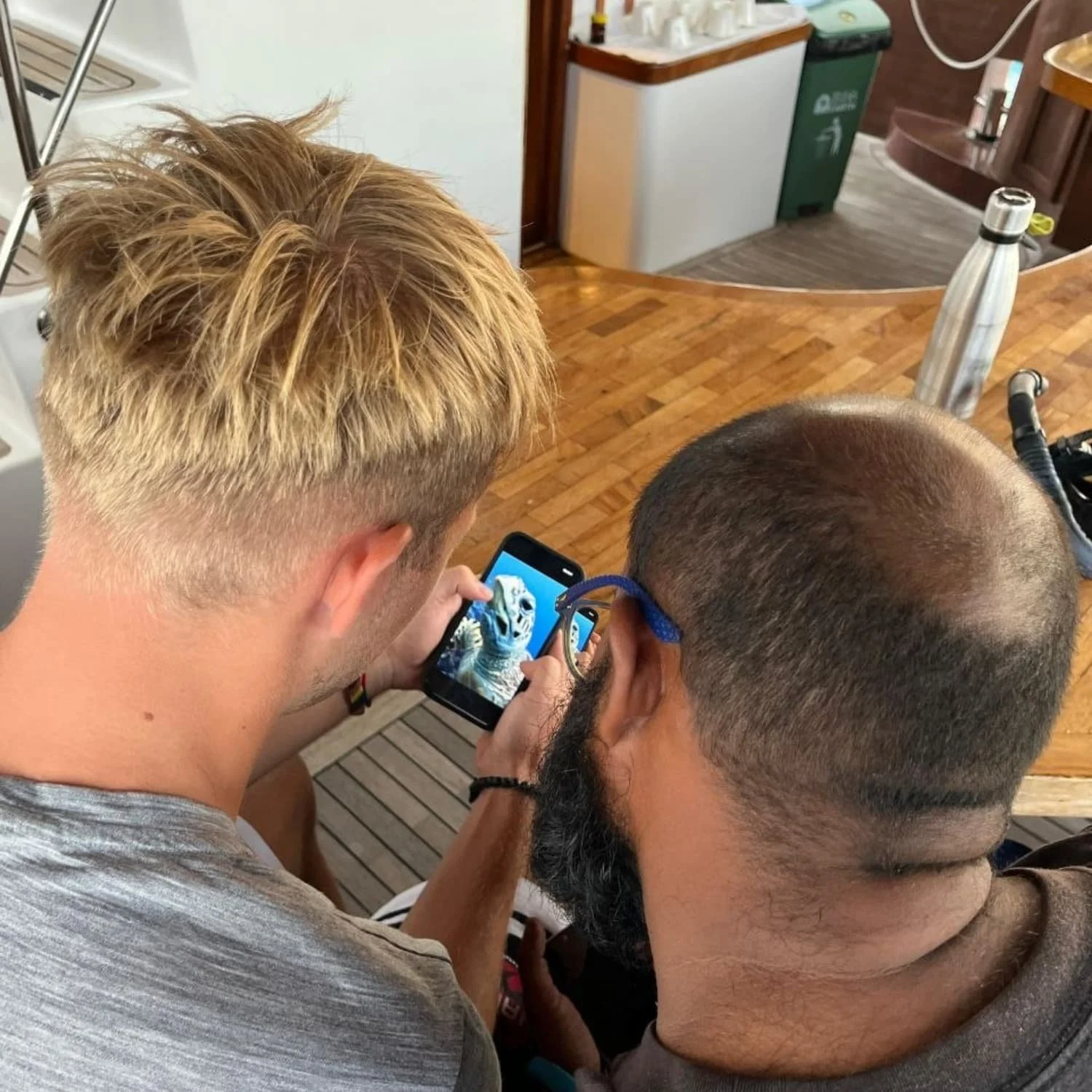
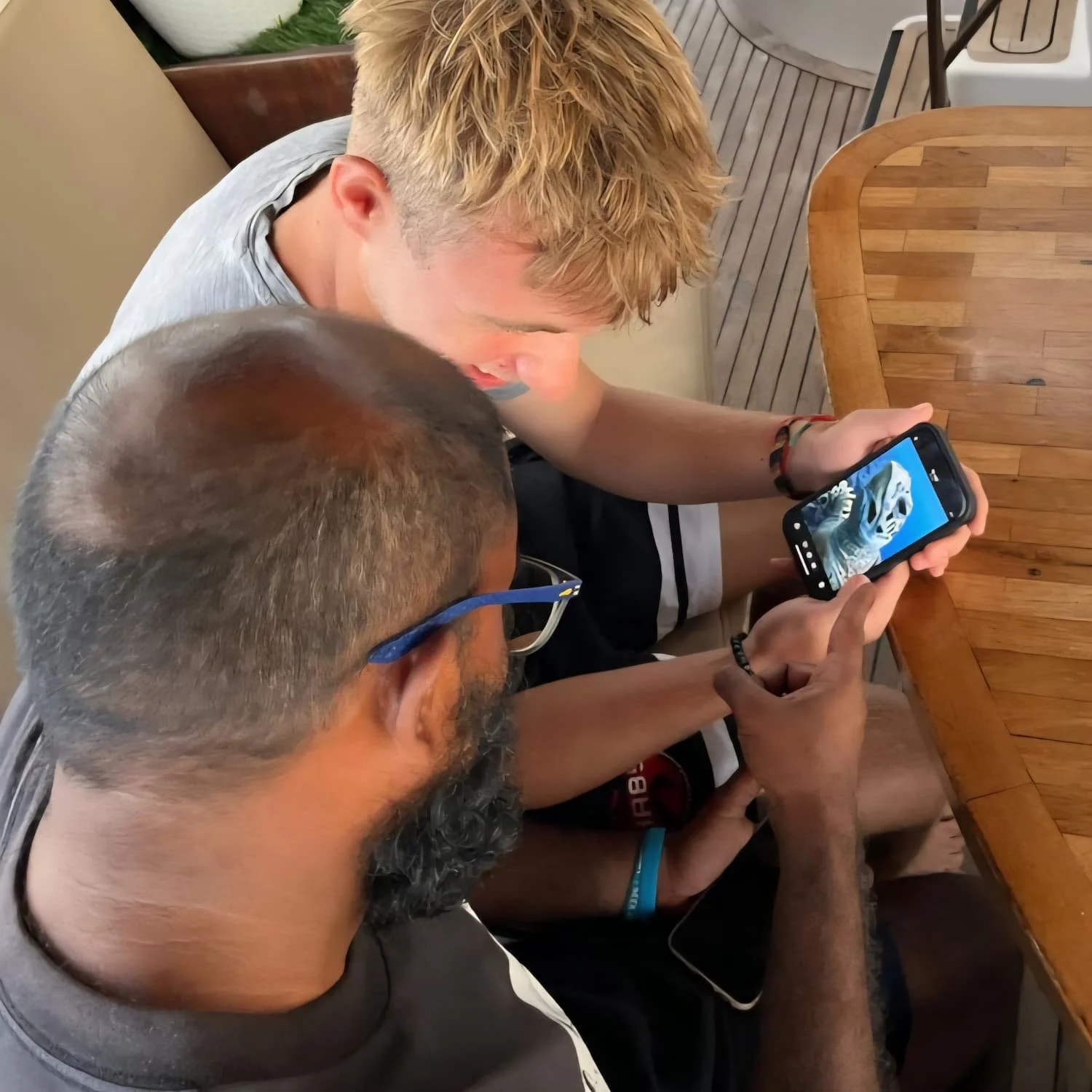
The most distinctive part of Secret Paradise Maldives’ approach is that it does not stop at educating guests about sustainability. In some activities, guests are brought into the data capture itself.
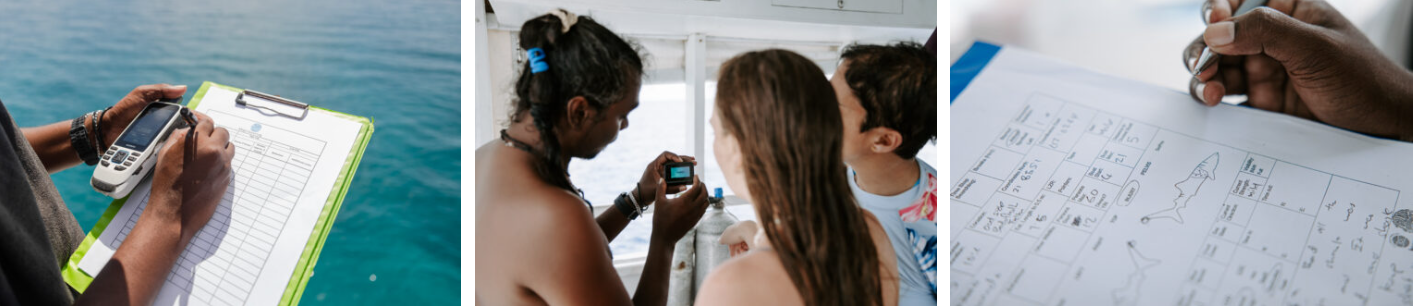
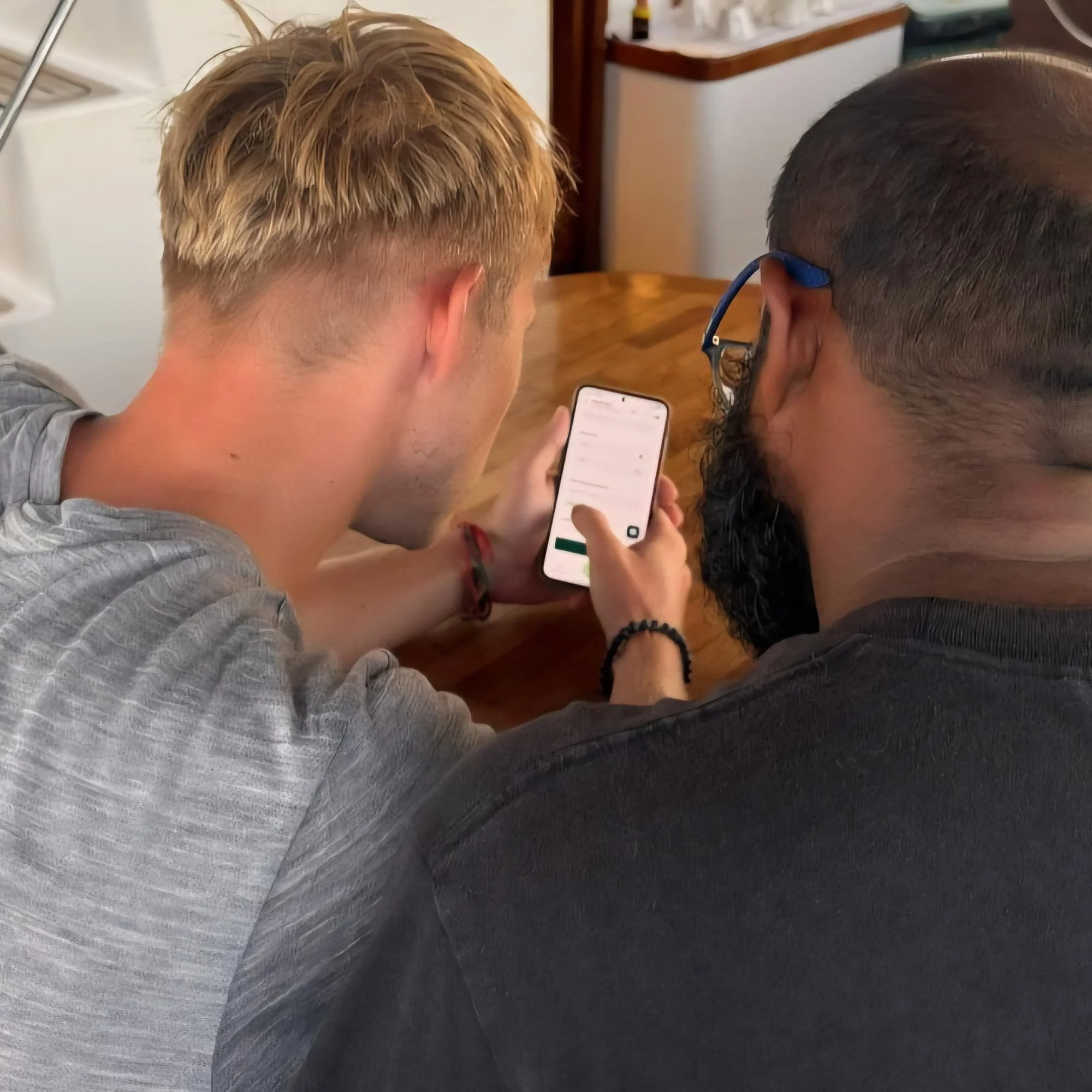
That happens across a range of projects, including tree planting, waste collection, coral restoration, fish and megafauna (large marine animals) identification, financial contributions, and back-office sustainability. At the end of each activity, a Tour Leader logs the information in an app on their phone, selecting the relevant project and entering the requested information step by step.
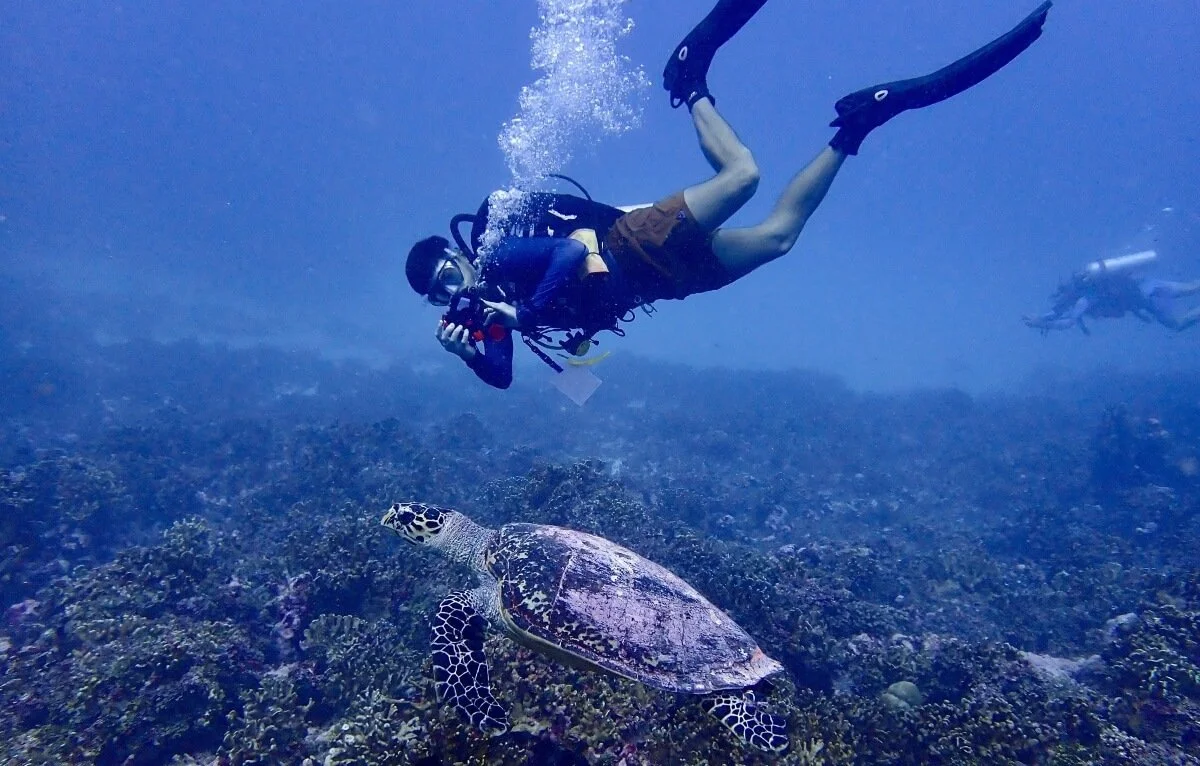
What gets recorded depends on the activity. In waste collection, the team logs the island and location, the type of activity, the volume of plastic and general waste collected, where the plastic was sent for recycling and where the general waste was disposed of, how many guests and team members took part, and supporting photos. In turtle identification, they record the location, species, the ID as registered on the Olive Ridley Project database, sex, any injuries, and other notes, with photo IDs shared with the Olive Ridley Project to support its Maldives turtle database.
Between November 2025 and March 2026, Secret Paradise Maldives recorded 207.45 kg of waste collected, of which 136.76 kg was plastic sent to Parley Maldives for recycling and 68.71 kg was general waste disposed of at island waste management sites. Over the same period, the team identified 38 turtles, six green and 32 hawksbills, with date and photo records shared onward for database matching and verification.
What matters here is not only that the data exists, but that some of the measurements are visible to guests while the activity is still happening. Instead of sustainability being translated into a short summary after the fact, it becomes part of the experience itself. For operators running conservation or community-based activities, that shift is worth paying attention to.
What Actually Changes for Guests
The harder question is whether this changes anything for guests beyond giving operators better records.
On that point, Secret Paradise Maldives is refreshingly careful. Tour Leader Aishath Nafsha says she has not noticed a major shift in guests’ overall level of interest, partly because the activities themselves have not changed dramatically. What she has noticed is that guests ask more specific questions about the information being recorded and what happens to it afterward.
That changes the conversation on the ground. A tree planting activity, for example, does not end with the simple fact that a tree was planted. Guests want to know whether it is a native species, whether the team has planted in that location before, and what will be done with the data collected. The same pattern appears elsewhere: not necessarily a transformation in behavior, but a more detailed curiosity about what is being measured, why it matters, and where the information goes.
That distinction matters. It would be easy to overstate the case and suggest that participation in data collection is already transforming guest behavior or proving better conservation outcomes. The evidence here does not support that yet. What it does suggest is something more modest and more useful: when measurement becomes visible, guests begin asking sharper questions.
Ruth Franklin sees this stage as the beginning of making data capture a routine part of activities rather than an internal exercise. In time, she hopes Secret Paradise Maldives will be able to send guests a WhatsApp summary at the end of a tour showing what they specifically contributed during their time with the company. If that happens, the loop will be more fully closed: guests will not only take part in the experience, but leave with a clearer record of what their participation produced.
Why Visible Data Matters Now
Travelers, partners, the press, and even governments are increasingly skeptical of green claims and want demonstrable proof of sustainability and impact claims. Good work that goes unmeasured is good work that goes unverified, and in an environment where greenwashing accusations follow any operator who overclaims, being able to show your data is quickly becoming a competitive necessity instead of a nice-to-have.
What is worth noting is what the data does and does not prove here. Secret Paradise Maldives' records show what was collected, what was identified, how activities were run, and that guests are growing curious about the numbers. They measure carbon at the tour level, track conservation activity outputs, document guest participation in data capture, and report on NGO contributions built into specific experiences. The data is collected more consistently through a single platform rather than assembled from disparate sources, which makes it easier to examine and report with greater confidence.
Supply Chains Remain the Hard Part
Waste systems, logistics, and import dependence in the Maldives present challenges that sit well outside the control of a single tour operator, and measuring the indirect impacts that run through a supply chain is a problem the industry as a whole has not solved.
Secret Paradise Maldives is currently working on a project to help its supply chain partners understand their own carbon emissions and identify where and what they can reduce.
They are also working to bring more local food into island tours, which deepens the cultural authenticity of the guest experience and directly strengthens the economic relationship between tourism and local food producers.
A Marathon, not a Sprint
Ruth's advice to operators who want to take their impact more seriously is to start before they feel ready. Do not wait for a perfect system or a large budget. Measure what you can, improve incrementally, and be honest about the gaps.
Sustainability, as she puts it, is a marathon and not a sprint, and the operators who get it right treat it as permanent work rather than a project with an end date.
Secret Paradise Maldives is almost fifteen years into that marathon, and Ruth and her team are still running.
What Operators in Asia Can Take from This
For hospitality and tour operators in Asia, the principles behind Secret Paradise Maldives' approach are transferable.
1. Make guest participation part of the experience.
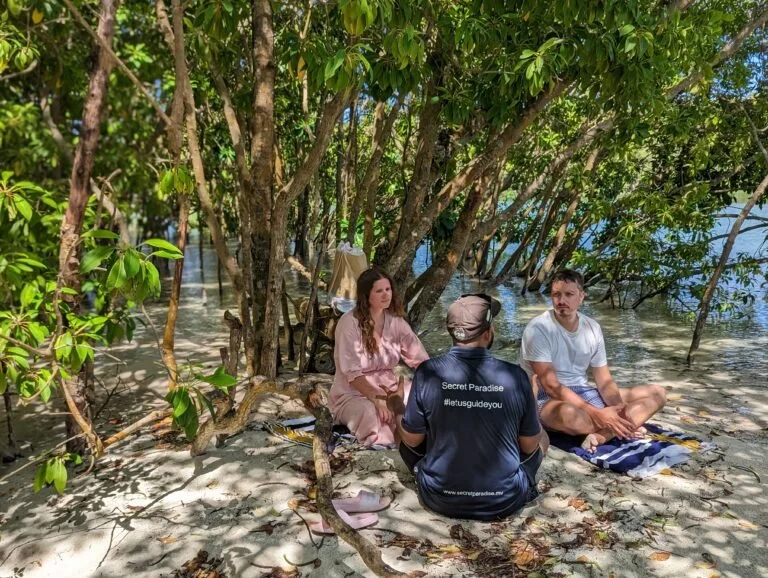
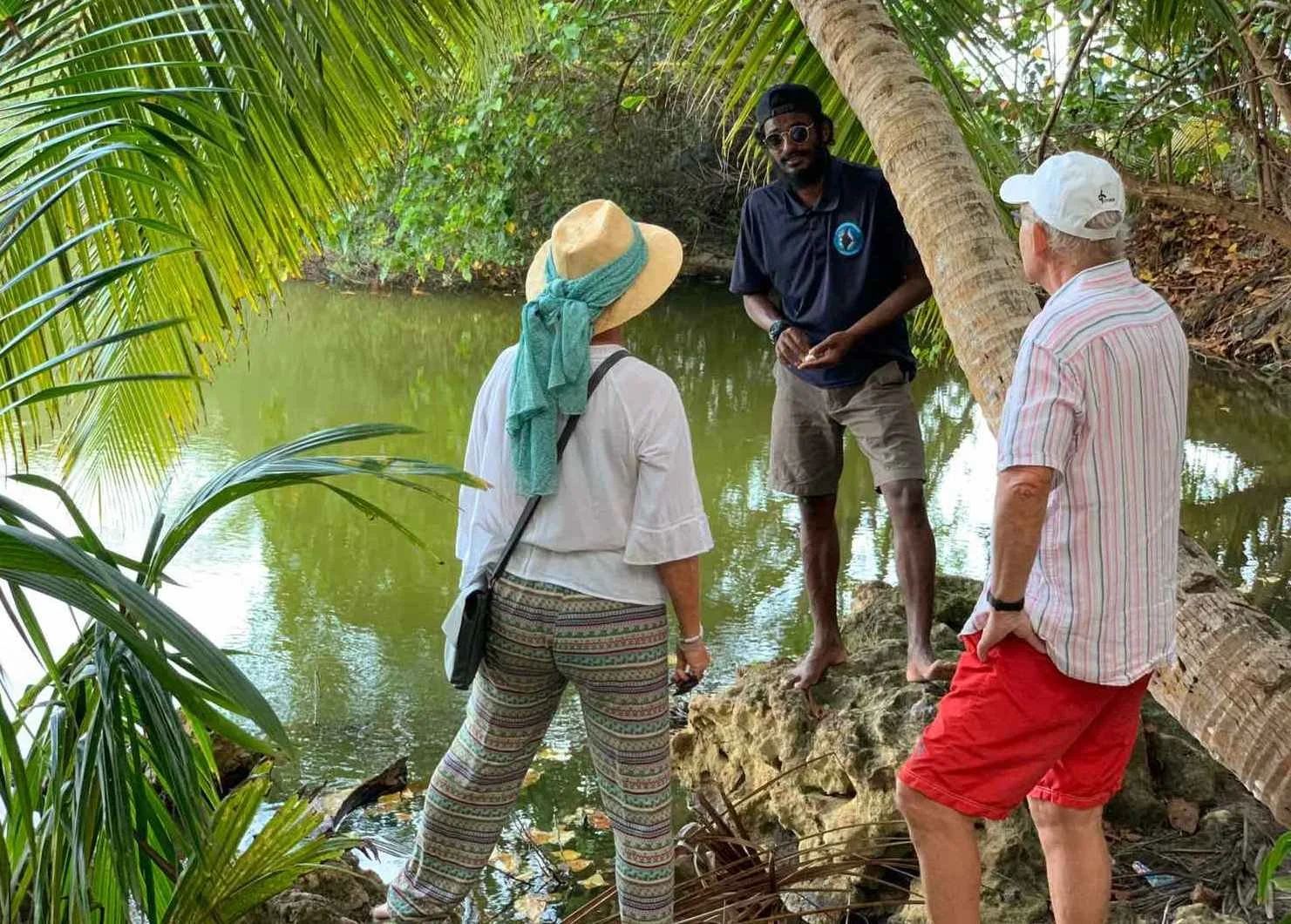
Many operators already do important conservation and community work, but guests hear about it only afterward. Look for activities where guests can genuinely take part, such as citizen science projects, biodiversity monitoring, or community projects, and keep scientific or compliance-grade measurements staff-led. Participation tends to make those experiences more tangible for guests.
2. Bring your data into one place.
Sustainability information often sits across spreadsheets, utility bills, supplier records, and staff reports. Consolidating that information into a single system makes it easier to identify trends, set targets, and communicate progress with confidence. Good intentions matter, but measurement allows you to improve and demonstrate impact over time.
3. Show impact at the experience level.
Guests often struggle to connect with broad company-wide sustainability claims. Showing the impact of a specific tour, excursion, or activity makes the information far more relatable. Whether you track carbon emissions, conservation outcomes or community contributions, bringing impact closer to the individual experience helps guests understand their role within the bigger picture.
All photos by Secret Paradise Maldives