People Are the Strategy: Building Impact-Led Hospitality Through Next-Gen Talent
For decades, many hospitality industry players have treated their workforce as an operational input — a cost line to be optimized, a gap to be filled.
The result is a sector facing a structural workforce problem: high turnover, shallow career ladders, and a growing disconnect between the values of the next generation entering the workforce and the industry's readiness to meet them.
The data tells a clear story.
15.7% of all direct jobs in travel & hospitality were held by individuals aged 15–24, compared to 13.7% across the wider economy. The Deloitte 2025 Gen Z and Millennial Survey shows that most of them would prioritize an employer's sustainability record when considering where to work.
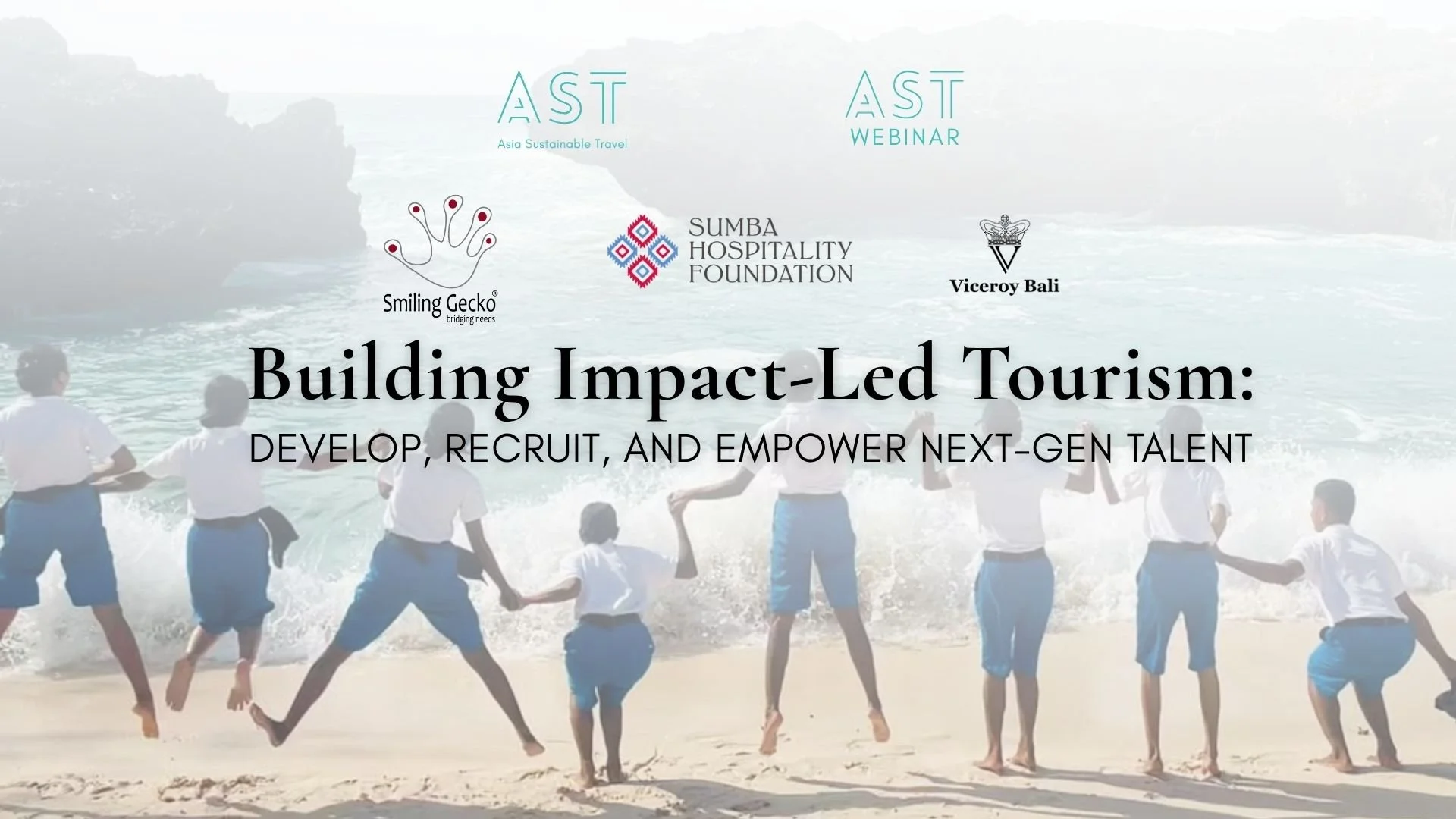
Jeremy Tran, Co-Founder of Asia Sustainable Travel, framed it at the outset of the latest AST Webinar, “Building Impact‑Led Tourism: Develop, Recruit, and Empower Next‑Gen Talent.”
"Our industry seems to keep treating that as a recruitment problem. I'd argue it's a structural and leadership problem."
The central question explored throughout the hour was this: How do travel and hospitality leaders build teams that not only execute sustainability strategies but also lead them, without sacrificing commercial performance?
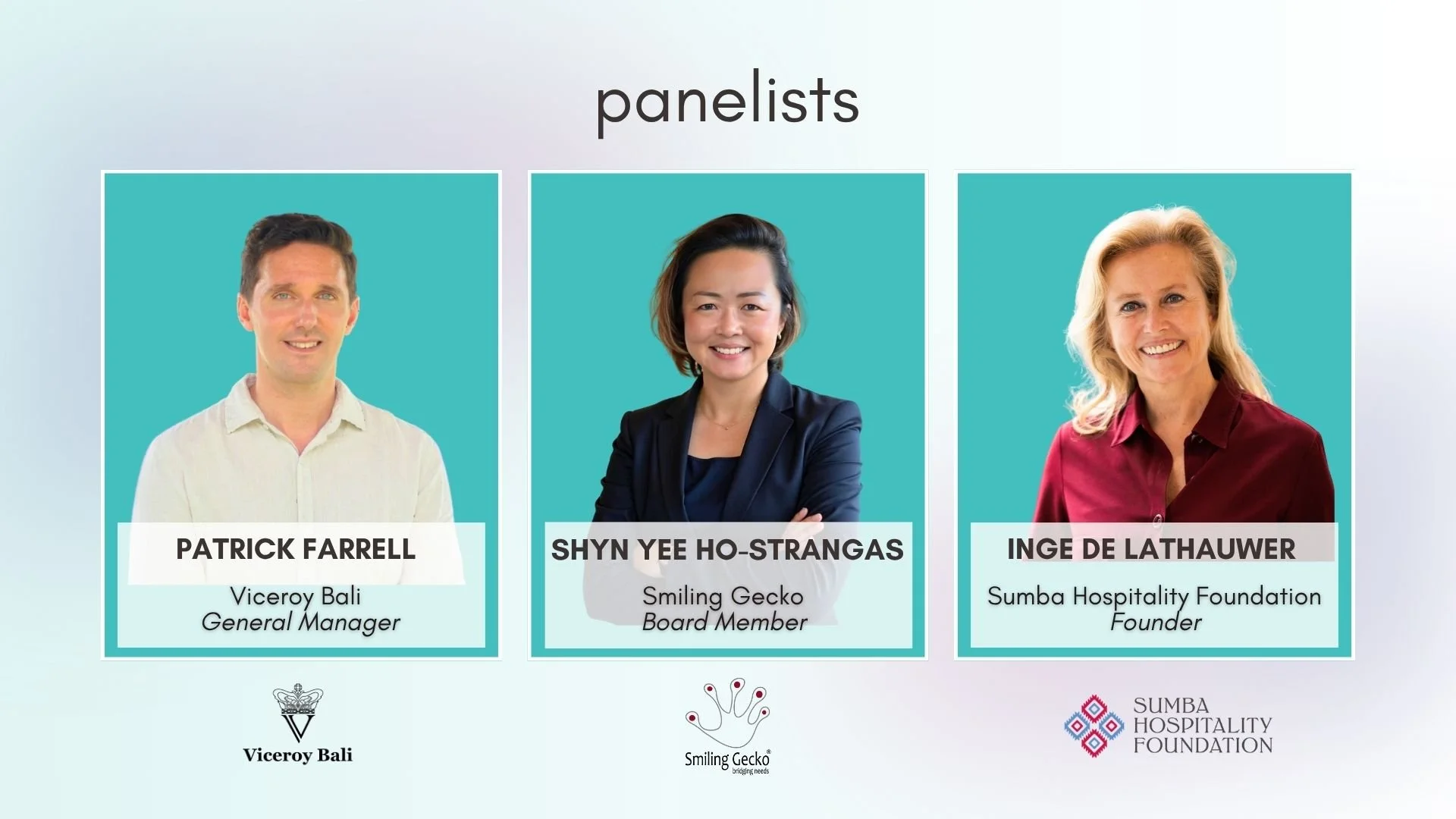
Three panelists — each operating from a different part of the value chain — presented their own versions of the answer.
The Diagnosis: What the Industry Gets Wrong
The conversation opened with moments of reckoning.
Inge De Lathauwer, Founder of Sumba Hospitality Foundation (SHF), described watching Bali's transformation over forty years: rice fields disappearing, communities sidelined, tourism becoming extractive rather than generative. When she first visited Sumba over a decade ago, she recognized the same conditions forming. "The local communities were absolutely not prepared to welcome tourism," she said. "And that's where the idea came from — to prepare and empower them before tourism gets too big."
Patrick Farrell, General Manager of Viceroy Bali, a member of Small Luxury Hotels of the World (SLH), identified a parallel breakdown at the property level. Bali's explosive post-pandemic growth has produced a market flooded with options for young workers, making "the replaceable staff idea" increasingly common. "People can't grow quick enough, or they don't grow at all," he observed. "They stay in the same entry-level role. Whereas the goal for us as leaders is to give the young talent a path to grow."
Shyn Yee Ho-Strangas, Board Member of Smiling Gecko Singapore and Director at Horwath HTL Singapore, located the problem even higher in the structure. After two decades in the industry, her defining observation is the persistent practice of dropping senior expat leadership into local communities, rotating decision-makers who hold the highest authority but are never accountable to the place. "There is this artificial ceiling," she said, "or suppression that restricts local staff from growing. And so what you see is they start moving to other hotels, or just stay in the same role for a really long time."
Taken together, these three vantage points — community builder, hotel operator, and investment advisor — point to the same root failure: the industry can do more on team empowerment and human development.
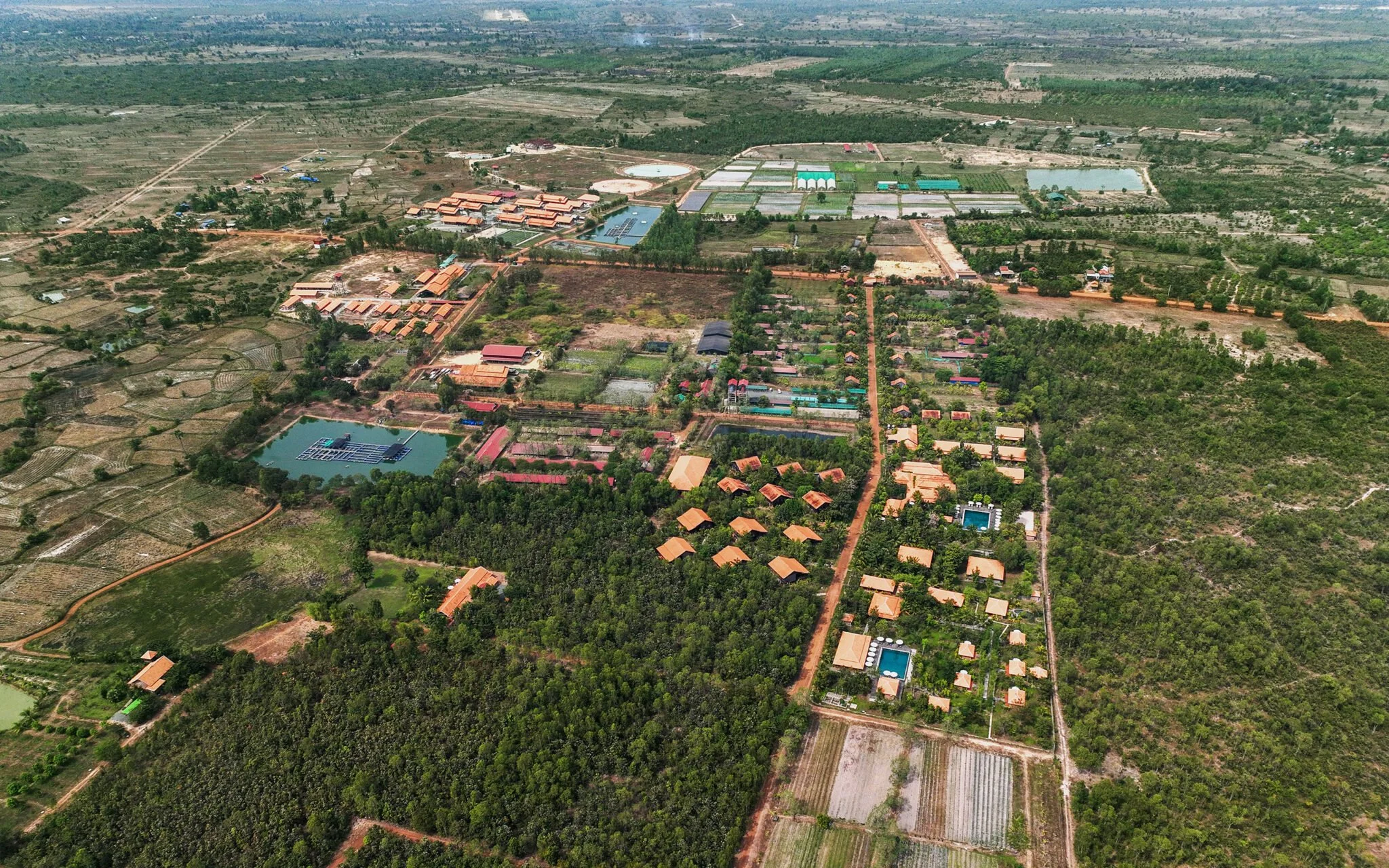
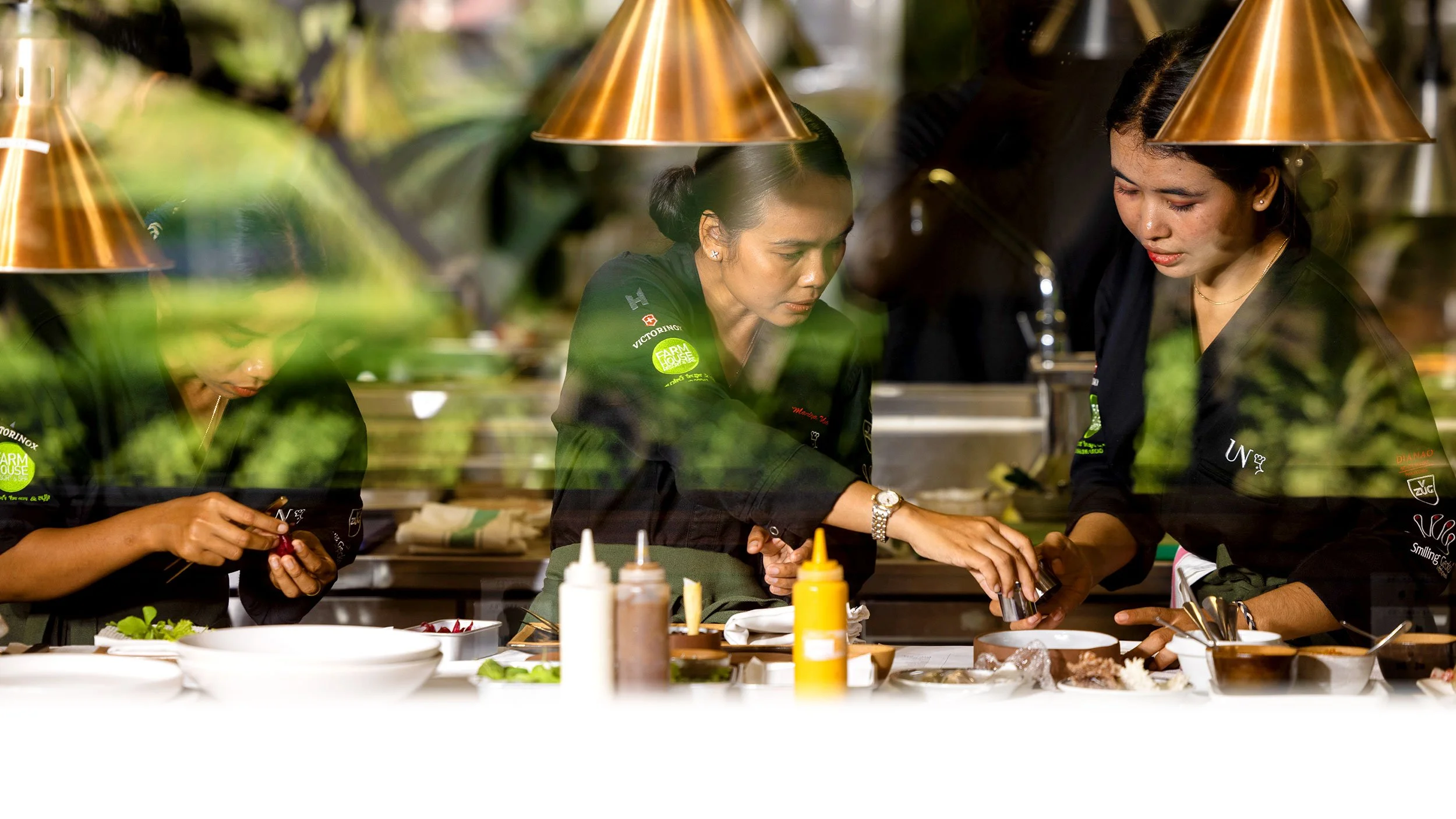
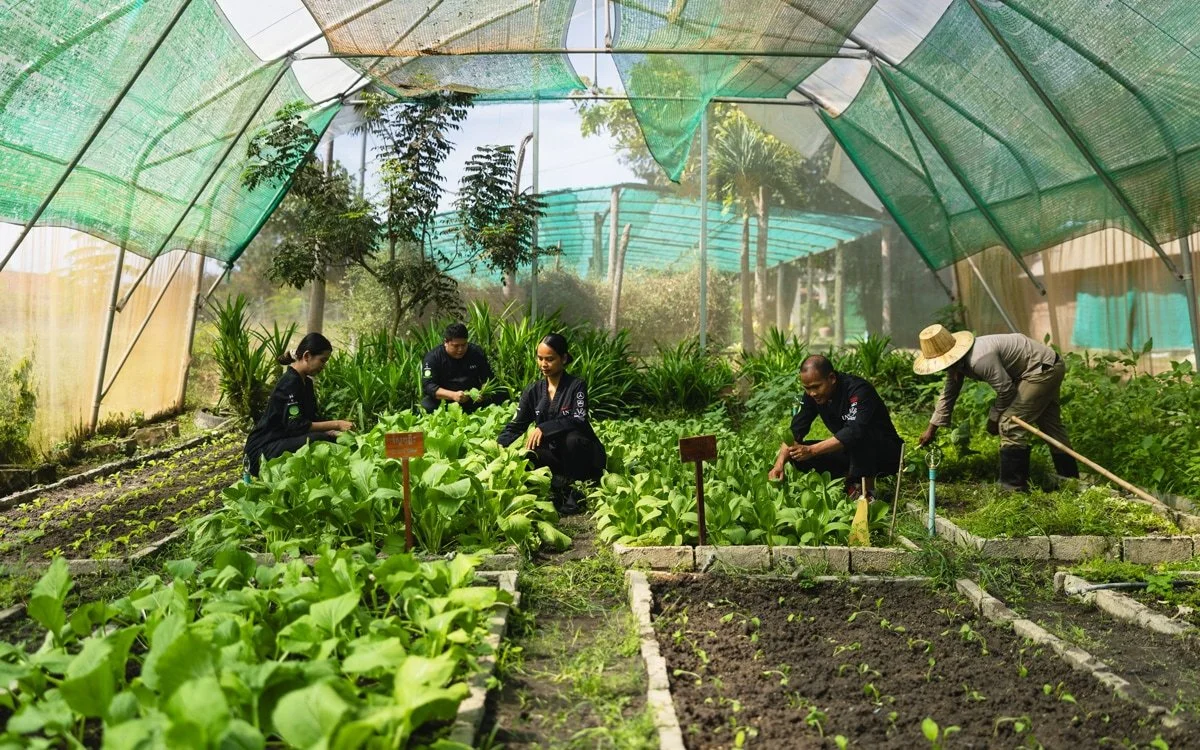
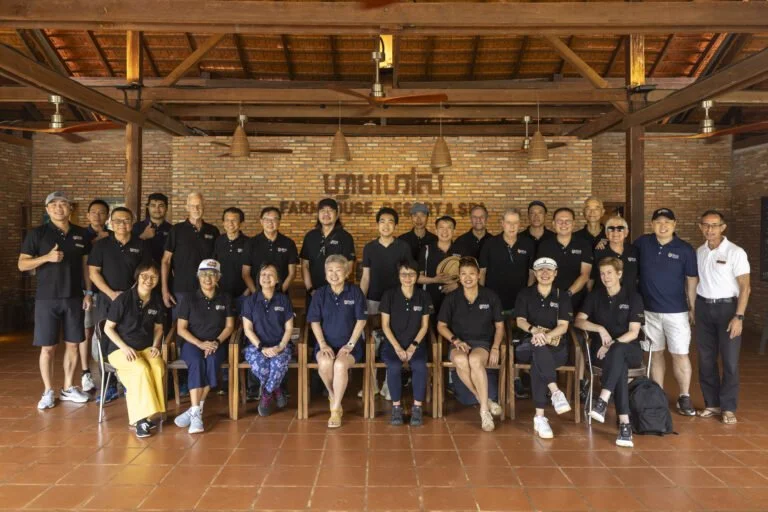
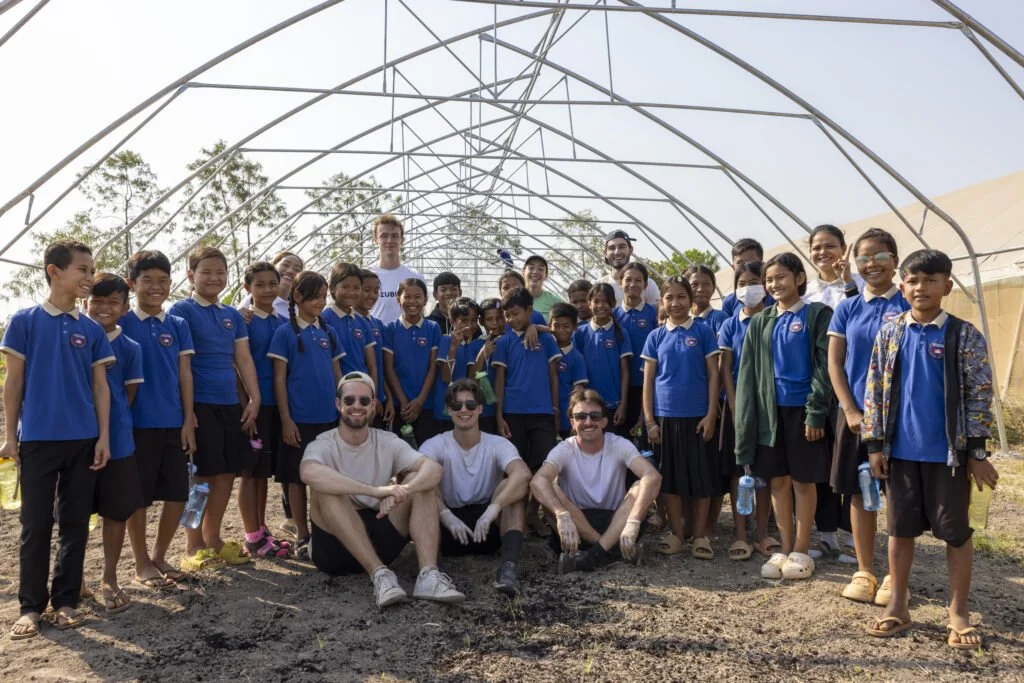
Smiling Gecko Campus (top) and Farmhouse Resort (bottom) in Cambodia. Photos by Smiling Gecko.
The Structural Blind Spot Hidden in the P&L
The structural blind spot that Shyn Yee named is one the industry rarely confronts head-on. When developers conduct feasibility studies for new properties, they build Profit & Loss (P&L) projections based on historical market data — how comparable hotels in the region performed, and how the asset's margins can be optimized.
What those models consistently understate is the human capability investment required to develop talent from a genuinely underserved community. In places where the starting point is not a trained hospitality workforce but a community that has never encountered formal service environments, the early investment must be substantially higher than a standard P&L would suggest.
"From an owner-investor standpoint, if they do not have a strong local sustainability agenda, it is in their interest to maximize the Gross Operating Profit (GOP) while keeping costs as minimal as possible. Whereas in some of these communities, you actually need to over-invest in the beginning to create a runway for the kind of growth you want to see," Shyn Yee said.
This isn't an objection to commercial discipline — it's a call for more accurate accounting. Impact-led talent development is not a charity line item. It is a long-term asset, and failing to model it correctly means projects are structurally set up to underdeliver on both community outcomes and operational performance.
Inge echoed this from a community builder’s perspective: the key blind spot is mistaking short-term skill training for long-term empowerment. "A lot of hotels have training programs for skill sets, but it's basically just to improve their own quality and service. It's not creating a career pathway. That's something very different."
A growing number of independent hotel groups began setting an example of empowering team members to be sustainability advocates. At 137 Pillars Hotels & Resorts, part of the Considerate Collection by SLH, for example, sustainability training is designed to change mindsets, not just Standard Operating Procedures (SOPs): team members attend regular sessions on sustainable practices and are encouraged to adopt them at home by bringing their own bags, cutting plastic, reducing waste, so that team members become multipliers of change in their own communities, not just executors of a hotel checklist.
Training Alone Is Not Empowerment
Perhaps the sharpest conceptual distinction of the session was the one Inge De Lathauwer drew between training and empowerment.
Over the past decade, Inge has built an integrated ecosystem at SHF, consisting of a hospitality school, permaculture farm, hotel, spa, and restaurant on Sumba – offering one of the most thoroughly tested hospitality education models in Southeast Asia.
Most hotels, she observed, have training programs. Short, skills-based modules designed to improve service quality within the property's existing operation. What they do not have is what she called a career pathway — a deliberate, multi-year arc that gives a young person from a marginalized background a genuine ladder to climb, not just a role to perform.
The SHF model was built specifically to close that gap. Students receive holistic personal development alongside technical skills, and the Foundation operates a careful matchmaking process with partner properties — not a one-size-fits-all intern placement, but a considered alignment between the student's character and the property's culture.
"From the start, the idea was it's not only the hospitality skills we want to teach. We want a holistic approach centered on personal development," Inge emphasized.
The results show up in the one place that matters commercially — the guest experience. Patrick confirmed that Viceroy Bali currently hosts both full-time Sumbanese team members and a rolling cohort of trainees. The difference from graduates of other institutions is, he said, "immediately visible and felt" — a quality of presence and passion that shows up not just in internal culture but in guest reviews, where specific team members are named by guests for the depth of their engagement.
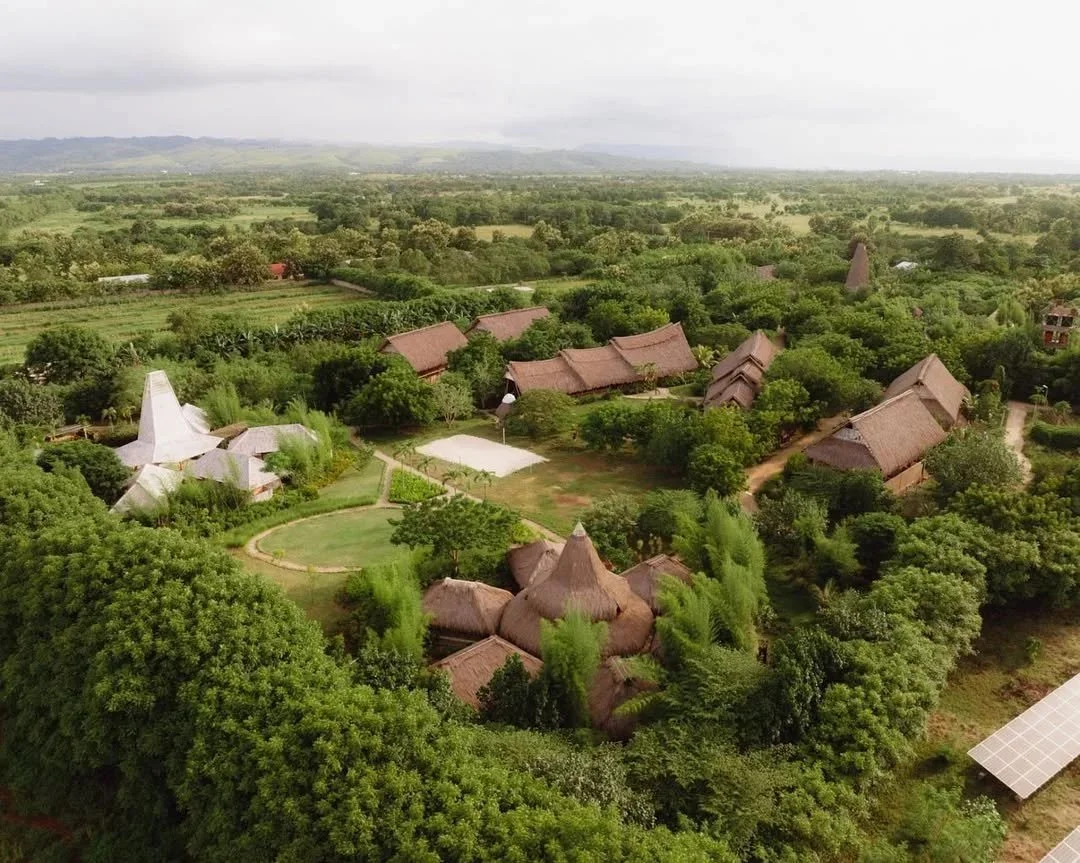
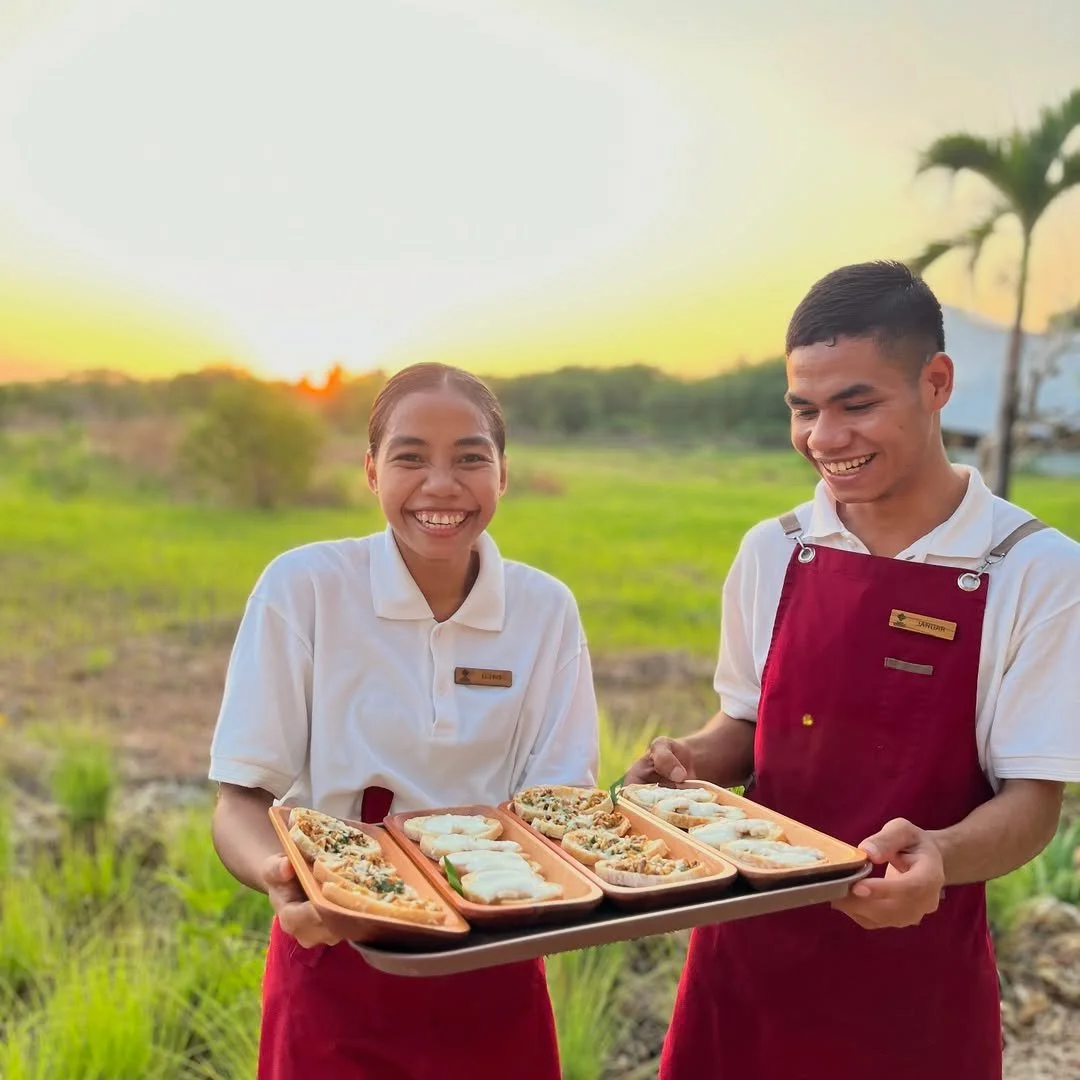

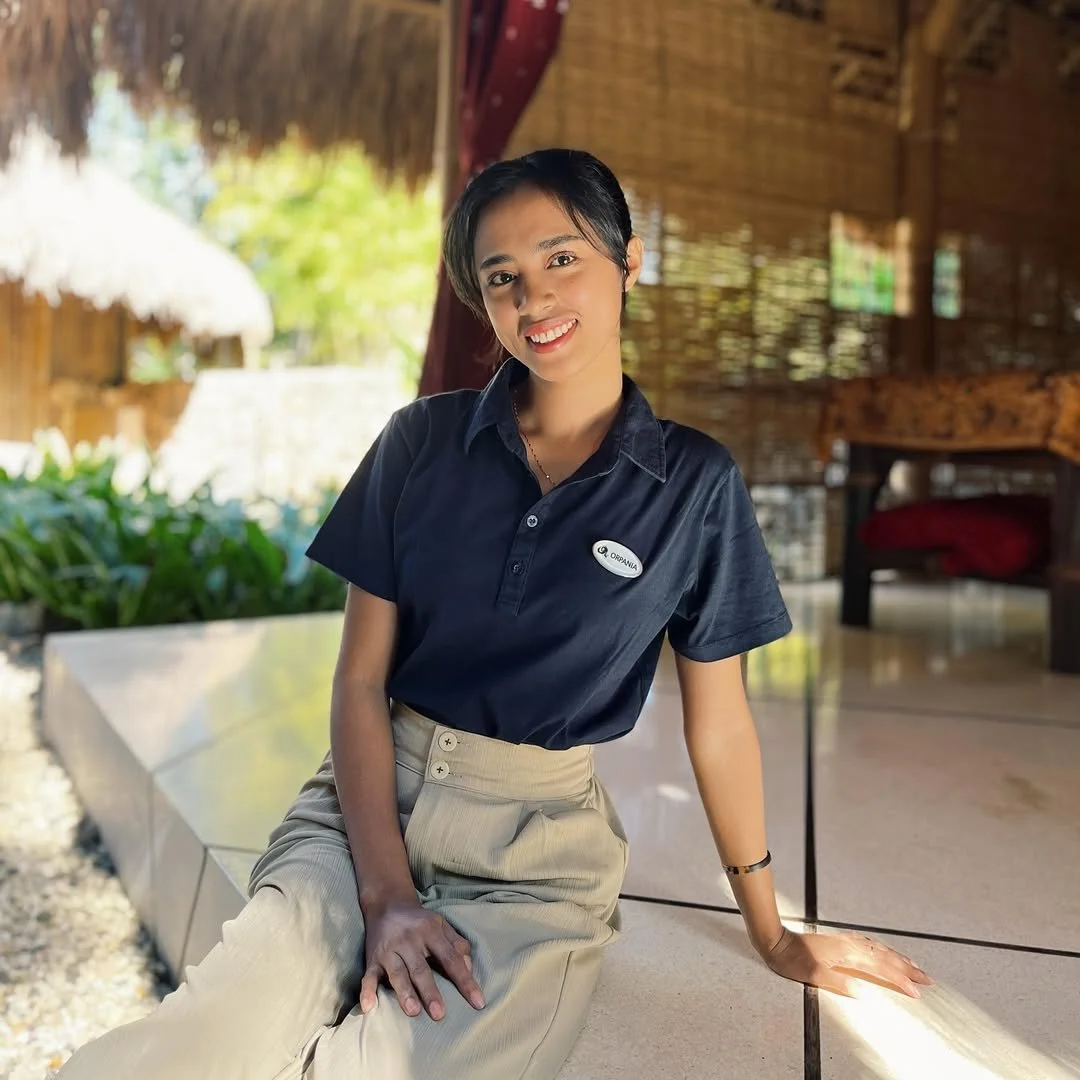

Sumba Hospitality Foundation Campus (Top) and Students. Photos by Sumba Hospitality Foundation
The Brain Drain Question — and Why the Answer Is Counterintuitive
The fear of brain drain — training someone well only to watch them leave for a larger brand or a bigger city — is among the most common objections to investing seriously in rural talent development. The webinar surfaced a more nuanced reality.
Inge De Lathauwer makes a point of celebrating SHF alumni working in Dubai, the Maldives, on cruise ships, and even in Antarctica. The goal is not to keep talent captive to Sumba — it is to build the agency and global fluency that brings people back as leaders, not just returnees. "Leave, open your eyes to the world, learn, become stronger, and then come back and become an example."
Shyn Yee offered the same framing from Cambodia. At Smiling Gecko, the strong family bonds in the local culture mean many graduates choose to stay, but those who leave and succeed elsewhere are also proof that the model works. "That provides them with optionality and a pathway for social mobility. If someone has the aspiration to move on and we can take in someone else and upskill that person — to me, that's a testament to the success of the project."
The metric that matters most is not retention. It is whether the model generates upward mobility for the individual and for the community that follows them.
Building a Team That Actually Believes in Purpose
In a market where every luxury hotel now claims to be purpose-led, the test is not what brands say — it's what their teams do when a guest asks a genuine question.
At Viceroy Bali, being independently owned has been a structural advantage. "We're not given a guidebook by one of the bigger brands," Patrick explained. "We can implement programs like educating guests on the rice paddies that surround us, bringing guests on tours, and empowering the team to talk about their community." Many team members come from the village where Viceroy operates. Teaching guests how a Balinese offering is made, explaining the Subak irrigation system, or discussing what the forest around them means — these are not packaged experiences. They are genuine acts of cultural ownership. "Empowering them to talk about their culture is a big part of what we do," Patrick said. "It's the team that makes the difference."
Shyn Yee pointed to the governance structures above the GM that determine whether this kind of culture survives leadership turnover — which, in branded chains, can happen every three to five years. The answer is alignment at the owner and investor level, built into the project framework from the start. "It's an entire supporting system of decision-makers and stakeholders that creates the ideal setup for continuity," Shyn Yee says.
That same mindset is visible at 137 Pillars House, where leadership talks openly about a "duty of care" to local culture, architecture, waterways, forests, animals, and the broader environment, and has embedded that into concrete commitments like Green Globe certification and the creation of an on‑site teak museum to preserve regional heritage. When duty of care is written into how a property is certified, curated, and marketed — not just how one GM speaks — purpose has a better chance of outliving any single tenure.

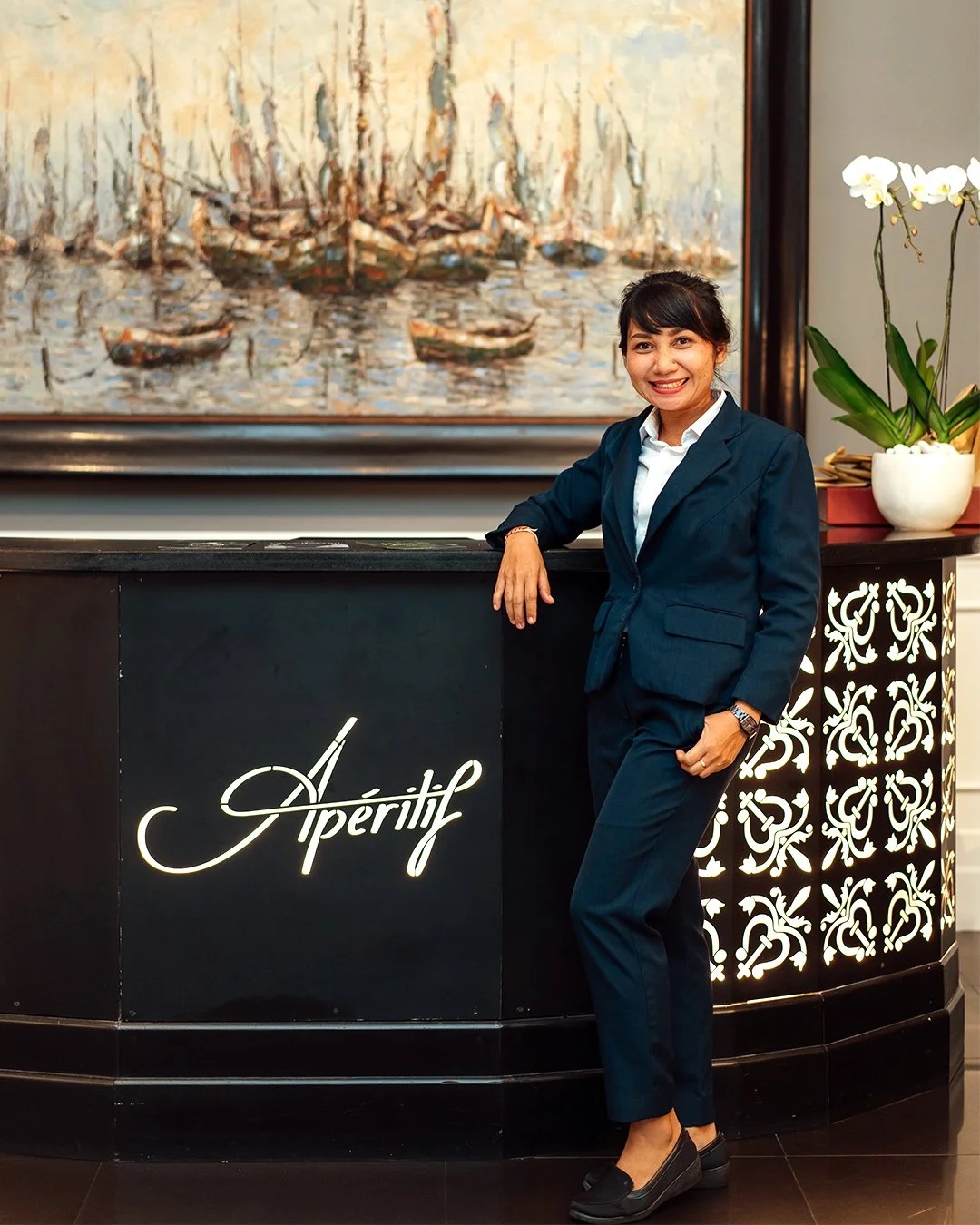
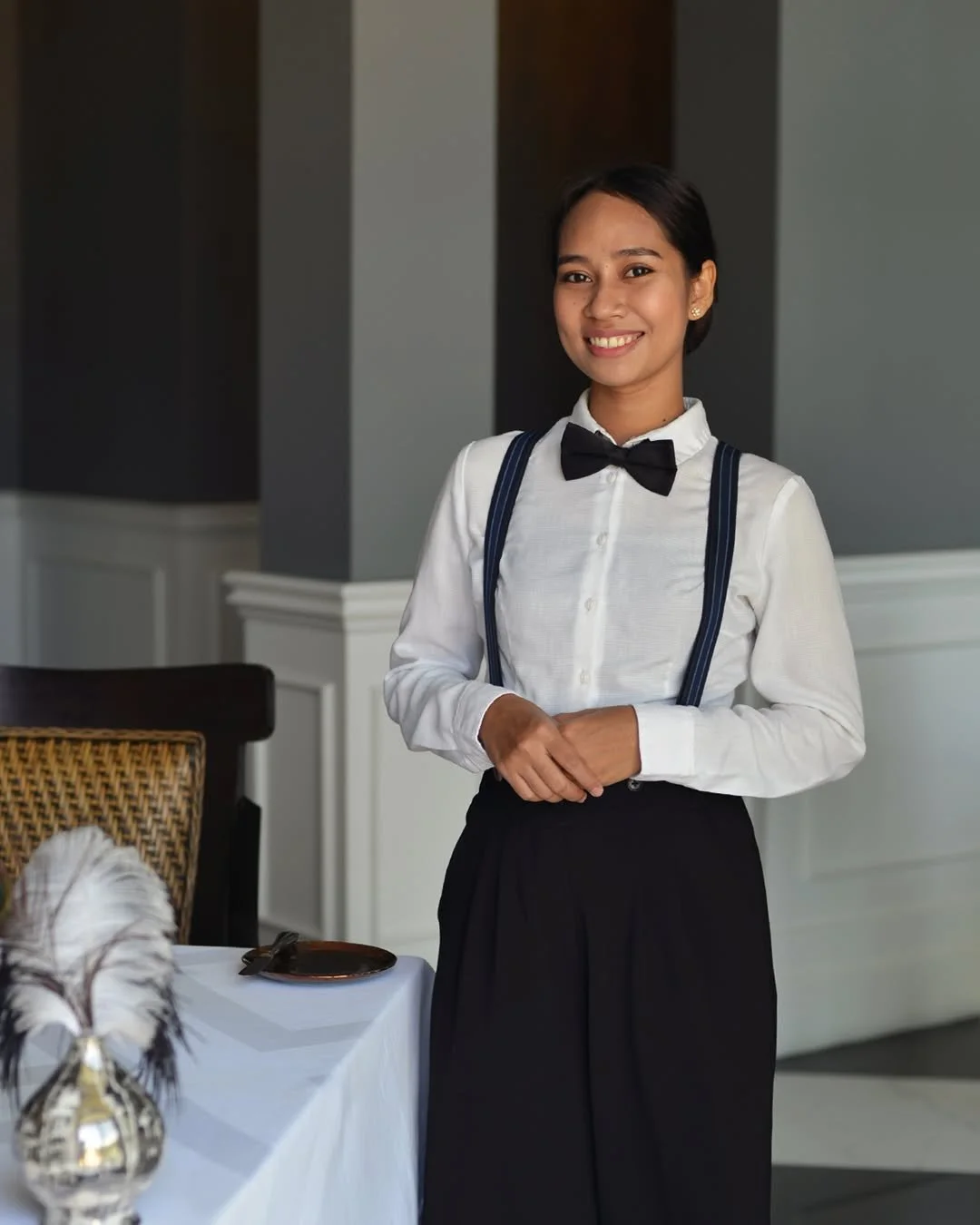
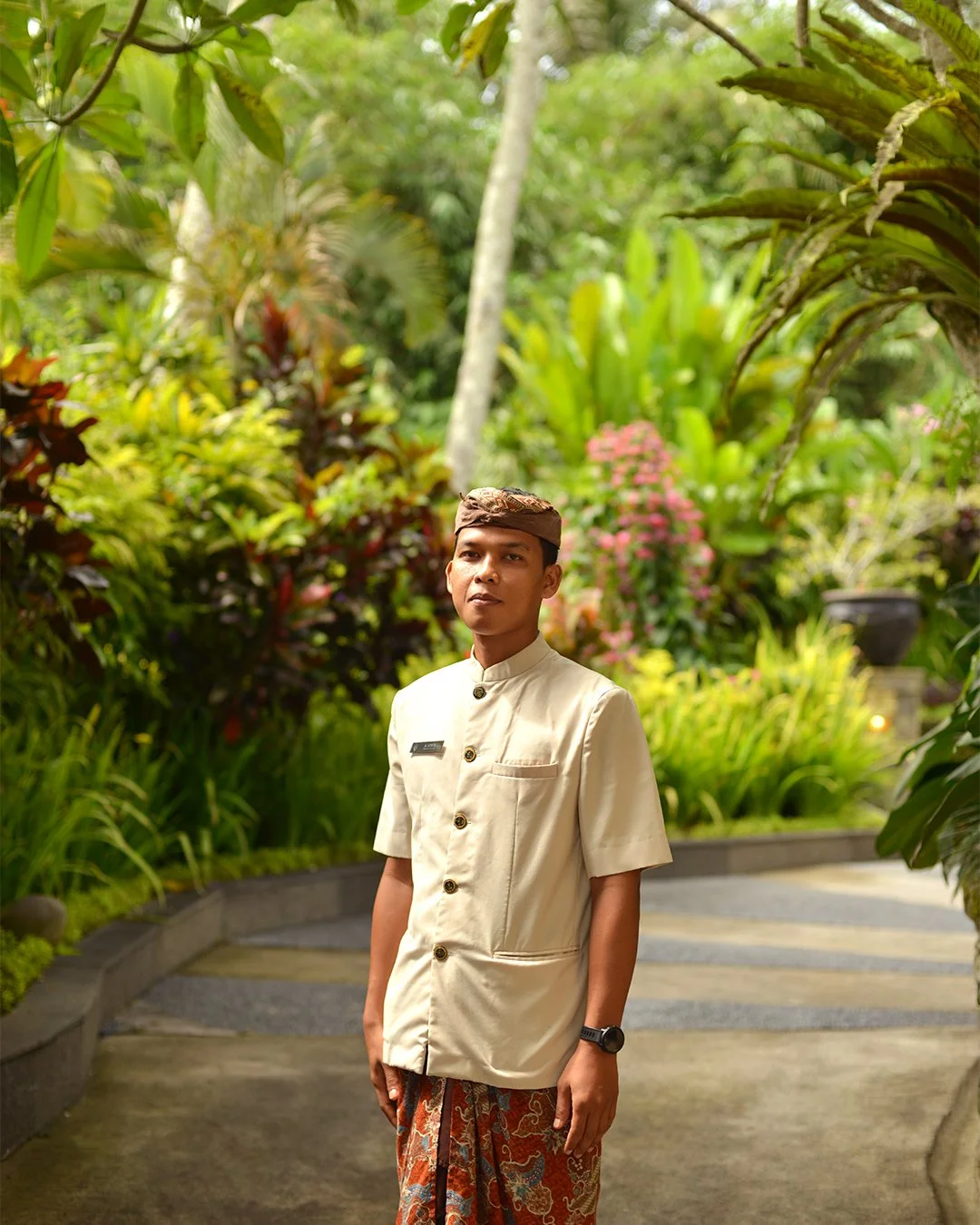
Photos: team members of Viceroy Bali. From top left clockwise, Dirgantara Putra, Chef de Partie at Cascade restaurant; Yuna, Restaurant Manager at Aperitif; Kadek Juliantara, Tour Guide; Imelda Sisilia Dappa, Head Waitress at Aperitif.
The Intention-Action Gap
The industry's intention-action gap is well documented among travelers — people who say they care about sustainability but whose booking behaviour tells a different story.
The same gap exists among young professionals.
Purpose alone, the panelists agreed, cannot compete with a materially better salary offer. Inge was frank: SHF graduates come from underprivileged backgrounds and send money home to their families. The pull of higher pay is not a value failure; it is an economic reality that the industry must take seriously rather than romanticize.
"Impact careers should not be sacrificial," Inge said. "If we can show owners and investors that sustainable tourism really delivers world-class standards and innovation, then students and alumni will feel there's a future in it."
Shyn Yee framed the competitive calculus precisely. Where the salary gap between a purpose-led employer and a conventional competitor is manageable, values become a legitimate differentiator. Where the gap is large, purpose loses. The implication is clear: impact-led operators who want to compete for talent cannot rely on mission alone. They must build compensation structures that respect both the values and the economic needs of the people they are trying to attract.
What Frontline Leaders Told Us to Stop — and Start
The webinar's rapid-fire round produced some of the sharpest, most actionable observations of the session.
Stop:
Treating sustainability as a marketing function. Patrick called out greenwashing directly: "Companies need to stop having the sustainability function run by the marketing team. At Viceroy, every department nominates team members — young and old — to be part of the sustainability group. There is a champion in each department."
Assuming that "if we build it, they will come" in underserved communities. The systemic daily challenges facing workers from rural or low-income backgrounds — childcare, family obligations, basic infrastructure — are not motivational issues. They are structural ones that require structural responses.
Treating school partnerships as recruitment pipelines. The most effective partnerships are co-creative: hotel staff travel to foundations to run workshops, co-develop curriculum, and meet students before internships. Treating them as a supply tap produces transactional relationships and underprepared graduates.
Start:
Listening to younger staff actively, not performatively. Patrick’s 60-day recommendation was concrete: step back, ask younger team members what they see as the future, and take their answers seriously. They are on the doorstep of where the industry is going. Give them a voice before the competition does.
Measuring the compounding community effect of local hiring. Not just staff retention rates, but whether employed team members are sending more children to school, generating additional employment in their households, and building economic resilience in their extended families. These are the metrics that reveal whether a project is genuinely creating upward mobility.
Spotting PR-dressed-as-empowerment early. Look at local leadership representation in senior roles and the length of commitment cycles. Short-horizon programs with no local leaders above entry level are almost always about brand narrative rather than genuine development.
Designing staff engagement programs that tie personal wellbeing to community benefit. As in 137 Pillars’ Stride & Sustain initiative, where team walking and running distances are converted into donations for local causes, a small but telling example of aligning internal culture with external impact.

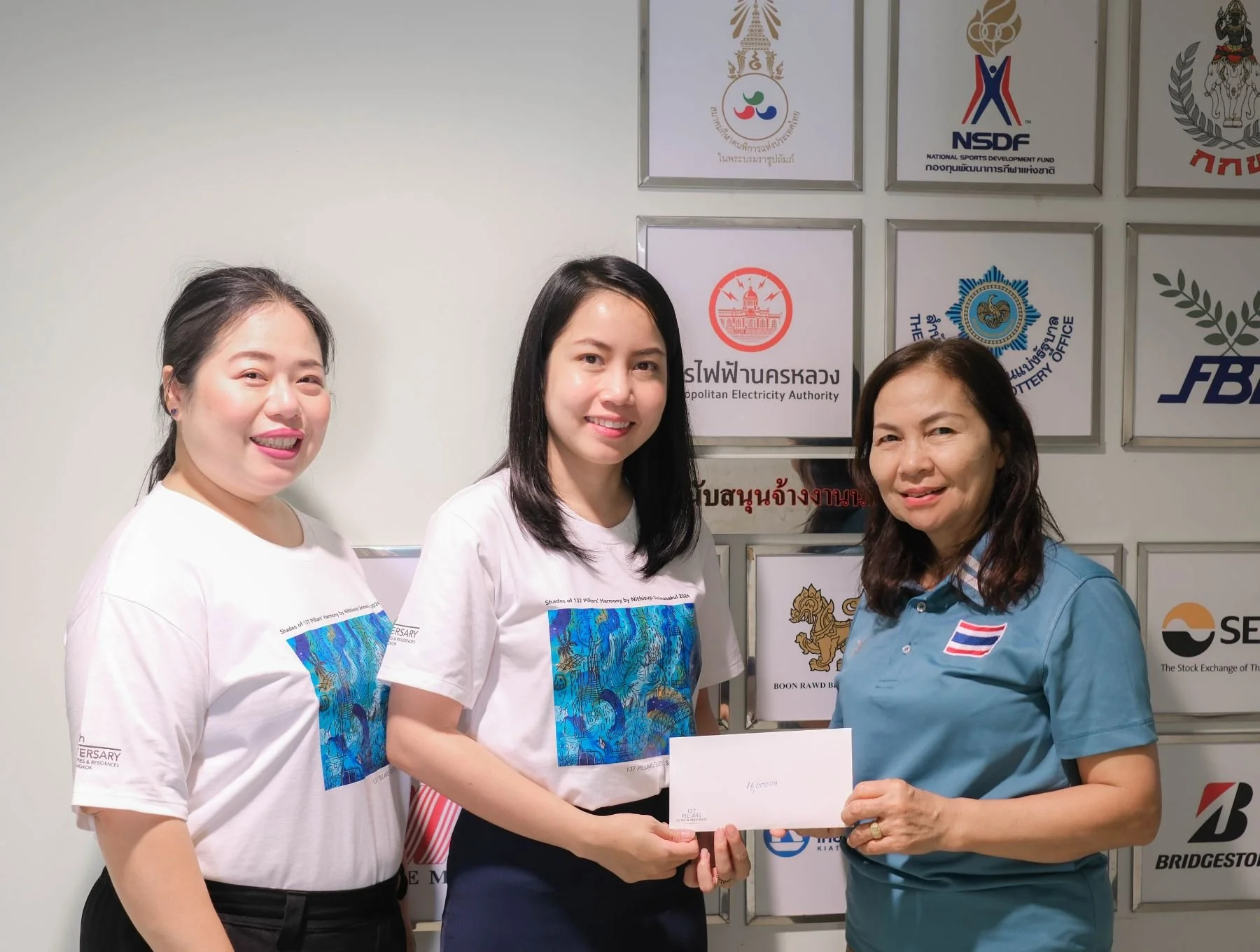
137 Pillars’ Stride & Sustain. Photos by 137 Pillars Bangkok.
Time to Leverage The Manpower That Has Been Consistently Underused
Impact-led tourism is not a value exercise. At its most rigorous, it is a different theory of value creation. It is one that counts community capability, cultural continuity, and local ownership as assets on the balance sheet, not costs to minimize.
It is about recruiting, developing, and trusting people to lead.
The businesses and destinations that have internalized this are building something the market cannot easily replicate: teams who believe in what they do, guests who notice the difference, and communities that have a stake in the outcome rather than a seat at the service counter.
What the webinar made clear is that this does not happen by accident, by aspiration, or by a single passionate GM.
It happens by design, on a structural, financial, and human level.