How Hotels Can Thrive in a Changing Hospitality Landscape
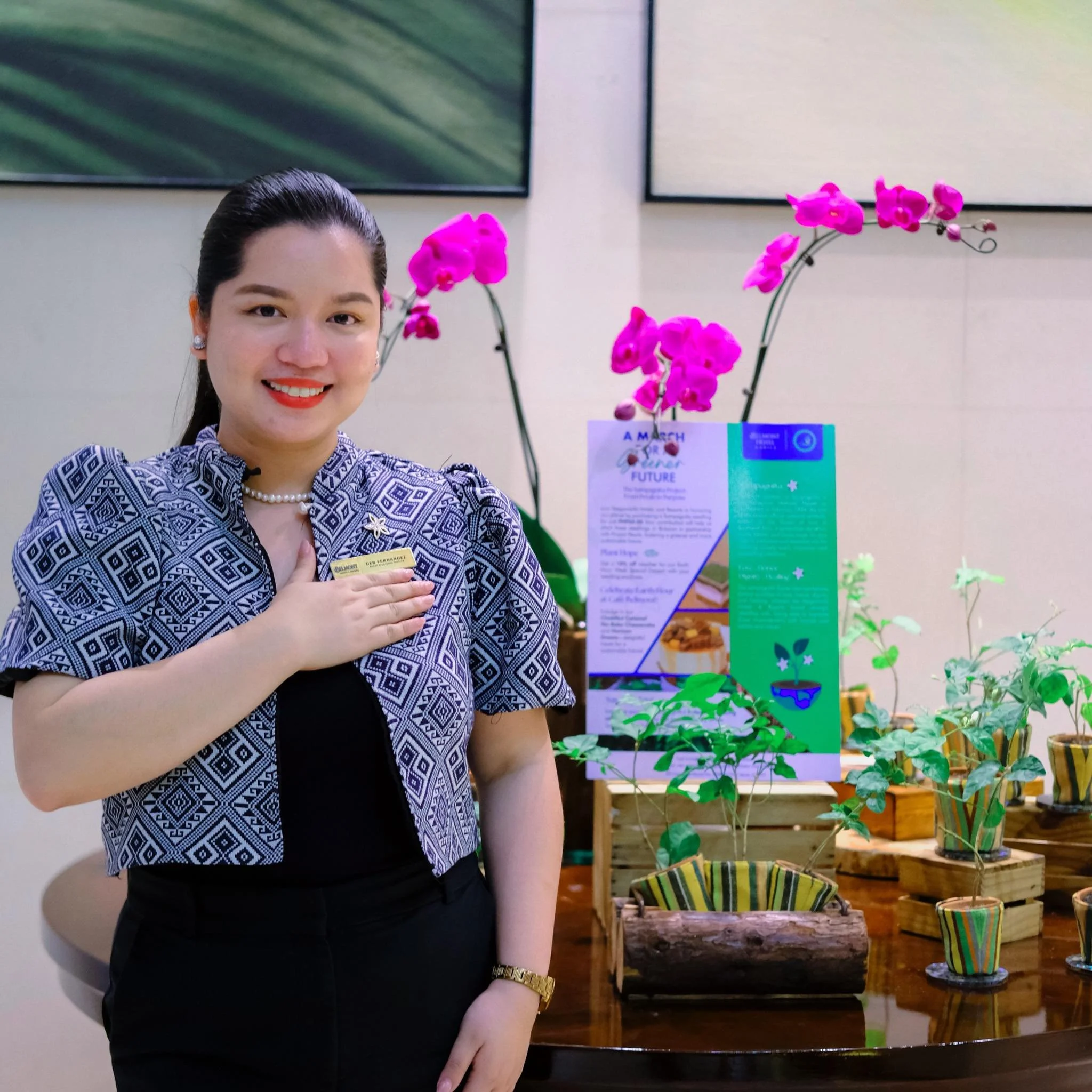
Photo by Megaworld Hotels & Resorts
The rules of hospitality are evolving. High-value guests evaluate properties differently now. Felix Guggenheim, President/CEO of Fuego Hospitality Collective, Inc., notes that the actual hotel experience now outweighs conventional star ratings. Maria Patria Puyat, Group Director of Business Development at Megaworld Hotels & Resorts (MHR), observes that incorporating local culture is essential for modern, social media-centric guests seeking distinctive, authentic experiences.
If your property clings to outdated service models, you risk ceding market share to competitors who anticipate guest needs before arrival.
How fast can you spot market changes, act on them, and adjust your operations?
Department of Tourism Regional Director for the National Capital Region Catherine C. Agustin emphasized recalibration in her keynote. She envisions hotels growing sustainably, competitively, and inclusively. Achieving this vision demands collaboration to develop resilient properties that uplift communities while welcoming the world.
Here are the practical strategies and insights that industry leaders shared at the 3rd annual Philippine Hotel Innovation Summit 2026, held in Manila on March 4, 2026—attended by over 300 of the region’s most influential hospitality leaders, developers, and tech pioneers—to help you put these concepts into action.
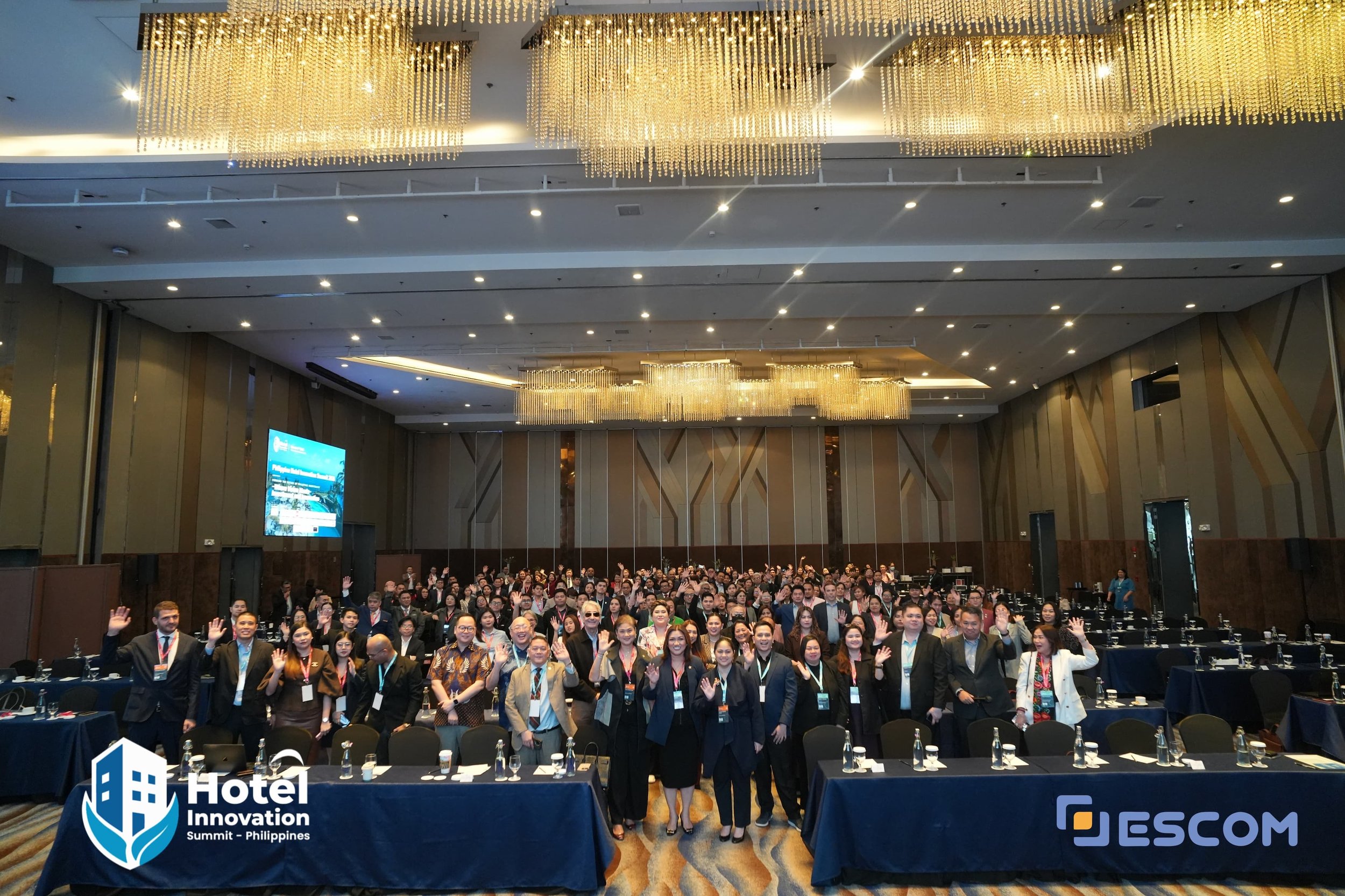
Over 300 of the region’s most influential hospitality leaders, developers, and tech pioneers attended the 3rd Philippine Hotel Innovation Summit 2026 held in Manila on March 4, 2026.
Designing the Foundation: From Blueprint to Brand
Every successful hotel begins with deliberate choices made long before opening. A property's physical design and operational flow determine its long-term profitability and ability to fulfill brand promises.
Strategic Location and Brand Standards
Location remains the cornerstone of any property's success, says Venessa Koo, Vice President for Business Development at The Ascott Limited. Yet, securing prime real estate is only the first step. You must rigorously uphold brand standards for service consistency. Patricia Puyat notes that these standards are what build trust and loyalty.
When renovating an existing property to comply with these standards, conversion challenges often emerge. Felix Guggenheim states such projects frequently demand trade-offs between original architecture and modern operations. The key lies in devising inventive solutions that protect the brand's identity while respecting budgets and balancing a building's heritage with the demands of today’s travelers.
Designing for Efficiency and Sustainability
Sustainability cannot be an afterthought; you must incorporate it directly into the design phase.
Christine Angela Sevilla, Senior Director, Development, South East Asia Pacific at Radisson Hotel Group, emphasizes that early planning for energy efficiency and waste management ensures long-term profitability. High energy consumption in the Philippines—often eating up 8% to 15% of total revenue—makes this a financial necessity, not just an environmental one.
Efficient layouts greatly affect operational costs. Guggenheim highlights that smart hotel design can reduce staffing requirements, thereby lowering salary overhead.
Innovation delivers hospitality-specific solutions. Guggenheim shares that by capturing excess heat from air-conditioning systems to heat swimming pools, hotels reduce waste and lower utility bills.
While technology streamlines operations and cuts costs, speakers stress it should never replace personal interaction with guests. Focus on intentional decisions and prioritize the broader good by collaborating within your local community.

“From Blueprint to Brand: Investing in and Developing International Hotels for Sustainable Growth” panel. From left: Kash Salvador, Director of Development, Accor (moderator); panelists Maria Patria Puyat, Group Director of Business Development, Megaworld Hotels & Resorts (MHR); Felix Guggenheim, President/CEO, Fuego Hospitality Collective, Inc.; Christine Angela Sevilla, Senior Director, Development, South East Asia Pacific, Radisson Hotel Group; and Venessa Koo, Vice President, Business Development, The Ascott Limited.
The Green Mandate: Where Profitability Meets the Planet
Sustainability is essential in hotel operations. Investing in energy efficiency and waste management lowers capital expenditures and utility costs over time.
Shifting from Compliance to Commitment
To make sustainability work, embed it into the company culture. AJ Dela Fuente, AVP for HR Organizational Development at Araneta Group, advises moving beyond compliance to genuine commitment.
"For teams to comprehend why we do things, always tie it to the purpose. Always tie it to the values. It shouldn't be an added task. It should be: It is who we are. It is our culture," Dela Fuente says. He adds a golden rule: "Sustainability should be equal to your brand."
However, Avinash Menon, Cluster General Manager at MHR, cautions against eco-initiatives that harm the guest experience. "We provide more to the guest, not less," he explains. Avoid restricting air conditioning or cutting menu options in the name of sustainability, as this breeds dissatisfaction and accusations of greenwashing.
When implementing changes that affect guests, Dela Fuente recommends a simple communication strategy: "Empathy first, and then explanation second."
For example, if you remove single-use plastic water bottles from rooms, first acknowledge that this change may disrupt guests' routines, then explain how glass water stations prevent millions of plastic bottles from entering the ocean.
Real-World Savings and Closed-Loop Systems
Rennan Reyes, Cluster General Manager at The Ascott Limited, points out that the shift to renewable energy is an opportune move. Currently, 7 of 18 Ascott properties use renewable energy and expect annual savings of about 6 million pesos.
Similarly, Mikel Arriet, General Manager at Anya Resort Tagaytay, shares that the resort expects to save 2 to 3 million pesos annually by moving to 100% renewable energy.
The resort is already achieving a 40% reduction in water consumption per shower through low-flow fixtures and other water conservation initiatives.
Anya Resort Tagaytay partnered with WWF-Philippines on an environmental campaign to implement practical food waste management and sustainable dining across its outlets.
The financial benefits are undeniable. Garry Garcia, Regional Director of Operations and Business Development at Swiss-Belhotel International, sums it up perfectly: "Sustainability does not only make sense, it saves us cents in terms of money. It improves our KPIs and makes us more resilient, especially in volatile times."
Structured Programs and Certifications
A structured program aligns staff and guests. Megaworld’s Me Green Sustainable Development program guides guests through three pillars: planet, people, and purpose, directly benefiting the community. MHR also champions the Sampaguita Project, integrating the preservation of the local flower into the hotel's identity and supporting local communities.
The Ascott’s program, Ascott CARES, is anchored on the Global Sustainable Tourism Council standards and focuses on Community, Alliance, Respect, Environment, and Supply Chain.
If you are beginning your journey, Rennan advises pursuing formal certification. This establishes a clear baseline for sustainable progress.
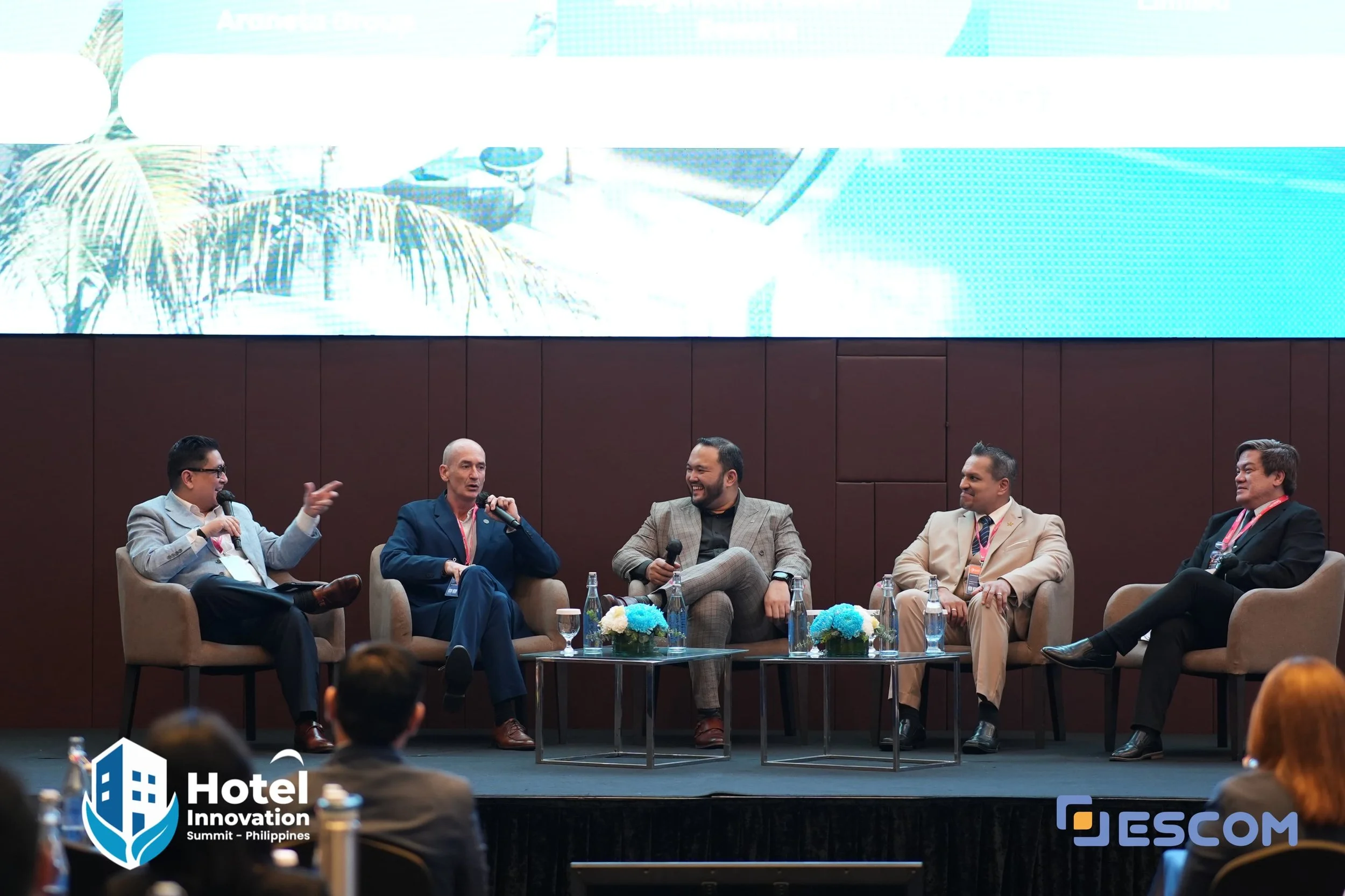
“The Green Mandate: Implementing Sustainable Practices for Resilient Hospitality” panel. From left: Garry Garcia, Regional Director of Operations and Business Development at Swiss-Belhotel International (moderator); panelists: Mikel Arriet, General Manager at Anya Resort Tagaytay; Rennan Reyes, Cluster General Manager at The Ascott Limited; Avinash Menon, Cluster General Manager at Megaworld Hotels & Resorts; and AJ Dela Fuente, AVP HR Organizational Development at Araneta Group.
Reimagining the Guest Experience
Delivering a memorable stay requires hotels to deeply personalize guest experiences and seamlessly integrate smart technology—without losing the human touch. That’s the new baseline for hospitality, and panelists agreed it’s both a necessity and a strategic opportunity.
Deep Personalization Through Data
Justine Anne Vergara, Director of Hotel Operations at Winford Resort & Casino Manila, explained their approach: “Innovation and tradition are not opposing forces. They must coexist by design.” At Winford, systems identify repeat gaming guests by frequency and preferences, but real recognition comes from frontline teams using that data, like having a guest’s favorite drink ready or remembering a guest's birthday.
“Tech should do the behind-the-scenes work like remembering preferences… but service personalization remains human-led,” she said.
Eddie Espiritu, Cluster Finance Manager at AyalaLand Hospitality, added that true competitive advantage is powered by using guest history and spending analytics. “We maximize the spending capacity of each guest in the property while providing personalized service with a pleasure to do this,” he said. By anticipating dietary restrictions, favorite excursions, and preferred spa therapists, luxury hotels curate highly personalized stays.
Seamless Technology Integration
On operational efficiency, Lynette Quinto Ermac, SVP of Sales and Operations at Discovery Hotels & Resorts, shared, “We believe that we need to be trailblazers as an organization… not just as a service-oriented company, but in how we think.”
Her team uses technology—including real-time communication tools that link housekeeping and engineering—to ensure flawless rooms and immediate issue resolution, while also using AI and digital marketing to deepen their understanding of guest needs long before arrival.
Shannen Keisha L. Tan, President of Mezzo Hotel, emphasized how innovation drives value in the competitive midscale market: “We enhance our operational efficiency so we can actually give more value. We are developing dashboards not just for revenue, but to measure our efficiency, employee happiness, and every touchpoint that matters for the guest experience.”
She advocated mastering the basics and using tech to free up staff for the personal touches that make a lasting impact.
Guests today expect recognition, effortless rewards, and anticipation of their preferences. But as Lynette Ermac cautioned, “You do touch points when the experience builds emotional connection and loyalty.… Tech should never replace the moments and connections that are truly memorable.”
The speakers agreed: Technology succeeds in the background, but it’s people who make hospitality exceptional.
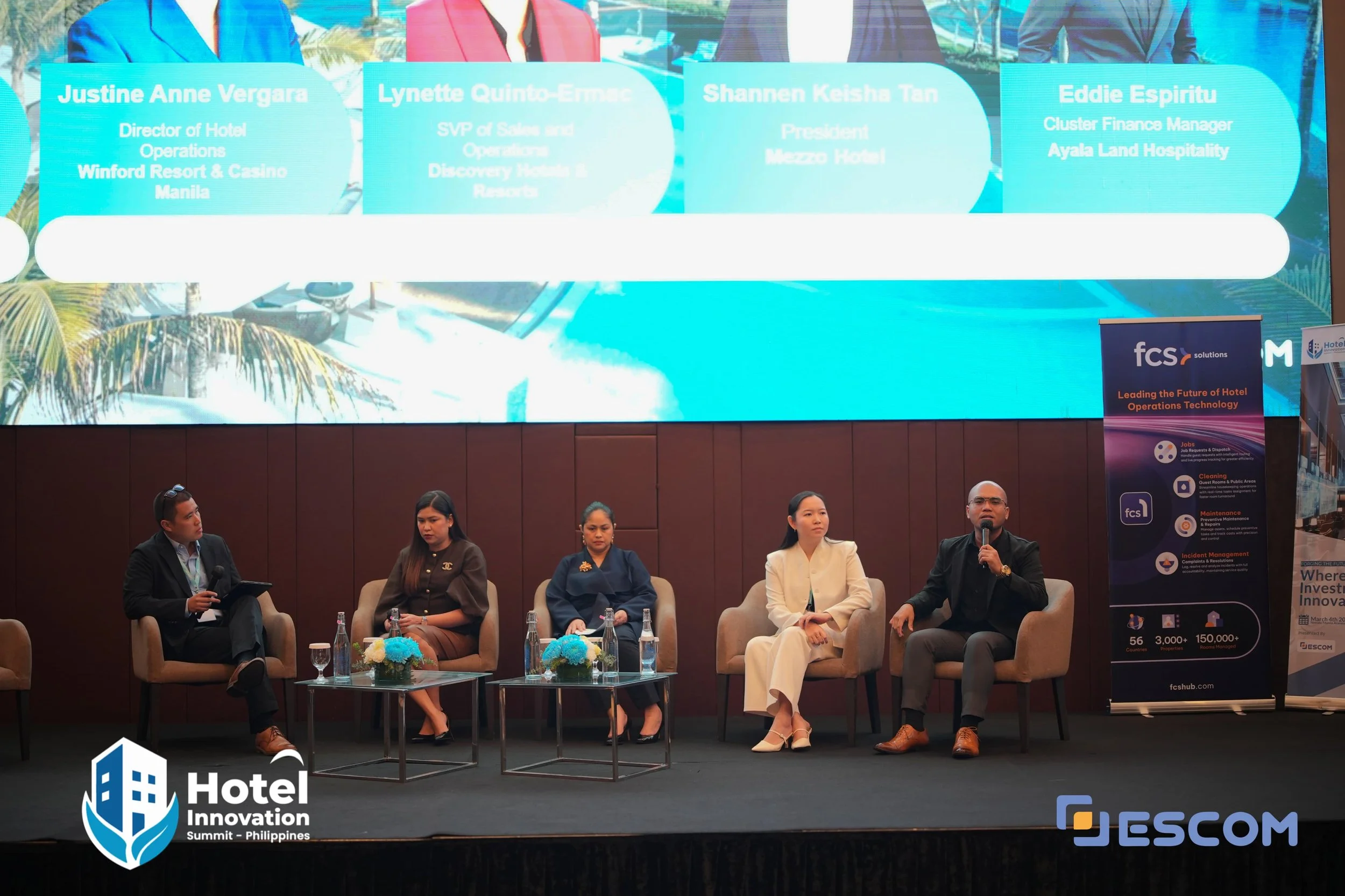
“Hospitality Reimagined: Navigating Disruption, Innovation, and Guest Expectations through Smart Investments, Revenue Strategies, and Next-Gen Hotel Technologies” panel. From left: Adam Domingo, Senior Manager – Hotels, Tourism and Leisure, Leechiu Property Consultants (moderator); panelists: Justine Anne Vergara, Director of Hotel Operations, Winford Resort & Casino Manila; Lynette (Quinto) Ermac, SVP of Sales and Operations, Discovery Hotels & Resorts; Shannen Keisha L. Tan, President, Mezzo Hotel; and Eddie Espiritu, Cluster Finance Manager, AyalaLand Hospitality.
Harnessing Artificial Intelligence for True Competitive Advantage
Every hotel seeks a competitive edge. However, simply purchasing the latest software will not magically make your hotel more profitable. As Chris Legaspi, Chief Commercial Officer at Archipelago International, explains, a true competitive advantage rests on assets that are valuable, rare, inimitable, and non-transferable.
"When you adopt a technology, your neighbor can also adopt the same technology," Legaspi points out. Therefore, the software itself does not provide the advantage. Your leadership and staff create the real advantage by managing and executing decisions with these tools.
Sense, Seize, and Transform
Legaspi applies the Dynamic Capabilities framework to hotel operations. To thrive, your hotel must use AI to do three things:
Sense: Detect market signals, forecast accuracy, and gain real-time visibility into booking trends.
Seize: Act on those signals by responding to pricing, optimizing channels, and personalizing offers.
Transform: Align cross-functional teams and compress the decision cycle.
"The true game is how fast you see change, act on it, and adjust your structure," Legaspi notes. If your hotel's organizational structure remains exactly as it was a decade ago, simply adding an AI tool will yield poor results. You must shift from reactive operations—like manual weekly forecasting—to proactive strategies driven by continuous monitoring.
Overcoming Operational and Leadership Roadblocks
Integrating AI requires a cultural shift driven from the top down. Mark Jerome Castillo, Chief Information Officer at The Bellevue Hotels and Resorts, observes that the most common blockers to innovation come from senior leadership roles holding on to traditional processes.
"Deployment is just a piece of the process," Castillo explains. Leaders must consider budgets, technology maturity, and the overall readiness of the organization.
John David Cruz, Senior Vice President of Operations at Hospitality Innovators, Inc., agrees. He highlights that to prevent expensive AI tools from becoming underutilized, they need to be part of daily work. "The way to really institutionalize these systems is to make it part of your daily processes, from reporting to the way you run your meetings," Cruz advises.
Executives must also prioritize data privacy and governance, ensuring clear boundaries and controls are established before rollout.
Distribution, Vibe Coding, and the DRAG Framework
Jerome Dela Cruz, Area Director APAC at HyperGuest, explains that in distribution and connectivity, AI is being used to normalize huge volumes of data from various channel managers and property management systems. He also notes the emergence of vibe coding, a no-code approach that allows hoteliers to quickly create websites, apps, and loyalty games using everyday language.
For daily staff productivity, Dela Cruz recommends the DRAG framework to understand what tasks to hand off to AI:
Drafting: Quickly generating emails, responses, and standard operating procedures
Research: Gathering market intelligence and summarizing trends
Analysis: Finding patterns in dashboard data to support human decisions
Graph work: Filling in repetitive data gaps in spreadsheets
But importantly, Dela Cruz warns that generative AI is not designed for perfect accuracy. Human intervention must remain in the middle to extract real value.
Protecting Brand Authenticity
While AI excels at math and pattern recognition, it cannot understand purpose or meaning. Loven Ramos, Director of Brand and Marketing at The Ascott Limited, approaches AI as a highly capable assistant rather than a leader.
"I let AI handle the math while we handle the heart," Ramos says. AI can analyze behavior, determine converting keywords, and suggest optimal posting times. However, it takes human judgment to know what feels right for the brand culture and the guest. "Algorithms can recognize patterns, yes, but never purpose." By keeping humans in control of the final output, hotels can sharpen their marketing performance without flattening their unique brand authenticity.
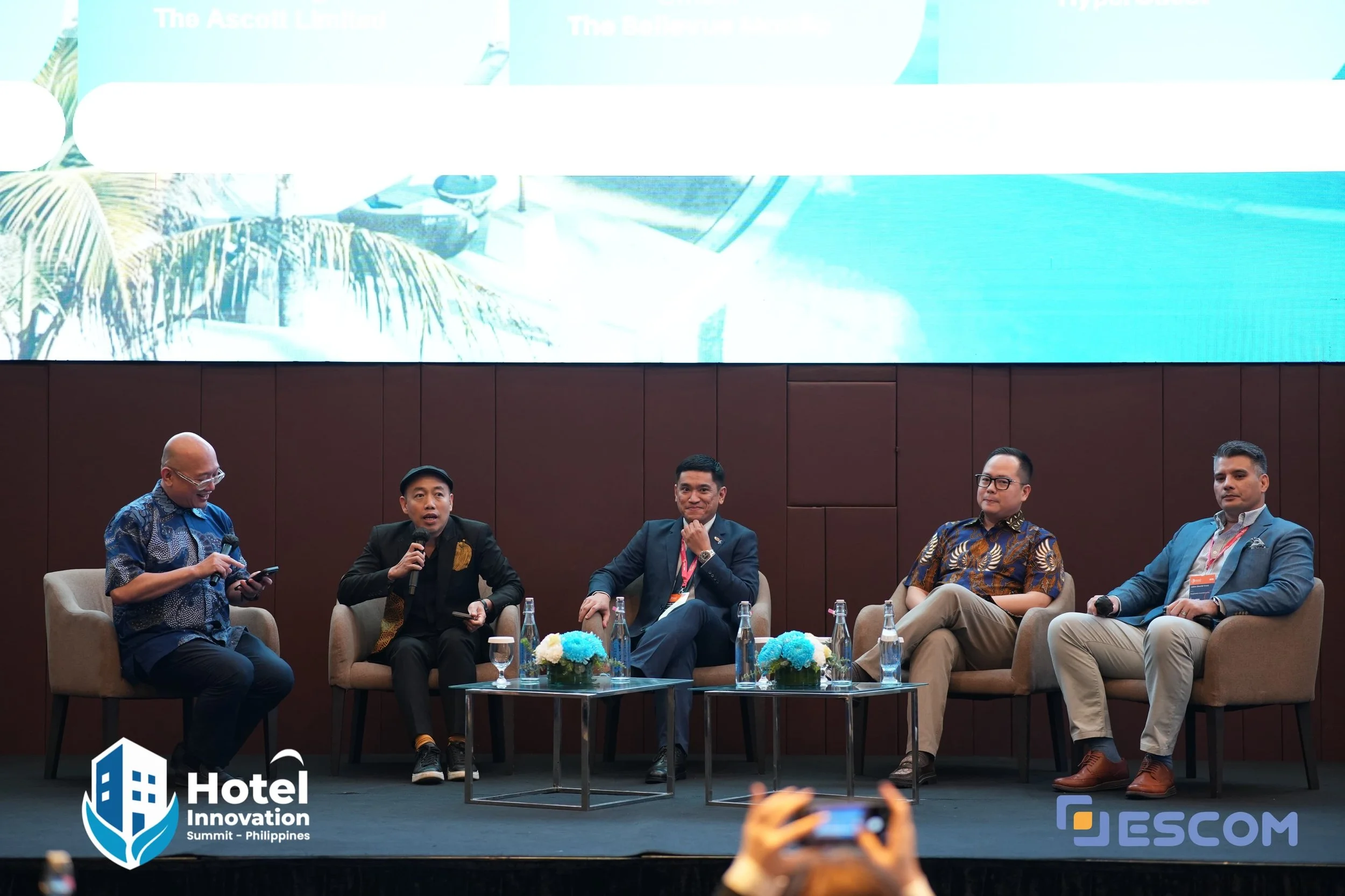
“The AI Era in Hospitality: Enhancing Competitiveness and Operational Intelligence” panel. From left: Chris Legaspi, Chief Commercial Officer at Archipelago International (moderator); panelists: Loven Ramos, Director of Brand and Marketing at The Ascott Limited; Mark Jerome Castillo, Chief Information Officer at The Bellevue Hotels and Resorts; Jerome Dela Cruz, Area Director APAC at HyperGuest; and John David Cruz, Senior Vice President – Operation at Hospitality Innovators, Inc.
Actionable Strategies for Hotel Leaders
Adaptation is not optional. The insights from the summit point to a clear blueprint for modern hospitality executives.
Review your layouts.
Look at your physical space and staff workflows. Can you centralize service stations to reduce steps and maximize staffing requirements?Tie sustainability to values.
Stop treating sustainability initiatives as a checklist. Make it part of your brand identity and train your team to explain changes to guests using the "empathy first" approach.Treat AI as an intern, as Chris Legaspi suggested.
Use AI for deep research, data sorting (the DRAG framework), and stimulating discussions. Never allow it to make final, unmonitored decisions regarding your brand voice or guest service.Leverage AI for forecasting.
Do not just use AI for chatbots. Implement predictive analytics in your revenue management systems to anticipate market shifts and adjust pricing in real-time.
For more insights into how this ties to your bottom line, explore these hotel direct booking strategies.Automate the mundane.
Use integrated software to handle backend communication (like housekeeping to engineering), so your frontline staff can focus entirely on creating memorable human interactions with guests.
The hotel industry will only become more competitive. Equip your teams with the right tools, demand strong leadership adoption, and always keep the guest experience at the heart of your operations.
TL;DR: The Summit at a Glance
Design and operations: Efficient physical layouts lower staffing costs by streamlining workflows. The actual hotel experience now outweighs traditional star ratings.
Sustainability: Treat sustainability-led initiatives as a core brand value, not just a marketing tactic. Frame eco-friendly changes to guests with empathy first.
Guest experience: Use data to personalize stays and integrate technology to remove friction, allowing staff to deliver high-touch service.
AI integration: AI is your new strategic intern. Use it for automated customer service, predictive analytics, and sensing market shifts to gain a true competitive advantage.

![[Exclusive] Sustainable Tourism Impact Fund: How Patient Capital Unlocks Investments Conventional Financing Overlooks](https://images.squarespace-cdn.com/content/v1/63f6cdbdc249663d72082ecd/1786501208510-5198Q2DTS0U08ZD8FRMS/Local%2BAlike%2B-%2B57.png)