Direct Bookings Done Right: A Sustainable Strategy for Hoteliers

Image Credit: pondsaksitphotos via Canva
In 2025, 69% of hotel bookings in ASEAN were made through online travel agencies (OTAs). That means, when you rely primarily on third-party booking channels, you're giving away up to 30% of your revenue on every booking. The scale of lost profit is staggering. It’s time to take back control.
Hospitality is about creating meaningful connections—a relationship built on trust and shared value. But for years, OTAs have turned the guest-hotel relationship into a transaction focused only on price and availability instead of highlighting what makes your property special.
OTAs can help you reach more guests, but this means paying high commissions and losing your most valuable asset: your direct connection with your guests.
Relying on OTAs and other third-party channels makes it harder to achieve real profitability and keep your property's unique story alive. To regain control and build a commercially resilient business, focus on strengthening your direct relationships with guests. Reclaim your narrative, protect your margins and brand identity, and make sure your hotel is at the center of every booking, not the intermediaries.
Last week, we brought together industry leaders during the Asia Sustainable Travel (AST) Webinar, “Own the Guest, Own the Revenue: Advanced Strategies for Direct Bookings.” Speakers included Blessy Townes, Vice President & Head of Digital Marketing and Branding at Discovery Hospitality; Ivan Cintado, the APAC Director for The Hotels Network, now a Lighthouse company; Madhavan “Maddy” Nair, Founder of Hoffero; and Eduard Ruppel, Founder of Leppur Marketing and a hotel SEO expert.
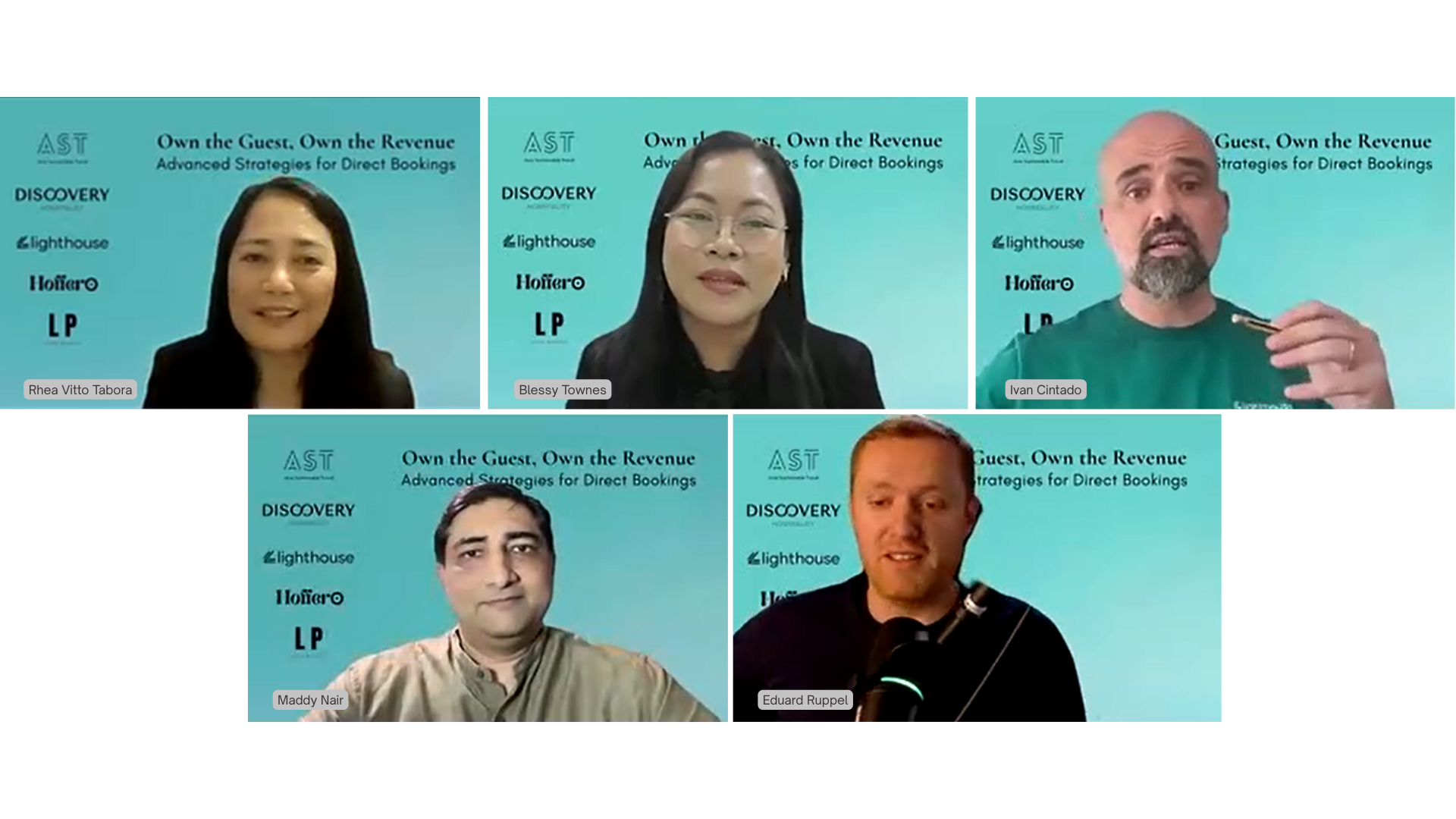
We examined practical, advanced strategies to build a more sustainable, long-term approach to driving direct bookings that strengthen your hotel’s future.
This isn't about withdrawing from working with OTAs. It's about having a profitable direct channel to tell your story and strengthen guest relationships—on your terms.
Here is a comprehensive look at the strategies, tactics, and mindset shifts our speakers recommend—and how to avoid common pitfalls.
A Mindset Shift: Marketing as a Revenue and Relationship Engine
If you want to drive meaningful, lasting growth, start by rethinking how you view marketing. Too often, marketing is seen as a cost center—a line item to be cut when budgets are tight.
Change how you view marketing. It is your key tool for generating revenue, building guest relationships, and protecting what makes your property unique in a crowded market.
Blessy Townes, a leader in hospitality digital marketing, put it perfectly: "Book Direct is not just a campaign. It's a long-term commitment."
This strategy is not something you can switch on and off when occupancy changes. It requires ongoing investment, a dedicated team, and a belief that building your brand directly with each guest is the best way to create a strong, resilient business.
Blessy shared a powerful example of this mindset in action. By implementing a group-wide, long-term focus on direct channels, Discovery Hospitality achieved 60% direct bookings across the group and an impressive 83% for its property, Discovery Boracay.
For context, the industry average for direct bookings in the Philippines typically hovers around 32.5% (although this figure includes agents and other sources, according to Mordor Intelligence’s report), and 31% in ASEAN. This means Discovery’s results are double the national and regional benchmarks.
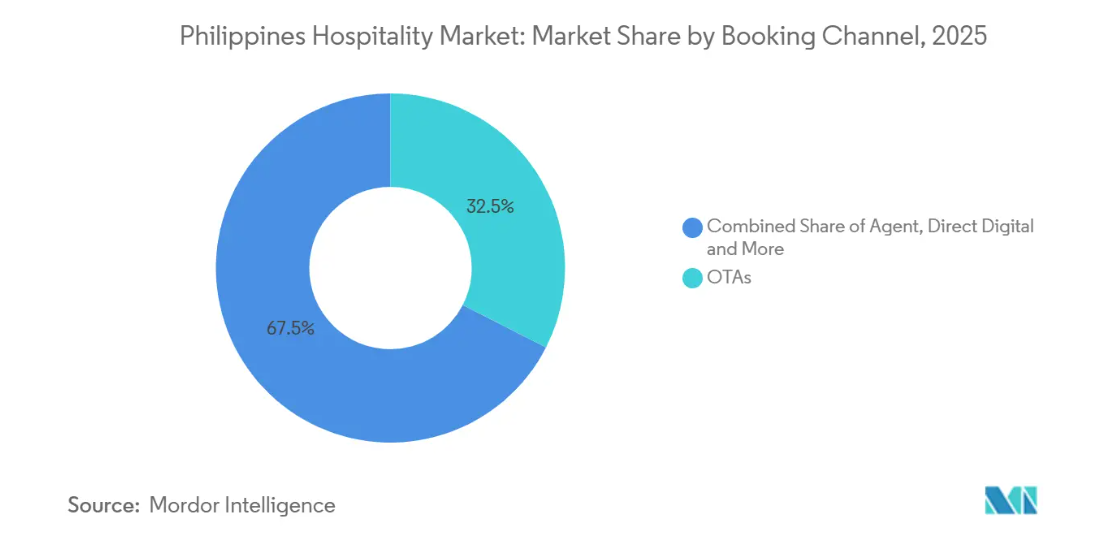
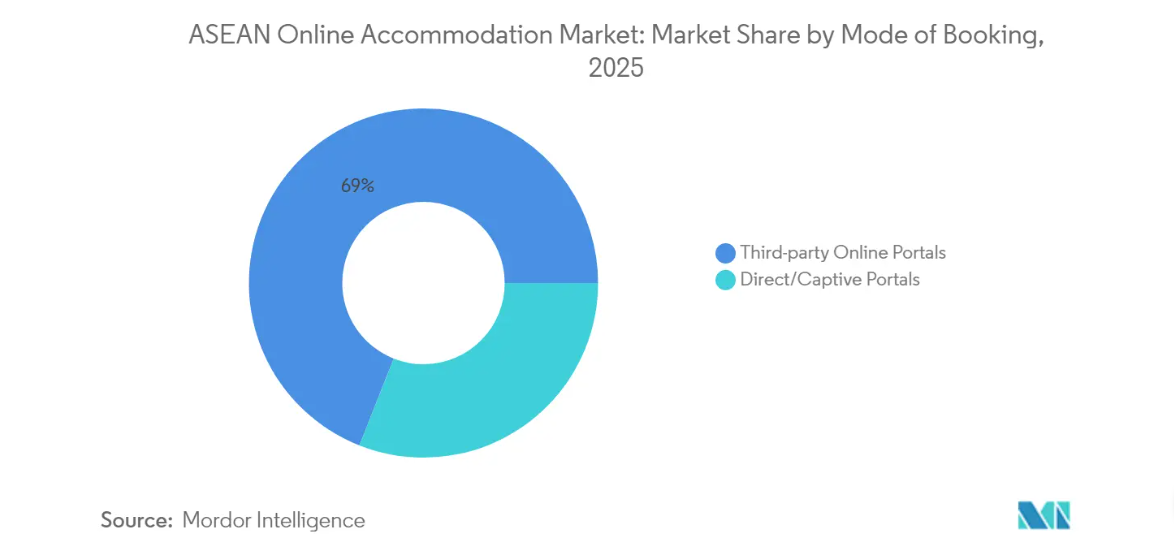
By seeing what’s possible above the standard, you can set a realistic yet ambitious target for your own business and measure progress toward becoming a leader in direct guest relationships.
"We didn't achieve this by simply undercutting OTAs on price," Blessy explained. "We did it by building a brand that guests trust and actively seek out." When you earn guest trust, you give people a real reason to choose you—again and again.


Discovery Boracay achieves 83% direct bookings, more than doubling the industry average of 32.5% in the Philippines through a guest-focused approach and long-term focus on direct channels. Photos by Discovery Boracay.
Your Website is Your Most Important Lobby
These days, guests form their first impression of your hotel long before they even arrive. They judge your brand by how your website looks, feels, and works. This online welcome shapes everything that comes next.
Eduard Ruppel put it simply: "Your digital lobby is even more important than your real lobby."
If your website is slow, confusing, missing important information, or has broken links, guests will feel frustrated and lose trust. It’s like walking into a messy lobby with no one to greet them. They will leave and often book through an OTA instead, where the process is easier but your brand is less visible.
Optimizing the Digital Guest Journey
Your website should be more than just a digital brochure. It needs to be your best and most effective tool for turning visitors into bookings. Guests expect a smooth online experience from start to finish. Eduard recommended taking a closer look at these areas:
1. Flawless functionality
"Check your buttons," Eduard suggested. Are your booking buttons working on every device and browser? It sounds simple, yet many hotel websites have broken links or "Book Now" buttons that lead to error pages. Even a single broken “Book Now” button is a guaranteed loss of revenue.
2. Consistent and unified information
Ensure the information on your website—from room descriptions to amenities—is perfectly aligned with what guests see on your Google Business Profile, social media, and OTA listings.
Accuracy and clarity build trust. If your OTA listing says "free breakfast" but your website doesn't mention it, the guest will book via the OTA just to be safe.
3. The "Stay-on-Site" experience
Make booking on your website easy and smooth, so it feels like a natural part of your brand. When someone clicks to book, keep them on your website with a booking engine that matches your website’s look and feel. This builds trust and simplifies the process, helping reduce abandoned bookings.
Think Like an OTA, Act Like a Hotelier
You already have the insights you need to serve your guests better than any third party ever could. OTAs use data to personalize offers and upsells, but you know your guests on a deeper level—their preferences, history with your property, and what keeps them coming back. If you’re not putting this data to work for your business, you’re missing out on valuable opportunities.
Ivan Cintado, a revenue management and data expert, framed it perfectly: "Think like an OTA and live like a hotel."
This means combining the efficiency of data-driven personalization with the warm hospitality only you can provide.
Personalization is more than just adding a guest's name to an email. It’s about understanding what they want and offering the right things at the right time.
Ivan shared a strong example of a predictive model his team created. The algorithm spots users on the booking engine who seem unlikely to book, such as those who hesitate on the payment page or keep checking dates without making a reservation.
Instead of offering a blanket 10% discount to everyone—which dilutes your ADR (Average Daily Rate)—the system offers a small, targeted incentive only to these specific users.
"Personalize offers to avoid giving discounts across the board," Ivan stressed. Protect your ADR by targeting incentives only to those guests who need an extra nudge. This approach rewards price-sensitive bookers while keeping your rates intact for those already eager to book.


An example of predictive personalization, which Ivan Cintado shared during the AST Webinar
Content That Connects: Video is Your New Superpower
In a crowded digital landscape, authentic storytelling captures attention. Maddy Nair champions the use of video, not just as a promotional tool but as a core part of the booking experience.
Photos of empty rooms are not enough to get guests excited about your property. Today’s travelers want to experience your story before they book. Use video to show what makes your hotel special. Let them see the glow of sunrise on your terraces, hear the buzz in your public spaces, and feel the atmosphere that makes your hotel more than just another place to stay on a booking site.
Making Your Content “Shoppable”
Maddy invited the attendees to embrace the power of "shoppable video"—an innovation that turns inspiration into action, seamlessly.
Imagine a potential guest watching a video of your property and spots a couple enjoying a private dinner on the beach. Instead of just dreaming, they see a discreet prompt inviting them to book that exact "Private Beach Dinner Experience" right then and there.
Shoppable videos let guests act on inspiration right away. Instead of just watching, they can book unique experiences or special packages as soon as something catches their eye. This makes booking easier, helps travelers move quickly from interest to reservation, and keeps your direct channel at the center of their decision-making.


Hoffero turns hotels’ reels into interactive shoppable experiences. Images from Hoffero.
Building Your Direct Booking Marketing Engine
Direct bookings can deliver 9–20% higher profit margins than those secured through OTAs, and hotels have achieved a 15–20% increase in direct bookings after implementing targeted 'Book Direct' campaigns.
But strong results require a clear strategy, careful execution, and a focus on channels you own and control. Start with these basics:
Audit your channels.
Analyze where your website traffic and direct bookings come from. Find out which platforms—social media, email, or referrals—give you the best ROI. Identify gaps and consider using new or less-used channels to find more opportunities.
Invest in your team.
Equip your staff with digital marketing and revenue management skills. Training in PPC, social media, content marketing, and SEO ensures your team can adapt quickly, control messaging, and respond to market shifts in real time.
Blessy suggests taking control of your digital marketing so you fully control your brand message and media budget. This way, you can quickly adjust your campaigns as the market changes and keep your direct channel effective.
Explore strategic partnerships.
If you want to reach overseas or niche markets, collaborate with marketing partners who send traffic straight to your website, not to third-party platforms. Choose partners who let you keep guest data so you can build long-term value with every booking.
The Foundational Role of SEO
Eduard reminded the audience of the importance of Search Engine Optimization (SEO). While paid ads offer quick results, SEO is the long game that builds sustainable traffic.
Ranking organically for relevant keywords is the most cost-effective way to attract travelers who are ready to book. But more than keywords and technical details, it’s also about making your website easy to use on any device and creating helpful content that inspires guests to pick your hotel.
Eduard named "SEO" as a key marketing pillar. This involves optimizing your website's load speed, ensuring it is mobile-friendly, creating valuable content (such as blog posts about local attractions), and keeping your Google Business Profile up to date. A strong SEO helps you rely less on paid ads over time.
Giving Guests a Compelling Reason to Book Direct
Why would a guest book on your website if they are used to OTAs? Maddy suggests giving them a clear, compelling reason—something unique that only you can deliver. If you don’t provide a strong incentive, guests will choose convenience, and you’ll lose both revenue and the guest relationship to a third party.
But focus on value, not just price.
Don’t make your direct offer just another discount. Discounts can turn your website into a price battleground, making it harder to show what truly sets your property apart. Instead, focus on perks guests can’t get anywhere else and highlight experiences that reinforce your brand—like complimentary upgrades (when available), a welcome drink or local snack, or exclusive packages. These incentives give guests a real reason to book directly with you and help build loyalty that OTAs can’t match.
A Note on Operational Feasibility
Although "flexible check-in/check-out" is a popular perk, Eduard raised a valid operational concern. In busy hotels, promising early check-in or late check-out can cause housekeeping nightmares and affect the next guest's stay. Only offer perks you can deliver every time, and choose ones that make guests happy without causing issues for your team.
Blessy added that your "Best offer should be available on the web year-round." Trust is everything. The moment a guest finds a better deal on an OTA, you lose more than revenue—you lose their trust and future business. Keep your direct offer strong, consistent, and transparent to earn loyalty and steady bookings.
Where and How to Start
The wealth of strategies discussed can feel overwhelming. But as Eduard wisely advised, the key is to "analyze your website and start small with baby steps."
Here is a practical, step-by-step plan based on our speakers' advice:
1. Audit your digital lobby.
Look at your website as if you were a guest. Test the booking process on all devices and browsers. Find and fix any functionality issues. Make sure all buttons work. Often, lost revenue starts with just one broken step in the booking process.
2. Define and communicate direct booking value.
Create a special, meaningful incentive for direct bookings—an offer that reflects your brand and can always be delivered. Put unique experiences and authentic perks front and center on your website.
3. Leverage your guest data.
Use analytics to spot booking patterns and points where guests hesitate to book. Apply predictive insights, as Ivan shared, to encourage the right guests at the right time with tailored offers. This helps protect your rate and convert more visitors.
4. Make video content bookable.
Repurpose your best video content into ‘shoppable’ or bookable video experiences, as Maddy advocates. Let guests move easily from inspiration to reservation, allowing them to book what they see in your videos, right on your site. This turns your brand storytelling into direct bookings.
5. Stay curious and invest in training.
Give your in-house team the tools and skills to control digital marketing and direct booking platforms. The panel emphasized agility as key—when your staff understands the full guest journey, you get ahead of trends, pivot fast, and protect your margins.
Reclaiming your direct bookings takes time and steady effort. This isn’t about quick wins. It means changing your mindset, committing to technology, and truly understanding your guest.
You have the power to own the guest and own the revenue. Now is the time to start.
Here’s a 30-day challenge: Pick the one “baby step” from this article that feels most achievable for your hotel—whether it’s fixing your booking flow, setting up a new direct booking incentive, or making your video content shoppable—and commit to taking concrete action within the next month. Small steps, taken now, will unlock momentum and bring you closer to owning your direct bookings.
Author’s note
You might wonder, “Why is direct booking important to sustainability?”
The answer is that direct bookings affect your bottom line, your brand, and long-term guest loyalty.
Profit is one of the three pillars of sustainability. When you focus on direct bookings, you’re not just improving your margins—you’re building a strong, guest-focused business that can last for years. Keeping more revenue lets you invest in sustainability-led practices, strengthening your brand and attracting eco-conscious travelers who want to support businesses that share their values.
Direct bookings create a positive cycle: better financial health lets you invest more in sustainability, which improves your brand and brings in even more direct bookings.