Why Is Water Stewardship a Business Continuity Strategy?


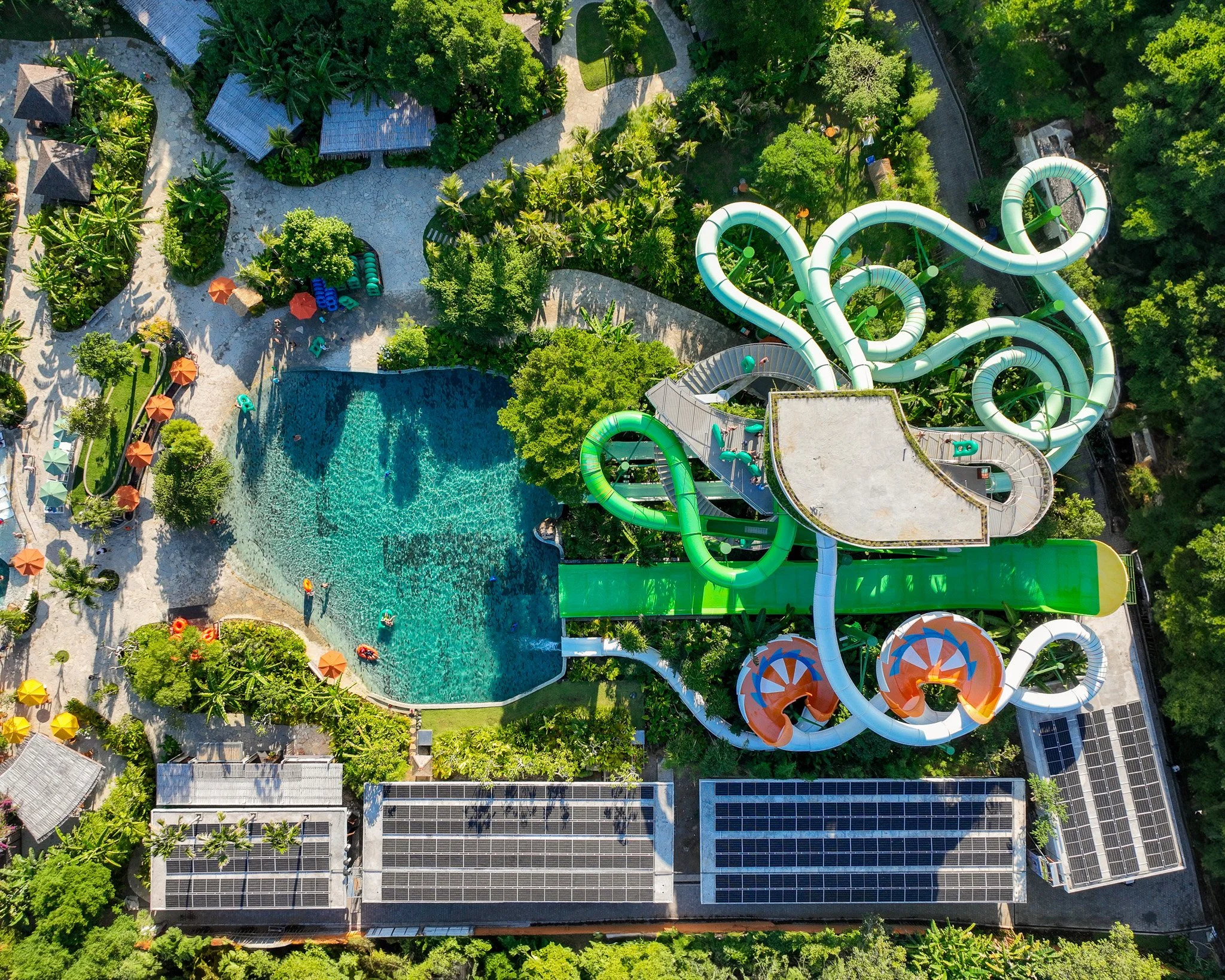
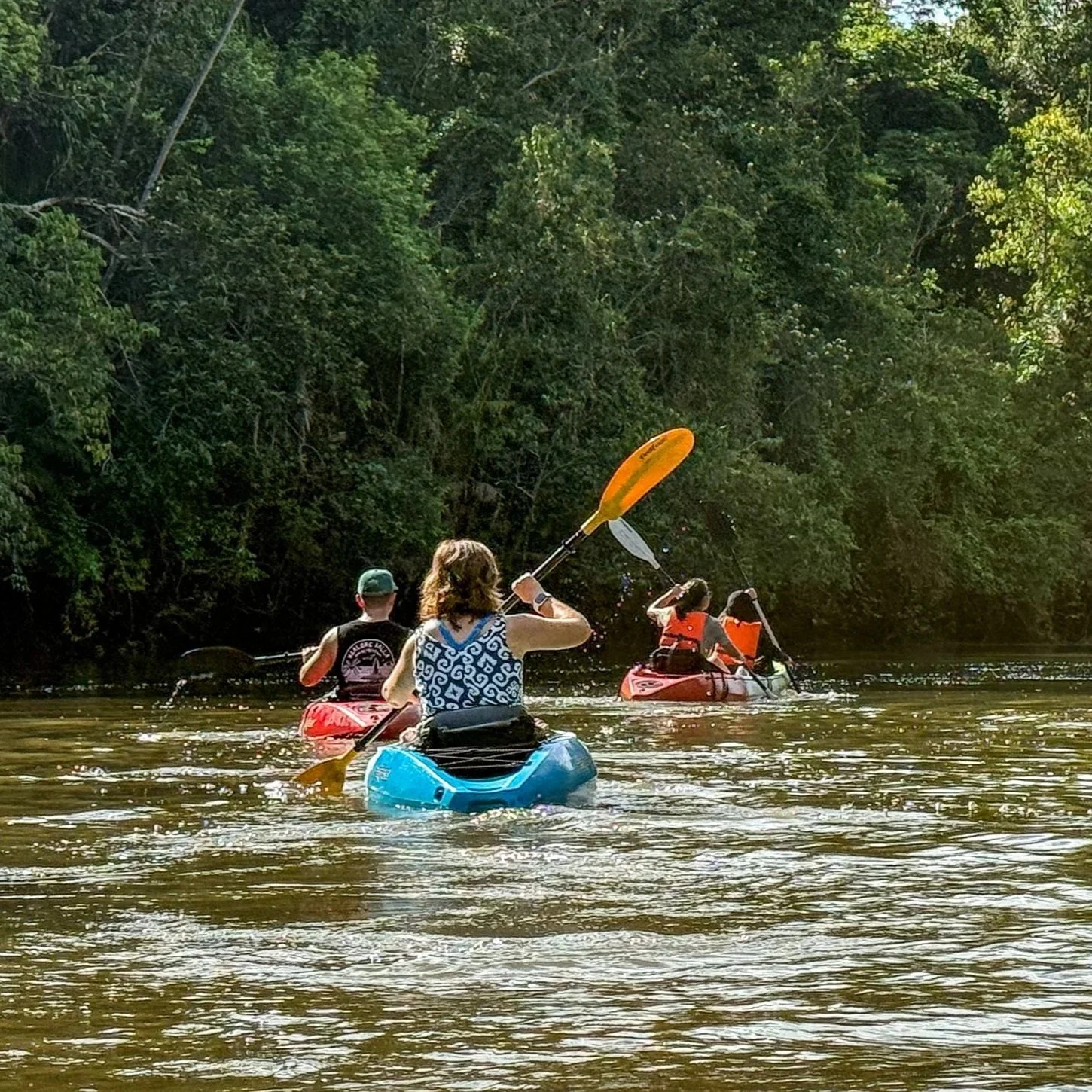
From left: Pimalai Resort & Spa and Waterbom Bali. Photos by brands.
For tourism businesses in water-stressed destinations, the cost of a lack of water stewardship does not just appear on a utility bill. It shows up across operations: emergency supply costs, service failures, room closures, staff strain, guest dissatisfaction, regulatory exposure, and damaged trust with the destination and community on which the business depends.
That was the central message of the AST Webinar, “Is Your Brand Treating Water as a Risk or Strategic Asset?” Featuring Charintip “Kade” Tiyaphorn, Director of Commercial & Finance at Pimalai Resort & Spa, and Syifa Muntaha, Eco Champion Coordinator at Waterbom Bali, the discussion moved beyond the familiar call to simply “save water.”
Instead, the discussion progressed to answer more future-forward commercial questions: what happens when water becomes unreliable, and what changes when a tourism business treats it as strategic infrastructure rather than an environmental add-on?
The obvious answers may be that every property needs to build reservoirs or install sophisticated treatment systems. However, the conversation highlighted that water stewardship begins when business leaders recognize water supply reliability as essential to and inseparable from guest experience, operating capacity and destination legitimacy.
Water Risk Is Operational Risk
Tourism relies heavily on water in many of the places where supply is most seasonal, contested and vulnerable: islands, coastal resorts and drought-prone destinations. Hotels and attractions require water across rooms, pools, kitchens, spas, laundries, landscaping and staff operations. Yet the underlying supply may depend on variable rainfall, stressed groundwater reserves or public infrastructure already under pressure.
Located on Koh Lanta, Thailand, Pimalai Resort & Spa, a member of Small Luxury Hotels of the World (SLH), sees water security as inseparable from business continuity. Kade described the realities facing remote island properties. A supply interruption can mean emergency water trucking, disruption to kitchens and housekeeping, a compromised guest experience, or room closures during periods of acute shortage.
“We have to care about the water because it’s very important for the continuity of our business,” she said.
Her point carries a wider implication for the sector. Water risk should not only belong in sustainability reports. It belongs in operational planning, capital allocation, finance, engineering, risk registers and asset strategy.
The central question is no longer simply, “What will this system cost?” It is: “What is the cost of being unable to operate as intended when supply fails?”


Photos by Pimalai Resort & Spa
Measure ROI Beyond Immediate Monetary Savings
Pimalai’s water system offers a powerful example of what long-term resilience can look like. Since 2001, the resort has operated a six-stage closed-loop system that captures rainwater and groundwater, stores water in on-site reservoirs, treats it for resort operations, then treats wastewater for irrigation, and discharges it to the ground.
Over 25 years, the system is estimated to have delivered a saving of around THB 50 million (or USD 1.5 million) in value.
The decision to build this system came from the founder’s experience running a remote farm without dependable electricity or water, as well as from a practical conviction that without water, nothing on the land can function. For a family-owned business with a multi-generational outlook, the investment was not primarily about creating an exit-ready return. It was about ensuring the resort could keep operating when supply conditions become unstable.
The lesson here is that hospitality leaders do not need to abandon return-on-investment discipline when assessing water infrastructure. They need to apply a more complete definition of return.
A resilience-adjusted investment case should account for avoided emergency water costs, reduced revenue risk, lower exposure to supply volatility, protection of the guest experience, reduced likelihood of expensive last-minute capital expenditure, and stronger preparedness for changing regulation. It should also consider the value of maintaining trust with local communities, authorities and partners when water becomes scarce.
The question is not whether infrastructure must justify its cost. It is whether the business is measuring the full cost of vulnerability.


Photos by Pimalai Resort & Spa
Water Efficiency Without Guest Sacrifice
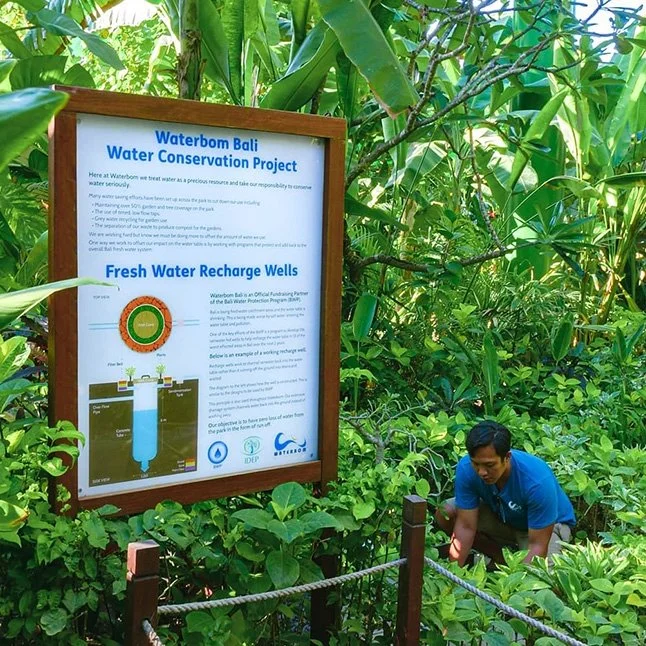
Waterbom Bali demonstrates the same principle of water stewardship through a very different operating model. Water is not a back-of-house operational input. It is central to the product.
That makes Waterbom’s performance particularly noteworthy. According to its 2025 Sustainability Impact Report, between 2019 and 2025, it reduced groundwater consumption from more than 160,000 cubic meters to under 115,000 cubic meters while welcoming more visitors. Its water-use intensity per guest fell from approximately 336 liters to 193 liters, a reduction of nearly 43 percent.
Waterbom did not ask guests to accept less enjoyable pools, rides or slides. It focused instead on making the systems behind the experience more efficient through filtration, reuse and more disciplined water management.
“Our visitors, of course, do not notice any difference in their experience,” Syifa said. “But the environment definitely does.”
Many skeptics may think sustainability is often a compromise on comfort to reduce the use of resources.
However, as demonstrated at Waterbom, well-designed resource efficiency should not compromise a premium guest experience. Instead, it protects both the resource and the business by reducing exposure to future scarcity, cost volatility and operational disruption.


Photos by Waterbom Bali.
But Efficiency Is Not the Whole Story
There is, however, an important distinction between becoming more efficient and becoming sustainable at the destination level. UN Tourism’s 2024 guidance on water management in tourism distinguishes between business-level action and destination-scale management, recognizing that water outcomes depend on wider municipal, regional and catchment conditions.
A business can reduce water use per guest within its walls but a destination’s total consumption can rise if visitor growth outpaces its efficiency gains. That does not negate operational progress. It means performance must be assessed through two lenses: water-use intensity and absolute water use. UN Tourism identifies measures ranging from per-tourist water use to water saving, recycled wastewater and water quality, while noting that monitoring water management remains a major challenge for water-scarce destinations.
→ Check out UN Tourism’s water management resources.
Intensity metrics reveal whether a business is using less water for each guest or visitor. Absolute-use metrics reveal the total volume of water a business withdraws, consumes, discharges or reuses over a reporting period.
Both matter, particularly in destinations where residents, ecosystems and tourism businesses depend on the same limited supply.
This is why self-sufficiency should not be confused with stewardship. A property that reduces dependence on outside supply may become more resilient, but a more community-centric goal should be whether its water sourcing, reuse, recharge and discharge practices contribute to the resilience of the wider destination. The Alliance for Water Stewardship Standard frames responsible water stewardship around shared water challenges, including responsible water balance, water quality, good water governance, healthy water-related ecosystems, and safe water, sanitation and hygiene.
For tourism and hospitality businesses, a social license to operate may require transparent and open communications with your stakeholders. It is also earned through the practical choices a company makes when resources are constrained. In water-stressed places, communities will judge whether tourism and hospitality is competing for freshwater or helping to preserve it.
The 2021 report, Water Equity in Tourism: A Human Right, A Global Responsibility, draws on case studies in Bali, The Gambia, Zanzibar, Goa and Kerala and finds that poorly regulated tourism and weak water governance can undermine access to water and sanitation, contributing to social conflict.
Optimize The Value of Existing Assets
Not every water improvement requires a major new capital project. One of Waterbom’s most significant gains came from using existing infrastructure more effectively.
Its recycled wastewater utilization increased from 2,769 cubic meters in 2024 to 18,855 cubic meters in 2025, almost seven times higher in one year. The improvement followed an expansion and fuller use of its sewage treatment capacity, enabling treated water from toilets and restaurants to be used for landscape irrigation across a site where 55 percent of the 5.1-hectare property is green space.
The outcome should not be treated as a repeatable annual benchmark. Syifa made clear that the rise reflected a one-time major opportunity to improve utilization rather than an expectation of a year-on-year sevenfold growth.
Nevertheless, the lesson is widely applicable. Before purchasing new technology, business leaders should ask whether they are fully using what they already own. Underused treatment capacity, leaks, inadequate sub-metering, inefficient irrigation and weak operating controls may represent material opportunities hiding in plain sight.
So, the first investment is often not infrastructure. It is visibility.


Photos by Waterbom Bali
Measure Before You Market
The speakers also advocated for exercising transparency related to sustainability claims. Waterbom’s position is that claims should withstand scrutiny. Any statement that cannot explain its method, metric, baseline or progress should be treated cautiously.
“For us, the focus has always been on measuring performance and improving year on year,” Syifa said.
This is the standard that should guide the sector. A hotel claiming to “save water” should be prepared to answer: what is being measured; how has performance changed; what intervention drove the outcome; is progress absolute or per guest; and where does the water come from, go to and get reused?
Awards, recognition and marketing can amplify credible work. They cannot substitute for operational evidence.
There is also a crucial distinction between guest communication and stakeholder disclosure. Not every resort needs to make wastewater reuse the centerpiece of its guest experience. Pimalai’s quieter approach, such as sharing information through reporting, newsletters, its website and on request, is appropriate to a luxury brand focused on relaxation.
Waterbom’s signage and Seed of Thought program, which engages guests, schools and communities through interactive education, suit an attraction with a more participatory visitor experience.
Both models can work, but the non-negotiable principle is verifiability. Businesses must be able to explain their performance honestly when guests, employees, partners, authorities or communities ask.
Photos by Waterbom Bali
What Hospitality Leaders Should Do Now
For most tourism businesses, the priority is not to replicate Pimalai or Waterbom exactly. It is to establish a disciplined sequence of action.
Diagnose the exposure. Map where water comes from, how reliable it is, who else depends on it, and what would fail first during a supply interruption.
Measure the baseline. Track water use across rooms, kitchens, laundries, pools, spas, irrigation and back-of-house operations; assess both total use and use per guest or visitor.
Reduce avoidable losses. Repair leaks, improve fixtures, optimize irrigation and install controls before assuming major technology is the only solution.
Reuse water intelligently. Identify viable non-potable uses, such as irrigation, and review whether treatment systems are operating at their intended capacity.
Build resilience into capital decisions. Include the cost of supply failure, business interruption and reputational damage alongside direct savings in investment appraisal.
Disclose with precision. Ensure public claims are supported by clear methodology, meaningful data and honest acknowledgment of constraints.
Water management should not sit with one sustainability manager working in isolation. It requires shared ownership between operations, finance, engineering and executive leadership.


Photos by Waterbom Bali
Water Is a Strategic Asset
The central lesson from the discussion was not that tourism companies must become water-technology specialists. It was that inaction is itself a decision that is likely to become more expensive.
Water stewardship begins with practical choices: measuring consumption, repairing loss, improving fixtures, using treated water more intelligently and planning for disruption. Over time, these actions become the foundation of a more resilient operation, a more credible brand and a stronger relationship with the destination.
As Kade put it, water is essential, and “doing nothing at all is probably the biggest mistake.”
The issue is no longer whether water is an environmental concern or a business concern. It is both. A more useful business question is when water supply fails at peak occupancy, what happens next?
The businesses that can answer that question with confidence will be better placed to ensure guest experience, preserve asset value and earn long-term trust in the places on which their success depends.


Photos by Pimalai Resort & Spa

![[Exclusive] Sustainable Tourism Impact Fund: How Patient Capital Unlocks Investments Conventional Financing Overlooks](https://images.squarespace-cdn.com/content/v1/63f6cdbdc249663d72082ecd/1786501208510-5198Q2DTS0U08ZD8FRMS/Local%2BAlike%2B-%2B57.png)