
Building Around the Trees: How The Farm at San Benito, Autograph Collection Built a Nature-First Healing Sanctuary


At The Farm at San Benito, landmarks such as the 300-year-old mango tree, the Labyrinth, and the big lagoon anchor a wellness experience built around landscape, ritual, and reflection.
The Farm at San Benito in Batangas, Philippines, is known for its landscape, wellness programs, and a personalized approach to guest care. Its move into Marriott’s Autograph Collection makes this a useful moment to look at what stays intact and what changes when a unique independent healing sanctuary becomes part of a global hotel group.
A property shaped by what stayed in place
“It’s not that you build nature around the resort,” says Giuliano Callegaro, the property’s General Manager. “You build the resort around the nature that was here.”
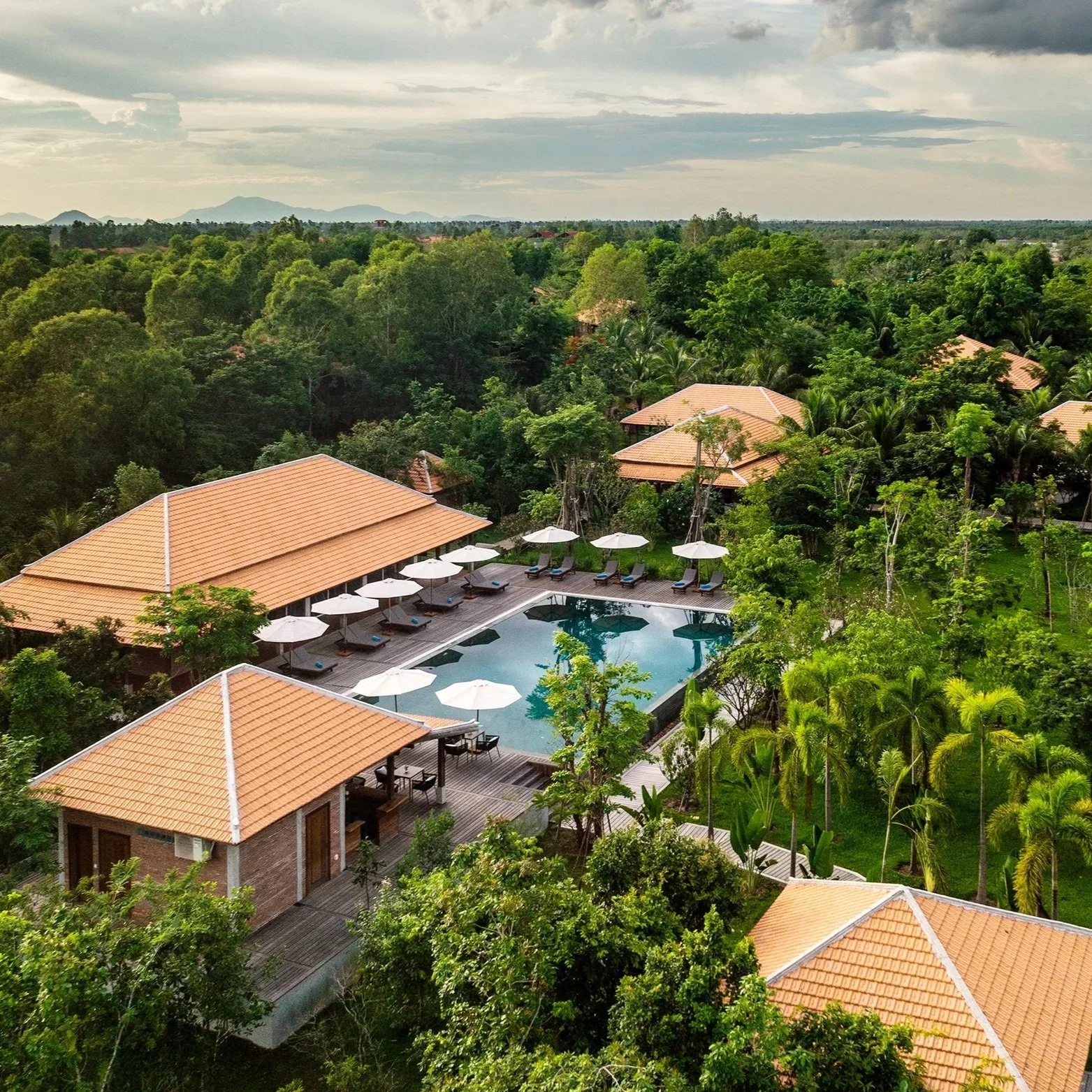
The property now covers about 20 hectares, reduced from its original 52 after 30 hectares were sold to a local developer. Only around seven hectares are developed. The rest remains a lush forest and jungle that the property has left undeveloped.
What matters here is that the landscape was not treated as a backdrop. Lem Senillo, the Spa Manager and The Farm at San Benito’s first employee when it opened in 2002, says the founder made the rule clear during construction: no trees were to be cut down. If a tree stood in the way, it was balled out, moved, and replanted elsewhere on the grounds. Callegaro adds that the resort also avoids using pesticides, extending that early discipline into daily operations.
This gives the property a different character from resorts that clear a site first and landscape it later. At the center of the grounds stands a 300-year-old mango tree, which the team calls the heart of the sanctuary, a symbol of healing and grounding. Around it, the property opens into garden paths and quiet spaces for reflection instead of rigid resort layouts. Silent reflection under the mango tree and sound healing at the amphitheater are presented as part of the guest experience, suggesting that the landscape is not decorative but built into how the place is used.
The look of the property follows from those decisions: mature trees, preserved greenery, and open spaces that do not feel imposed on the land.
This same philosophy shapes the accommodations. Their layouts and settings vary with the surrounding landscape. Some rooms open onto private gardens, while others use glass, open-air baths, or elevated views over water and forest to keep the landscape in view. That variation comes from letting existing trees, slopes, and views guide the design.
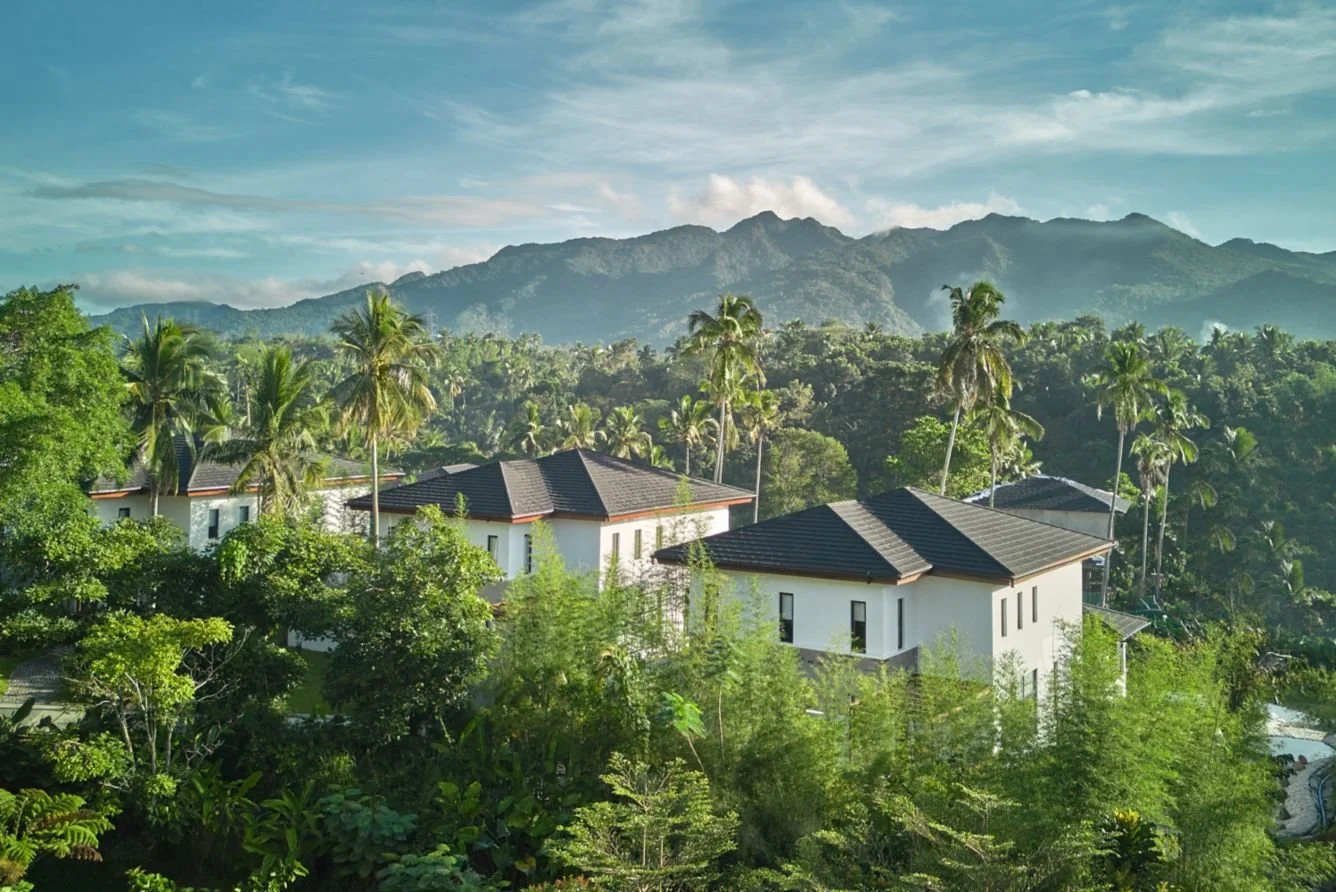
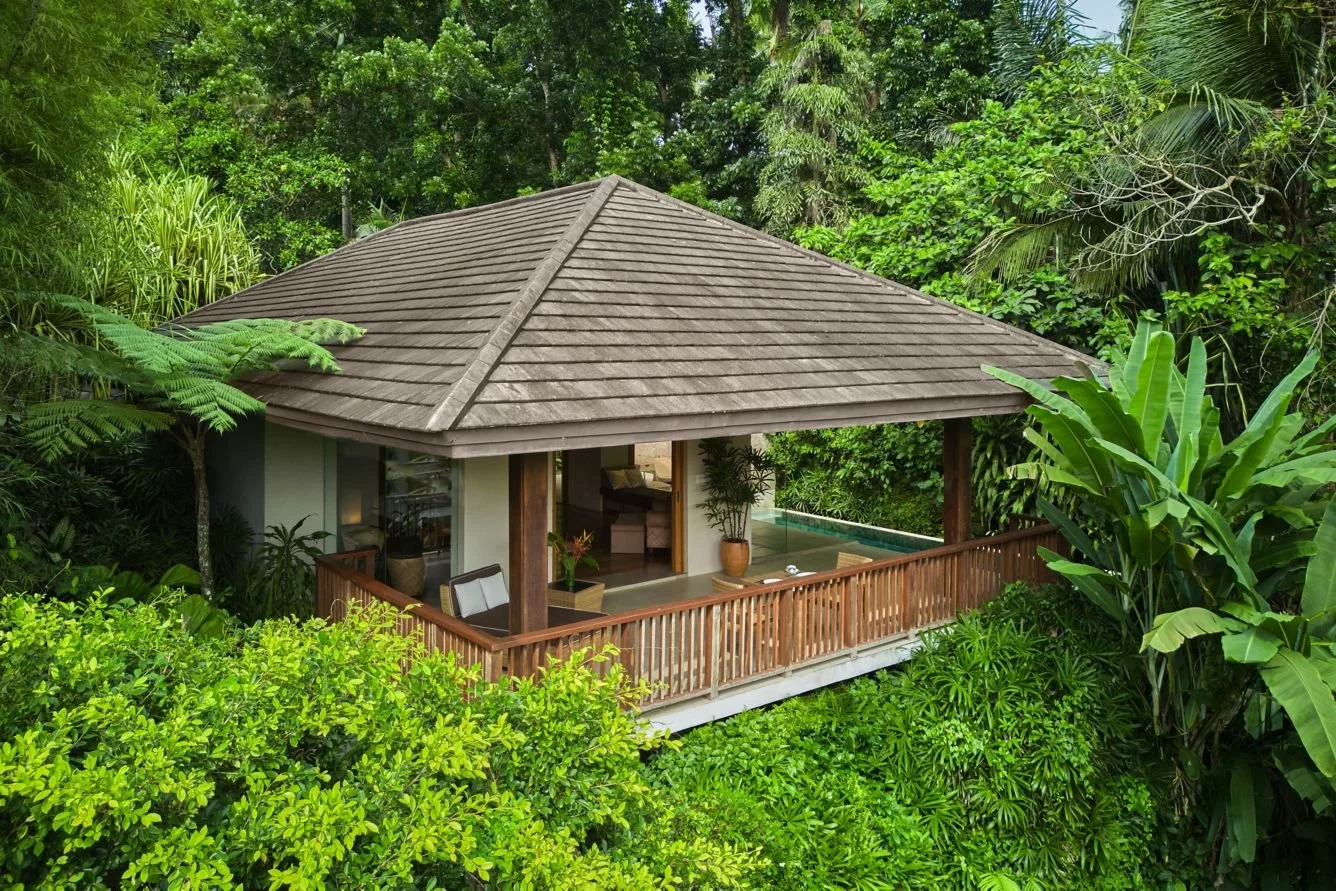
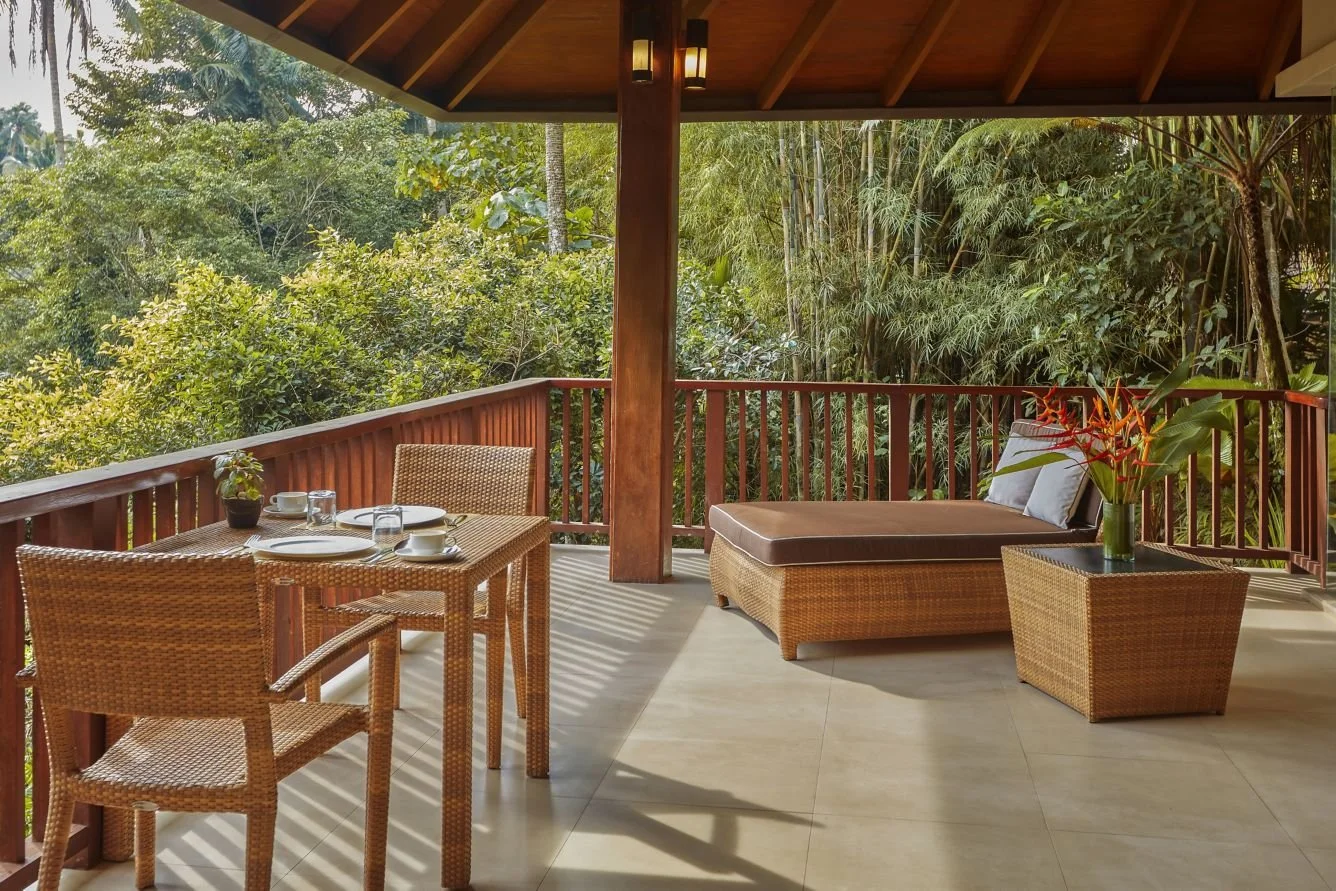
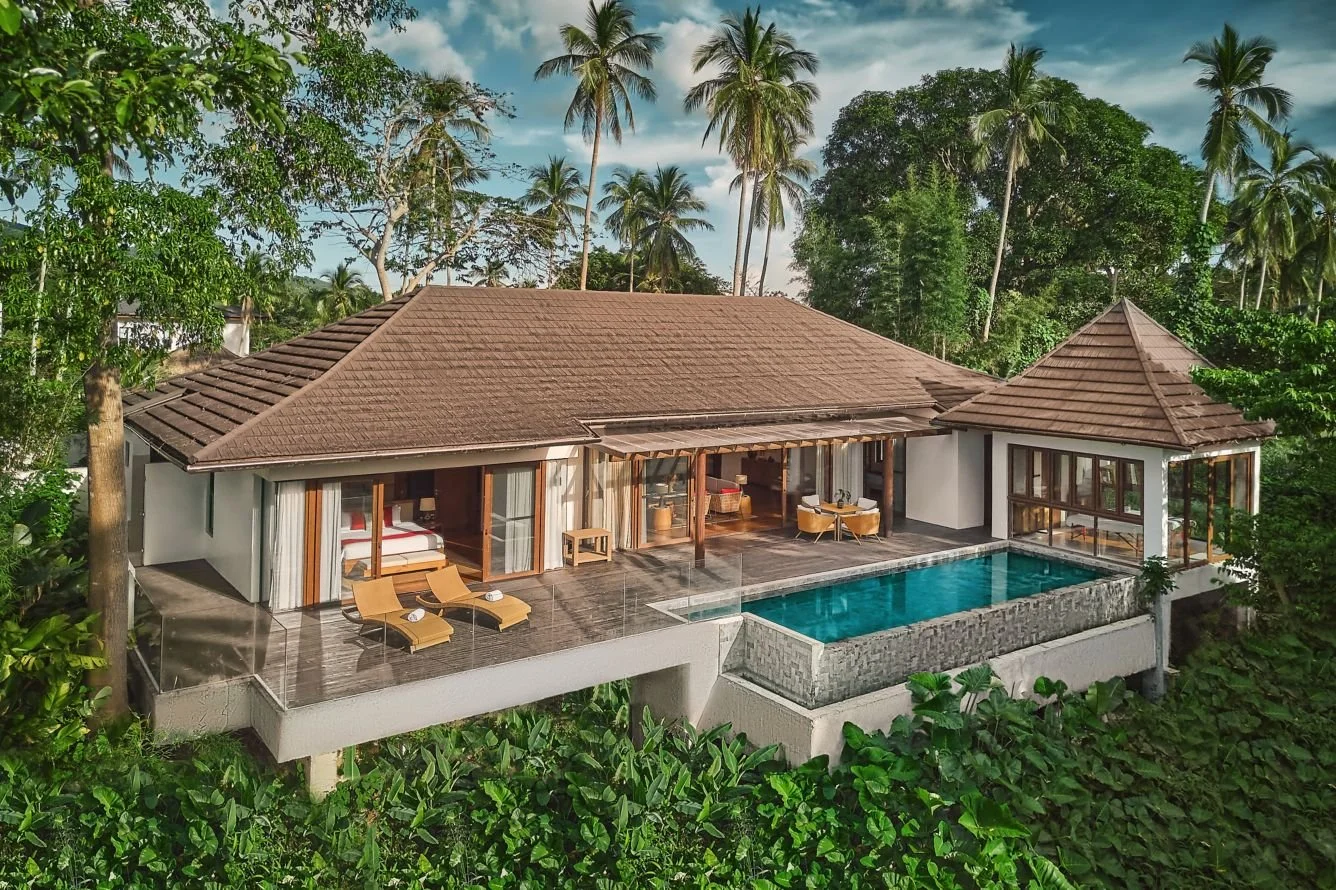
The Farm at San Benito, Autograph Collection offers a range of suites, villas, and residences that pair contemporary comfort with design cues drawn from Filipino heritage and the surrounding landscape.
Belonging to a global brand without being flattened by it
Joining Marriott’s Autograph Collection has helped The Farm at San Benito reach more guests while keeping its distinct character.
The clearest benefit is in distribution. Callegaro says about 60 percent of bookings now come through Marriott Bonvoy, giving the property access to a broader guest network while supporting its position in the wellness market.
Just as important, the affiliation appears to leave room for the property to remain itself. As Callegaro describes it, The Farm at San Benito continues to draw on its own identity rather than follow a strict luxury-brand template. In practice, that means keeping its local design language and repurposing existing materials on-site. Callegaro shares some examples, from restoring an old table for a new bar area to reworking wood found on the property into new guest-facing features.
Five programs, grounded in Filipino traditions of care
The Farm at San Benito’s wellness offering is built around five main programs. Alex Danila, Operations Manager at the Healing Sanctuary, says these include weight management, complete rejuvenation, beauty and vitality, and gut health detox, alongside the Signature Path, a personalized program tailored to each guest’s needs and length of stay.
What gives the offering its character is the way the team talks about care itself. Senillo shares the two Filipino concepts behind their service: kapwa, the sense of shared identity between guest and caregiver, and malasakit, a form of care that treats a guest's wellbeing as deeply personal. "This is the Filipino brand of wellness," Senillo says. "Malasakit is care that comes from within."
He explains that healing is not confined to treatments or scheduled sessions. It is also about helping guests feel supported enough to slow down and take part in their own healing.
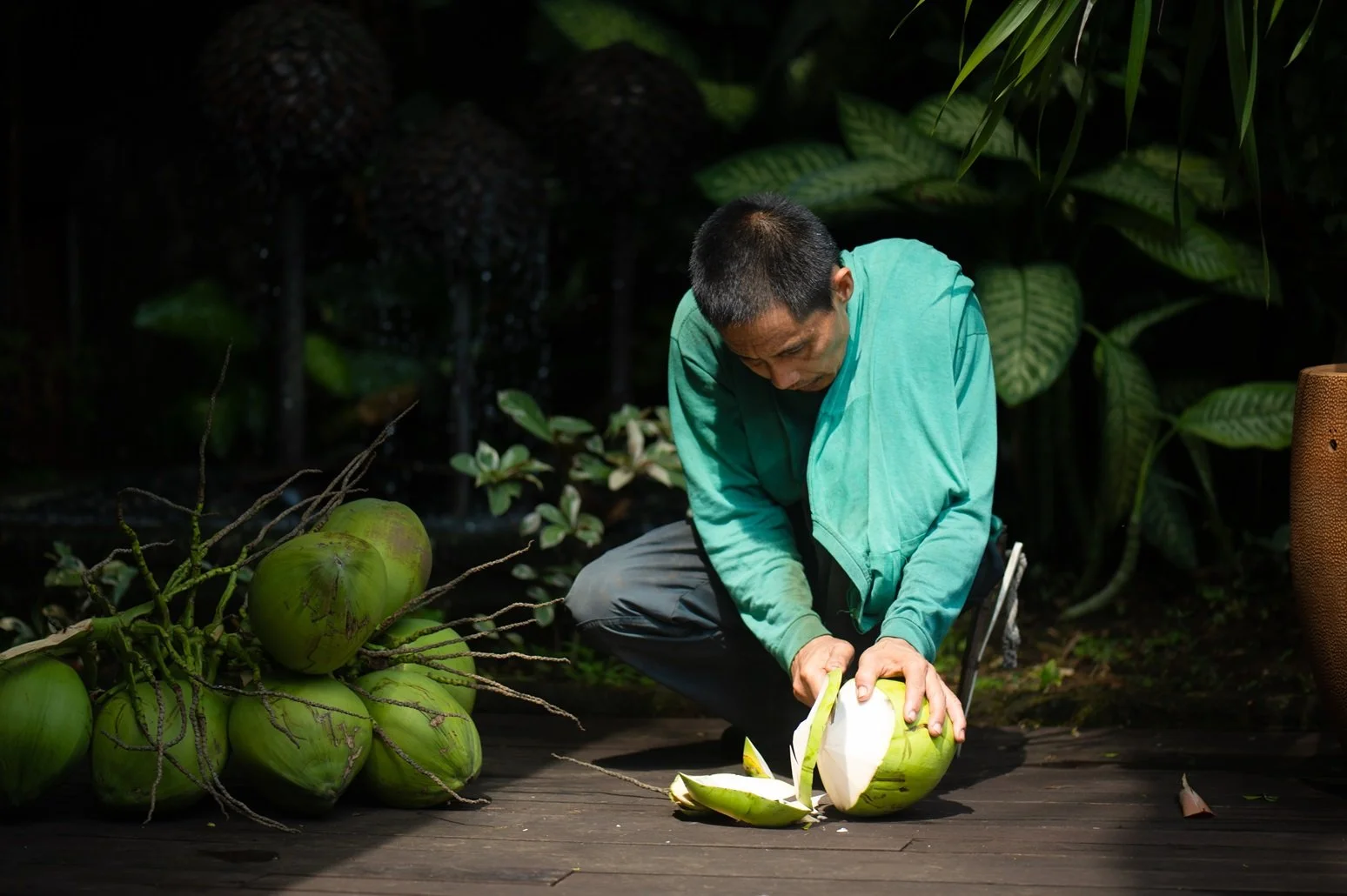
The same approach shapes the therapies. Alongside movement, meditation, and other wellness routines, the Healing Sanctuary offers hilot (a traditional Filipino therapeutic massage) and treatments that use ingredients more commonly found in Filipino homes than on international spa menus. Senillo mentions coconut oil, turmeric, red ginger, sambong (a medicinal herb), lagundi (a shrub commonly used in herbal remedies), oregano, and warm coconut milk baths. He describes this as a treatment rooted in local plant knowledge and care traditions rather than imported wellness trends.
Some of the resort’s rituals follow this same idea. Senillo describes the Rainy Cleansing Program as a way for guests to reconnect with a more playful, open frame of mind by walking, moving, dancing, or simply standing barefoot in the rain. He also includes journaling as part of the healing process, with prompts about forgiveness, gratitude, love, and happiness.

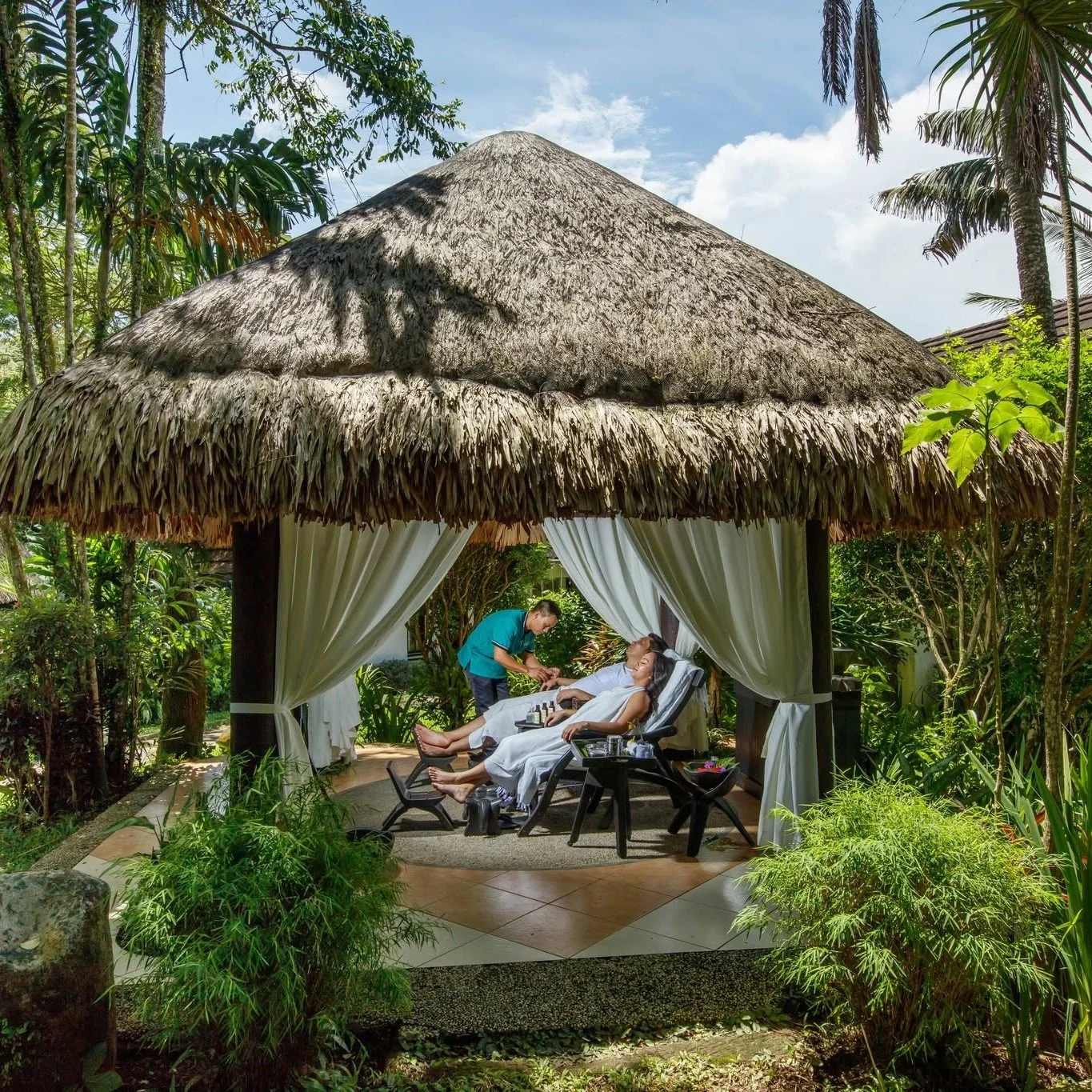
The Healing Sanctuary at The Farm at San Benito, Autograph Collection combines nature-based treatments, traditional touch therapies, and quiet garden surroundings as part of the property’s wider approach to restorative wellness.
What healing looks like on the plate
At The Farm at San Benito, food is positioned as part of the broader experience of slowing down, feeling lighter, and paying closer attention to where it comes from.
Dining at the resort is part of the wellness journey. The menu follows a farm-to-table approach built around seasonal vegetables, nutrient-rich grains, and seafood, with an emphasis on freshness and lightness.
For Callegaro, it begins with sourcing. “My goal is that by October, we’re going to be self-sufficient in about 80 to 90 percent of the vegetables,” he says. For now, about half of the restaurants’ produce comes from the property’s own gardens, and the rest is bought locally. The resort grows its own herbs, vegetables, and fruits as part of that effort.
He also wants to make fuller use of what the property grows. One initiative under development is to dry chili and herbs from the resort, pack them in jars, and sell them in the shop for guests to take home.
He prefers to buy ingredients when they are naturally available rather than lock the property into year-round contracts. That helps keep costs down and allows the menu to change with what is in season, rather than forcing dishes to fit fixed supply arrangements. He also says they are in talks with the University of the Philippines Los Baños - College of Agriculture and Food Science as part of the property’s longer-term sourcing strategy.
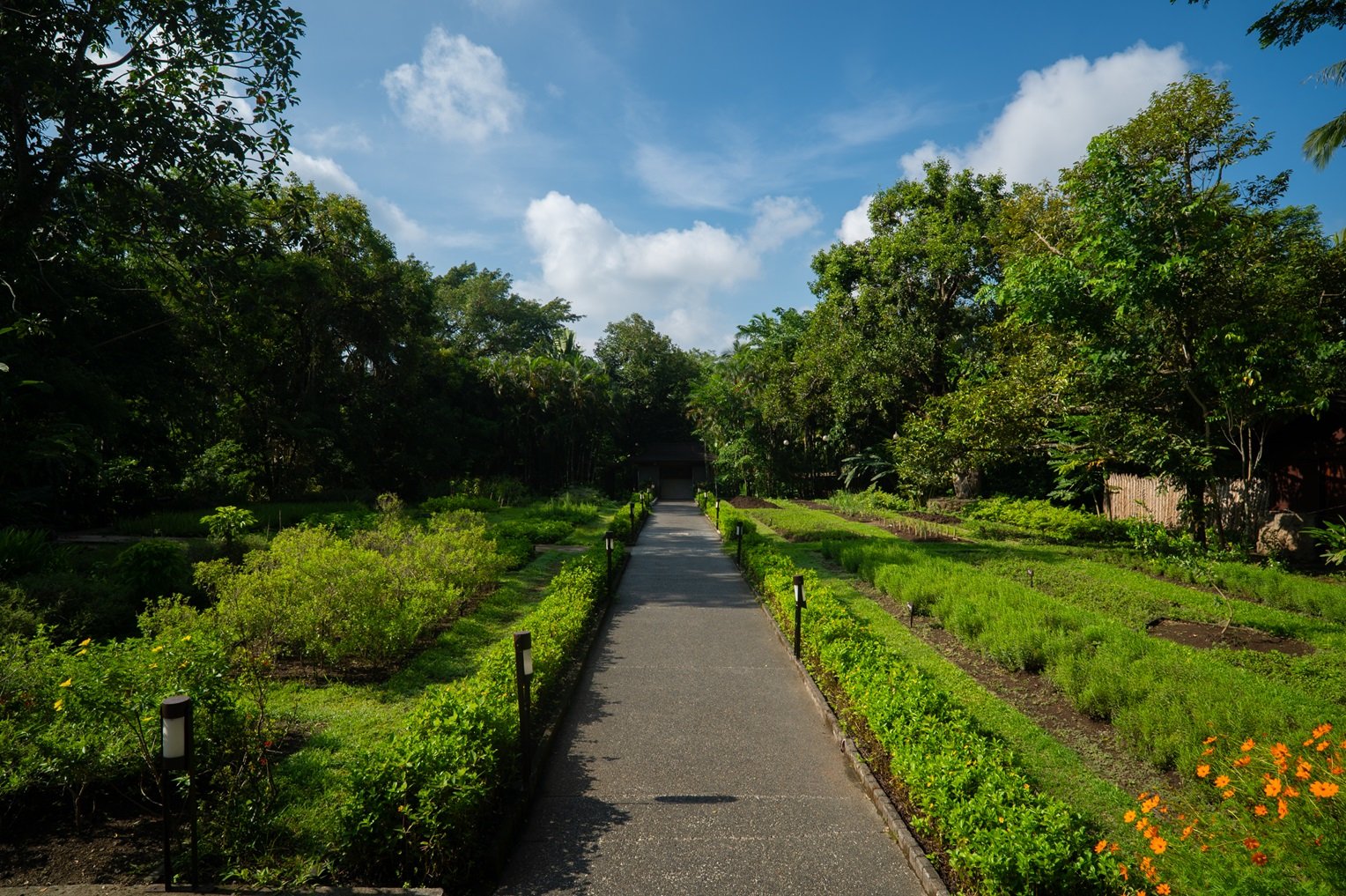
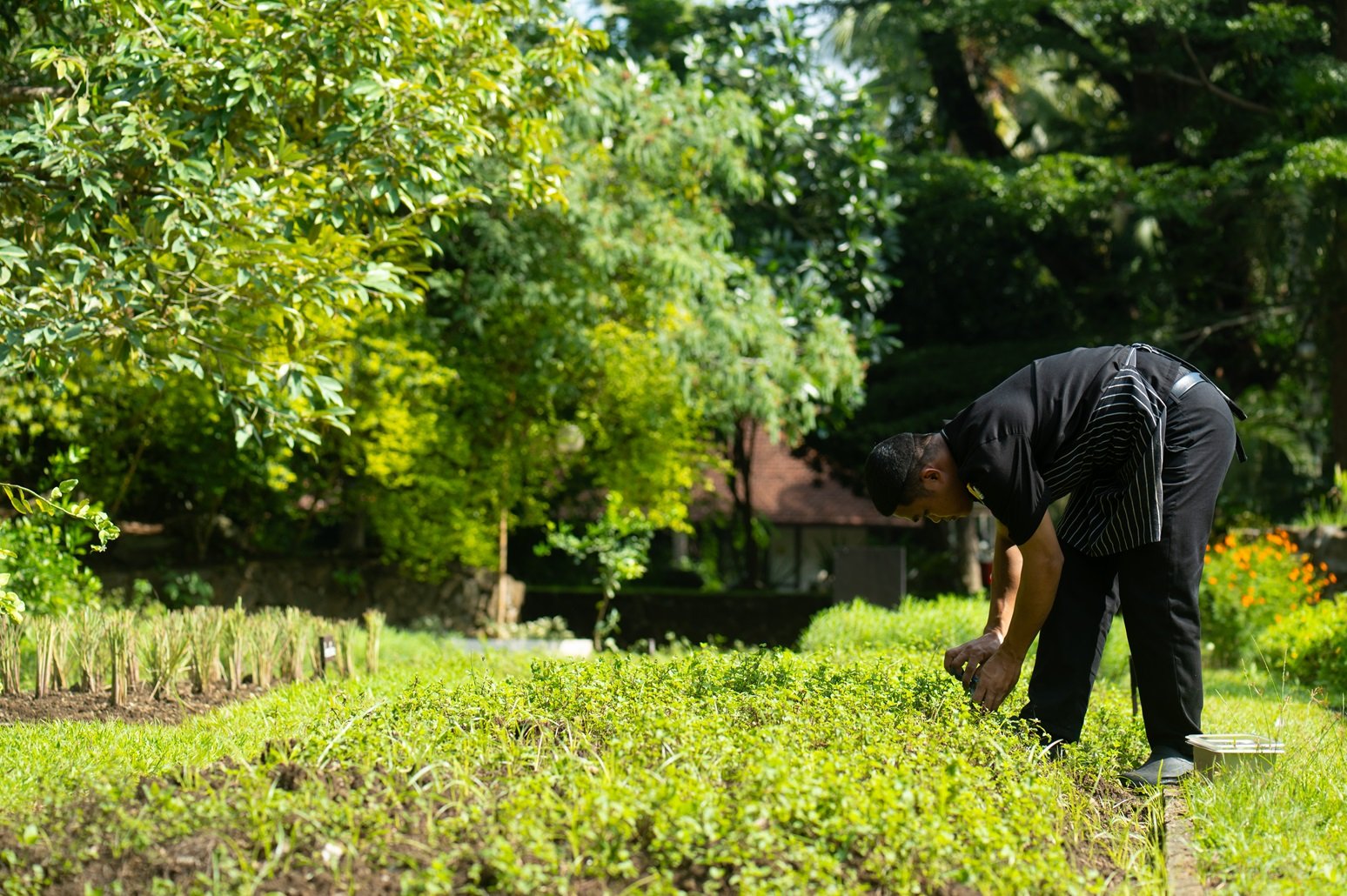
Gardens at The Farm at San Benito, Autograph Collection support more than the setting, supplying part of the property’s produce and reinforcing its connection between wellness, food, and place.
What other hoteliers can learn from The Farm at San Benito, Autograph Collection
The Farm at San Benito, Autograph Collection is not something most properties can copy. You cannot add a 300-year-old mango tree, a forested land, or a founder who refused to cut any trees after the fact. But the underlying principle behind it is useful: build with what a place already offers, rather than forcing a concept onto it. Here is what that can look like in practice.
1. Let the land dictate the build.
Worth asking: What on your site is worth building around rather than clearing away?
Mature trees, natural water features, and the site’s existing contours are valuable assets that cost nothing to preserve. Guests notice the difference between a protected landscape and one that feels manufactured. Building around what is already there can also lower site-preparation costs and help a property feel established more quickly.
2. Root wellness in something you actually own.
Worth asking: What local knowledge, ingredient, or tradition could only your property deliver?
A program built on local knowledge, cultural context, and homegrown ingredients is much harder to copy than a standard spa menu. It also gives guests a clearer reason to choose your property over a generic alternative, and a story they take home with them.
3. Grow what you can, then turn surplus into story.
Worth asking: How much of your kitchen's produce could come from land you already control, and what surplus could become a shop product that lets guests take part of that story home?
Unused land, rooftops, or service areas can become productive spaces. Even a small garden supplying 10 percent of your herbs or salad greens can lower costs and connect the kitchen more closely to its surroundings.
One idea at The Farm at San Benito is to dry herbs grown on the property, put them in jars, and sell them in the shop for guests to take home. This simple idea turns surplus into a new source of income and another lasting reminder of the stay.
4. Buy by the season, not just by the contract.
Worth asking: Where are you paying year-round prices for ingredients that would be cheaper and better in season?
Fixed annual contracts often build in the supplier's risk of scarcity, meaning you pay a premium to smooth out volatility that could instead be managed through menu planning. Building menus around seasonal availability can lower cost, reduce food miles, and give chefs more room to work with peak-quality ingredients.
5. Turn institutions into sourcing partners.
Worth asking: Which agricultural schools or producer networks are within reach of your property?
The Farm at San Benito’s talks with the nearby university offer a helpful model for other operators. Schools and institutions can advise on planting schedules, crop choices, and longer-term planning to keep a local supply network stable over time.


All photos by The Farm at San Benito, Autograph Collection