Can Shinta Mani's Funding Model Withstand Cambodia's Tourism Downturn?
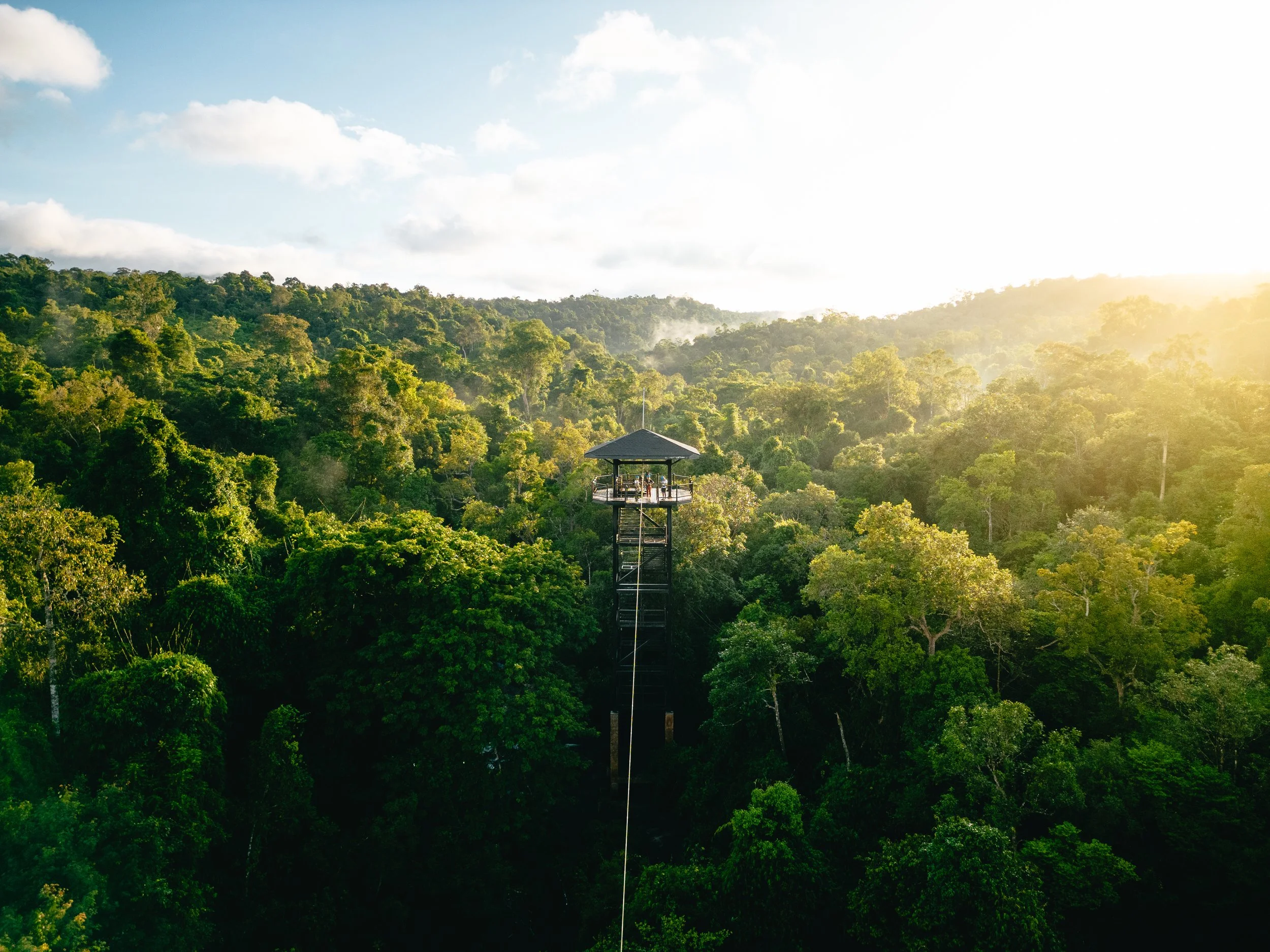
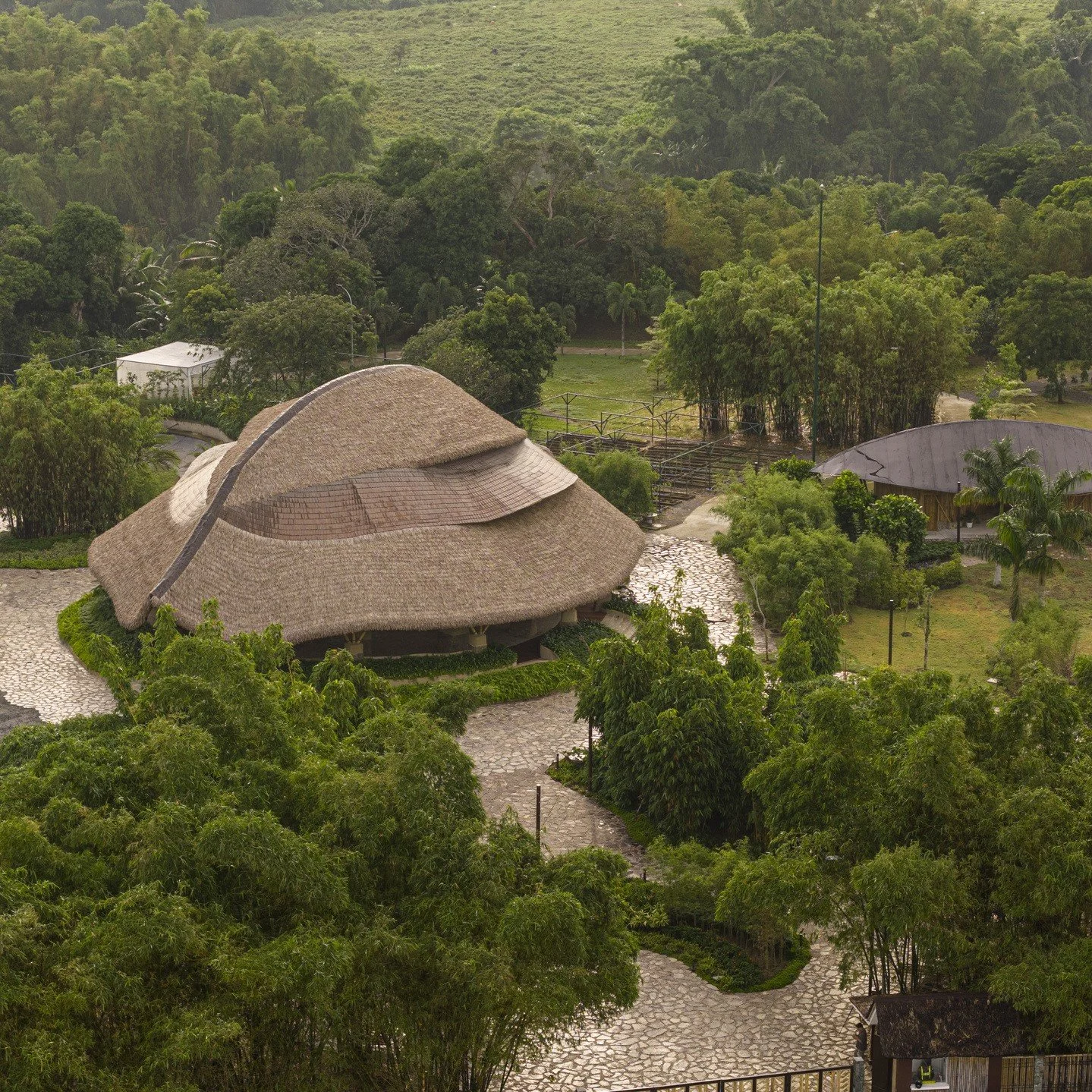
Shinta Mani WILD
In Cambodia, the warning signs of a tourism slowdown were hard to miss: quieter airports, emptier hotel lobbies, and a noticeable downturn in activity across attractions from the islands in the south to Siem Reap in the north.
Fresh from The Long Run's APAC Regional Meeting, I found myself thinking about what a significant decrease in arrivals would mean for the country's hospitality and travel businesses, particularly those impact-led entities whose purpose extends far beyond room nights.
That question came sharply into focus during my visits to Shinta Mani WILD, Shinta Mani Angkor, and the Shinta Mani Foundation's projects outside Siem Reap.
For more than two decades, Shinta Mani has been one of Asia's most compelling examples of hospitality as a force for social and environmental change: a business model in which hotel revenue helps fund education, healthcare, interest-free microfinance, practical support for rural communities, and environmental conservation.
Its impact is most convincing on the ground.
At Shinta Mani WILD, I joined rangers on an anti-logging patrol through the Cardamom forest. About 30 minutes outside Siem Reap, I saw how the Foundation has helped mothers build home-based craft businesses, enabling them to care for their children while earning an income for their families. I also met a single mother whose multigenerational family had moved into a secure home with the Foundation's support, and visited villages gaining access to safe drinking water.
Since 2004, the Foundation reports having delivered 360 hospitality graduates, over 2,000 water wells, over 20,000 water filters, over 4,600 bicycles, 270 interest-free micro-loans, and free dental care for nearly 24,000 Cambodian children.
Yet as Cambodia faces its sharpest tourism downturn since the pandemic, Shinta Mani confronts its toughest test: can a deeply committed, purpose-led hospitality brand remain commercially resilient — and keep delivering its social and environmental projects — when the guests who help fund it no longer arrive in the numbers they once did?
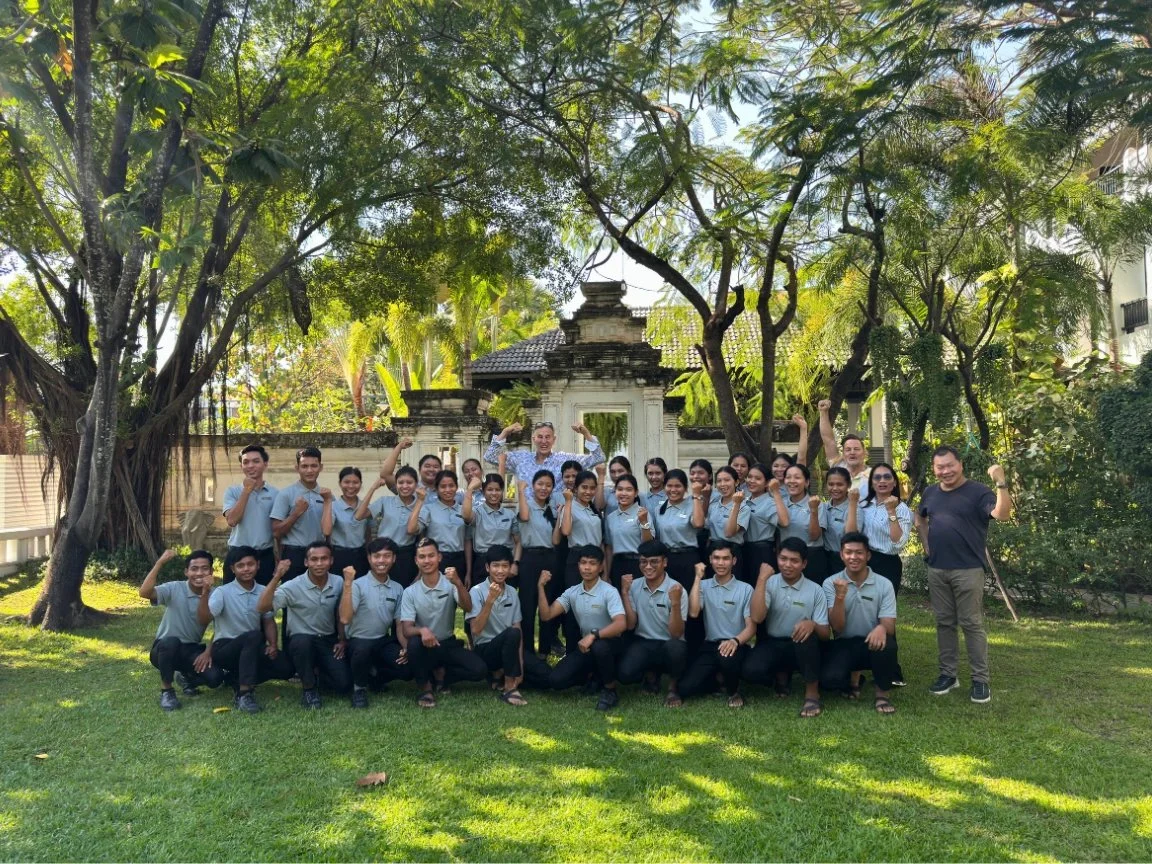
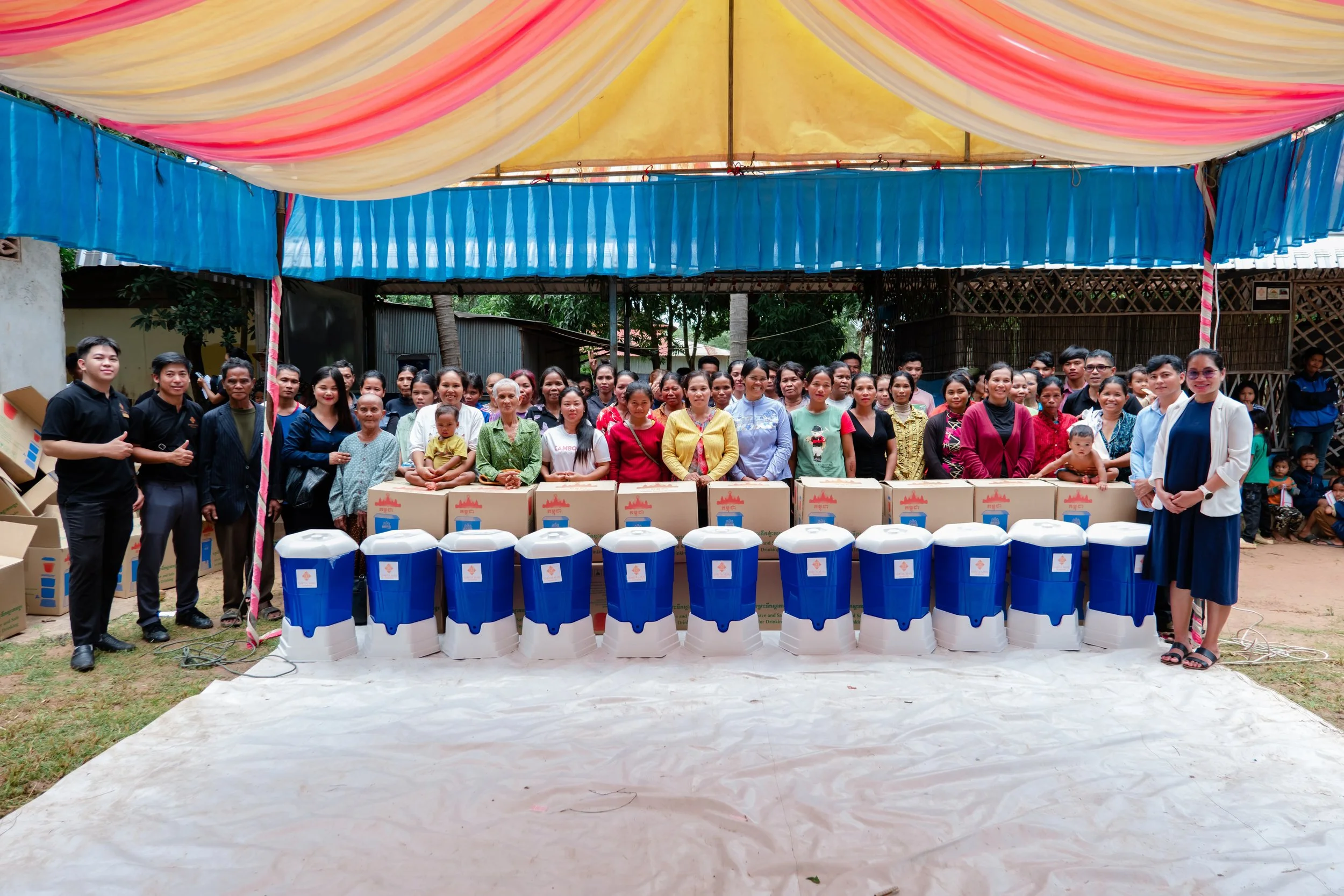
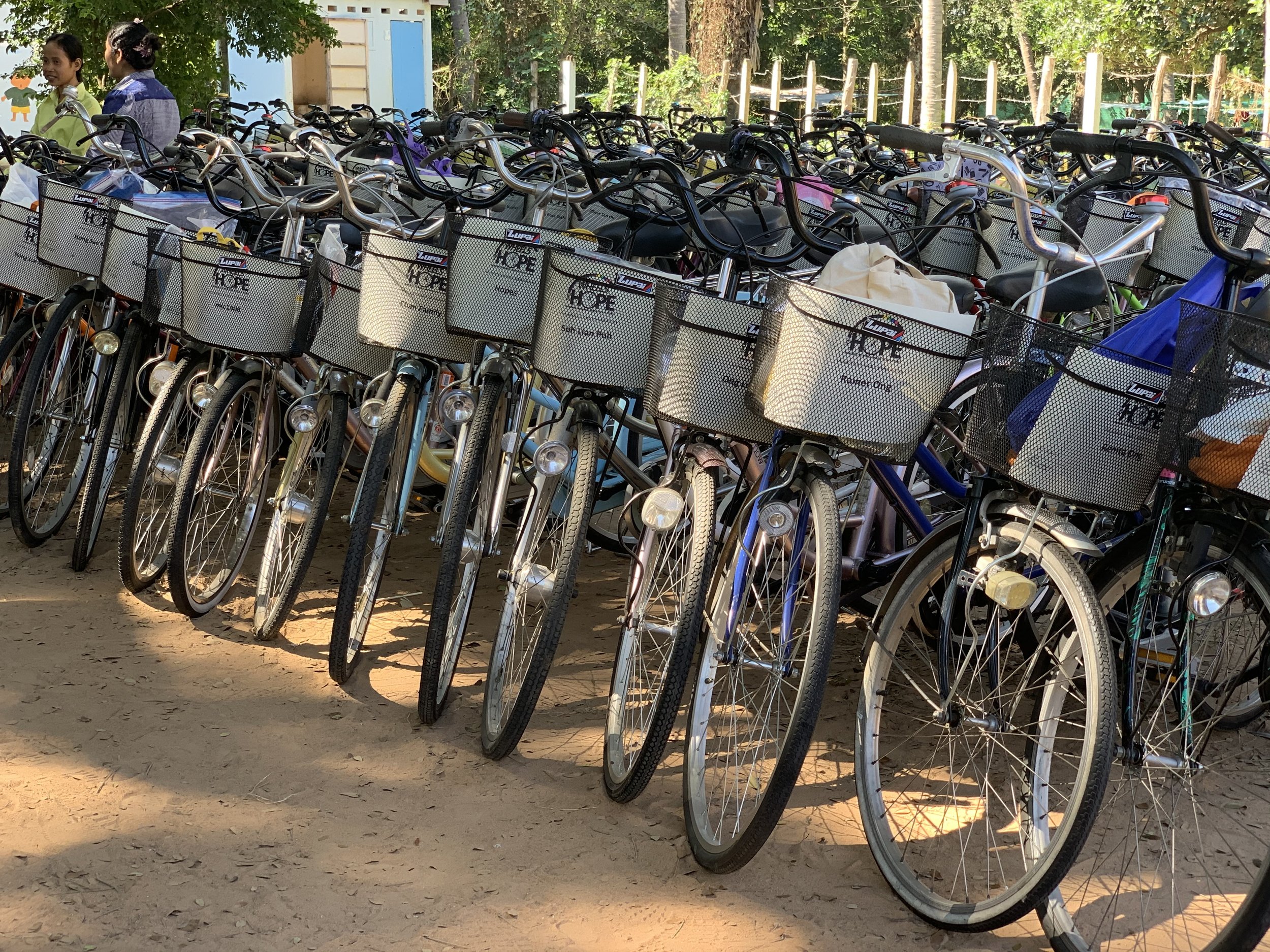
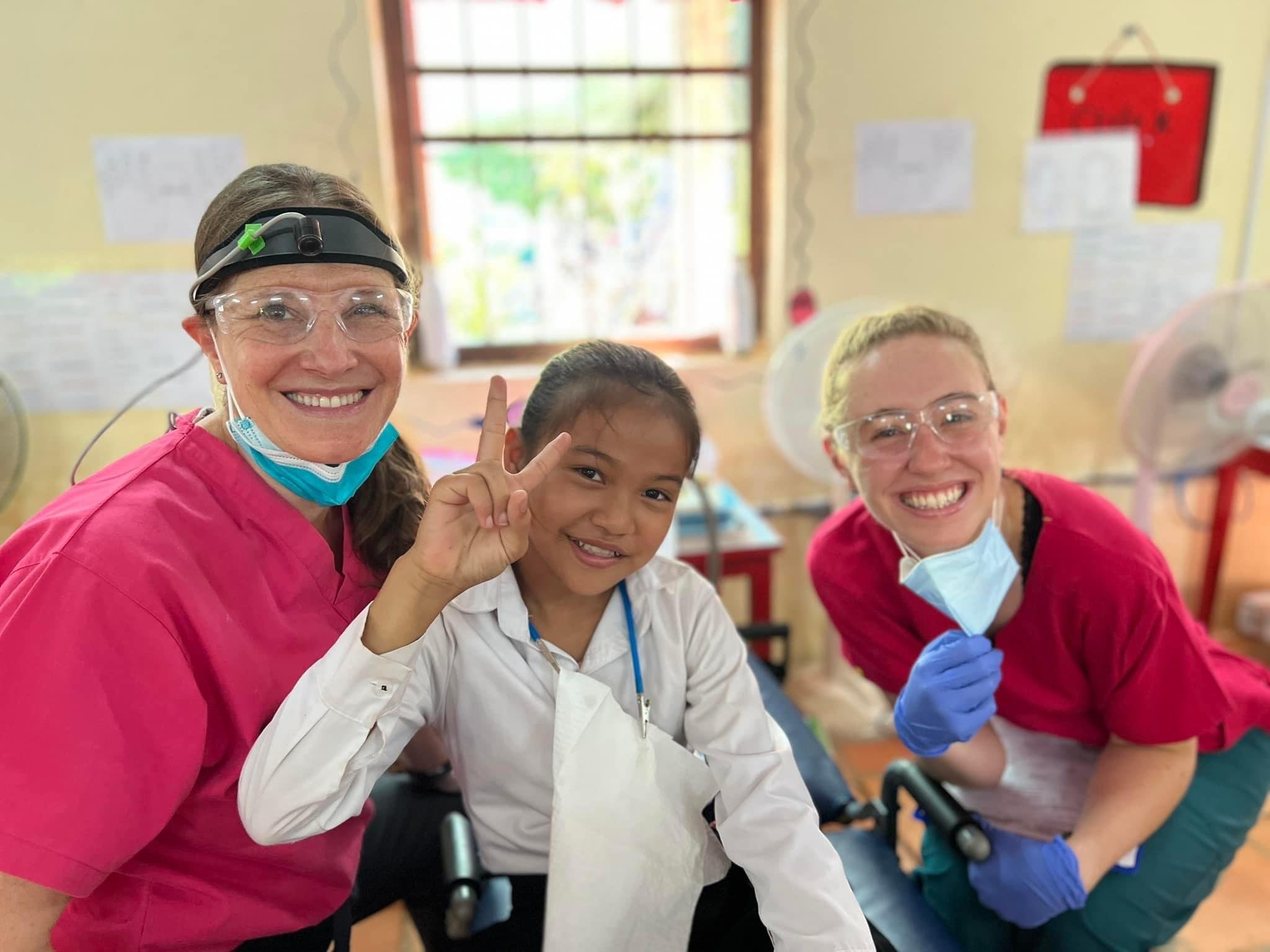
From left: The Shinta Mani Hospitality School graduates, water filters gifted to the community, bicycles for students, and dental clinic.
Cambodia's Tourism Downturn Is a Convergence of Crises
Cambodia's tourism downturn has accelerated into a major reversal. In the first half of 2026, the country welcomed roughly 1.75 million international visitors, a nearly 48% decline from about 3.36 million during the same period in 2025, according to Ministry of Tourism data.
The losses have been most severe at Cambodia's borders with Thailand since 2025 when the dispute broke up. Cambodia's most important overland source market has been effectively cut off. In the first quarter of 2026, Thai arrivals fell by nearly 95% compared to the same period last year.
But the downturn cannot be explained by the border conflicts alone. Cambodia's widely reported scam-center crisis has severely damaged international traveler and investor confidence, with the government reporting nearly 2,000 arrests tied to scam operations and officials publicly acknowledging the reputational toll.
Rising fuel costs and disruptions to Middle East airspace have made long-haul journeys to Cambodia more expensive and less convenient.
The impact is evident at Angkor Archaeological Park, the country's most recognizable draw. From January to July, the seven-month tally stood at 428,223 visitors, a nearly 31% drop in ticket sales from 2025.
For Shinta Mani, this downturn is more than an occupancy challenge. It tests whether the funding model behind its community and conservation work can withstand fewer guests.
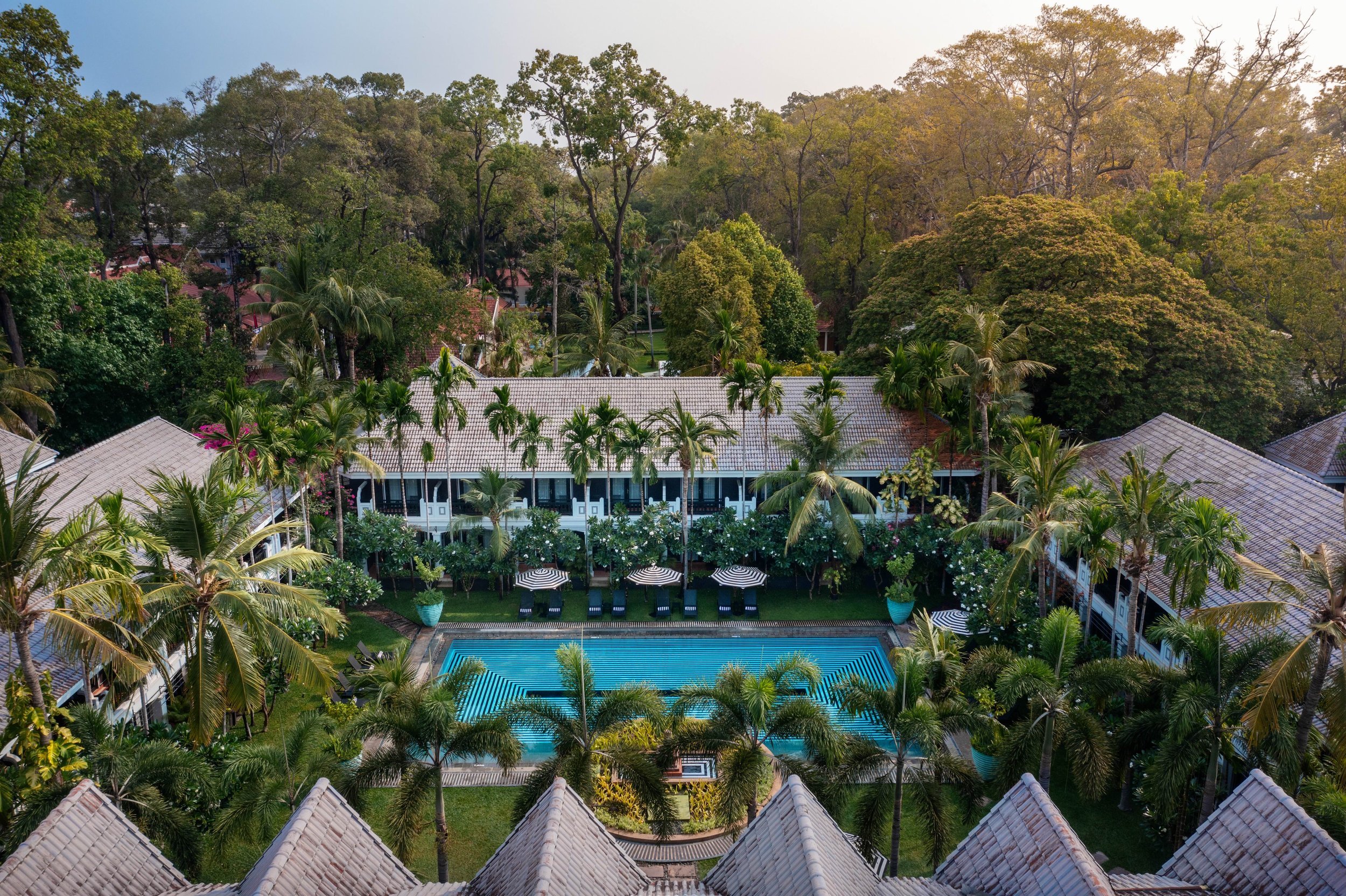
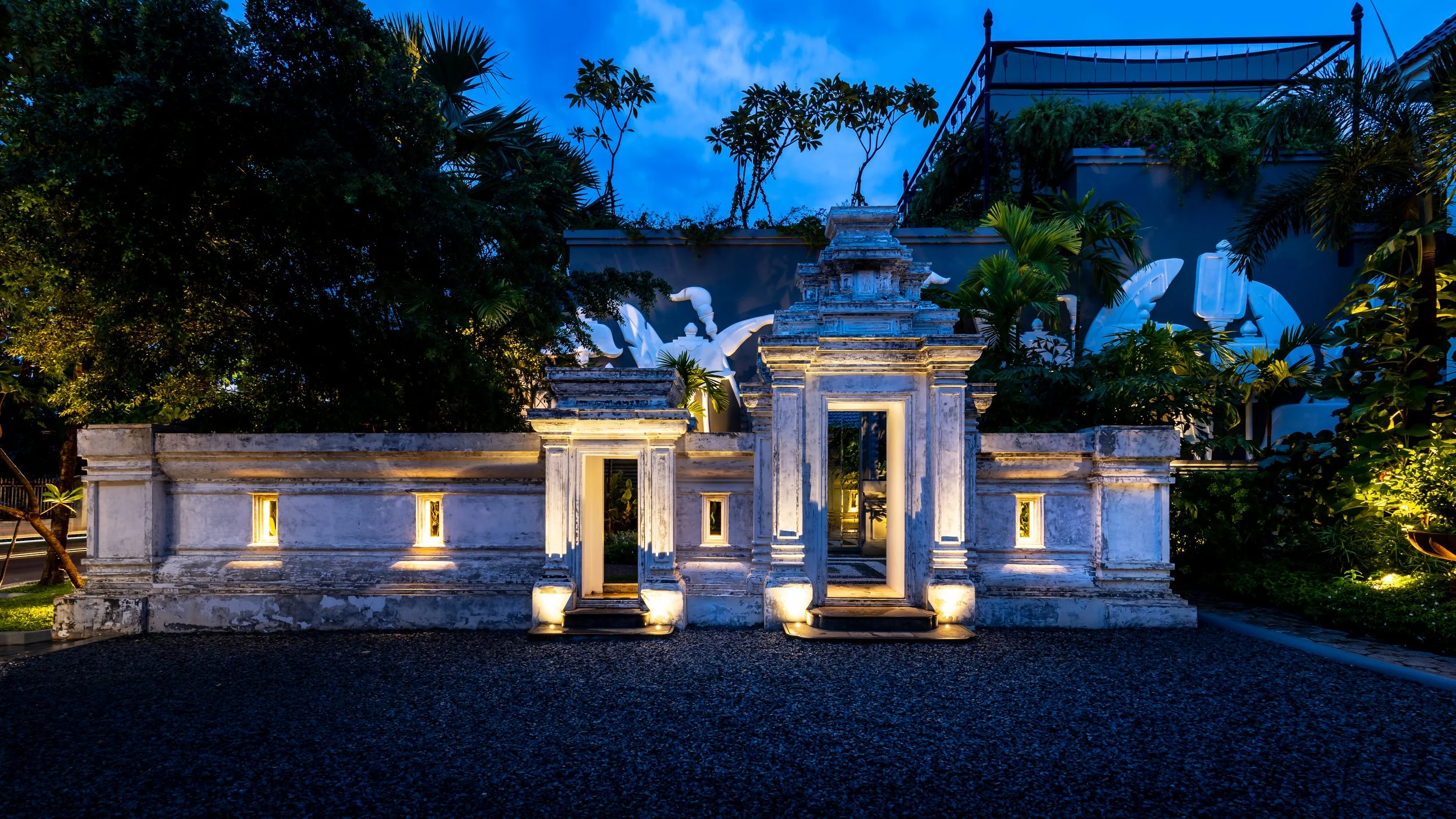


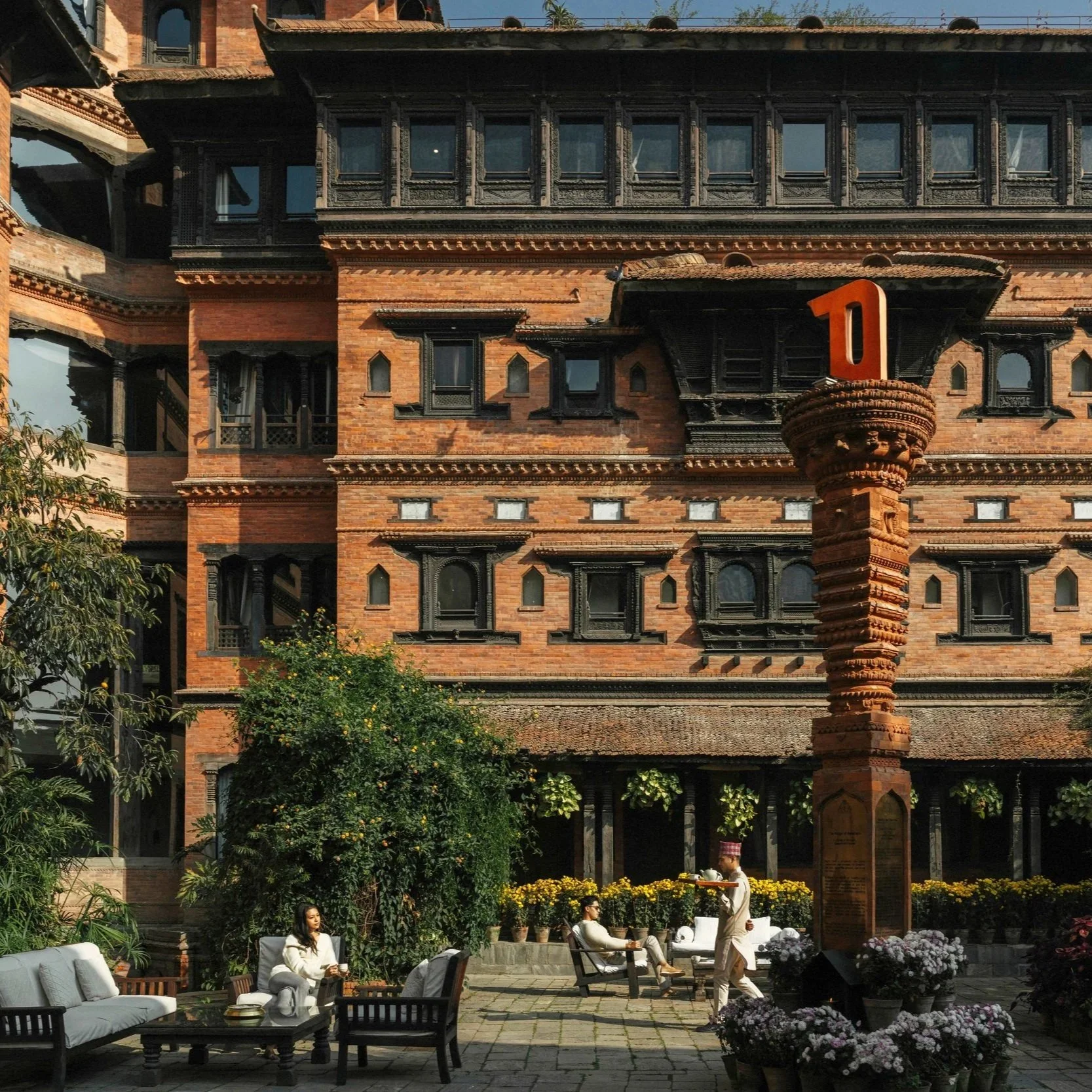
Shinta Mani Angkor
The Business Model Built for This Moment
Bill Bensley, the brand’s designer and Shinta Mani WILD’s co-owner, describes a financial philosophy that runs against the usual hospitality playbook of expanding first and working out the funding later. He highlights, "the ambition is to build a brand that is Foundation-first."
"I have never taken out a loan, and I have never spent money I did not already possess," he says. "We do not invent a program and then hope that the money will somehow appear. We raise the money first. What we raise this year funds the work of next year and, where possible, the year after that. If the funds are not there, we do not make promises we cannot keep."
There is no single occupancy threshold at which a community program gets switched off, because the Foundation was never built to depend on one hotel's monthly performance in the first place.
Bensley clarifies that contributions that he and his co-founder Sokoun Chanpreda channel through the hotels now cover only about 10% to 15% of the Foundation's annual budget, largely absorbed by administration, staff, vehicles, and equipment expenses. Most scholarship and community project funding comes from a diverse mix of sources--art and retail sales, brand collaborations, and charitable donations.
Bensley's own paintings, sold across five galleries in Asia, direct 100% of proceeds to Foundation projects. Closer to home, "Shop with a Heart" at Shinta Mani Angkor channels profits from locally made goods directly back into community work. A capsule collection with Jim Thompson — 64 indoor and outdoor fabrics unveiled in Paris — earmarks a fixed share of revenue for the same cause. As recently as June, the Foundation secured a donor's contribution that will finance its hospitality training school for the next couple of years.
This model is considerably more resilient than an impact operation tethered to a single hotel's cash flow. But resilience isn't immunity.
Art has its own weather. The 2023 Bensley Art Trail funded an entire scholarship class in one season, but a quieter year could just as easily mean fewer wells, bicycles, or forest patrols. Brand deals hinge on partners' confidence in Cambodia, and hospitality retail needs guests in the shops to survive at all.
Asked what the contingency plan would be if funding sources underperform simultaneously, Bensley answers: "Work harder. Paint more. Invent more collaborations. Find more generous partners. And, most importantly, grow Shinta Mani into other countries where the same model can do good."
The challenge facing Shinta Mani is not whether it has diversified its ecosystem. It has.
The test — one this article returns to at the end — is how much volatility this diversified system can absorb before the important community and conservation work begins to stall, or worse, retreat.

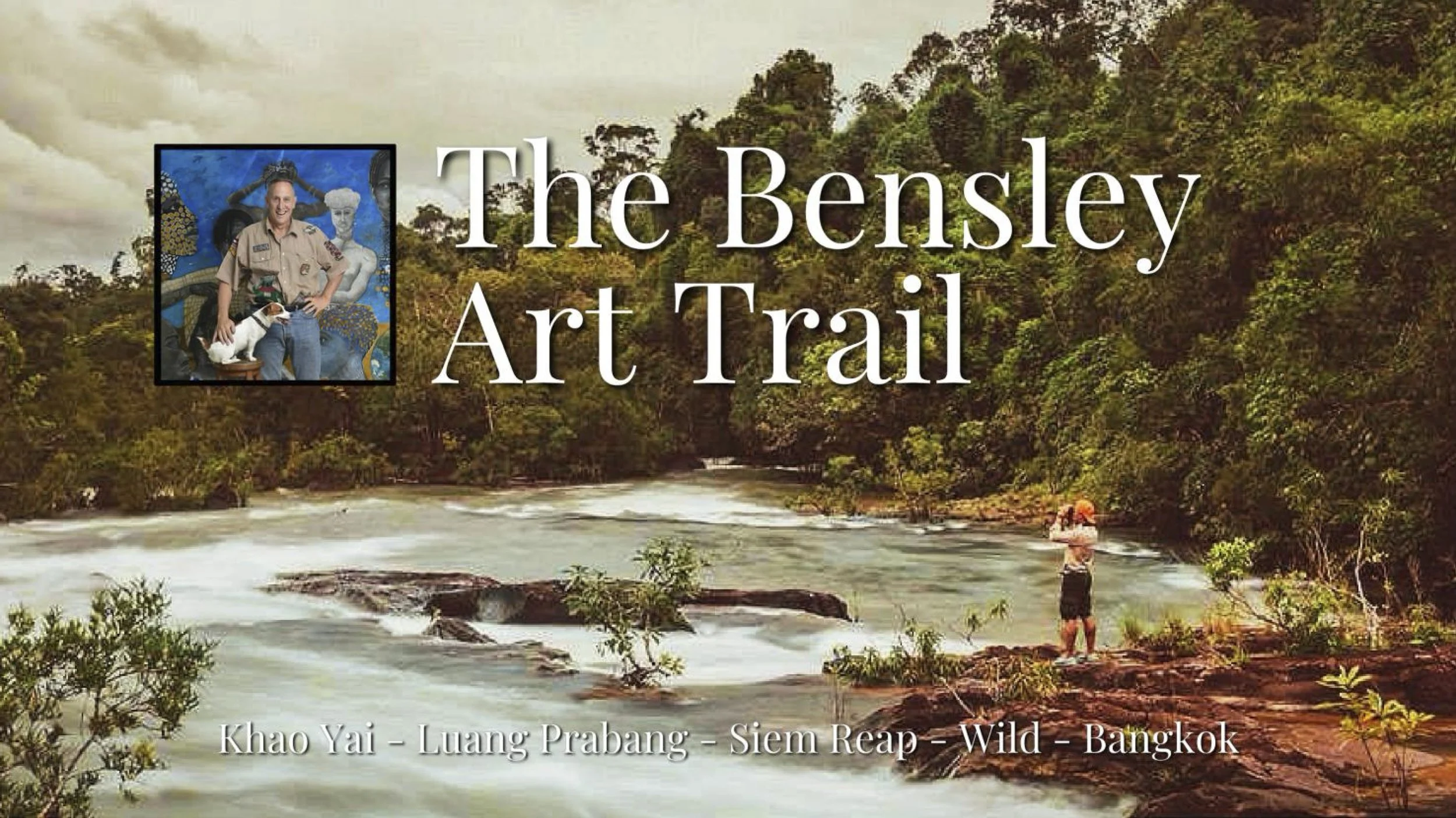
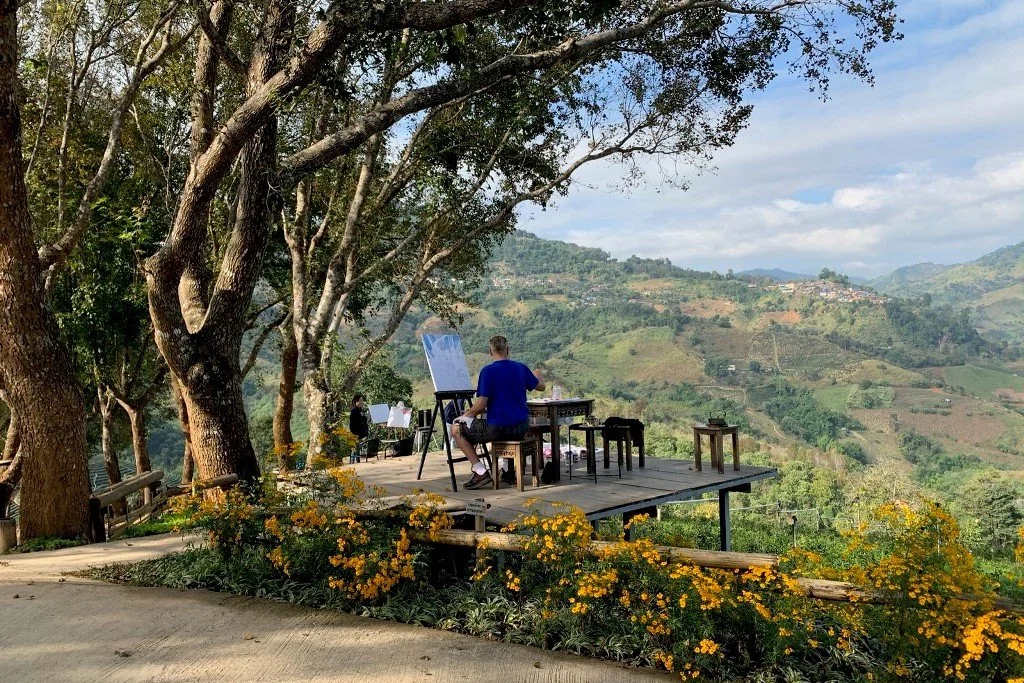
From left: Bill Bensley; The 2023 Bensley Art Trail by Smiling Albino.
What Foundation-First Model Looks Like on The Ground
"A foundation-first hotel is centered on helping local people and protecting wildlife first, and then creating the most extraordinary hospitality we possibly can around that purpose," Bensley says. "Social impact is not the decorative parsley placed beside the hotel. It is the reason for the hotel being there."
The hospitality school is the flagship for good reason. Disadvantaged students receive ten months of free tuition, uniforms, meals, and a rice stipend to support their families at home while they train in reception desk, back office, kitchen, and spa roles. According to the Foundation’s record, all 360 graduates to date have secured paid work, many within Shinta Mani's own properties. Chhunnin Neat, Assistant Executive Director of the Shinta Mani Foundation, highlights this as the practical value of hospitality-led capacity development when the graduates improve their employable skills, gain an income, and secure better financial wellbeing for their families.
The Foundation also runs a micro-finance program that follows a similar philosophy: build capacity, not dependency. Its interest-free micro-loans fund pig farms and craft-making collectives, paired with basic business coaching. Once repaid, that capital returns to the fund and flows directly to the next entrepreneur, creating a revolving pool of capital where a single donation keeps working long after the initial gift. These micro-loans also extend to university students who would otherwise have to abandon their degrees. Around 200 families and 80 students have benefited so far.
As I visited the rattan-weaving cooperative and met micro-loan recipients with Neat, what stood out was not the scale of any single grant, but how it gave families the means to carry out financially sound, income-generating activities. Craft-makers earn roughly US$100 a month, about half Cambodia's minimum wage. They gain new source of income for families that previously didn’t exist while being able to stay at home to take care of their children. Pig farmers use interest-free loans to build breeding operations that can support themselves over time. The Foundation does not just distribute capital, but also pairs it with practical guidance and market access.
The healthcare and direct assistance programs follow the same forward-looking instinct: intervene early rather than respond after a crisis takes hold. The Foundation's 1,000-Day Program has supported up to 2,000 expectant and new mothers with transportation to medical appointments and access to medical supplies.
“The ambition is to build a brand that is Foundation-first: helping local people and protecting wildlife first, and then creating the most extraordinary hospitality we possibly can around that purpose.
Social impact is not the decorative parsley placed beside the hotel. It is the reason for the hotel being there."
— Bill Bensley
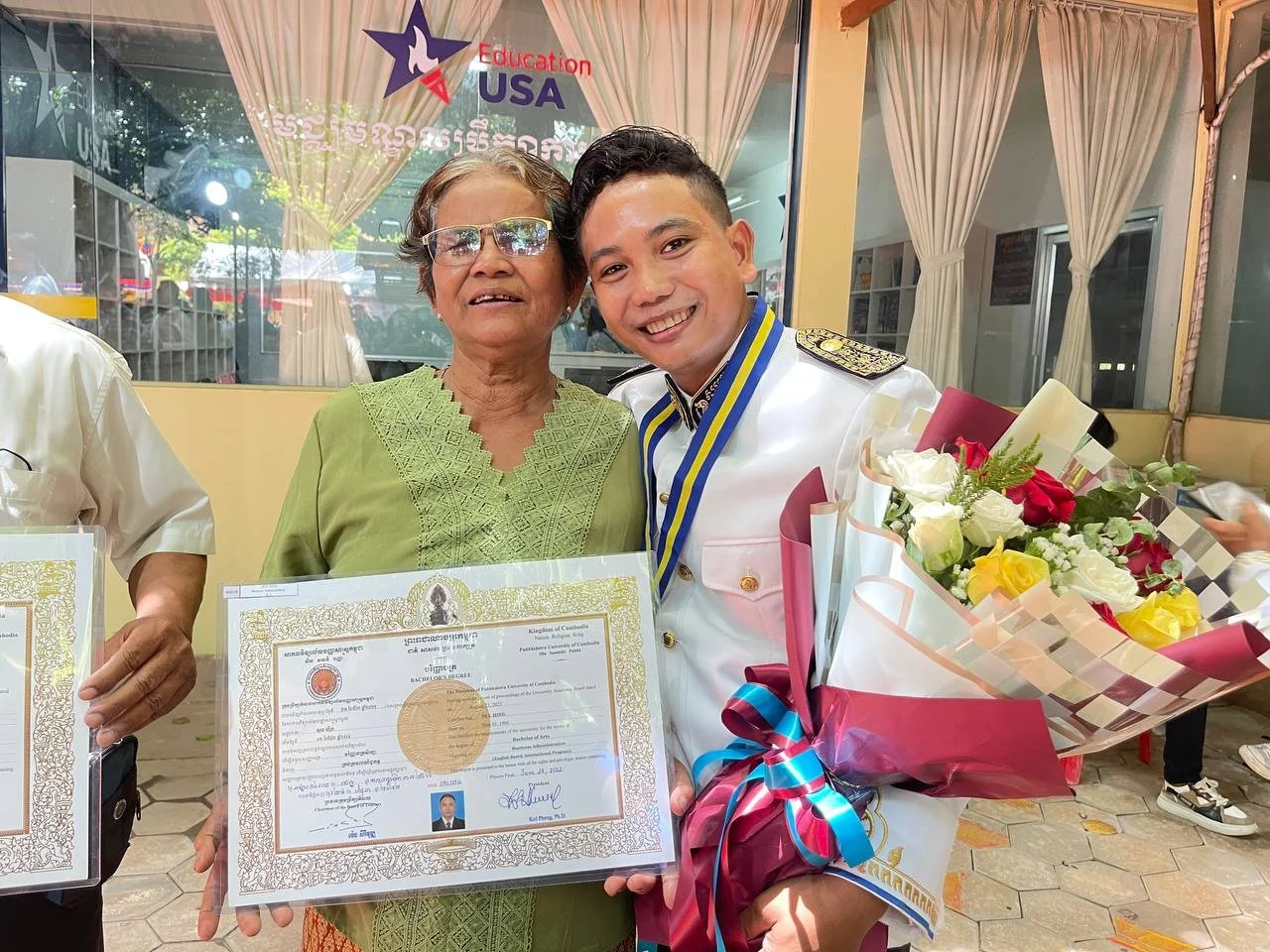

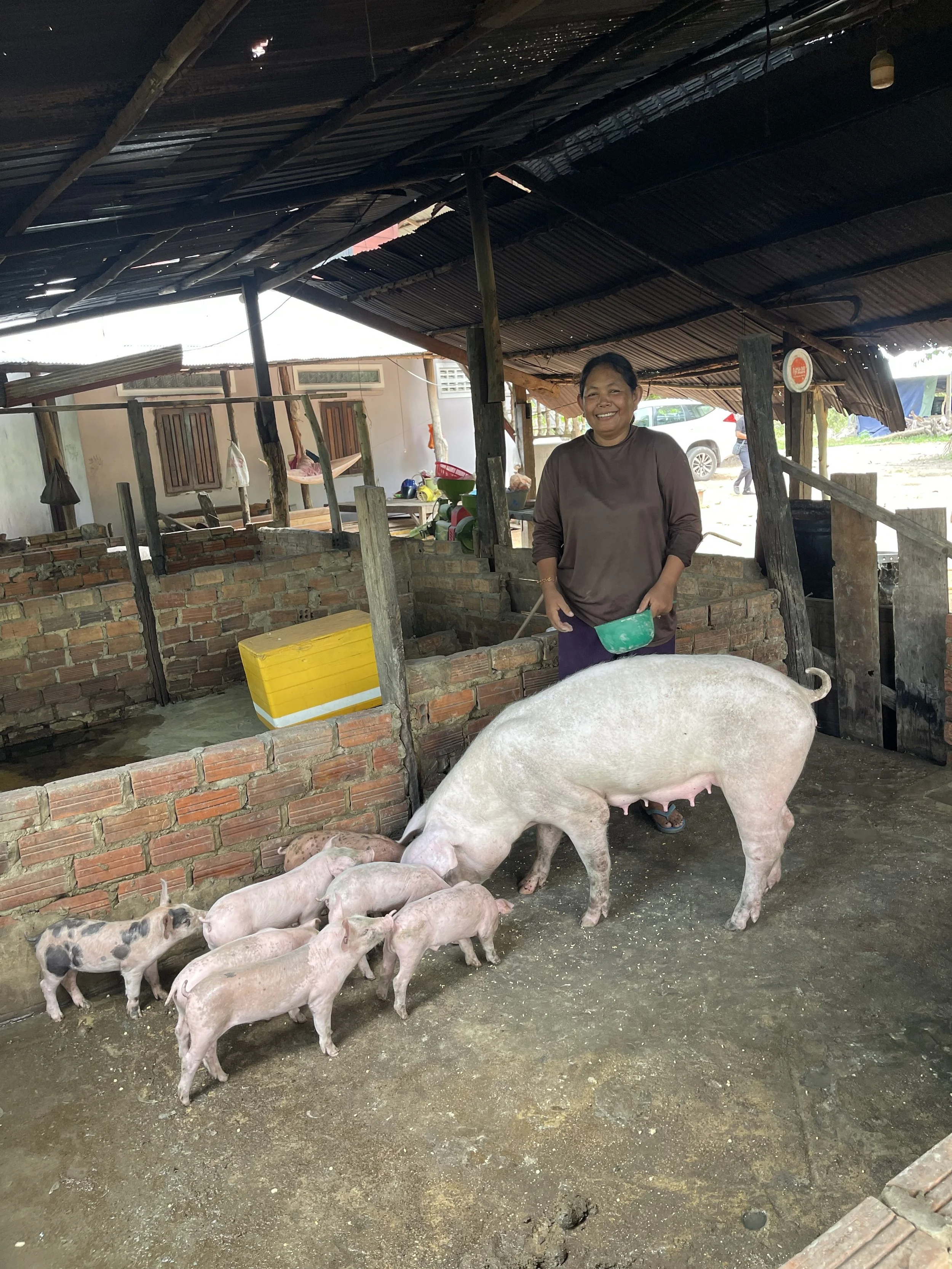
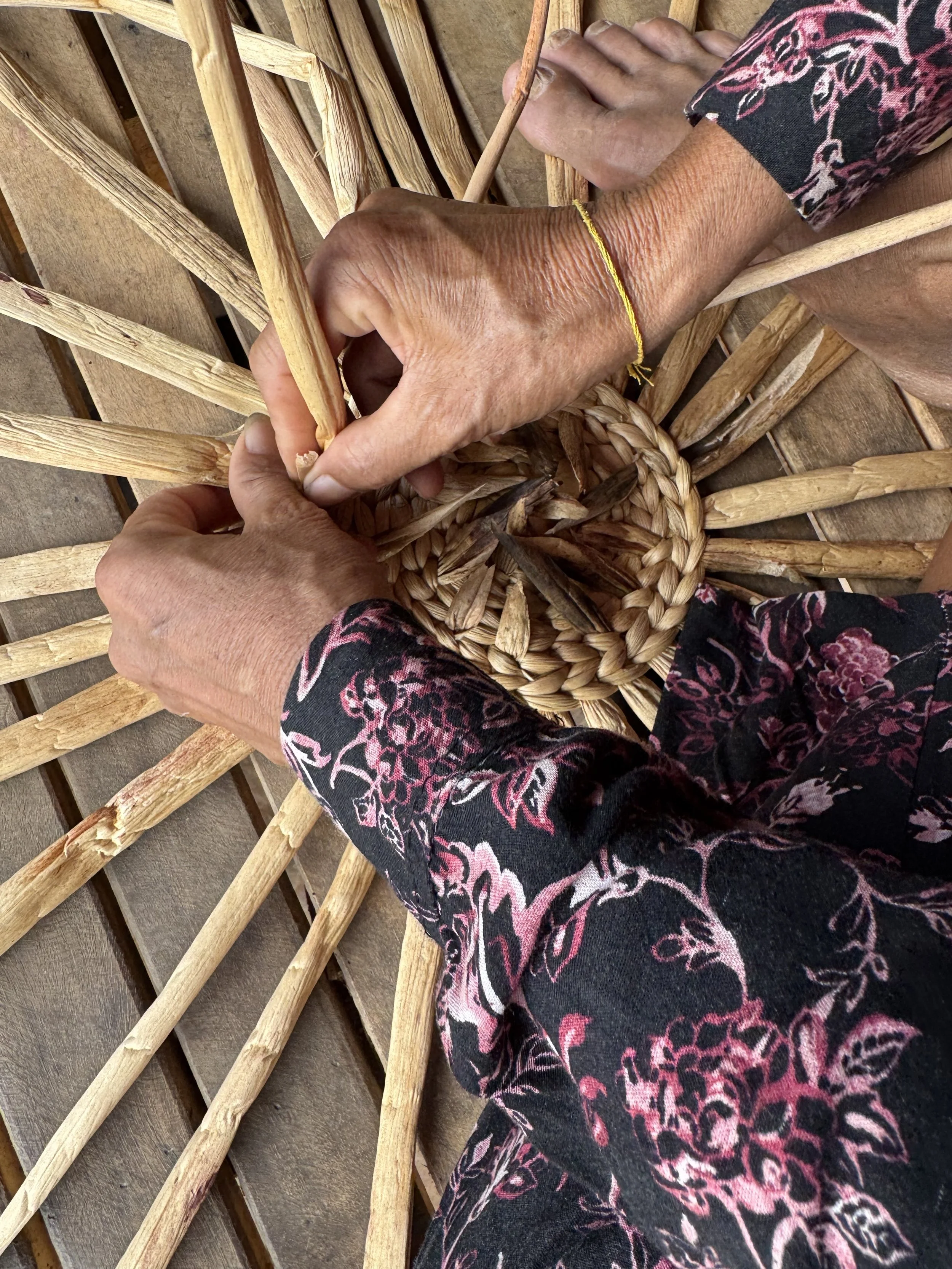
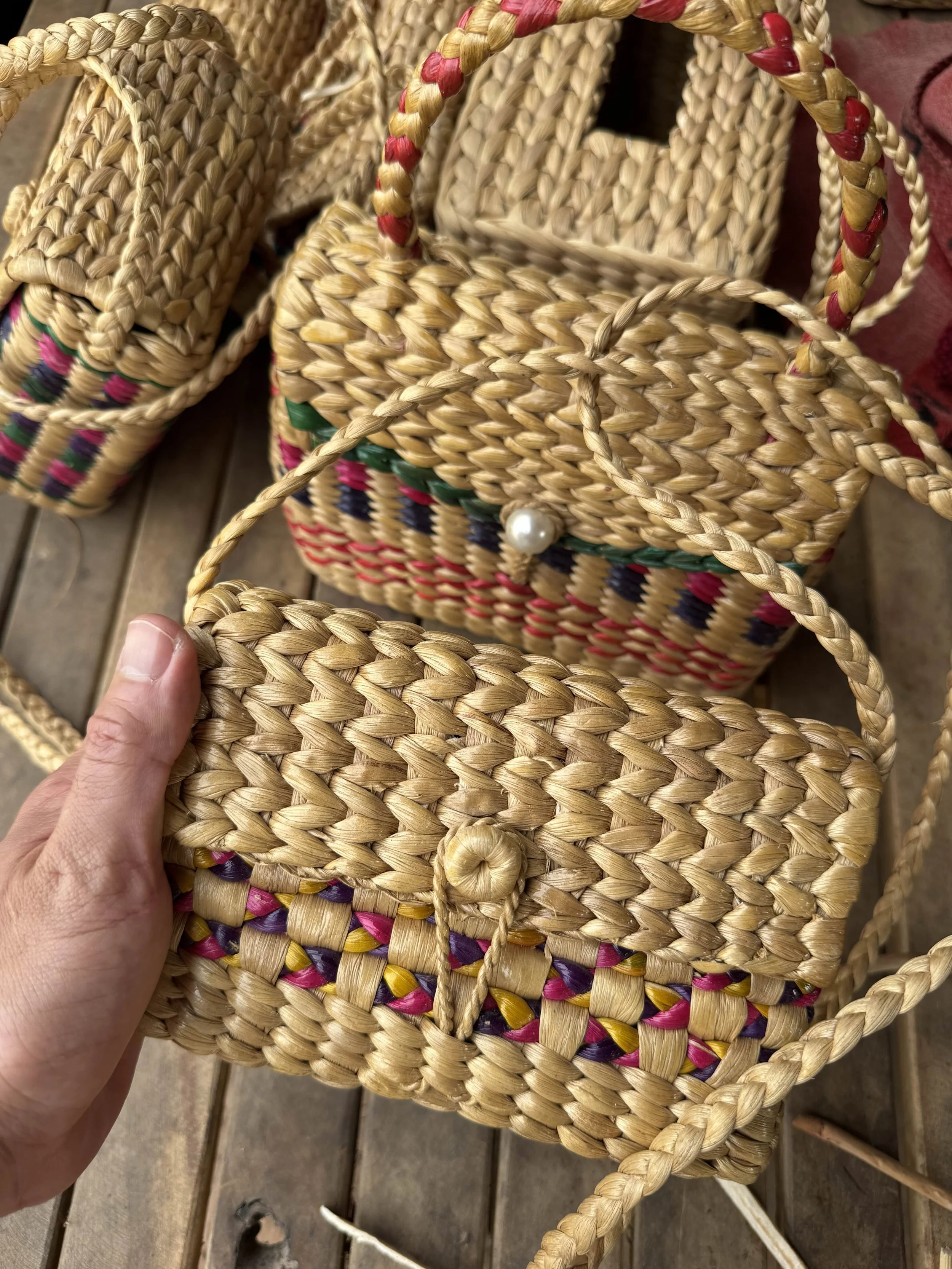
From left: People and businesses supported by Shinta Mani Foundation’s micro-finance project in Siem Reap. Last two images on right by author.
Inside Shinta Mani WILD’s Conservation Equation
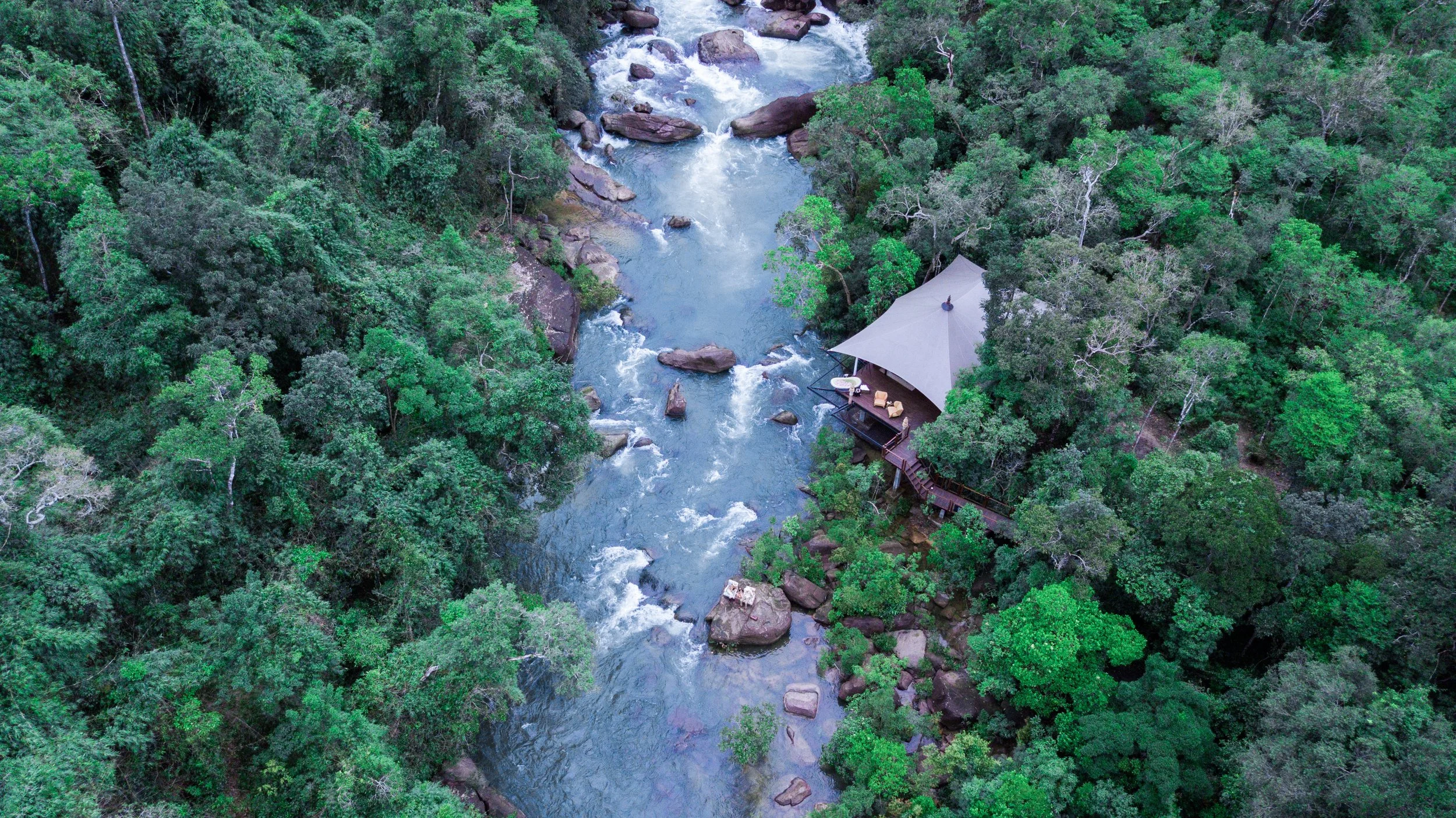
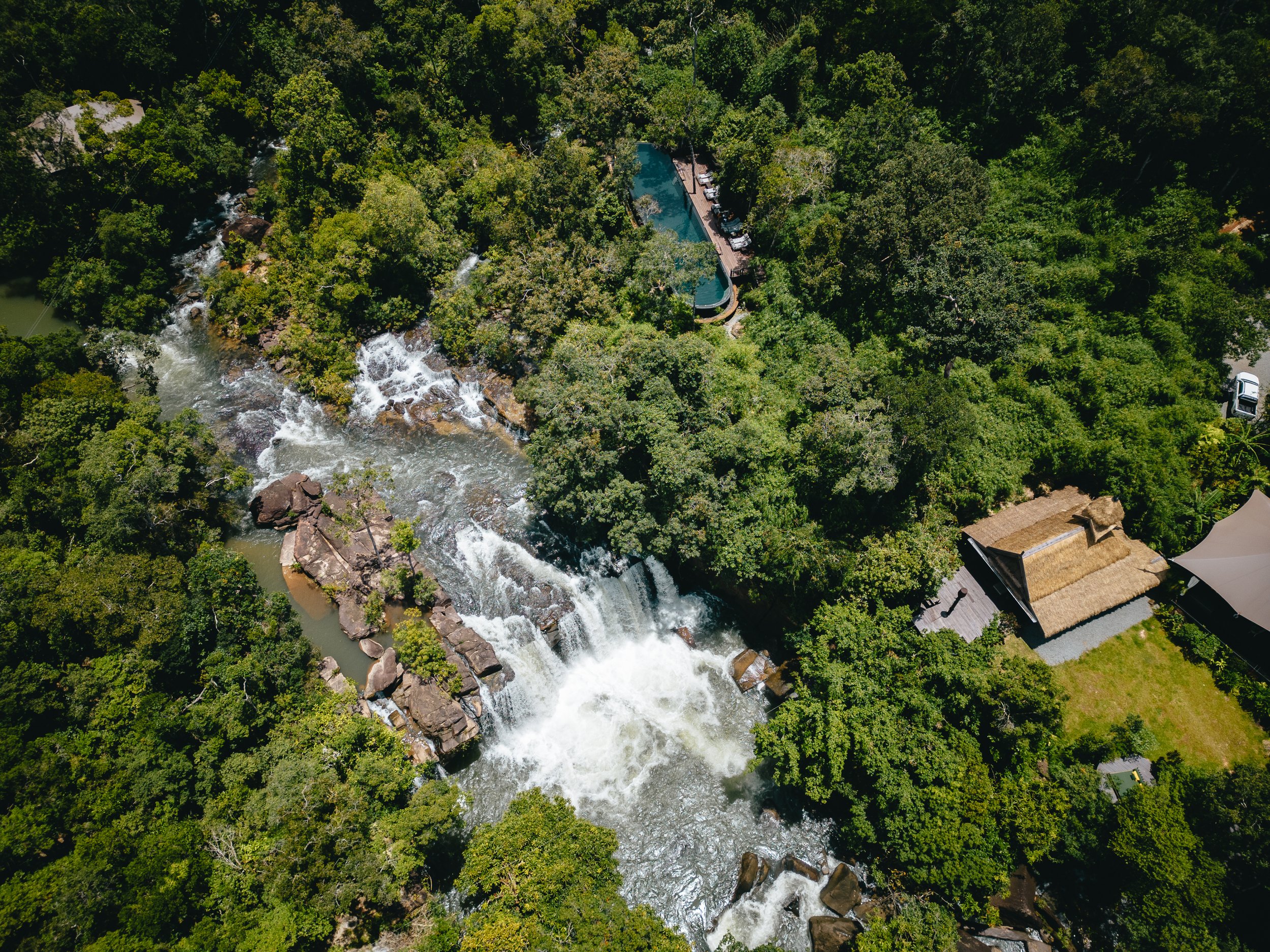
While community, culture, and education are the brand’s key programs in Siem Reap, further south, conservation is the central operating philosophy at Shinta Mani WILD. The camp funds a dedicated Wildlife Alliance ranger operation patrolling a forest concession of over 2,000 hectares within Southern Cardamom National Park, one of the last unfragmented rainforest corridors left in mainland Southeast Asia.
Bensley frames the payoff differently: the greatest achievement is what has not happened. The trees not felled. The mine not dug. The animals not killed. "Those things do not make tidy photographs for a press release, but they are the difference between a living forest and a memory," he says.
That logic is visible the moment guests arrive. It is geographically remote, unapologetically expensive, and deliberately unlike ordinary resorts. It could be a harder sell in a market where arrivals are plummeting and price-sensitive travelers are either staying home or choosing destinations with cheaper access and fewer geopolitical complications.
Yet the same attributes that make WILD a hard sell also give it a degree of insulation. Its guests are not coming to Cambodia for discounted room rates. They are making a deliberate journey for a specific, story-rich experience — ziplining into camp over a waterfall, joining rangers on anti-poaching patrols, learning how satellite imagery has tracked the loss of 4.3 million acres of forest nationwide since 2001 and why this particular tract is still intact.
In Bensley's words, “luxury hotels do not float above politics or frightening headlines.” But the upper end of the market tends to be more resilient because those guests are choosing an experience rather than simply booking a room.
That resilience depends on the people delivering the experience. The camp's staffing model is roughly 75% local hires, including former poachers who now earn their living safeguarding the forest they once worked against — a workforce that is itself part of Shinta Mani’s rich conservation story. Sarorn, who served as my butler during the visit, was one of them. He turned to poaching out of desperation to support his family before learning English and working his way into hospitality. He accompanied me on a patrol with Wildlife Alliance's rangers and recounted the challenges poaching had forced him into.
Shinta Mani WILD is exemplary of how the hospitality-funded conservation strategy is designed to work: a high-yield, low-density camp whose room revenue helps fund ranger patrols, chainsaws confiscated, and snares dismantled — staffed by the local community members.
“Our greatest achievement is something that has not happened.”
— Bill Bensley
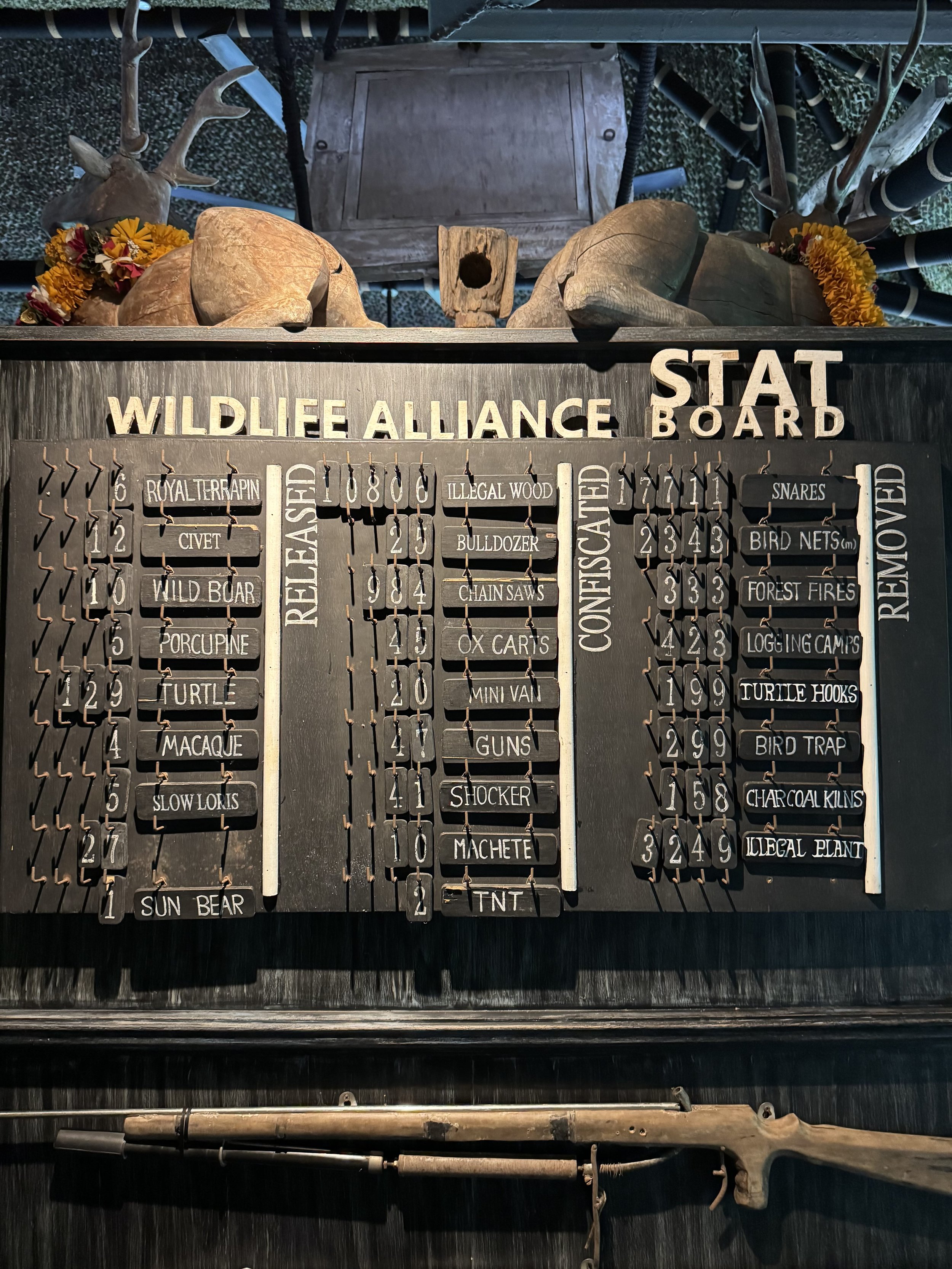
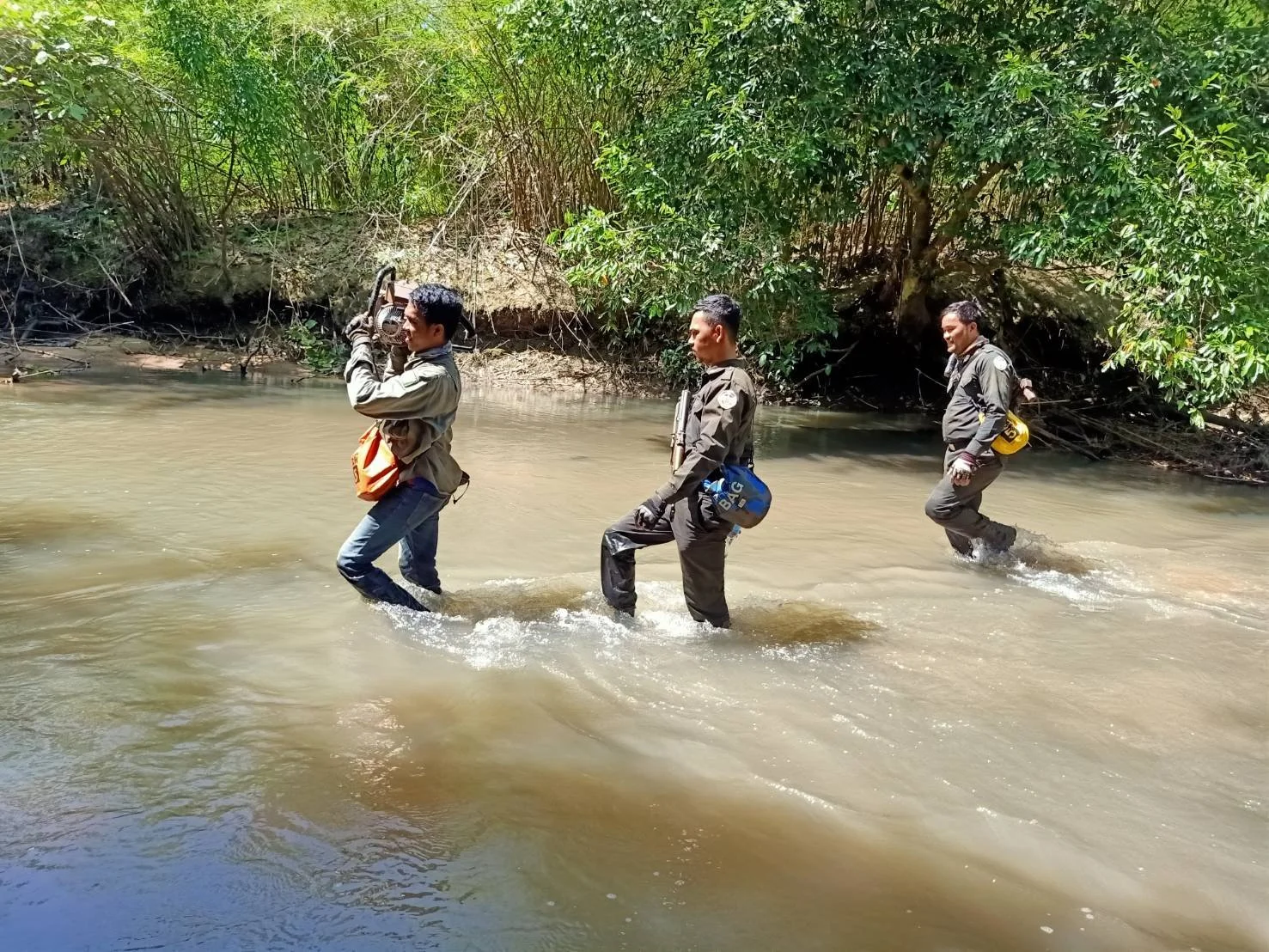
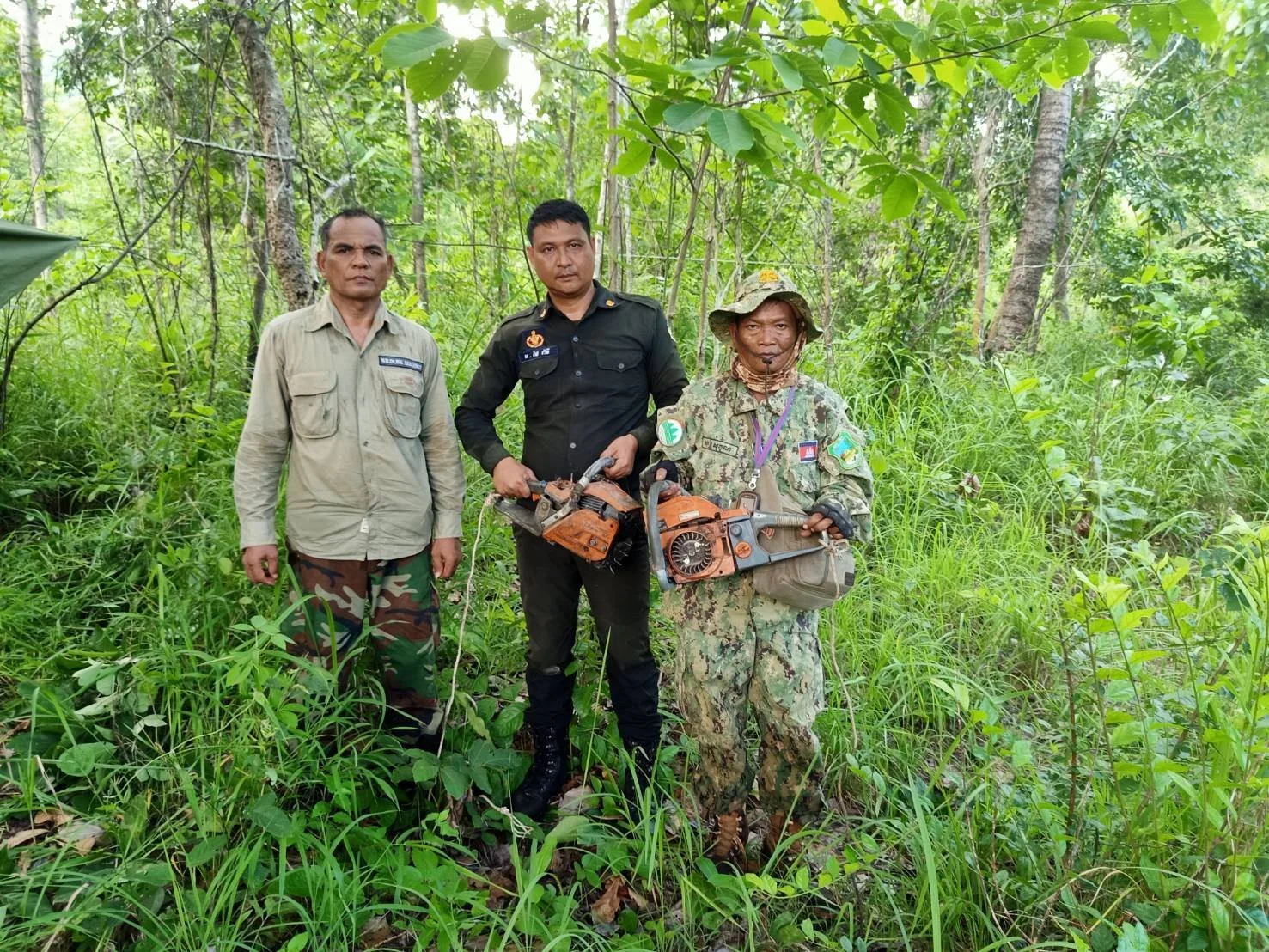
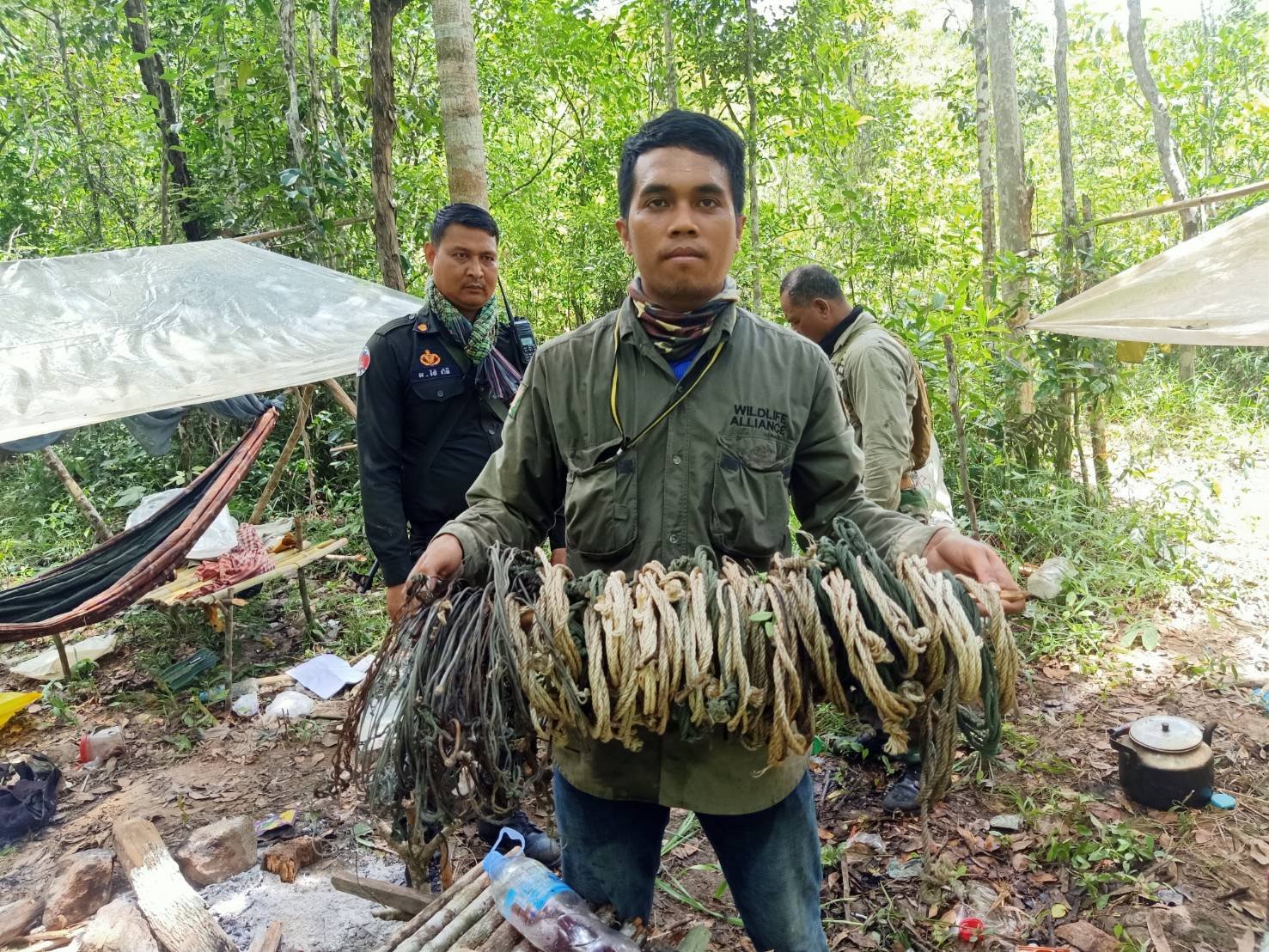
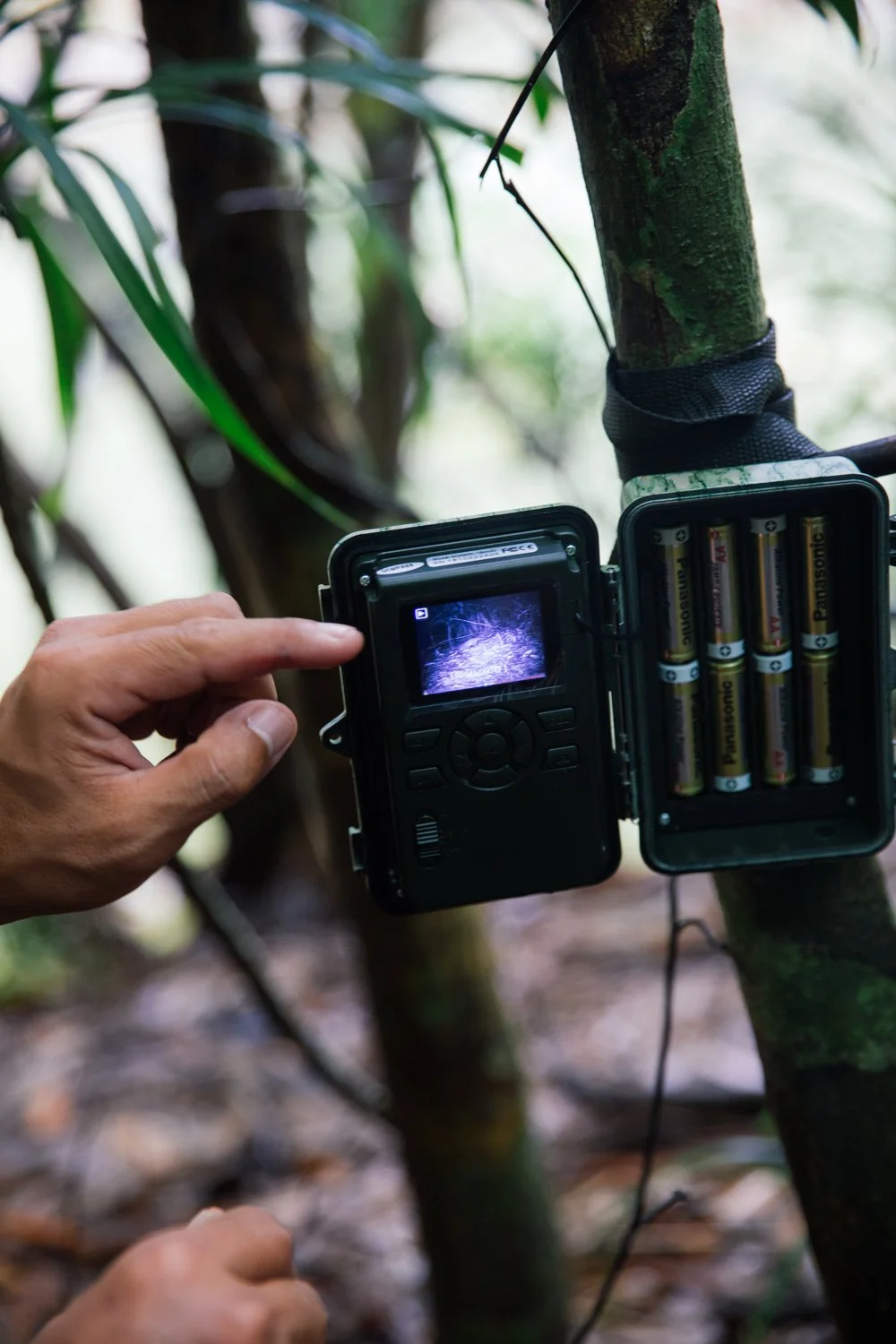
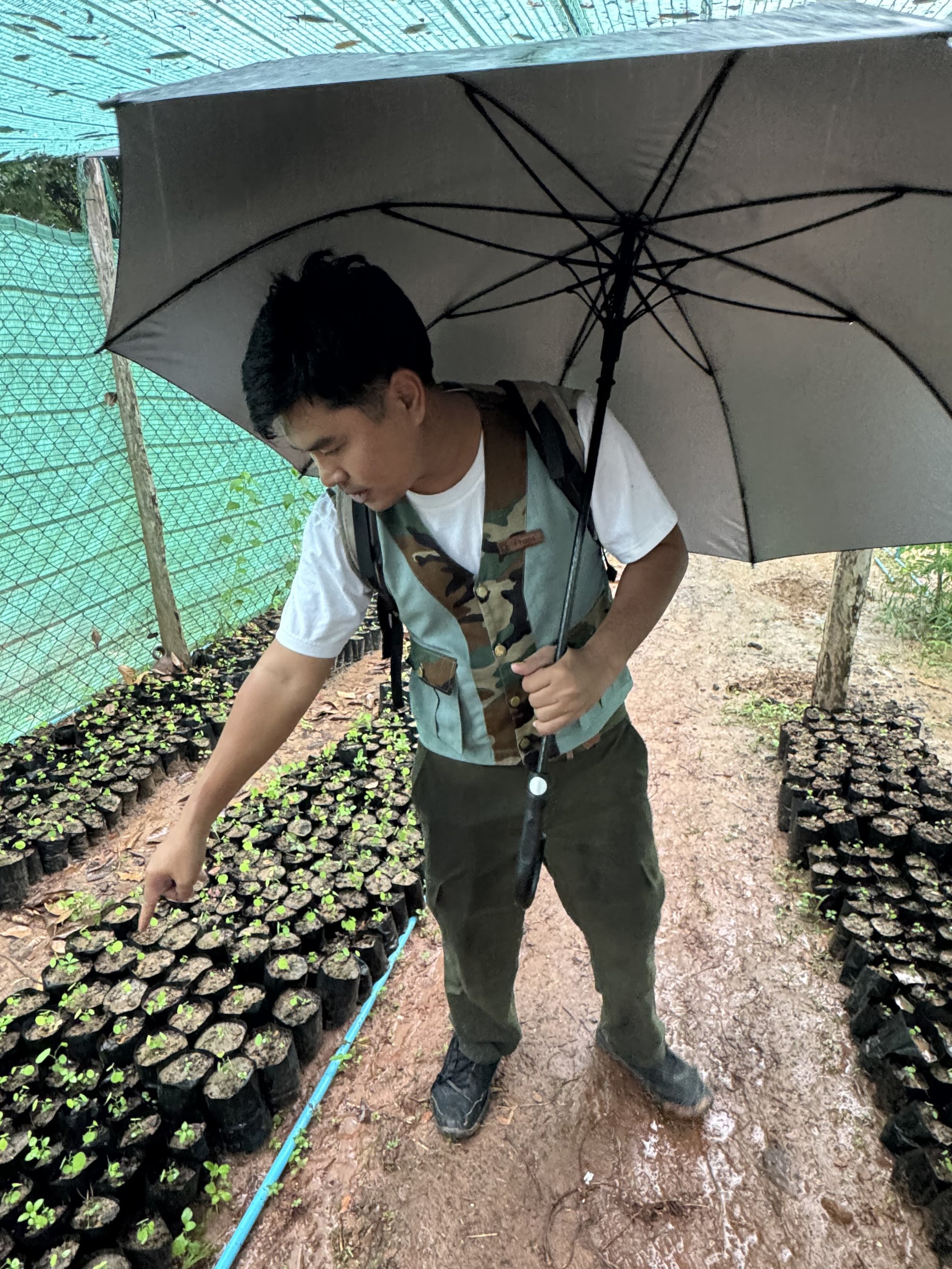
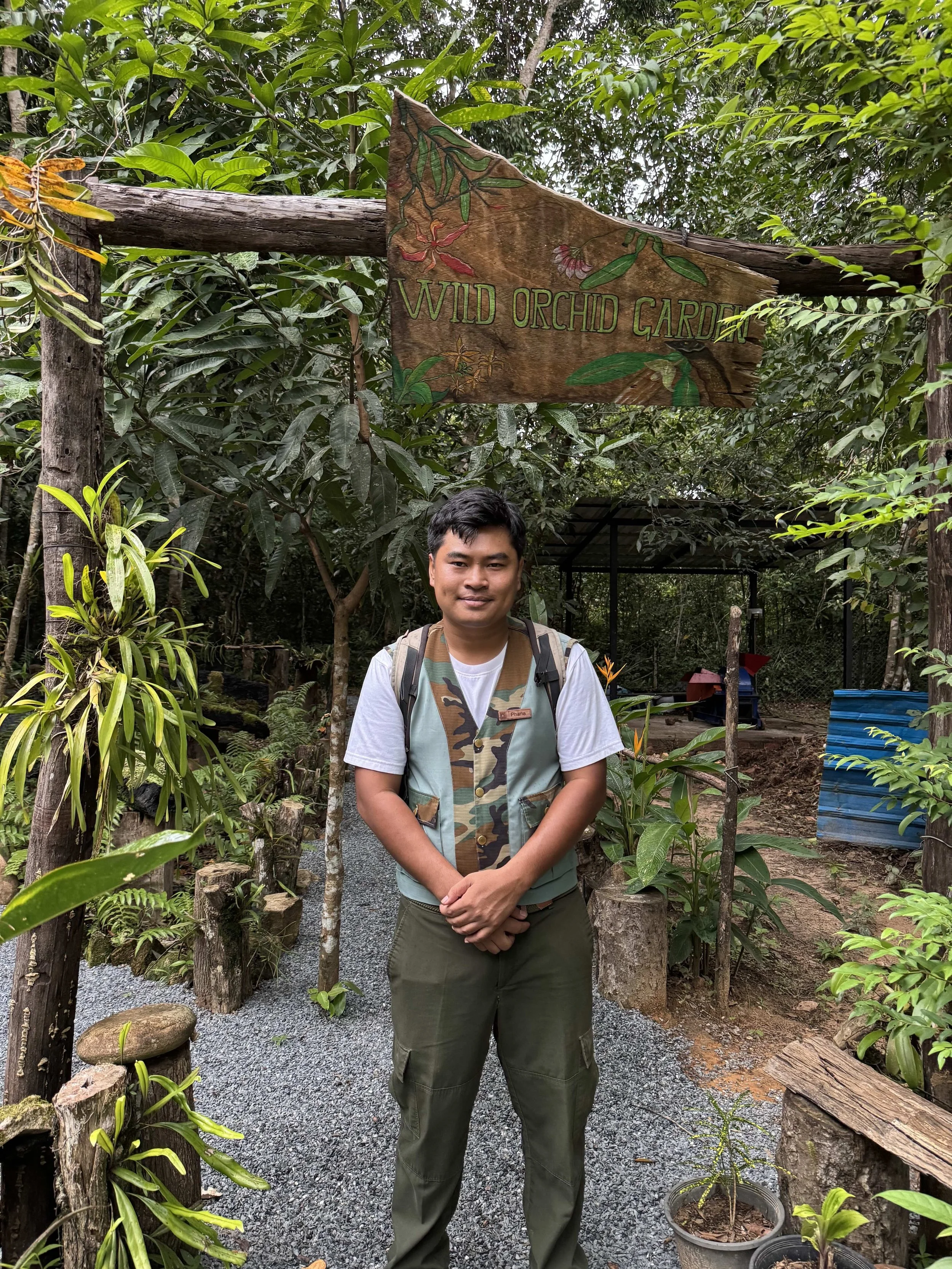
Wildlife Alliance’s ranger patrol in Cardamon National Park. Last two images by author during his visit to wild orchid and rosewood rehabilitation initiatives at Shinta Mani WILD.
A Meeting with Bill Gates Highlighted Cambodia's Trust Problem
Last summer, over lunch at a hotel he designed, Bensley spent an afternoon with Bill Gates. When the conversation turned to Shinta Mani, Bensley saw an opening. "I gently suggested that perhaps he might be interested in helping us," Bensley recalls. "He declined. He explained that Cambodia's reputation for fraud made him extremely wary. I could not honestly tell him that his concern was unfounded."
That exchange underscores that Cambodia's downturn is not just a matter of flight routes and border checkpoints; it is also a trust problem. Trust is exactly the currency the Foundation's non-hotel funding depends on.
Asked whether less rigorous organizations using "foundation" and "impact" carelessly diminish what he and his team have spent two decades building, he reframes the question: it is not that loose language directly diminishes authentic work, but that it raises the "burden of proof" for everyone operating in the same space. "It makes serious donors suspicious," he explains, "and that can prevent money from reaching organizations doing genuine work." His prescription is "not louder marketing. It is evidence, transparency, and results that can be physically seen."
Shinta Mani's insistence on transparency and audited accounts becomes more than a governance box-tick exercise. Shinta Mani WILD is a member of The Long Run, embedding its rigorously tested 4Cs framework – Conservation, Community, Culture, and Commerce – into its operation.
But credentials alone do not explain why the brand's approach to trust feels distinct on the ground.
That comes down to an instinct that co-founder Sokoun Chanpreda insisted on from the start. "He never wanted anyone to feel guilty, cornered, or embarrassed because they had come on holiday and were suddenly expected to demonstrate their virtue," Bensley explains. Guests can visit the hospitality school or travel into the forest with rangers as long as they ask about.
Bensley emphasizes, "We were doing this before 'impact' became a marketing department, an ESG paragraph, or a fashionable panel discussion."
That evidence is available for anyone who asks. Based at Shinta Mani Angkor, the Foundation’s team offers donors and guests a direct view of its work. When Neat dropped me at the hotel, she was heading to the airport to meet an arriving donor — the kind of hands-on access her team offers routinely. It is exactly the physically visible proof Bensley says the sector now needs more than marketing, in a country where donors need clear evidence that contributions reach the people they are meant to help.
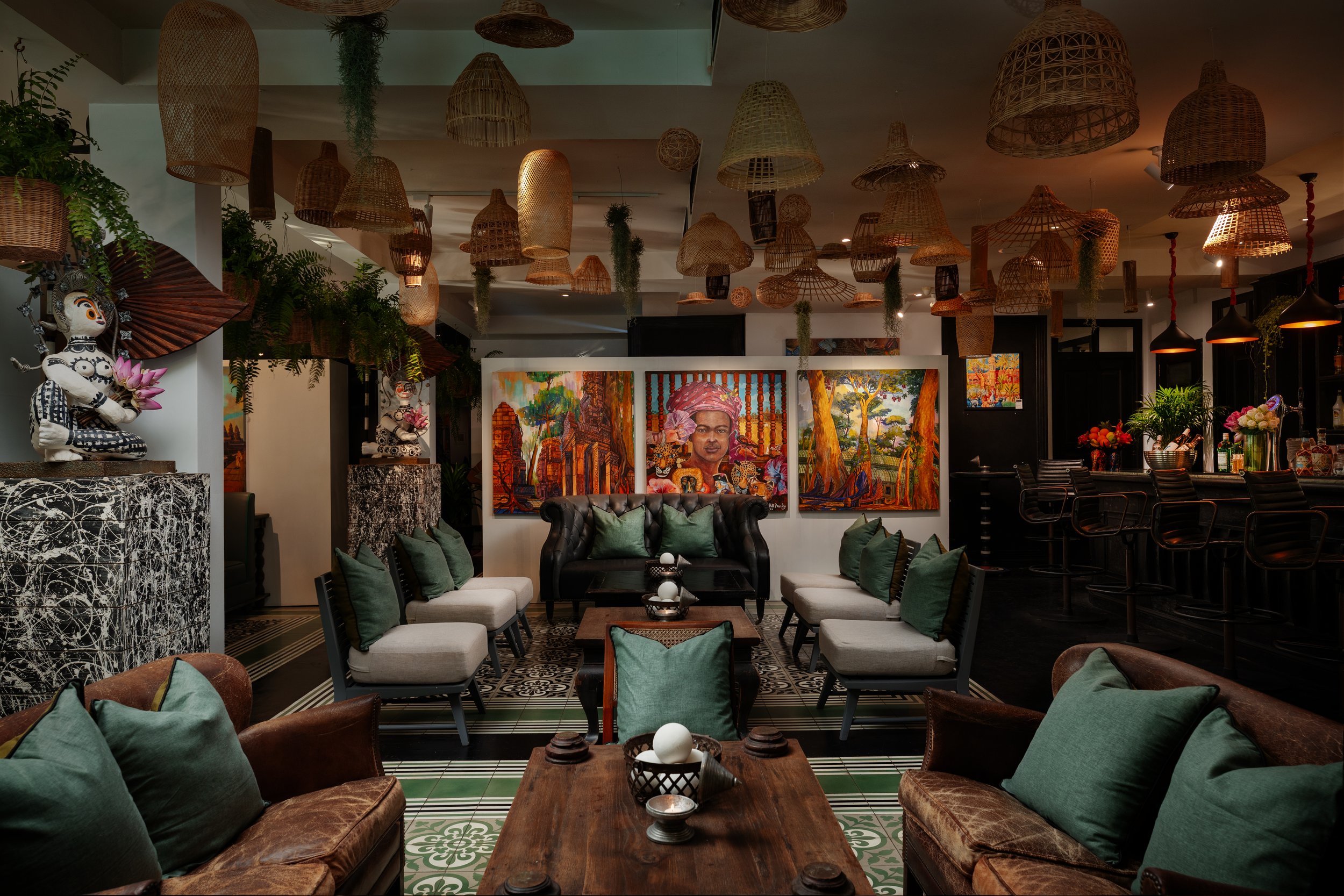
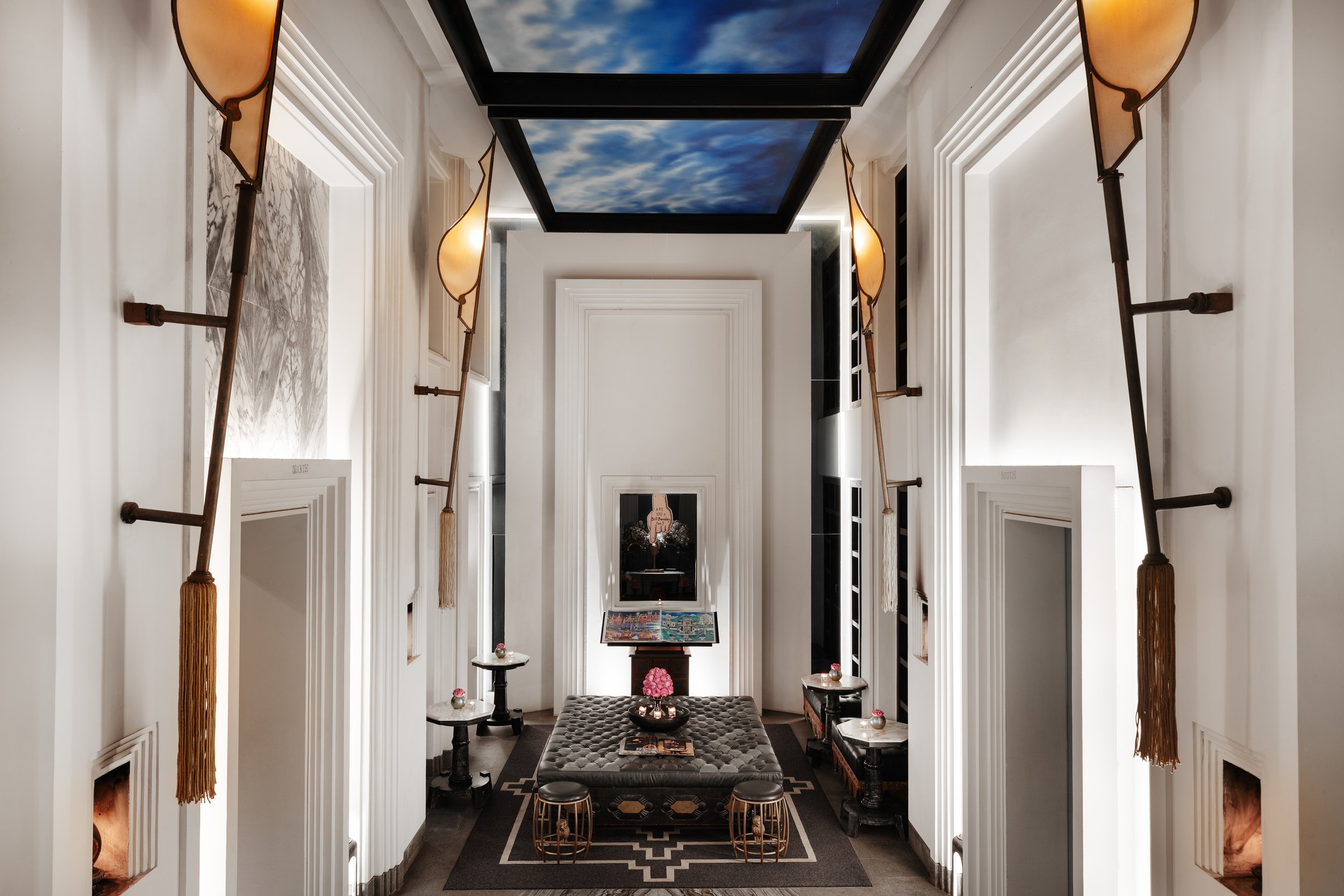
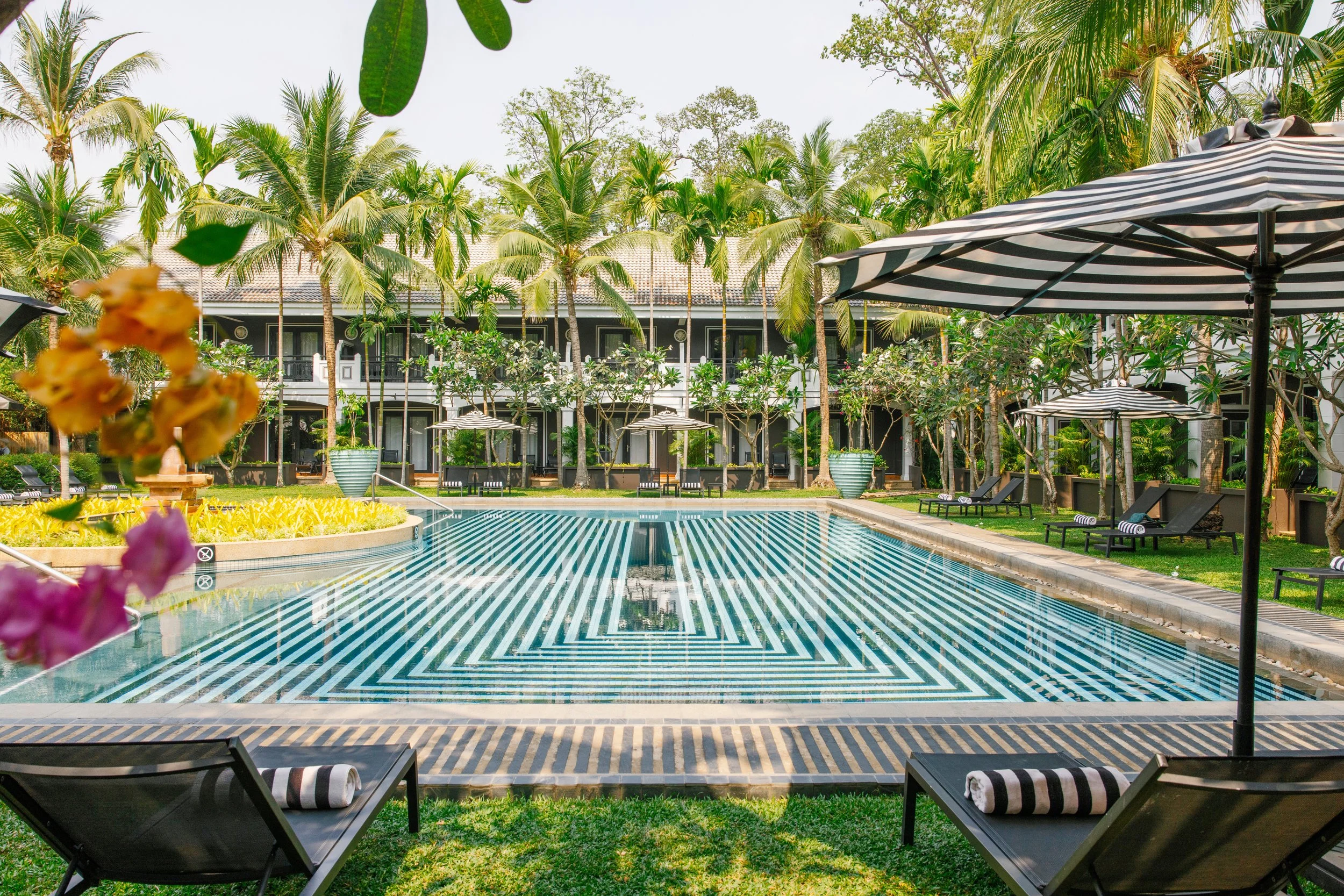
Shinta Mani Angkor
“The real damage is when people use words such as “foundation” and “impact” carelessly…it makes serious donors suspicious, and that can prevent money from reaching organizations doing genuine work.
The answer is not louder marketing. It is evidence, transparency and results that can be physically seen.”
— Bill Bensley
The Verdict: Resilient by Design, but Being Tested to Its Limit
At Shinta Mani, hotel revenue didn’t become the load-bearing wall for its Foundation. With art sales, retail, brand licensing, and donations alongside hotel contributions, a 48% decrease in international arrivals has not forced a proportional cut in community or conservation work at Shinta Mani.
While the model is built to absorb this kind of shock without hotel performance dictating outcomes month to month, that does not make the brand immune.
Art sales fluctuate, brand partnerships depend on confidence in Cambodia, and retail relies on physical footfall. If the downturn becomes prolonged, those sources could weaken together. For now, however, the structure has given the Foundation time and room to keep delivering on its commitments — which is what a purpose-led hospitality model should be built to do.
Shinta Mani's position — diversified, audited, insulated by design — is closer to a best-case example than a typical one. For the hundreds of smaller, hotel-dependent operators across Cambodia with no equivalent foresighted leadership or funding buffer, this downturn is a far blunter test.
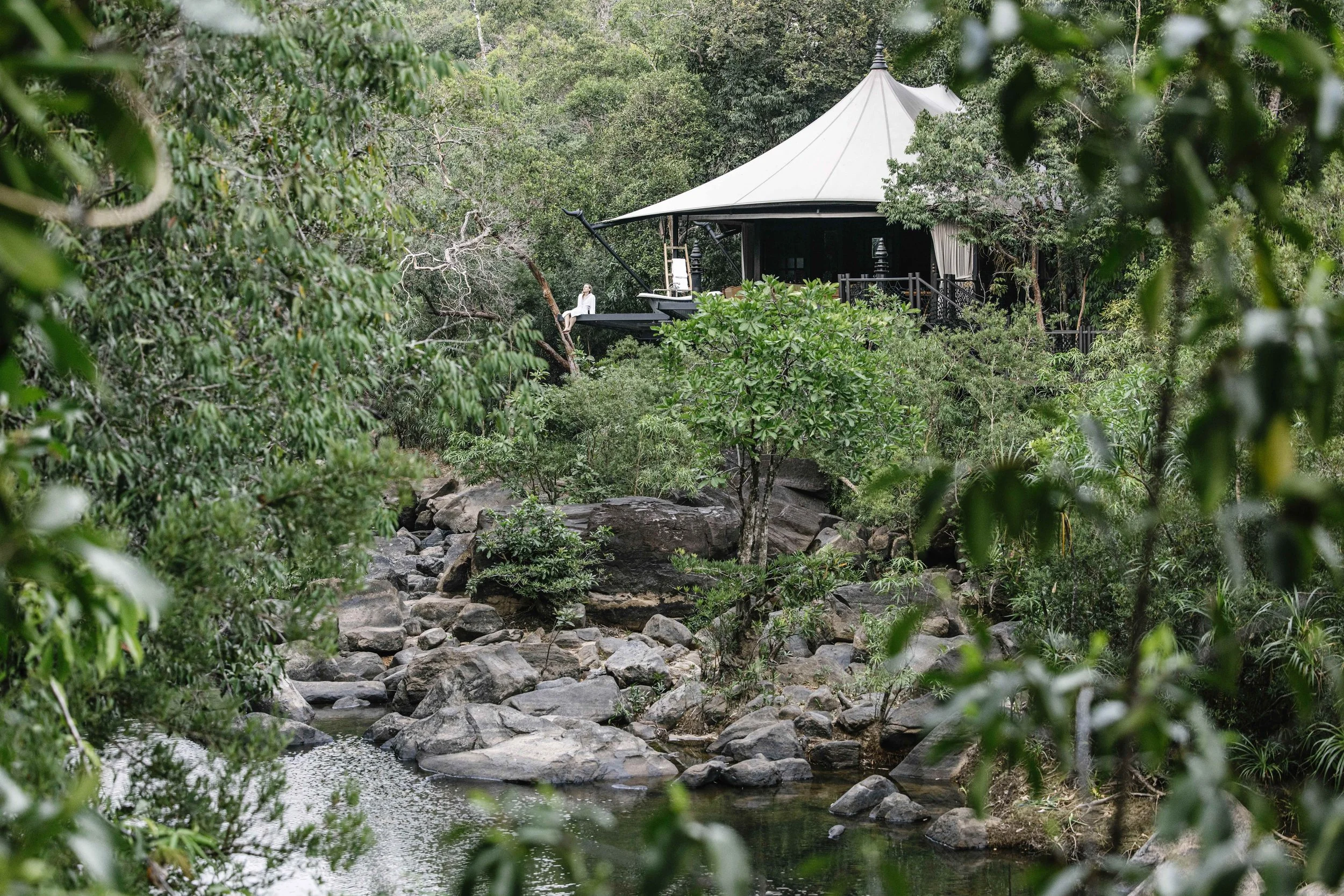
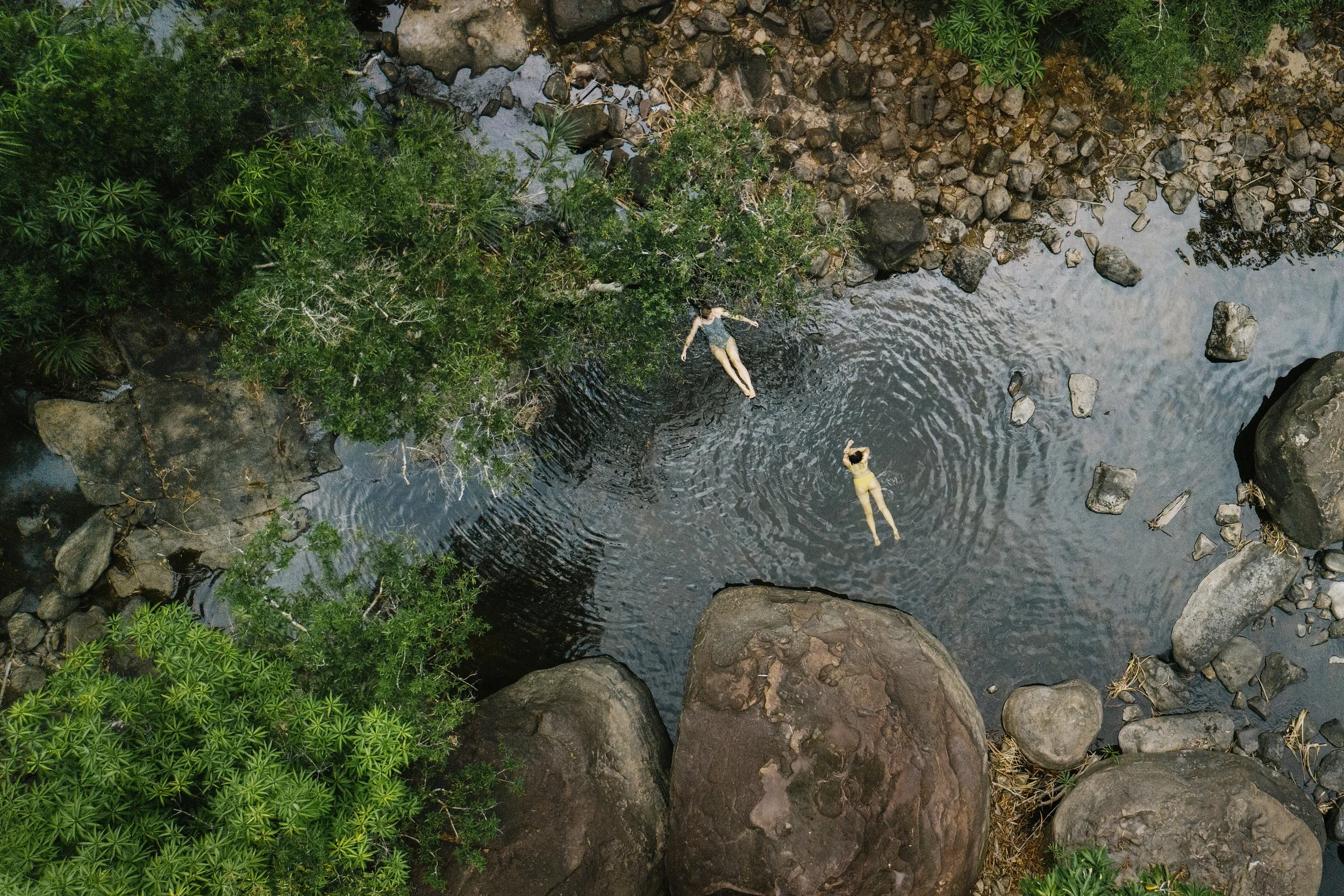
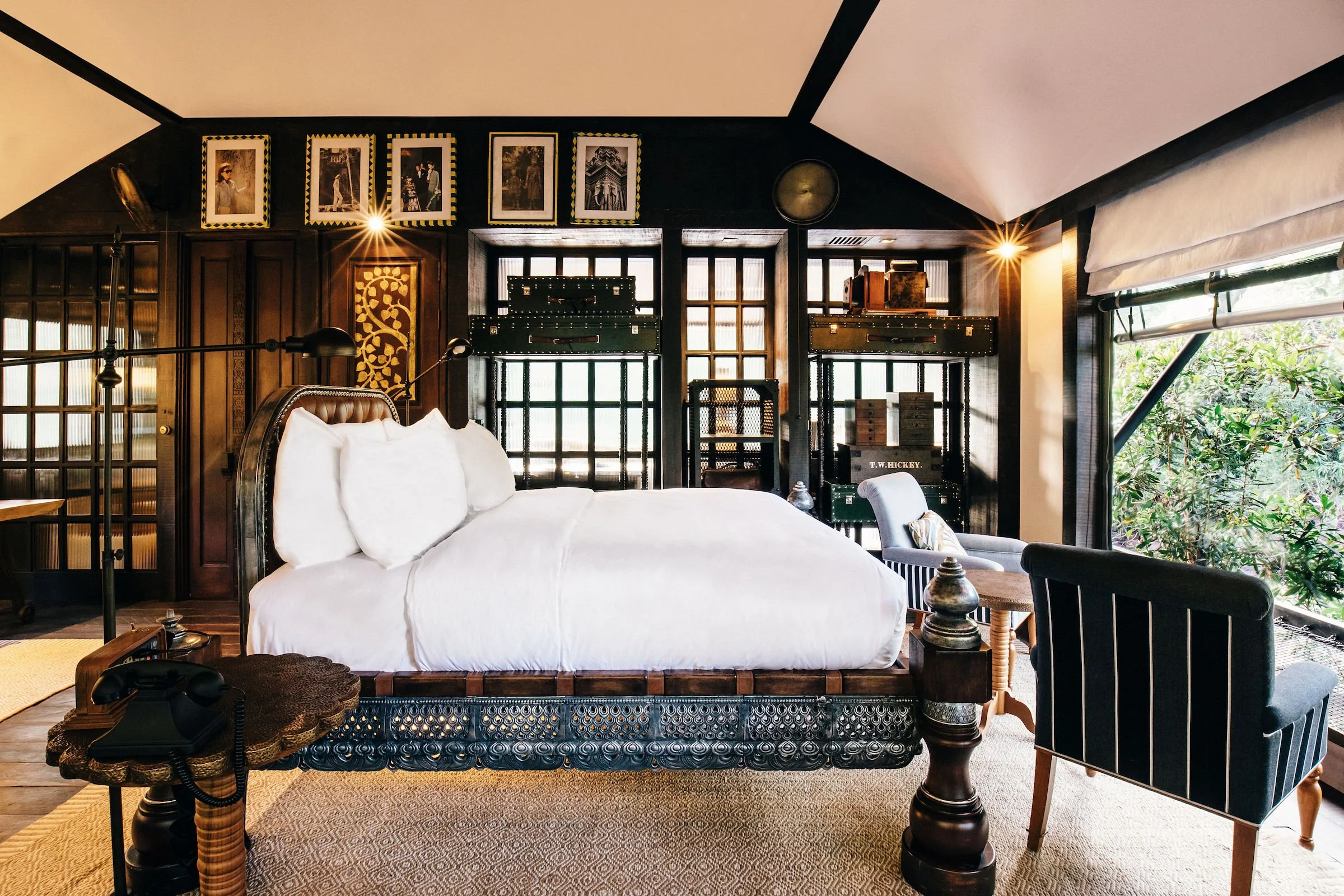
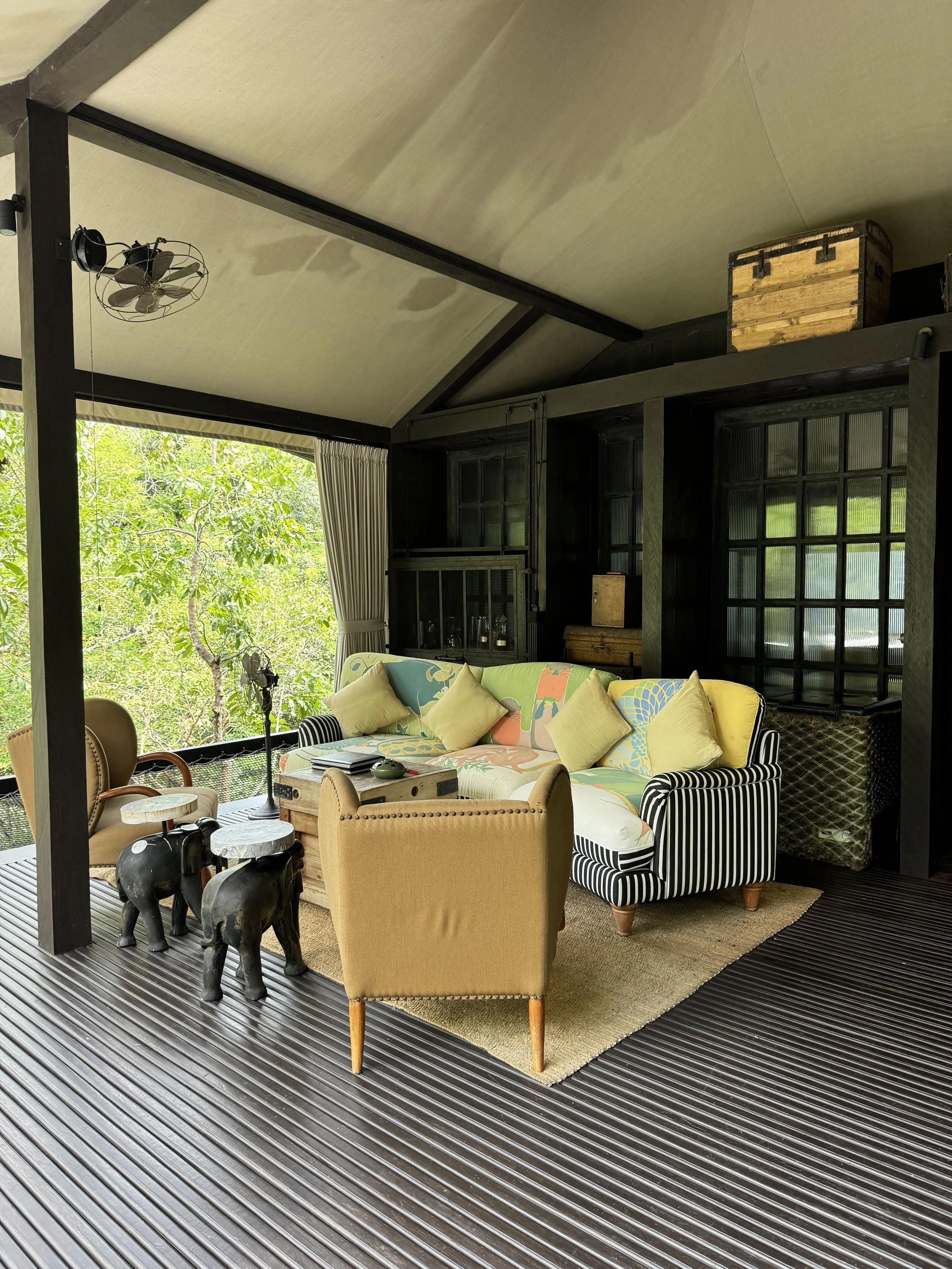
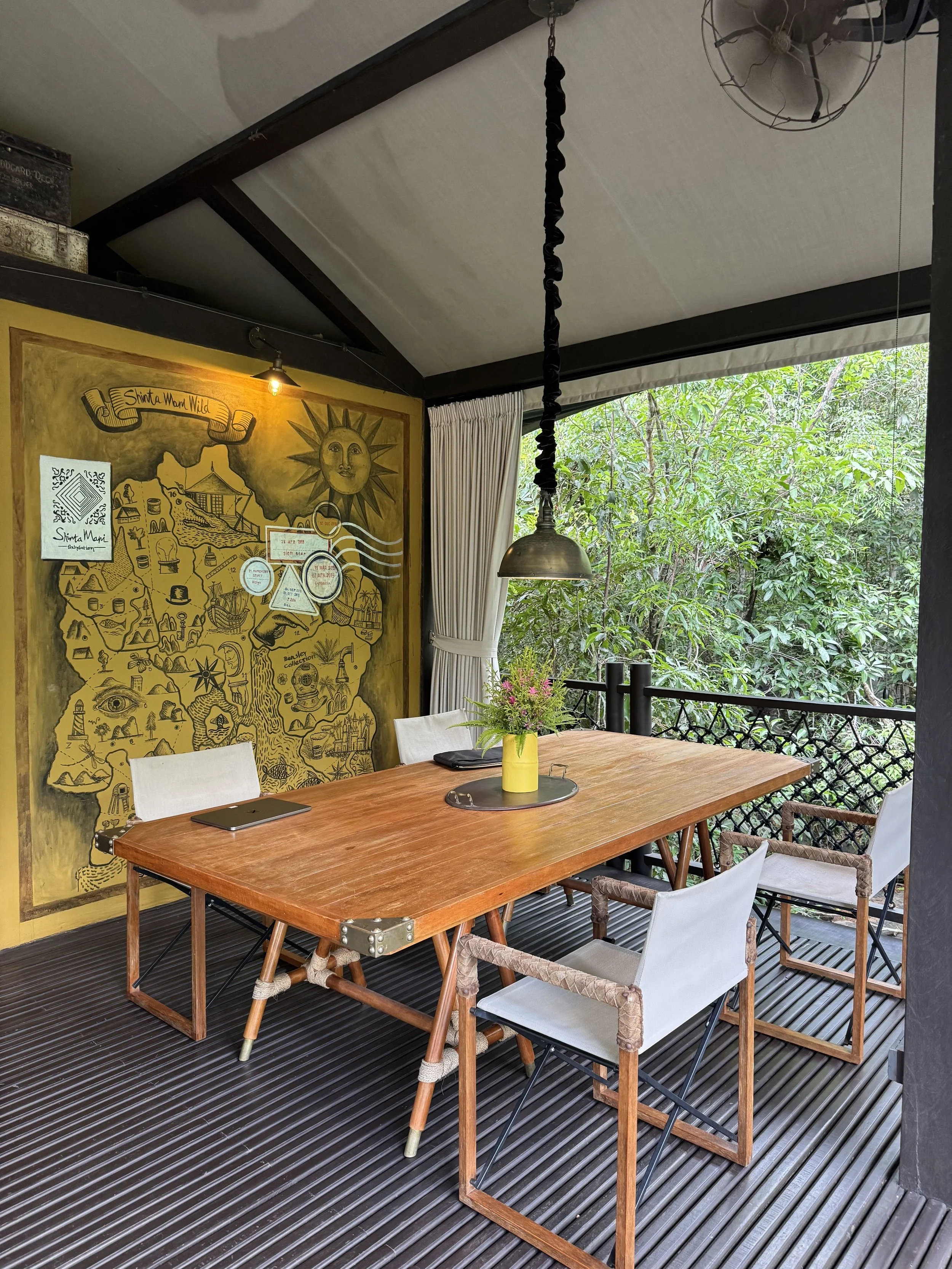
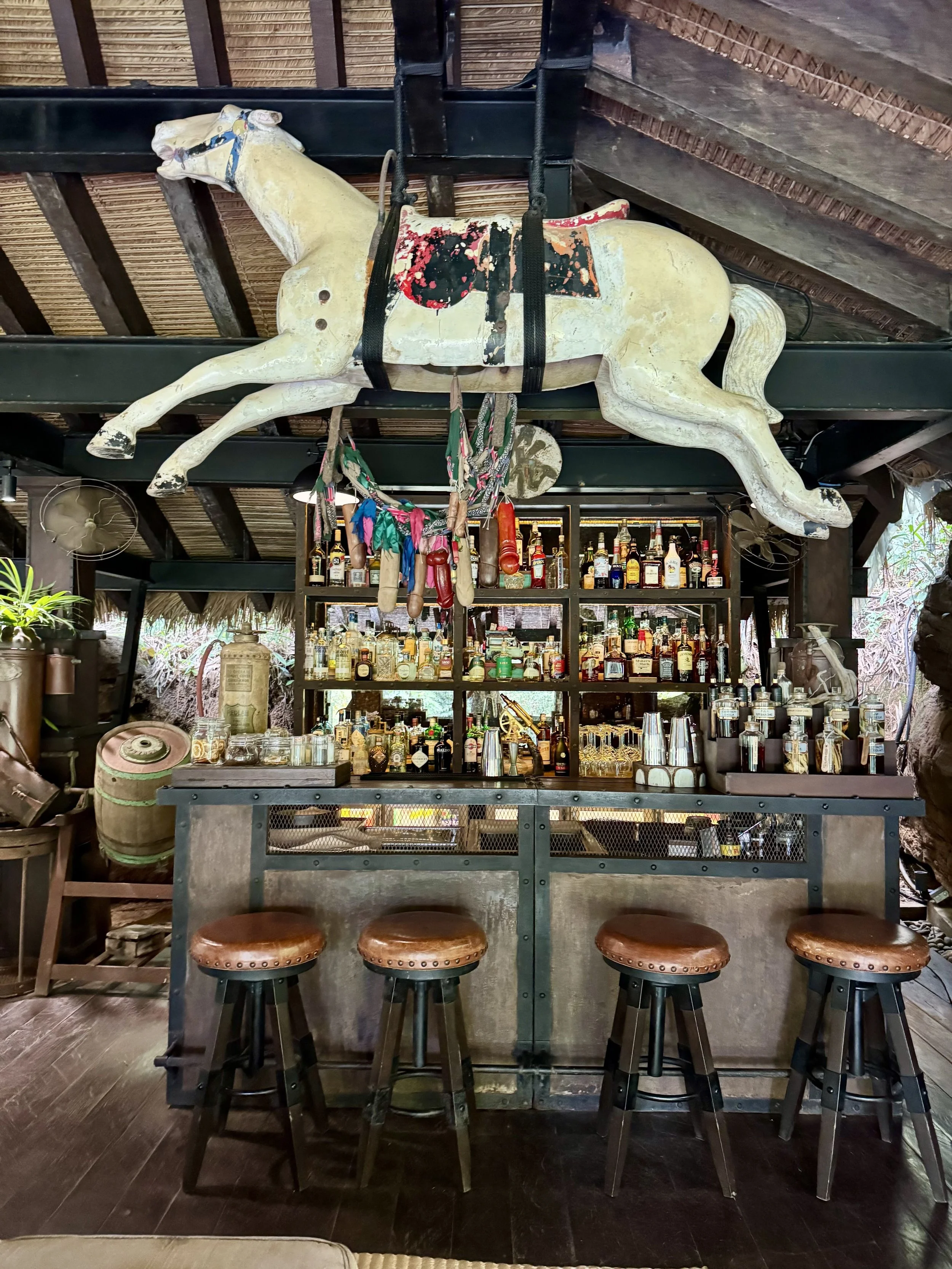
Shinta Mani WILD. Last three photos by author.
Three Lessons for Other Impact-Led Hoteliers
Here are three principles that stand out for other hoteliers considering how to structure and scale impact work of their own.
Diversify funding the way you would diversify revenue
Pair hotel revenue with guest micro-contributions, retail, corporate partnerships, and a recurring donor base that exists independently of room nights. The Datai Langkawi runs a similar model, directing a share of guest activity charges and retail sales into its conservation trust — useful as one funding source among several, not a substitute for the rest.
Set a diversification threshold. A foundation funded 80% by hotel revenue is one bad season from crisis; four or five smaller, uncorrelated sources — guest contributions, corporate sponsorships, licensing, recurring donors — can absorb one stream collapsing without shutting programs down.
Discipline beats scale
Fund before you announce. Confirm new scholarships, wells, or ranger positions only once multi-year funding is secured, not pledged.
Match growth to actual income. Cap annual program expansion against the previous year's realized income, rather than projected revenue, and retain six to twelve months of operating reserves before scaling.
Transparency is the actual product
Publish dedicated, audited foundation accounts, and show unit costs — the price of a well or scholarship, the terms of a microloan — as specific numbers donors can independently verify.
Give donors direct access to the work. Contact with program staff and beneficiaries builds trust more effectively than a glossy annual report; Neat meeting arriving donors herself is a simple example of how evidence becomes relationship-building.
"We were doing this before 'impact' became a marketing department, an ESG paragraph, or a fashionable panel discussion."
— Bill Bensley
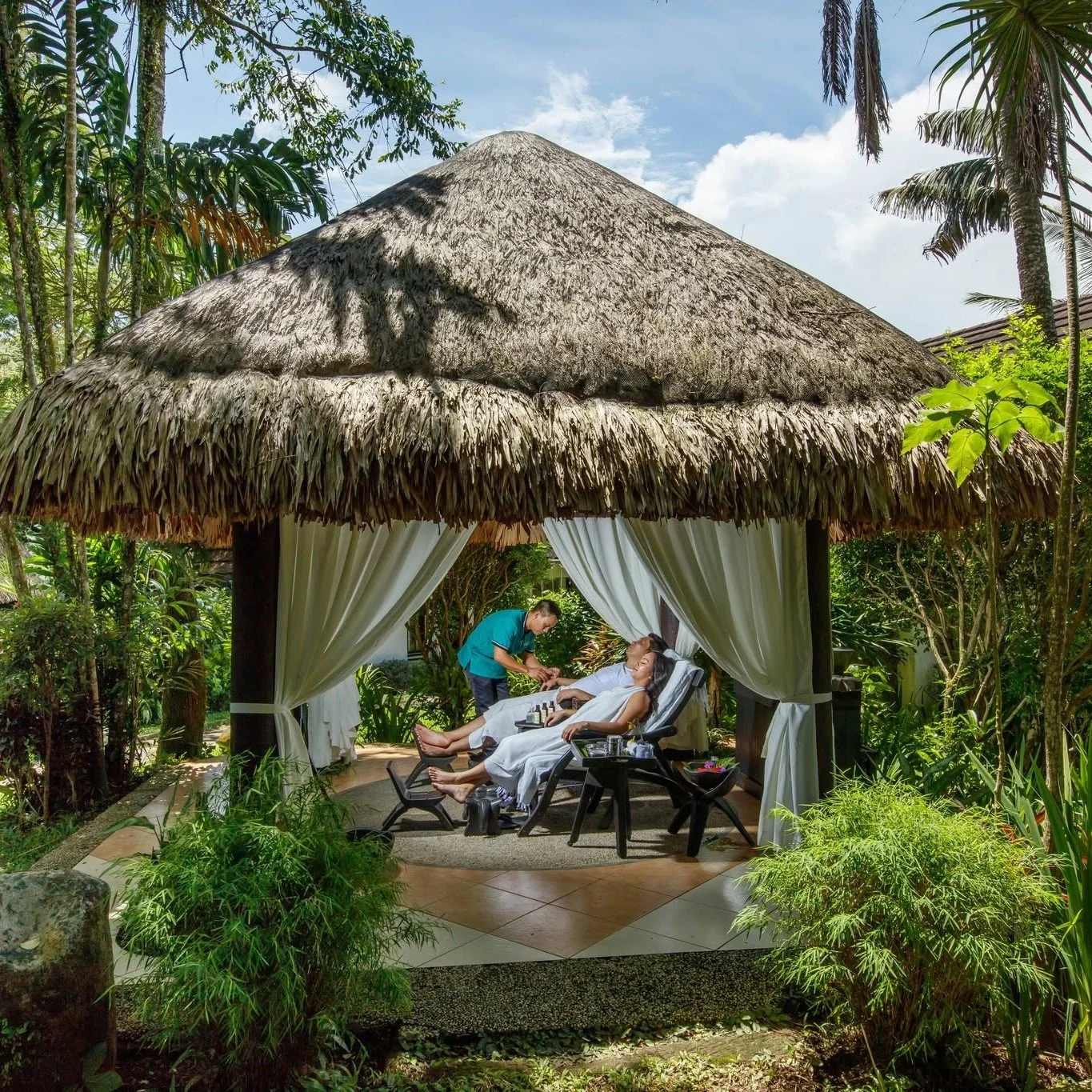
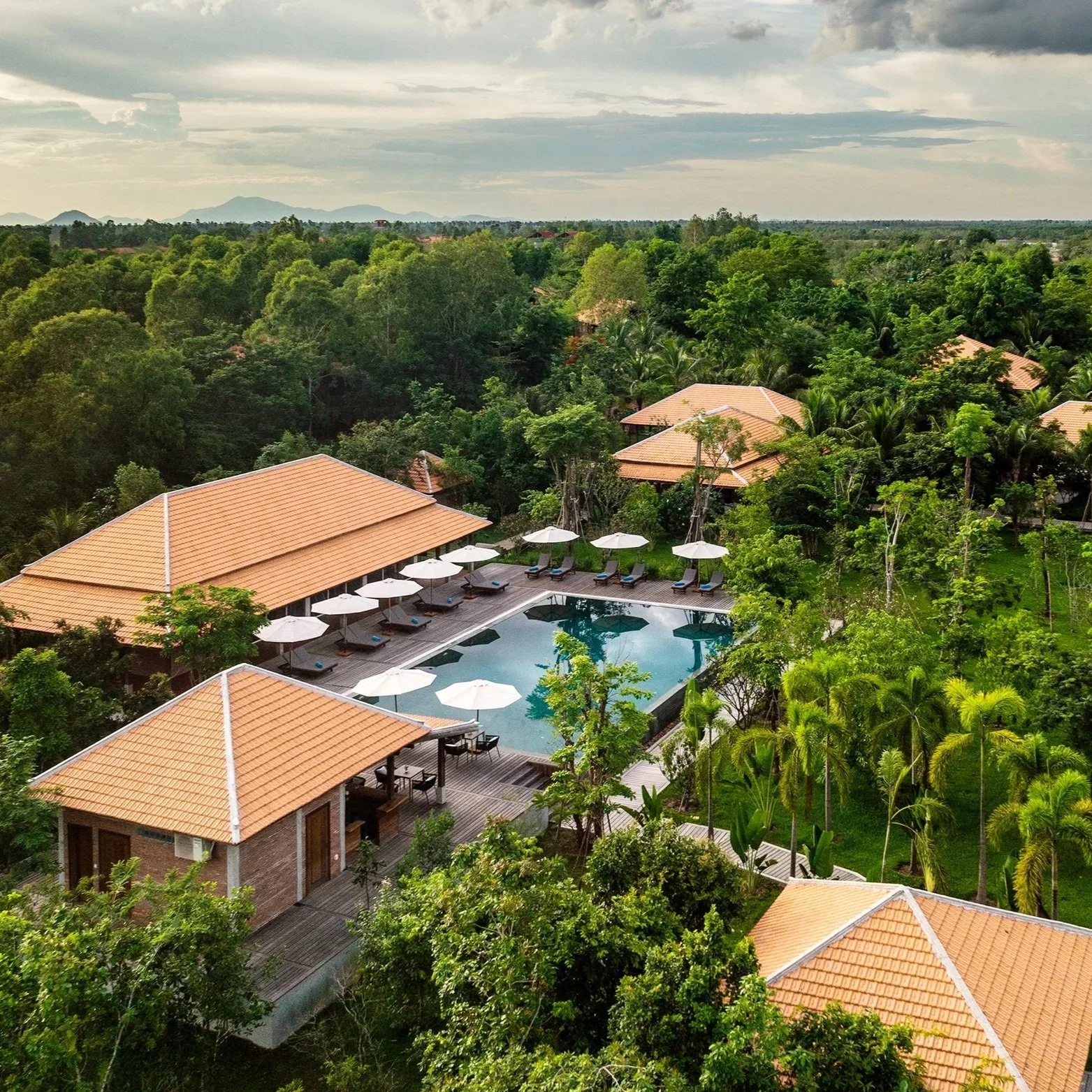
All photos by Shinta Mani unless stated otherwise.