No AI Can Replace A Travel Advisor With Human Empathy. But Where Does the Industry Go From Here?

For two decades, the online travel booking experience ran on a reliable, if imperfect, arrangement. Discovery flowed through Google. Brands and OTAs converted traffic into bookings. Influencers, media, travel advisors, and tour operators were compensated at every link in the chain. Whoever was closest to the customer held what mattered most: the data and sometimes also the relationship.
That architecture is now being dismantled faster than the industry could have anticipated.
Phocuswright reported that 33% of travelers typically use Generative AI ChatGPT, Claude, and Perplexity for trip research, compared with just 6% in the second half of 2024.
AI travel planning tools like Travo, Layla, and Navan Edge can generate itineraries in seconds, on demand. Agentic tools like OpenAI Agent Mode and Claude Cowork can now search, select, and handle most of the booking process without the traveler visiting a single website.
The AI disruption, however, causes an equally impactful and consequential dimension. A peer-reviewed study published this year found that AI recommendation systems show a strong, consistent bias toward already-popular hotspots such as Kyoto, Bali, or Phuket.
Analyzing 85,000 AI travel queries, researchers described the phenomenon as AI "shrinking the world by narrowing options."
Put simply, AI is not just changing how travel is planned. It may be concentrating demand on destinations already under stress, while the places that need tourism the most remain structurally invisible to algorithmic discovery.
Two conscious travel business leaders, Nanami Granger, Founder and CEO of Eighty Days Japan, and Amit Jaipuria, Founder and CXO of Postcard Travel Club, have been impacted by this interruption.
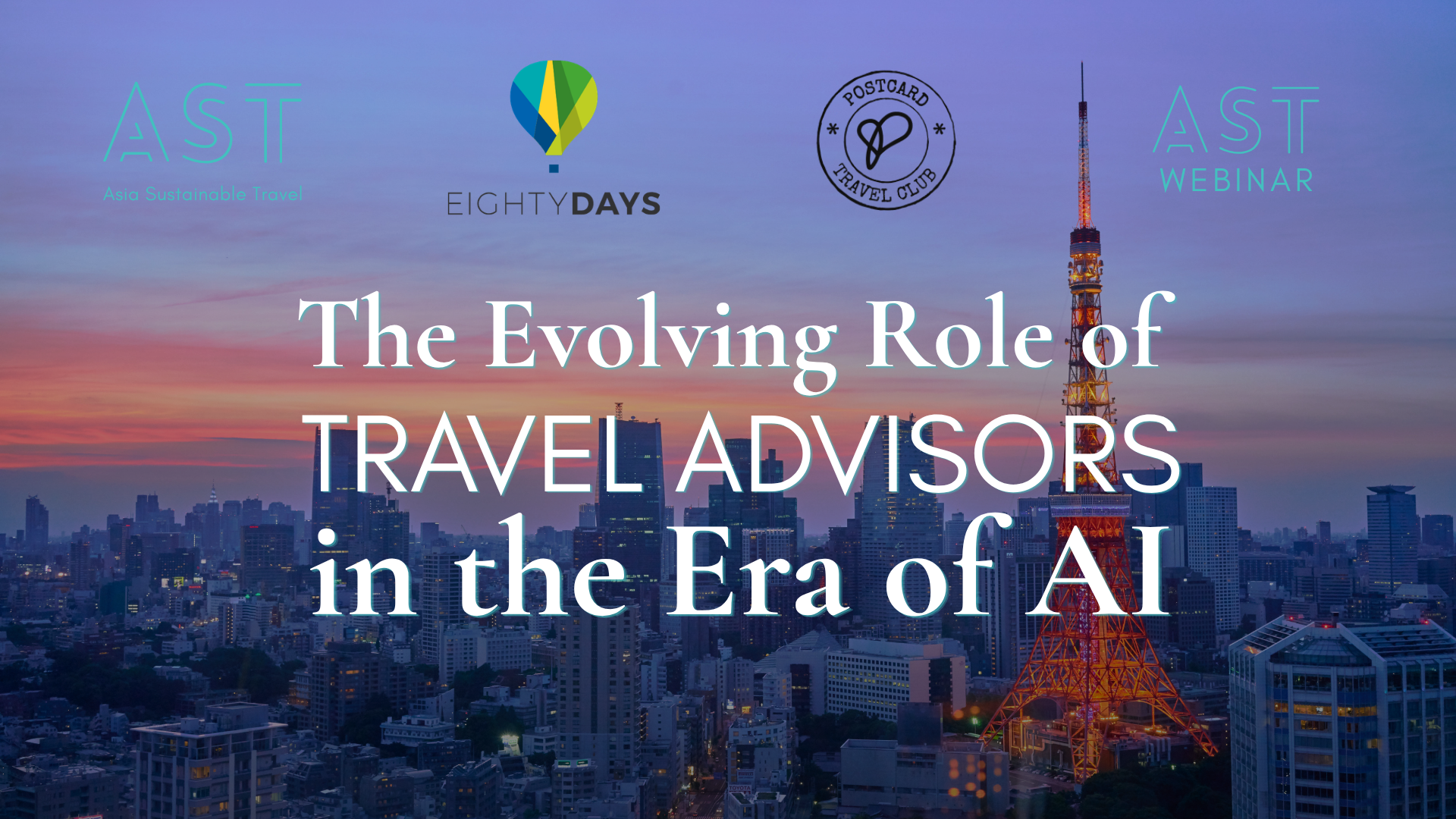
On the recent AST Webinar, "The Evolving Role of Travel Advisors in the Age of AI," they shared their clear-eyed diagnoses of the AI-prompted challenges and opportunities before them.
What AI Has Revealed
The most clarifying question of the session was also the most uncomfortable: What has AI revealed about the weaknesses in how your own business was built?
For Nanami, the vulnerability is speed. "Our customers are always wanting to get an answer right away — an itinerary within ten seconds. In this case, we can't beat AI," she acknowledged. But her honest diagnosis also illuminated where Eighty Days Japan remains structurally unassailable: precision and real-time intelligence.
Japan's operational complexity, for example, bullet trains requiring two separate tickets, restaurants closing without notice, artisan studios open only to those with the right introduction, is exactly the territory where AI consistently falls short. "AI can't reach the level of that precision," Nanami said. "We end up calling and checking, many times, whether places are open today."
For Amit, the AI disruption struck a different nerve. With over 100,000 people creating or reviewing travel itineraries using AI every day, Postcard Travel Club is not fighting a speed problem. It is fighting the issue of itinerary commoditization. "I've seen a lot of itineraries that are very bland. People just say do this, do this, do this, but the why is missing," Amit pointed out.
This is where Postcard Travel Club's value proposition stands apart: not in the assembly of an itinerary, but in the depth of context, the groundedness of a recommendation, and the network of on-the-ground relationships that no algorithm or AI can earn.

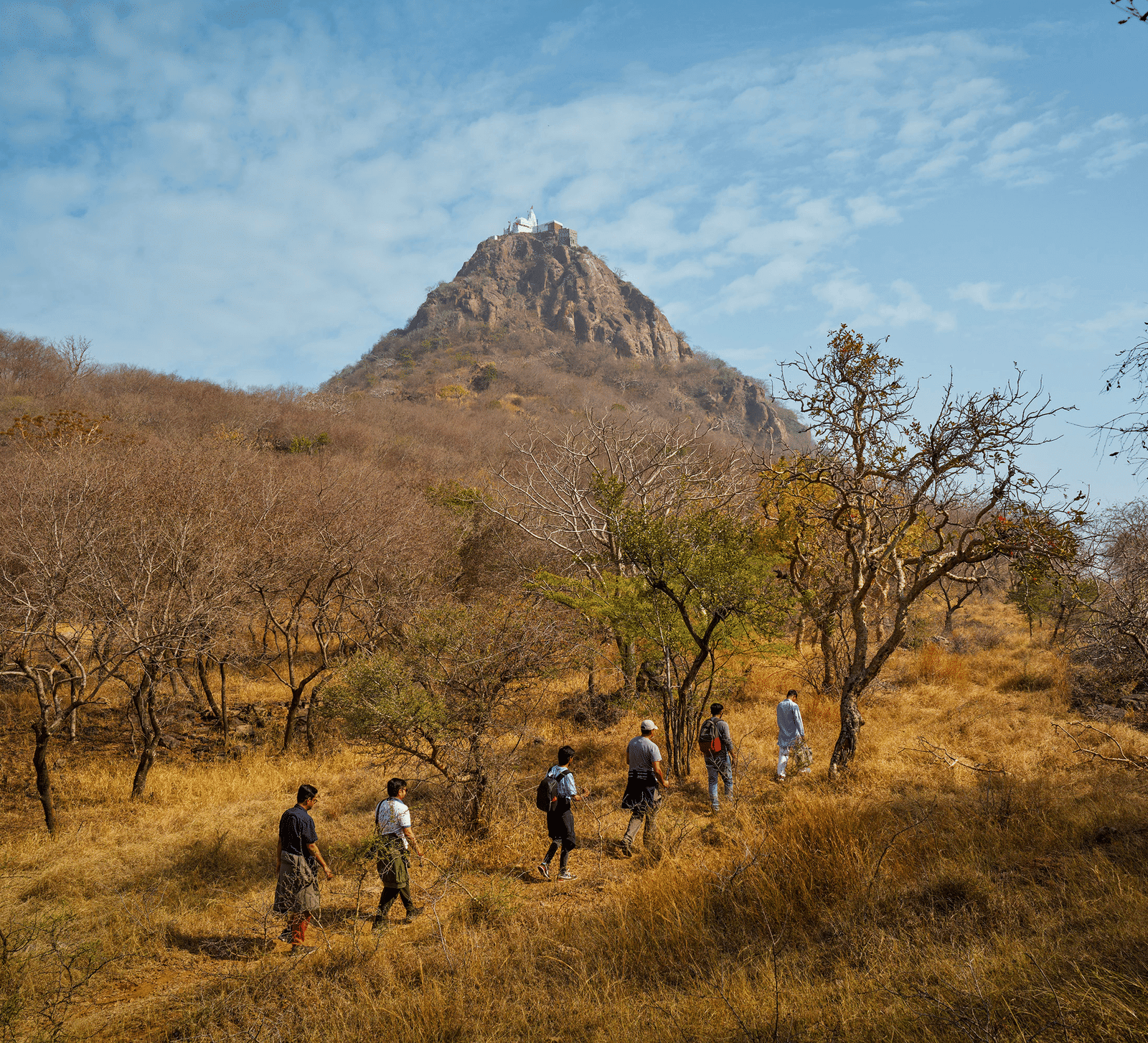
From left: Somsagar Lake and Deogarh in Rajasthan, India. Photo via Postcard Travel Club.
The Concentration Problem
These individual business vulnerabilities point to a larger systemic issue taking shape across the industry. Japan welcomed a record 42.7 million visitors in 2025. In response, the Japanese government is tripling its tourist departure tax starting in July 2026 and plans to more than double the regions implementing overtourism measures by 2030.
There is a sharp irony here: the independent traveler segment fueling much of this growth is also the segment most likely to use AI for planning, and AI is funneling them overwhelmingly toward the same three or four corridors.
I asked the panelists whether the problem could be that most travelers don't actually want responsible travel, although they say they want authenticity and community impact in numerous surveys. When the algorithm and Gen AI recommend Kyoto in three clicks, they’d take it. AI is not shrinking the world. It is revealing what travelers actually choose when no one is guiding them."
Nanami's response was neither defensive nor dismissive. Eighty Days Japan does not exclude Kyoto for first-time visitors as it remains a great destination. What her team does is widen the aperture of choice: offering hidden experiences within popular destinations, spotlighting Tokyo islands accessible by a one-hour boat from the port, proposing high-end hot spring alternatives in quieter regions when clients ask about already-popular Hakone. "We don't go against their ideas," she explained. "We broaden the selection of options for them."
Amit located the root problem one level upstream. "It's a human problem, not an AI problem. AI is just a tool. It's the humans we need to teach to ask the right questions. Why do they want to go to Kyoto? What are they actually traveling for?"
That reframe — from destination to motivation — is the architectural premise behind Postcard Travel Club's interest-based search engine, which asks travelers whether they are drawn to food, adventure, or spirituality, and then allows the destination to show itself. "You're no longer looking at a destination first," Amit said. "You're looking at the experience and the story first. And that leads to better travel because all of a sudden there's much deeper context to why you're traveling."
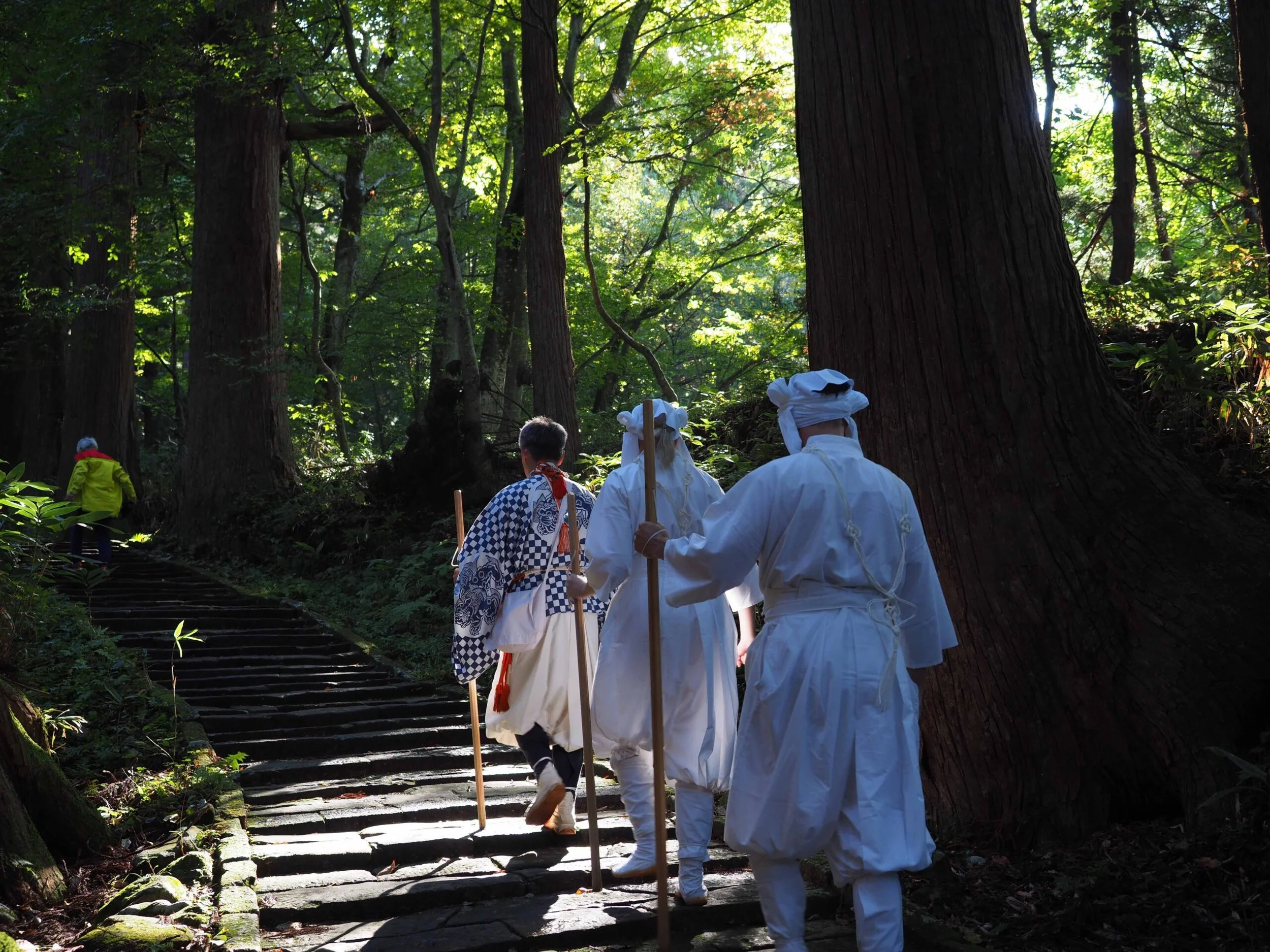

From left: Mt Haguro via Tsuruoka City, Sawara Festival via Suigo-Sawara Tourist Association.
Two Strategies, One Principle
The panelists represent markedly different operating philosophies — and that tension was productive rather than contradictory.
Eighty Days Japan uses AI exclusively for backend operations. It does not deploy AI to generate itineraries or produce customer-facing content. The reason is as philosophical as it is practical: the relationships that give Eighty Days Japan its competitive advantage — with artisans who do not want to be found online, with craftspeople whose primary business is their craft — exist entirely outside the AI discovery ecosystem.
"Not all businesses in Japan are about money, or about visitor numbers. It's about connections, and about who introduces you," Nanami explained. Her team functions as a gatekeeper, protecting suppliers from being overwhelmed by direct contact while ensuring that the right travelers — introduced through trusted partners — can access experiences that would otherwise be invisible or inaccessible.
Postcard Travel Club takes the inverse approach: AI is deeply embedded in research, business modeling, persona creation, and content production. Over two years, the company has trained its AI tools to operate within the constraints of its proprietary digital postcard media format, for which it holds a U.S. patent awarded in July 2025. AI drafts content; human editors refine it. AI builds traveler personas; human curators make the match.
"Storytelling is also AI-assisted, but it's always polished by a human writer," Amit noted. His forthcoming Postcard AI Engine is designed to drive connections between conscious luxury travelers and boutique properties at scale while keeping the human matchmaking layer intact.
What unites these two strategies is a shared conviction: the itinerary is no longer the intellectual property. "Intellectual property is really in the social capital — the guide, the storyteller, the experience curator," Amit said. "Even a competitor who saw the itinerary would still not know who the on-the-ground expert is.”
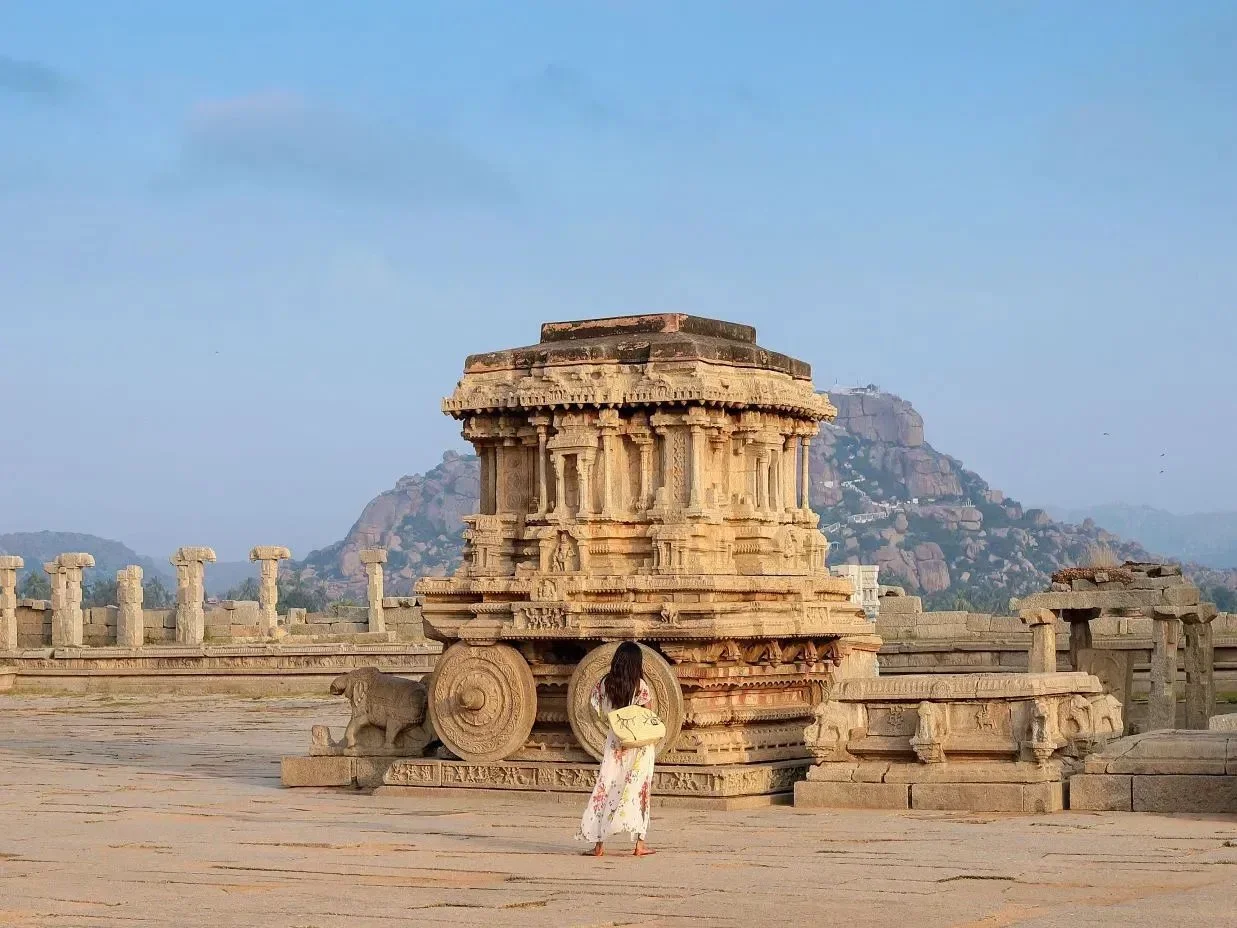

From left: Tea Plantation in Kerala, Vijaya Vitthala Temple in Karnataka. Photo via Postcard Travel Club.
The Discovery Gap, and Who Falls Through It
One of the webinar's most instructive data points was also one of its quietest.
When Postcard Travel Club members first browse the platform's 1,700 boutique hotels across 115 countries, the most common reaction from them is surprise. "They didn't even know so many properties existed that were so cool," Amit reported. "Even a Slovenian resident working with us said, 'Living here for 15 years, I still didn't know some of these experiences existed.'"
This is the discovery gap: a vast layer of extraordinary, values-aligned travel experiences that are structurally invisible to algorithmic discovery. Curated collections such as Design Hotels, Relais & Châteaux, and Small Luxury Hotels of the World exist — but most travelers often don't know these collections exist, let alone how to navigate them. "Boutique hotels, by definition, should be custodians of stories in their countries," Amit argued. The travel advisor's job, in a world where AI surfaces what is most clicked rather than what is most meaningful, is to close that gap, not just for the traveler's benefit, but for the destination communities whose economic viability depends on being found.
AI is also reshaping the very market it was designed to serve. Nanami highlighted that Japan's visitors are now splitting into two distinct cohorts. The high-end travelers actively seek human expertise and want to know "something that people don't know." The bucket-list travelers are content with the three-click itinerary. "We don't feel like we're losing customers, because our clients are looking for authenticity — and that is something you can't reach on the internet easily, especially in Japan," she said.
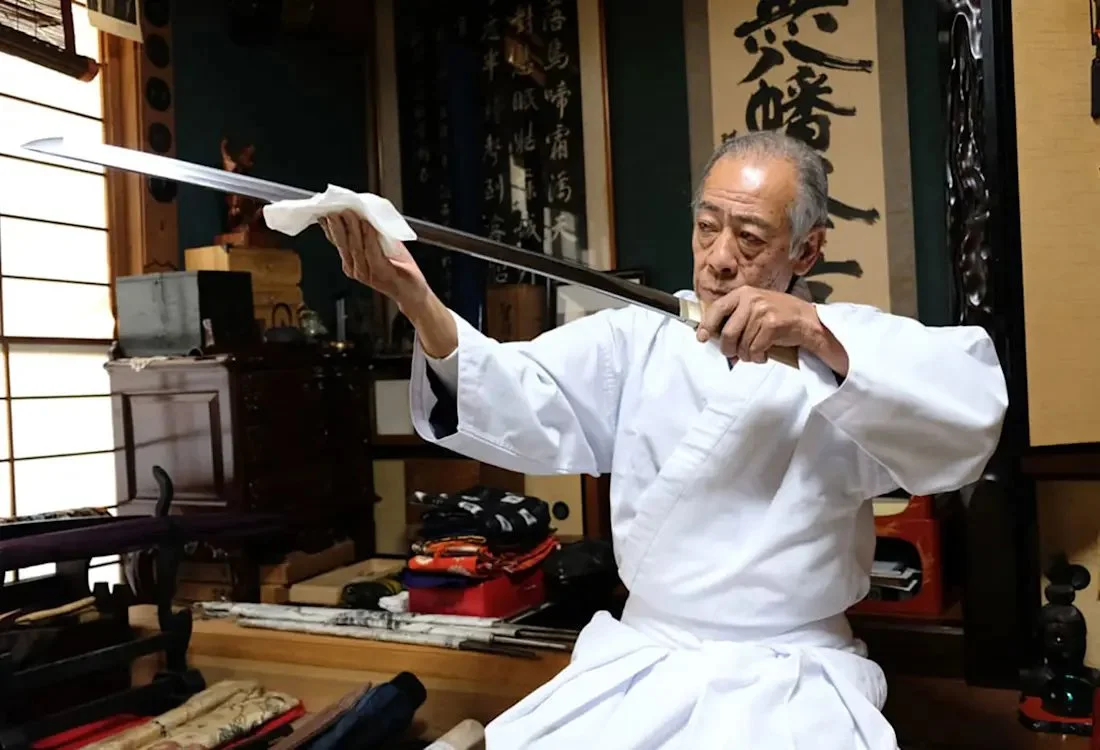
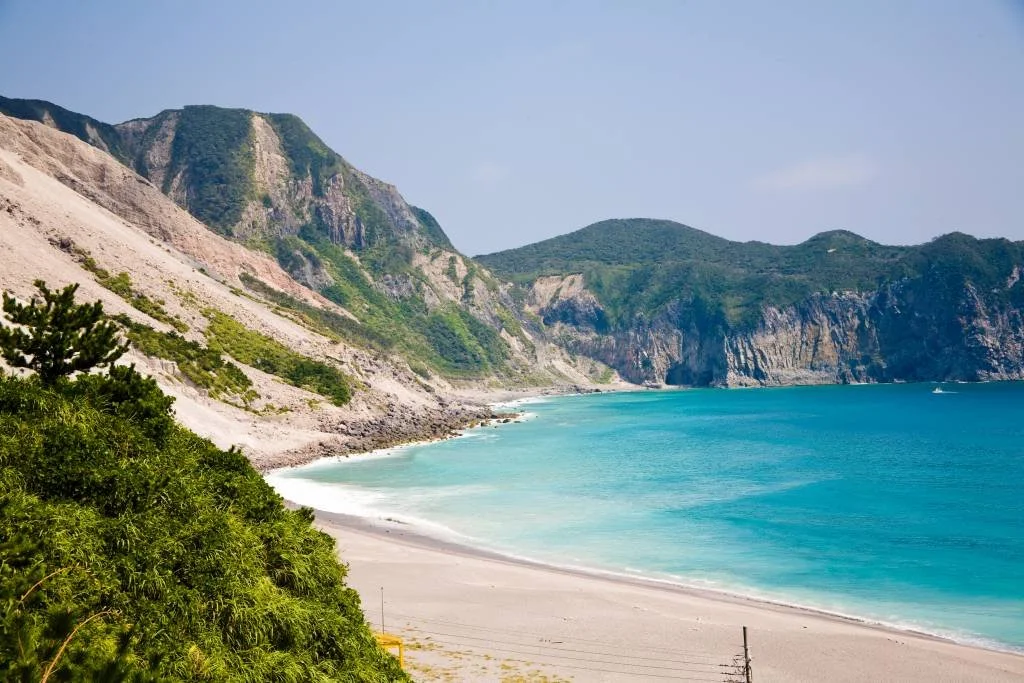
From left: Katana Sword via Visit Kyushu, Tokyo Islands via Tokyo Cheapo.
What Advisors Must Stop — and Start
During the rapid-fire round, the closing exchange produced the session's sharpest, most actionable guidance.
Stop:
Taking supplier relationships lightly. AI's instant answers create a dangerous casualness — the sense that everything is reversible, that a cancellation barely matters. "If they get bothered by tourists contacting them directly, it's not good for them," Nanami warned. Advisors who contact suppliers and cancel at the last-minute cause real, lasting damage to relationships built over years.
Negotiating on artisan pricing without understanding its value. A single kimono can take months to complete, and advisors who bargain without that knowledge degrade both the relationship and the work. Nanami named value-respecting as one of her non-negotiables for any travel advisor whom she trusts with her partners.
Assuming all travelers want the same thing. Technology platforms built on deal optimization and volume metrics treat travelers as a homogeneous audience, missing entirely the traveler chasing self-discovery rather than money savings. "Algorithms can never capture this nuance," Amit said. "It requires human involvement."
Start:
Using AI to find the hidden story, not just the popular destination. "Take your old itinerary and ask AI: can you find me the hidden story in this experience? What's the background?" Amit recommended. The practitioner who learns to prompt for depth rather than breadth will produce content their competitors cannot replicate.
Leading with the traveler's why, not their where. Understanding whether the motivation is food, spirituality, craft, or solitude before proposing a destination. "Dive deeper into the context of the story rather than saying: go here, go here."
Start treating AI as a publishing tool rather than a planning crutch. For smaller travel advisors and destination management companies, AI now offers something that was previously cost-prohibitive: the ability to produce inspiring, story-driven content at scale. "It's an amazing chance for smaller travel designers to distinguish themselves," Amit said, with one firm caveat. “Always fact-check with a human editor, because AI does hallucinate.”
The Deeper Human Responsibility
Nanami's closing message was pragmatic: give AI more personal context if you want deeper responses, but do not mistake the tool for the relationship. "If you find a local person to craft an itinerary together, you might discover something new." Amit's response was more ambitious: "It's a great time to make travel a force for good. Stories are at our fingertips now. Everyone should just start telling stories about the places they recommend."
The travel advisor who survives this transition will not be the one who uses AI most — nor the one who avoids it most stubbornly. It will be the one who understands, with precision, what AI cannot do: earn trust with an artisan in rural Japan, know which mosaic artist in Barcelona opens their studio to the right person through the right introduction, or ask a traveler the question they didn't know they needed to answer before finding where they truly wanted to go, what experience they wanted to have.
That is a task that AI could not complete, at least not at this point in time.

Taj Mahal via Canva.