Will AI Drive or Derail Sustainable Travel? Solving the Industry’s Challenges

Photo by Tara Winstead on Pexels
Artificial intelligence (AI) is reshaping the travel industry at lightning speed, promising unparalleled efficiency, personalized guest experiences, and data-driven sustainability. Yet, beneath the surface of this exciting frontier lie complex questions about environmental costs, ethical responsibility, and the irreplaceable value of the human touch.
The conversation has moved beyond whether we should use AI to how we can use it responsibly to benefit the guests, the teams, and the planet.
This was the main focus of our recent virtual Asia Travel Future Summit, "Will AI Drive or Derail the Sustainable Travel Transformation?"
We gathered some of the sharpest minds in technology and tourism to cut through the hype and offer practical advice.
The discussion was candid, insightful, and refreshingly forthcoming, showing a clear path forward for hospitality professionals who want to leverage AI's power without compromising their commitment to sustainability.
From the environmental impact of data centers to the psychology of food waste in hotel kitchens, no topic was off-limits. Here are the key takeaways for you and your teams.
The Environmental Cost of AI’s Promise
The summit opened with a strong reality check from our keynote speaker, Julie Cheetham, Chief Operations Officer of Travalyst. While AI’s potential to optimize operations is vast, its environmental impact is far from virtual.
Julie shared statistics that demand attention from every responsible leader. A single request made through ChatGPT consumes ten times the electricity of a Google search, according to an International Energy Agency (IEA) report that was also cited by the United Nations.
On a larger scale, the infrastructure needed to power our AI-driven world—massive data centers running 24/7—may soon consume six times more water than the entire country of Denmark.
“That is a problem when a quarter of humanity already lacks access to clean drinking water,” Julie highlighted.
"The environmental costs can't be ignored," she stated plainly. This goes beyond energy and water; we must also contend with the growing mountain of e-waste generated by the hardware upgrades required to run these advanced models.
This is the central paradox: a tool that can help us become more sustainable is, in itself, a significant consumer of natural resources.
Julie highlighted some stories within their coalition, such as Google's Green Light project, which uses AI to optimize traffic light timing to reduce vehicle emissions, as examples of AI's positive potential.
The initial data from this project, she said, suggested a potential reduction of up to 30% in stops and 10% in greenhouse gas emissions. “This creates a better experience for all travelers on these roads,” she shared.
“It's now live in 20 countries across four continents, from Kolkata to Boston, USA. These intersections can save fuel and lower emissions for up to 47 million car rides each month,” she added.

Google’s Project Green Light is an example of AI in action, optimizing traffic lights to reduce vehicle emissions. It’s a glimpse into how AI can make urban mobility smarter and more sustainable. Screenshot from Julie’s keynote.
Julie also emphasized that AI can empower travelers to make more informed decisions, which has driven early adoption across the industry. This technology is already reshaping booking behavior by guiding travelers to lesser-known destinations and offering personalized inspiration for experiences they might not have otherwise considered.
However, her message was clear: we cannot embrace the benefits without acknowledging and addressing the associated costs.
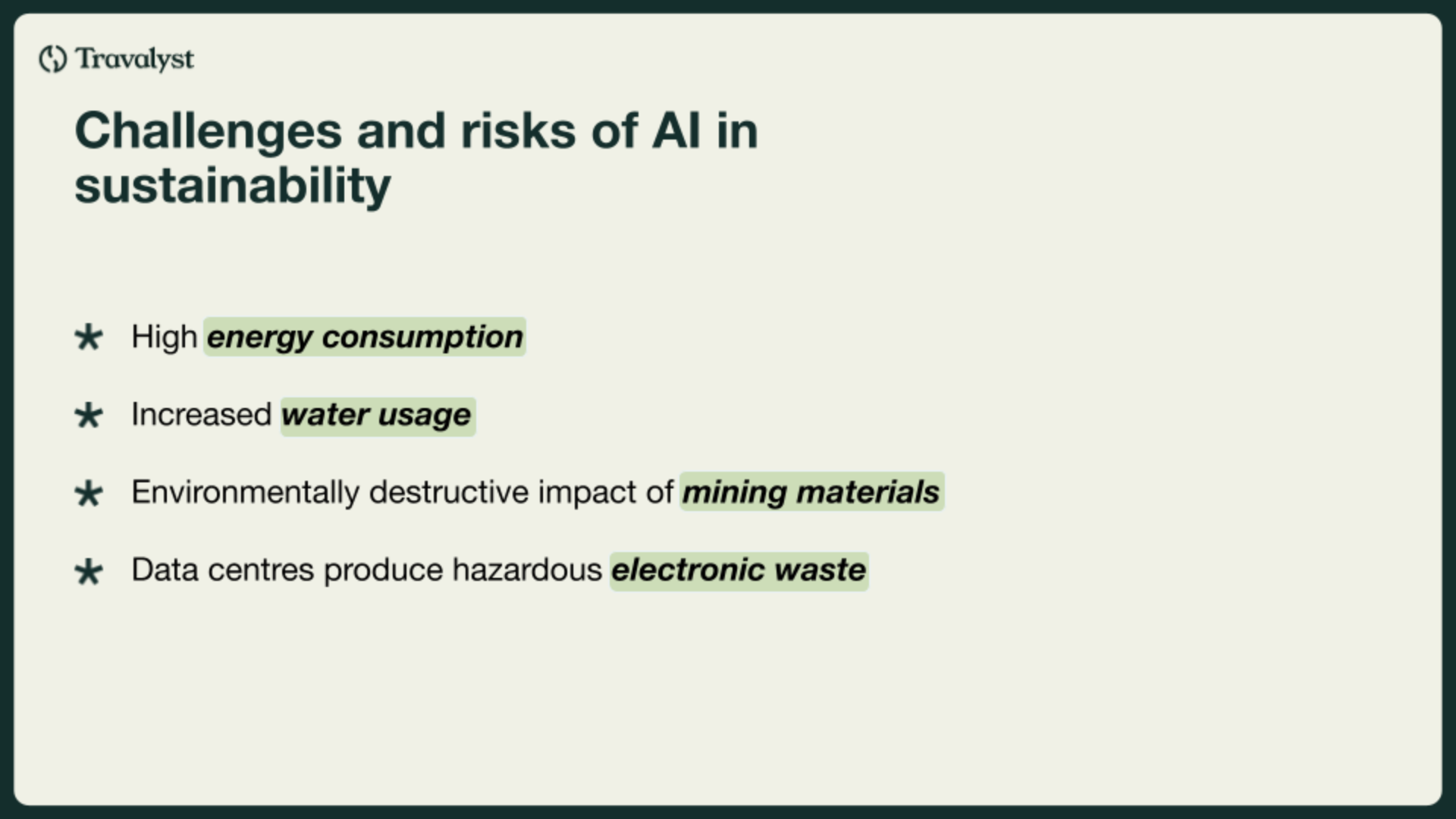
The environmental challenges of AI are real: high energy use, increased water consumption, and dangerous e-waste from data centers. Addressing these risks is crucial to ensuring AI supports sustainability rather than harming it. Screenshot from Julie’s keynote.
Building Trust in the AI Era
Trust is the currency of hospitality. As AI becomes more integrated into the guest journey, from trip planning to on-property experiences, maintaining that trust is essential. Julie pointed out a critical statistic: 49% of travelers worry about the accuracy of information they receive from AI channels.
The solution? Credible, consistent, and compliant data. For sustainability, this means making sure that the "green" information shared with travelers is verified, transparent, and easy to understand. Greenwashing, whether intentional or not, erodes the very foundation of trust we work so hard to build.
The human element, Julie emphasized, remains irreplaceable in validating information and ensuring ethical oversight. We cannot outsource our ethics to an algorithm.
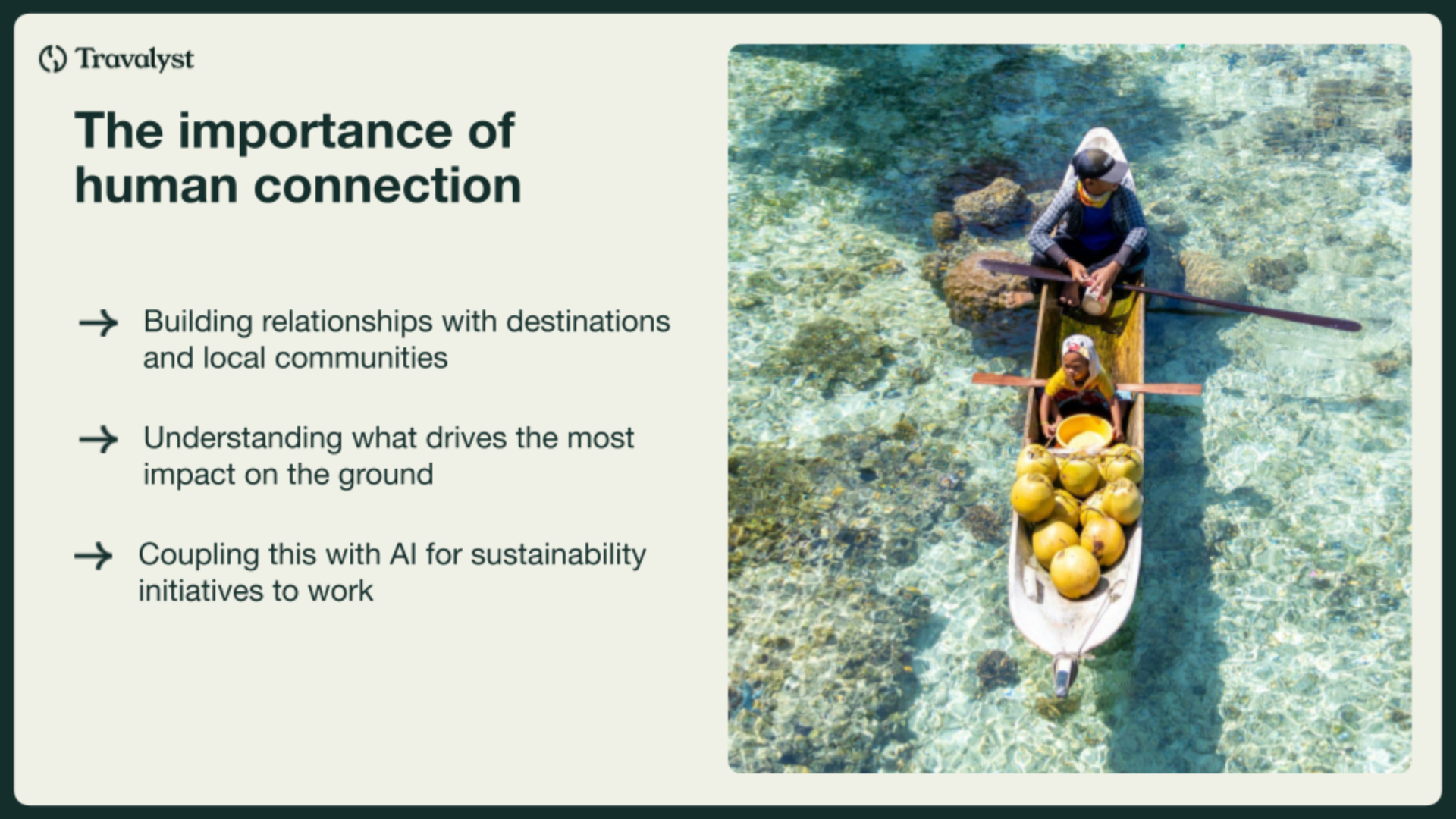
Human connection is the heart of sustainability. Building relationships with local communities and understanding our on-the-ground impact is essential. When we pair these human efforts with AI, we can drive meaningful change. Screenshot from Julie’s keynote.
Focus on Pain Points, Not Shiny Objects
The first panel discussion, ‘Driving Sustainability-Led Operational Excellence Through Human-AI Collaboration,’ brought the conversation from high-level theory to on-the-ground applications. Chris Legaspi, Chief Commercial Officer at Archipelago International, shared practical advice for hotel GMs and operations teams unsure of where to begin.
“Start with a clear understanding of what you have before trying to implement AI," he urged. It was a call to resist the "shiny new toy" syndrome. Before you can optimize, you must first have a firm grasp of your existing data, processes, and, most importantly, your operational pain points.
He advised leaders to focus on the repetitive back-of-house work that drains teams. Are your teams spending countless hours on manual forecasting? Are you struggling with food waste in the kitchen? These are the areas where AI can deliver quick, measurable wins and, just as importantly, boost team morale.
Archipelago's own AI-powered revenue management system, FluxRate, exemplifies this approach. It automates forecasting, pricing, and rate deployment. Chris explained that this frees up his commercial team to focus on high-value strategy rather than tedious manual data entry. The lesson is to let AI handle the repetitive tasks, so your team can focus on the human side of the work.
The Real Threat Isn't Automation, It's Overload
One of the most significant insights came when the conversation turned to job security. There is widespread fear in the industry that AI will replace human roles, but Chris challenged that view.
"The real threat isn't automation, actually. It's overload," he explained. "When people spend their days buried in reports or repetitive tasks, they lose the space to think... and remember, in the hotels, we have to connect to guests. That is where performance breaks down."
He described a framework where AI handles patterns and repetition, while people focus on judgment, context, and relationships. "Human judgment remains paramount while machine learning is still serving us," he noted.
By delegating heavy processing to AI, we reclaim valuable time for our teams, which, in turn, builds resilience. This allows a revenue manager to move from drowning in spreadsheets to focusing on strategy, and a GM with precise forecasts to proactively address service issues.
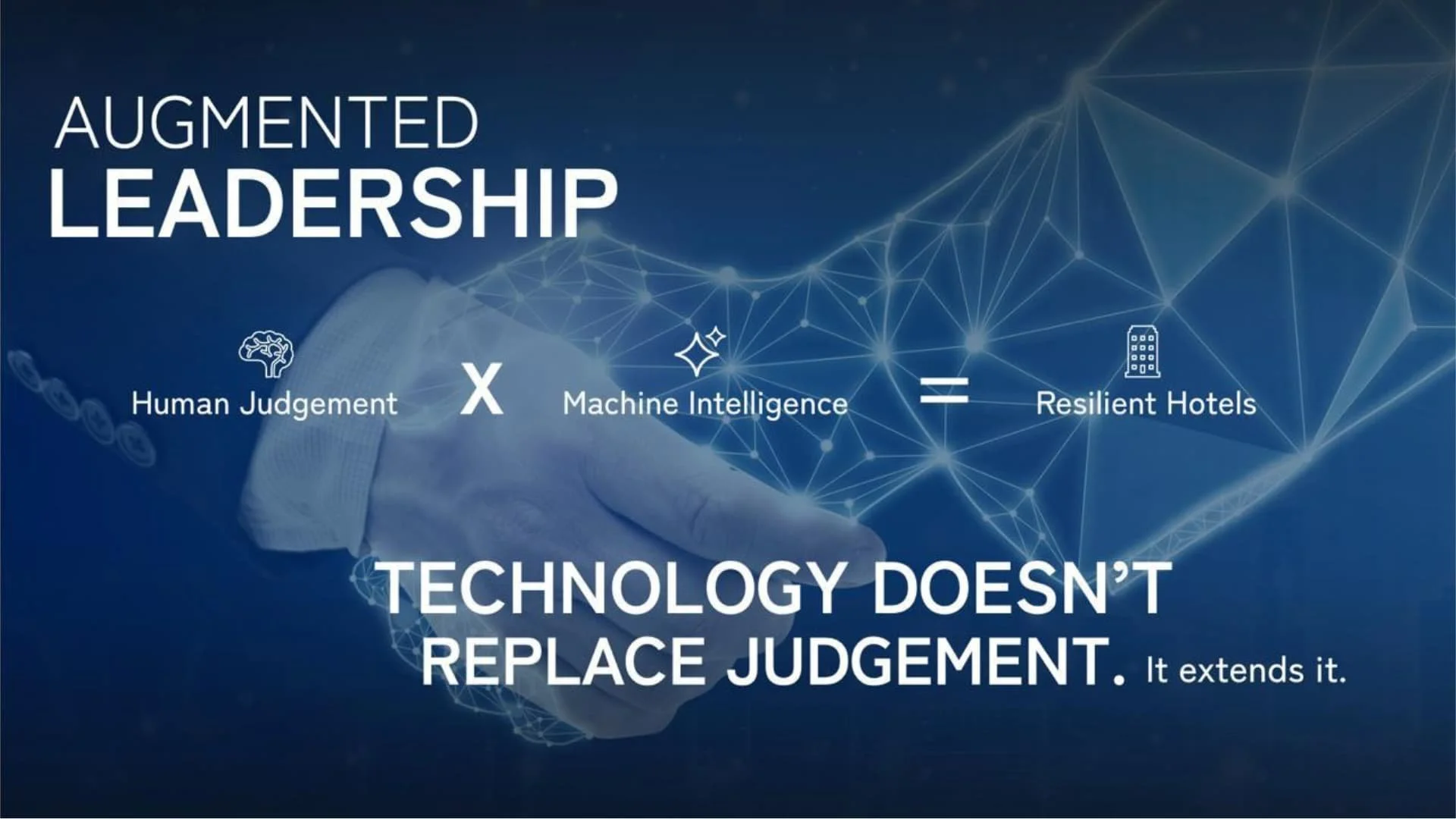
Augmented Leadership combines human judgment with machine intelligence to create resilient hotels. Technology doesn’t replace decision-making—it enhances it, enabling smarter, more adaptive hospitality. Screenshot from Chris Legaspi’s slide.
The Behavioral Gap in Operations
Andrea Bellini, Senior Consulting Manager at Lightblue, grounded the discussion in the tangible reality of kitchen operations. He focused on food waste—a massive sustainability issue for hospitality.
However, Andrea pointed out that data alone doesn't solve the problem. You can have the best AI analytics in the world, but they cannot overcome the "psychological blocks" or ingrained habits that prevent staff from changing their behavior.
This reinforced the summit's topic: AI provides the visibility, but leadership and training must provide the "so what." We need to translate operational data into actionable insights that resonate with the staff on the floor. If a chef sees data as a tool for improvement rather than a scorecard for punishment, adoption skyrockets.

Lightblue’s FIT Program addresses food waste holistically by integrating training, smart scales, and real-time data to help kitchens reduce waste and improve efficiency. It’s a win for both the planet and the bottom line. Screenshot from Andrea Bellini’s presentation.
Cultivating a Healthy Skepticism
Matthew Lo, Chief Executive Officer of Advant Labs, offered a necessary dose of healthy skepticism. He reminded the audience that technology adoption is often driven by profit motives rather than purely for human good. His contrarian view served as an important reminder to critically evaluate why we are implementing a particular tool.
For luxury hospitality, he argued, the focus should be on enabling "the smoothest, most seamless purchase experience that is on brand." If AI can help accomplish that, it’s a positive step. But it should be a means to an end—enhancing the brand and guest experience—not the end itself. This perspective is vital for ensuring technology serves your business strategy, rather than your strategy bending to fit the technology.
The New Leadership Literacy
The rapid pace of AI progress can be overwhelming. Both Matthew and Chris suggested that tourism businesses must either build their AI capabilities or establish a "thought partnership" with an AI expert.
Going a step further, Chris recommended that leaders learn the basics of a programming language like Python. The goal is not to become a developer, but to "understand the gaps" and the fundamental logic behind the tools you are using.
This literacy is fast becoming a value-added skill for modern hospitality leaders. It allows you to ask better questions of your tech partners and make more informed investment decisions.
Making Data Actionable
In the second panel, ‘Navigating AI-Driven Data Collection and Marketing Responsibly,’ the conversation shifted to how we can make sustainability data actually work for us, rather than just sit in a report.
Dimitri Syrris, Founder and CEO of Baotree, shared a valuable perspective on turning sustainability into action using data. He highlighted a common challenge in the industry: data paralysis. Hotels and tourism companies often have data scattered across spreadsheets and different departments, which makes it hard to get the full picture or measure real progress.
To prevent greenwashing, Dimitri stressed the importance of evidence-based reporting. “Speak to evidence that you can report on. Don’t just make up stuff,” he advised. He encouraged brands to be honest about their challenges, saying, “When you’re vulnerable and honest, and you say, ‘We had a lot of waste last month, but this is our plan to reduce it,’ you connect with people. It’s okay to show the not-so-bright side of your brand as long as you’re clear about what you’re doing to improve.”
Dimitri also explained the need for robust governance systems. Baotree’s platform includes features like unique identifiers, timestamps, and digital records to ensure data integrity. “You can’t edit, corrupt, or manipulate the data within our platform,” he added, emphasizing the importance of trust in sustainability reporting.
This approach ensures that when it comes time to report, the information is trustworthy. “It comes down to what is the objective or the intention... why do you want to track your sustainability? Is it for compliance, storytelling, investor reporting, guest engagement, or community impact measurement?”
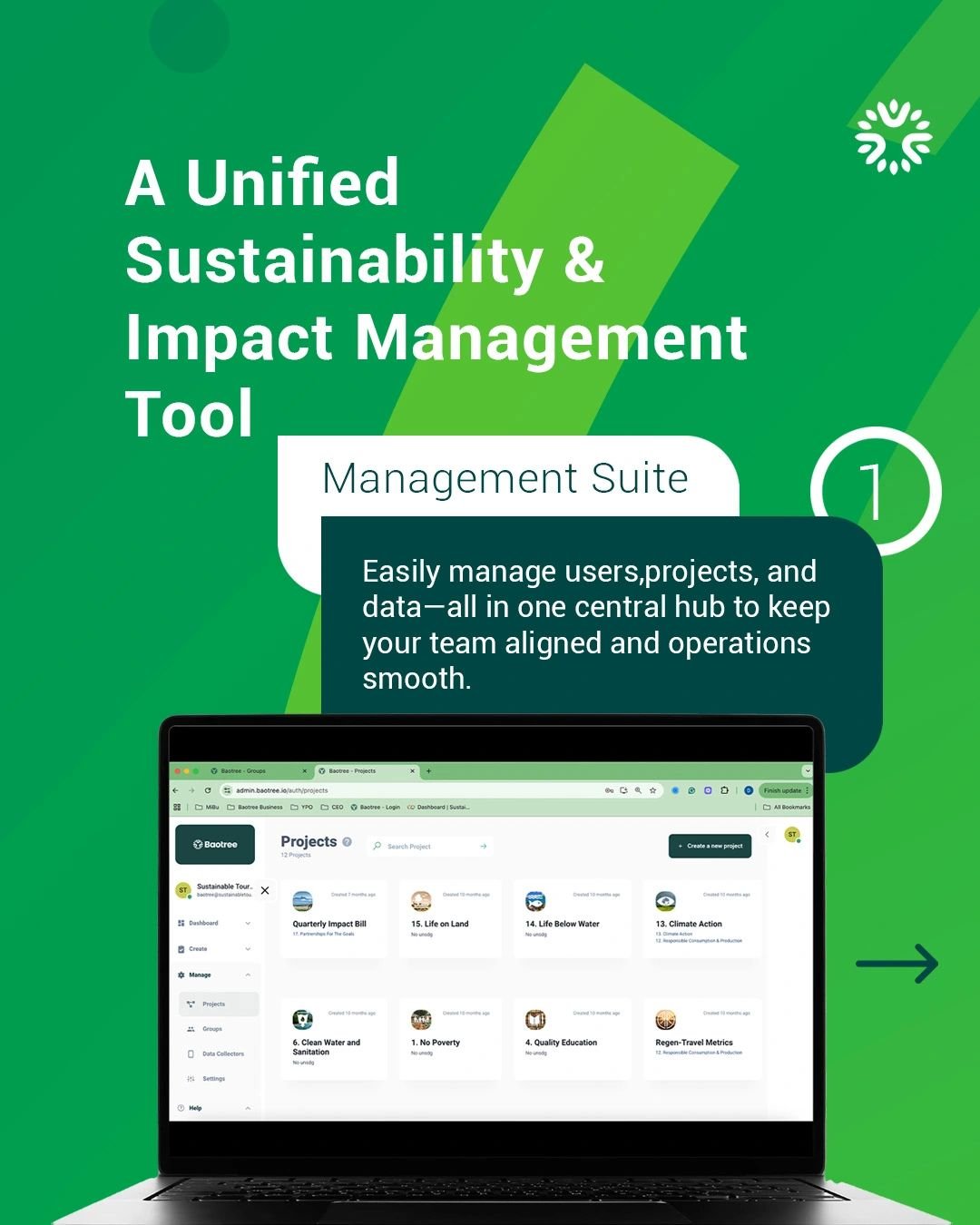
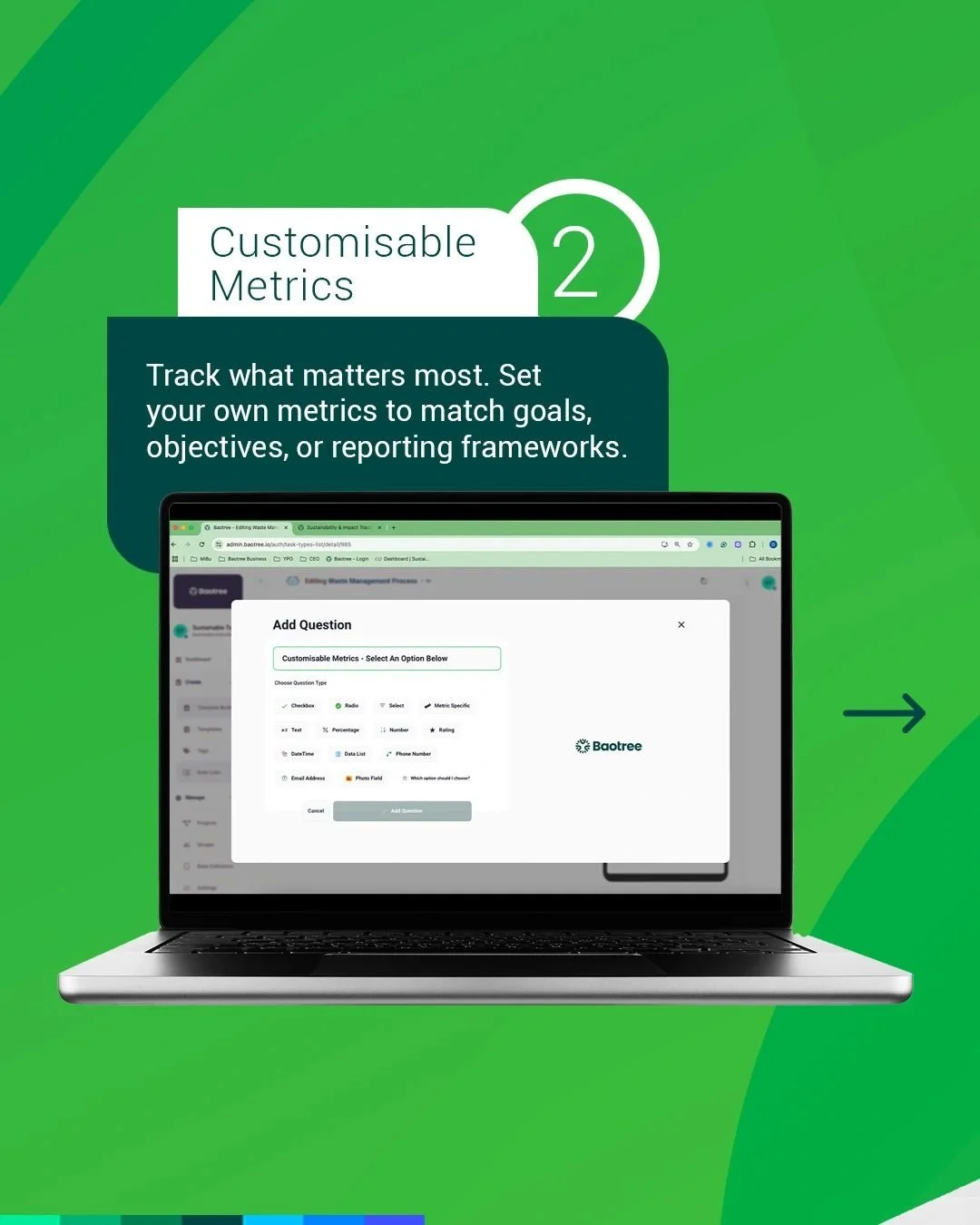
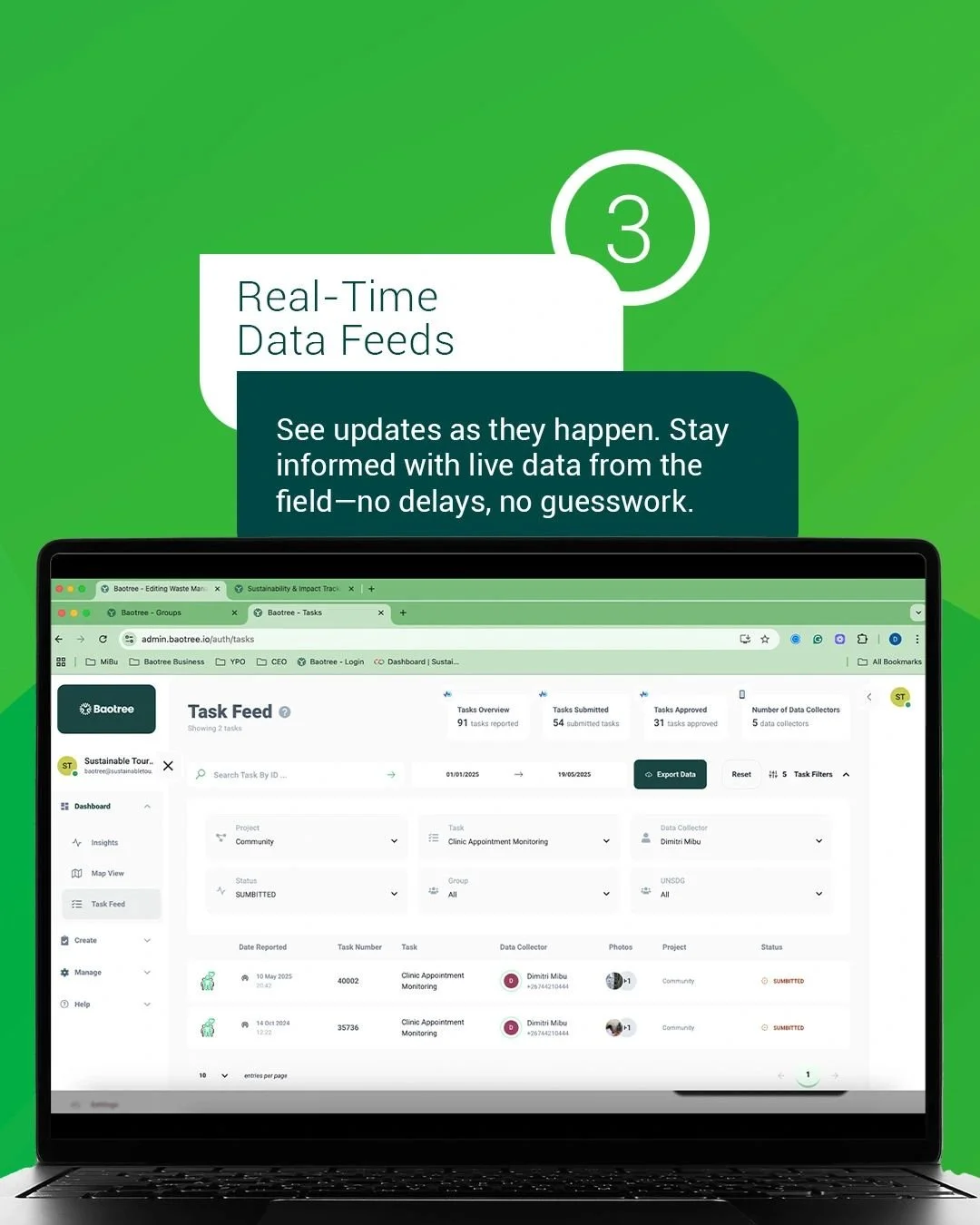
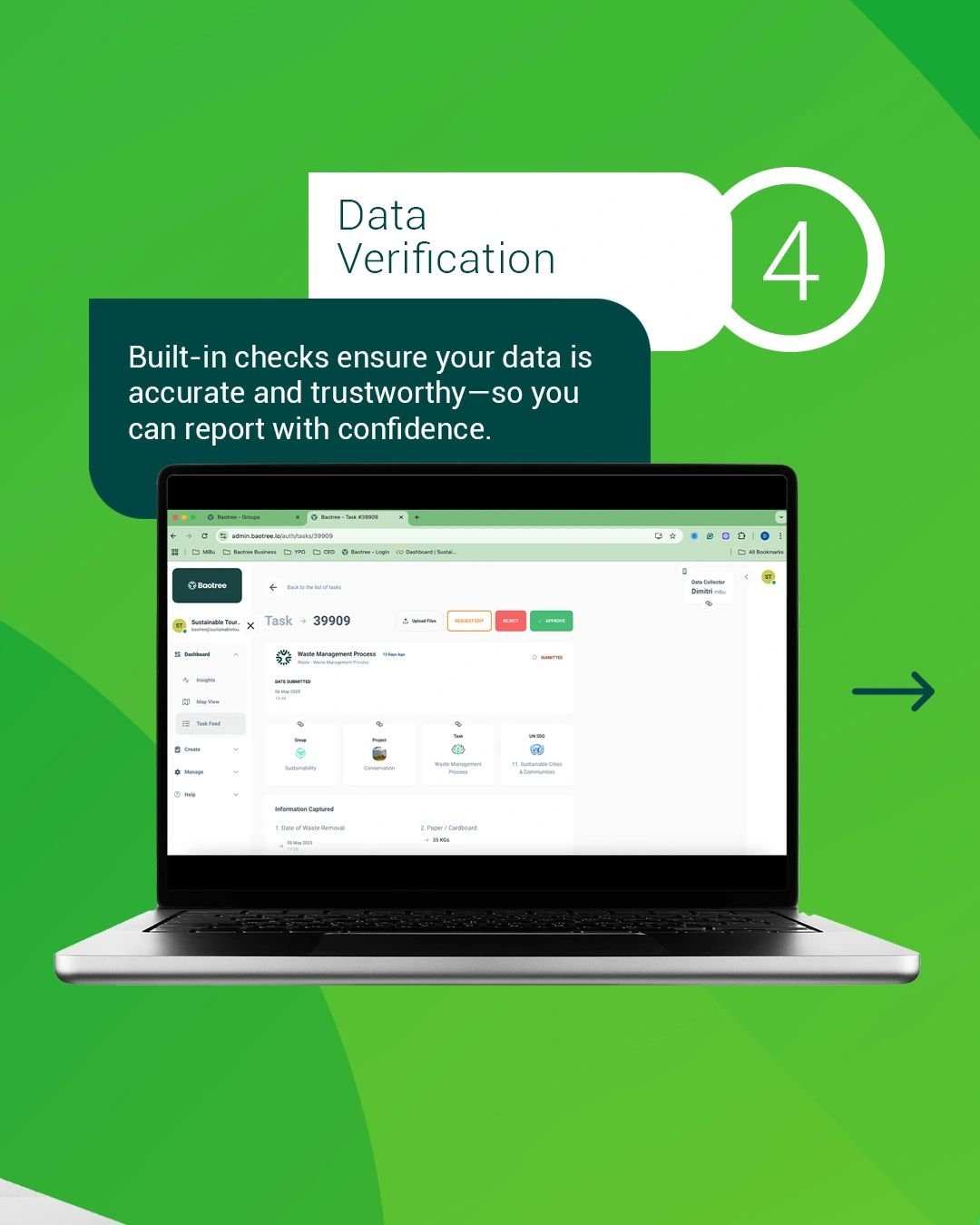
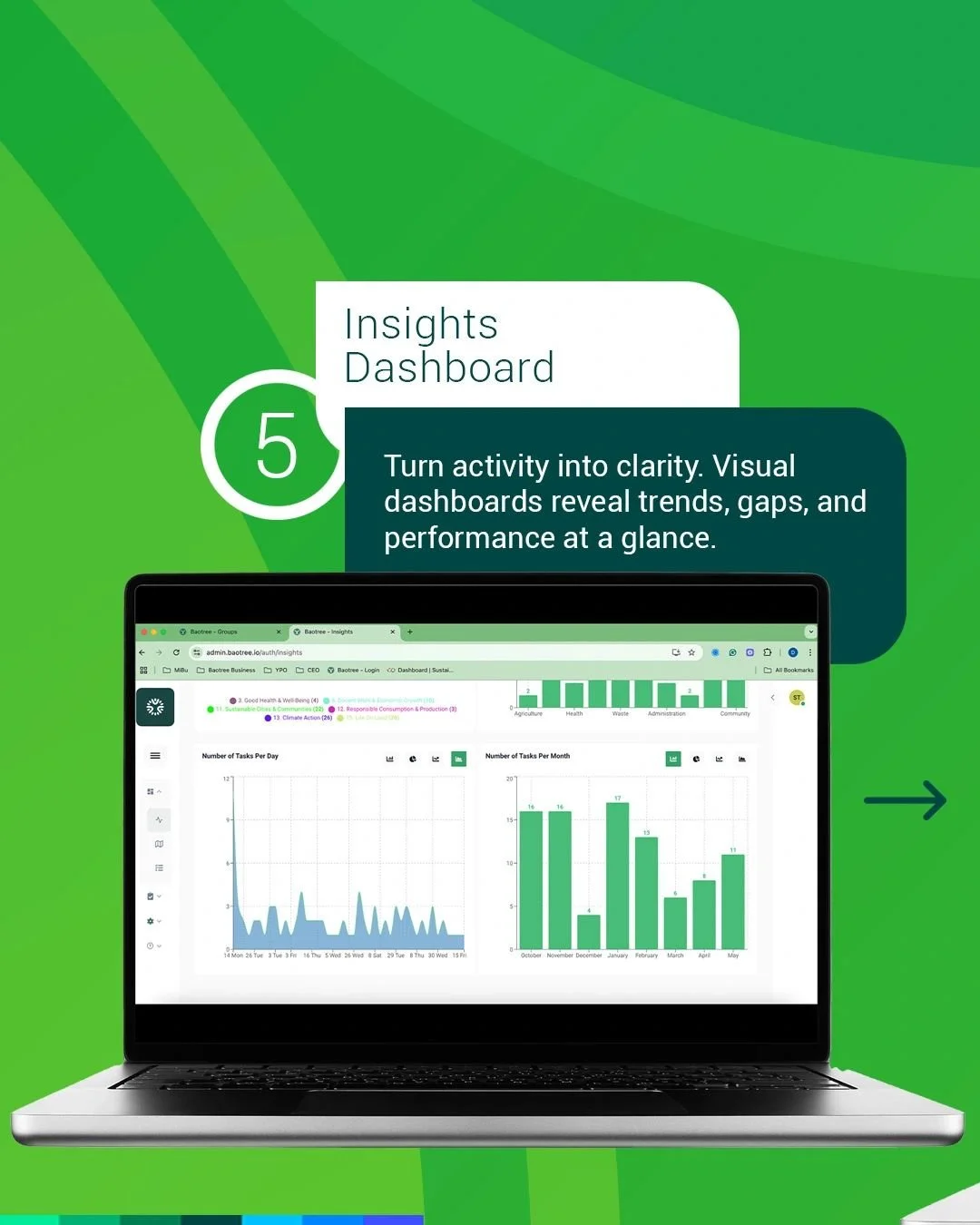
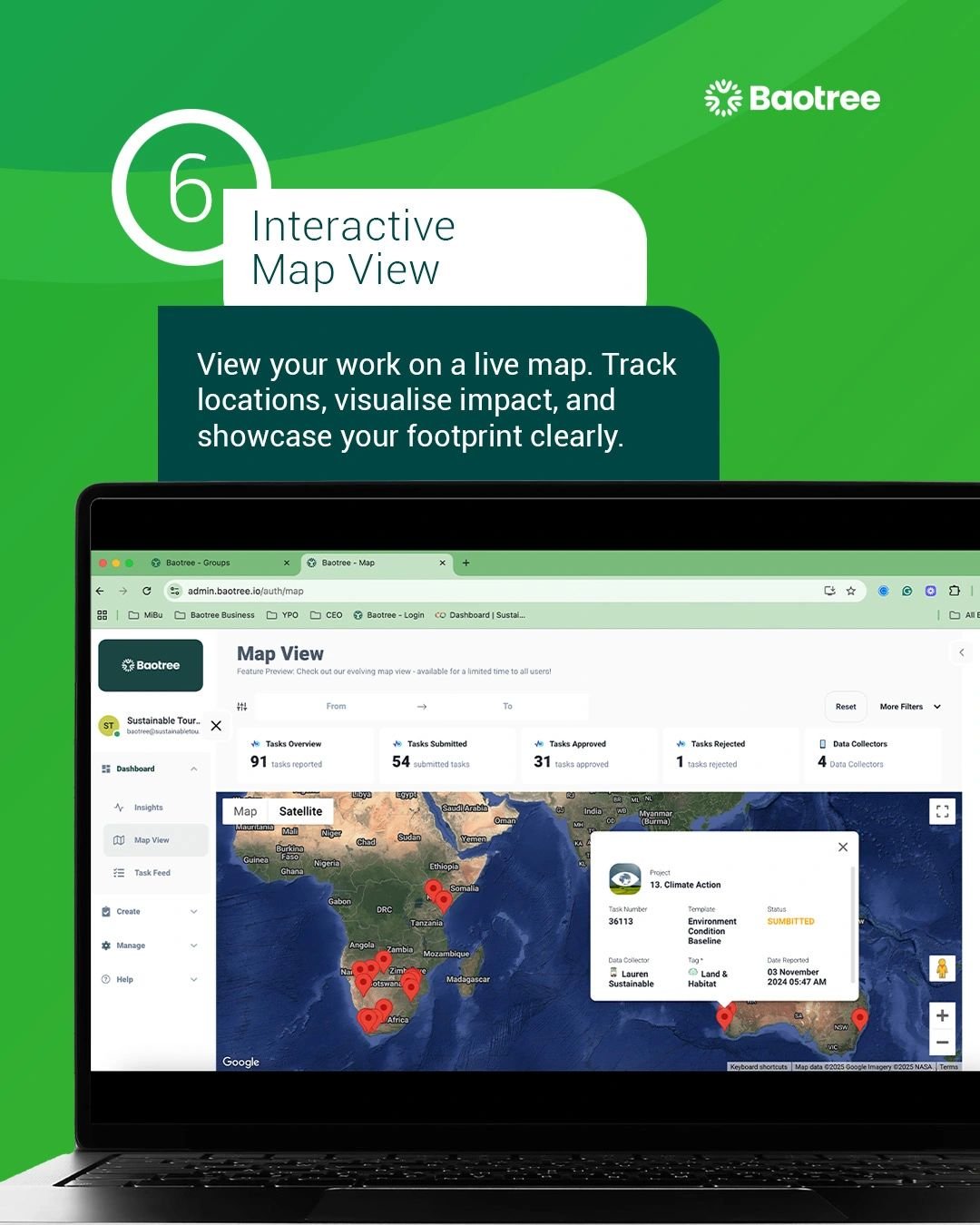
Baotree is a unified sustainability and impact management tool that helps tourism and hospitality businesses capture, verify, and visualize their impact data. Photos by Baotree.
Hyper-Personalization with a Human Touch
Tara Schwenk, Senior Director of Digital Strategy at Lemongrass Marketing, explored how AI can deliver on the promise of hyper-personalization at scale while maintaining trust and authenticity.
Tara cautioned against over-reliance on AI-generated content without proper oversight.
“There’s a real danger of creating stories that aren’t fact-checked,” she warned. “It’s fine to use AI to reduce friction and costs, but every piece of content must go through a human lens to ensure it’s factual, culturally nuanced, and free of bias.”
She also stressed the importance of quality data collection. “Responsible data collection today looks more like a relationship than an extraction,” Tara explained. “The value exchange has to be obvious to the consumer. We’re asking for this information because it’s going to make their trip better in a specific and clear way.”
Tara encouraged brands to focus on first-party and zero-party data—information that travelers willingly share. “Your own channels, like a great website, newsletter, or blog, are more important than ever. Social media platforms come and go, but the data you own is what builds trust and enables personalization at scale.”
She also touched on the need for an AI policy within organizations. “We created an AI policy at Lemongrass, and the whole team has read and signed it,” she shared. “It’s a great place to start for any brand looking to dip its toes into AI.”
A Call for Courageous Leadership
Fernanda Rodak, Manager for Sustainability and Social Responsibility at Pacific Asia Travel Association (PATA), concluded the event by weaving together the various threads of the conversation into a clear leadership call to action. Her summary went beyond a simple overview; it was an invitation to act.
She highlighted two key lessons that every leader must take forward:
1. Human judgment is the ultimate AI guardrail.
Fernanda emphasized that the summit's strongest message was the irreplaceable role of human judgment in AI.
"Every speaker stressed that AI's best function is to augment human ability, not automate it away," she noted.
Leaders must resist the temptation to delegate everything to machines unquestioningly, as this risks "skill atrophy" and the loss of critical thinking and analytical judgment. She argued that human-AI collaboration is essential for accountability, ethical standards, and cultural sensitivity—elements vital for building resilient operations and trustworthy guest experiences.
2. Data-driven sustainability is a key driver of profitability.
Drawing from the insights of Andrea Bellini and Dimitri Syrris, Fernanda emphasized that sustainability is both a moral obligation and a strategic advantage. "Using AI and data to solve problems like food waste doesn’t just make you a more responsible business; it also delivers significant financial savings," she explained.
She also commended Dimitri’s reminder about data integrity. "If we use AI to measure impact, we must use systems that are fair, robust, and resistant to greenwashing." She added that transparency and trust depend entirely on the quality of the data fed into the system.
Fernanda also shared two predictions for the future of AI and sustainability in the APAC region:
1. AI-driven sustainability metrics and traceability
Fernanda predicted that AI will continue to advance in sustainability metrics and traceability. "AI systems will track the entire life cycle of resources, allowing hotels and other travel businesses to identify systemic inefficiencies and provide customers with verified, real-time data on their low-carbon footprint choices," she said.
2. Localized AI for ethical storytelling
Fernanda forecasted the rise of smaller, more localized AI models designed to combat dominant narrative bias.
"Standard AI models risk drowning out the rich cultural diversity and nuances of APAC," she warned.
To address this, the industry will need tools trained on specific local languages, cultural contexts, and traditional knowledge of the region. These localized models will ensure that marketing content is authentically personalized while protecting the unique identity of APAC destinations and respecting each destination’s data sovereignty.
Actionable Steps for Your AI Journey
So, where do we go from here? The webinar provided a clear roadmap for any hospitality leader.
1. Start small and iterate.
Resist the urge to launch a massive, all-encompassing AI project.
As Julie Cheetham advised, "Experiment and iterate with small changes." Identify a single, specific problem, apply a targeted solution, evaluate the impact, and listen to your customers and team.
2. Focus on internal pain points.
Look at the repetitive, low-value tasks that are bogging down your teams.
As Chris Legaspi recommended, addressing these operational inefficiencies is the fastest way to see a return on your AI investment and improve staff morale.
3. Audit your data first.
Before you can effectively implement any AI solution, you need clean, organized, and accessible data.
Conduct a thorough audit of your current data infrastructure. What information do you have? Where is it stored? How can you integrate disparate sources to get a single source of truth?
4. Invest in AI literacy.
You don't need to become a data scientist, but as a leader, you must understand the fundamentals of how AI works.
Encourage your teams to learn, experiment, and build a "thought partnership" with technology providers who can guide you on your journey.
5. Prioritize ethical implementation.
Always ask the tough questions. What are the environmental costs of this solution? How are we protecting guest data? How are we ensuring human oversight to prevent bias?
Your commitment to sustainability and ethics must guide your technology strategy.
The transformation driven by AI is not on the horizon; it is already here.
The question posed by our Asia Travel Future Summit—will it drive or derail sustainable travel?—does not have a single, simple answer.
The outcome is not set in stone. It will be determined by the choices industry leaders make today.
Through hands-on experimentation, critical thinking, and a steadfast focus on both people and planet, we can ensure that artificial intelligence becomes a powerful force for positive change in the world of travel.
The Asia Travel Future Summit is a collaboration between Asia Sustainable Travel and Wise Steps Group, comprising Wise Steps Foundation, Wise Steps Consulting, and Sejiva.
If you are an AST Trailblazer Member:
>> Watch the webinar recording.
>> Read the guide to get a ready-to-use responsible AI framework and a 90-day integration rollout plan.
Not a member yet? Check out the benefits here.


![[Exclusive] Sustainable Tourism Impact Fund: How Patient Capital Unlocks Investments Conventional Financing Overlooks](https://images.squarespace-cdn.com/content/v1/63f6cdbdc249663d72082ecd/1786501208510-5198Q2DTS0U08ZD8FRMS/Local%2BAlike%2B-%2B57.png)